

A small, nocturnal owl with excellent camouflage, the Eurasian Scops-Owl (Otus scops) occurs in the UAE mainly as a passage migrant and winter visitor.
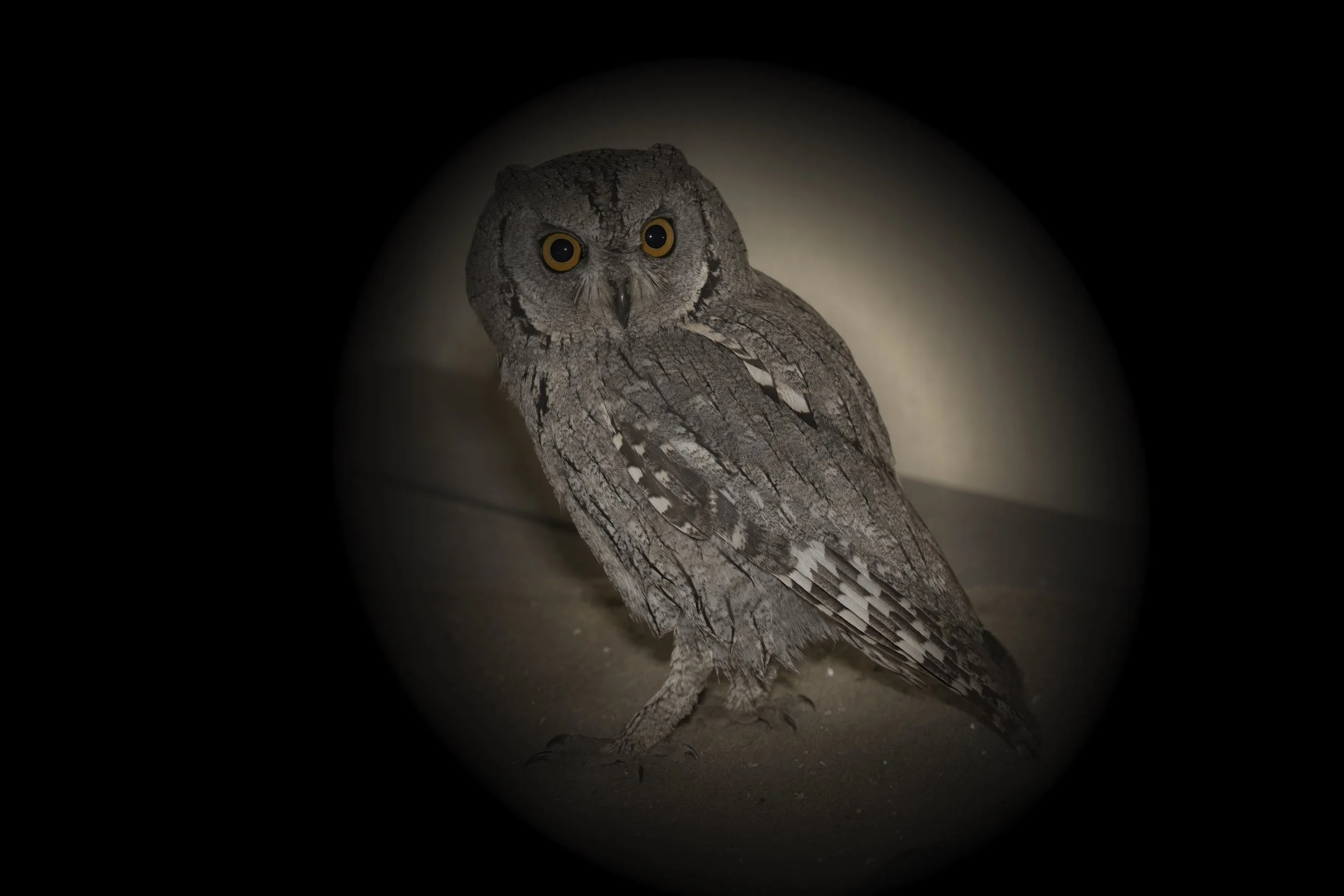
A small, compact owl with a rounded head and short ear tufts that are often held upright when alert. Plumage ranges from grey to brown, finely mottled and streaked to closely mimic tree bark, providing excellent camouflage. The facial disc is pale and lightly defined, framing bright yellow eyes and a short, dark bill. Underparts are paler with fine vertical streaking, and the wings are relatively short and rounded. Adults typically weigh around 60–135 g, with a wingspan of approximately 50–60 cm, making it one of the smallest owl species encountered in the region.
The Eurasian Scops-Owl favors open woodlands, groves, orchards, and tree-lined landscapes, particularly where mature trees provide cavities for roosting and nesting. It avoids dense forest, preferring semi-open habitats with scattered trees and clearings that support abundant insect life. In the UAE, it is most often recorded in farmland, gardens, parks, plantations, and lightly wooded wadis, using trees and palms as daytime roosts during migration and winter.
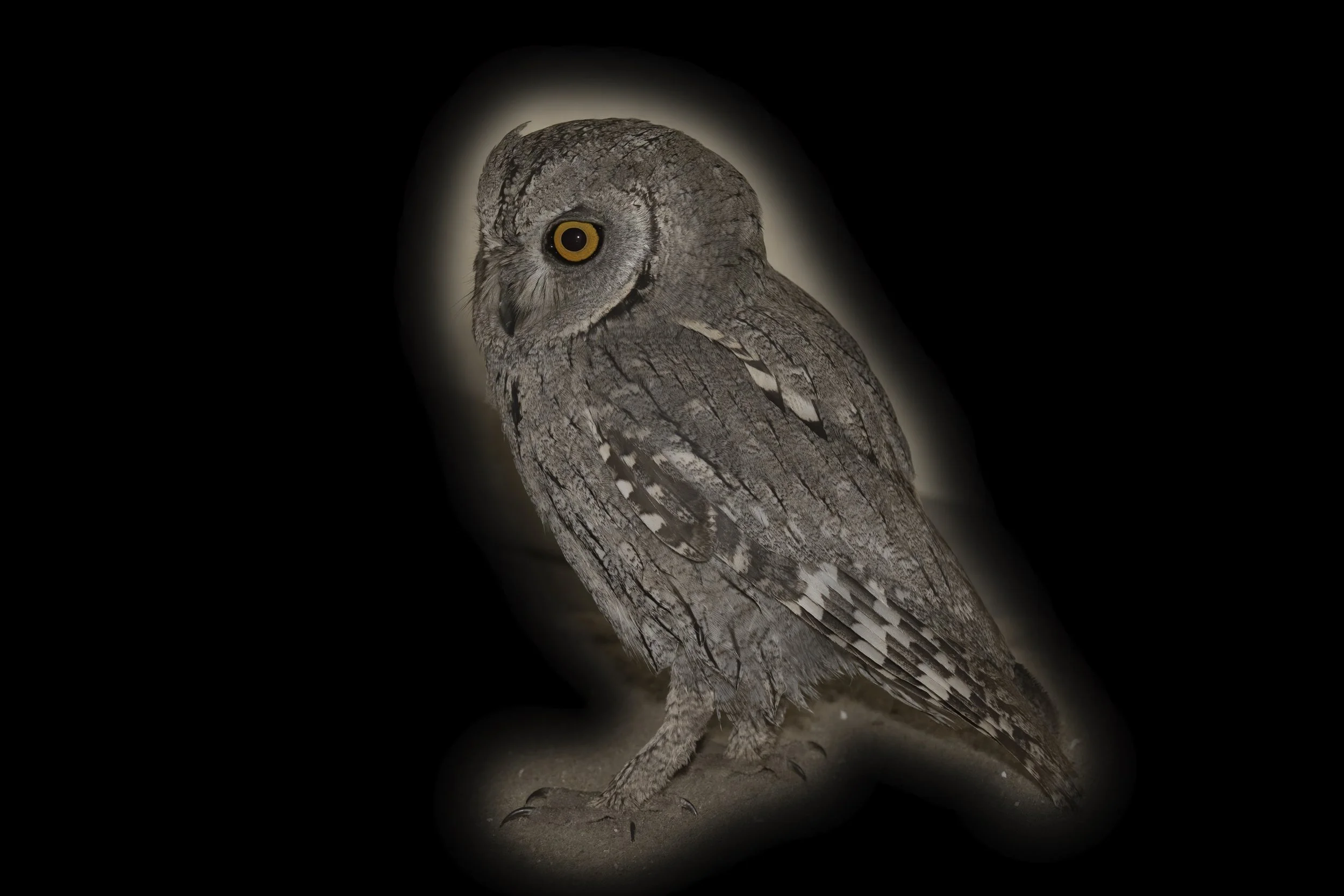
The Eurasian Scops-Owl plays an important ecological role as a natural controller of insect populations, feeding primarily on beetles, moths, grasshoppers, and other nocturnal invertebrates. By regulating insect numbers, it helps maintain balance in woodland, agricultural, and semi-natural ecosystems. As a sensitive, low-profile species, its presence also serves as an indicator of healthy, lightly wooded habitats with adequate prey and roosting sites. Protecting the Eurasian Scops-Owl therefore contributes to broader ecosystem health and supports biodiversity at multiple levels.