

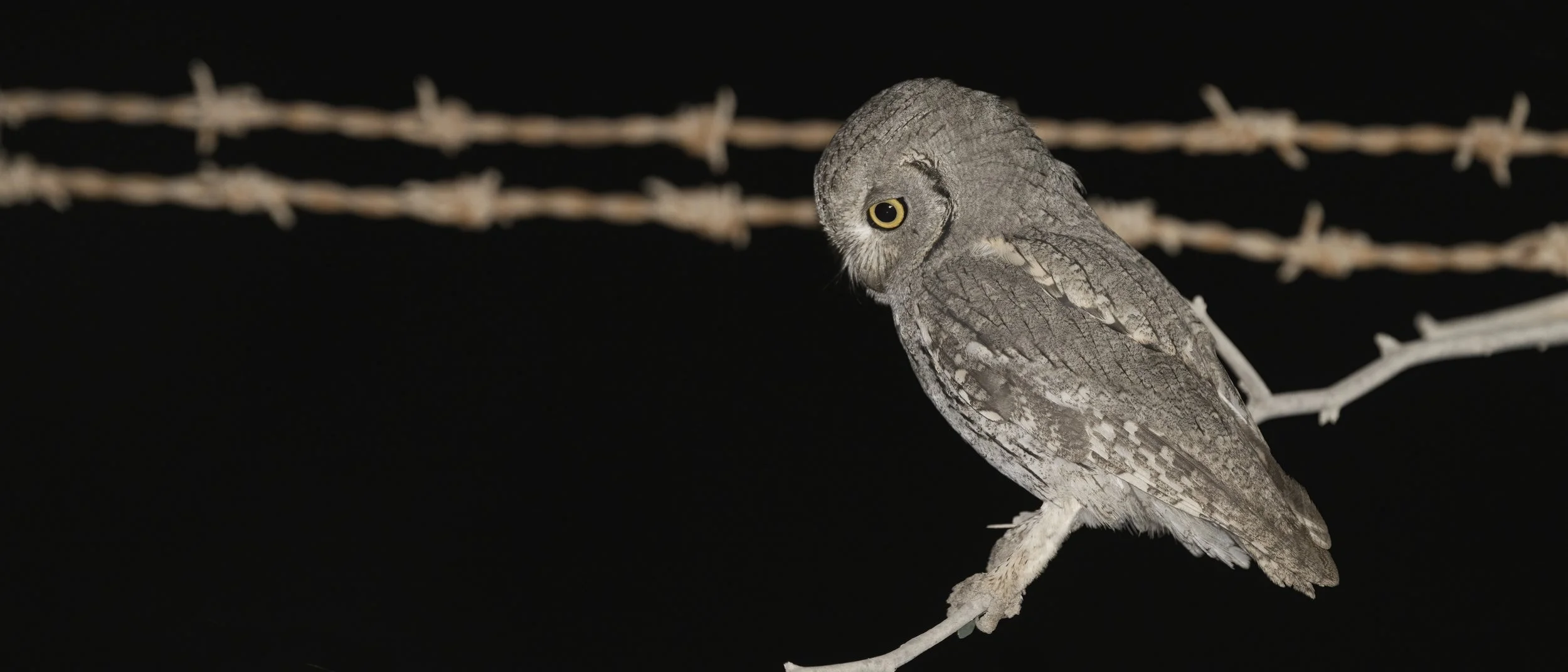
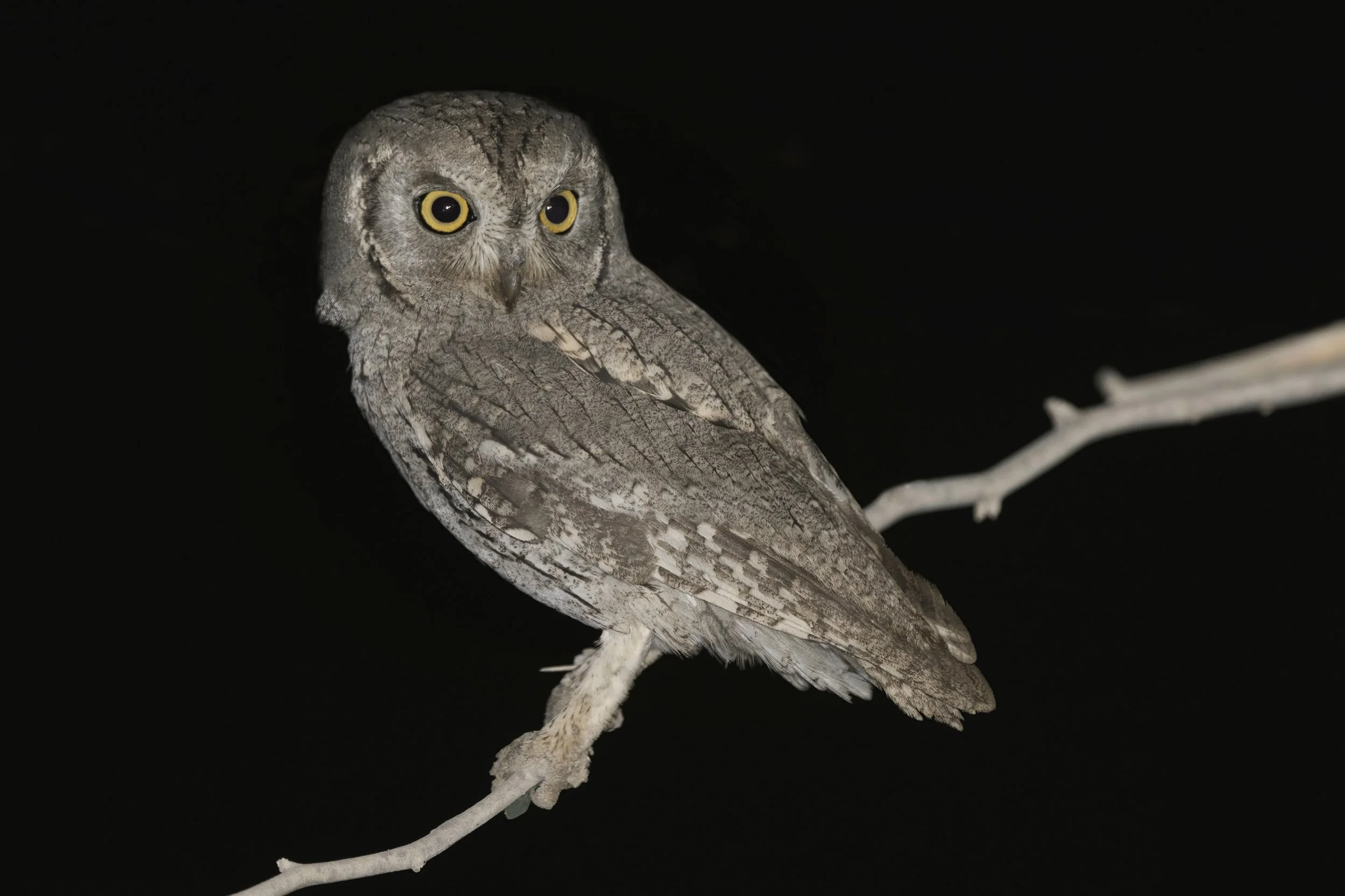
The Pallid Scops Owl (Otus brucei) holds the title of the smallest owl in the UAE, measuring only around 19 to 21 centimeters in length. Despite its tiny size, it is a skilled and efficient nocturnal hunter, perfectly adapted to the country’s arid landscapes. Its sandy plumage allows it to blend seamlessly with desert trees and palm trunks, making it almost invisible by day. At night, it comes alive, feeding on insects, small reptiles, and other desert creatures. This little owl is not only a symbol of adaptability and balance in harsh environments but also a quiet reminder of how even the smallest predators play an essential role in keeping the UAE’s desert ecosystems healthy and alive.
The Pallid Scops Owl (Otus brucei) is a small, desert-adapted owl found across the arid landscapes of the Middle East, Central Asia, and parts of North Africa. In the UAE, it inhabits semi-desert regions, palm groves, and areas with scattered trees or old date plantations, where it can blend perfectly with bark and sand-colored surroundings. Its pale plumage and quiet demeanor make it almost invisible by day, as it roosts motionless against a trunk or within dense foliage. At night, it becomes active, feeding mainly on insects such as beetles, moths, and small reptiles, often hunting under the cover of palm fronds or near artificial light that attracts prey. Despite its small size, this owl is a master of camouflage — a true desert phantom, rarely seen but often heard through its soft, repetitive “poo-poo” call echoing through the night.
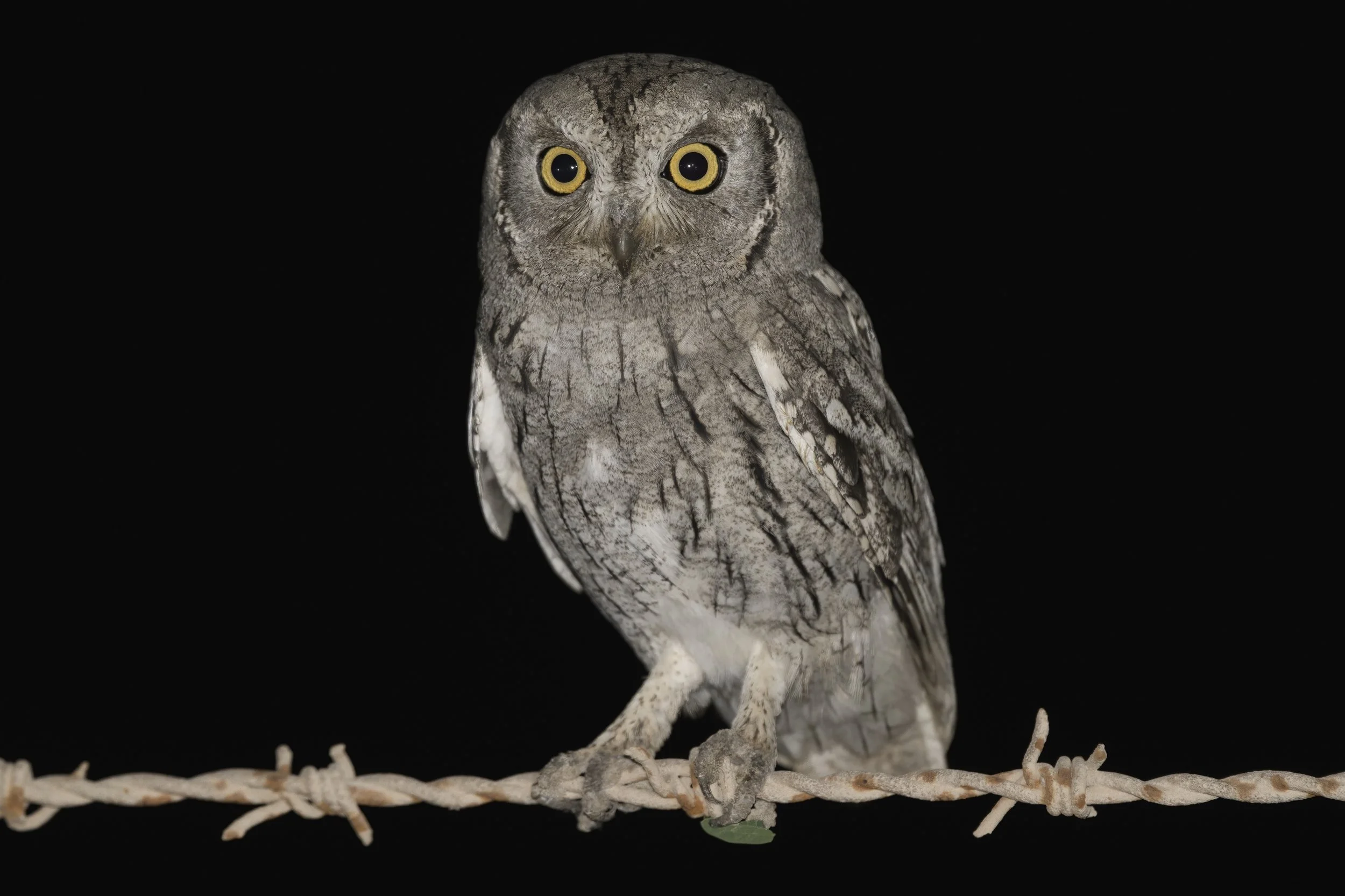
Ecologically, the Pallid Scops Owl plays a vital role in balancing desert ecosystems. As an efficient nocturnal predator, it helps control insect and small vertebrate populations, keeping fragile habitats in balance. Its presence in farms and oasis areas is a natural form of pest management, reducing the need for chemical control. Beyond its ecological value, this owl also serves as an indicator of habitat health — its survival depends on the availability of old trees, palm groves, and quiet roosting sites. Protecting these spaces not only ensures the future of the Pallid Scops Owl but also safeguards the biodiversity that thrives alongside it in the UAE’s desert and agricultural landscapes.