

Persian Horned Viper \ Pseudocerastes persicus
الأفعى القرناء الفارسية
Hunting strategy: This species is a classic ambush predator, chooses a concealed position near: (rodent runways, rock edges, wadi margins, remains stationary for long periods, strikes quickly when prey comes within range)
Unlike more active foraging snakes, it conserves energy by waiting rather than searching.
Defensive behaviour: When threatened, the Persian Horned Viper may display a graduated defensive response: (stillness and camouflage, coiling into a defensive posture, hissing or body inflation)
Striking only if contact seems imminent
It does not produce the rasping “sawing” sound typical of Echis species.
Strikes are usually defensive, not pursuit-based, and occur at very close range.
Movement and posture: Generally slow-moving and deliberate, rarely travels long distances in a single night, uses rocks, shadows, and uneven terrain to remain concealed, often adopts a partially coiled posture, ready to strike if needed.
Its movement style reflects its reliance on ambush and concealment rather than speed.
In the UAE, the species reaches the edge of its global range, which is one reason it’s so rarely encountered.
In the UAE, Pseudocerastes persicus is most closely associated with: (Rocky environments of the Hajar Mountains, Mountain slopes and ridgelines, Stony wadis and rock-strewn valleys, Gravelly desert–mountain transition zones)
Unlike the Arabian Horned Viper (Cerastes gasperettii), it is not a sand-dwelling species.
A key and often misunderstood point:
While most records come from mountainous terrain, it is not strictly confined to high altitude in the UAE.
There are confirmed low-elevation records (around 200m), showing that: Elevation alone does not define suitability and that rock cover, substrate type, and microclimate are more important than height.
“Horns”: not true horns—raised/elongated scales above each eye, typically noticeable but not giant spikes.
Texture: strongly keeled scales (rough-looking).
Size: commonly reported around 40–70 cm, with a maximum record ~108 cm; females often larger.
Color/pattern: usually sandy-grey to brown/grey-tan with darker blotches/bands for camouflage in rocky desert terrain (varies by location).
As a viper, its venom is typically dominated by toxin families common in Old World vipers (often associated with tissue-damaging and bleeding/vascular effects).
Studies on P. persicus venom show strong biological activity and variation between venoms/fractions (research interest includes cytotoxic effects in lab studies).
Safety note: any suspected bite is a medical emergency—treat as urgent and get professional care immediately.
Globally, Persian Horned Vipers are specialists of arid, rocky landscapes, not open sand deserts.
Across their range (Iran, eastern Arabia, parts of Pakistan), they are most strongly associated with: (Rocky deserts and semi-deserts, Stony plateaus and gravel plains, Mountain foothills and rugged slopes, Dry wadis with scattered rocks and boulders, Areas with broken terrain, cracks, and crevices)
They tend to avoid: (Deep, loose sand dunes (preferred by Cerastes), Densely vegetated habitats, Agricultural or heavily altered landscapes)
What matters most is structure, not elevation: (Rocks for camouflage, Crevices for shelter, Stable ground temperatures, Prey availability (mainly small rodents and lizards))
Although often considered a “mountain viper,” globally it can occur from low elevations up to high plateaus, provided the terrain is rocky and dry.
Frequently Asked Questions
-
Yes. The Persian Horned Viper (Pseudocerastes persicus) is a venomous viper and should never be approached, handled, or disturbed. Any suspected bite should be treated as a medical emergency and the person should be transported for medical care without delay.
-
Yes. The Persian Horned Viper occurs in the United Arab Emirates, where it is associated mainly with rocky mountain and wadi habitats. Published UAE records include the Hajar Mountain region and Ras Al Khaimah.
-
In the UAE, it is most closely associated with rocky mountain terrain, wadis, gravelly areas and rugged slopes. Although it has often been associated with higher elevations, a Persian Horned Viper was documented in Wadi Qada'a, Ras Al Khaimah, at only 195 metres above sea level.
-
The species has distinctive horn-like structures above the eyes. Unlike the single enlarged scale forming the horn of some Cerastes vipers, the “horns” of Pseudocerastes persicus are formed from a series of smaller scales. The name persicus refers to Persia, present-day Iran, which forms an important part of the species' range.
-
The Persian Horned Viper is a generalist predator known to feed on lizards, small mammals, birds and occasionally arthropods. It is primarily an ambush predator, remaining still and waiting for suitable prey to come within striking distance.
-
It uses a sit-and-wait hunting strategy. Rather than actively chasing prey over long distances, the viper relies on camouflage and patience, striking when an animal comes within range. This ambush strategy is characteristic of Pseudocerastes persicus.
-
One of its most recognizable features is the pair of horn-like structures above the eyes. It is a thick-bodied, medium-sized viper with coloration that blends effectively with rocky and gravel habitats, making it difficult to notice when resting among stones.
-
It is better described as defensive rather than aggressive. When threatened at close range, individuals may coil, hiss loudly and prepare to strike. As with all venomous snakes, the safest approach is to keep a generous distance and allow the animal to move away without disturbance. A UAE field observation documented hissing and a defensive striking posture when the snake was encountered.
-
Keep your distance, do not attempt to touch or move the snake, and give it a clear escape route. For wildlife photography, use a long focal length and avoid repeatedly approaching or surrounding the animal. If a bite occurs, move away from the snake, keep the affected person as still as practical and seek emergency medical treatment immediately. Do not cut or suck the wound or apply a tight tourniquet.
-
The Persian Horned Viper is currently assessed globally as Least Concern on the IUCN Red List. However, its Arabian population has previously been assessed as Vulnerable, reflecting its more restricted distribution in southeastern Arabia.
-
Yes. Pseudocerastes persicus is an oviparous species, meaning females reproduce by laying eggs rather than giving birth to live young.
-
Beyond the UAE, the species has a broad distribution extending through parts of the Middle East and southwest Asia, including Iran, Afghanistan, Pakistan and northern Oman, with records from several other countries in the region.
Other Species
-
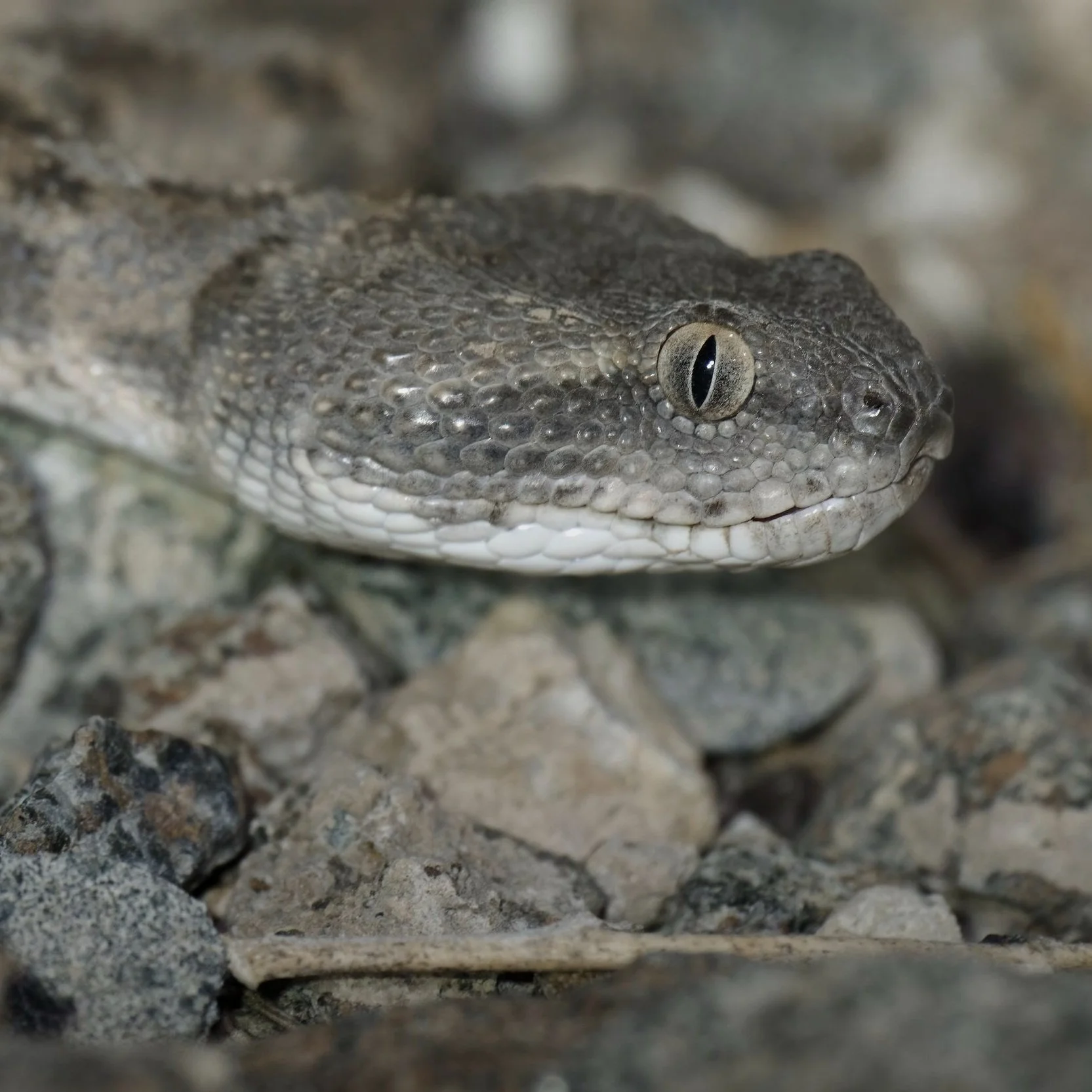
Hajar Saw-scaled Viper (Echis omanensis)
-
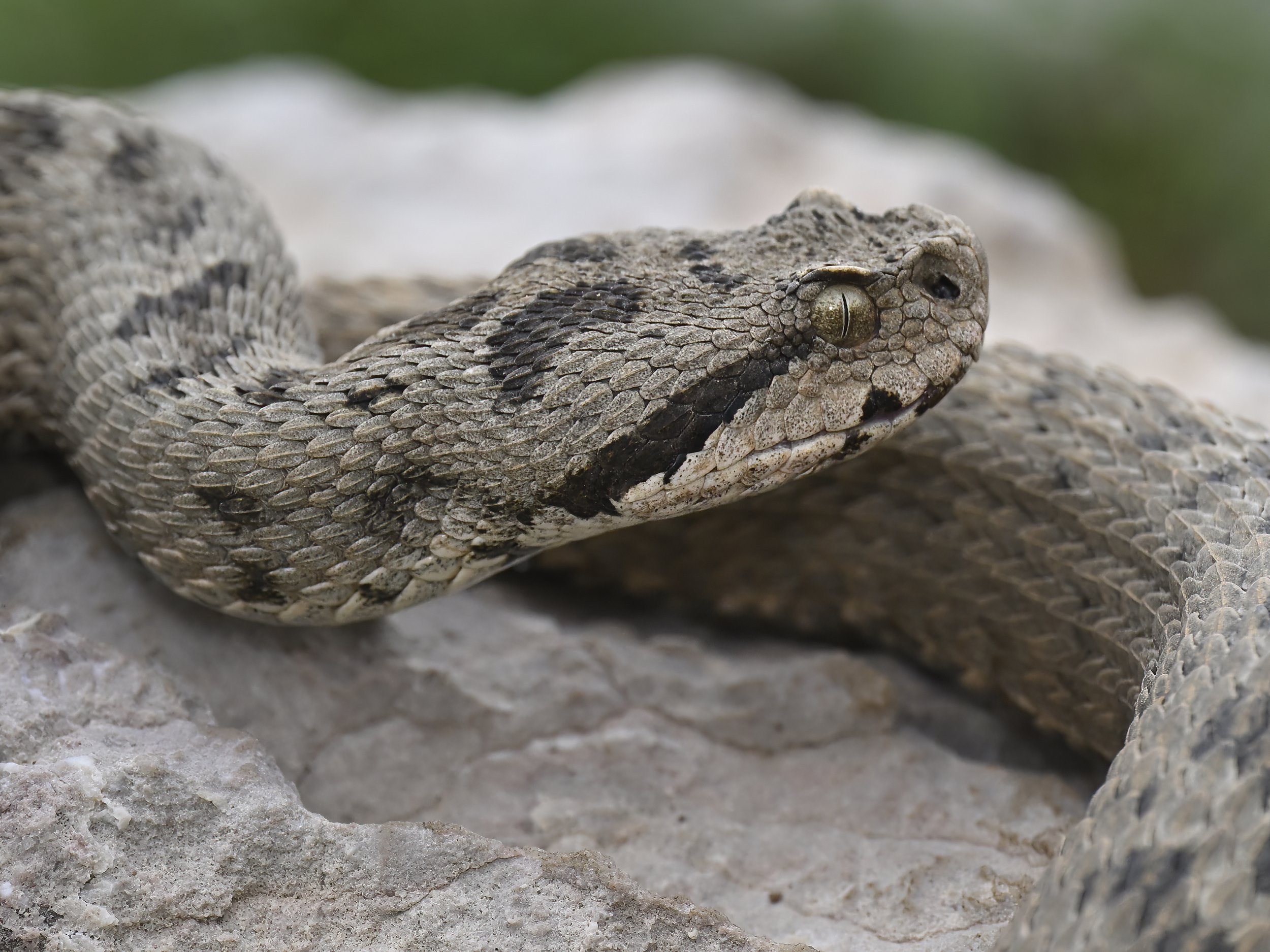
Lebanon Mountain Viper (Montivipera bornmuelleri)
-
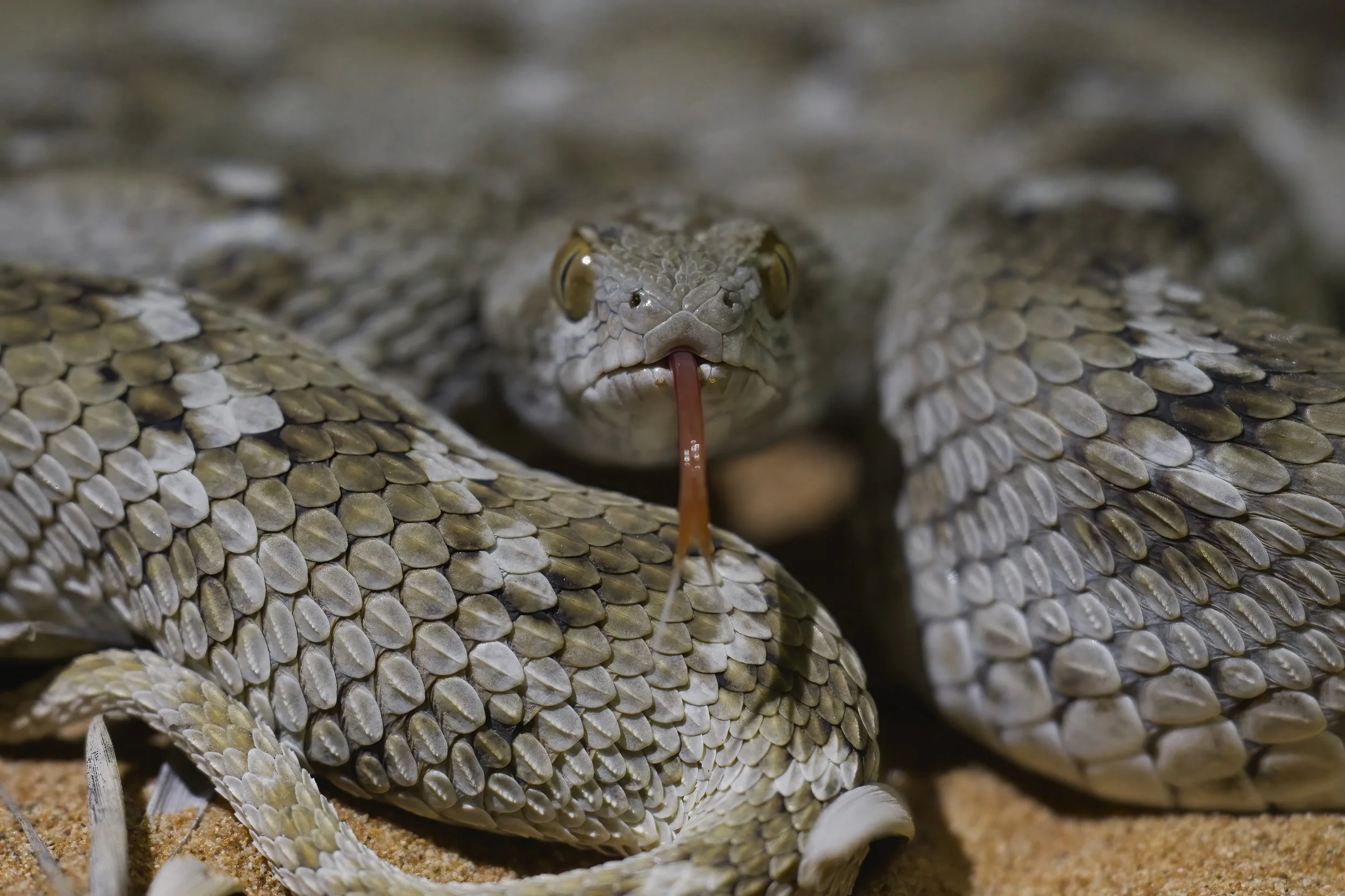
Sindh Saw-scaled Viper (Echis carinatus)
-
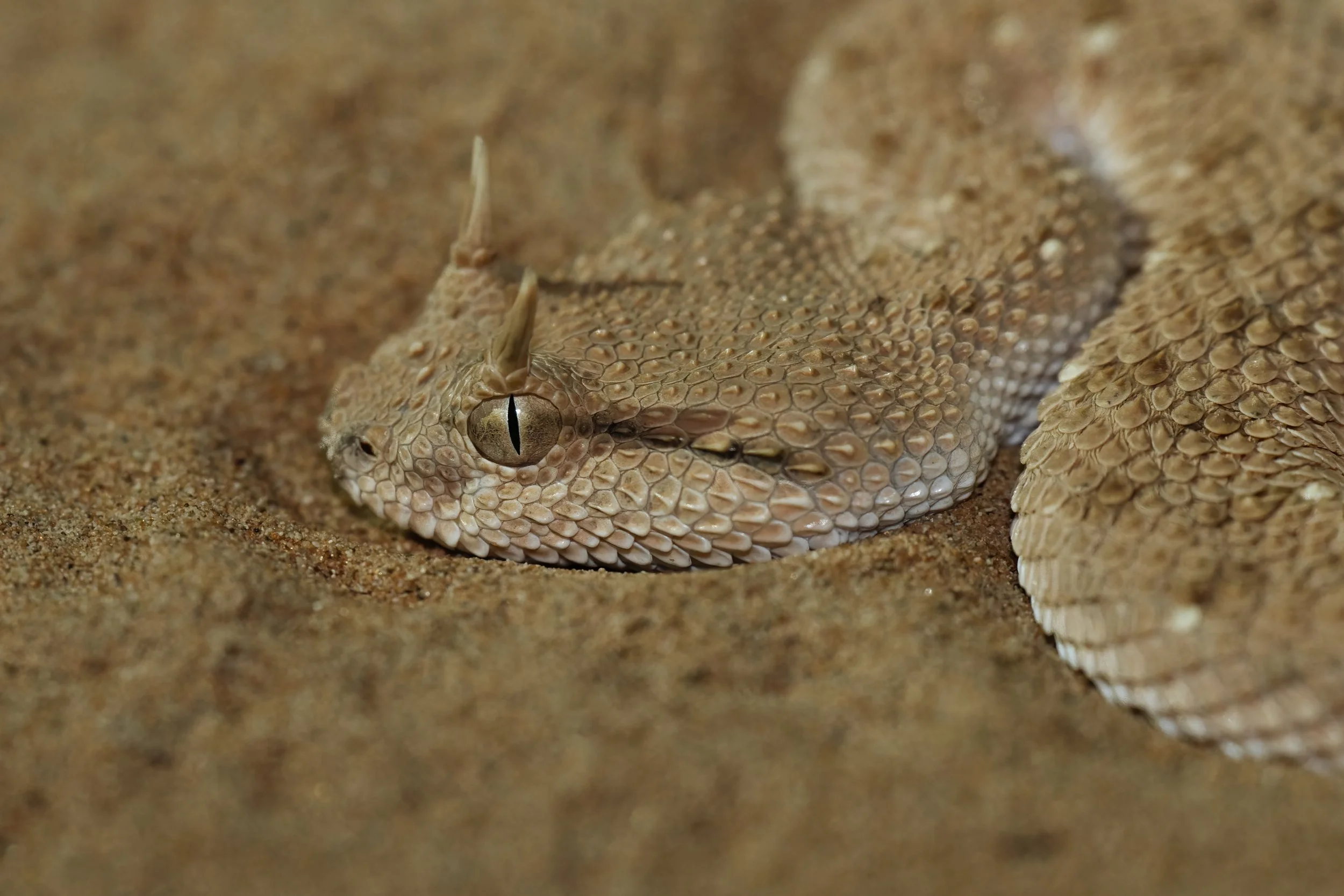
Arabian Horned Viper (Cerastes gasperettii)