

Arabian Fat-tailed Scorpion (العقرب الأسود) \ Androctonus crassicauda **
Highly Venomous
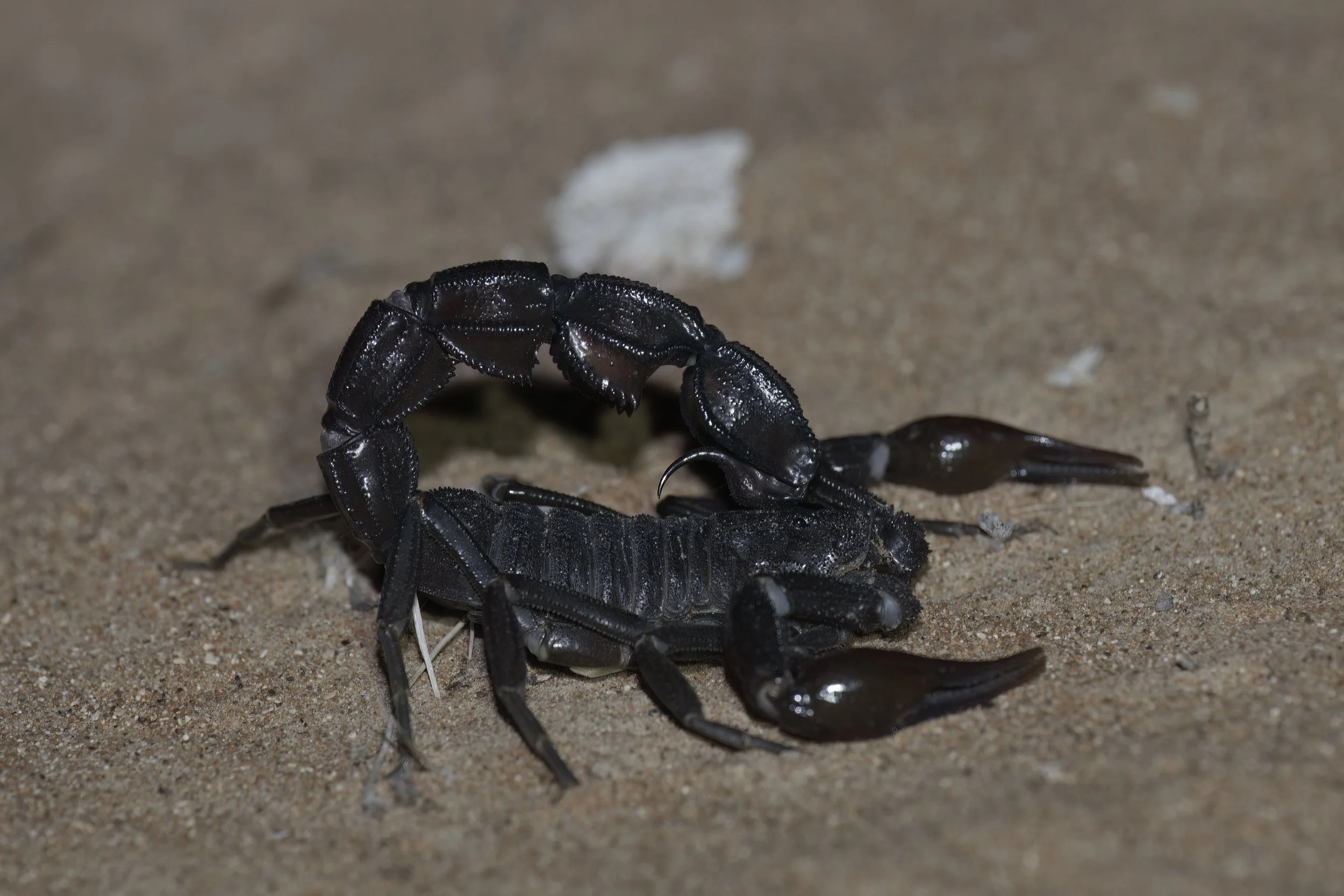

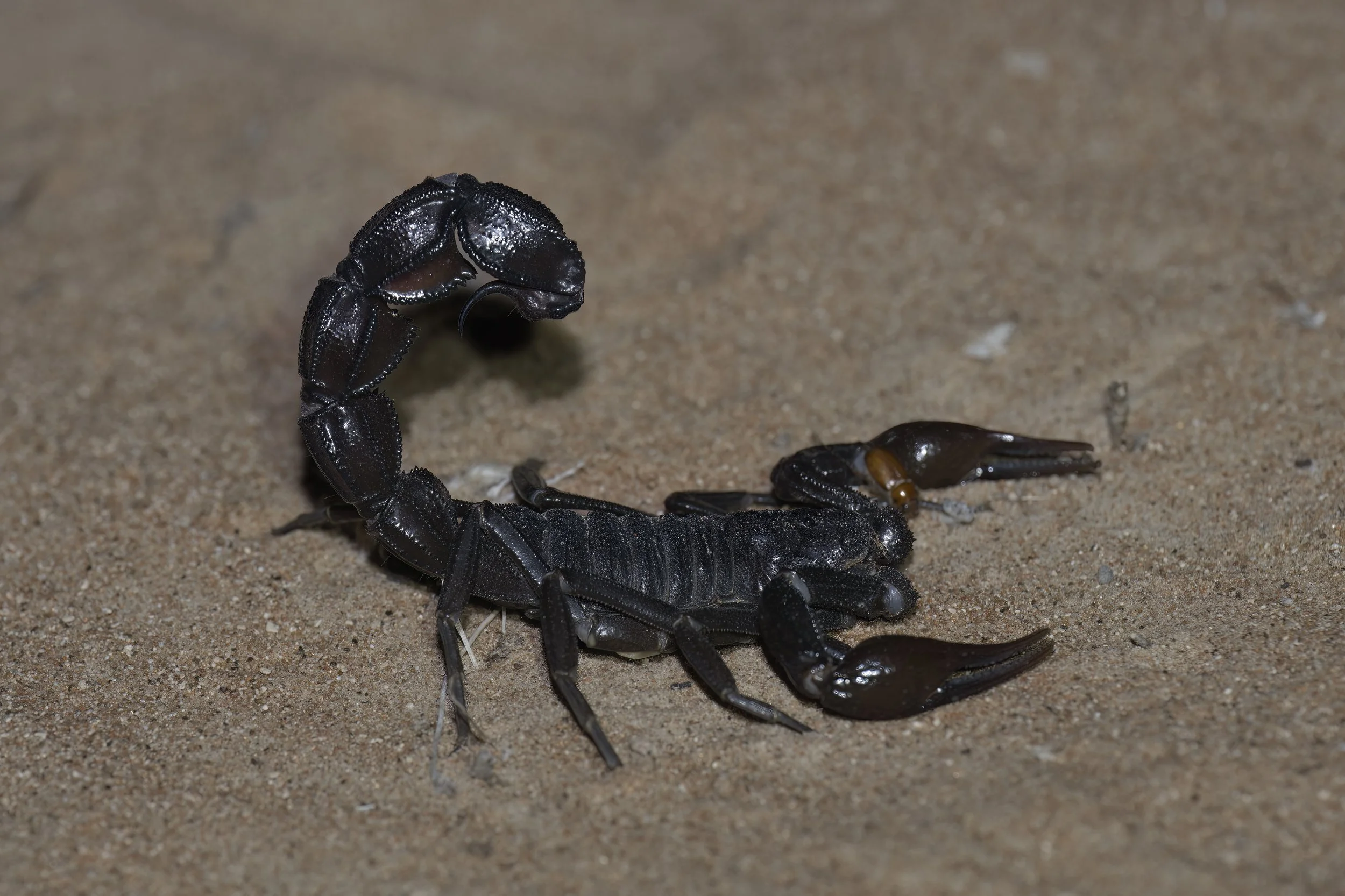
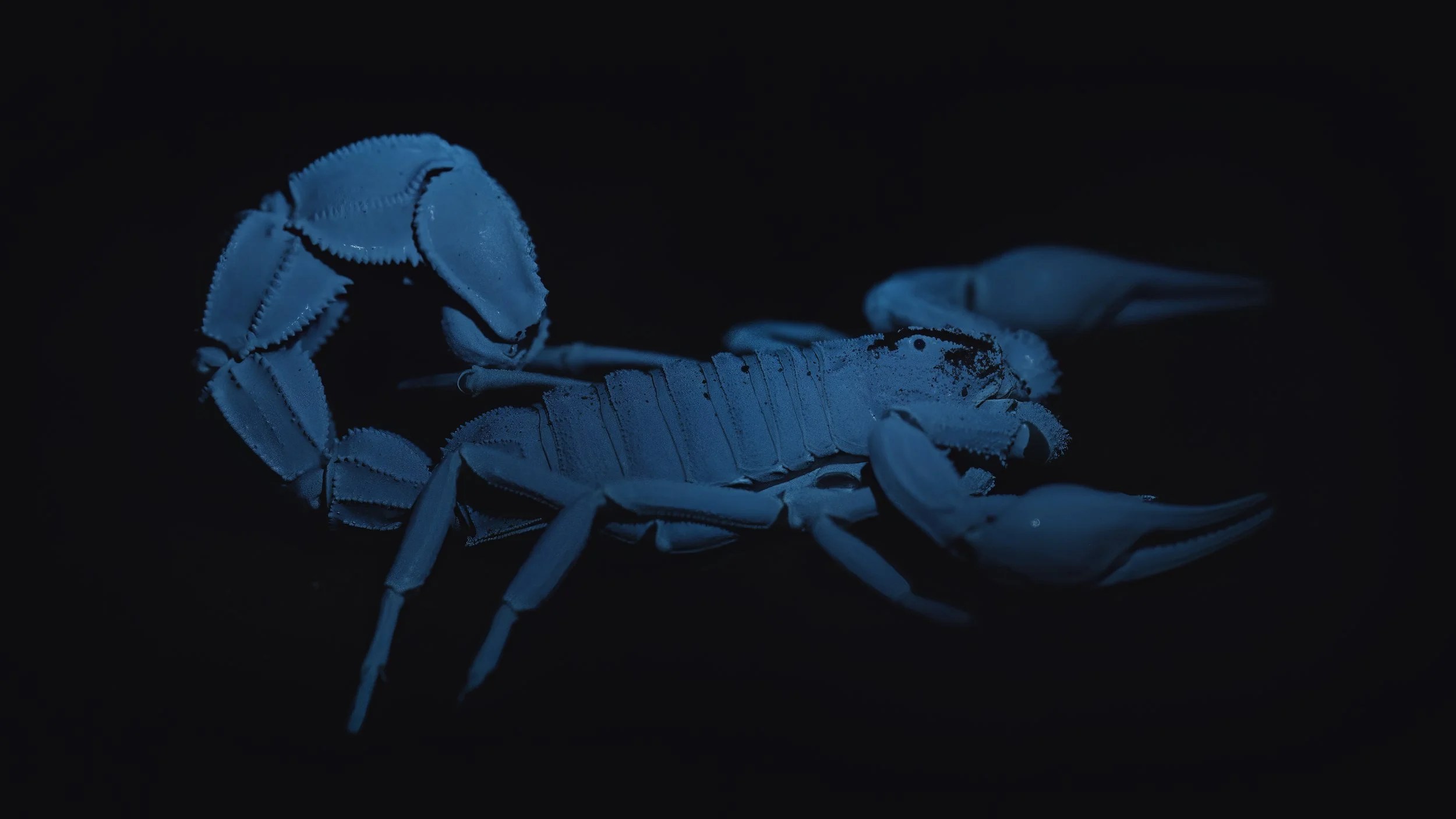

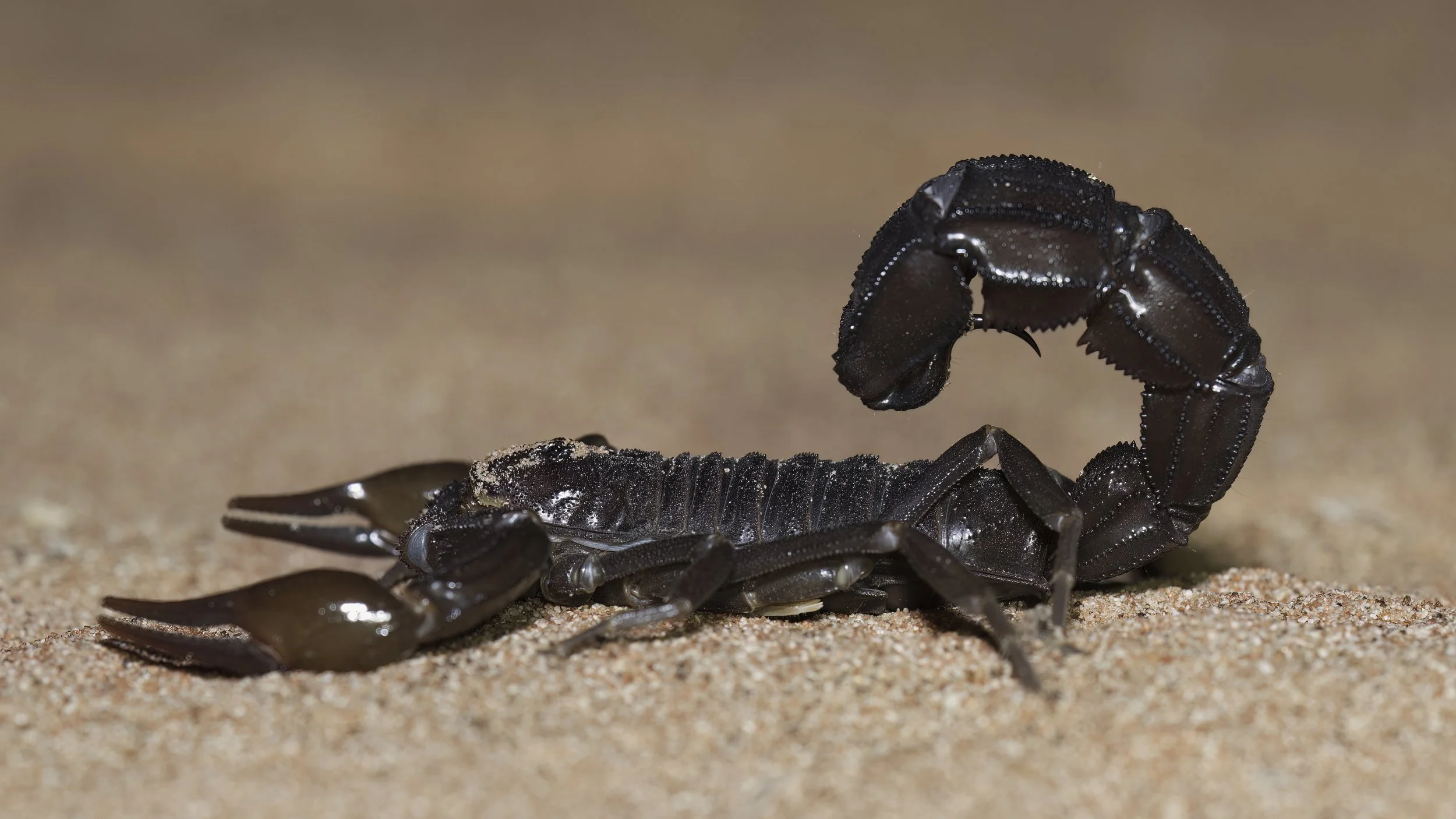
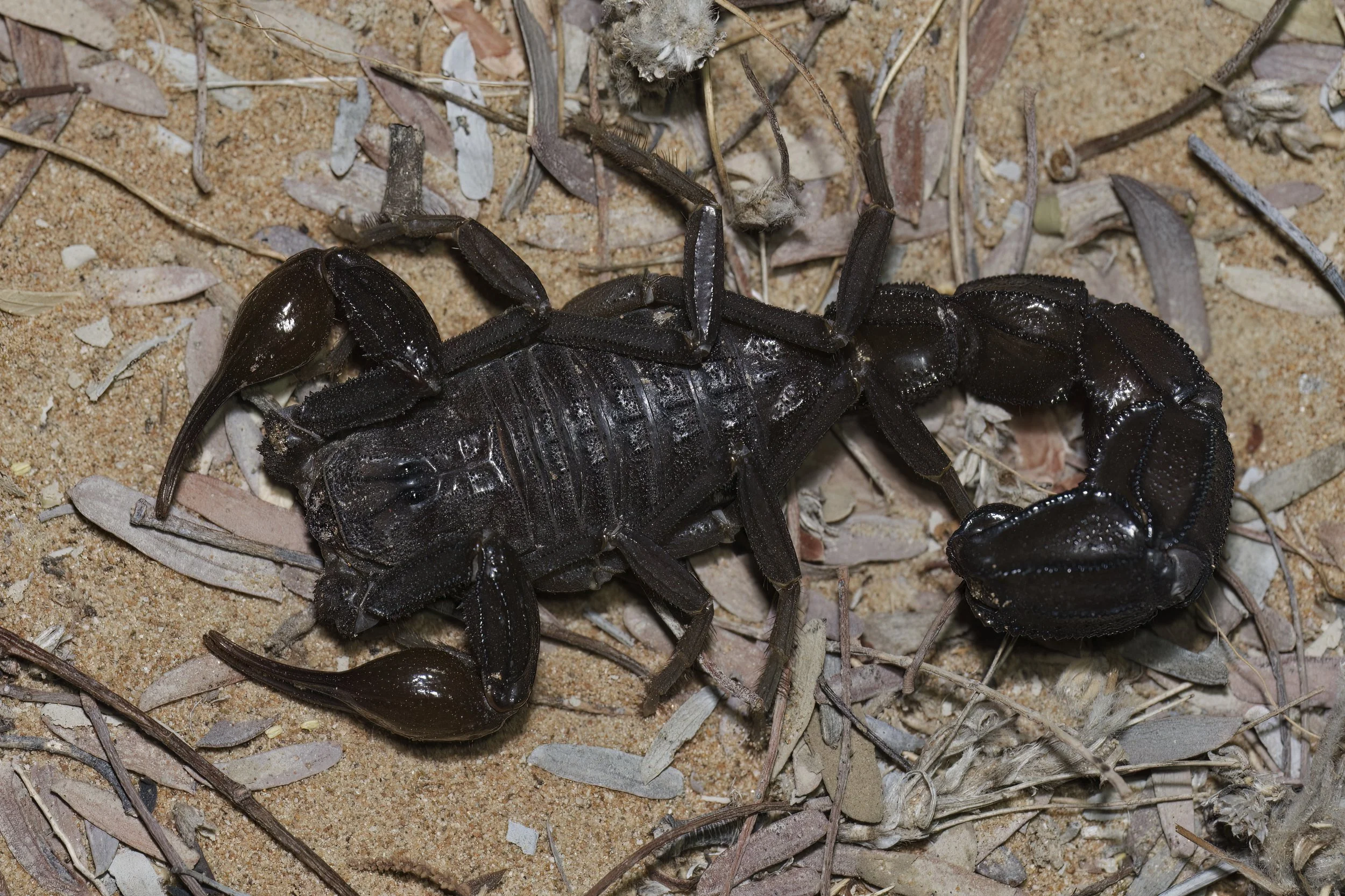
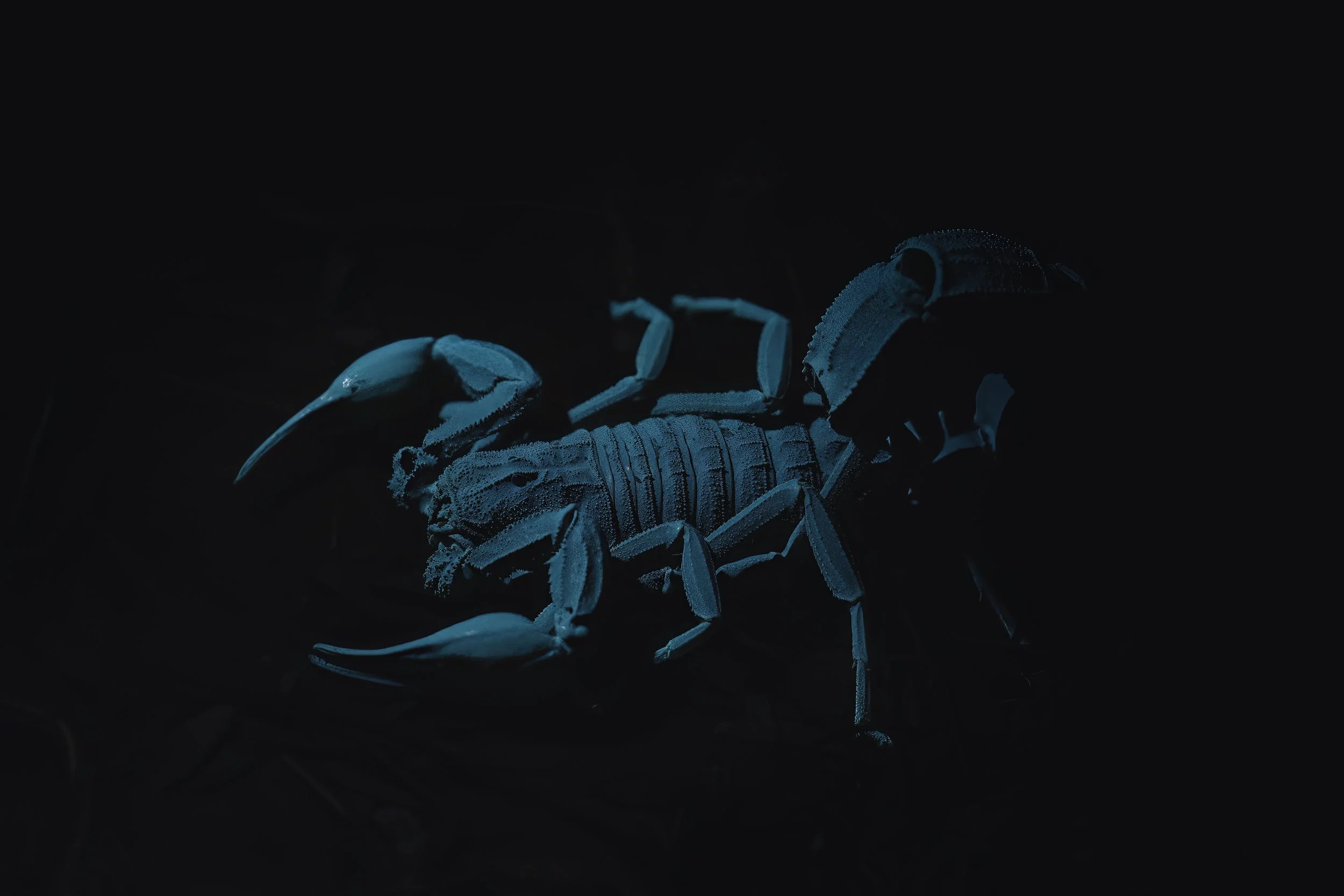
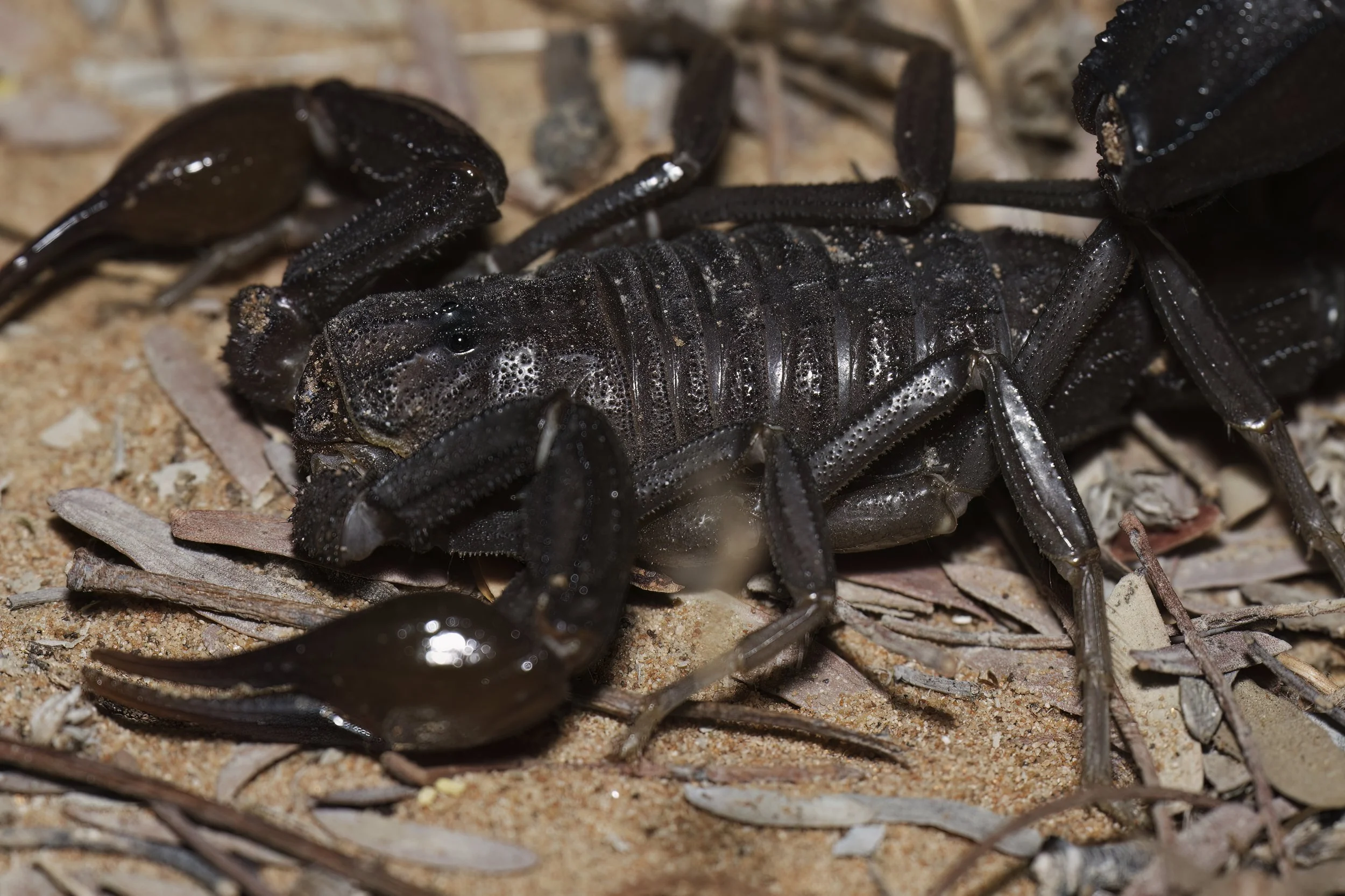
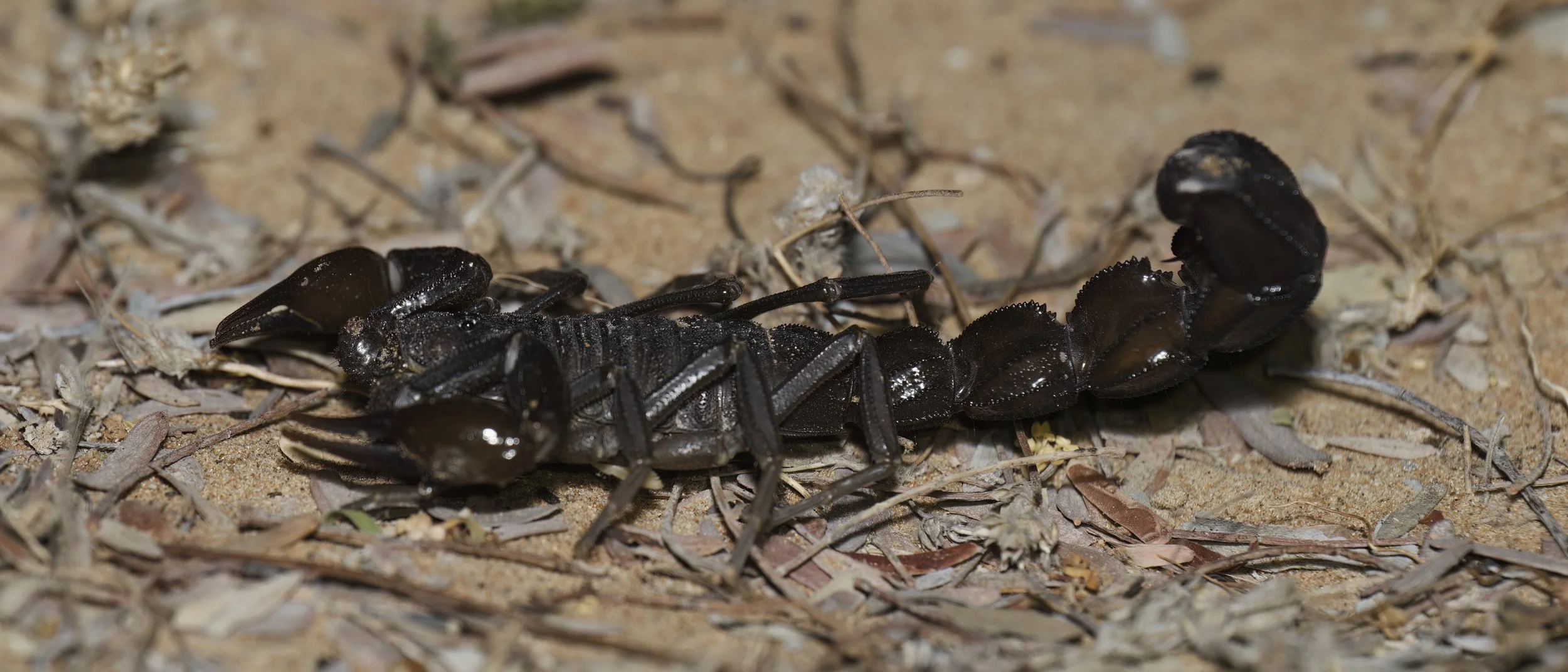
The Arabian Fat-tailed Scorpion (Androctonus crassicauda) is one of the most dangerous and venomous scorpions found across the Middle East, including the United Arab Emirates. Recognizable by its thick tail and robust body, this nocturnal predator is highly adapted to arid environments. Its venom is a potent mix of neurotoxins that can cause serious medical complications in humans, especially in children and the elderly. While it poses a public health risk, the venom of A. crassicauda is also being studied for its potential in medical research, with early findings suggesting possible applications in cancer treatment, antimicrobial therapy, and neurological disorders. Despite its fearsome reputation, this species plays an important ecological role in controlling insect populations in desert ecosystems.
العقرب الأسود ذو الذيل السمين يُعد من أخطر وأكثر أنواع العقارب سمّية في الشرق الأوسط، بما في ذلك دولة الإمارات العربية المتحدة. يمكن التعرف عليه بسهولة من خلال ذيله السميك وجسمه القوي، وهو مفترس ليلي متكيف بشكل كبير مع البيئات الجافة
يحتوي سمه على مزيج قوي من السموم العصبية التي قد تسبب مضاعفات طبية خطيرة لدى الإنسان، خاصة لدى الأطفال وكبار السن. وعلى الرغم من خطورته على الصحة العامة، فإن سم هذا النوع يخضع حاليًا لدراسات علمية لاستكشاف إمكاناته في المجال الطبي، حيث تشير نتائج أولية إلى إمكانية استخدامه في علاج السرطان، ومكافحة الميكروبات، واضطرابات الجهاز العصبي
ورغم سمعته المخيفة، يلعب هذا العقرب دورًا بيئيًا مهمًا في التحكم بأعداد الحشرات ضمن النظم البيئية الصحراوية
Related Species
-
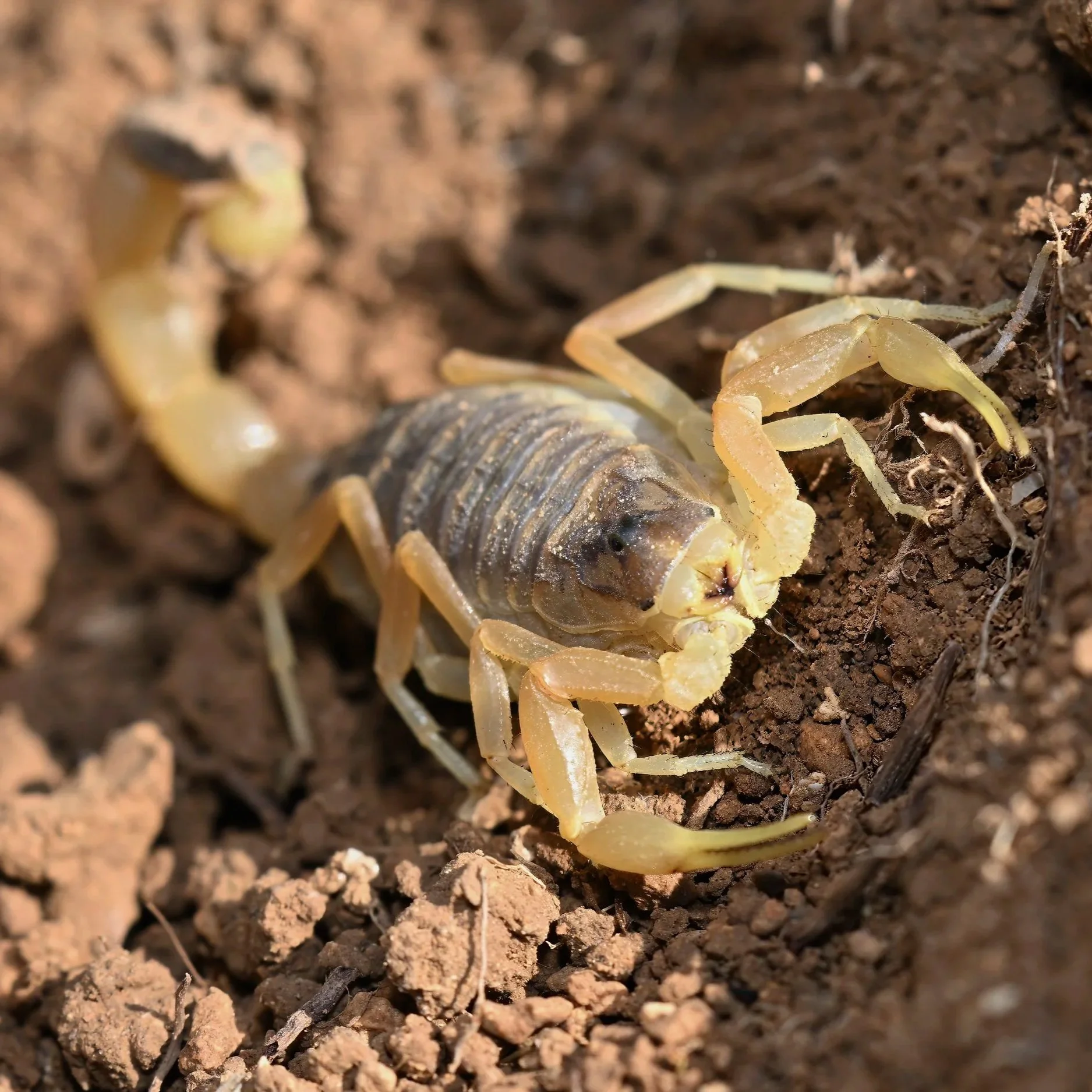
Deathstalker Scorpion (Leiurus abullahbayrami)
-
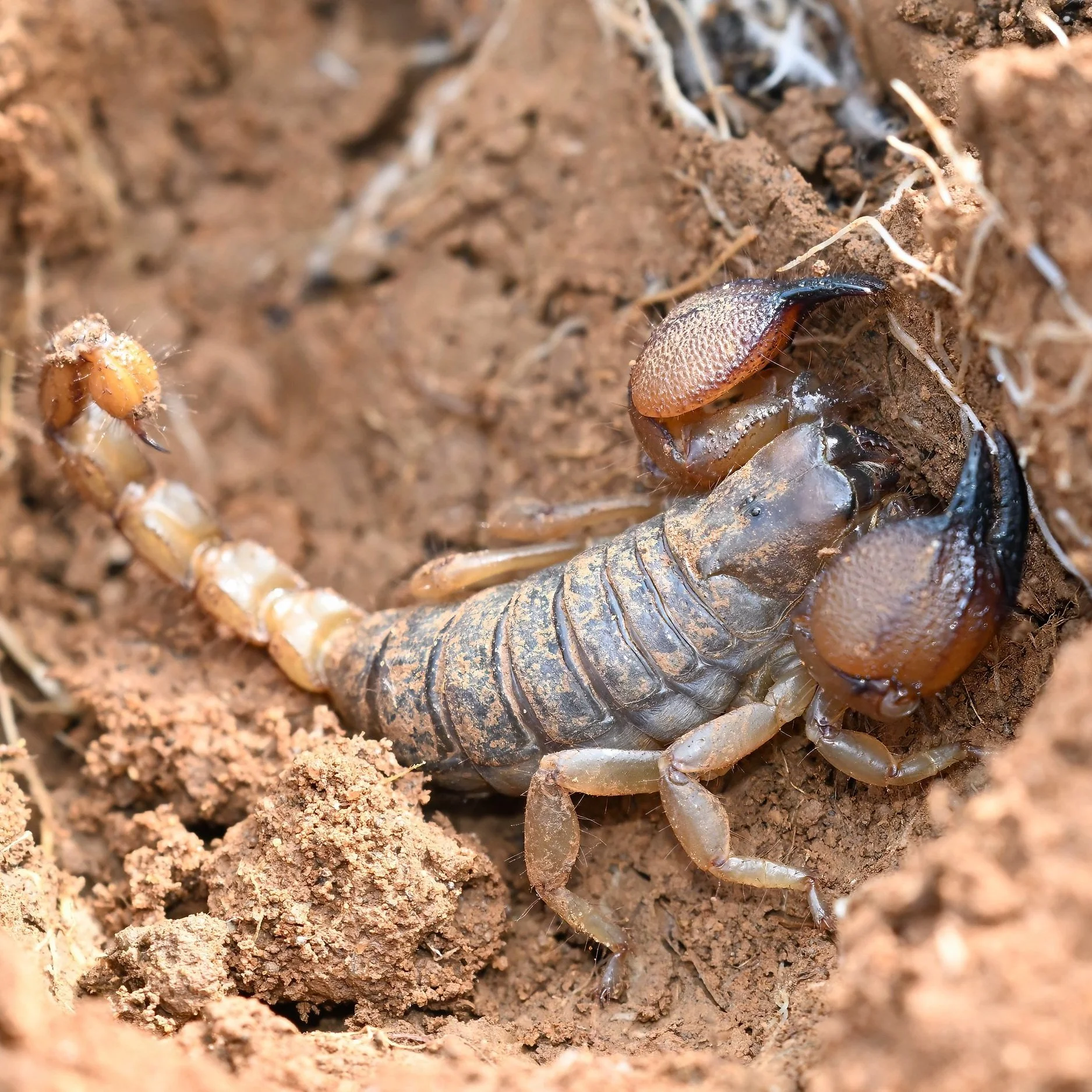
Large-clawed Burrowing Scorpion (Scorpio maurus)
-
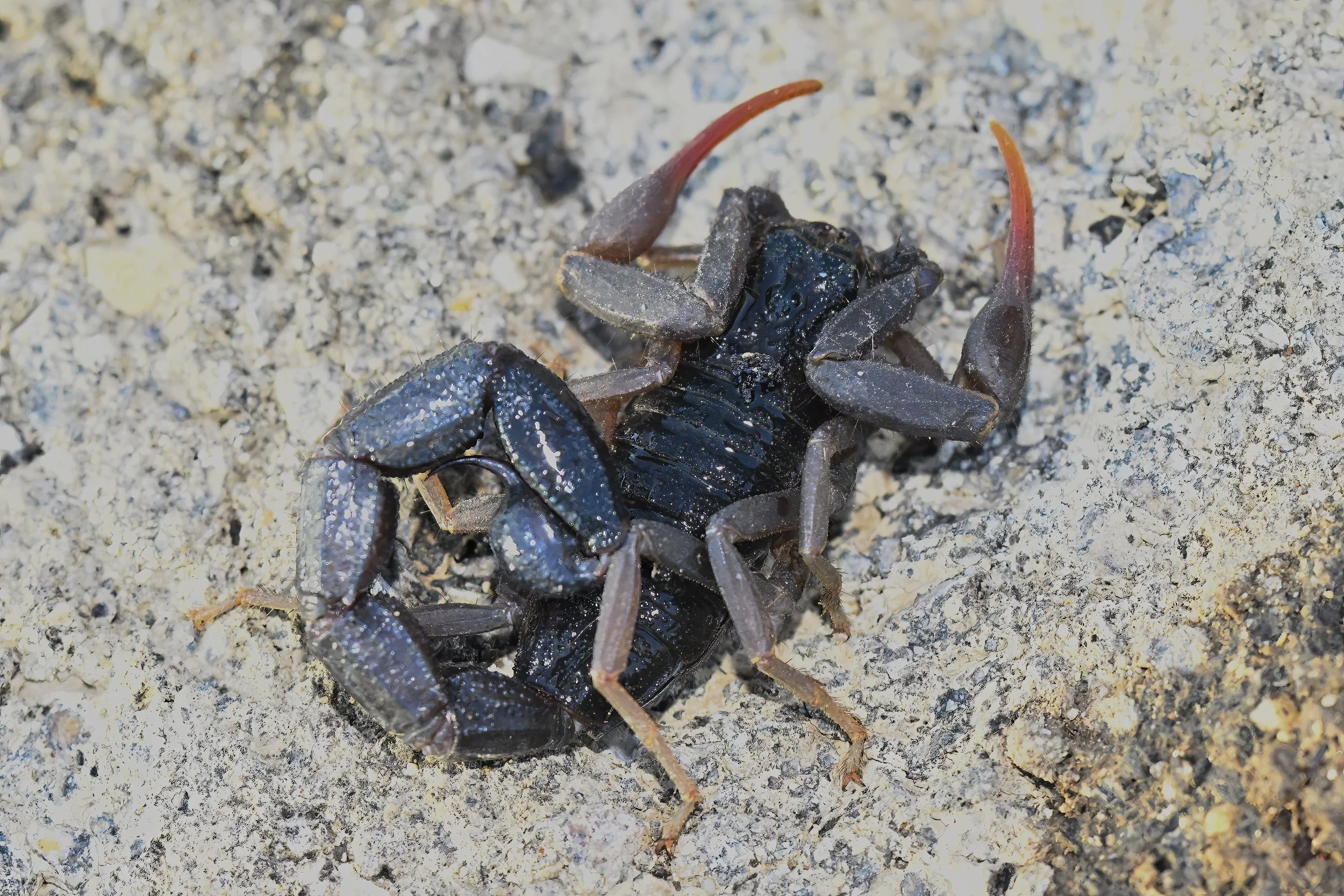
Judaicus Scorpion (Hottentotta judaicus)
-
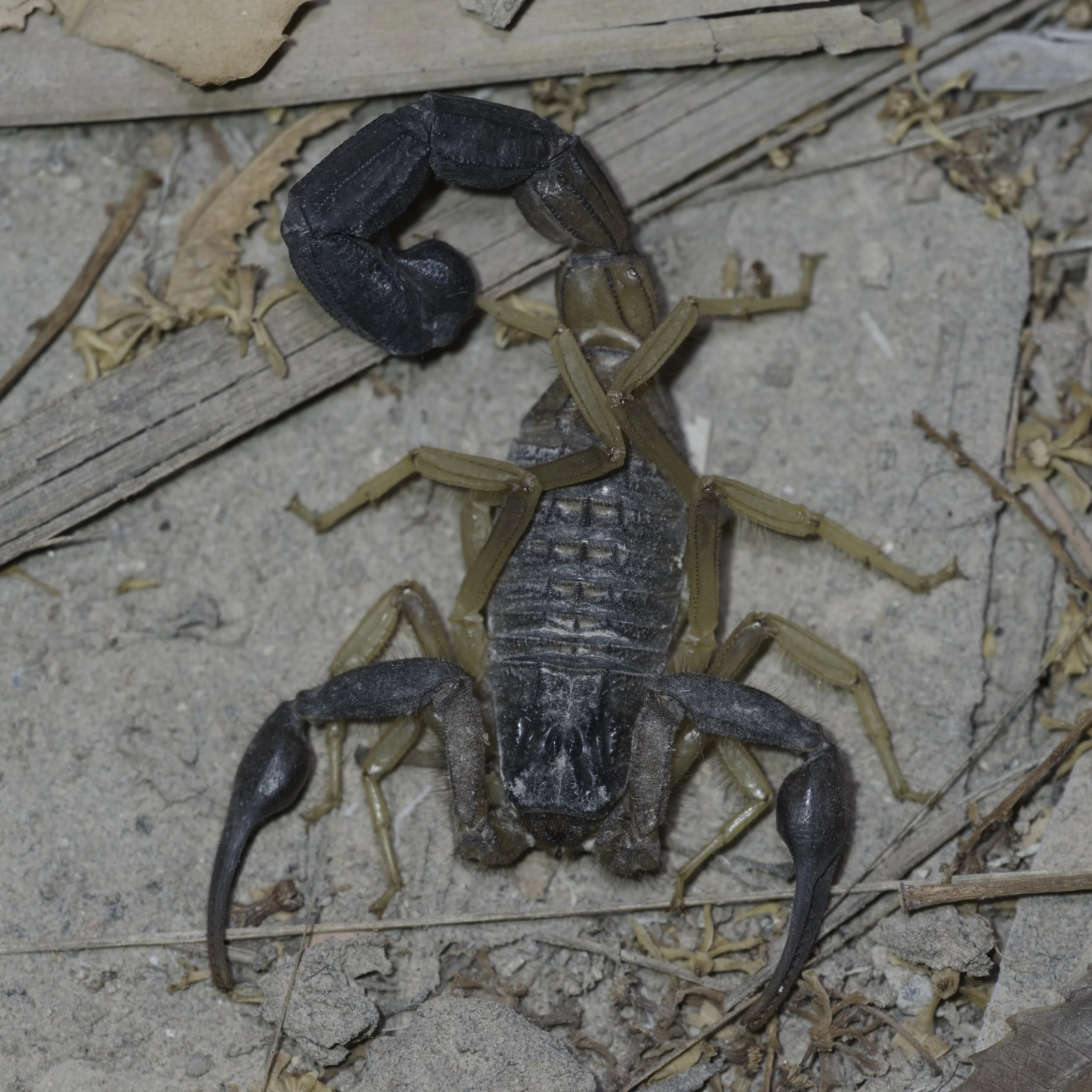
Jayakar’s Scorpion (Hottentotta jayakari)
-
The scientific name of the Arabian Fat-tailed Scorpion is Androctonus crassicauda. It is one of the best-known scorpion species in the Middle East and is found across the UAE.
-
Yes. The Arabian Fat-tailed Scorpion is considered medically significant due to its potent venom. Although healthy adults often recover with appropriate medical care, anyone who is stung should seek medical attention as soon as possible, especially children, older adults, or individuals with underlying health conditions.
-
This species occurs across much of the Middle East, including the United Arab Emirates. It inhabits deserts, rocky landscapes, farms, wadis, and other dry environments where it can shelter beneath rocks, debris, or within burrows.
-
The Arabian Fat-tailed Scorpion is usually dark brown to black, with a robust body and a noticeably thick tail (metasoma). Its powerful pincers and stout build distinguish it from many lighter-coloured desert scorpions.
-
No. They are different species. The Arabian Fat-tailed Scorpion (Androctonus crassicauda) is typically dark in colour, while the Deathstalker (Leiurus quinquestriatus) is usually yellow. Both possess medically significant venom but belong to different genera.
-
It feeds mainly on insects, spiders, and other small arthropods. Larger individuals may occasionally prey on small vertebrates such as geckos or young rodents when the opportunity arises.
-
No. Like most desert scorpions, it is primarily nocturnal. During the day it remains hidden beneath rocks, inside burrows, or in other sheltered locations to avoid the intense desert heat.
-
Do not attempt to handle or kill it. Keep a safe distance and allow it to move away naturally if possible. If it is inside a building or poses an immediate risk, contact the appropriate local authorities or a pest control professional rather than trying to remove it yourself.
| NOT EVALUATED | DATA DEFICIENT | LEAST CONCERN | NEAR THREATENED | VULNERABLE** | ENDANGERED | CRITICALLY ENDANGERED | EXTINCT IN THE WILD | EXTINCT |
|---|---|---|---|---|---|---|---|---|
| NE | DD | LC | NT | VU | EN | CR | EW | EX |