

Arabian Horned Viper \ Cerastes gasperettii
(الأفعى المقرنة العربية)
The Arabian Horned Viper (Cerastes gasperettii), also known as Gasperetti’s Horned Viper, is a venomous snake native to the deserts of the Arabian Peninsula, including the UAE, Saudi Arabia, Oman, and Yemen. It is a relatively small viper, usually measuring between 30 to 60 cm, with some individuals reaching up to 85 cm. Its body is thick and covered in keeled scales, colored in sandy or grayish tones that blend seamlessly with its desert environment. One of its most distinctive features is the presence of horn-like scales above its eyes, although not all individuals display these horns. It is a nocturnal species and is especially active during the evening and night, often using a unique sidewinding motion to move efficiently across soft sand.
This species is well-camouflaged and often buries itself beneath the sand, leaving only its eyes or horns exposed, making it difficult to spot. As such, caution is advised when walking in desert environments, especially after dark. For wildlife photographers and researchers, sightings of this viper are valuable and relatively rare, and any documentation should include location, time, and habitat to support scientific and conservation knowledge.
The venom of Cerastes gasperettii is primarily hemotoxic, meaning it affects blood and tissue rather than the nervous system. A bite can cause immediate pain, swelling, tissue damage, and local bleeding. While it is rarely fatal with timely medical treatment, the venom can lead to serious complications, especially if left untreated. Its venom contains enzymes such as metalloproteinases and phospholipases that break down cells and disrupt blood clotting. Although no species-specific antivenom exists, polyvalent viper antivenoms used in the region may offer effective treatment. First aid should focus on immobilizing the affected limb and seeking medical attention quickly.


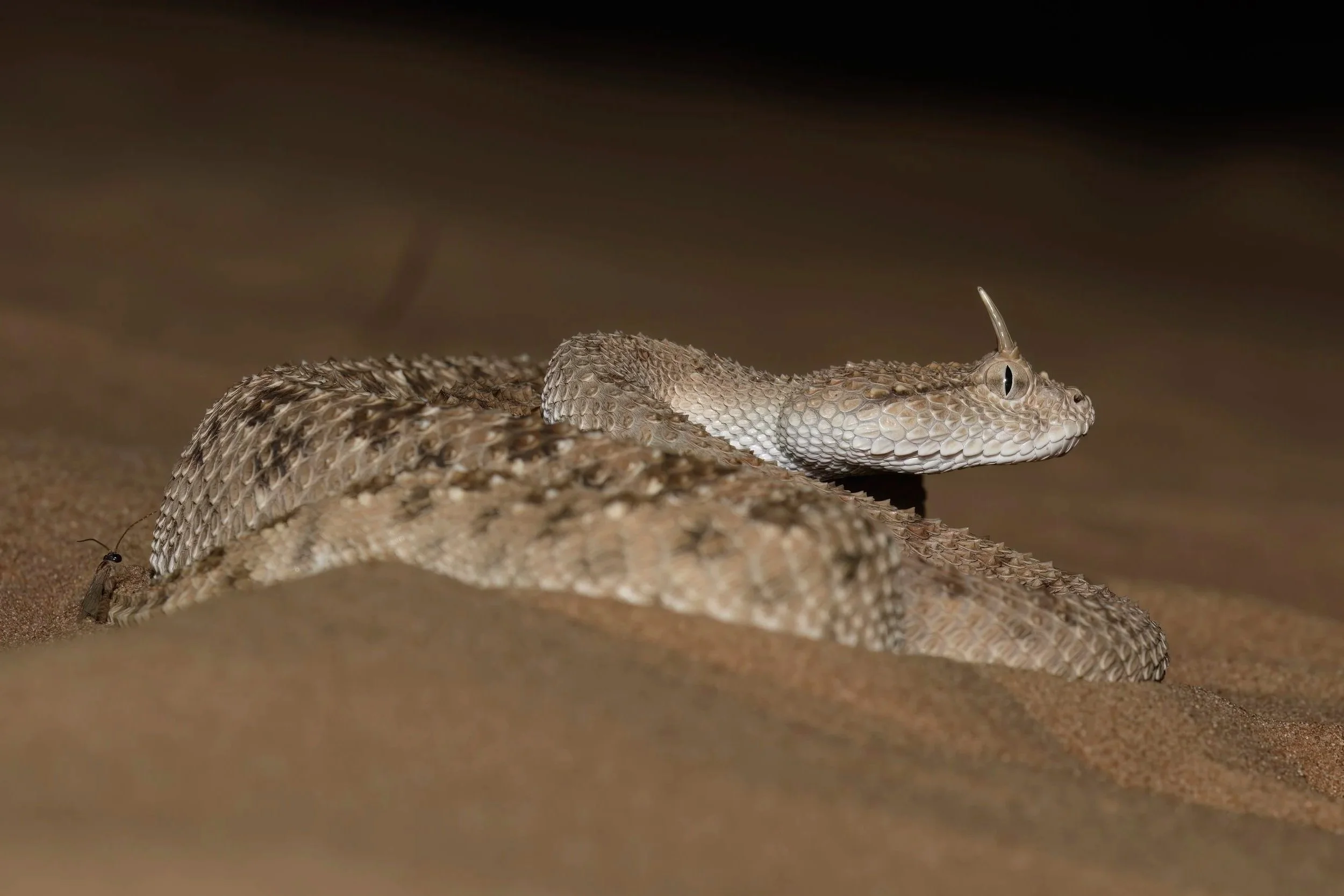


One species, many looks
One with horns, and one without
Field Encounter
Umm Al Quwain - UAE - October - 2026
Arabian Horned Vipers can be found with horns above the eyes or without them. I regularly encounter both forms in the UAE desert.
Most of the individuals I find are sitting in an ambush position, partly buried in the sand and waiting for prey. They are usually calm snakes. If given enough space, they often remain in the same position without moving, which gives me plenty of time to observe and photograph them.
I encounter this species regularly during night herping, especially from August through October, sometimes in good numbers. From my field experience, I would consider it a very common snake in suitable UAE desert habitat.
My best encounters are usually in sandy areas with scattered small bushes and shrubs, where the snakes can bury themselves and wait in ambush.
If the snake starts trying to move away, strikes, or begins rubbing its scales together to produce a warning sound, it means you are doing something wrong, you have to stop immediately and move away
Vipers of the UAE
Other Species
-
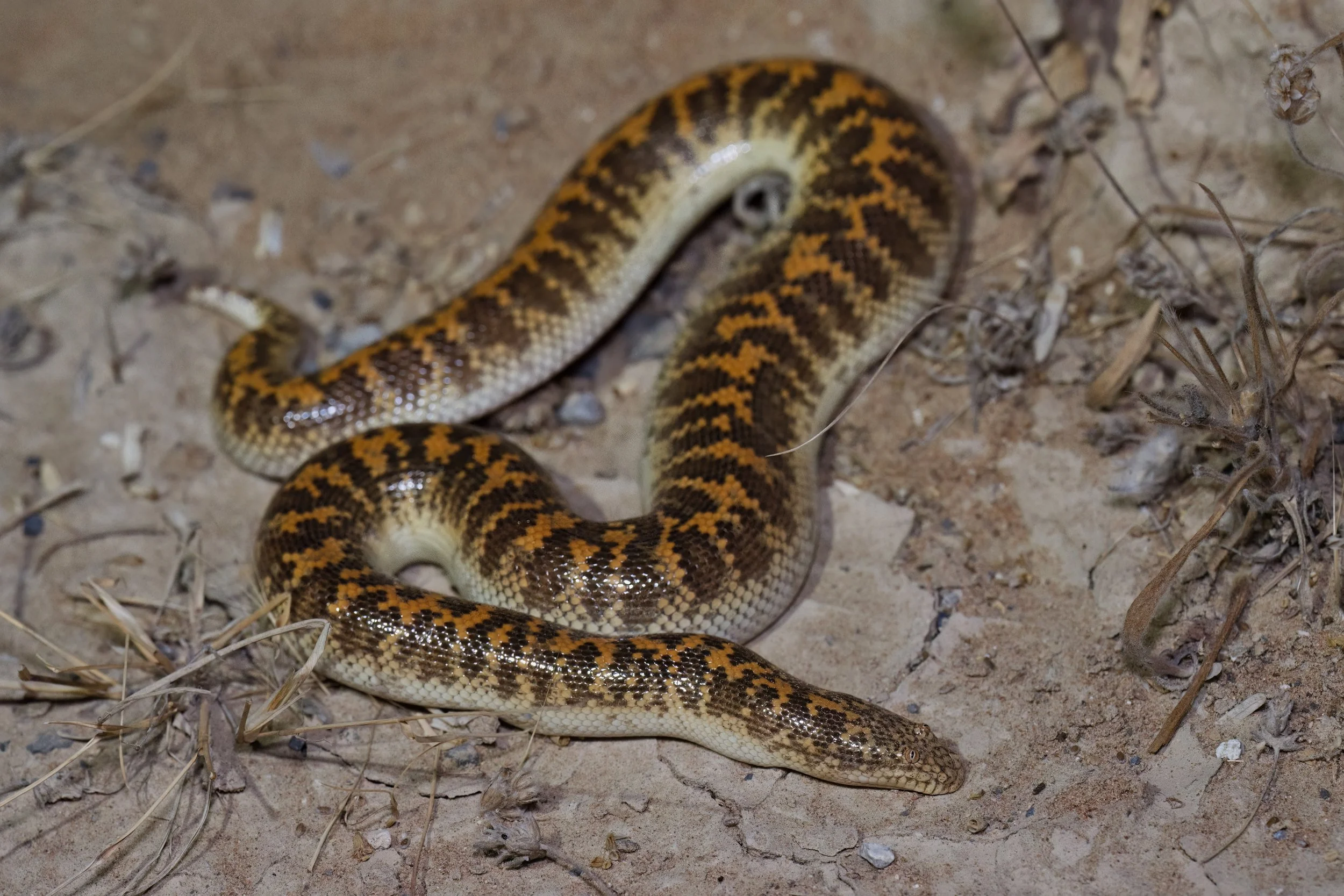
Arabian Sand Boa (Eryx jayakari)
-

Diadem Snake (Spalerosophis diadema)
-
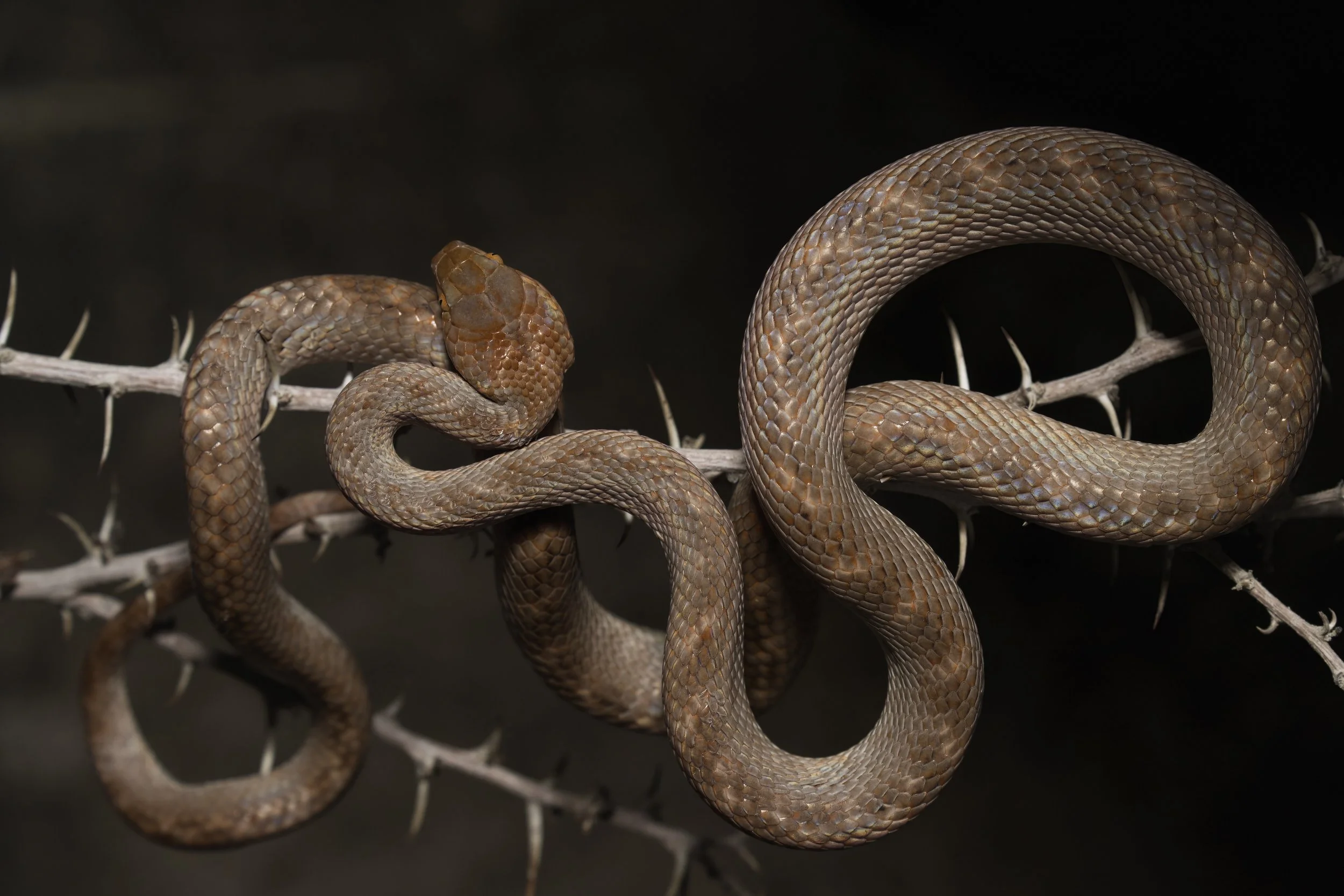
Arabian Cat Snake (Telescopus dhara)
-

Schokari Sand Racer (Psammophis schokari)