

Arabian Red fox (Vulpes vulpes arabica)
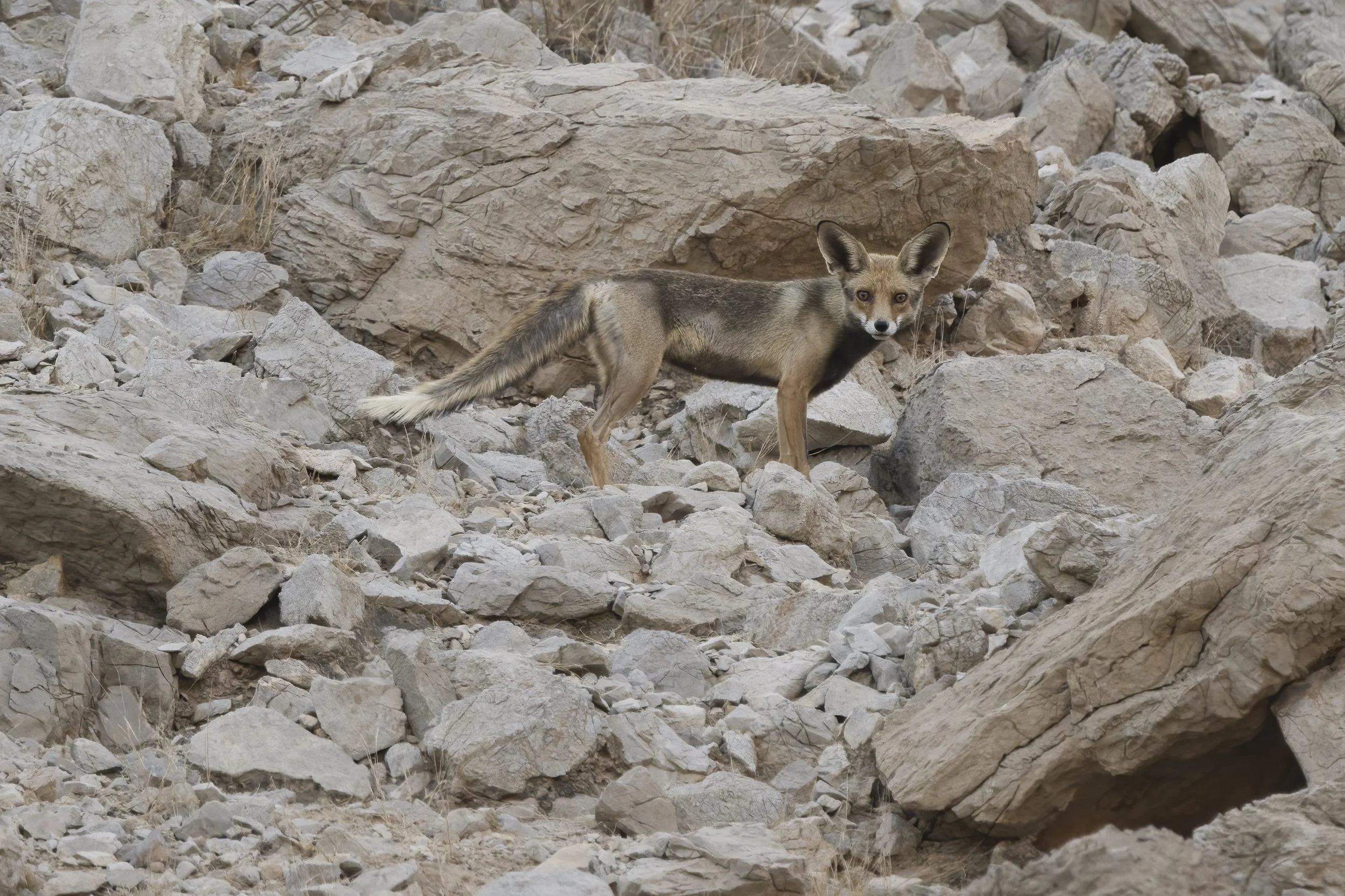
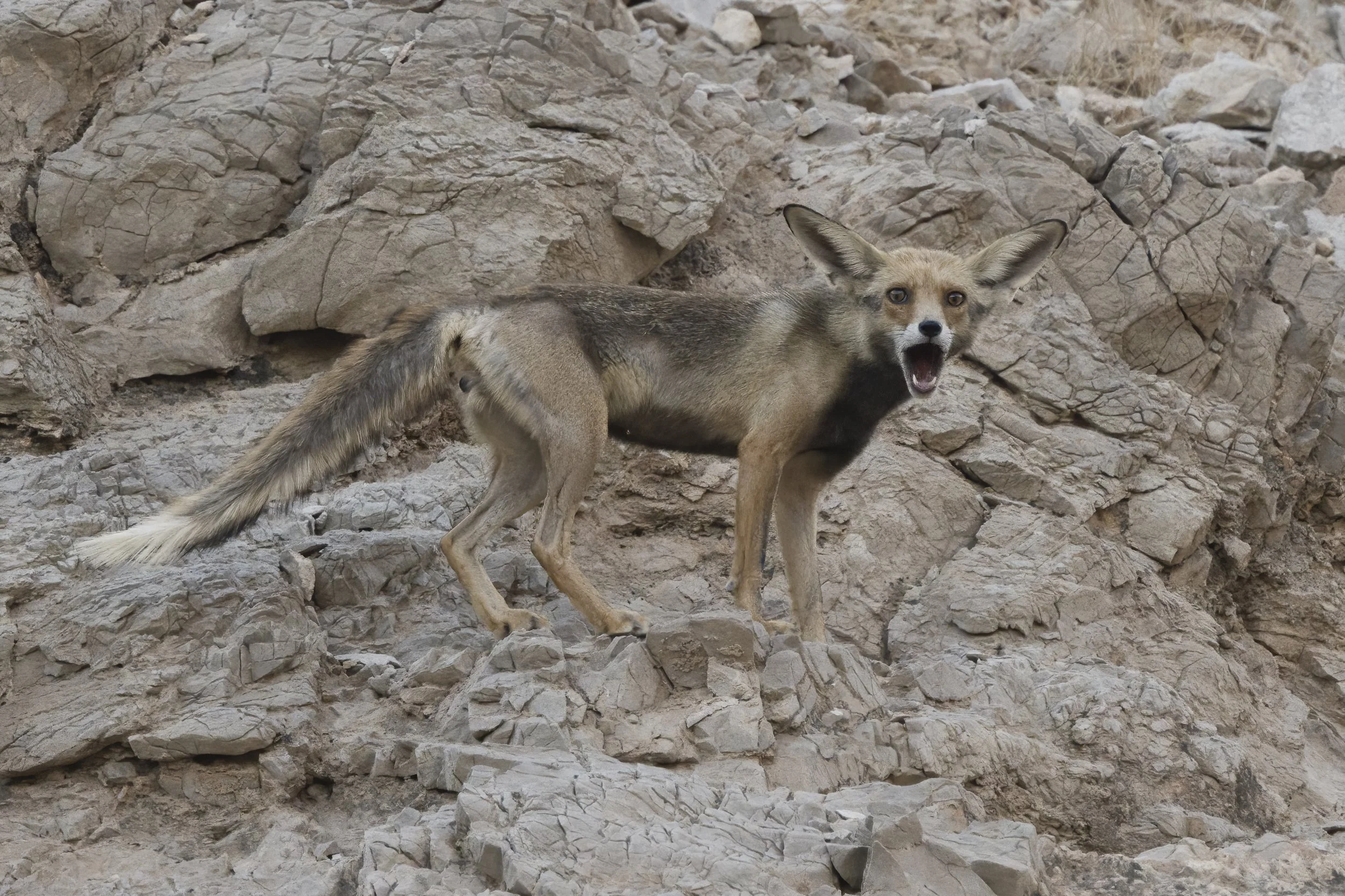
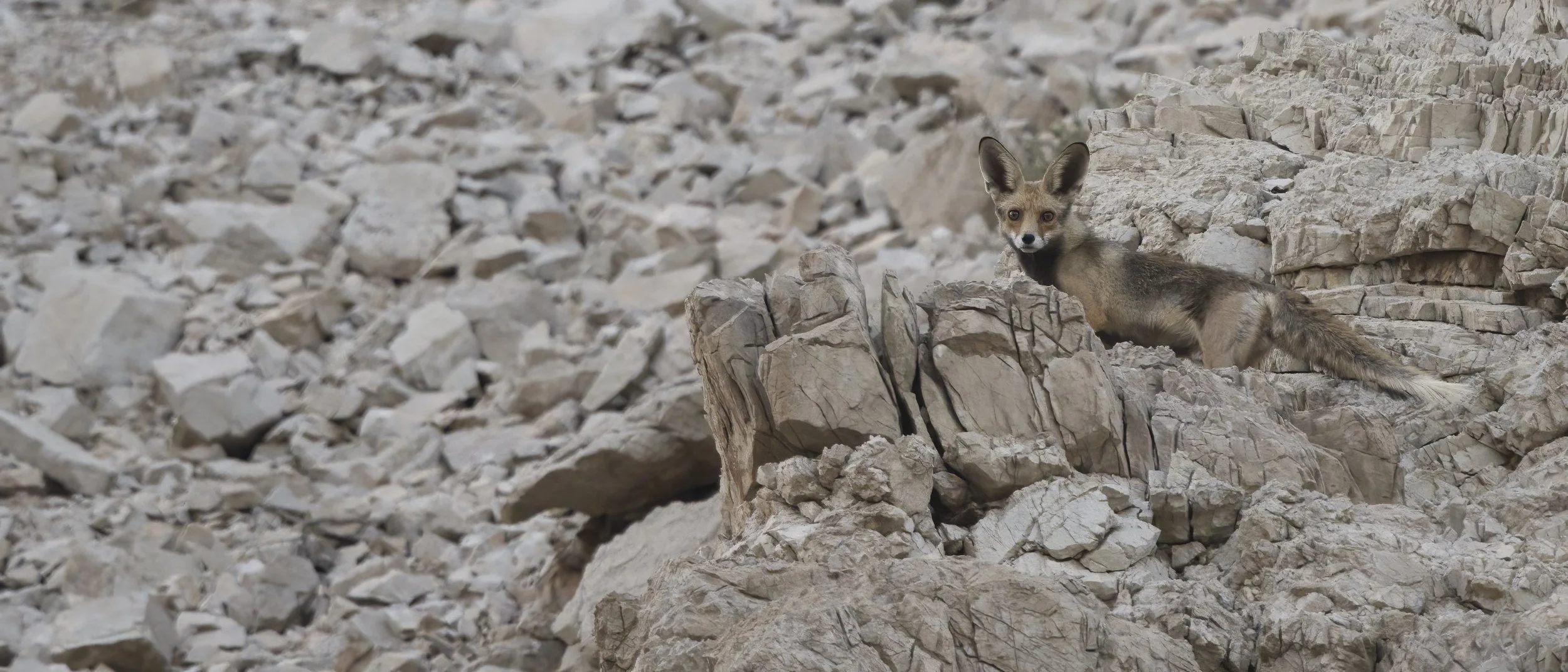
The Arabian Red Fox (Vulpes vulpes arabica) inhabits a variety of environments across the Arabian Peninsula, including deserts, semi-deserts, and areas with sparse vegetation. It can also be found near urban areas, farmlands, and mountainous regions, showing a remarkable ability to adapt to different habitats. The fox seeks shelter in burrows, caves, or under rock formations to escape the harsh desert sun during the day.
The mating season for the Arabian Red Fox typically occurs in winter, around December and January. After a gestation period of about 50-55 days, the female gives birth to a litter of 2-5 kits, usually in the spring. The pups are born blind and remain in the safety of the den for the first few weeks, relying on their parents for food and protection. Both parents play an active role in raising the young until they are independent.
The Arabian Red Fox is an opportunistic omnivore with a diverse diet. It primarily feeds on small mammals, birds, reptiles, and insects. In addition, it scavenges for food in urban areas and eats fruits, berries, and seeds when available. This adaptability in diet allows the fox to survive in resource-scarce environments.
This subspecies is slightly smaller than its European cousins, with an average body length of 40 to 60 cm (16 to 24 inches) and a tail length of 25 to 40 cm (10 to 16 inches). It weighs between 2.5 to 4.5 kg (5.5 to 9.9 pounds), depending on the individual and its environment.