

Asian Houbara \ Chlamydotis macqueenii
(حبارى شرقية ، الحبارى الآسيوية ، حبارى ماكويني)
Vulnerable **
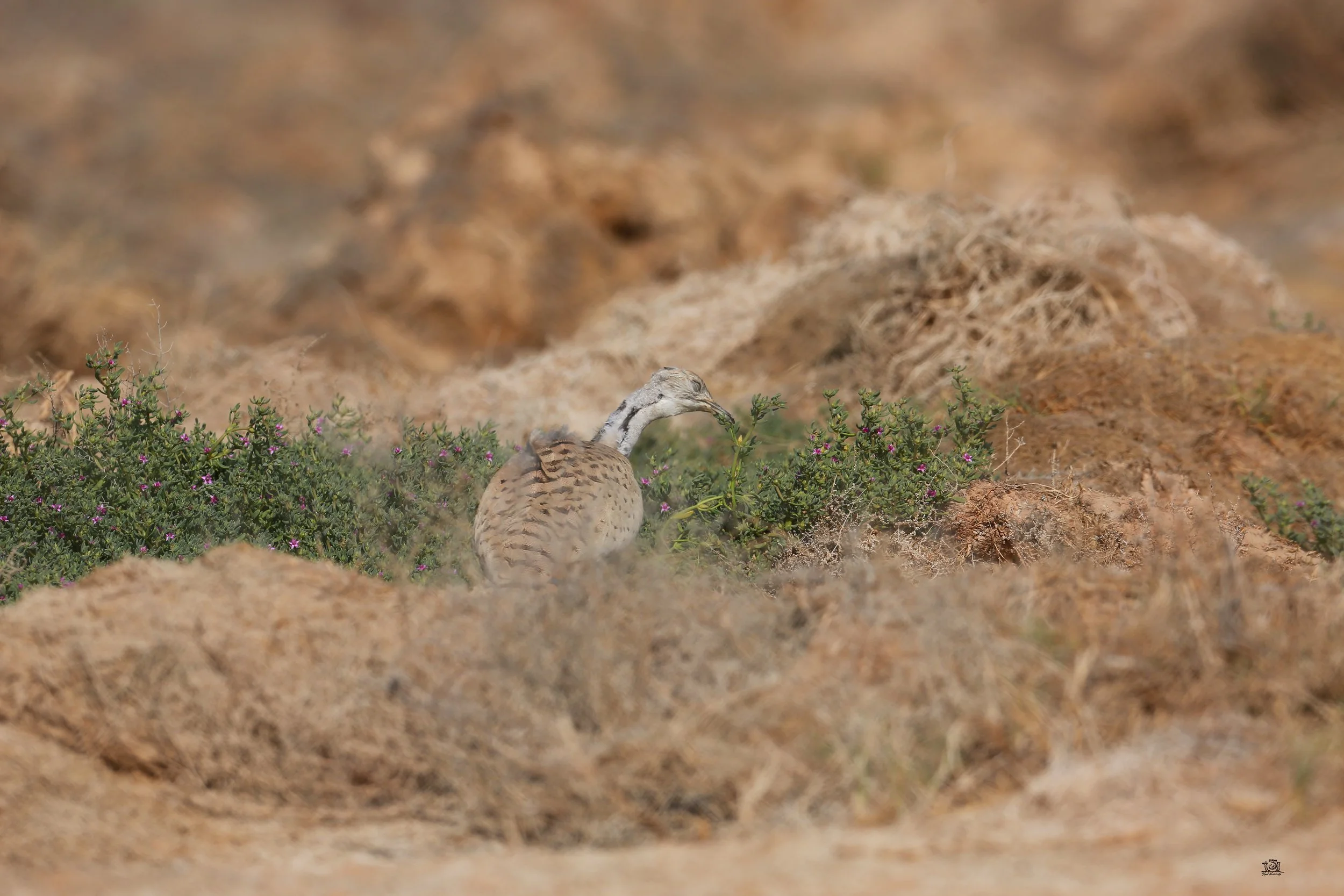
Photo Credit: Paul Kinnock - Semi-wild Houbara
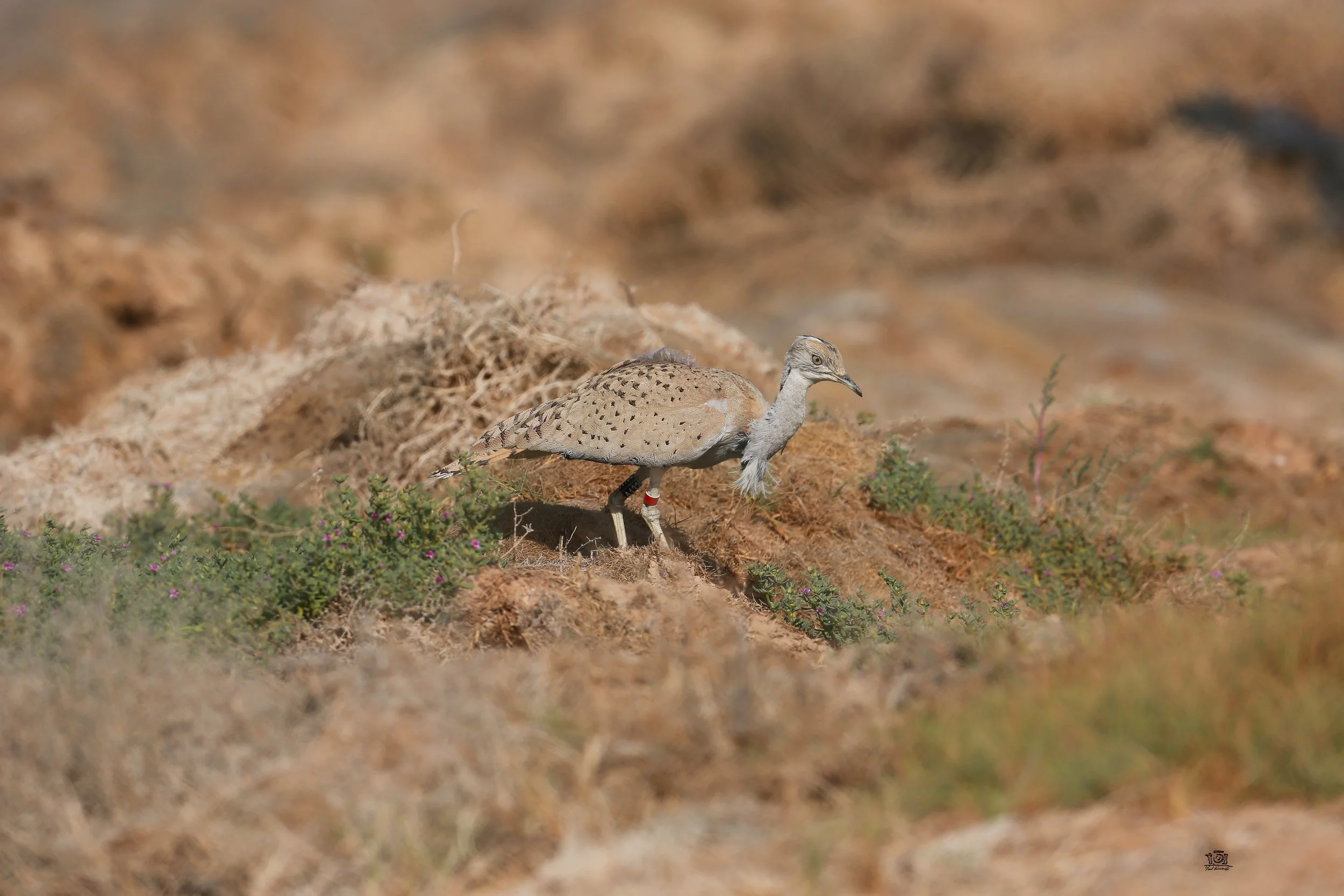
Photo Credit: Paul Kinnock - Semi-wild Houbara
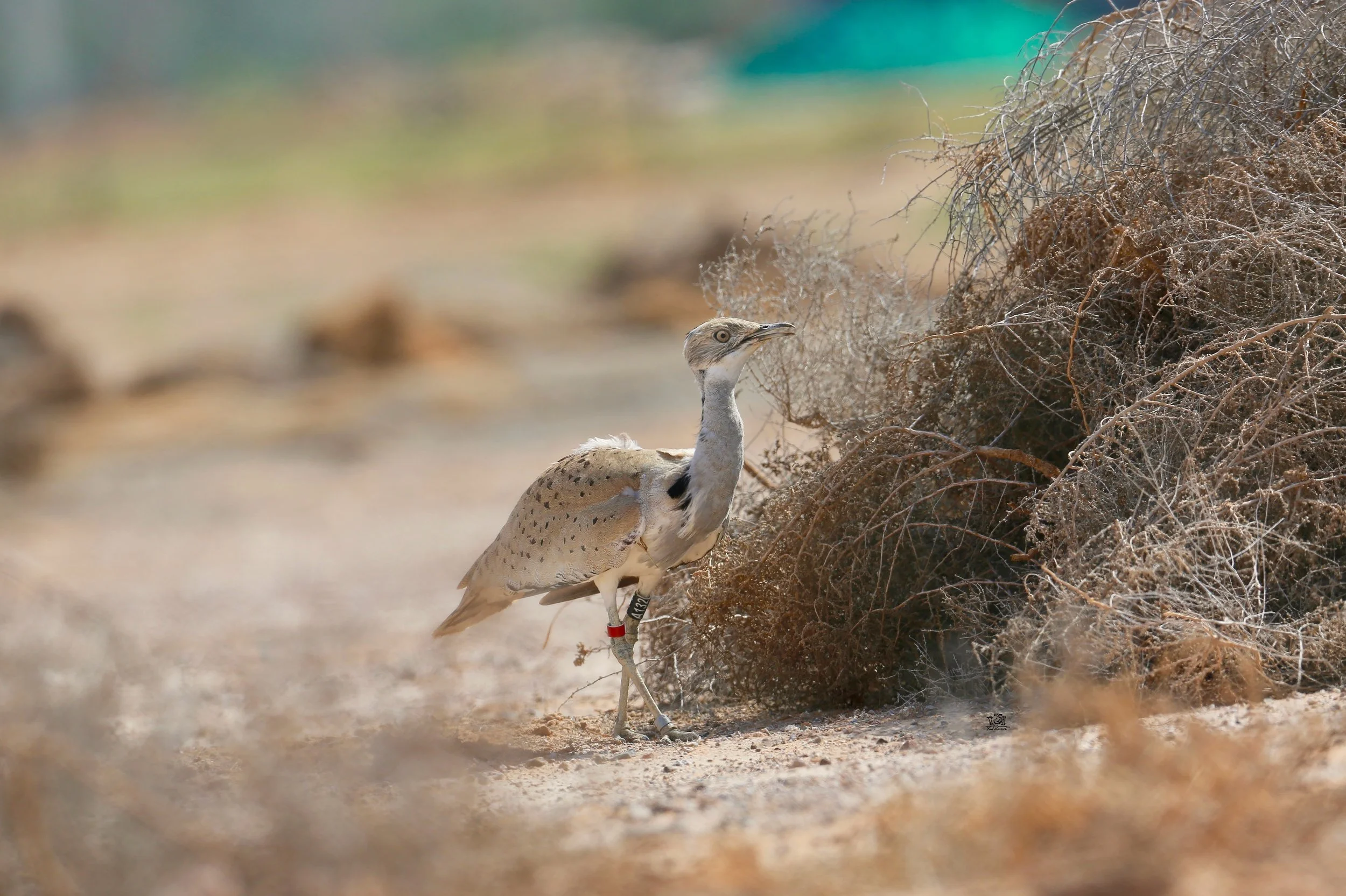
Photo Credit: Paul Kinnock - Semi-wild Houbara
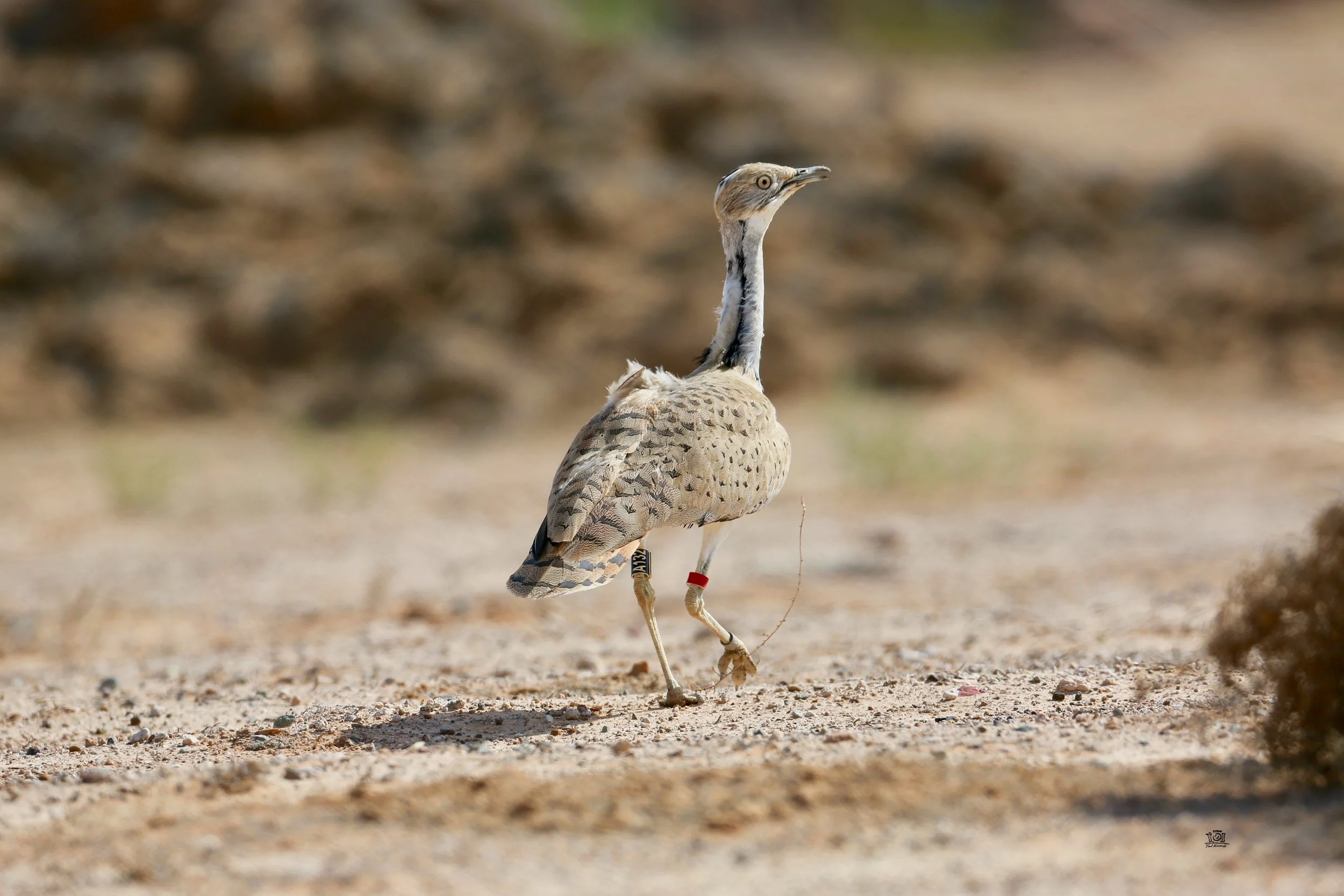
Photo Credit: Paul Kinnock - Semi-wild Houbara
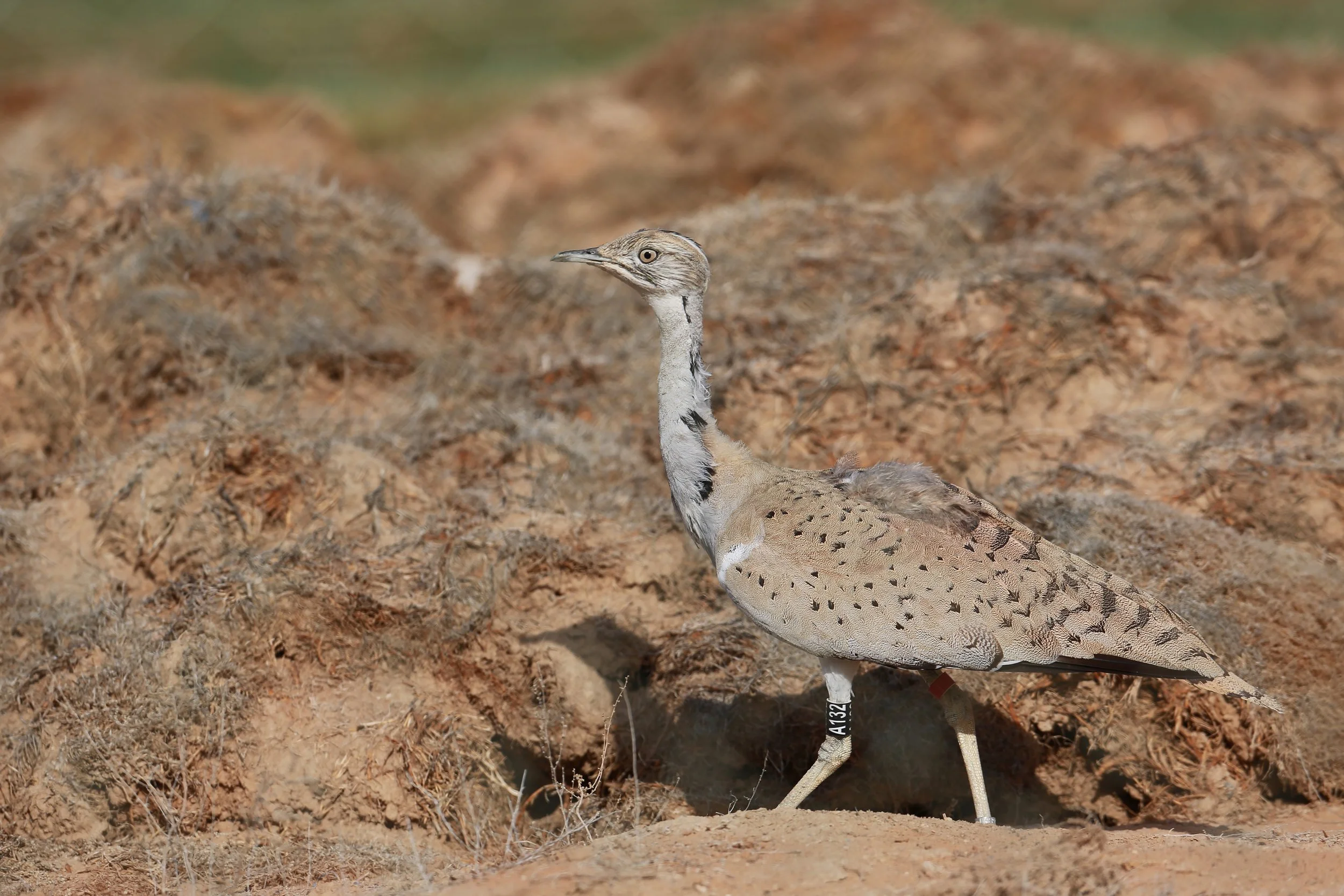
Photo Credit: Paul Kinnock - Semi-wild Houbara
The Asian Houbara (Chlamydotis macqueenii) or MacQueen’s Bustards breeding in Central Asia, Kazakhstan, Mongolia, and parts of western China migrate south during the winter months. During this migration, some individuals reach the Arabian Peninsula, including the United Arab Emirates. In the UAE they are typically recorded between late autumn and early spring, using desert habitats as wintering grounds before returning north to their breeding areas.
Breeding occurs mainly in Central Asian steppes and desert plains. Males perform elaborate courtship displays in open areas, raising their distinctive white neck feathers and walking in a stiff, ritualized posture to attract females. The female nests on the ground, usually laying two to four eggs in a shallow scrape hidden among low vegetation.
Historically, The Asian Houbara (Chlamydotis macqueenii) / MacQueen’s Bustard occurred more widely across the Arabian Peninsula, including the territory that is now the United Arab Emirates. Older records and regional accounts indicate that the species was once more regularly present in Arabian desert landscapes. Over time, heavy hunting pressure and habitat changes led to a significant decline across the region. As a result, the species is now mainly recorded in the UAE as a winter visitor, and breeding within the country is considered extremely rare or no longer confirmed.
The Asian Houbara (Chlamydotis macqueenii) or The MacQueen's Bustard is a large desert-adapted bustard native to arid regions of Central Asia and the Middle East. It is closely associated with open desert landscapes and is well known for its cryptic plumage that blends perfectly with sandy and gravel plains. MacQueen’s Bustard is a cautious ground-dwelling bird that relies heavily on camouflage and stillness to avoid predators.
This species prefers open desert and semi-desert environments, including sandy deserts, gravel plains, and sparsely vegetated steppe. It favors landscapes with low shrubs and scattered vegetation that provide feeding opportunities and concealment while still allowing wide visibility of the surroundings.
Related Species
-
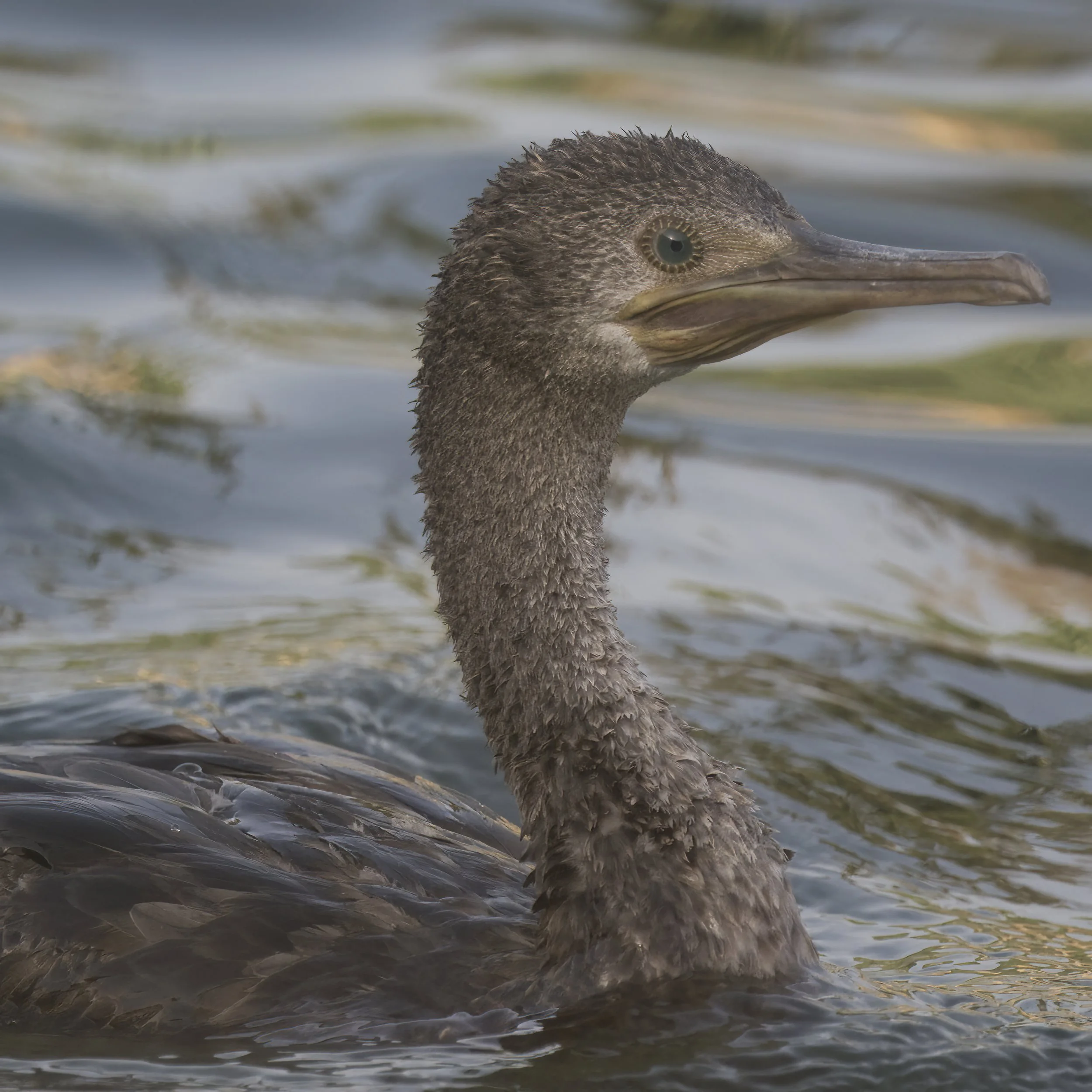
Socotra Cormorant (Phalacrocorax nigrogularis)
-
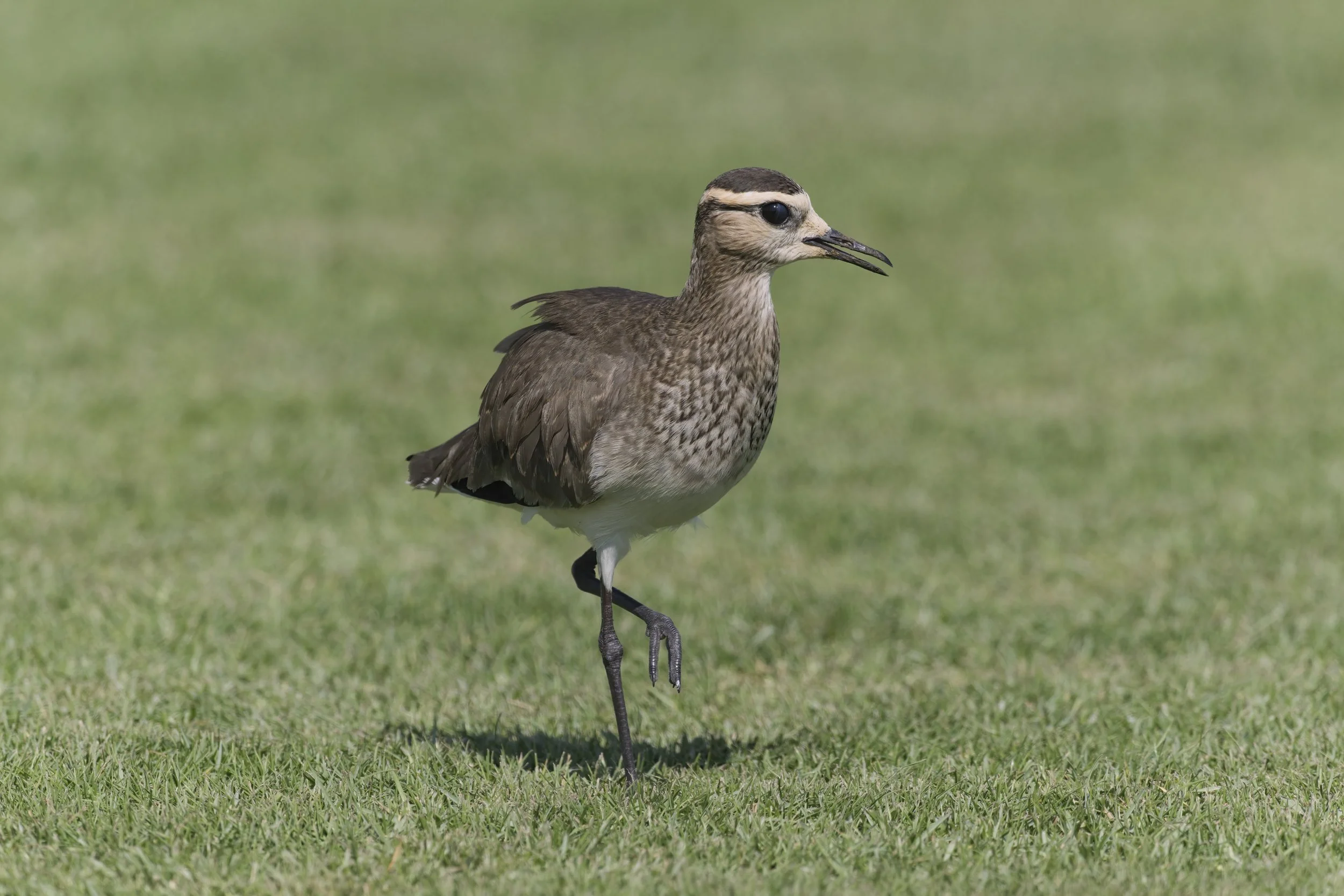
Sociable Lapwing (Vanellus gregarius)
-
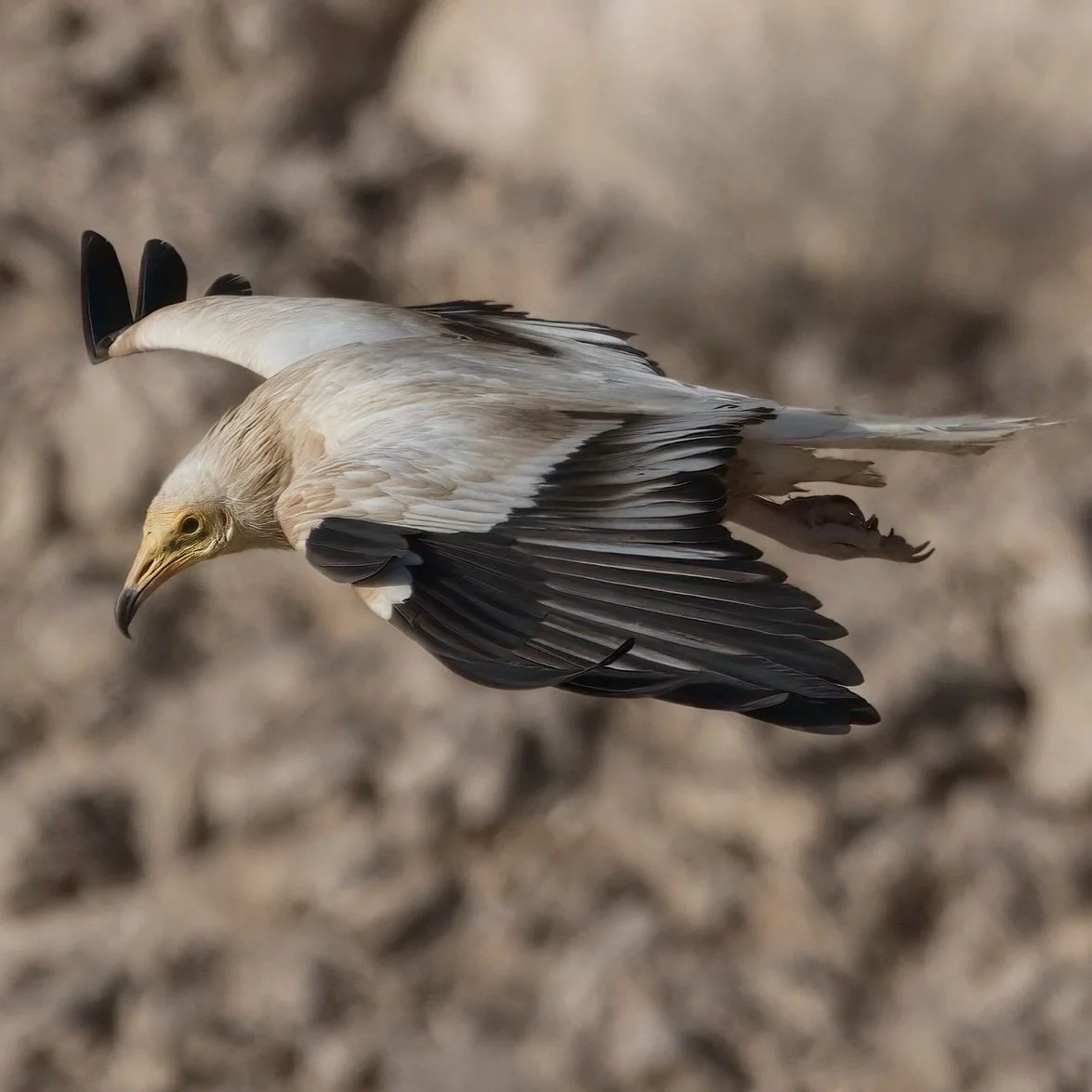
Egyptian Vulture (Neophron percnopterus)
-
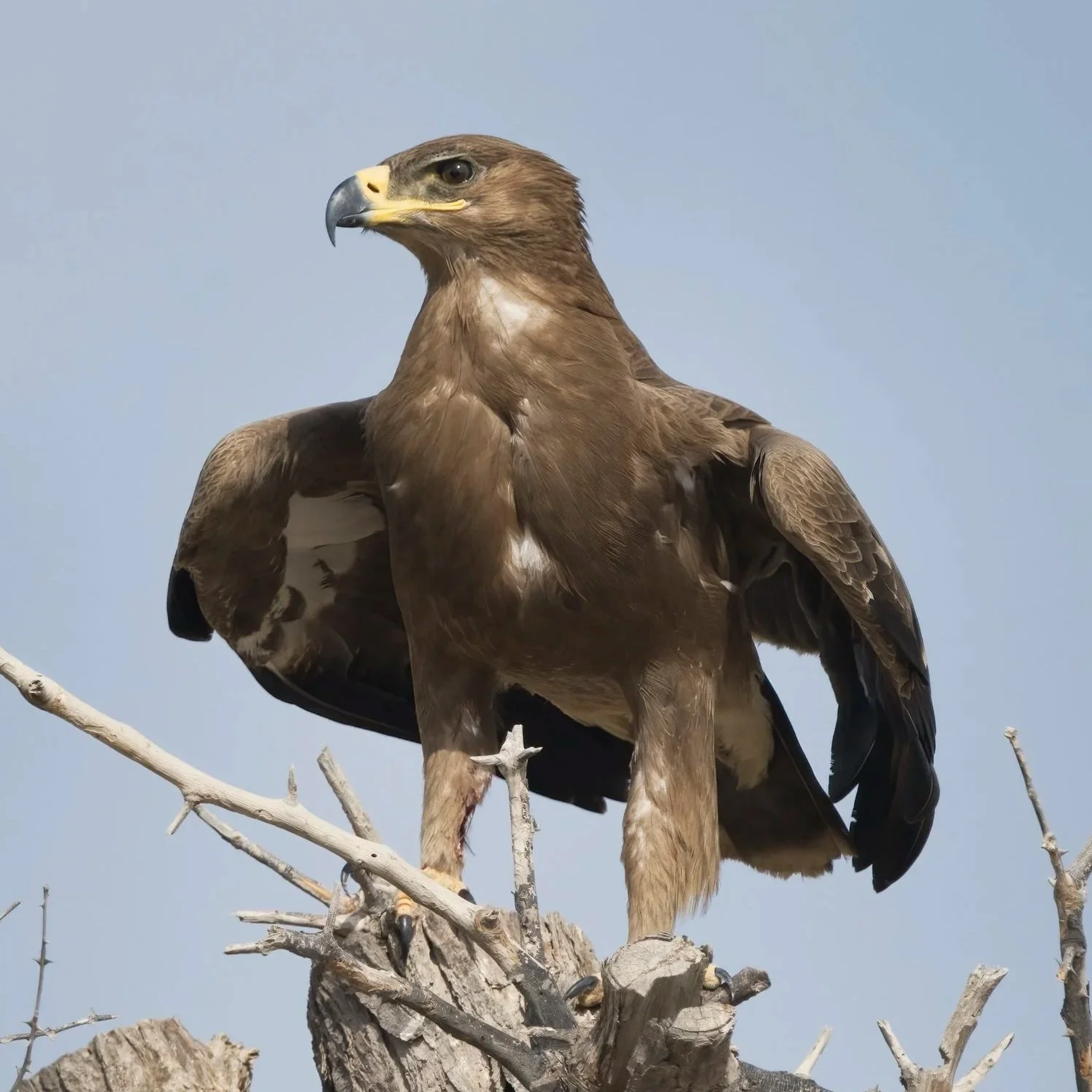
Steppe Eagle (Aquila nipalensis)
| NOT EVALUATED | DATA DEFICIENT | LEAST CONCERN | NEAR THREATENED | VULNERABLE** | ENDANGERED | CRITICALLY ENDANGERED | EXTINCT IN THE WILD | EXTINCT |
|---|---|---|---|---|---|---|---|---|
| NE | DD | LC | NT | VU | EN | CR | EW | EX |