

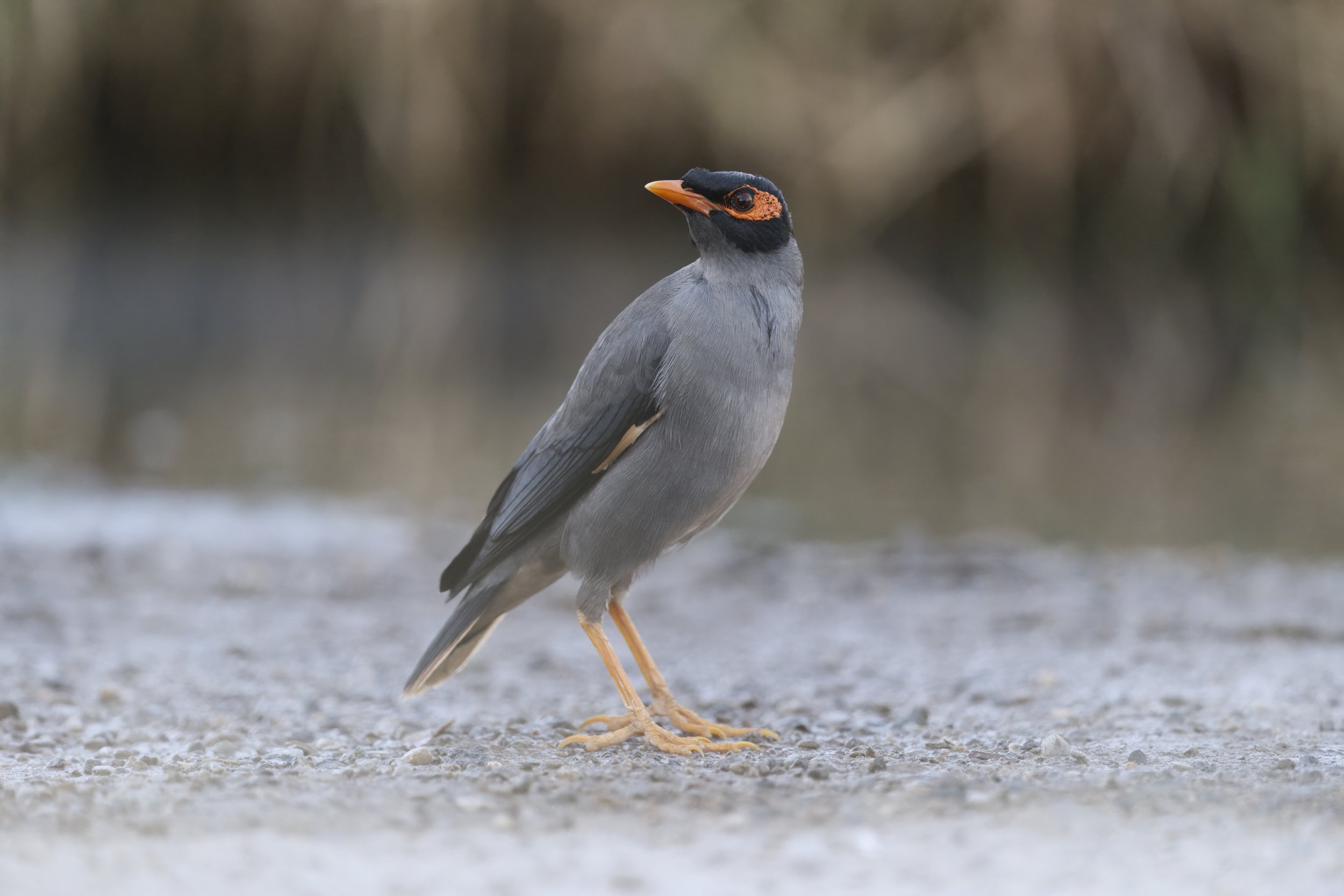
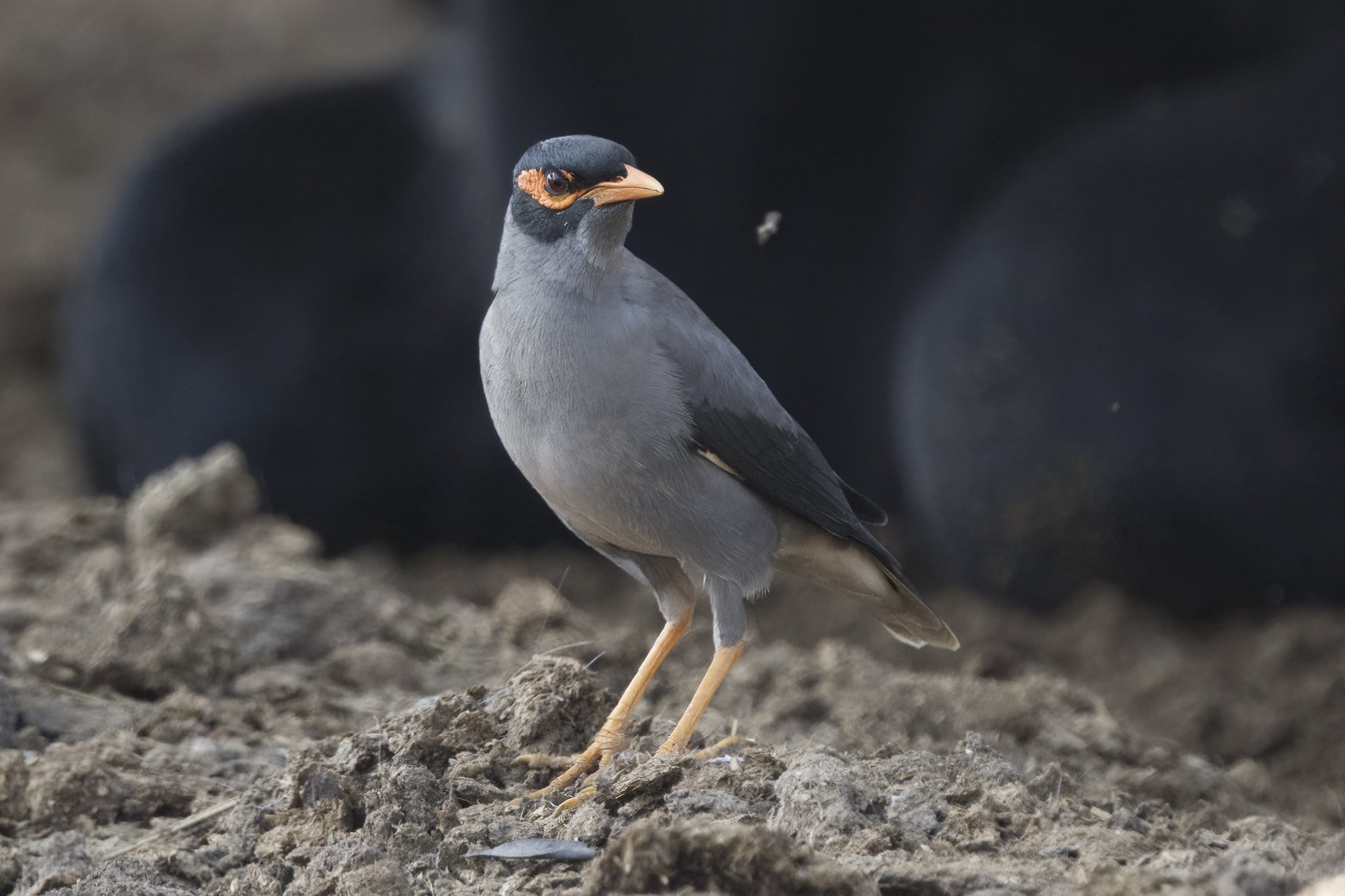
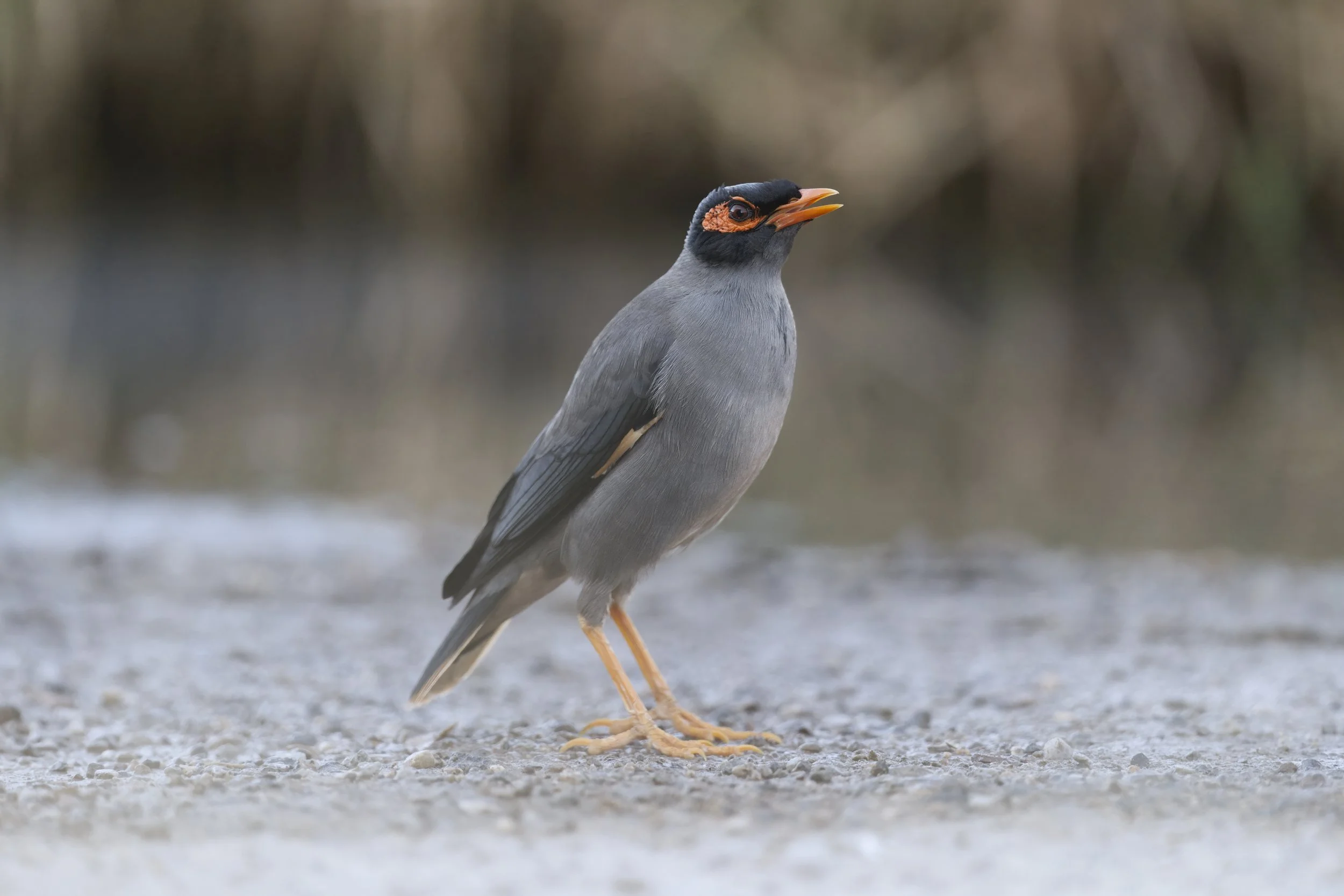
Bank Myna \ Acridotheres ginginianus
(ماينا الأنهار)
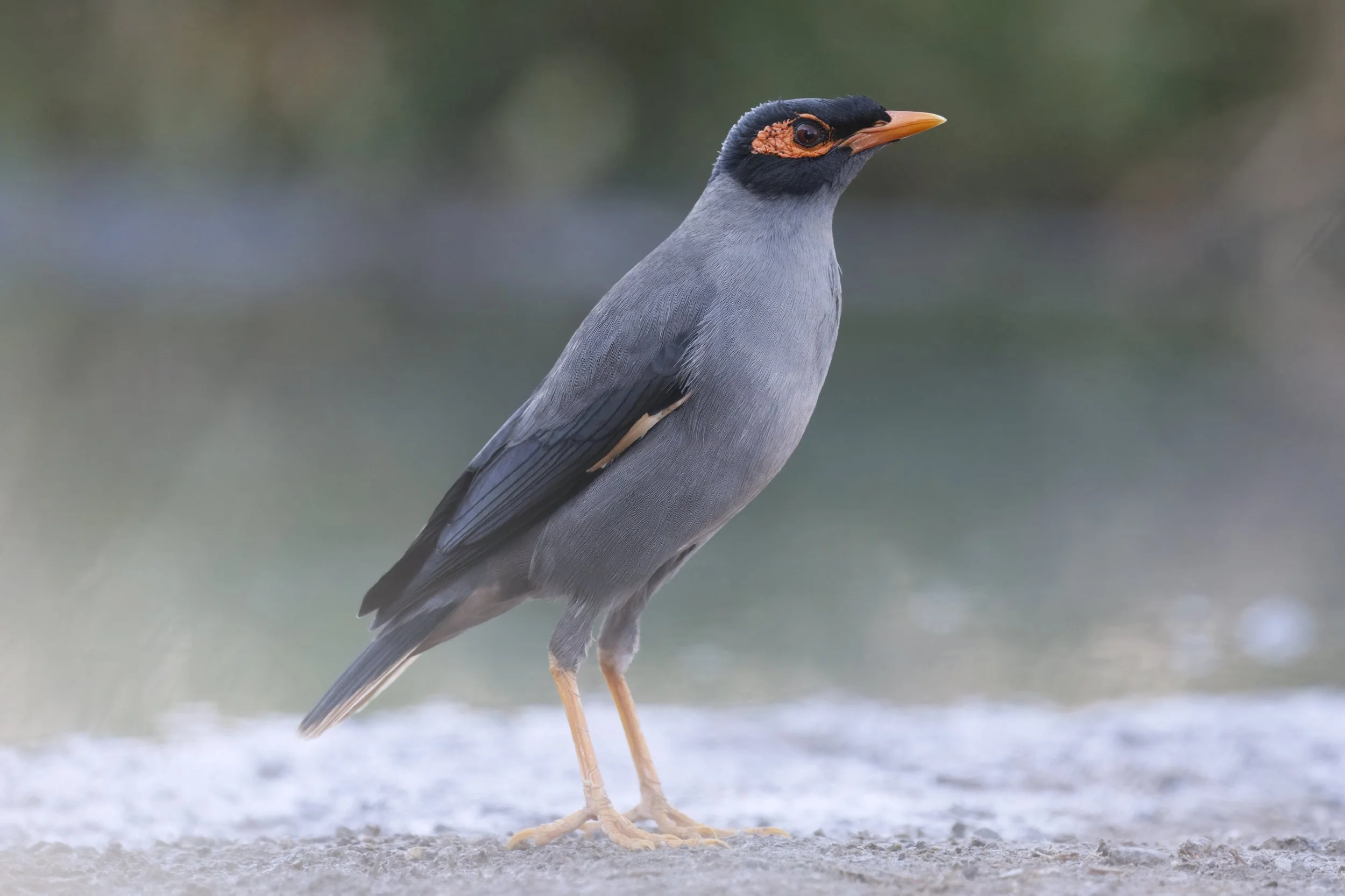
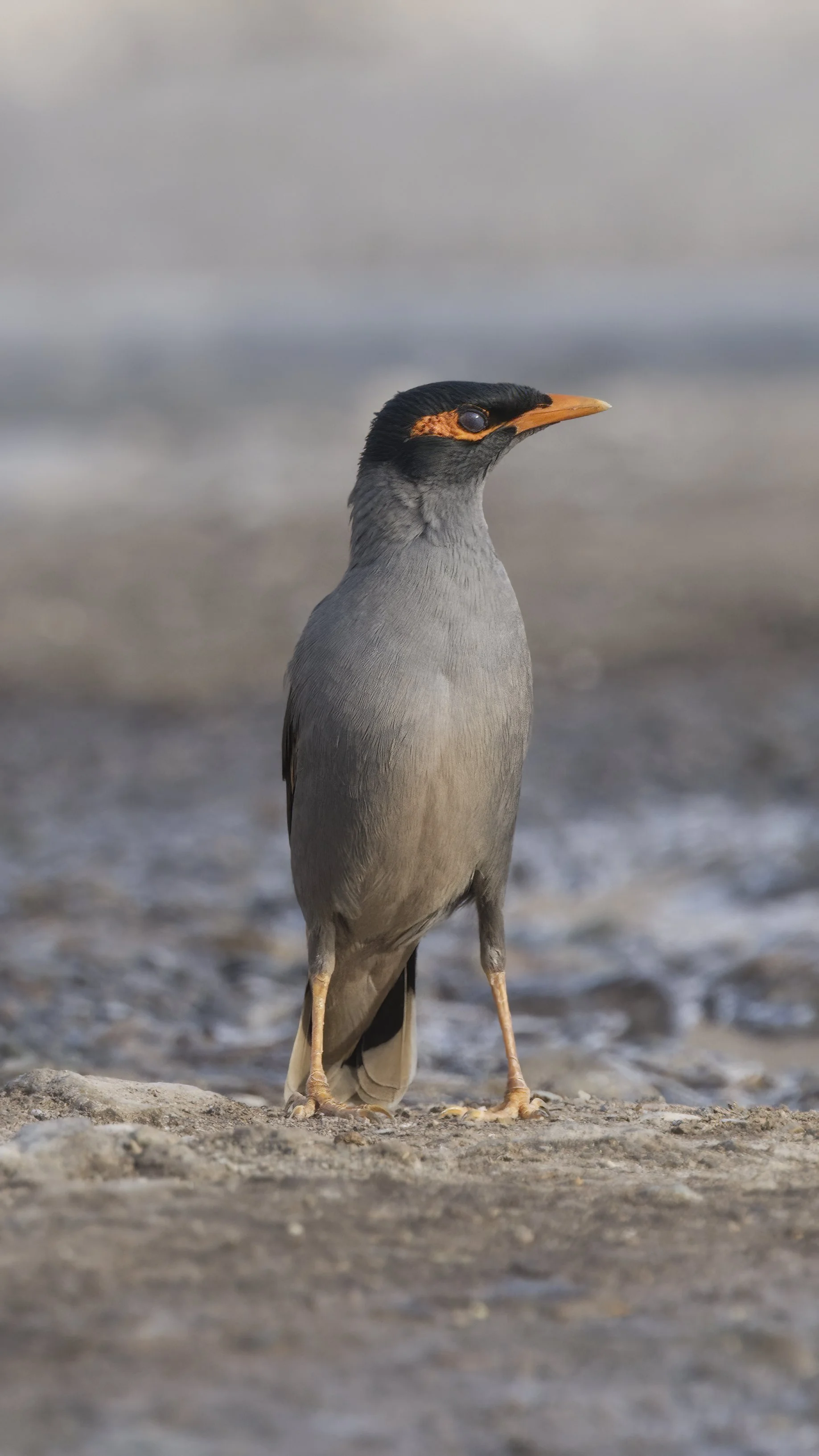
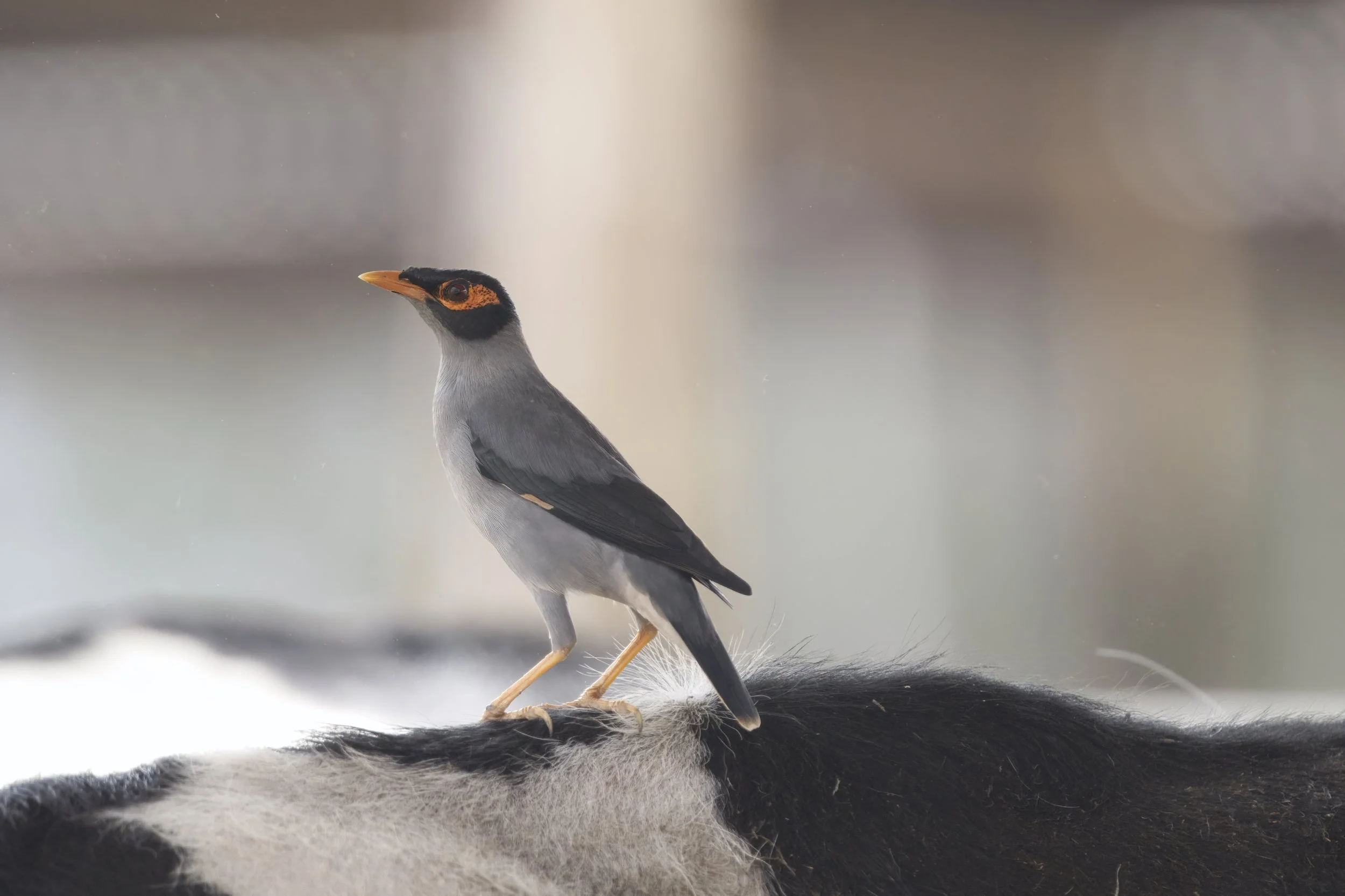
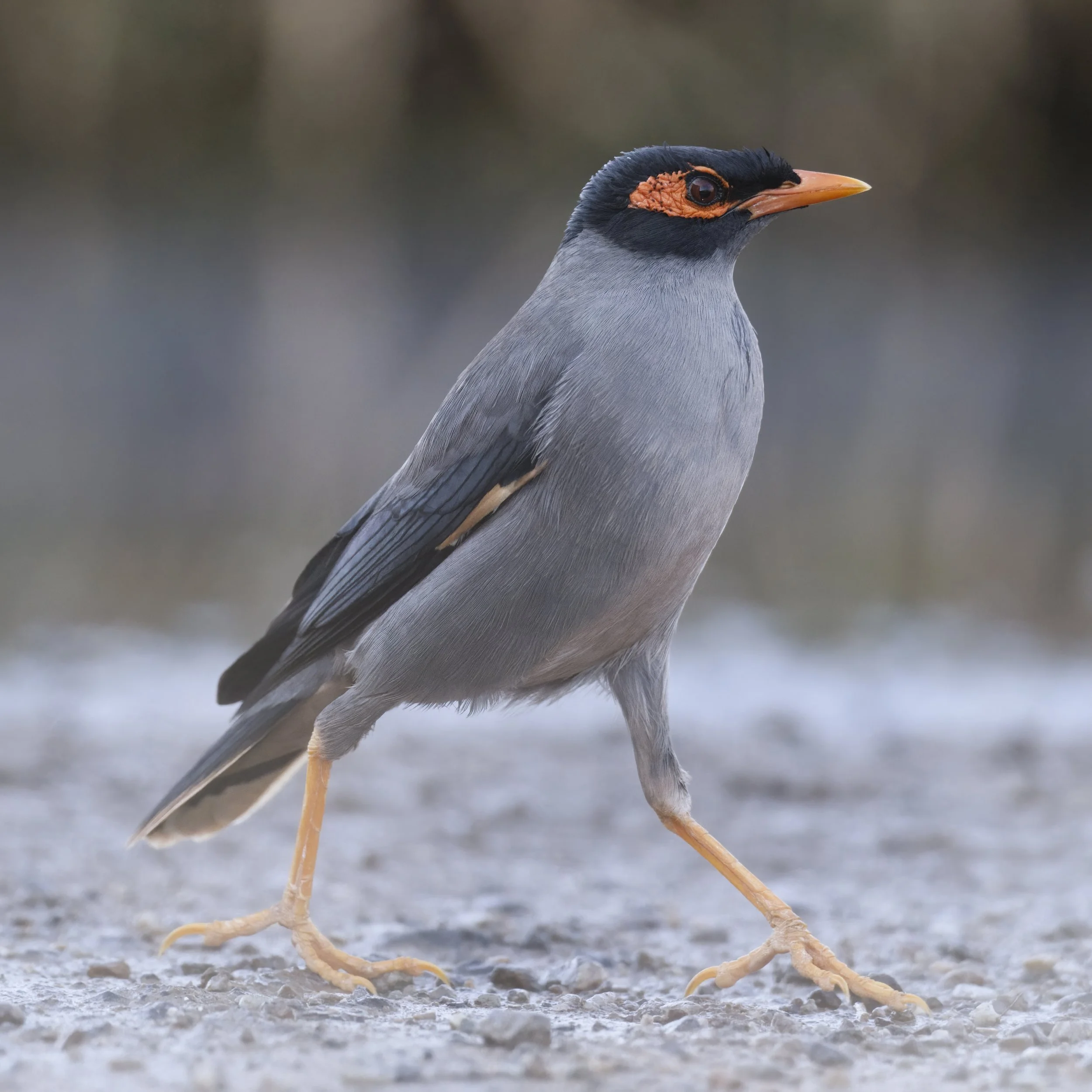
Bank Mynas (Acridotheres ginginianus) are known for their unique foraging behavior, often seen picking food directly from cattle’s legs. They take advantage of insects, ticks, and parasites that get disturbed as cows move through fields. This symbiotic relationship benefits both the bird—by providing an easy meal—and the cattle—by helping remove pests. This behavior is similar to that of cattle egrets, showcasing the adaptive and opportunistic nature of the Bank Myna in its search for food.
The Bank Myna (Acridotheres ginginianus) is considered invasive in some regions due to its high adaptability, rapid reproduction, and competitive behavior. Originally native to South Asia, it has expanded its range, often thriving in urban areas, agricultural lands, and near water bodies.
Why It’s Considered Invasive:
Aggressive Competition – It competes with native bird species for nesting sites and food resources, sometimes outcompeting them.
Rapid Breeding – It reproduces quickly, allowing populations to grow and spread fast.
Human-Associated Spread – It adapts well to human-altered environments, including cities, farmland, and livestock areas.
Potential Crop Damage – Large flocks can feed on grains and fruits, sometimes affecting agriculture.
Disease Transmission – Like other urban-dwelling birds, it may contribute to the spread of avian diseases.
Although not as notorious as the Common Myna (Acridotheres tristis), the Bank Myna's expanding range raises concerns about its impact on native ecosystems, particularly in areas where it has been introduced.
تُعرف طيور ماينا الانهار بسلوكها المميز في البحث عن الغذاء، حيث تُشاهد غالبًا وهي تلتقط الطعام مباشرة من أرجل الأبقار. تستفيد من الحشرات والقراد والطفيليات التي تنكشف أثناء حركة الأبقار في الحقول. وتُعد هذه العلاقة تكافلية، إذ يستفيد الطائر من وجبة سهلة، بينما تستفيد الأبقار من التخلص من الآفات. يشبه هذا السلوك ما تقوم به طيور البلشون البقري، مما يعكس الطبيعة التكيفية والانتهازية لهذا النوع في البحث عن الغذاء.
تُعتبر المينا ضفّاف نوعًا دخيلًا في بعض المناطق بسبب قدرتها العالية على التكيف، وسرعة تكاثرها، وسلوكها التنافسي. موطنها الأصلي جنوب آسيا، لكنها وسّعت نطاق انتشارها، وغالبًا ما تزدهر في المناطق الحضرية، والأراضي الزراعية، وبالقرب من المسطحات المائية.
:لماذا تُعتبر نوعًا دخيلًا
منافسة عدوانية: تنافس الطيور المحلية على مواقع التعشيش ومصادر الغذاء، وقد تتفوق عليها في ذلك.
تكاثر سريع: تتكاثر بسرعة، مما يسمح بزيادة أعدادها وانتشارها بشكل كبير.
الانتشار المرتبط بالإنسان: تتكيف بسهولة مع البيئات التي غيّرها الإنسان مثل المدن، والمزارع، ومناطق تربية المواشي.
تأثير على المحاصيل: يمكن للأسراب الكبيرة أن تتغذى على الحبوب والفواكه، مما قد يؤثر على الزراعة.
نقل الأمراض: كغيرها من الطيور التي تعيش قرب الإنسان، قد تساهم في نقل بعض أمراض الطيور.
ورغم أنها ليست بنفس شهرة المينا الشائعة من حيث التأثير، فإن توسع نطاق انتشار المينا ضفّاف يثير القلق بشأن تأثيرها على النظم البيئية المحلية، خاصة في المناطق التي تم إدخالها إليها

Other Species
-
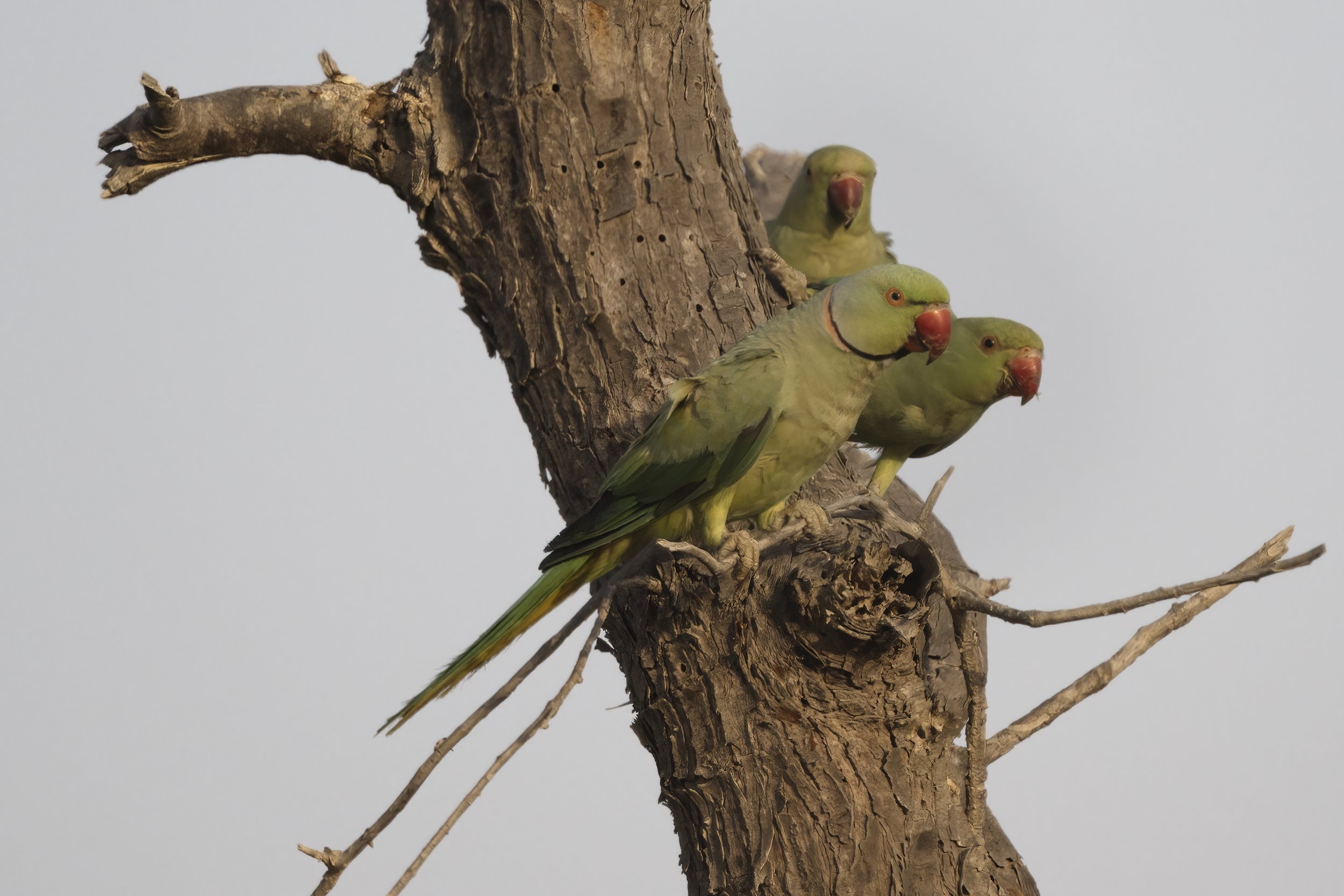
Rose-ringed Parakeet (Alexandrinus krameri)
-
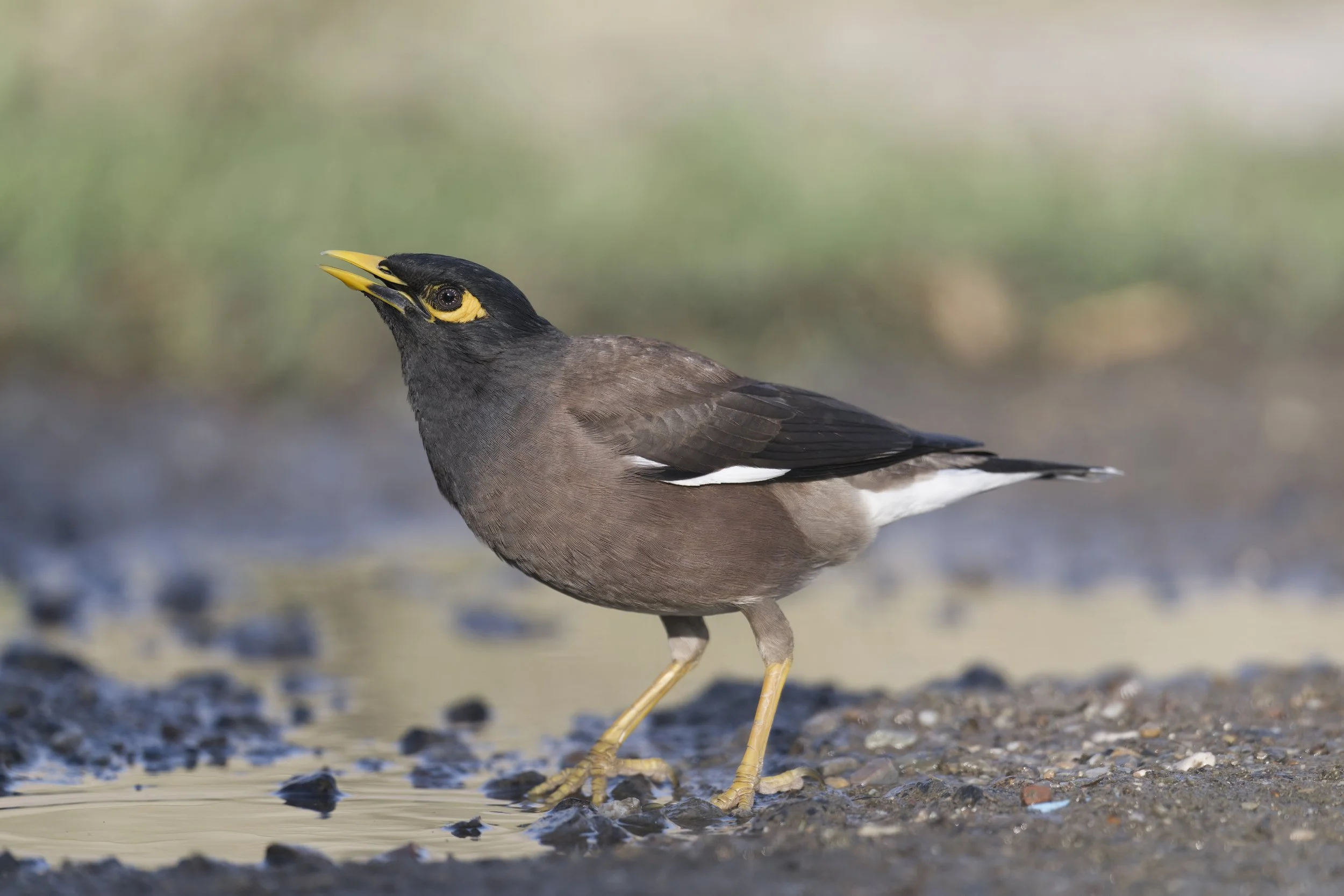
Common Myna (Acridotheres tristis)
-
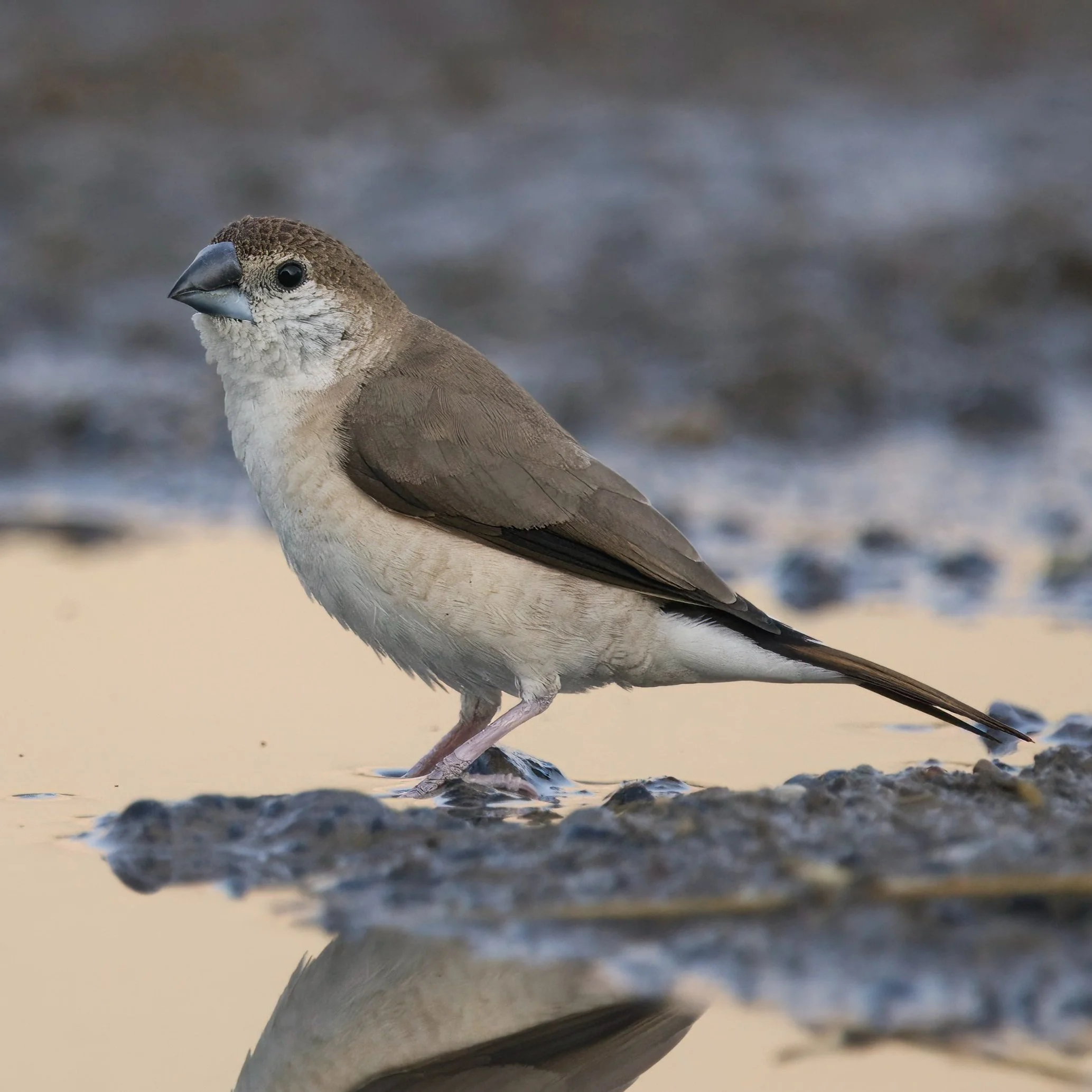
Indian Silverbill (Euodice malabarica)
-
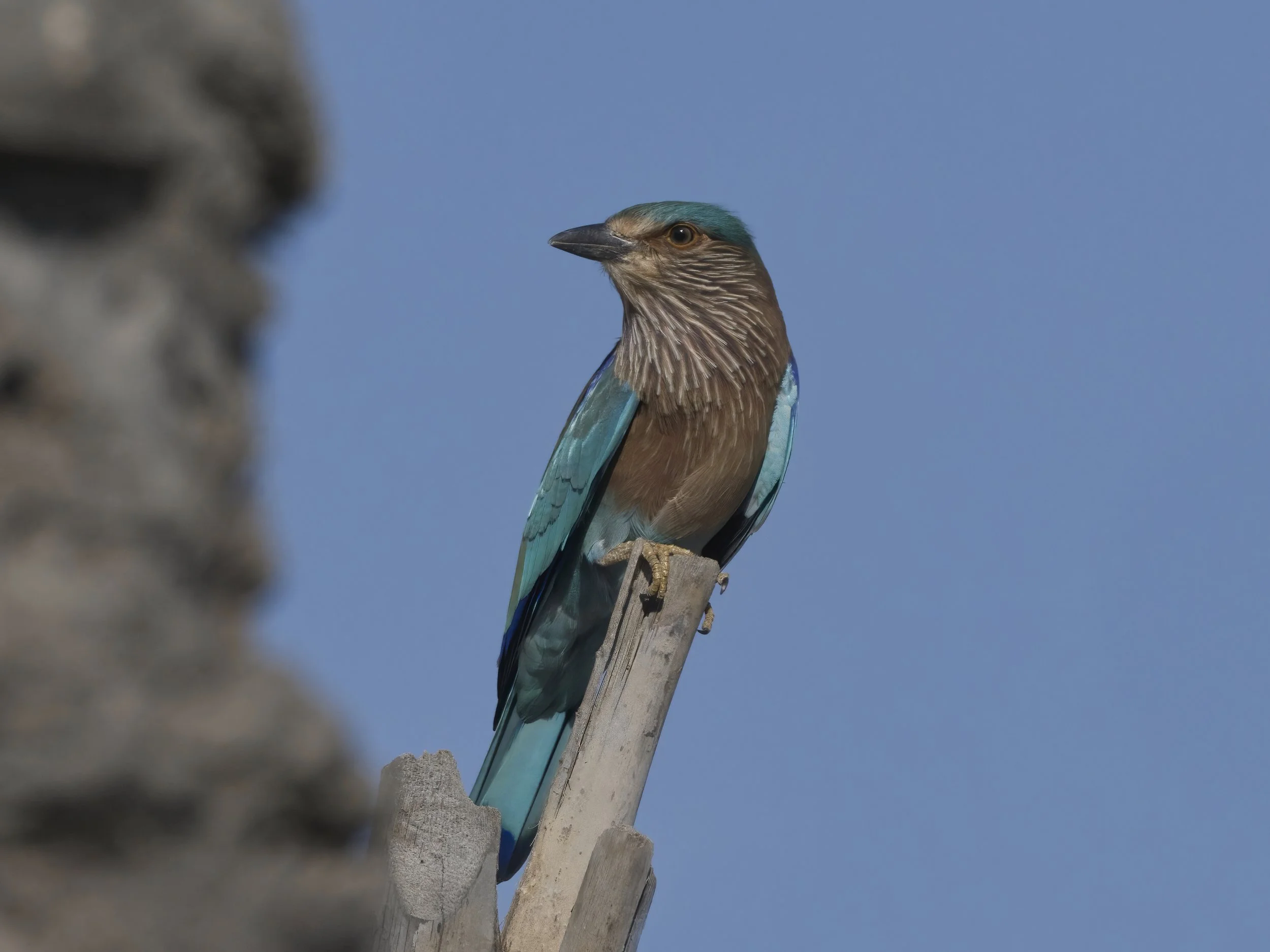
Indian Roller (Coracias benghalensis)