

Lichtenstein’s Sandgrouse – A Rare Glimpse into UAE Desert Life
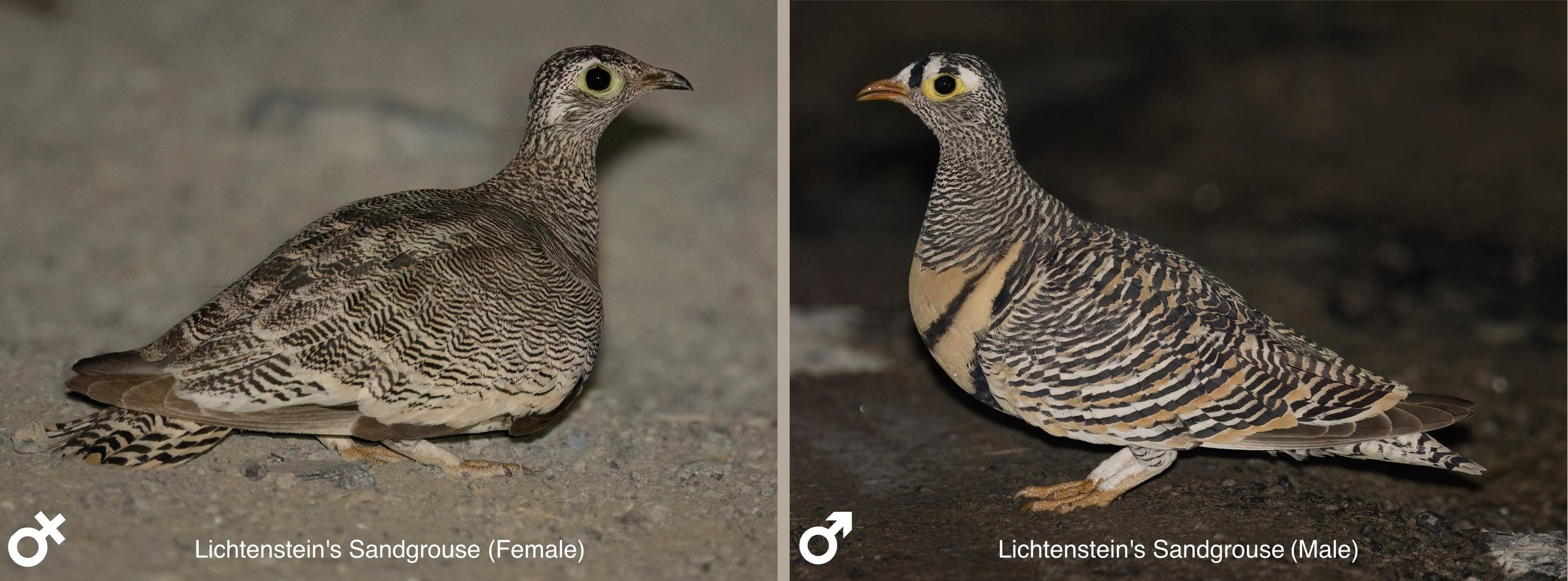
In the UAE’s arid landscapes, Lichtenstein’s Sandgrouse are typically seen in tight-knit groups, often quite large. The largest gathering I’ve personally observed consisted of around 80 individuals, possibly more — spotted during an evening drinking session shortly after sunset.
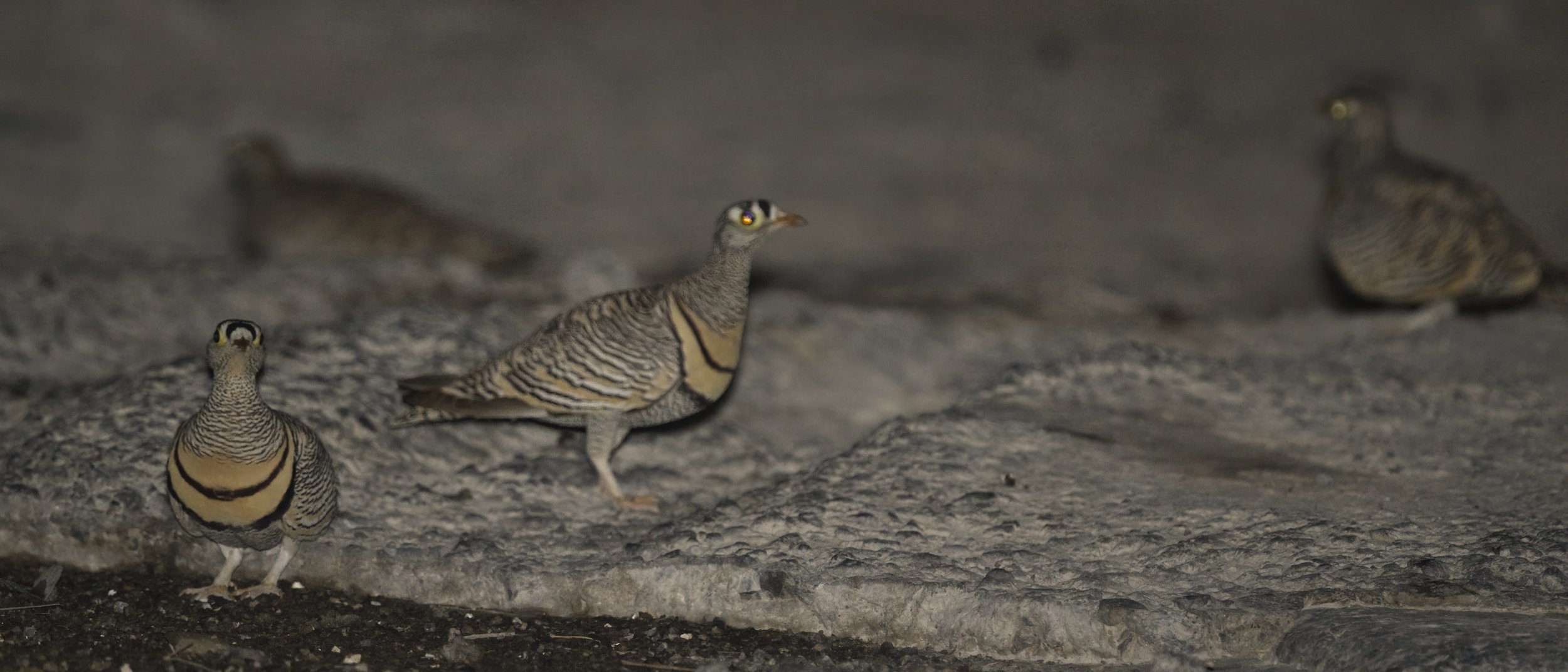
As darkness begins to settle — when it's dim enough to lose color detail but still visible without artificial light — the sandgrouse start to approach water sources. The process is cautious and highly organized:

A small group arrives first, flying in wide circles above the water to scan for potential threats.
After several passes, they land nearby and remain alert, monitoring the area.
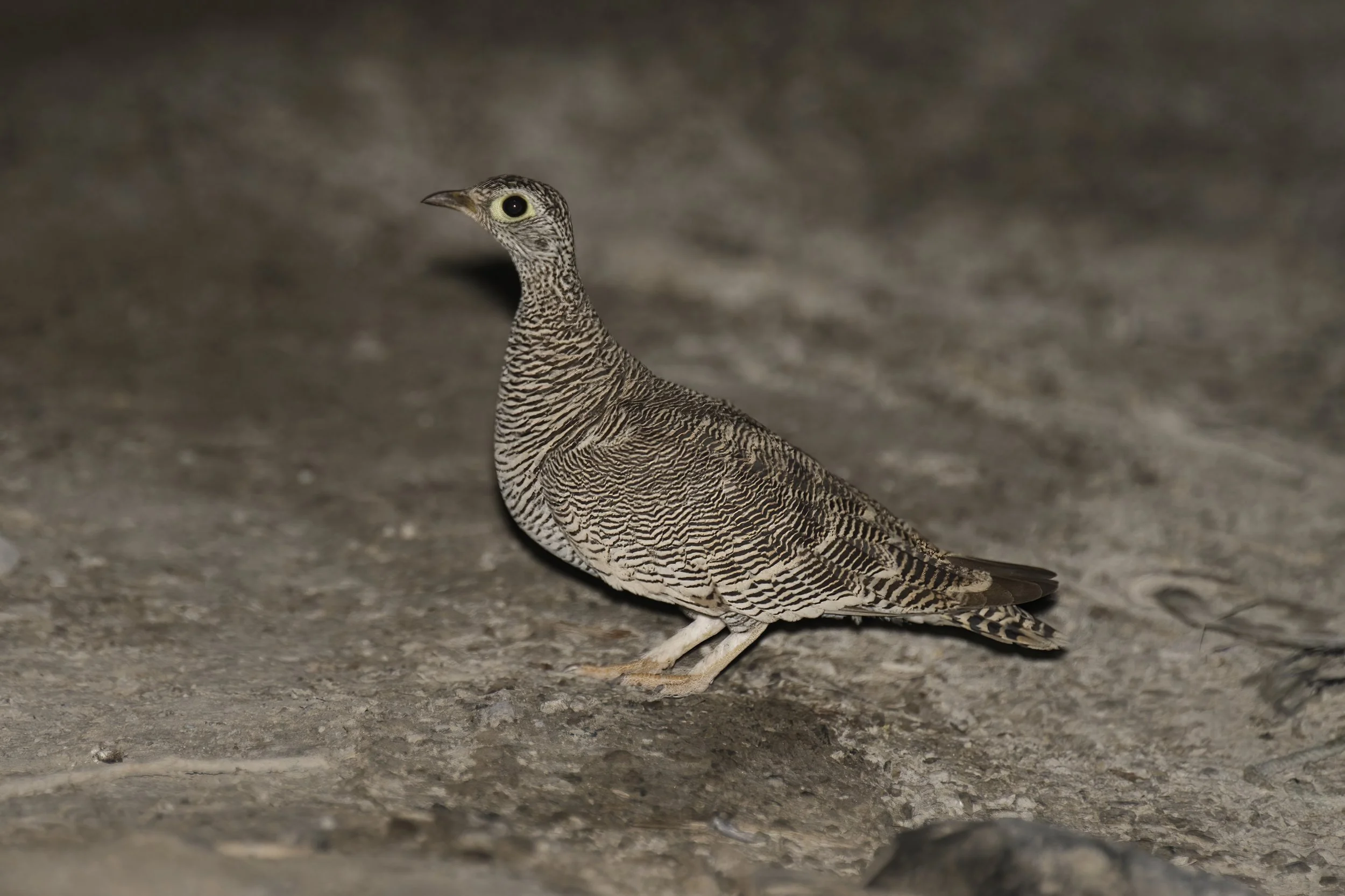
3. Once it’s deemed safe, the rest of the flock arrives in waves of 5–10 birds.
4. While some begin to drink, others stay back to keep watch, ensuring the safety of the group.
One of the most remarkable behaviors is how adult sandgrouse — especially females — collect and carry water back to their chicks. The feathers on their bellies are specially adapted to absorb and hold water, allowing them to fly long distances back to the nesting grounds. The chicks, unable to fly or reach water sources themselves, rely entirely on this method of hydration. It’s an extraordinary example of desert adaptation and parental care.

This entire routine happens during a narrow window of time — after sunset but before predators like foxes arrive to drink, usually around 8:00 PM. The sandgrouse must drink quickly and return to safety before the risk of predation increases.
These desert birds display a combination of vigilance, coordination, and dedication that’s both humbling and inspiring. Observing them in such moments offers deep insight into how wildlife survives — and thrives — in one of the world’s harshest environments.