

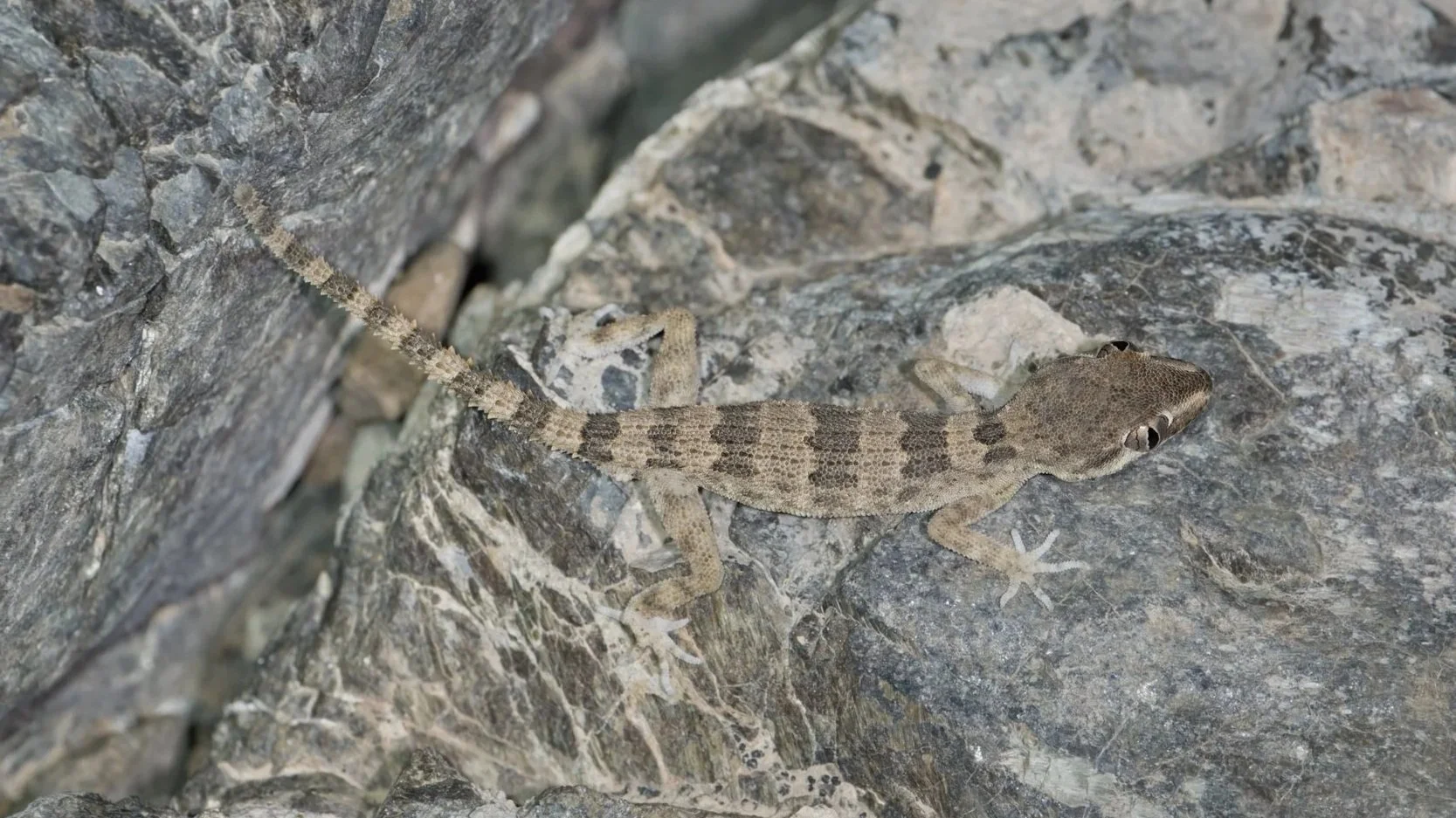
Hajar Banded Ground Gecko
The Hajar Banded Ground Gecko, Trachydactylus hajarensis, is a small ground-dwelling gecko from the Hajar region, recorded from the United Arab Emirates and northern Oman. It has a compact body, strong desert-rock coloration, and a banded pattern that helps it blend into gravel, stones, and wadi ground. The Reptile Database notes that it differs from the related Trachydactylus spatalurus by its smaller size, reaching up to about 50 mm snout–vent length, and by its strongly keeled dorsal scales.
وزغة الحجر الأرضية المخططة هي وزغة صغيرة أرضية المعيشة من منطقة جبال الحجر، سُجّلت في دولة الإمارات العربية المتحدة وشمال سلطنة عُمان. تتميز بجسم مدمج، ولون قوي ملائم للبيئات الصحراوية الصخرية، ونمط مخطط يساعدها على الاندماج مع الحصى، والحجارة، وأرضيات الأودية. وتشير قاعدة بيانات الزواحف إلى أنها تختلف عن الانواع الاخرى بحجمها الأصغر، إذ يصل طولها من الخطم إلى فتحة المخرج إلى نحو 50 ملم، وبحراشفها الظهرية شديدة التخدد
Habitat and behavior
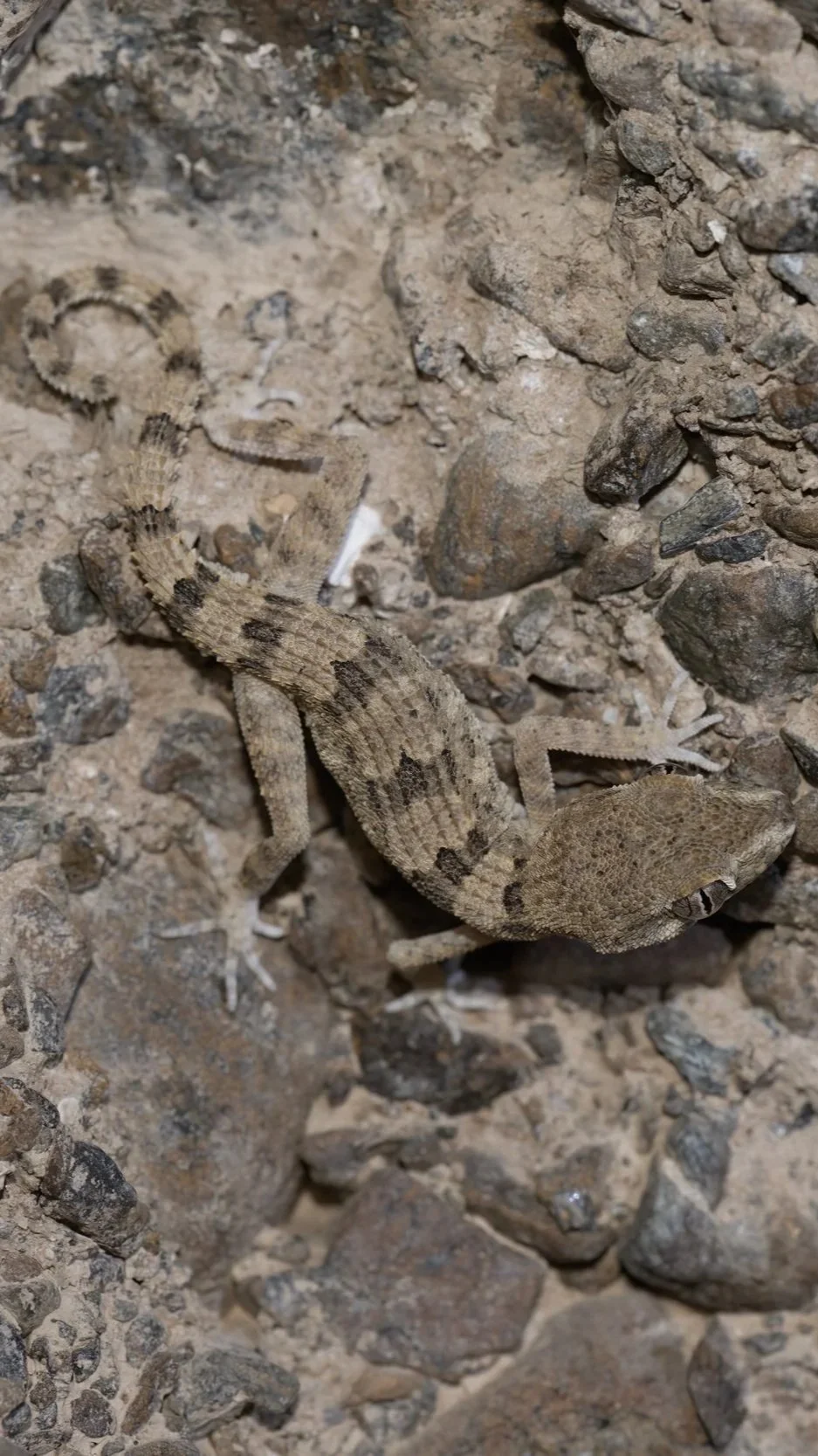
In the UAE, this gecko is best treated as a Hajar Mountain and rocky-wadi species rather than an open sand specialist. Its type locality is Wadi Ham near Masafi in the Hajar Mountains, which makes it especially relevant for UAE mountain herping and reptile documentation. It is a nocturnal ground gecko, usually associated with rocky surfaces, gravel, stones, and broken mountain terrain, where it can remain hidden during the day and become active after dark.
في دولة الإمارات العربية المتحدة، من الأفضل التعامل مع هذه الوزغة بوصفها نوعًا مرتبطًا بجبال الحجر والأودية الصخرية، لا كنوع متخصص في الرمال المفتوحة. وتقع منطقتها النمطية في وادي حام قرب مسافي في جبال الحجر، مما يجعلها ذات أهمية خاصة للبحث الميداني عن الزواحف الجبلية وتوثيق الزواحف في الإمارات. وهي وزغة أرضية ليلية النشاط، ترتبط عادةً بالأسطح الصخرية، والحصى، والحجارة، والتضاريس الجبلية المتكسرة، حيث تبقى مختبئة خلال النهار وتصبح نشطة بعد حلول الظلام
Why this species matters
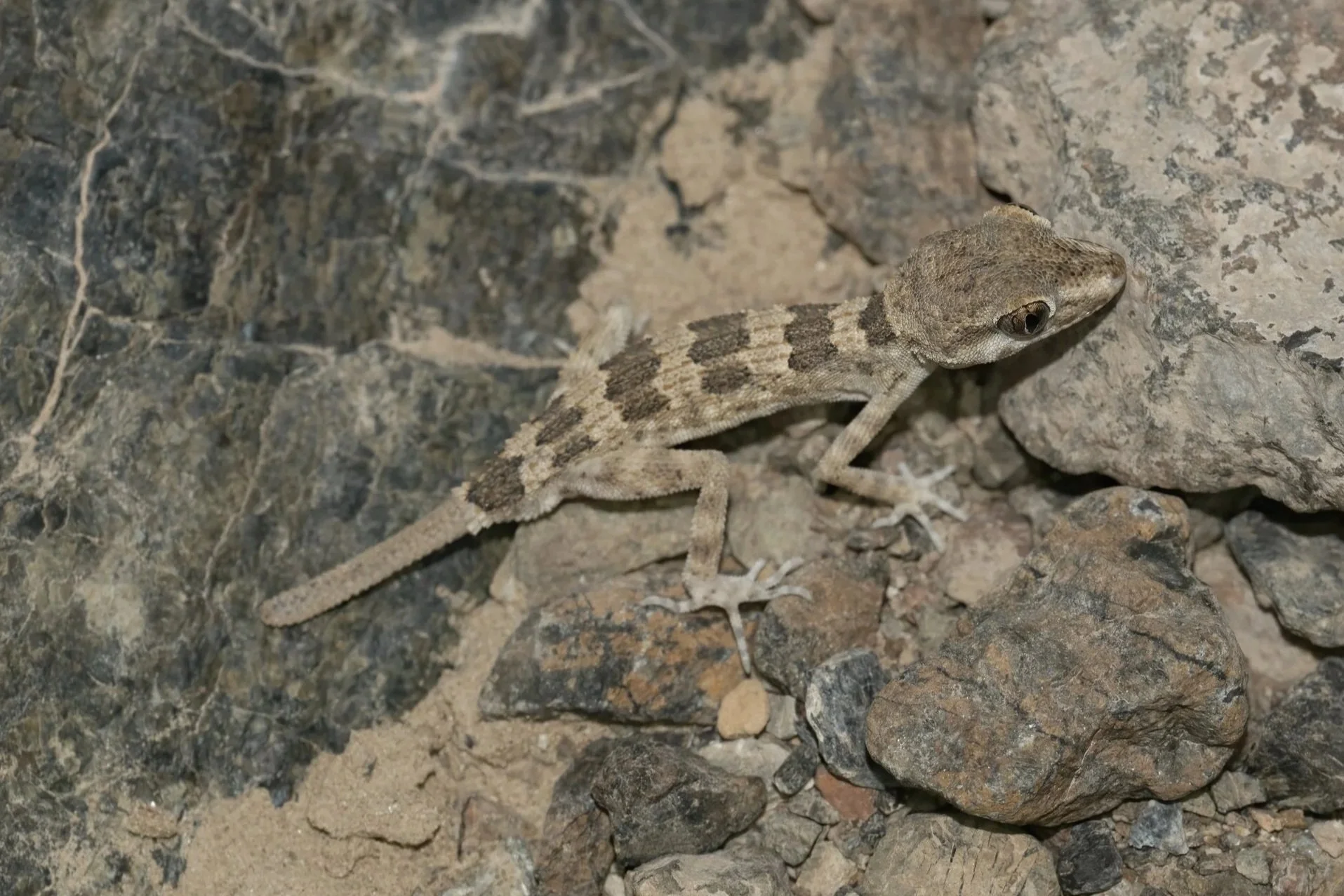
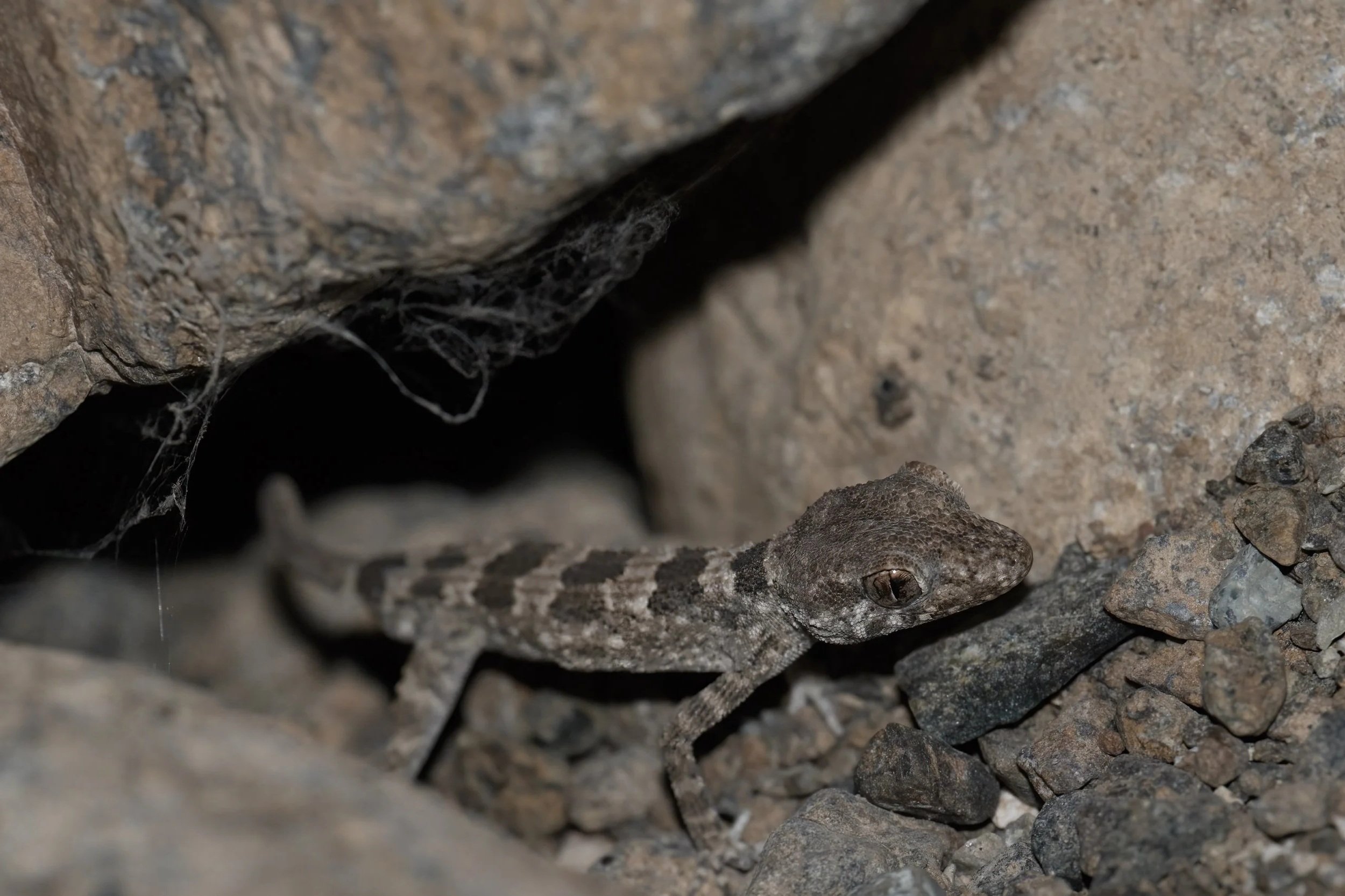
This species is important because it represents the UAE’s regional Hajar Mountain reptile identity. It is not UAE-only endemic, but it is a localized regional species shared with northern Oman. Taxonomically, it also has an interesting story: it was formerly treated as Bunopus spatalurus hajarensis, and recent work recognizes it as Trachydactylus hajarensis. New phylogenomic research has found several population lineages within the species, but the current recommendation is to keep them under one species for now.
تكتسب هذه الوزغة أهميتها لأنها تمثل الهوية الزاحفية الإقليمية لجبال الحجر في دولة الإمارات العربية المتحدة. فهي ليست نوعًا متوطنًا في الإمارات وحدها، لكنها نوع إقليمي محدود الانتشار مشترك مع شمال سلطنة عُمان. ومن الناحية التصنيفية، تحمل هذه الوزغة قصة مثيرة للاهتمام وقد كشفت أبحاث فيلوجينومية حديثة عن وجود عدة سلالات سكانية داخل هذا النوع، لكن التوصية الحالية هي الإبقاء عليها جميعًا ضمن نوع واحد في الوقت الحالي