
Red Sea House Gecko
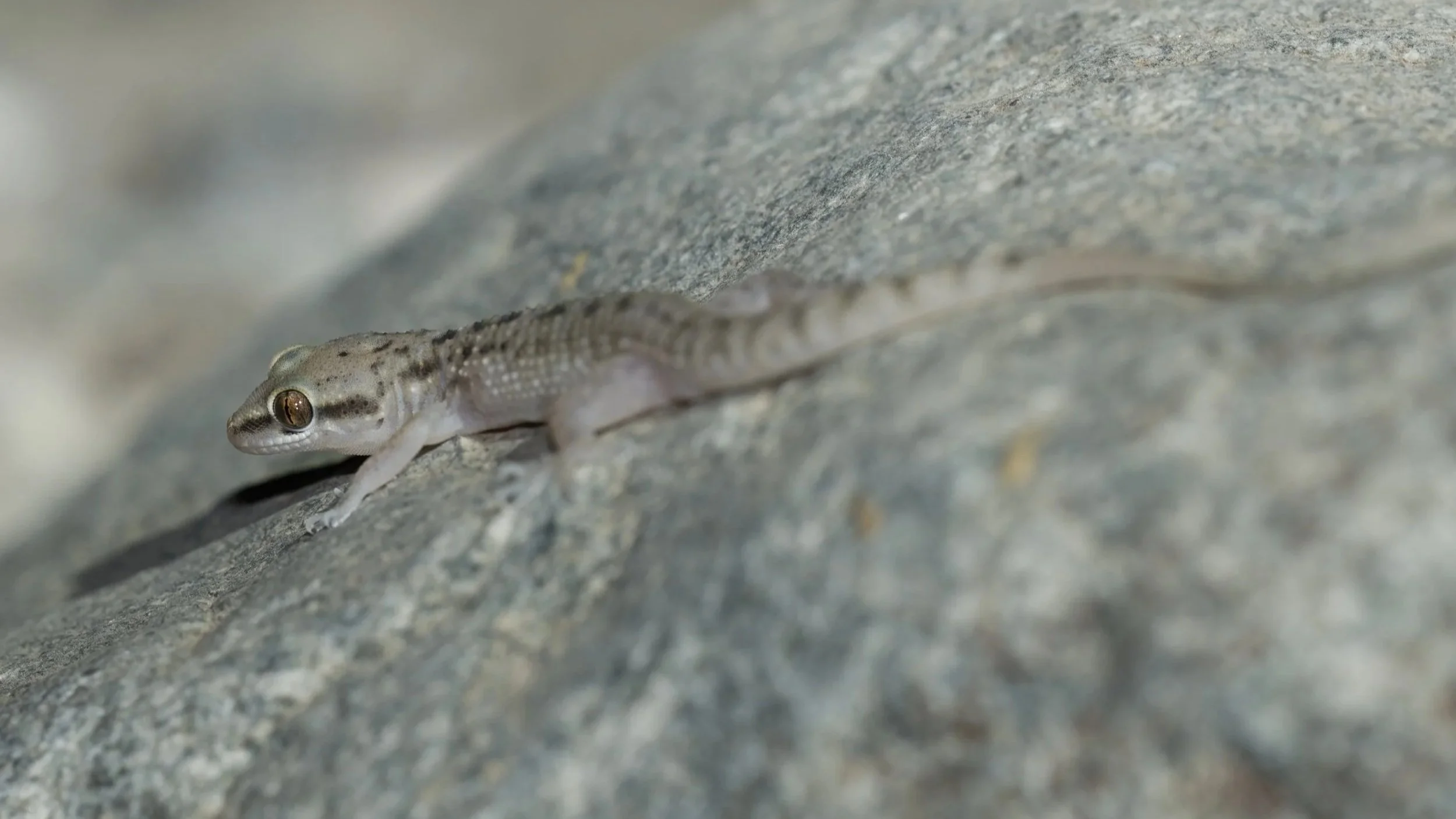
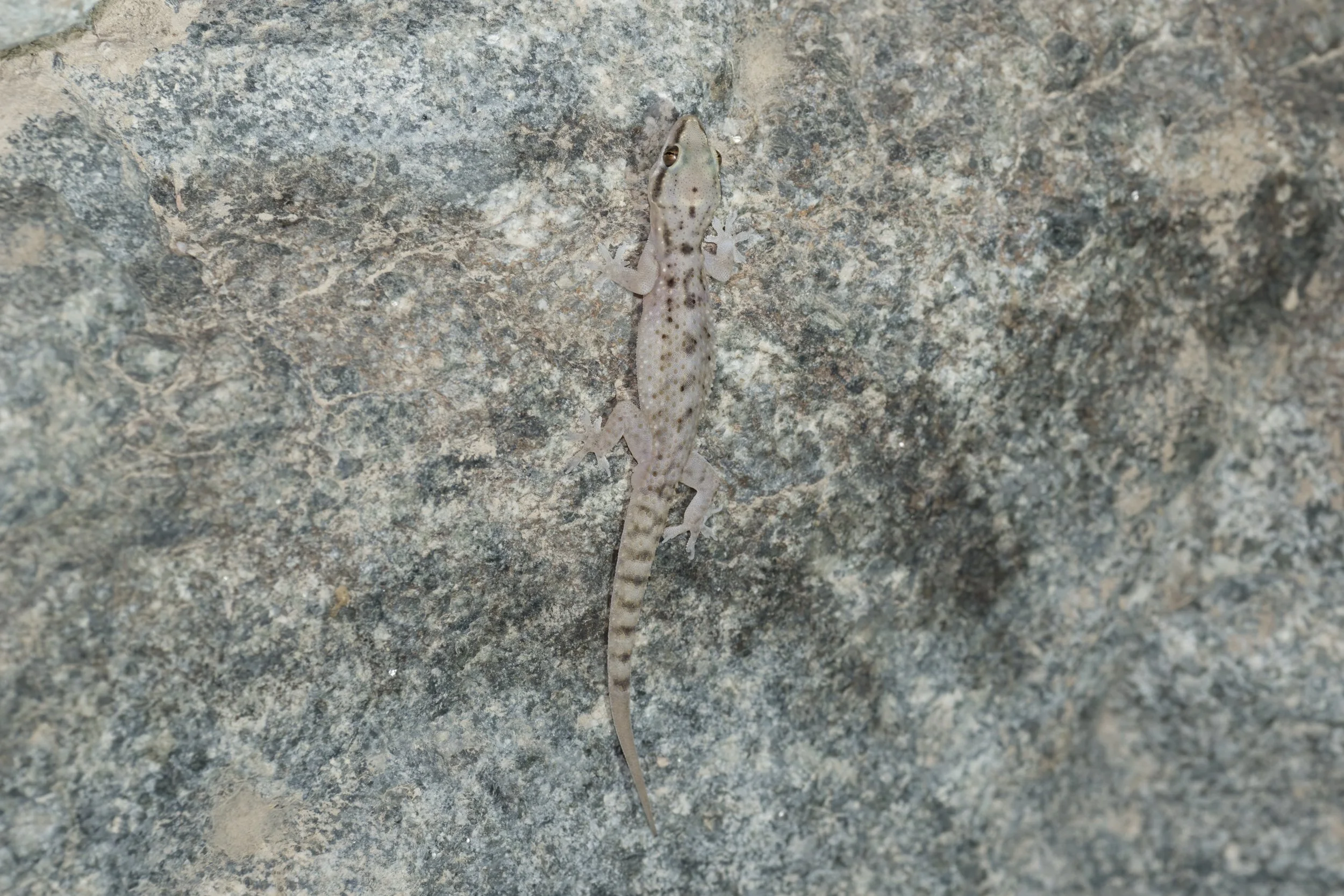
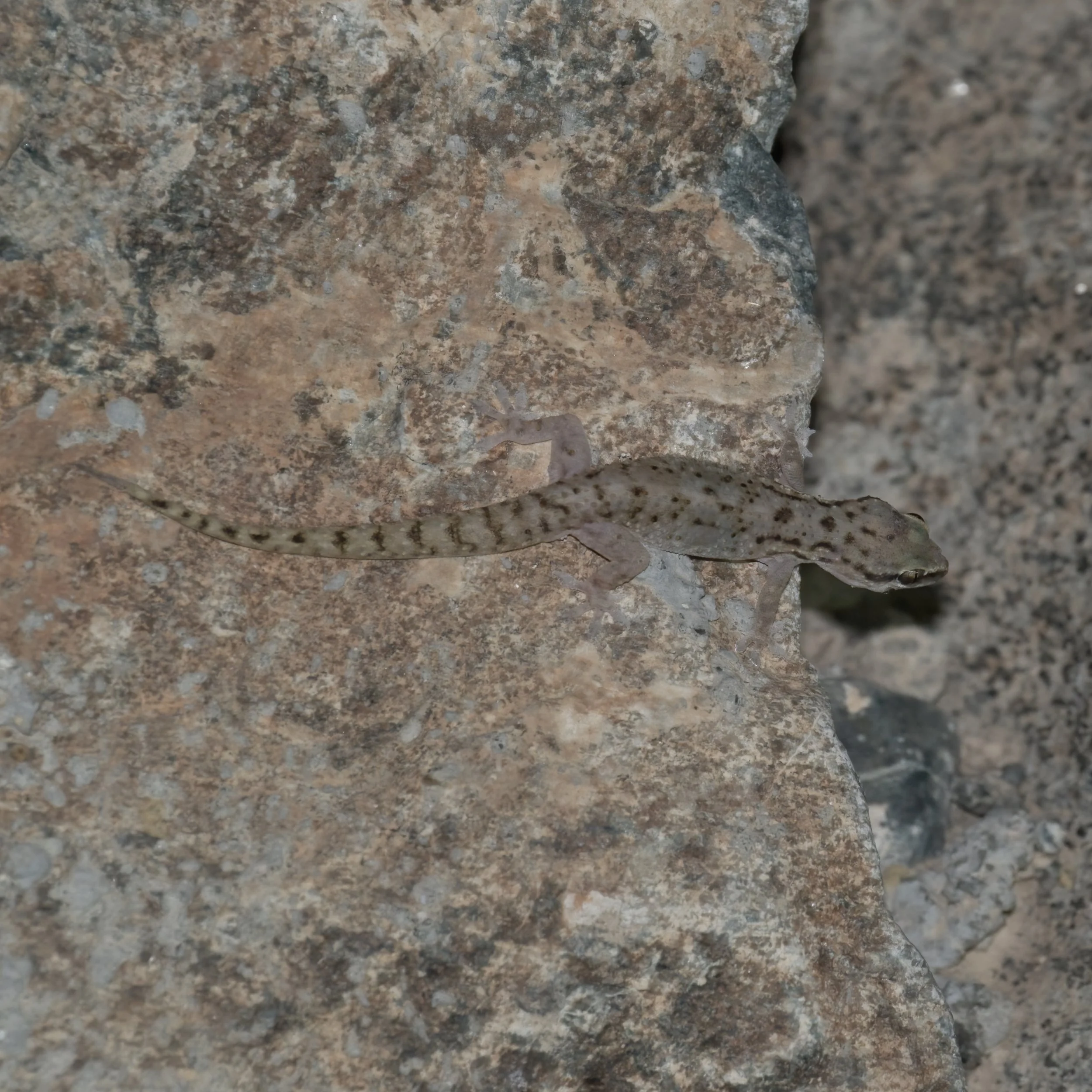
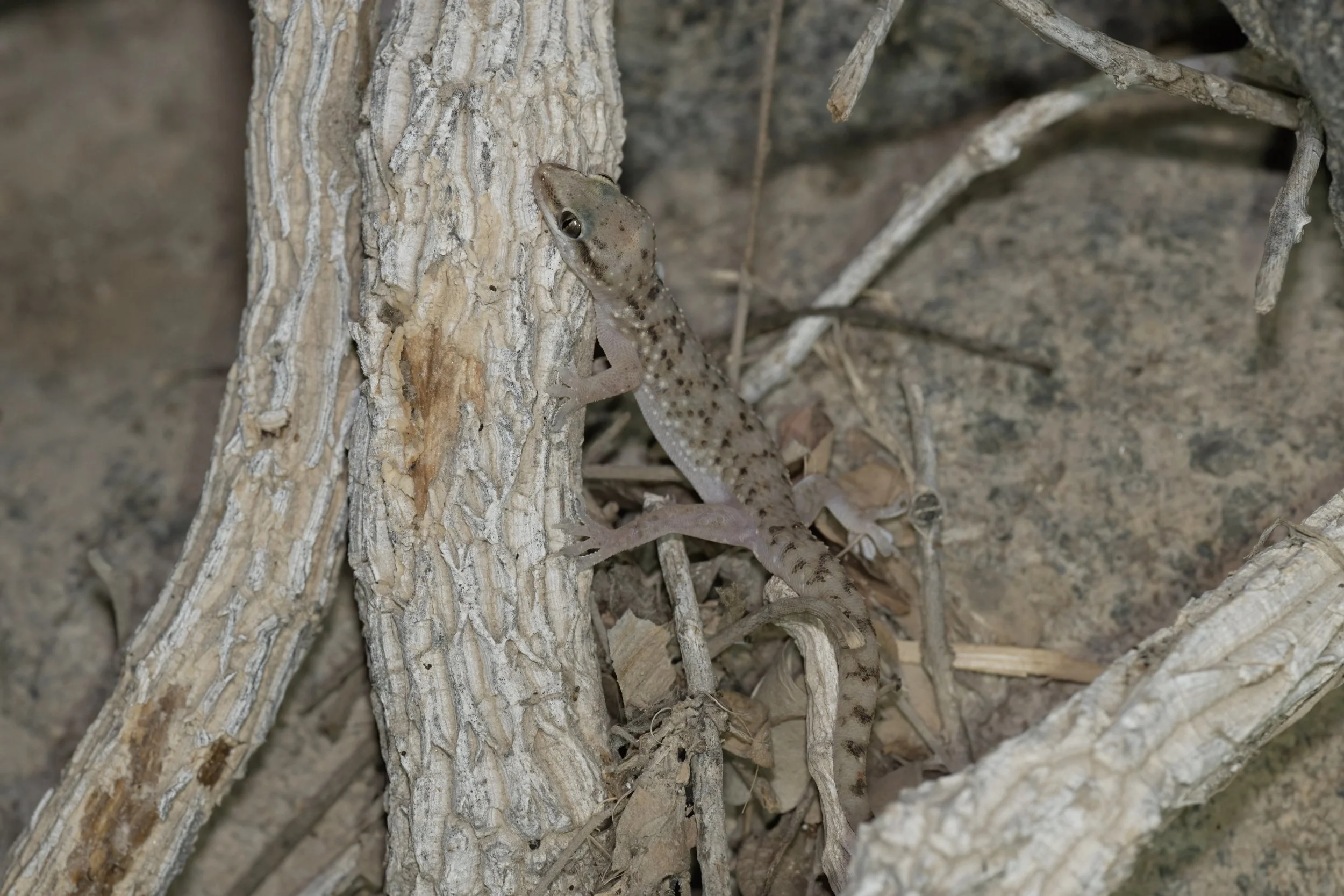
The Red Sea House Gecko, Hemidactylus robustus, is a medium-sized nocturnal gecko with a sturdy body, large eyes, and adhesive toe pads that allow it to climb walls, rocks, and other surfaces. Its body pattern usually includes darker markings across the head and back, with irregular bands or patches that help break up its outline. Compared with sand geckos, it looks more like a climbing species, with stronger toes and a body shape suited to vertical surfaces. The Reptile Database notes a maximum snout–vent length of about 54.6 mm in males and 51.3 mm in females.
وزغة البحر الأحمر المنزلية هي وزغة متوسطة الحجم ليلية النشاط، تتميز بجسم قوي، وعينين كبيرتين، ووسائد لاصقة على الأصابع تمكّنها من تسلق الجدران والصخور والأسطح الأخرى. ويتضمن نمط جسمها عادةً علامات داكنة على الرأس والظهر، مع أشرطة أو بقع غير منتظمة تساعد على تفكيك حدود الجسم وتمويهها. وبالمقارنة مع وزغات الرمال، تبدو أقرب إلى الأنواع المتسلقة، بأصابع أقوى وشكل جسم مناسب للأسطح العمودية. وتشير قاعدة بيانات الزواحف إلى أن أقصى طول من الخطم إلى فتحة المخرج يبلغ نحو 54.6 ملم عند الذكور و51.3 ملم عند الإناث
Habitat and behavior
In the UAE, the Red Sea House Gecko is found in arid desert areas and is also often associated with man-made habitats. It may occur around buildings, walls, farms, and structures where lights attract insects at night. Like many Hemidactylus geckos, it uses adhesive pads under the toes to climb, giving it more freedom than ground-living geckos that remain mainly on sand or gravel. UAE references list it among widespread arid-zone geckos from sea level to around 400 meters elevation, and also note that it can be more abundant in man-made habitats than in natural ones.
في دولة الإمارات العربية المتحدة، توجد وزغة البحر الأحمر المنزلية في المناطق الصحراوية الجافة، كما ترتبط كثيرًا بالموائل التي صنعها الإنسان. وقد تُشاهَد حول المباني، والجدران، والمزارع، والمنشآت حيث تجذب الأضواء الحشرات ليلًا. وكغيرها من وزغات نفس الجنس، تستخدم الوسائد اللاصقة الموجودة أسفل الأصابع للتسلق، مما يمنحها حرية حركة أكبر من الوزغات الأرضية التي تبقى غالبًا على الرمال أو الحصى. وتدرجها المراجع الخاصة بالإمارات ضمن الوزغات واسعة الانتشار في المناطق الجافة، من مستوى سطح البحر حتى نحو 400 متر ارتفاعًا، كما تشير إلى أنها قد تكون أكثر وفرة في الموائل التي صنعها الإنسان مقارنة بالموائل الطبيعية
Why this species matters
This species shows another side of UAE gecko diversity: not every gecko is a desert specialist or a mountain endemic. The Red Sea House Gecko is part of the adaptable group of geckos that can live close to people while still belonging to the wider desert ecosystem. Around lights and buildings, it hunts small insects and is one of the reptiles many people may see without realizing its ecological role. For a UAE gecko gallery, it helps connect wild habitats, farms, and urban edges into one wider picture of reptile life in the Emirates.
يُظهر هذا النوع جانبًا آخر من تنوع الوزغات في دولة الإمارات العربية المتحدة؛ فليست كل الوزغات متخصصة في الصحراء أو متوطنة في الجبال. تُعَدّ وزغة البحر الأحمر المنزلية جزءًا من مجموعة الوزغات القادرة على التكيف والعيش بالقرب من الإنسان، مع بقائها في الوقت نفسه جزءًا من النظام البيئي الصحراوي الأوسع. وحول الأضواء والمباني، تصطاد الحشرات الصغيرة، وهي من الزواحف التي قد يراها كثير من الناس دون أن يدركوا دورها البيئي. وبالنسبة إلى معرض وزغات الإمارات، يساعد هذا النوع على ربط الموائل البرية، والمزارع، وأطراف المناطق الحضرية ضمن صورة أوسع لحياة الزواحف في الإمارات