
Habitat
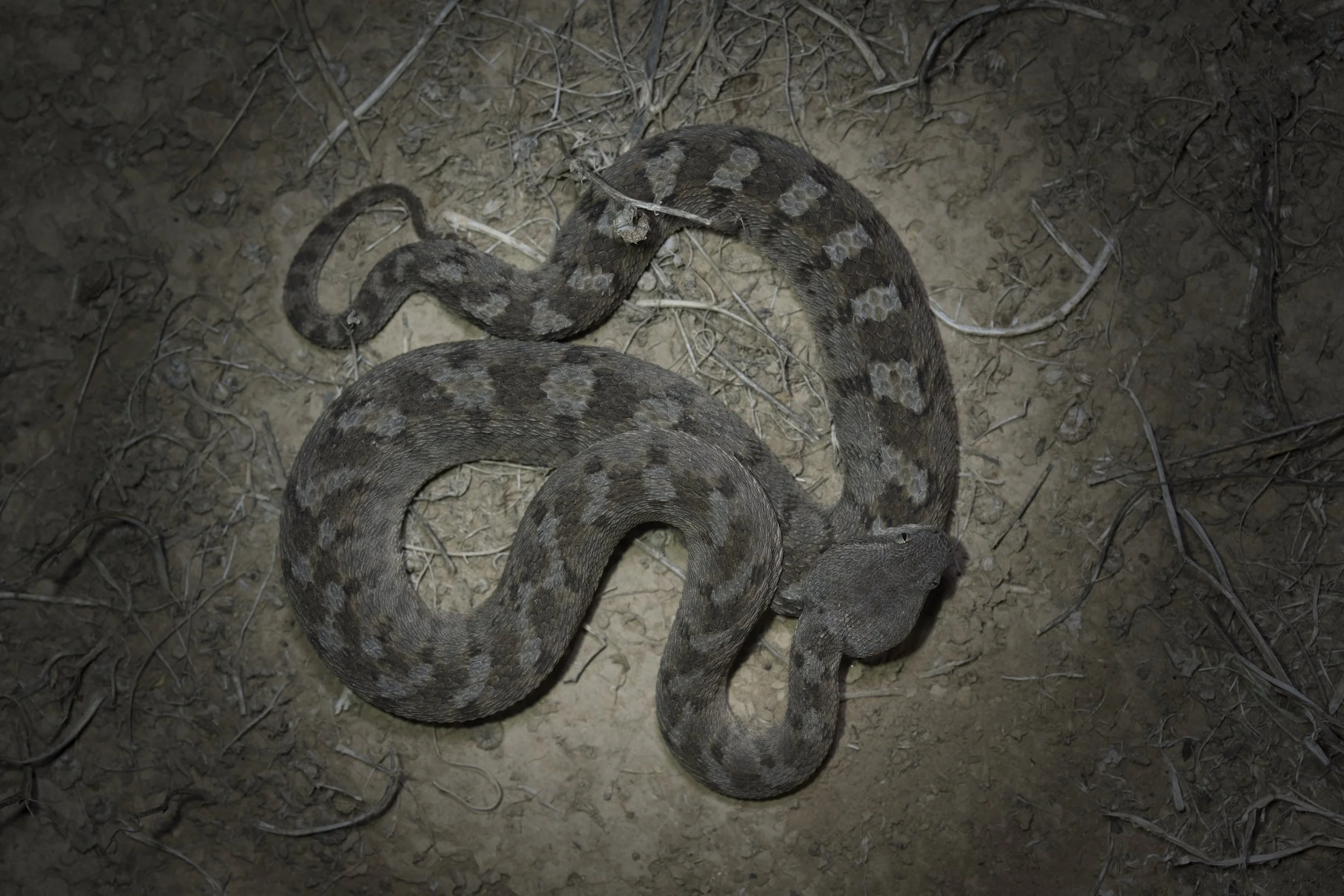
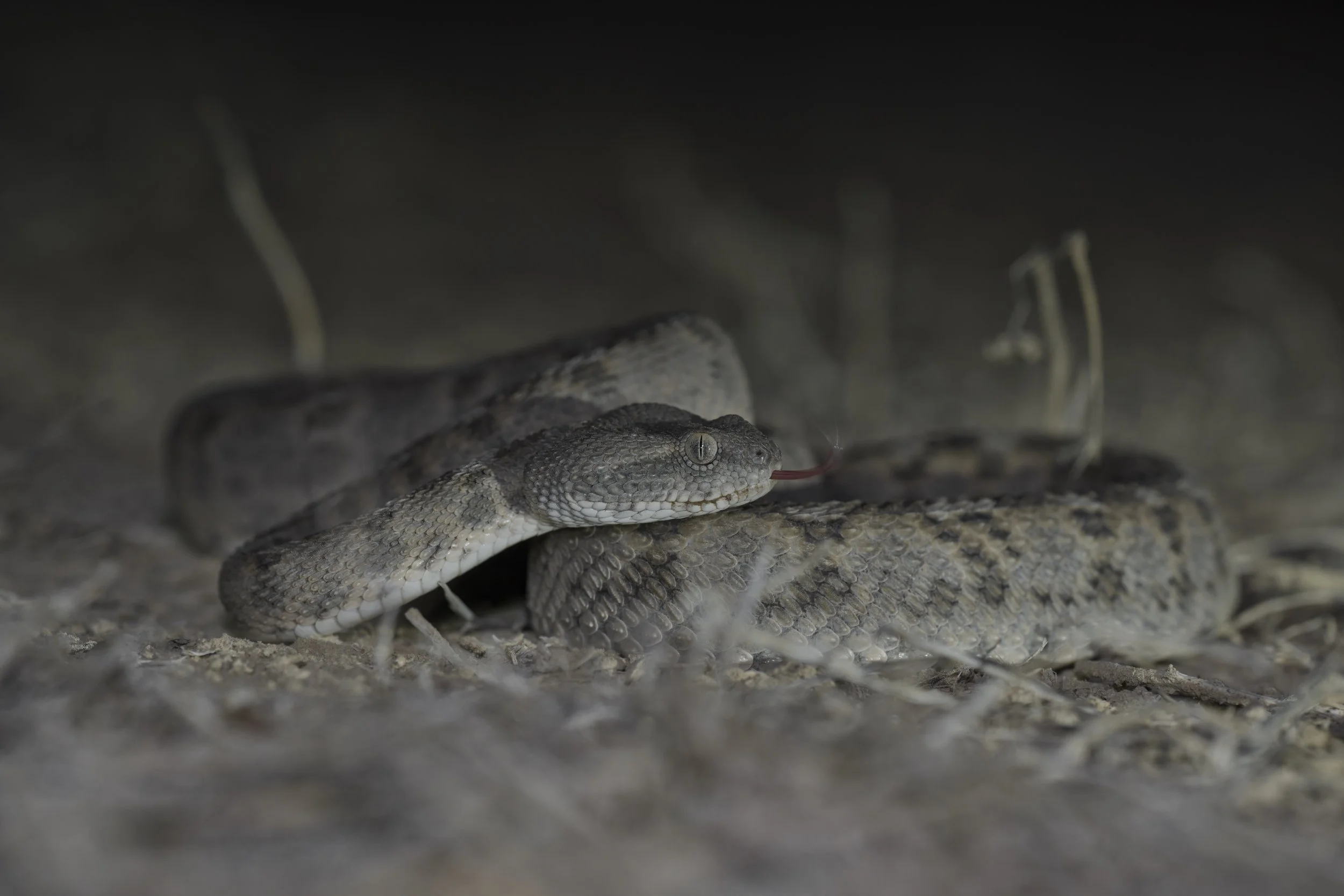
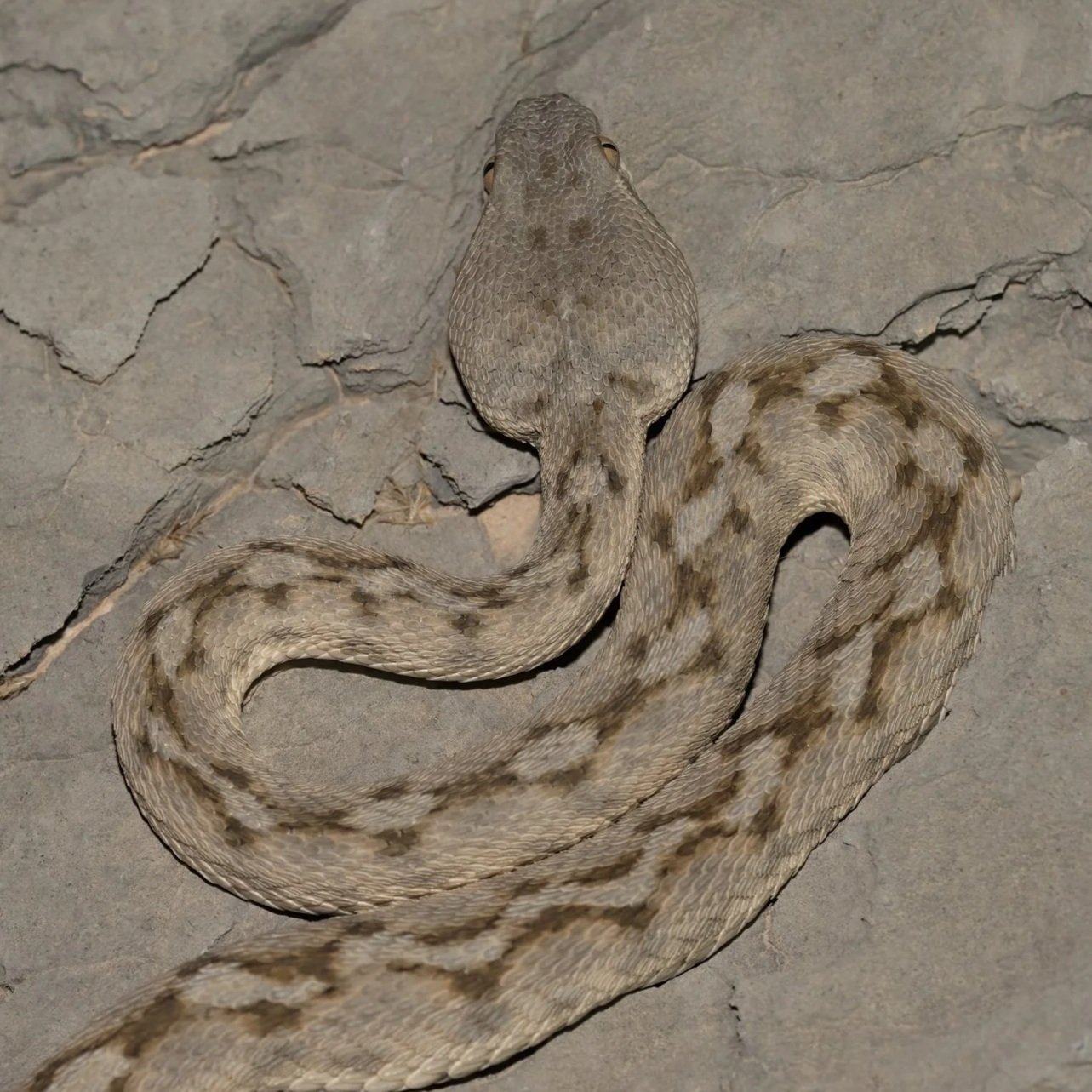
The Hajar Saw-scaled Viper \ Echis omanensis is a mountain and rocky-wadi viper, not a true open-sand desert species. In the UAE, it is most strongly associated with the Hajar Mountains and their surrounding wadis, especially rocky areas, boulder slopes, gravel beds, and wadis that hold permanent or seasonal water. The Hajar Mountains guide describes it as common in rocky mountain wadis with permanent water, and UAE reptile research links it with rocky mountain environments from sea level up to high elevations. It is one of the medically important venomous snakes recorded in Sharjah, Fujairah, and Ras Al Khaimah.
أفعى السجاد العمانية هي أفعى جبلية ترتبط بالوديان الصخرية، وليست نوعاً صحراوياً حقيقياً يعيش في الرمال المفتوحة. في دولة الإمارات العربية المتحدة، ترتبط هذه الأفعى بشكل واضح بجبال الحجر والوديان المحيطة بها، خصوصاً المناطق الصخرية، والمنحدرات المليئة بالصخور، وأرضيات الحصى، والوديان التي تحتفظ بالمياه بشكل دائم أو موسمي. يصفها دليل زواحف جبال الحجر بأنها شائعة في الوديان الجبلية الصخرية التي تحتوي على مياه دائمة، كما تربطها الدراسات الخاصة بزواحف الإمارات بالبيئات الجبلية الصخرية من مستوى سطح البحر وحتى الارتفاعات العالية. وتُعد من الأفاعي السامة ذات الأهمية الطبية المسجلة في الشارقة والفجيرة ورأس الخيمة
Physical Characteristics
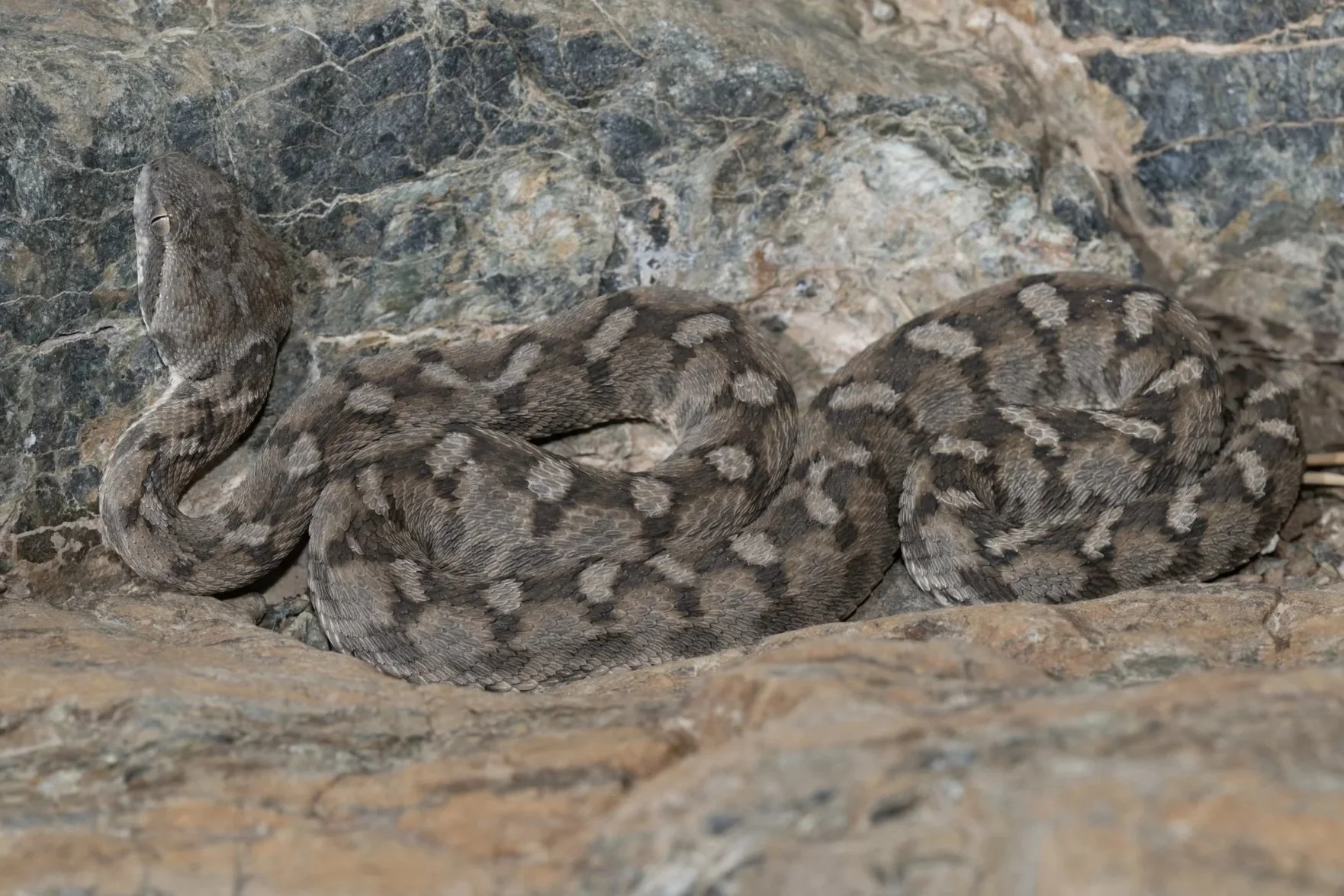
This is a strong, compact viper with a wide, robust head, a narrow neck, vertical pupils, and rough keeled scales. Its body color is usually dark brown, grey, or sometimes warmer brown, with pale whitish dorsal spots often linked by a darker zigzag pattern along the back. Compared with the sandy Arabian Horned Viper, it looks more like a rocky-wadi snake: darker, heavier in the head, and better camouflaged against stones, gravel, and shaded mountain ground. The Hajar guide gives a snout–vent length of around 75 cm, making it a sizeable viper for the region
هذه أفعى قوية ومتماسكة البنية، تتميز برأس عريض وقوي، وعنق ضيق، وبؤبؤين عموديين، وحراشف خشنة ذات حواف بارزة. يكون لون الجسم عادةً بنيّاً داكناً أو رمادياً، وأحياناً يميل إلى البني الدافئ، مع بقع ظهرية باهتة مائلة إلى الأبيض، غالباً ما تكون مرتبطة بنمط متعرج داكن يمتد على طول الظهر. وبالمقارنة مع الأفعى العربية المقرنة التي ترتبط أكثر بالبيئات الرملية، تبدو أفعى السجاد العمانية كأفعى وديان صخرية بوضوح: أغمق لوناً، أثقل في شكل الرأس، وأكثر قدرة على التخفي بين الصخور والحصى وظلال الأرض الجبلية. ويذكر دليل جبال الحجر أن طولها من الخطم إلى فتحة المخرج يصل إلى نحو 75 سم، ما يجعلها من الأفاعي الكبيرة نسبياً في المنطقة
Hunting Habits
It is mainly nocturnal, becoming active after dark when temperatures drop and prey is moving through wadis and rocky ground. It hunts by ambush and short-range striking, relying on camouflage beside stones, vegetation, water channels, and wadi edges. Its prey includes toads, geckos, rodents, and invertebrates, which makes wet or semi-wet mountain wadis especially important because they attract amphibians, reptiles, insects, and small mammals. Although mostly nocturnal, it may sometimes be seen basking in the early morning before retreating into cover.
تنشط هذه الأفعى في الغالب ليلاً، وتبدأ حركتها بعد حلول الظلام عندما تنخفض درجات الحرارة وتتحرك الفرائس بين الوديان والأرض الصخرية. تعتمد في صيدها على الكمون والضربات القصيرة السريعة، مستفيدة من قدرتها العالية على التخفي بجانب الصخور، وبين النباتات، وقرب مجاري المياه، وعلى أطراف الوديان. تشمل فرائسها الضفادع، والأبراص، والقوارض، واللافقاريات، وهذا ما يجعل الوديان الجبلية الرطبة أو شبه الرطبة مهمة جداً لها، لأنها تجذب البرمائيات والزواحف والحشرات والثدييات الصغيرة. وعلى الرغم من أنها ليلية في معظم نشاطها، فقد تُشاهد أحياناً وهي تتشمس في الصباح الباكر قبل أن تعود إلى مخبئها
Venom Details
A true viper with large movable front fangs, known as a solenoglyphous fang system, used to inject venom during a bite. Its venom is mainly hemotoxic, meaning it affects blood, clotting, and tissue rather than working primarily as a neurotoxin. A bite should be treated as medically serious: symptoms may include pain, swelling, bleeding problems, tissue damage, and dangerous clotting disturbance, and urgent hospital care is required. UAE research list it as medically important venomous snakes.
تمتلك أنياباً أمامية كبيرة ومتحركة تُعرف بنظام الأنياب الأنبوبية المتحركة، وتُستخدم لحقن السم أثناء العضة. ويُعد سمّها في الأساس دموياً، أي أنه يؤثر في الدم، وتجلطه، والأنسجة، أكثر من كونه سماً عصبياً بالدرجة الأولى. لذلك يجب التعامل مع عضتها كحالة طبية خطيرة؛ فقد تشمل الأعراض الألم، والتورم، ومشكلات النزيف، وتلف الأنسجة، واضطرابات خطيرة في تخثر الدم، ما يستدعي التوجه العاجل إلى المستشفى. وتُدرجها الدراسات الخاصة بزواحف دولة الإمارات العربية المتحدة ضمن الأفاعي السامة ذات الأهمية الطبية