
Habitat
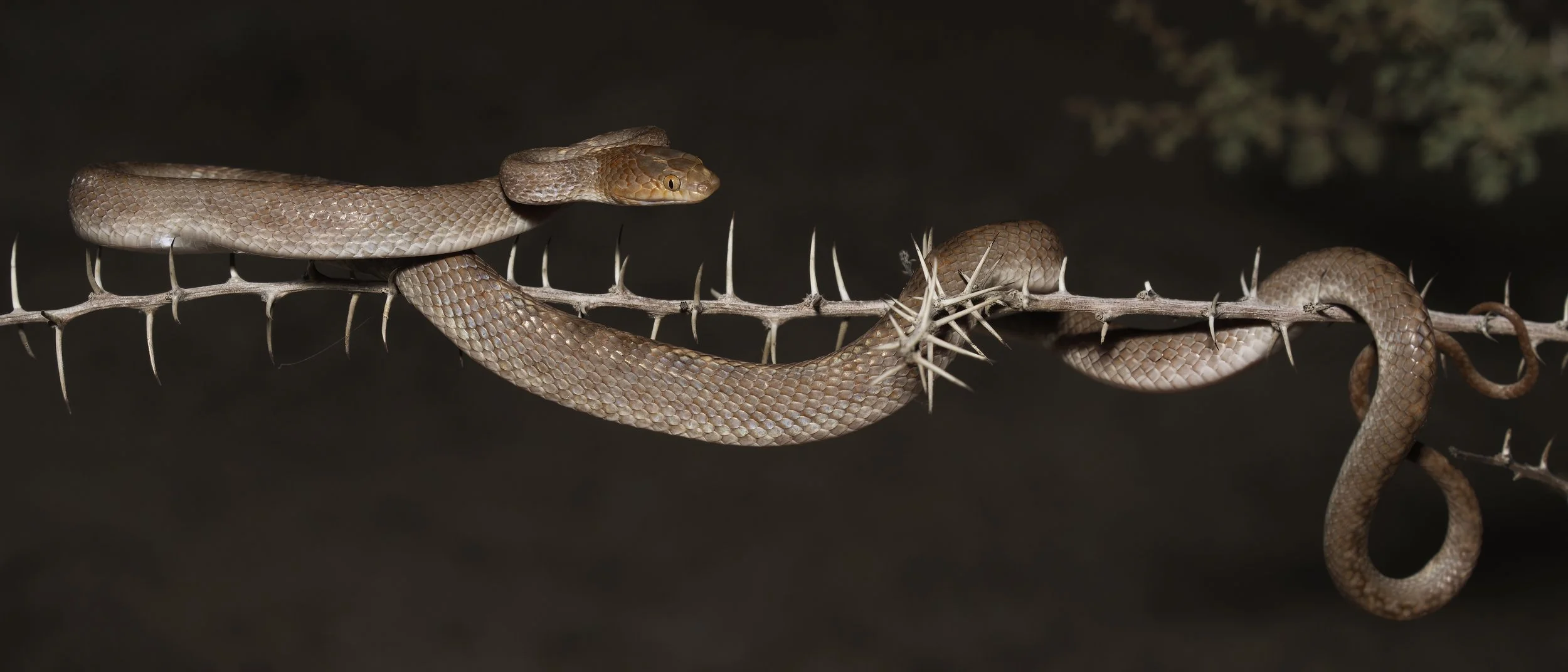
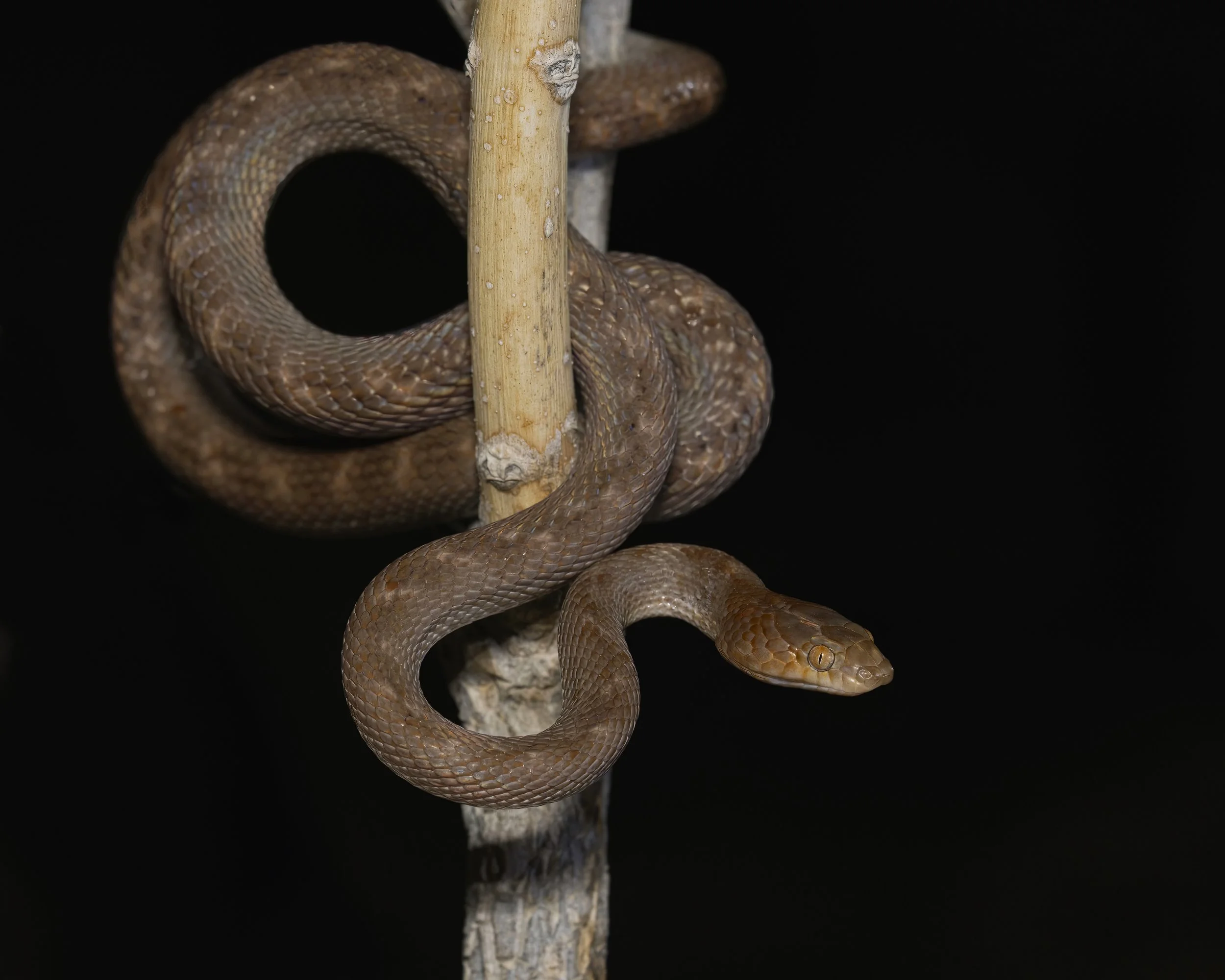
The Arabian cat snake \ Telescopus dhara is sparsely distributed across arid and semi‑arid regions of the UAE, with records from the Hajar Mountains—particularly around the Musandam Peninsula and Wadi Helo—and scattered sightings in dry wadi systems and date‐palm farmland edges. Individuals are most often encountered at night on tree stumps, low shrubs, or rocky outcrops, taking advantage of both terrestrial and low arboreal niches.
ثعبان القط العربي ذو انتشار محدود ومتفرق في المناطق الجافة وشبه الجافة في دولة الإمارات العربية المتحدة، مع تسجيلات من جبال الحجر، خصوصاً حول شبه جزيرة مسندم ووادي الحلو، إضافة إلى مشاهدات متفرقة في أنظمة الوديان الجافة وعلى أطراف مزارع النخيل. وغالباً ما تُشاهد الأفراد ليلاً على جذوع الأشجار، أو الشجيرات المنخفضة، أو النتوءات الصخرية، مستفيدة من قدرتها على استخدام كل من البيئات الأرضية والموائل الشجرية المنخفضة
Physical Characteristics
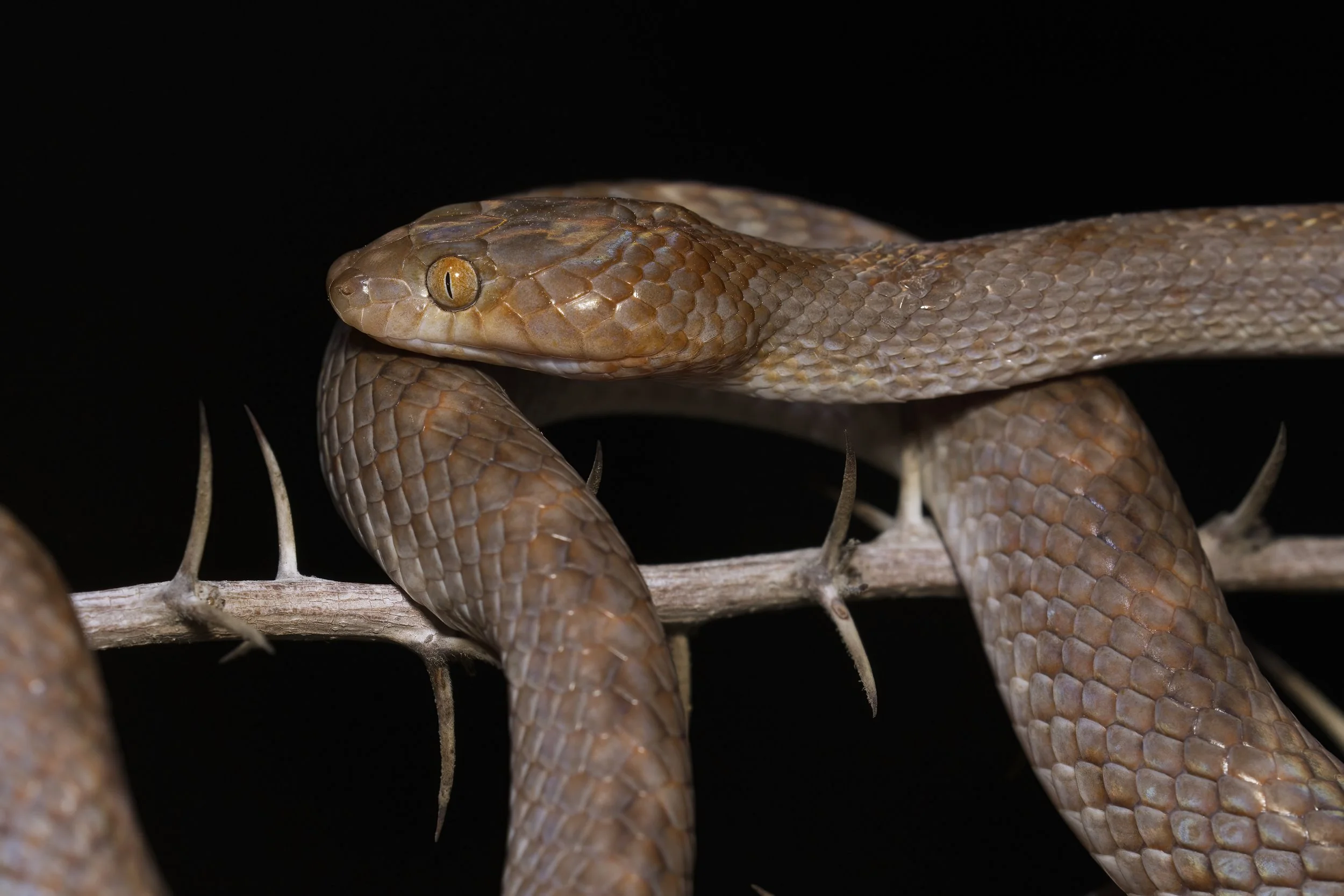
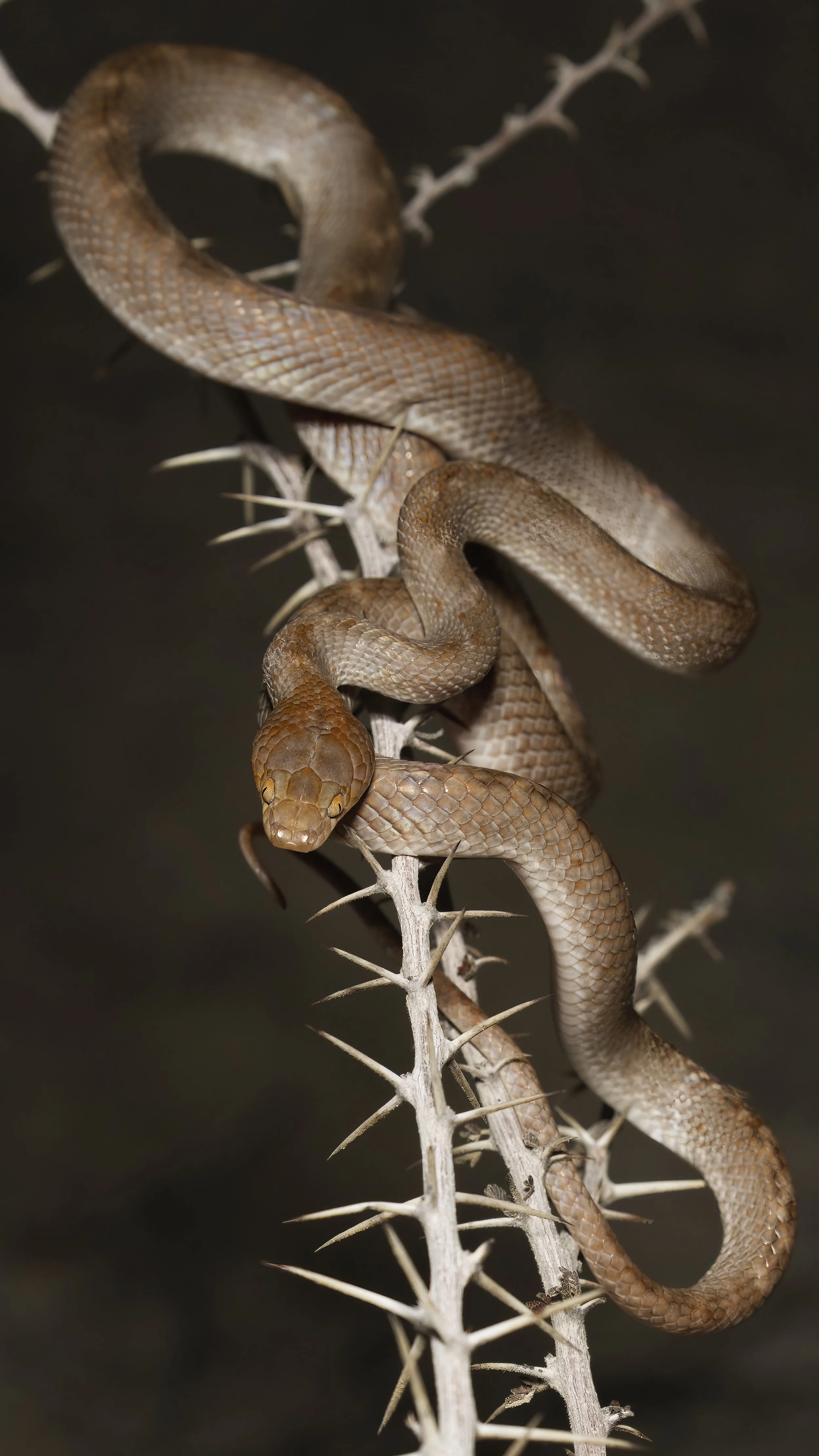
This species exhibits the slender, slightly flattened cylindrical body typical of the genus, averaging 80–120 cm in total length. Its smooth dorsal scales are usually gray‑brown or reddish‑brown, marked with darker blotches or faint banding, and its underbelly is noticeably paler. The large, vertical‑pupilled eyes and a broad rostral scale give it its “cat‑snake” appearance.
يتميّز هذا النوع بجسم أسطواني نحيل ومسطّح قليلاً، وهي سمة نموذجية لهذا الجنس، ويتراوح طوله الإجمالي عادةً بين 80 و120 سم، تكون الحراشف الظهرية ناعمة، وغالباً ما يتراوح لونها بين الرمادي البني والبني المحمر، مع بقع داكنة أو أشرطة خفيفة غير واضحة، بينما يكون الجانب السفلي من الجسم أفتح لوناً بشكل ملحوظ. وتمنحه عيناه الكبيرتان ذواتا البؤبؤ العمودي، مع الحرشفة الأنفية العريضة في مقدمة الرأس، مظهر “ثعبان القط” المميز
Hunting Habits
Primarily nocturnal and ambush‑oriented, T. dhara preys predominantly on small lizards (especially geckos), but will also take small rodents and nesting birds when available. It typically positions itself near rock crevices or vegetation at nightfall, striking with rear fangs to immobilize prey rather than constricting, then swallowing its catch headfirst. Cryptic coloration and still‐body posturing help it avoid both predators and unwary prey.
ينشط بشكل رئيسي ليلاً، ويعتمد في صيده على الكمون. يتغذى غالباً على السحالي الصغيرة، وخاصة الأبراص، لكنه قد يفترس أيضاً القوارض الصغيرة والطيور في أعشاشها عندما تتاح له الفرصة. وعادةً ما يتموضع عند حلول الليل بالقرب من الشقوق الصخرية أو بين النباتات، ثم يضرب فريسته مستخدماً أنيابه الخلفية لشلّ حركتها، بدلاً من قتلها بالعصر، قبل أن يبتلعها من جهة الرأس. ويساعده لونه المموّه ووضعية الثبات على تجنب المفترسات والاقتراب من الفرائس غير المنتبهة
Venom Details
Possessing an opisthoglyphous (rear‑fanged) delivery system, the Arabian cat snake’s venom is primarily neurotoxic. Although T. dhara has relatively large venom glands—comparable in potency to some death‑adder species—the inefficient fang position limits envenomation in humans to mild local effects in most cases. Nonetheless, allergic reactions can exacerbate symptoms, so any handling should be approached with caution.
يمتلك ثعبان القط العربي جهاز حقن سم من نوع الأنياب الخلفية، ويكون سمّه في الأساس ذا تأثير عصبي. وعلى الرغم من أن يمتلك غدداً سمّية كبيرة نسبياً، وقد تكون فاعلية سمّه قابلة للمقارنة مع بعض أنواع أفاعي الموت، فإن موقع الأنياب الخلفي يجعل حقن السم في الإنسان أقل كفاءة، وغالباً ما تقتصر التأثيرات على أعراض موضعية خفيفة في معظم الحالات. ومع ذلك، قد تؤدي التفاعلات التحسسية إلى تفاقم الأعراض، لذلك يجب التعامل مع هذا النوع بحذر وتجنب الإمساك به