
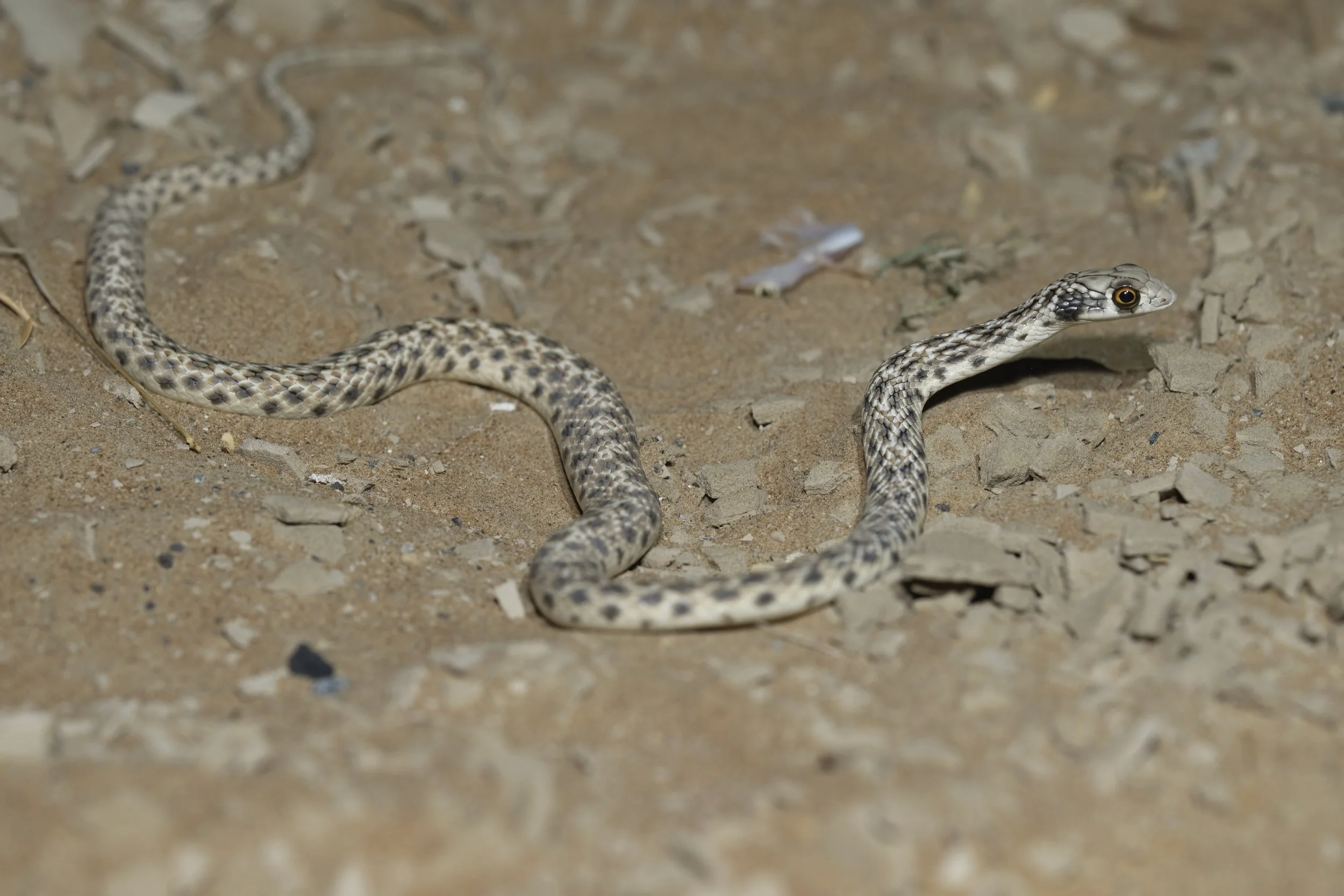
Thrives in arid and semi-arid habitats, including sandy deserts, gravel plains, dry wadis, and rocky foothills across the Middle East and North Africa. It prefers open terrain with loose soil or sand that allows easy burrowing and quick movement, and it may also use abandoned rodent burrows for shelter. Its ability to tolerate high temperatures makes it a characteristic reptile of harsh desert ecosystems.
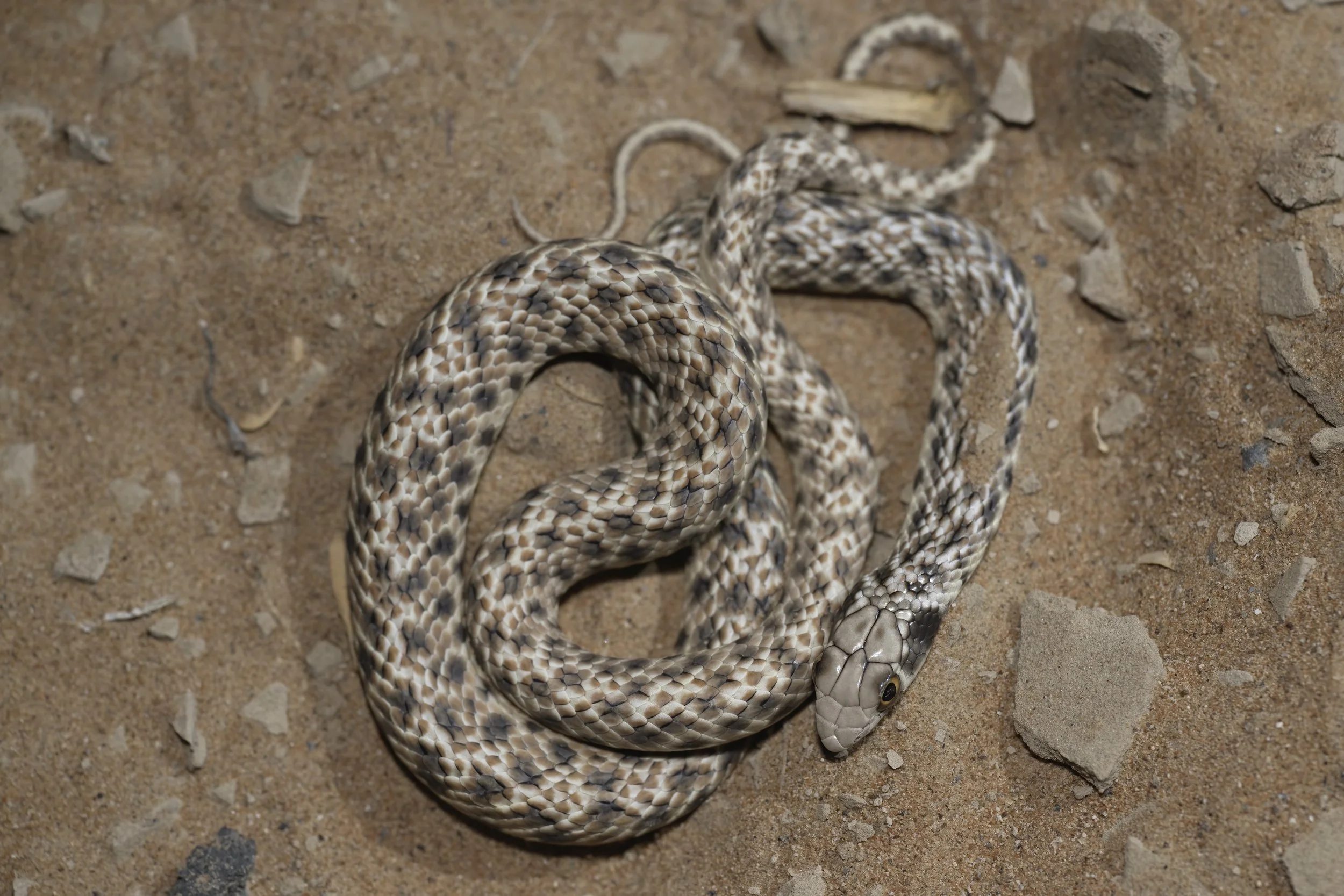
Habitat
Hunting Habits
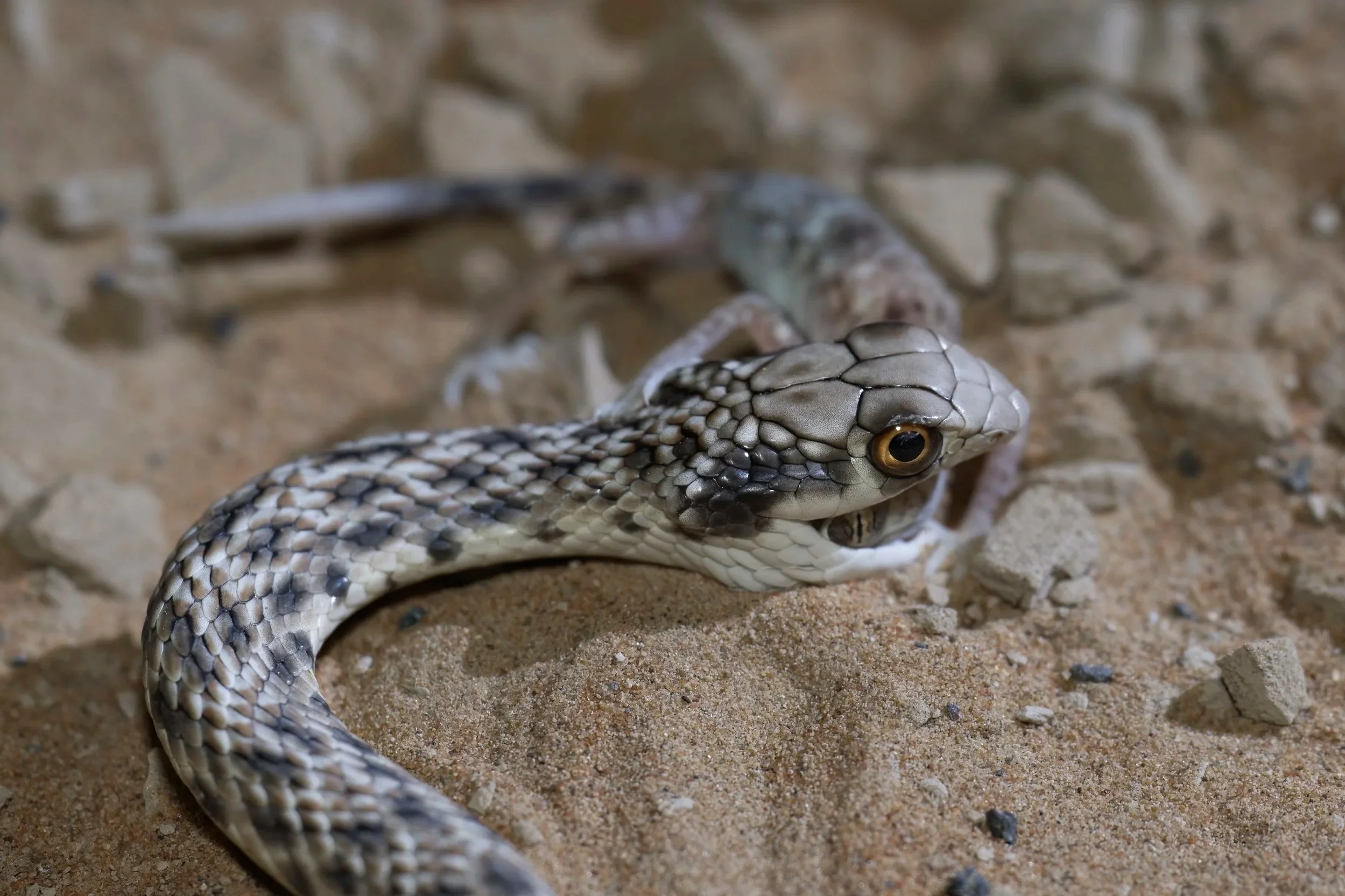
Active diurnal hunter, relying on both speed and keen vision to locate prey in open desert terrain. It primarily feeds on lizards, such as geckos and agamas. Unlike ambush predators, it actively patrols its habitat, using quick strikes to seize prey. Being rear-fanged and mildly venomous, it subdues its catch by grasping and working the fangs into the prey to deliver venom, which helps immobilize smaller animals.
The Moila Snake is a slender, medium-sized colubrid, typically ranging from 1 to 1.5 meters in length, with a distinctly elongated body and long tail. Its head is slightly flattened and broad, giving it a cobra-like profile when threatened, while large eyes with round pupils indicate its largely diurnal activity. The coloration varies from pale sandy beige to light brown, often marked with darker spots or blotches that provide camouflage against desert terrain. One of its most notable traits is its ability to flatten its neck region into a hood, closely resembling a true cobra as a defensive display. The ventral side is lighter, usually whitish or cream. Males are generally larger and more robust than females, and juveniles tend to show stronger dorsal markings that fade with age.
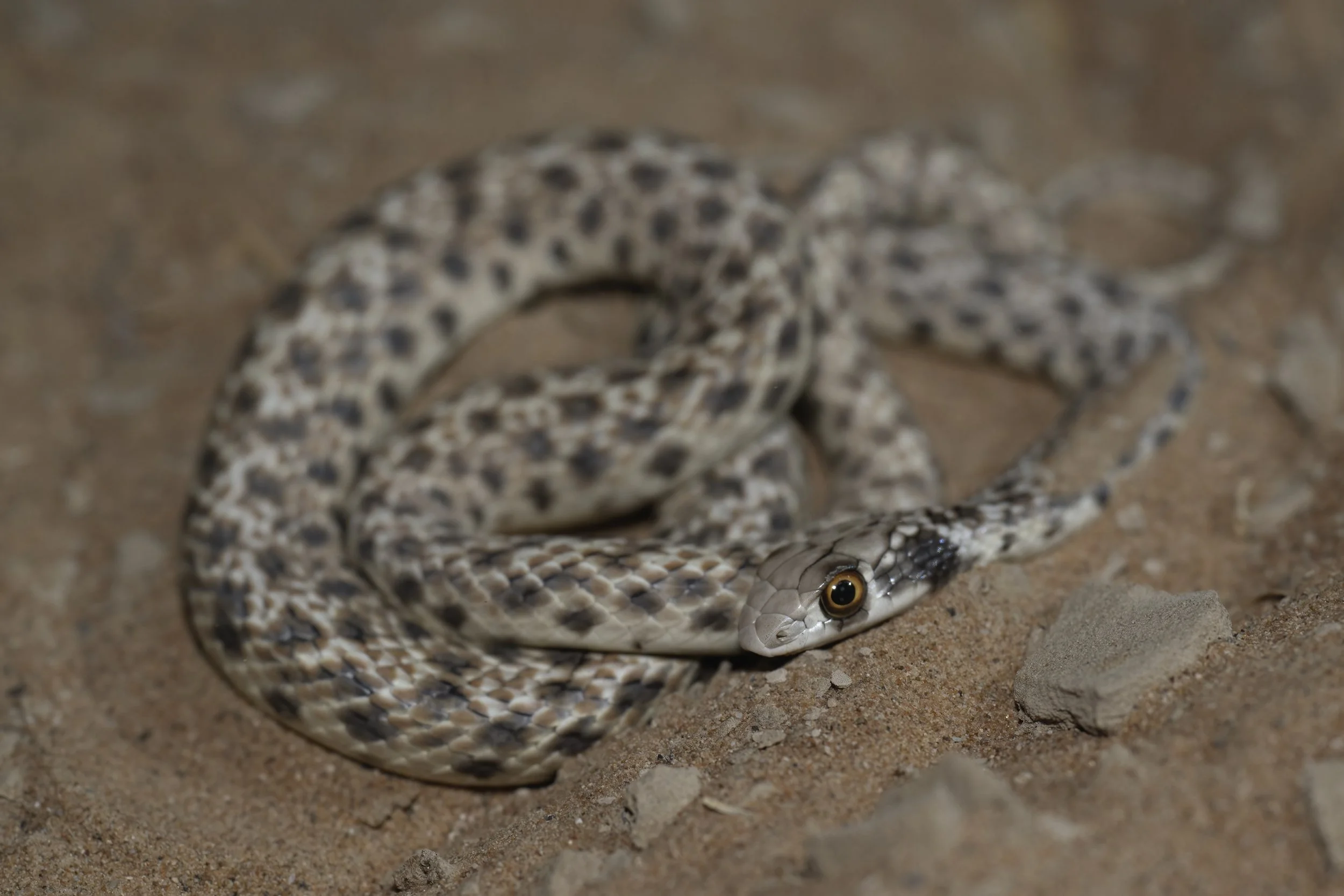
Physical Characteristics
Venom Details
The Moila Snake is a rear-fanged colubrid with mild venom that it delivers using enlarged grooved teeth situated at the back of the upper jaw. Its venom is primarily adapted for subduing small prey such as lizards and rodents rather than for defense against larger animals. In humans, bites are uncommon and generally not dangerous; symptoms are usually limited to localized swelling, redness, and mild pain, though sensitive individuals may experience stronger reactions. Because the fangs are positioned far back, effective envenomation often requires the snake to chew on its prey (or a person’s skin if handled carelessly). Unlike true cobras, the Moila Snake does not pose a significant medical threat, but its defensive hooding display can lead to it being mistaken for a venomous species.