Habitat
Primarily found in arid and semi-arid regions of the Middle East and North Africa. This species thrives in desert environments, sandy dunes, gravel plains, and rocky terrains where it can easily camouflage itself. It prefers habitats with loose, well-drained soils that facilitate its burrowing behavior, often sheltering under rocks, shrubs, or in abandoned burrows to avoid extreme daytime temperatures.
يوجد هذا النوع بشكل رئيسي في المناطق الجافة وشبه الجافة في الشرق الأوسط وشمال أفريقيا. ويزدهر في البيئات الصحراوية، والكثبان الرملية، والسهول الحصوية، والتضاريس الصخرية، حيث يستطيع التخفي بسهولة ضمن محيطه. ويفضّل الموائل ذات التربة المفككة وجيدة التصريف، التي تساعده على سلوك الحفر والاختباء، وغالباً ما يحتمي تحت الصخور أو الشجيرات أو داخل الجحور المهجورة لتجنب درجات الحرارة الشديدة خلال النهار
Hunting Habits
Nocturnal, emerging at night to hunt for its prey. It feeds mainly on small lizards, insects, and occasionally small rodents. The snake employs a combination of stealth and speed to capture its prey, relying heavily on its keen sense of smell and heat detection. It uses its pointed snout to dig and uncover hidden prey beneath the sand or debris. Its venom is mild and used primarily to immobilize small prey rather than pose any significant threat to humans.
ينشط هذا النوع ليلاً، ويخرج بعد حلول الظلام للبحث عن فرائسه. يتغذى بشكل رئيسي على السحالي الصغيرة والحشرات، وقد يفترس أحياناً القوارض الصغيرة. ويعتمد في صيده على مزيج من التخفي والسرعة للإمساك بالفريسة، مستفيداً بدرجة كبيرة من حاسة الشم القوية وقدرته على رصد الحرارة. ويستخدم خطمه المدبب للحفر وكشف الفرائس المختبئة تحت الرمل أو بين المخلفات السطحية. ويُعد سمّه خفيفاً، ويُستخدم أساساً لشل حركة الفرائس الصغيرة، ولا يشكل عادةً خطراً كبيراً على الإنسان
Physical Characteristics
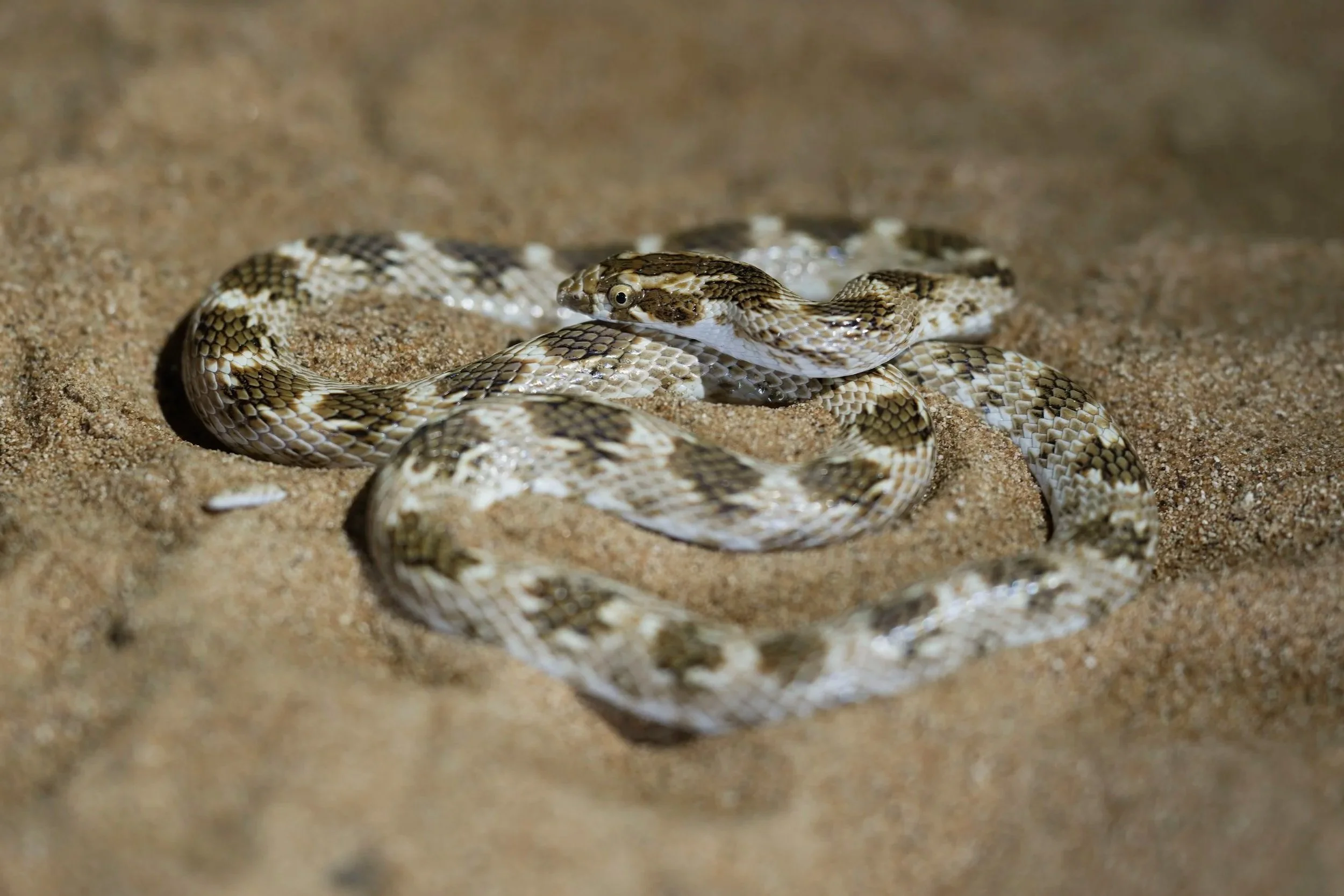
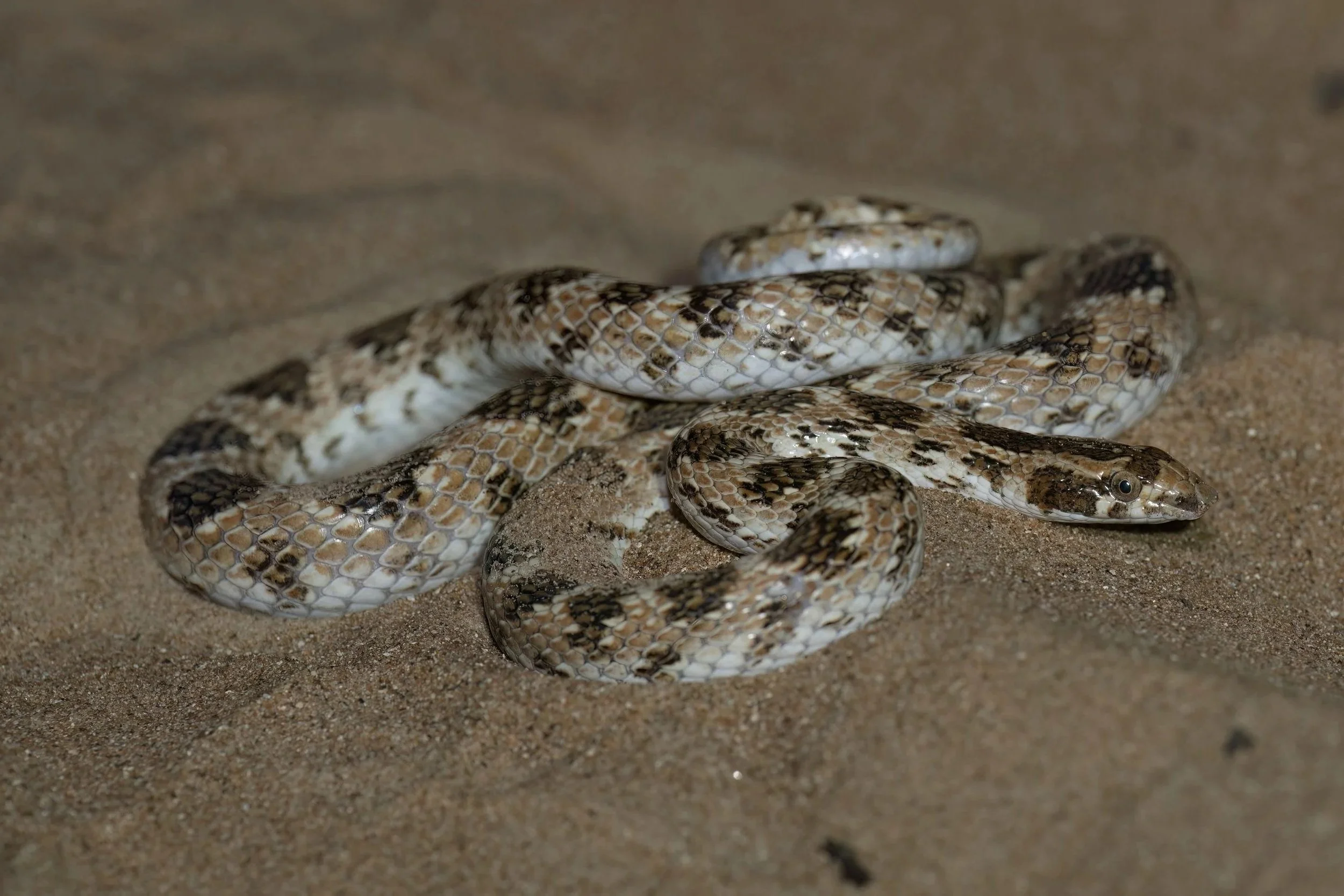
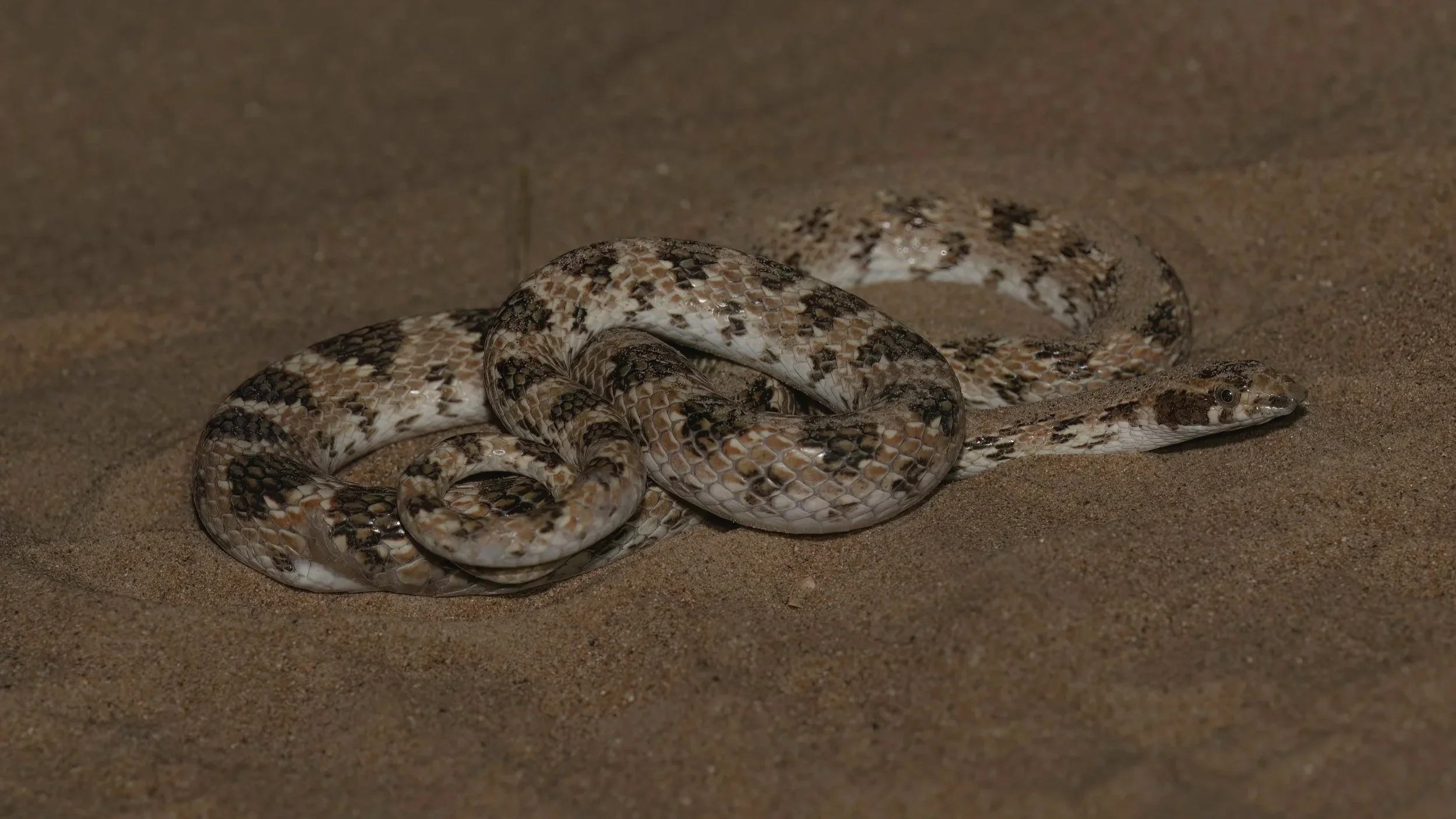
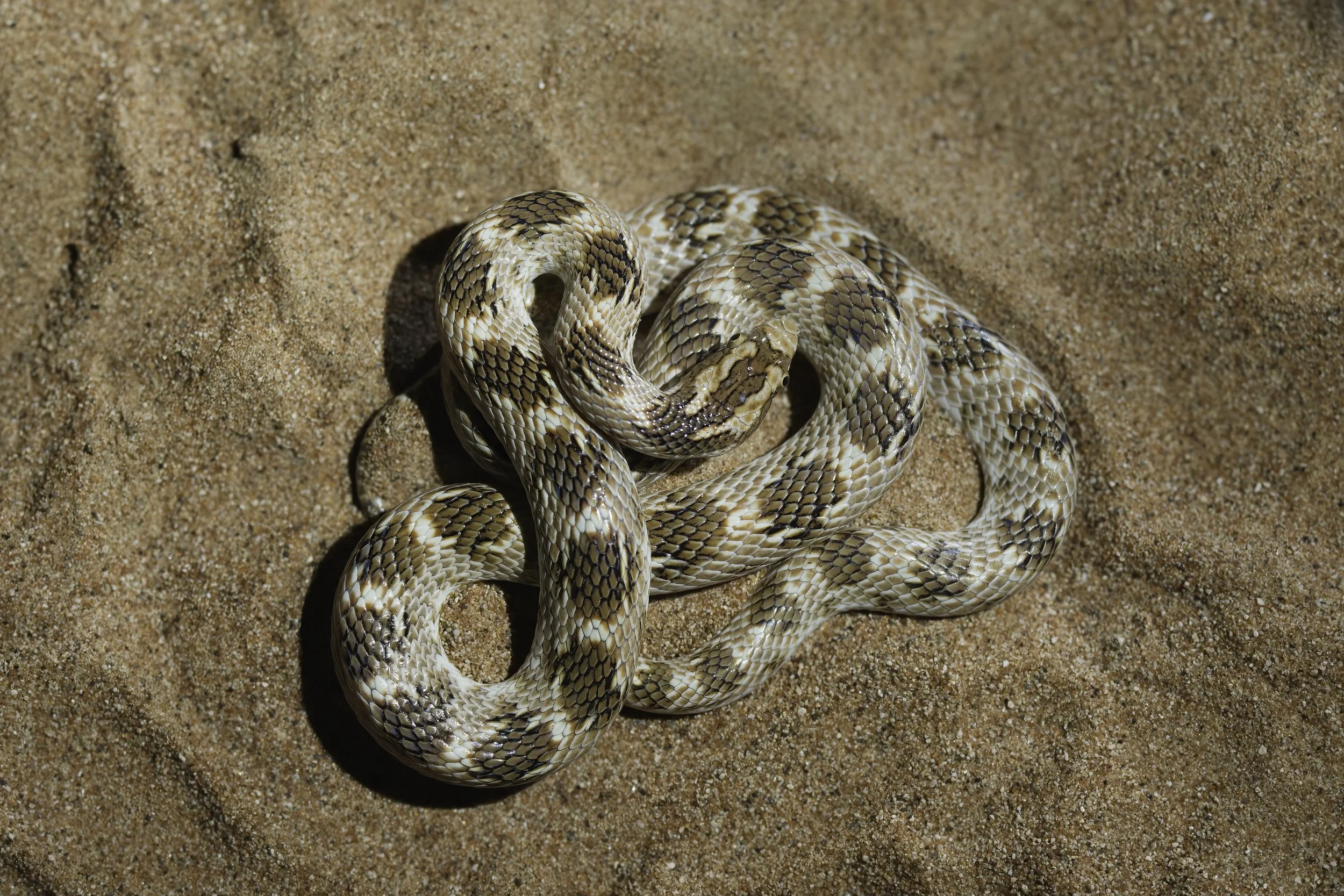
The crowned leafnose snake is a slender, medium-sized snake, typically measuring between 40 to 70 centimeters in length. Its most distinctive feature is the characteristic leaf-shaped scale at the tip of its snout, which aids in digging and sensing its environment. The snake’s coloration usually ranges from sandy beige to reddish-brown, often with a series of darker crossbands or spots that provide excellent camouflage against the desert substrate. Its smooth scales and streamlined body enable it to move swiftly across sandy landscapes.
ثعبان التاج ورقي الأنف هو ثعبان نحيل ومتوسط الحجم، يتراوح طوله عادةً بين 40 و70 سم. وتُعد الحرشفة الورقية المميزة عند طرف خطمه أبرز صفاته، إذ تساعده على الحفر واستشعار البيئة المحيطة به. ويتراوح لون هذا الثعبان عادةً بين البيج الرملي والبني المحمر، وغالباً ما يحمل سلسلة من الأشرطة العرضية أو البقع الداكنة التي تمنحه تمويهاً ممتازاً على أرضية الصحراء. كما تساعده حراشفه الناعمة وجسمه الانسيابي على التحرك بسرعة فوق الرمال
It possesses a mild venom primarily used to subdue its small prey such as lizards and insects. Its venom is considered non-dangerous to humans, producing no significant toxic effects or serious medical symptoms. The snake’s venom delivery system is limited, as it has rear-fanged dentition (opisthoglyphous), meaning the venomous fangs are located toward the back of the mouth, which reduces the likelihood of effective venom injection during defensive bites. Overall, while the venom is effective for hunting, it poses minimal risk to people and is not considered medically significant.
Venom Details
يمتلك هذا الثعبان سماً خفيفاً يُستخدم أساساً للسيطرة على فرائسه الصغيرة مثل السحالي والحشرات. ويُعد سمه غير خطير على الإنسان، إذ لا يسبب عادةً تأثيرات سُمية مهمة أو أعراضاً طبية خطيرة. كما أن نظام حقن السم لديه محدود، لأنه من الثعابين خلفية الأنياب، ويُعرف علمياً باسم، أي أن الأنياب السامة تقع باتجاه الجزء الخلفي من الفم، مما يقلل من احتمال حقن السم بفعالية أثناء العضات الدفاعية. وبشكل عام، ورغم أن السم فعال في الصيد، فإنه يشكل خطراً ضئيلاً جداً على الإنسان ولا يُعد من الأنواع ذات الأهمية الطبية