

Yellow-billed Stork \ Mycteria ibis
(لقلق أصفر المنقار)
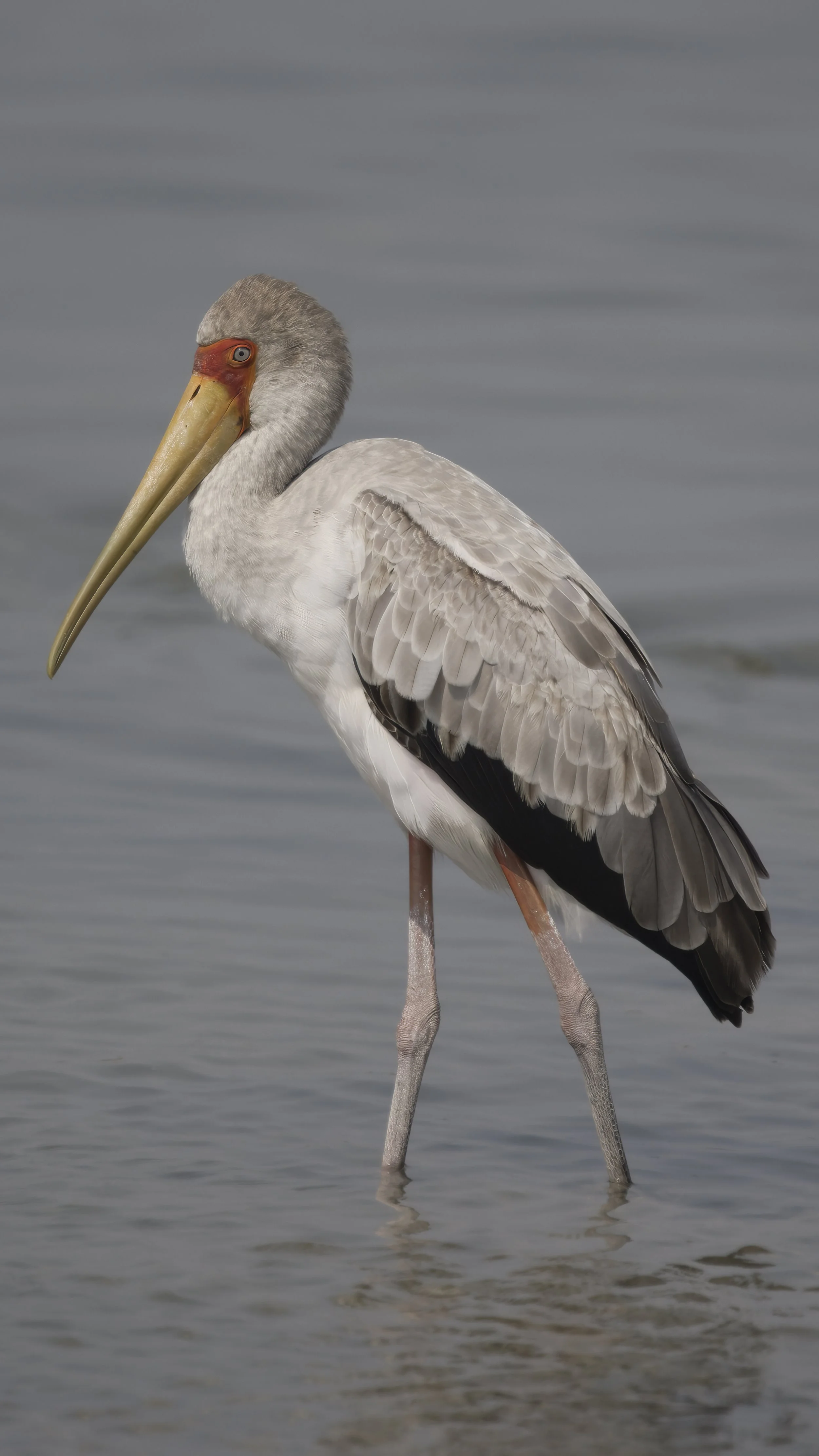
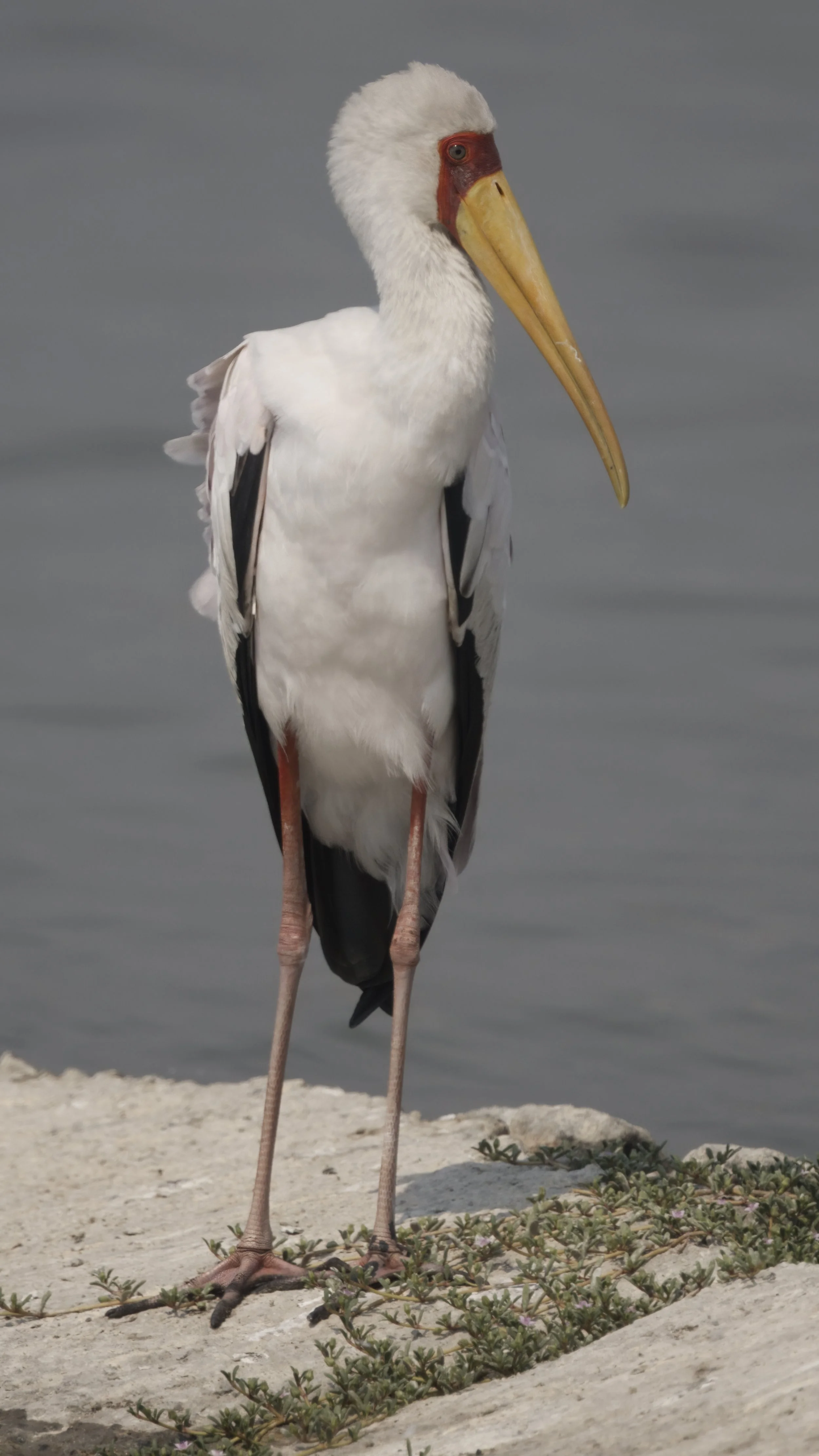
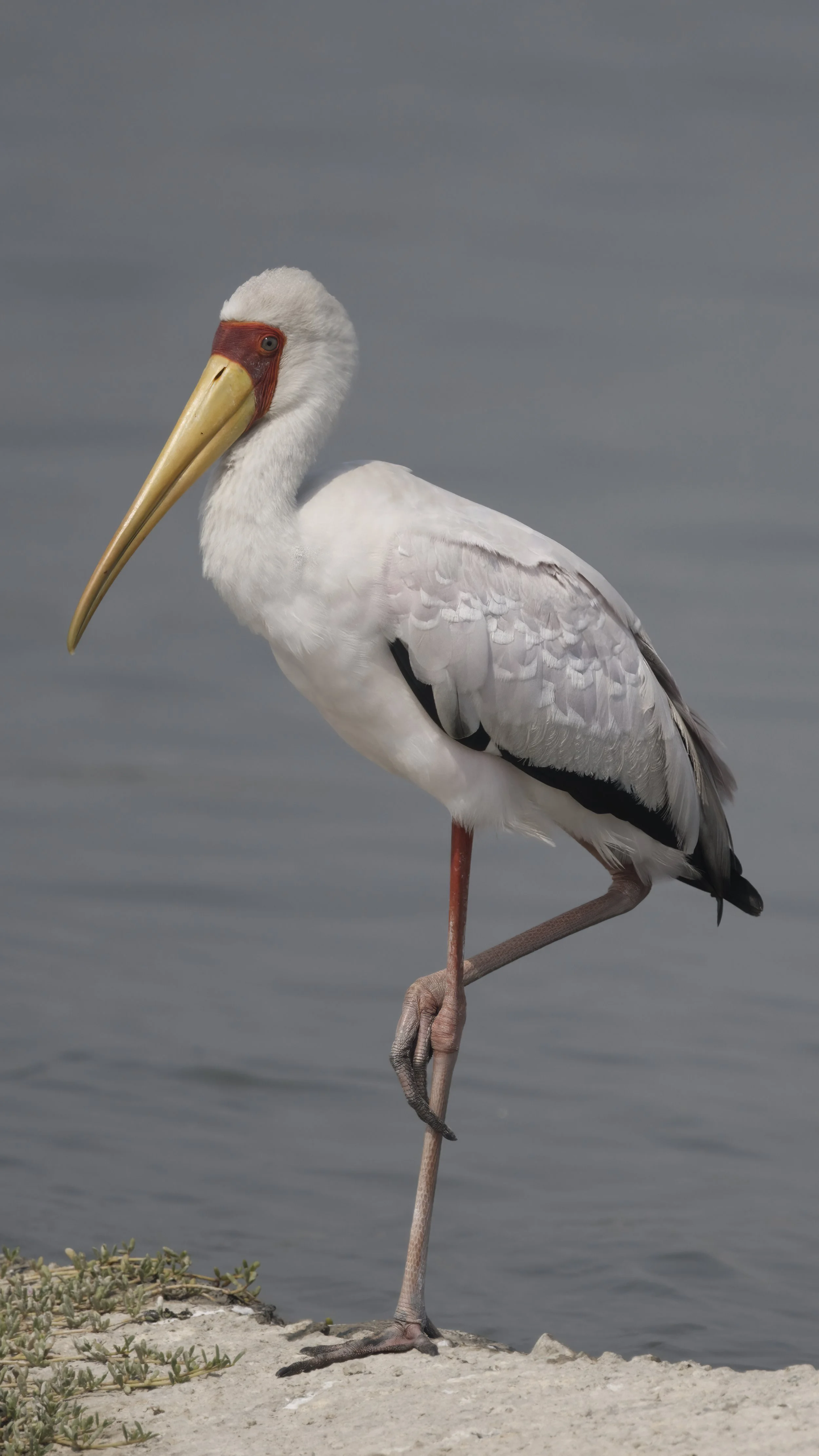
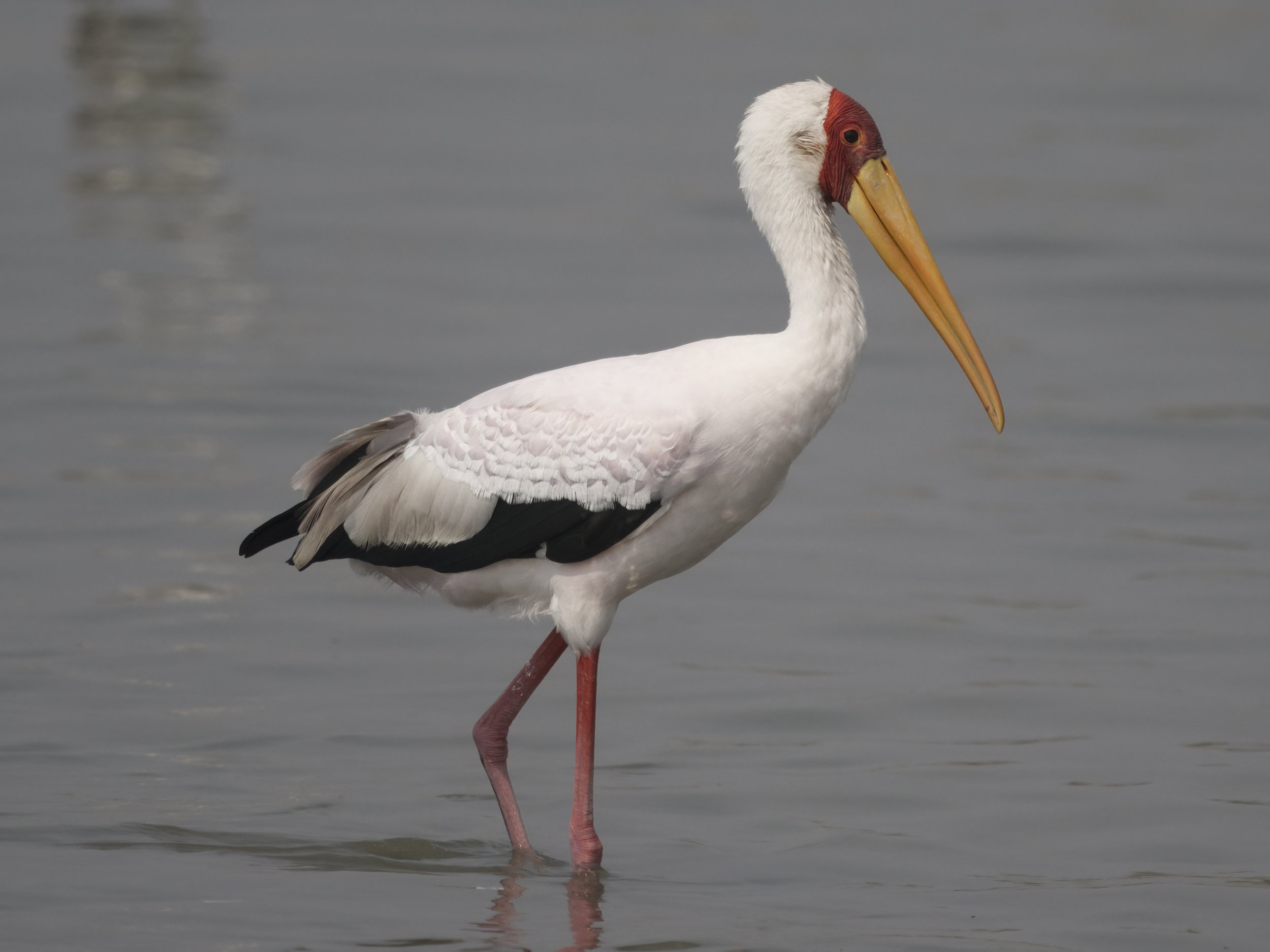
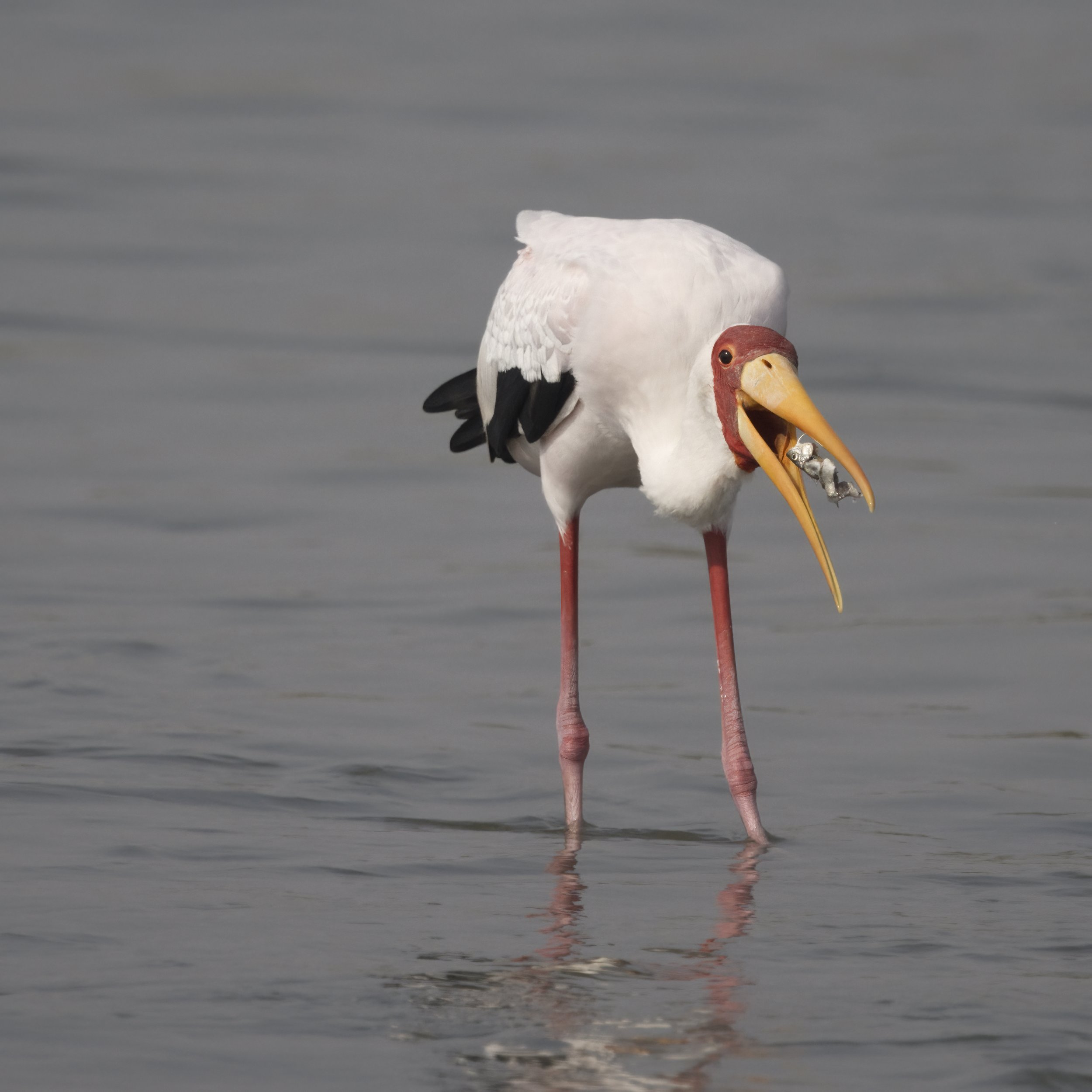
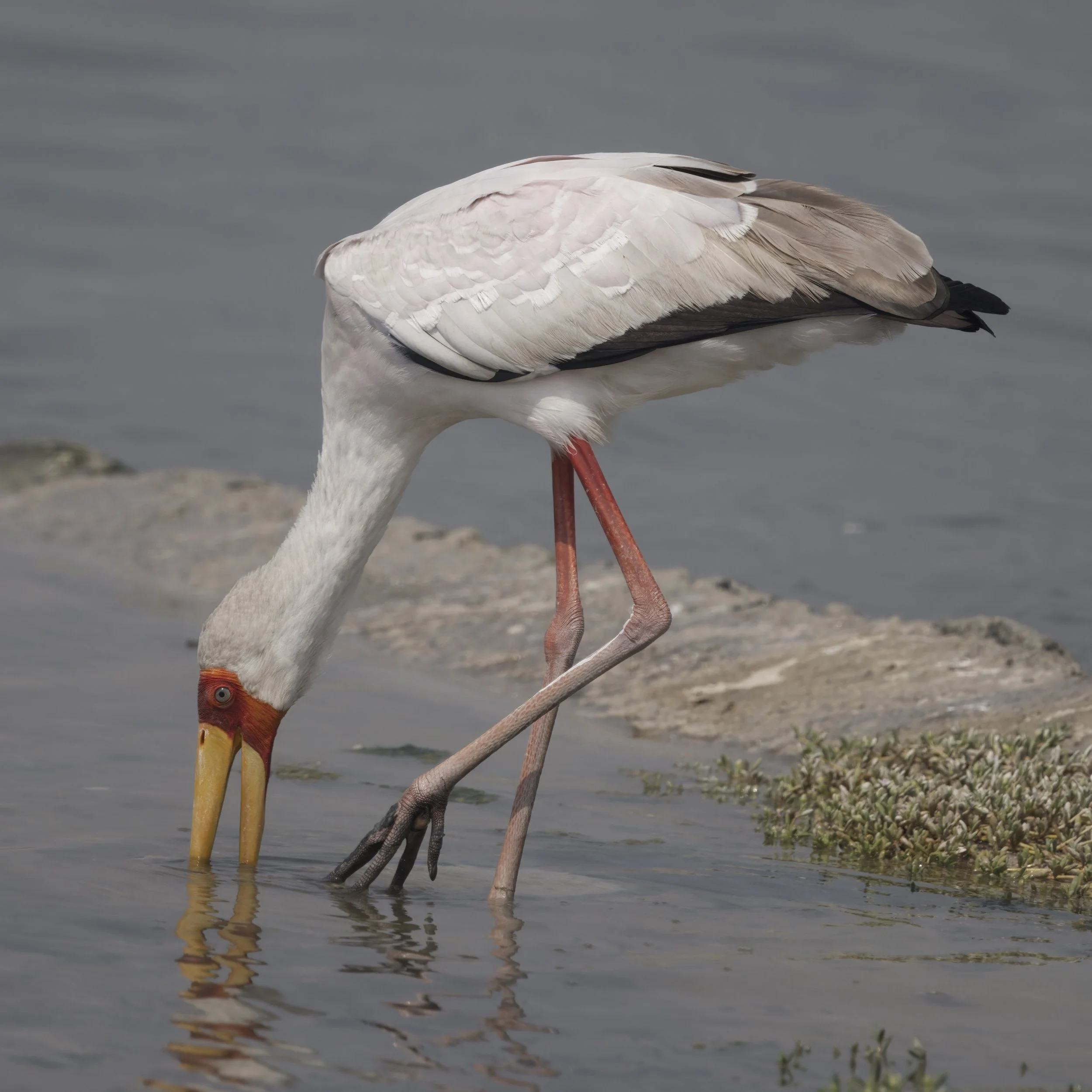
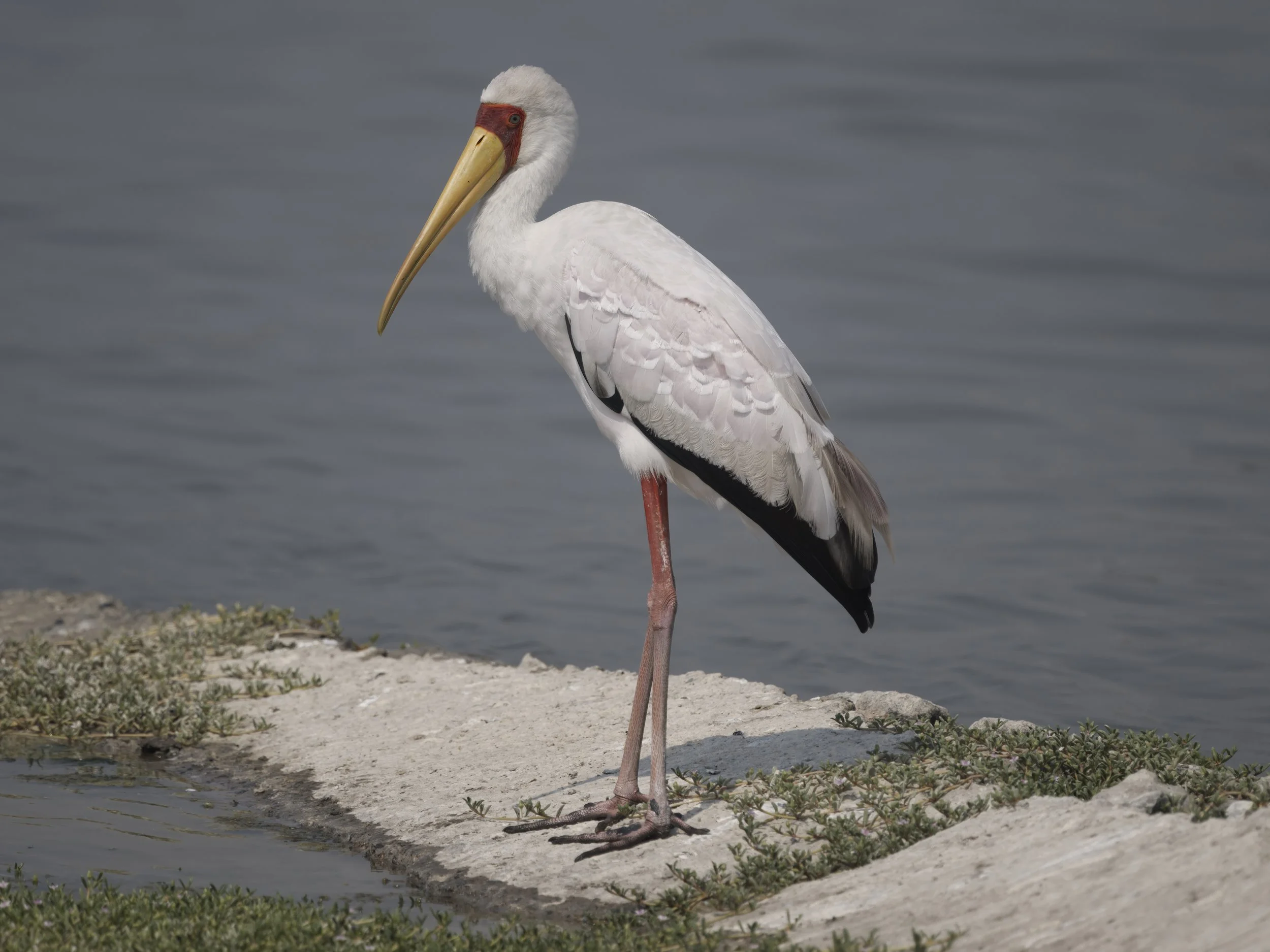
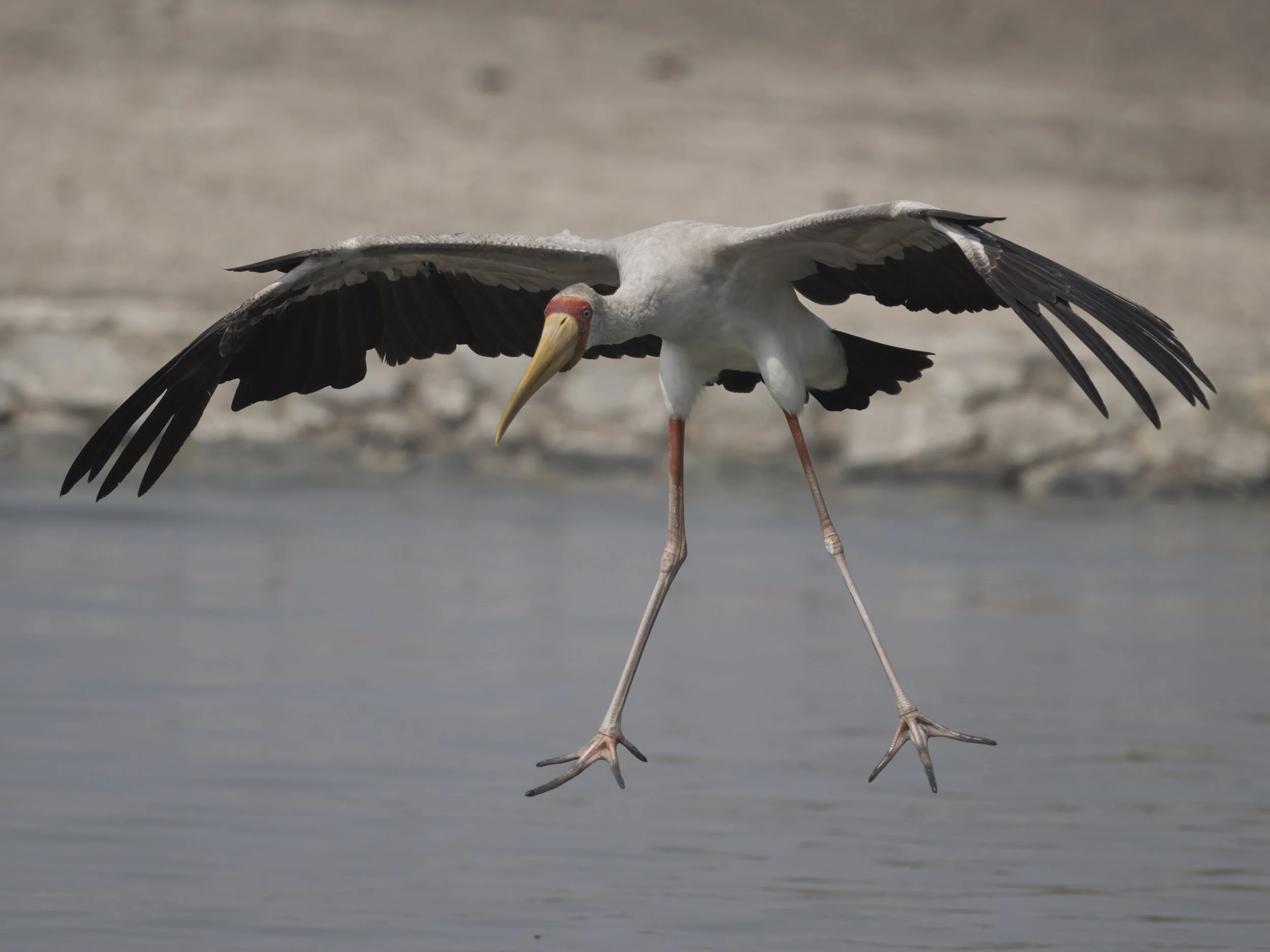
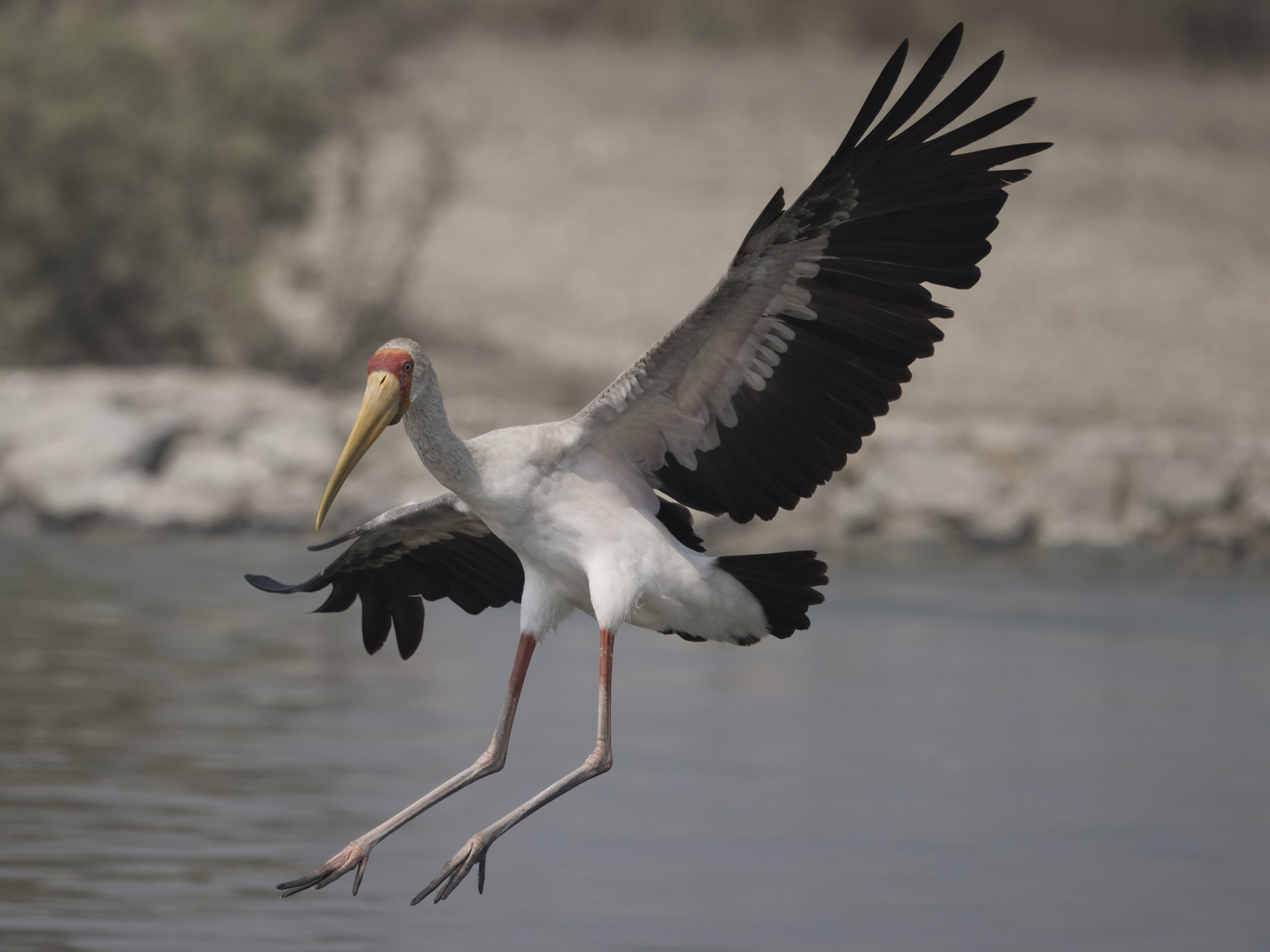
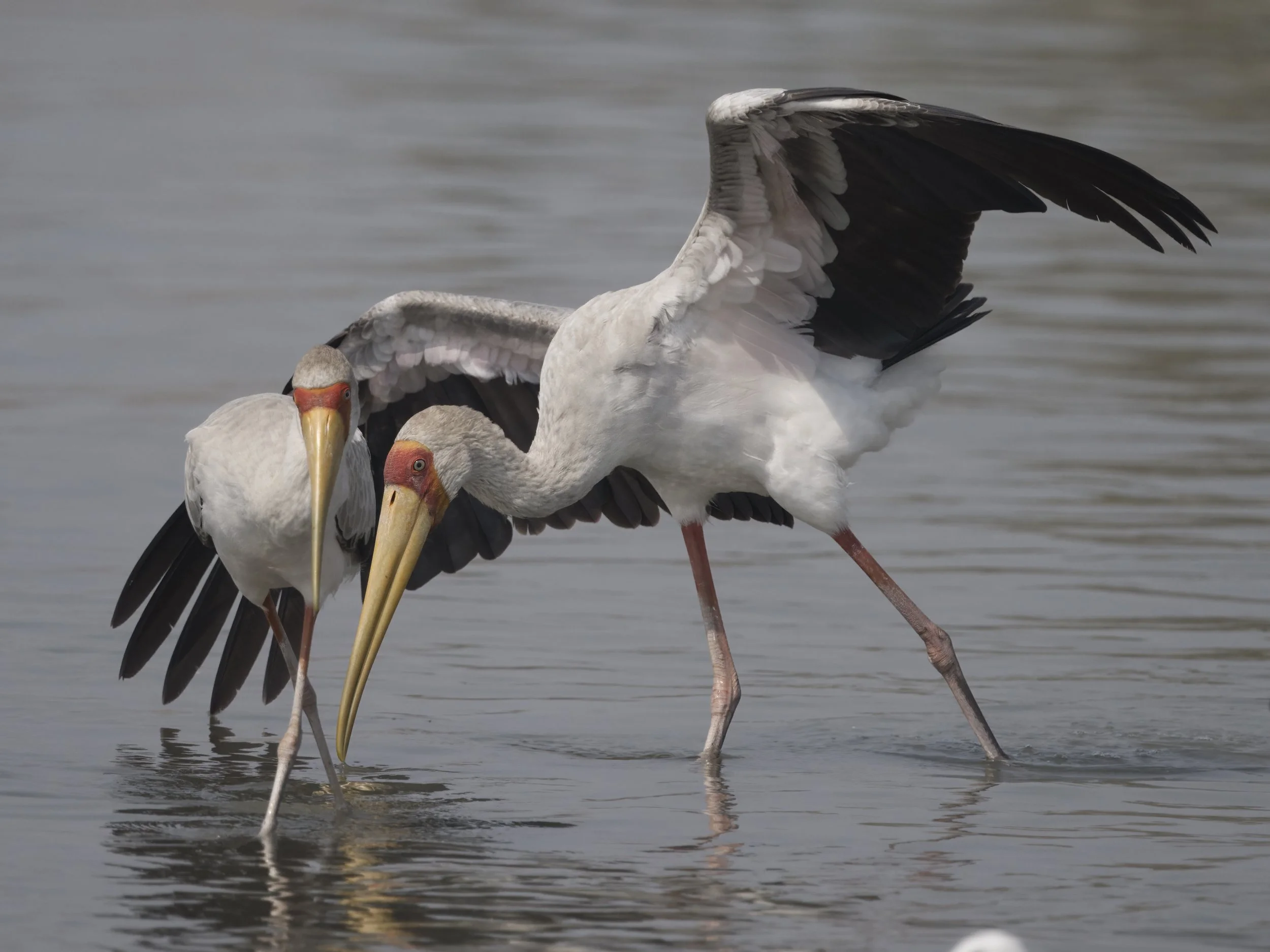
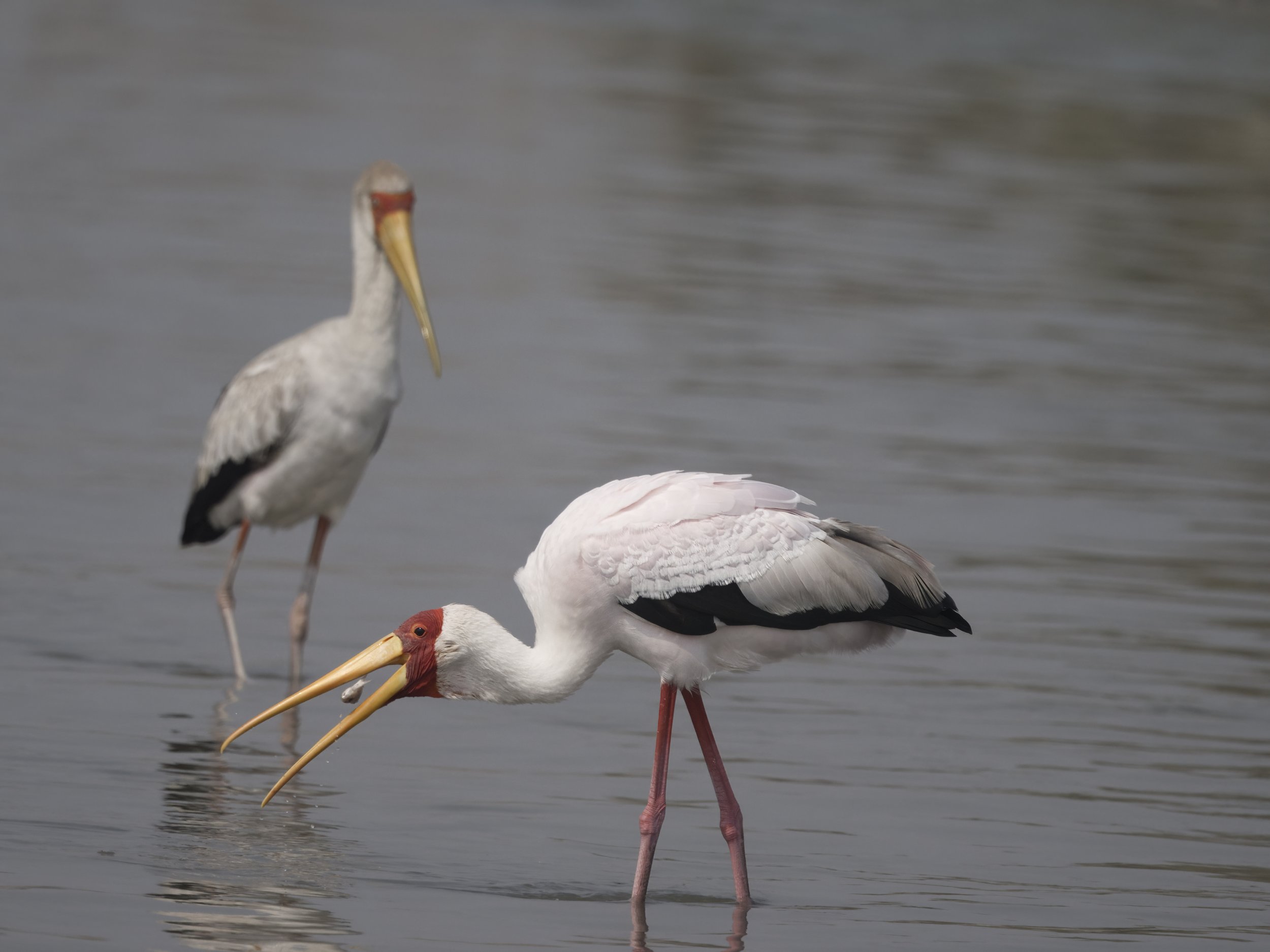
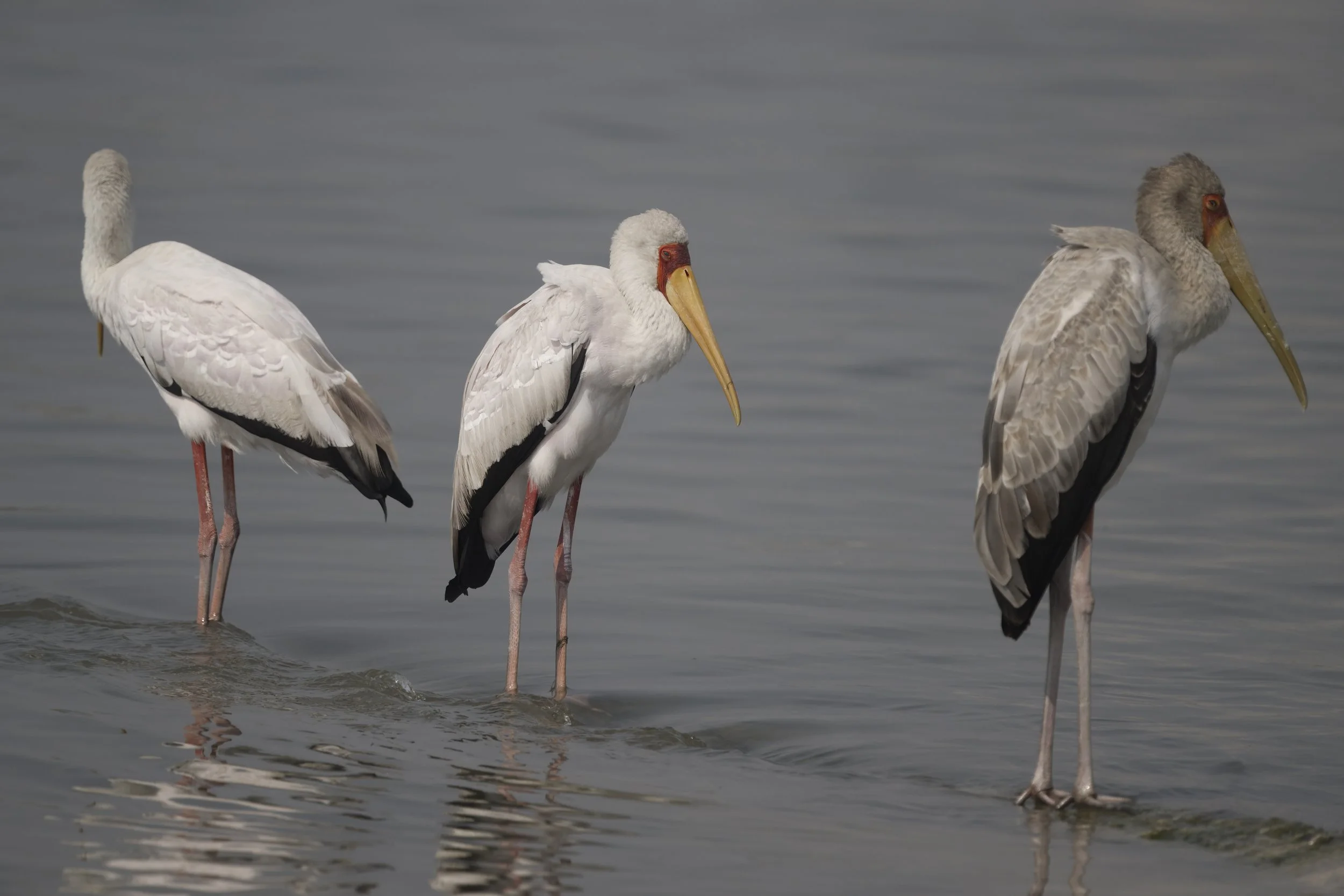
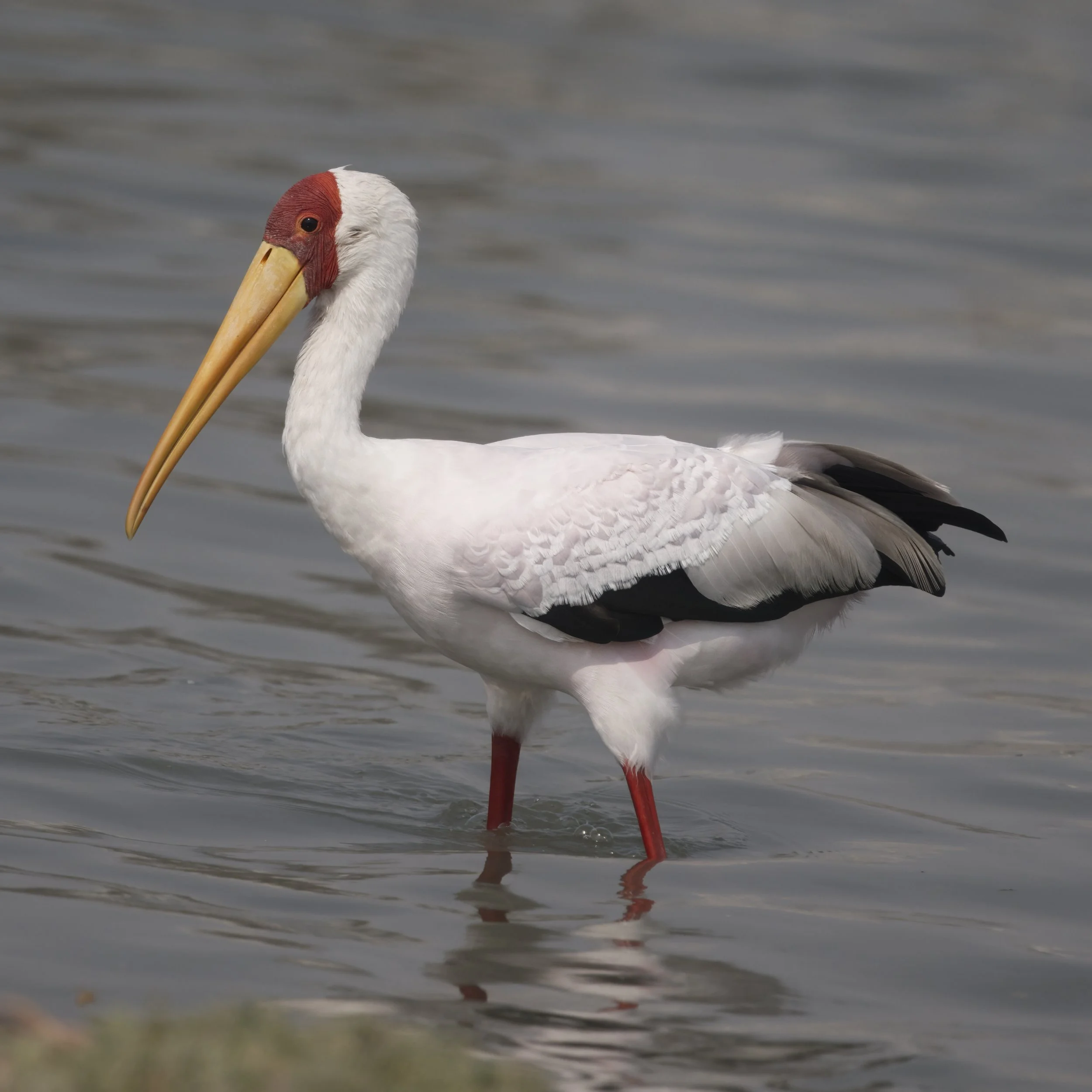
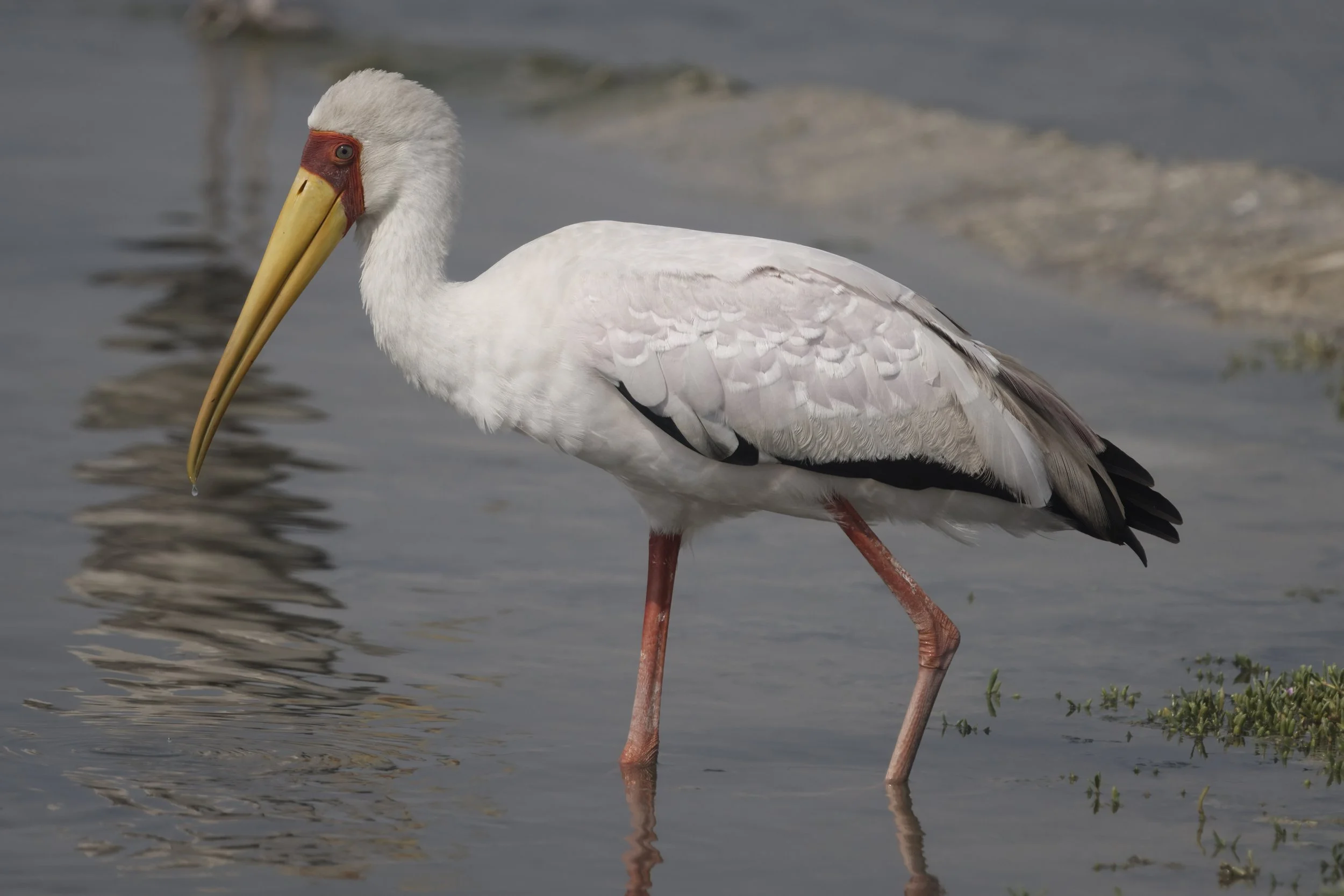
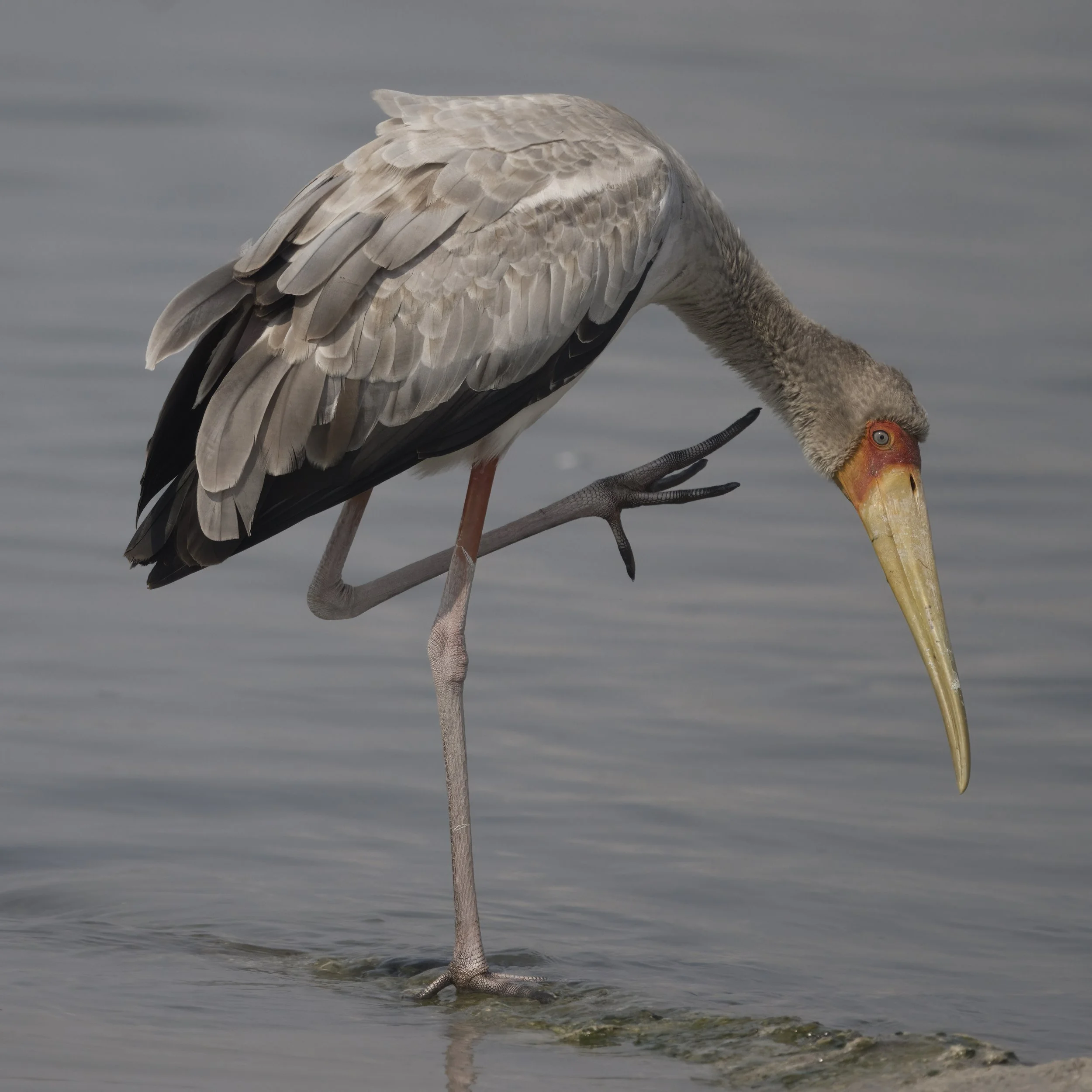
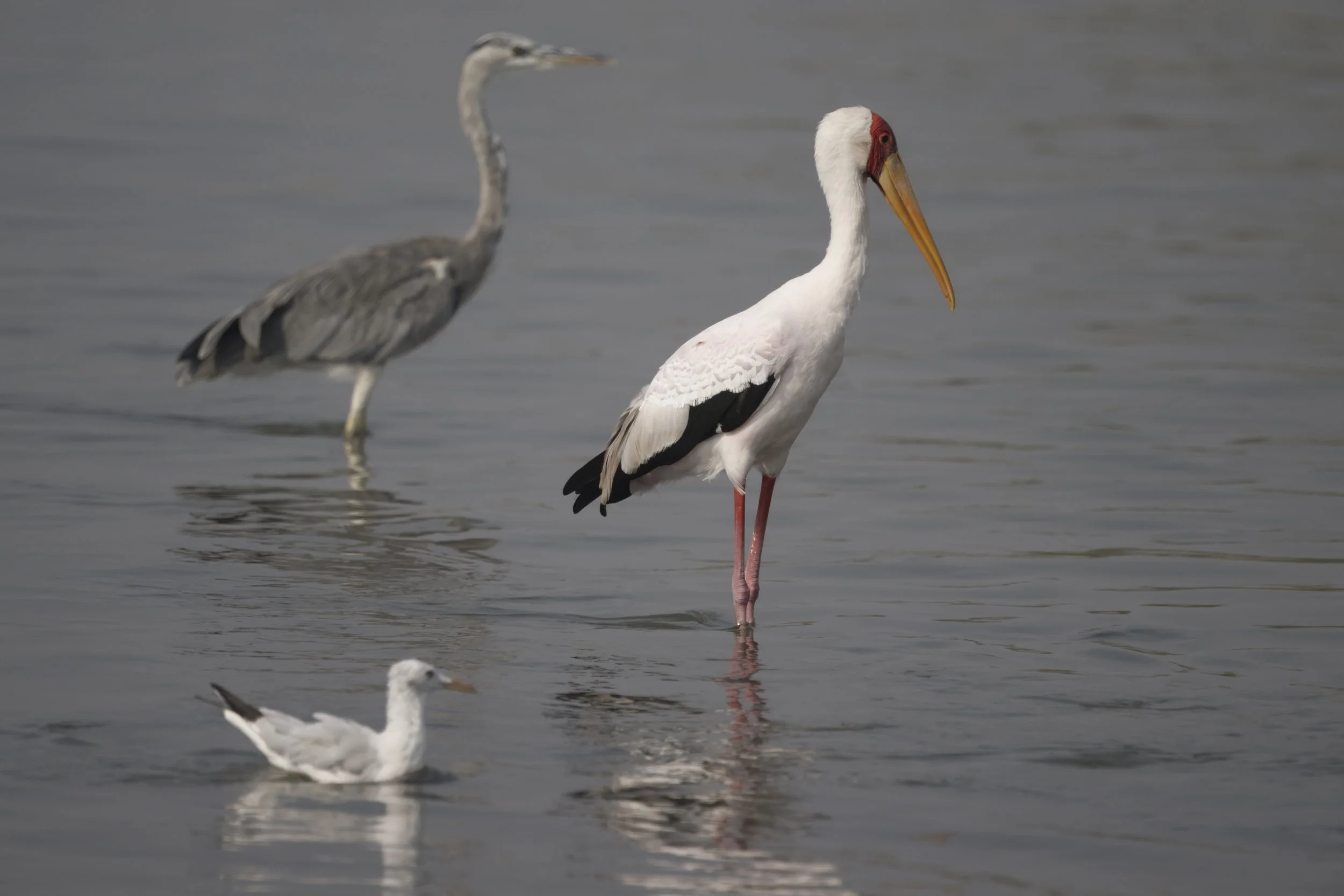
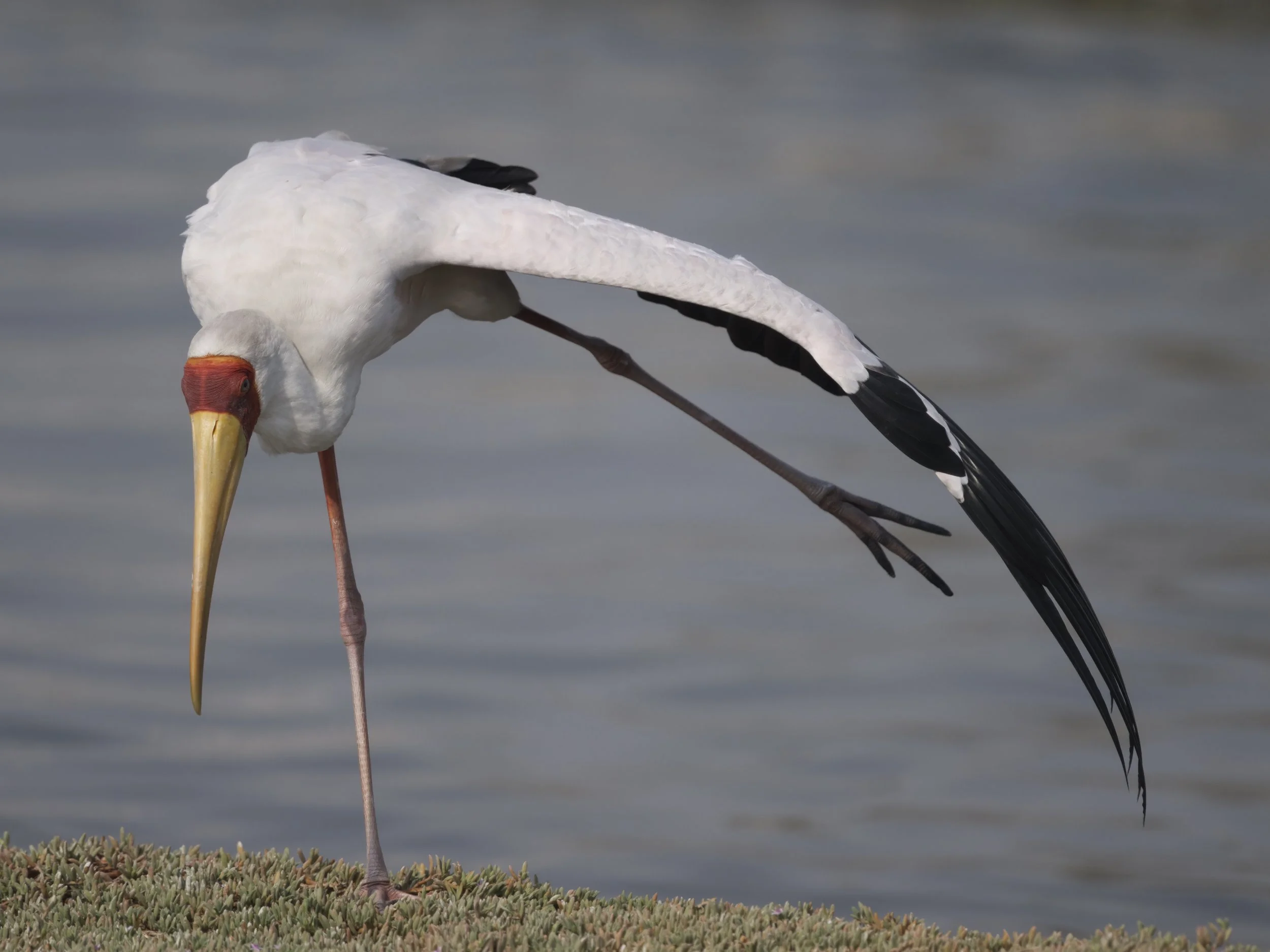
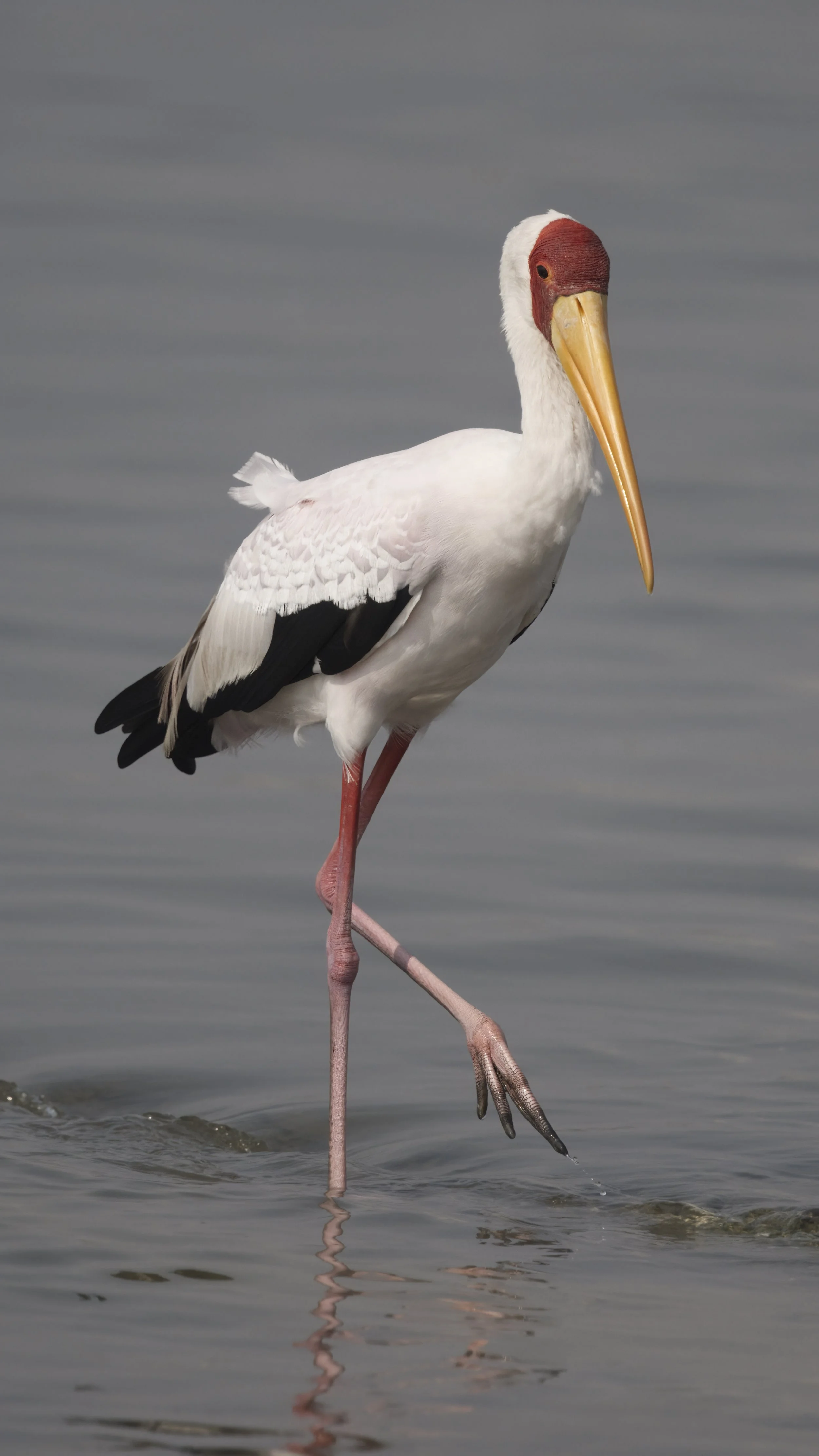
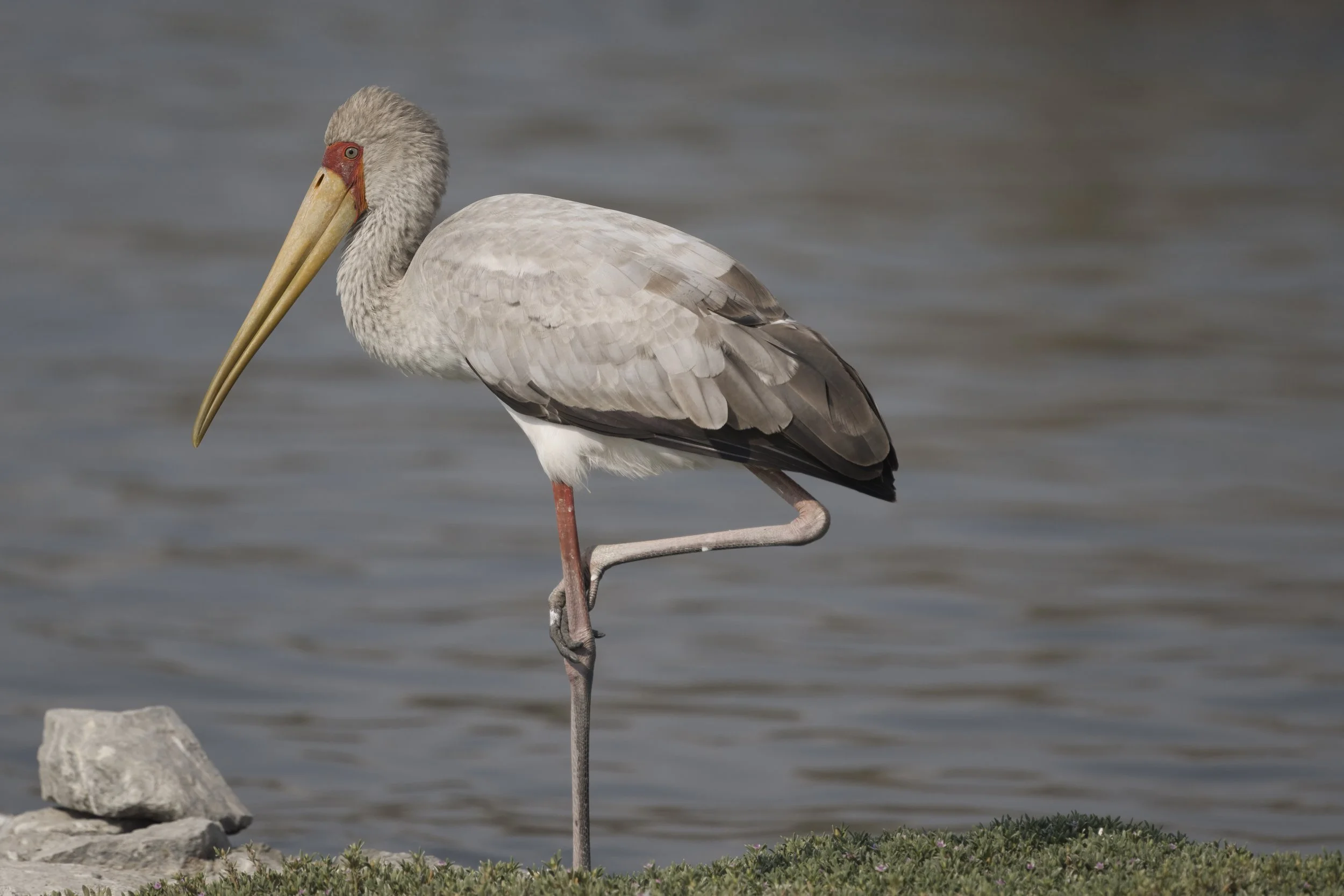
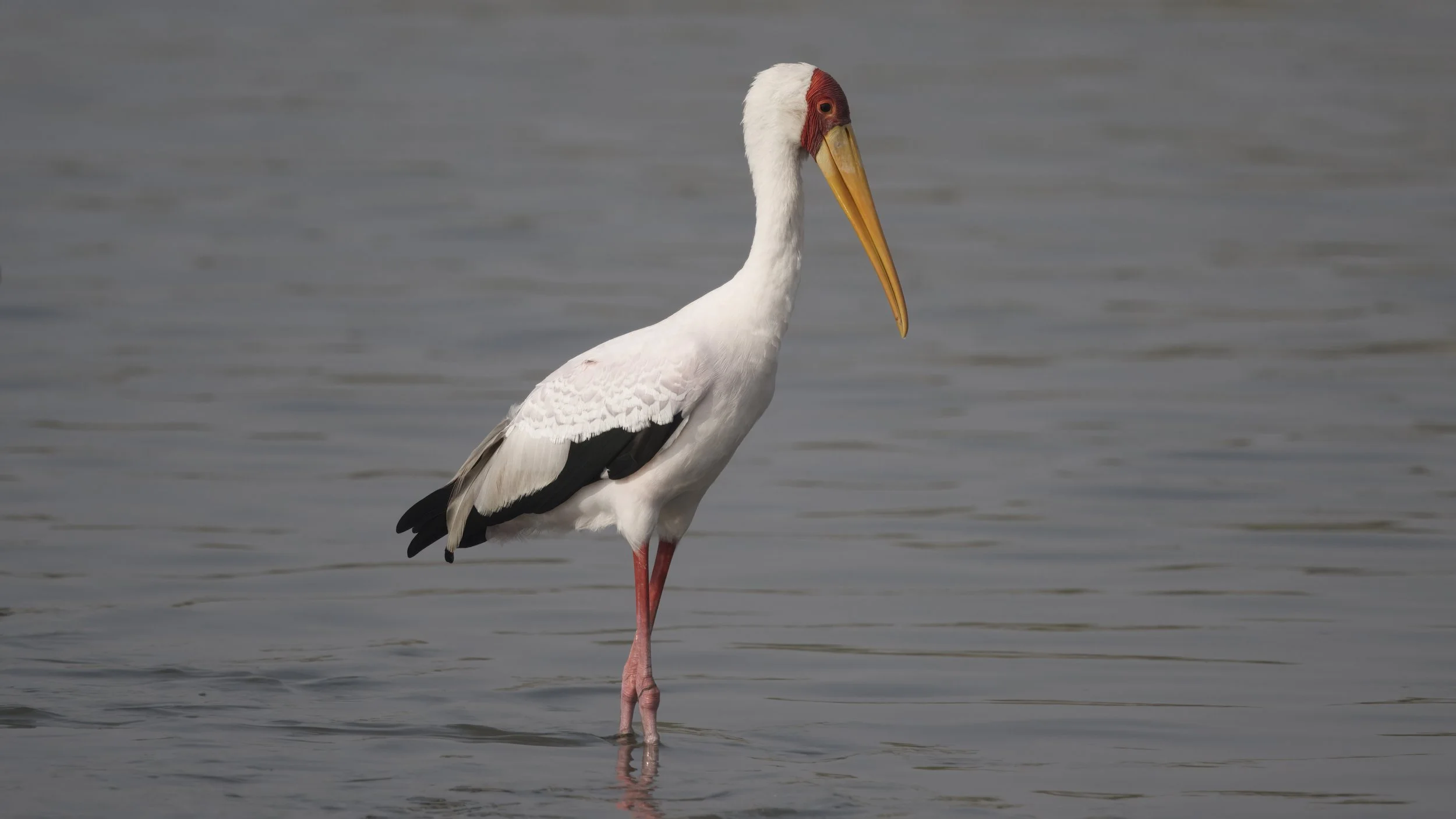
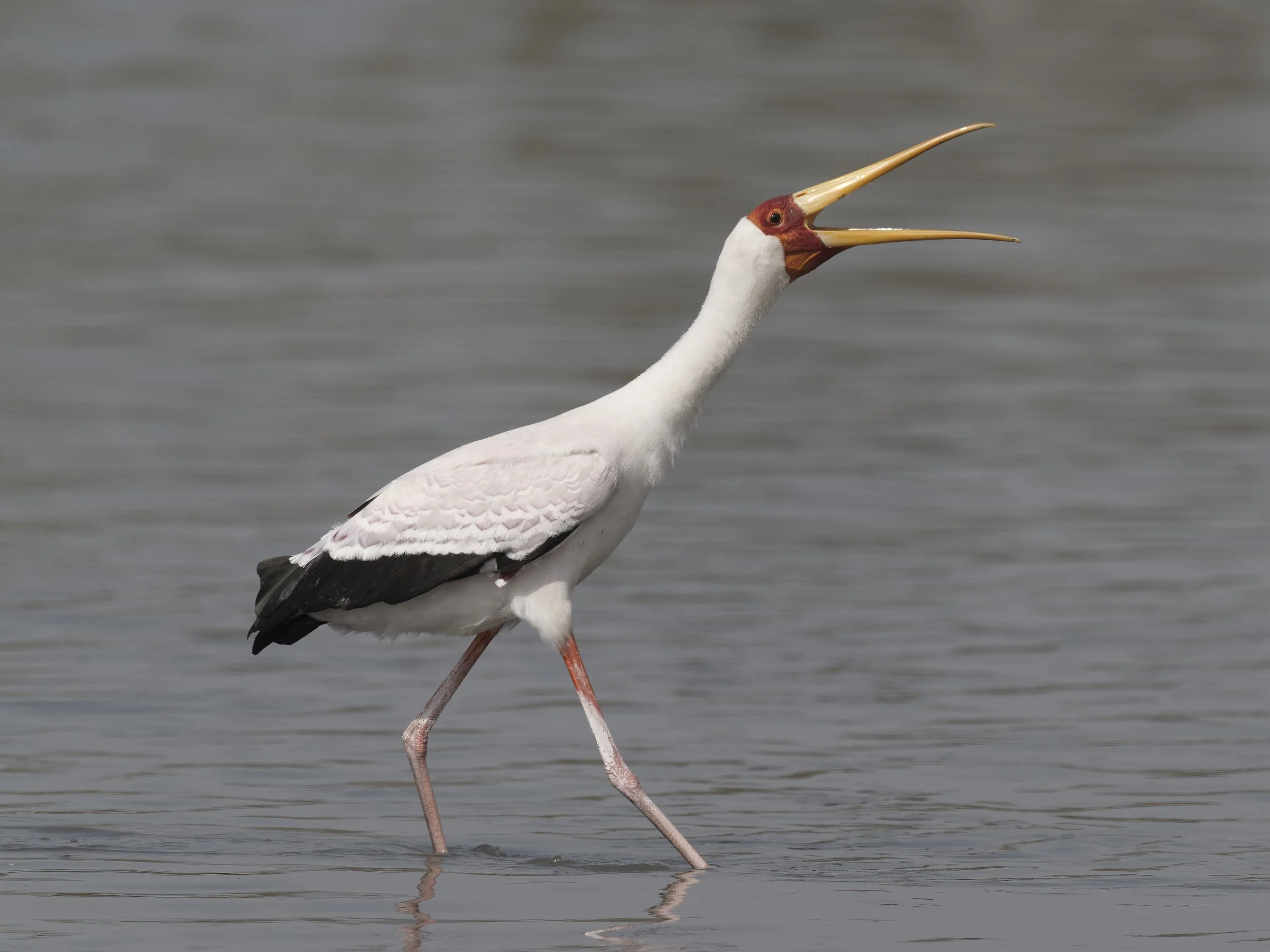
The Yellow-billed Stork (Mycteria ibis) is a large, distinctive wading bird found throughout sub-Saharan Africa and parts of Madagascar. Adults typically measure 90–105 cm (35–41 inches) in length and have a wingspan of about 150 cm (59 inches). Weighing between 2.3 and 2.6 kg (5–6 lbs), this species is easily recognized by its vibrant yellow bill, which is long, straight, and slightly down-curved, ideal for foraging in shallow waters. Its plumage is mostly white, with a soft pinkish hue, especially on the wings and back, and contrasting black flight feathers. Its bare facial skin is a bright reddish-orange, adding to its striking appearance.
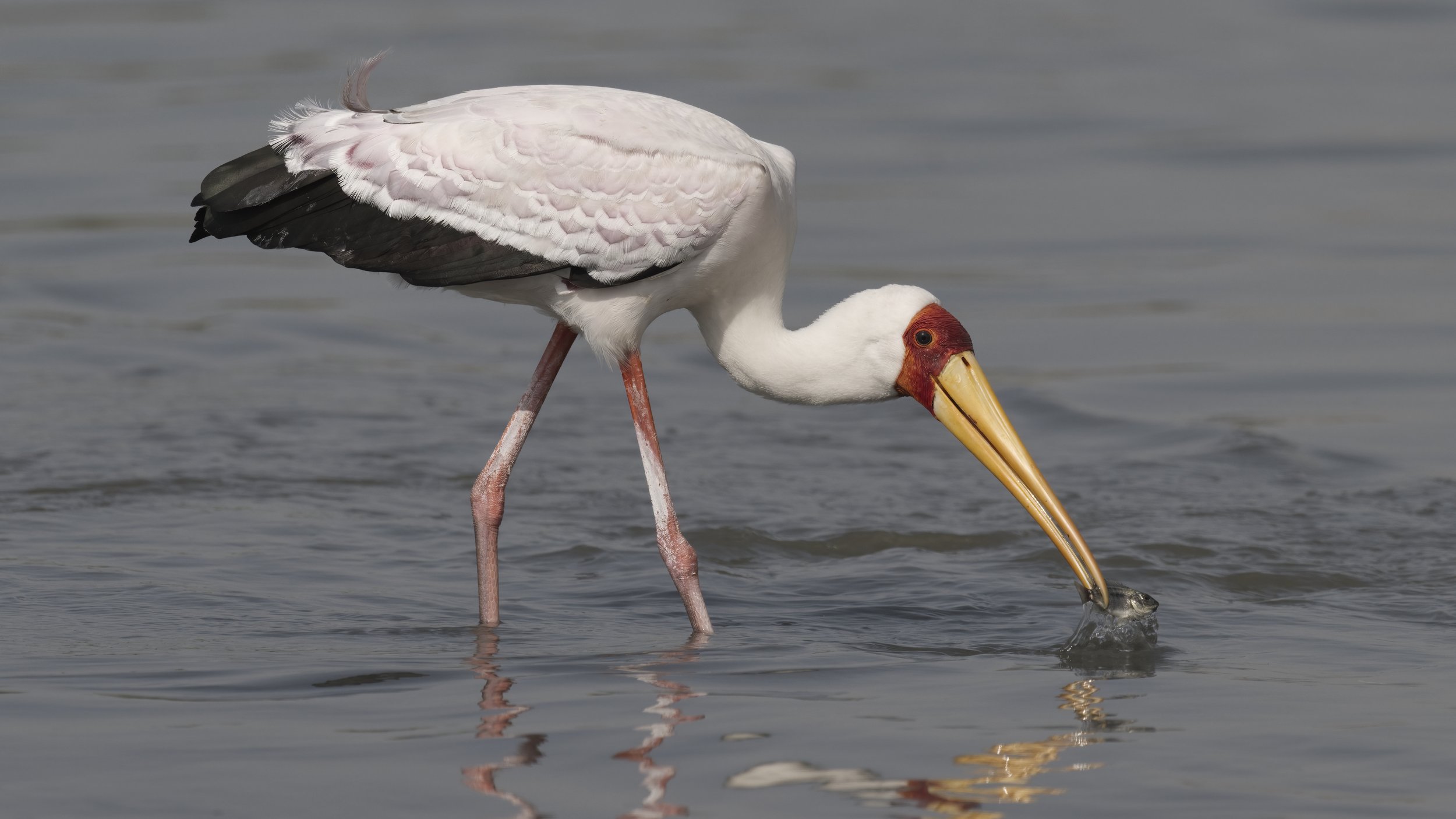
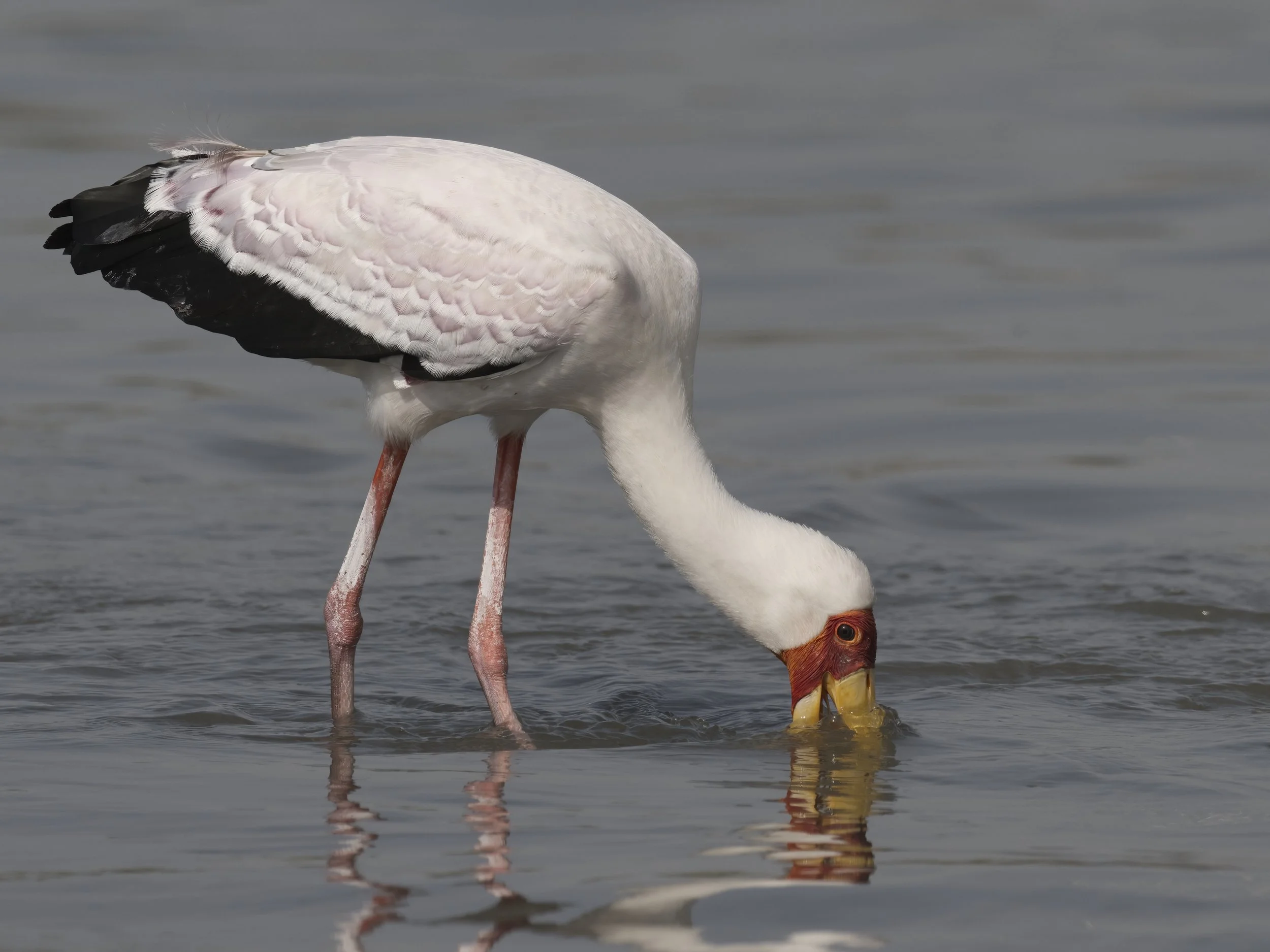
Yellow-billed Storks primarily inhabit wetlands, including shallow lakes, marshes, swamps, and riverbanks. Their foraging technique is highly specialized: they wade slowly through the water, sweeping their partially open bill from side to side, snapping it shut when they detect prey. Their diet consists of fish, frogs, crustaceans, and various small invertebrates, which they capture with remarkable speed.
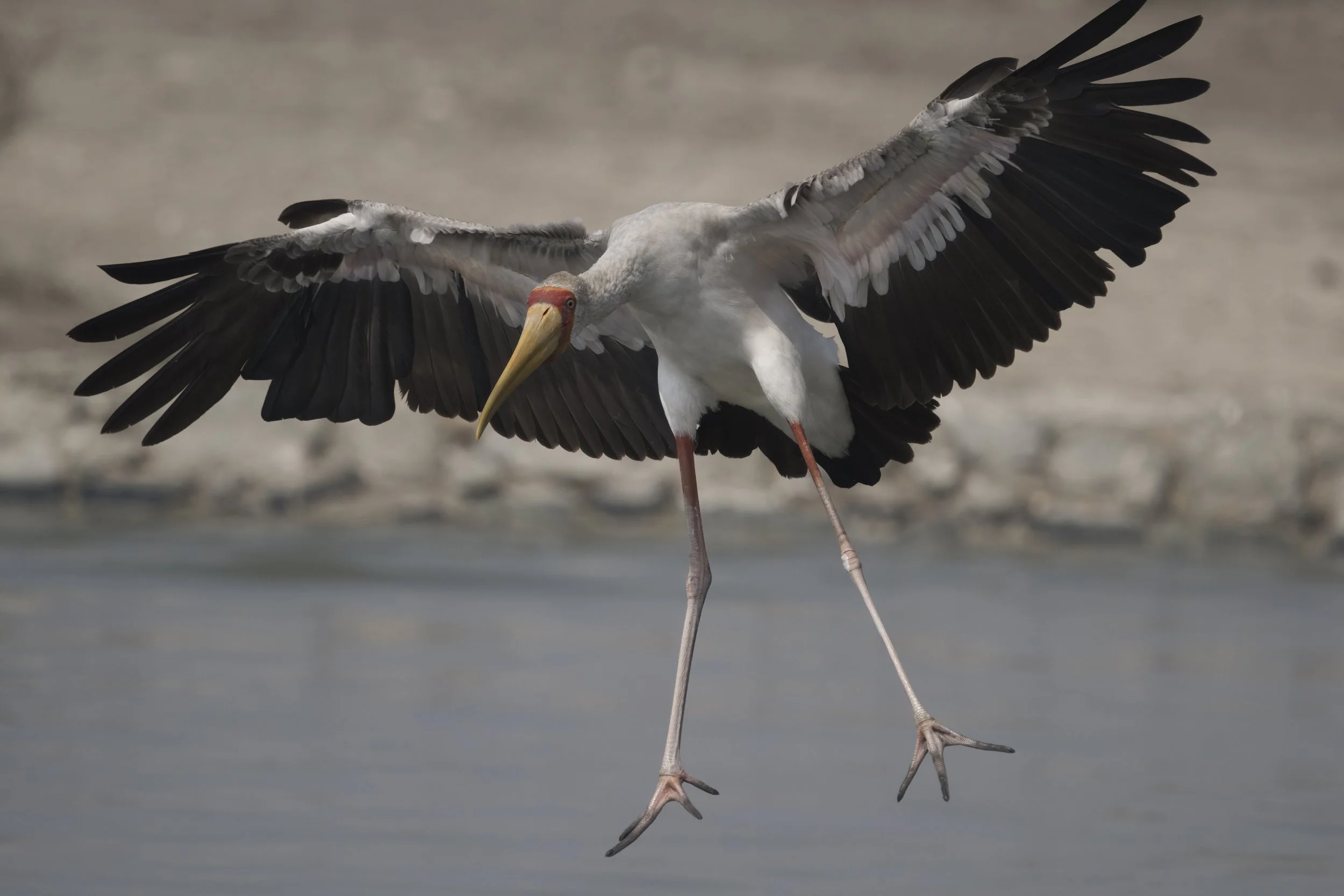
These birds are social and often form large nesting colonies, usually sharing space with other waterbirds such as herons, egrets, and ibises. During the breeding season, which varies with location and rainfall patterns, they build large stick nests in trees near water. Both parents take part in raising their young. The Yellow-billed Stork’s elegant, slow wingbeats and soaring flight are a familiar sight across Africa’s wetlands, where it plays an important ecological role by helping control fish populations and maintaining the health of aquatic habitats. Despite being relatively common, habitat loss due to wetland degradation poses a threat to its populations in some areas.
اللقلق أصفر المنقار هو طائر خوّاض كبير ومميز ينتشر في أنحاء واسعة من أفريقيا جنوب الصحراء وأجزاء من مدغشقر. ويبلغ طول الطيور البالغة عادة بين 90 و105 سم، مع باع جناحين يصل إلى نحو 150 سم، ويتراوح وزنها بين 2.3 و2.6 كغ. ويُعرَف هذا النوع بسهولة من خلال منقاره الأصفر الطويل المستقيم والمنحني قليلًا إلى الأسفل، وهو تكيف مثالي للبحث عن الغذاء في المياه الضحلة. أما ريشه فهو أبيض غالبًا مع مسحة وردية خفيفة، خاصة على الأجنحة والظهر، ويتباين مع ريش الطيران الأسود، بينما يظهر الجلد العاري على الوجه بلون برتقالي مائل إلى الأحمر يمنحه مظهرًا لافتًا
ويعيش اللقلق أصفر المنقار في الأراضي الرطبة مثل البحيرات الضحلة، والمستنقعات، والسبخات، وضفاف الأنهار. ويعتمد على أسلوب تغذية متخصص، إذ يسير ببطء في الماء محرّكًا منقاره المفتوح جزئيًا من جانب إلى آخر، ثم يغلقه بسرعة عند ملامسة الفريسة. ويتغذى على الأسماك، والضفادع، والقشريات، واللافقاريات الصغيرة
ويُعَدّ طائرًا اجتماعيًا، حيث يشكّل مستعمرات تعشيش كبيرة غالبًا مع طيور مائية أخرى مثل البلشونات وأبو قردان وأبو منجل. وخلال موسم التكاثر، الذي يختلف حسب المنطقة والأمطار، يبني أعشاشًا كبيرة من الأغصان على الأشجار القريبة من المياه، ويتشارك الأبوان في رعاية الفراخ. وتُعَدّ ضربات جناحيه البطيئة وطيرانه الانسيابي من المشاهد المألوفة فوق الأراضي الرطبة الأفريقية، حيث يؤدي دورًا بيئيًا مهمًا في تنظيم أعداد الأسماك والحفاظ على صحة النظم المائية. ورغم أنه ما يزال شائعًا نسبيًا، فإن تدهور الأراضي الرطبة وفقدان الموائل يشكلان تهديدًا لبعض جماعاته




Other Species
-

Eurasian Spoonbill (Platalea leucorodia)
-
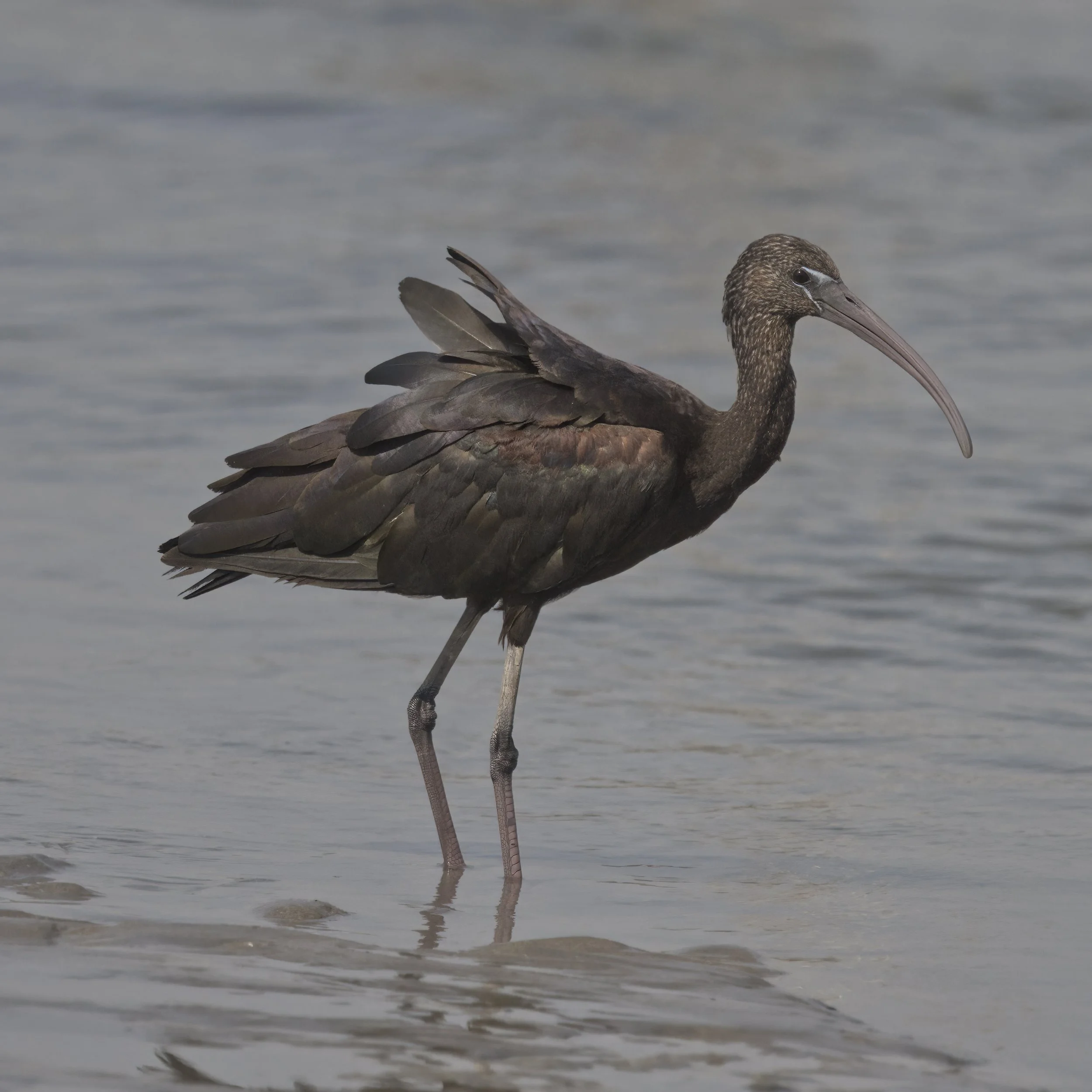
Glossy Ibis (Plegadis falcinellus)
-
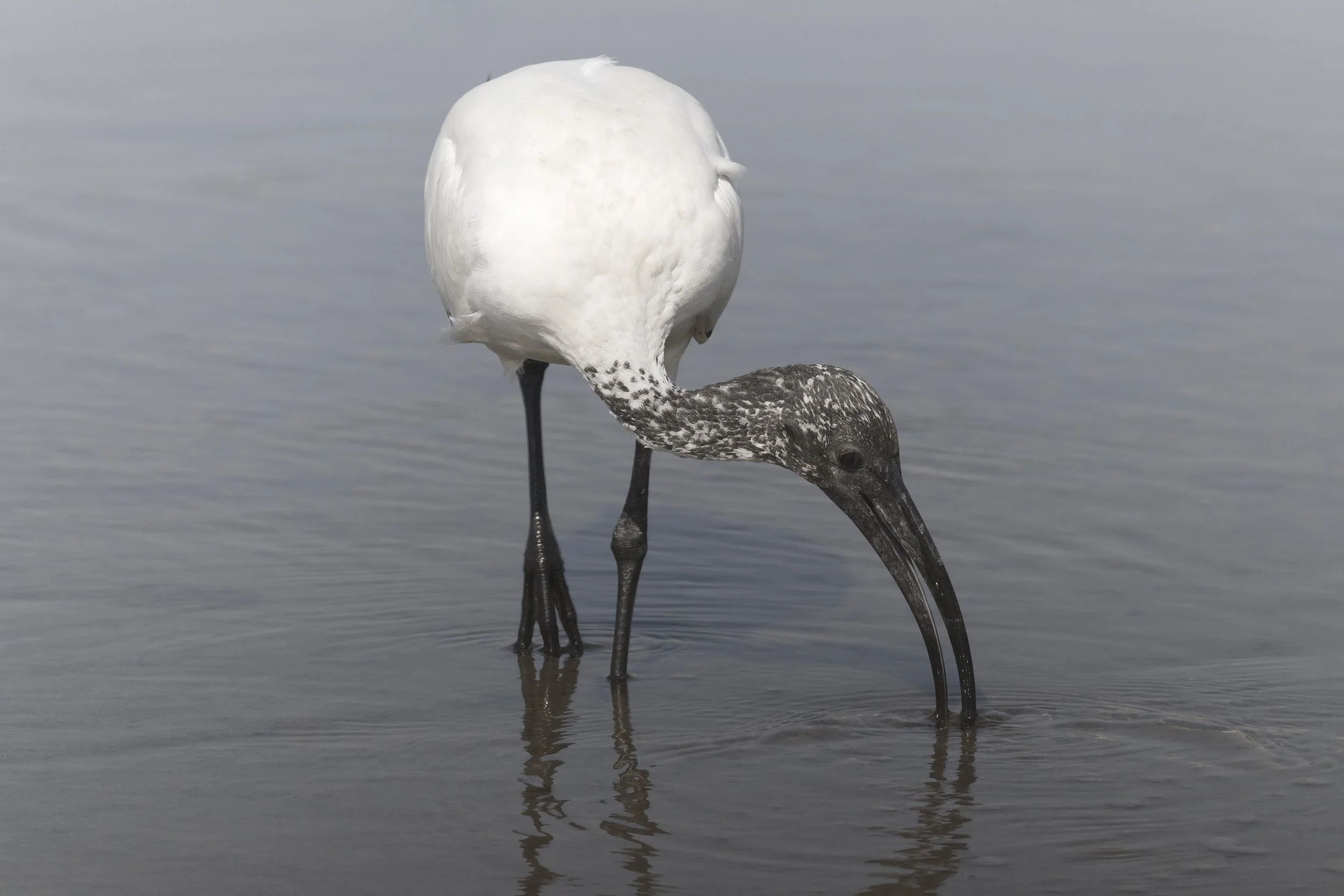
African Sacred Ibis (Threskiornis aethiopicus)
-
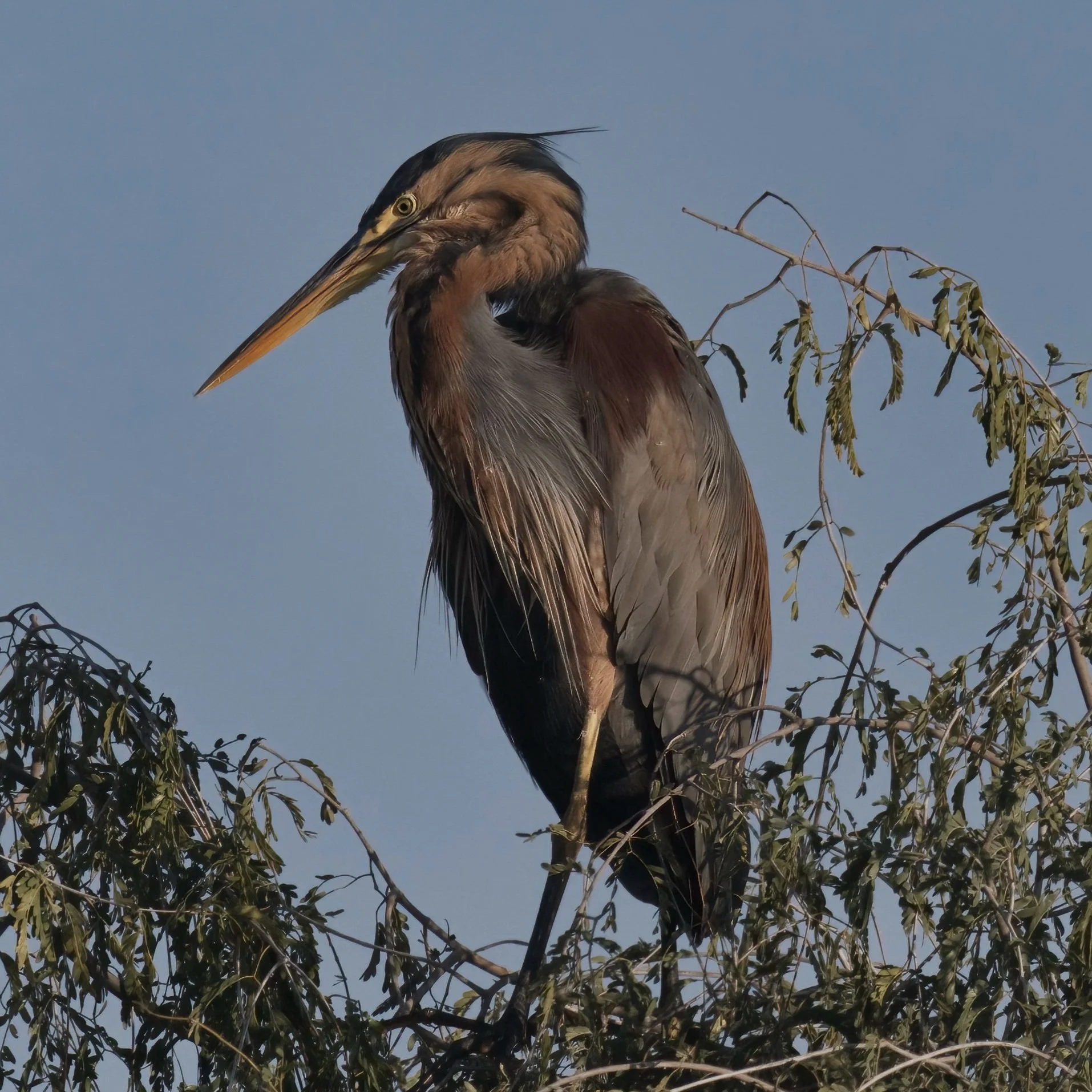
Purple Heron (Ardea purpurea)