

Blue-cheeked Bee-eater \ Merops persicus
(وروار أزرق الخد )
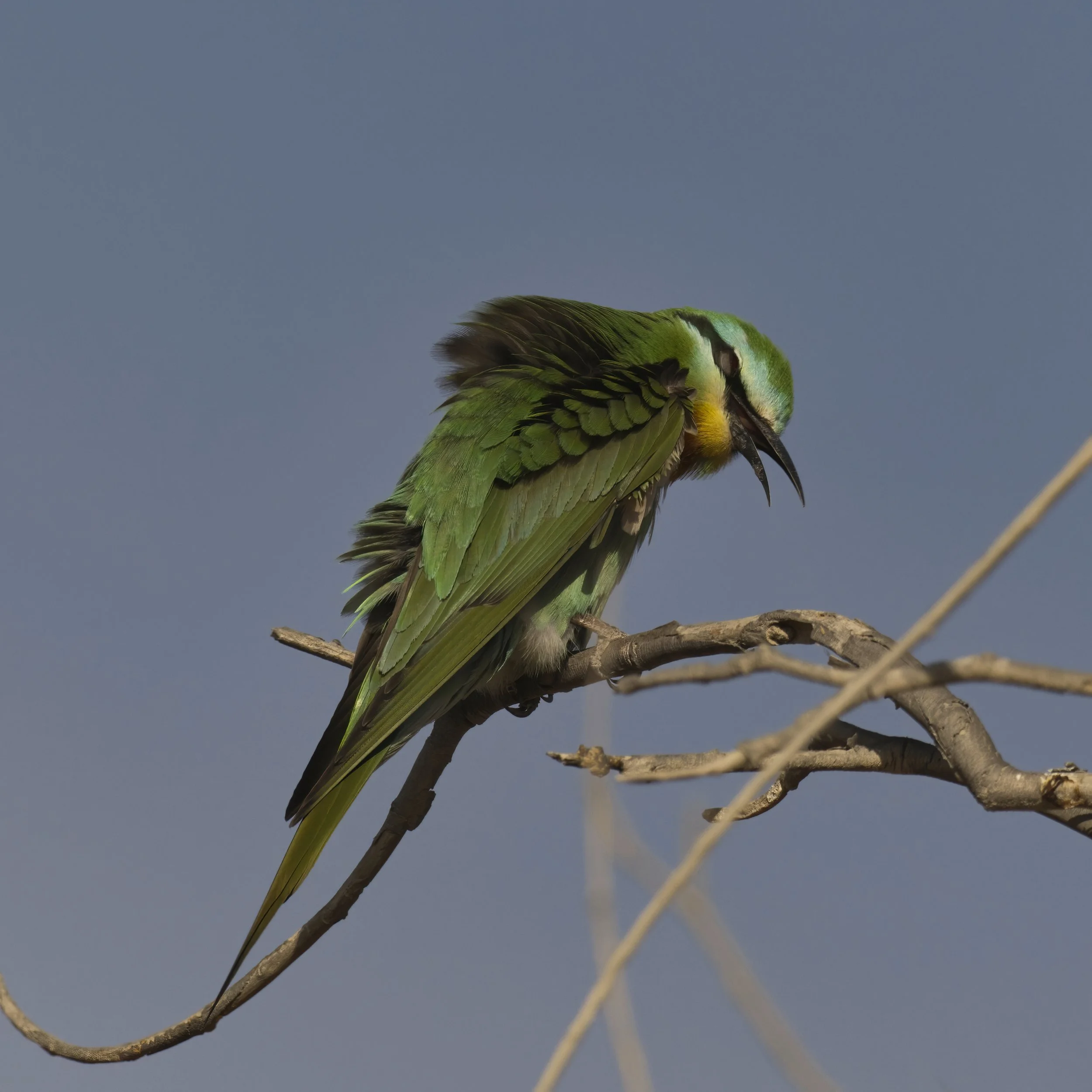
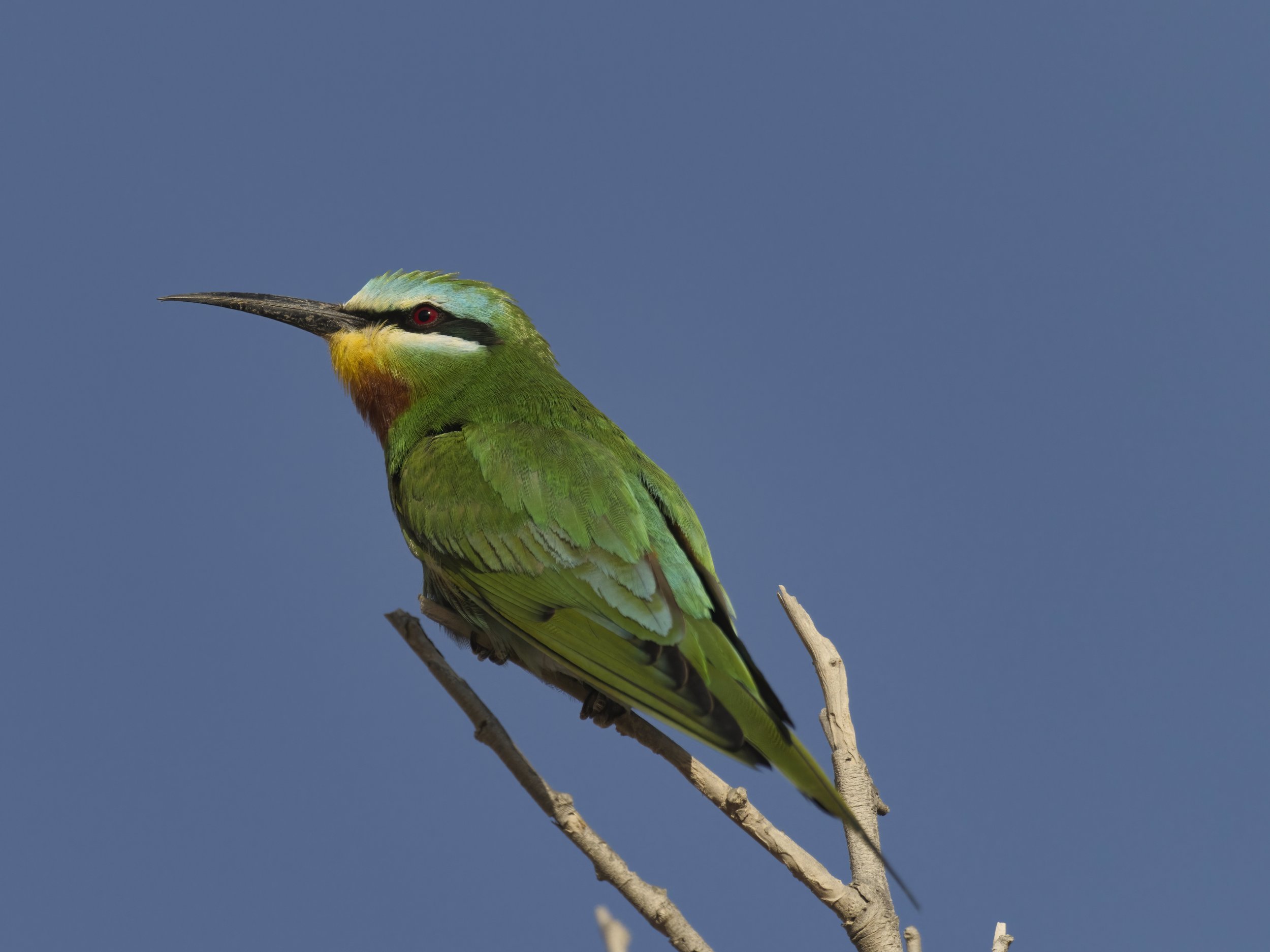
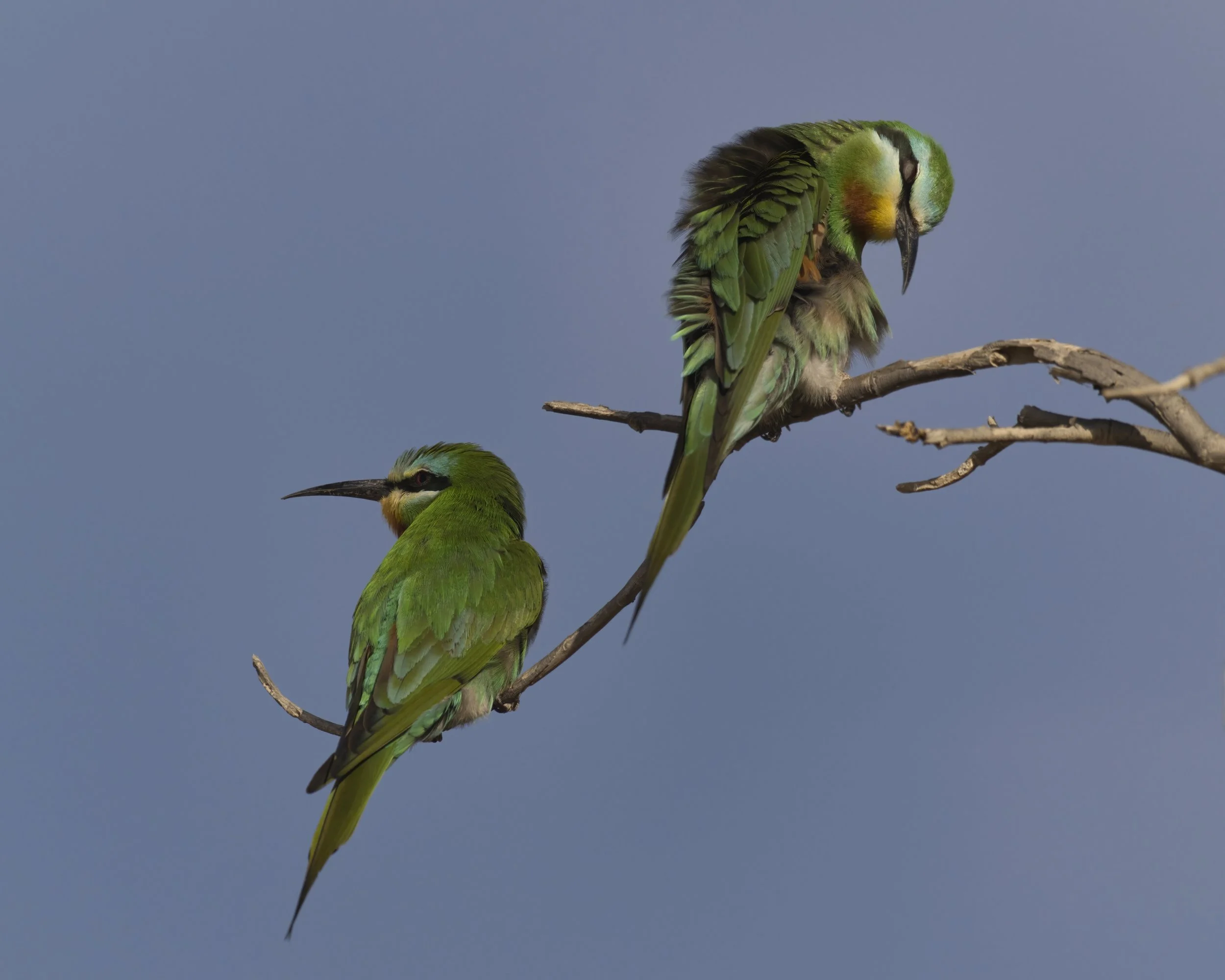
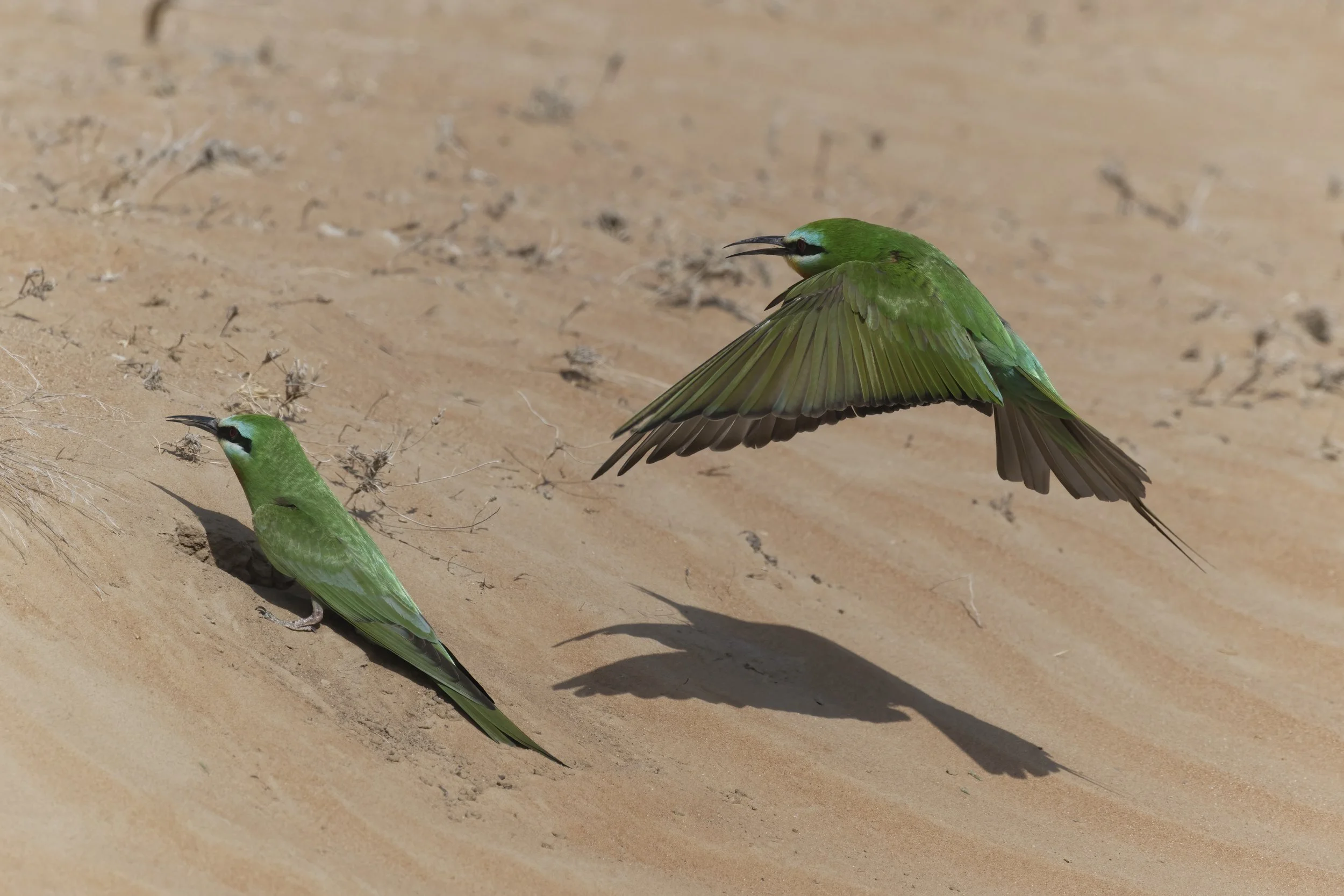
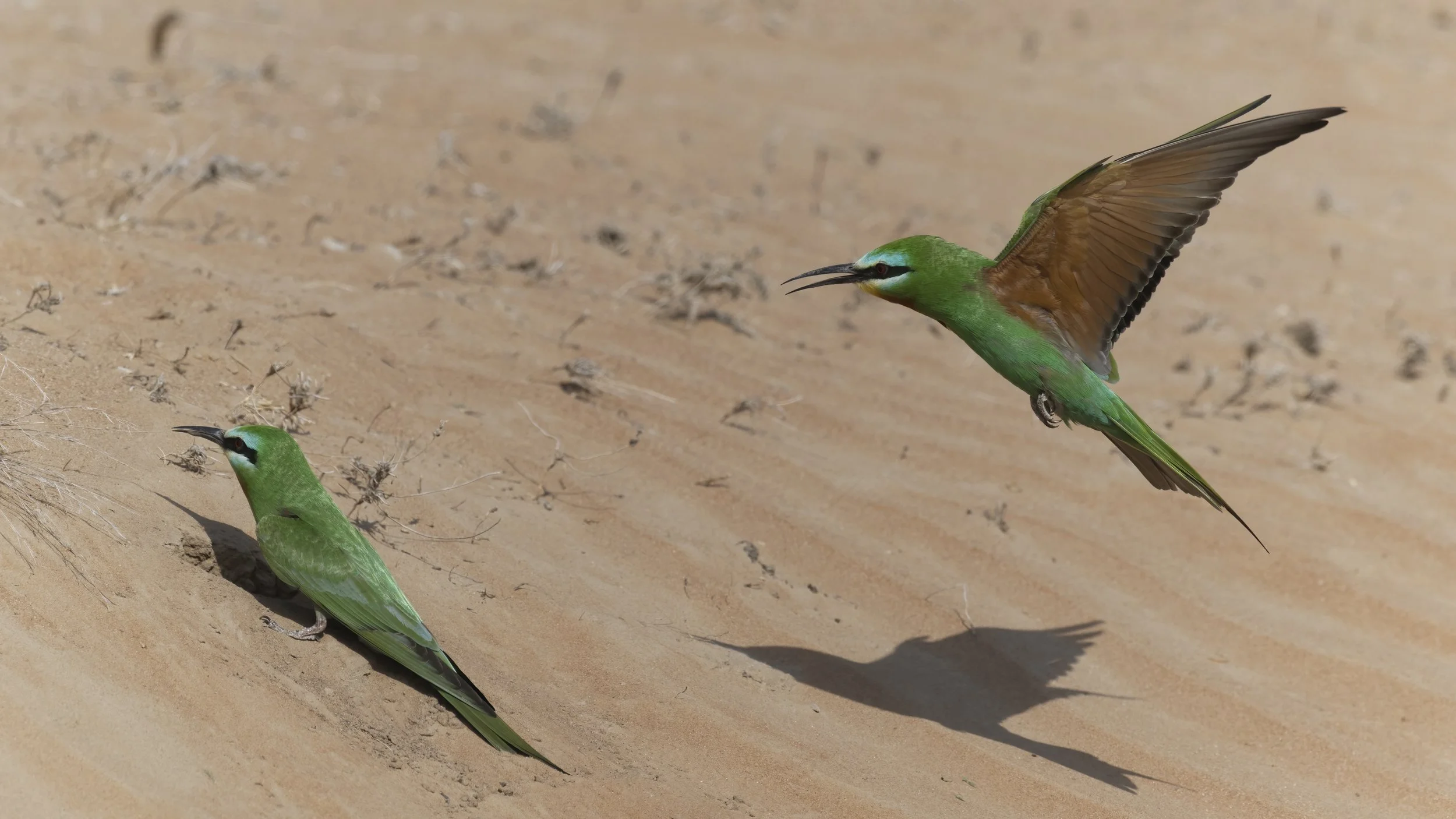
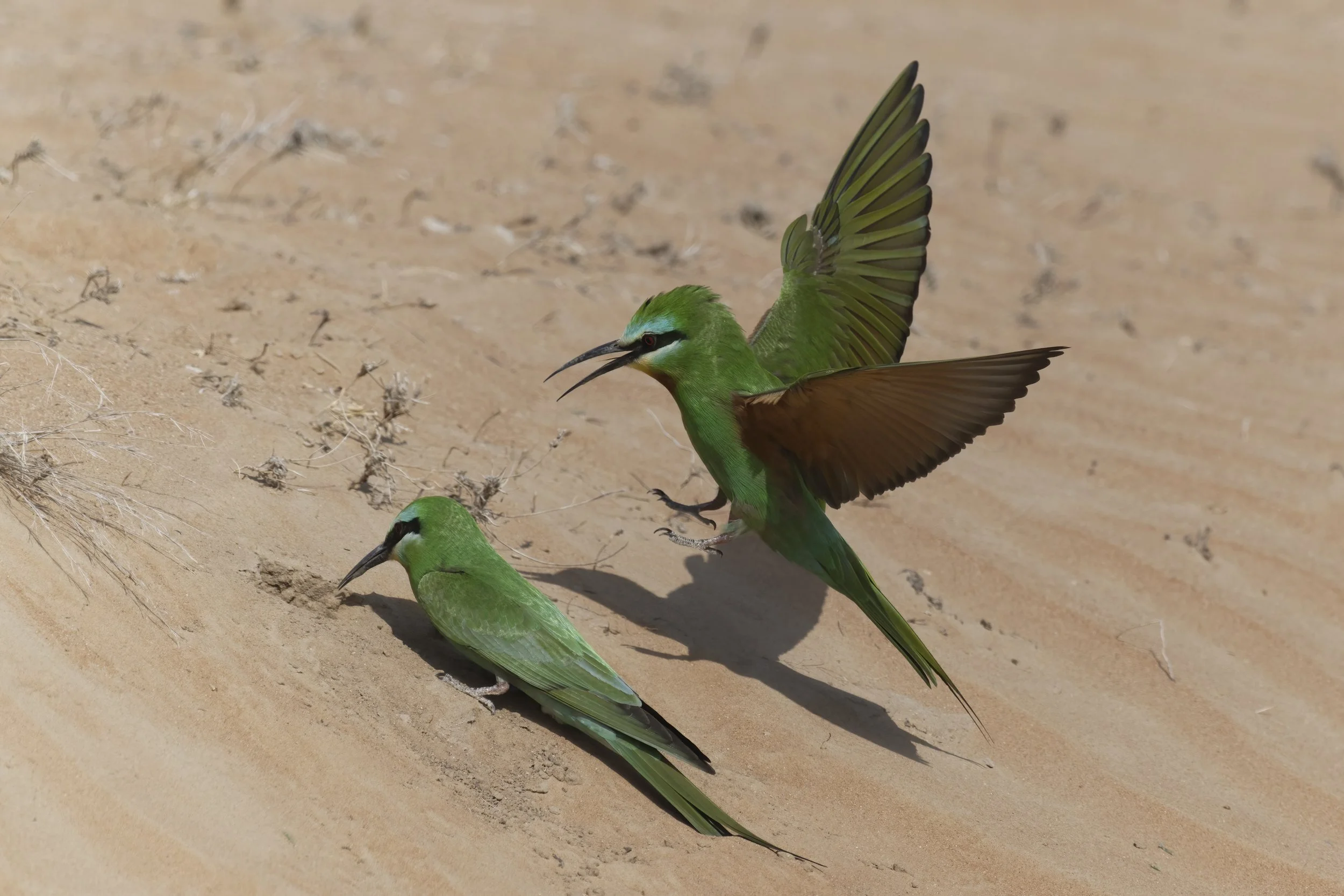
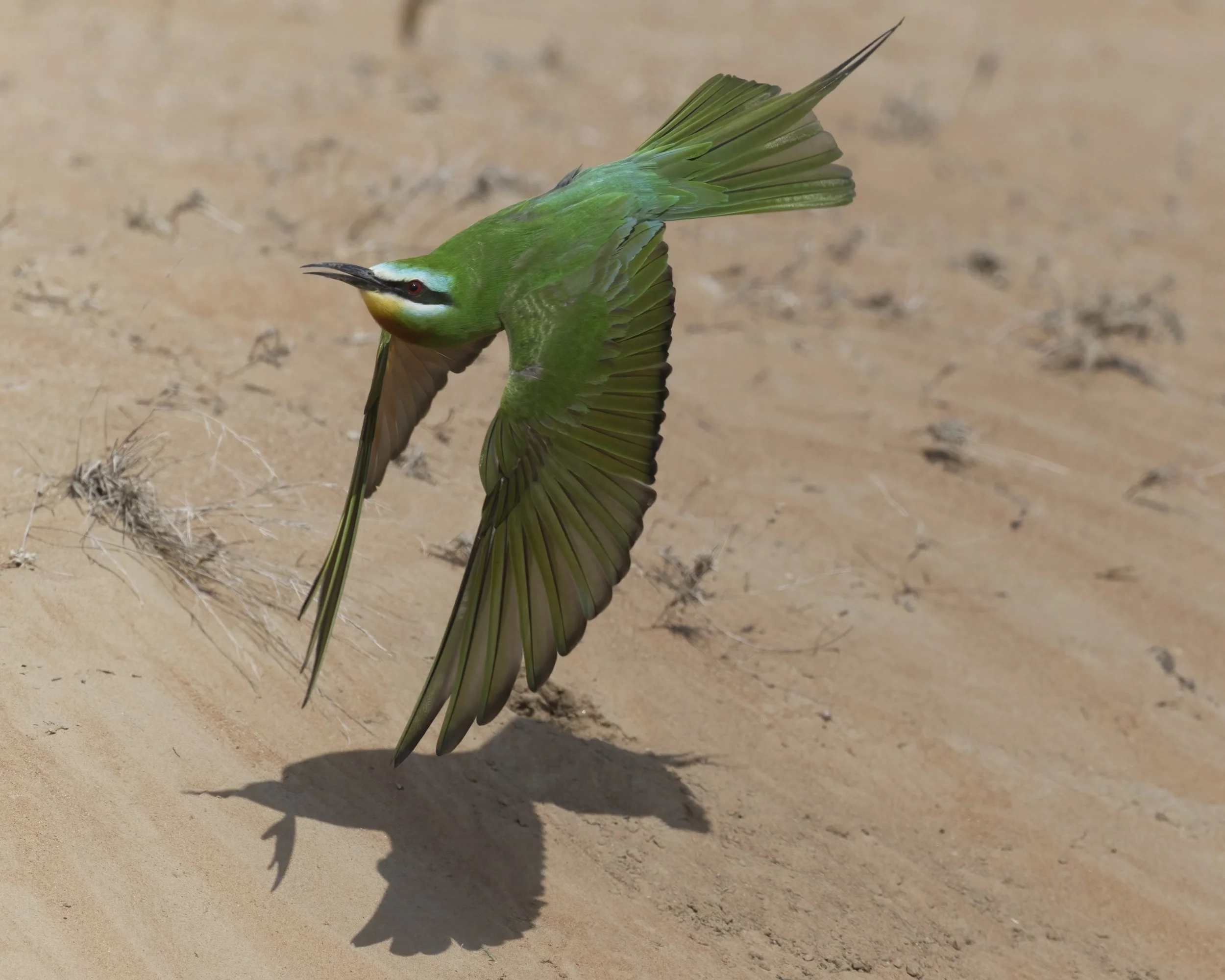
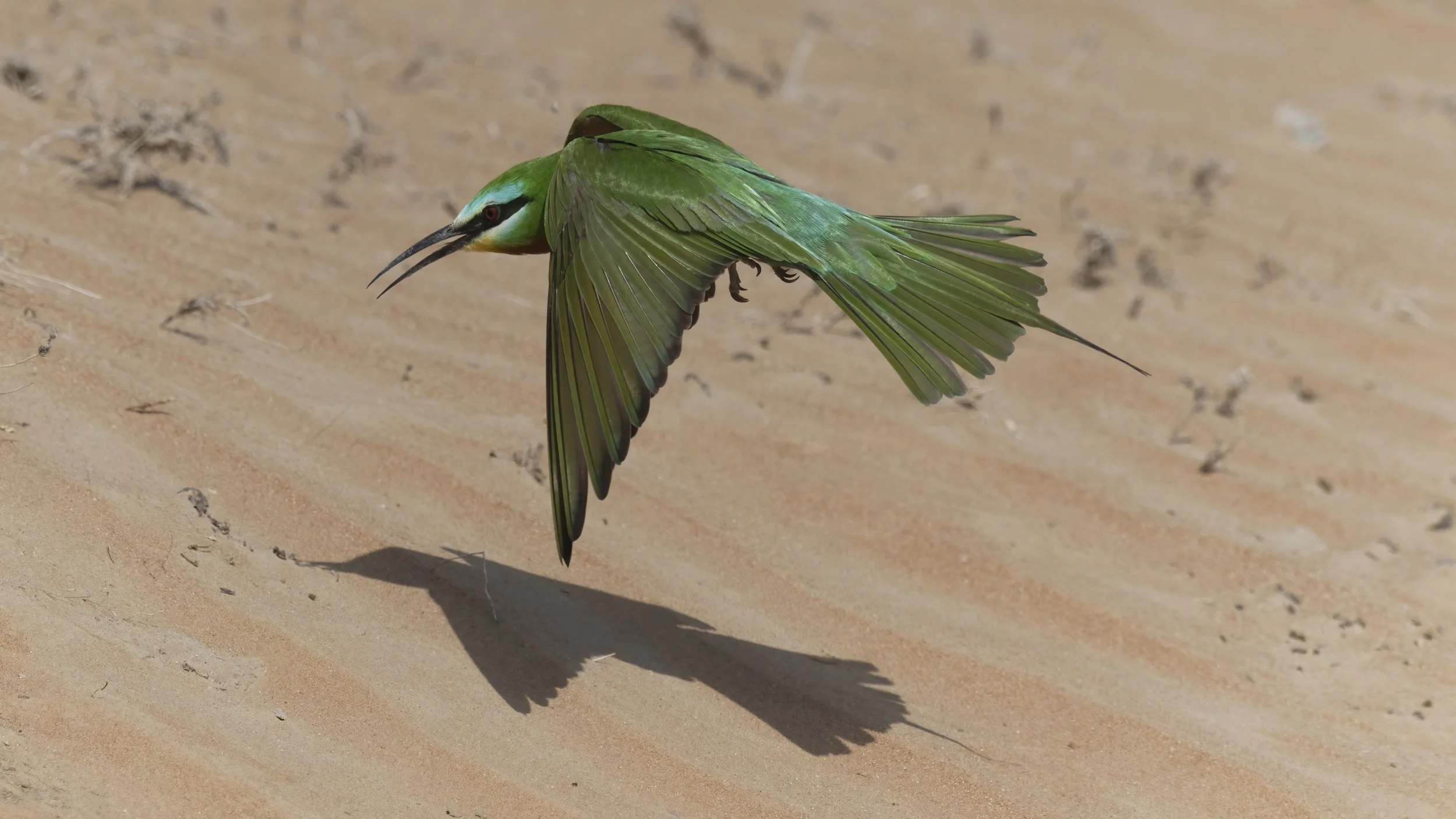
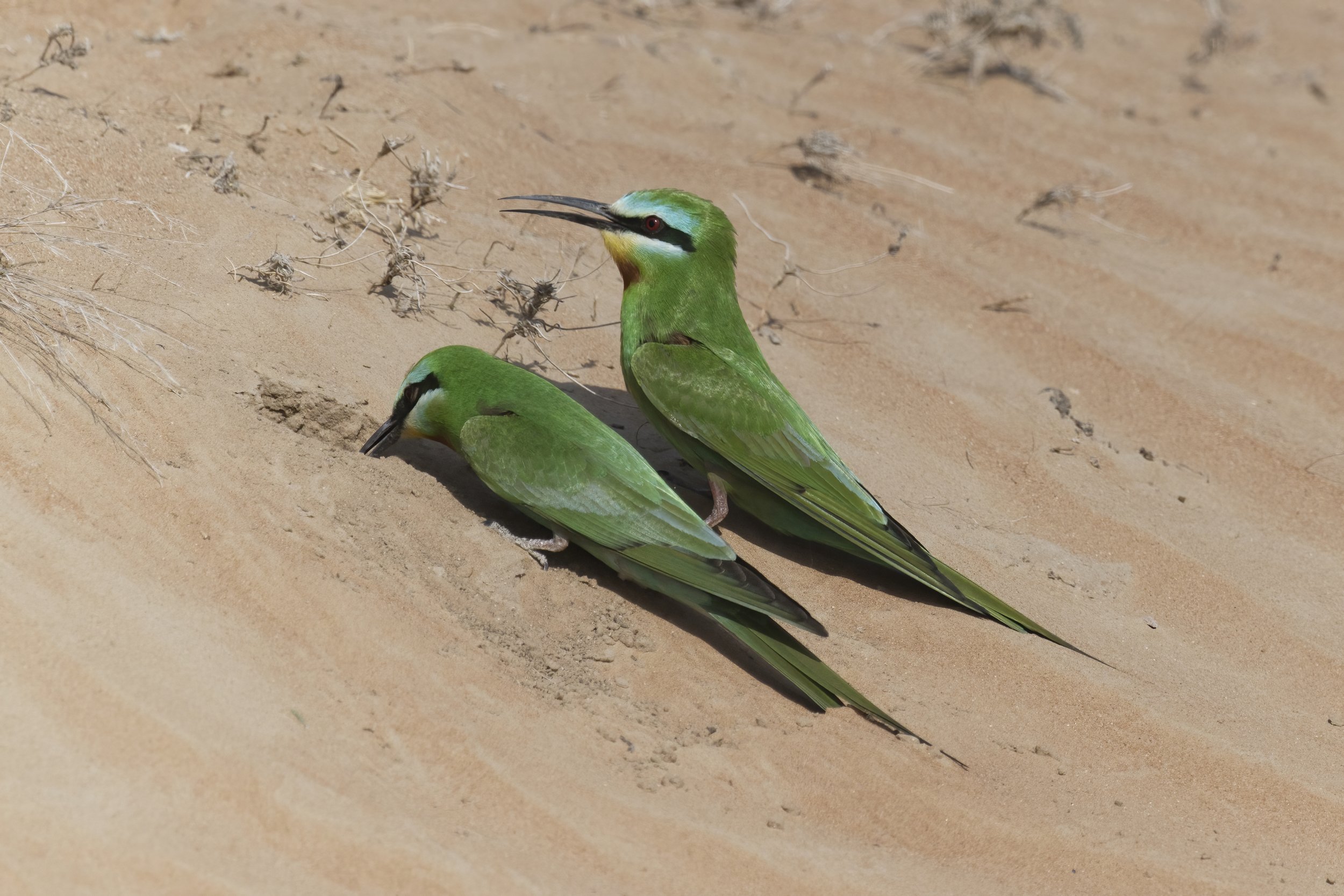
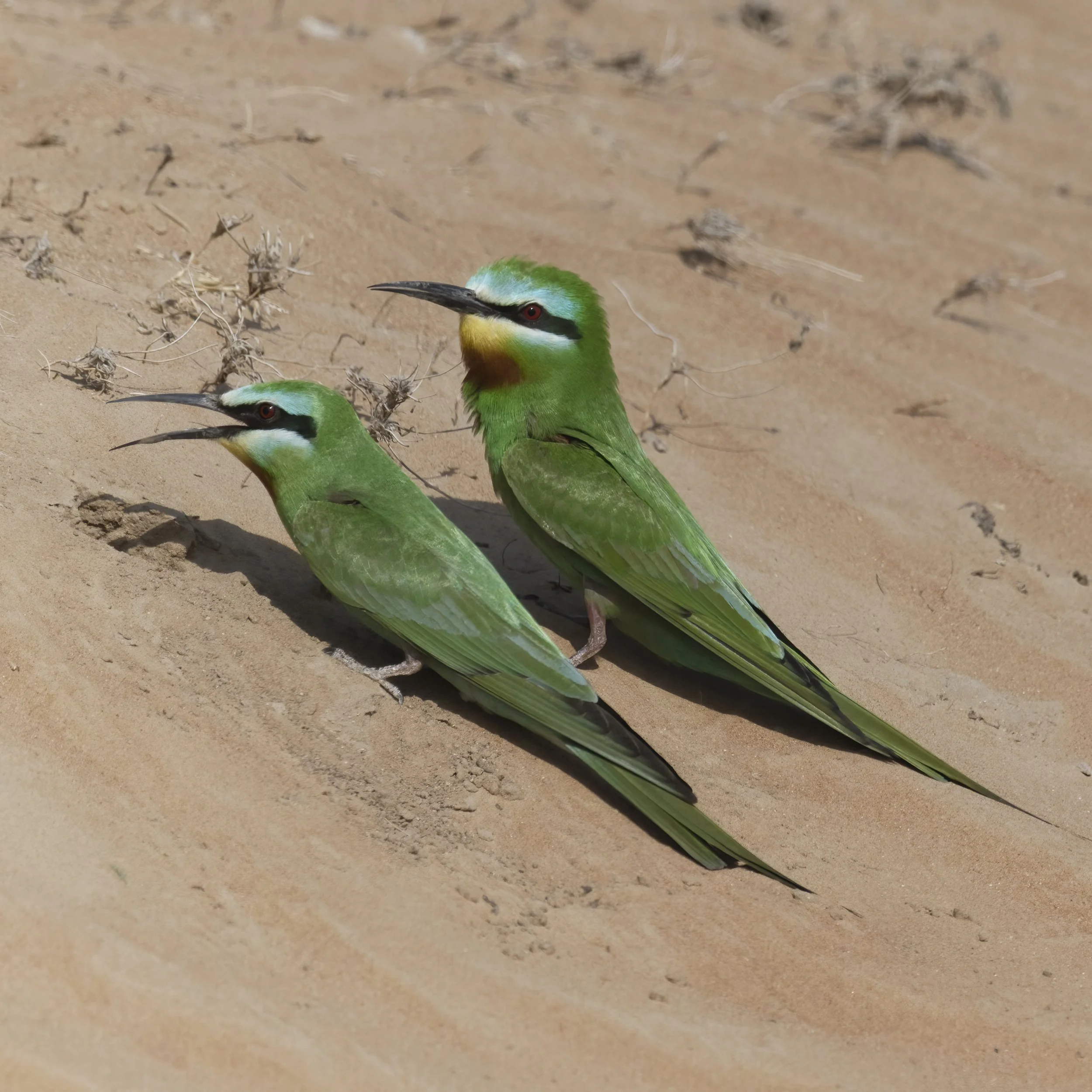
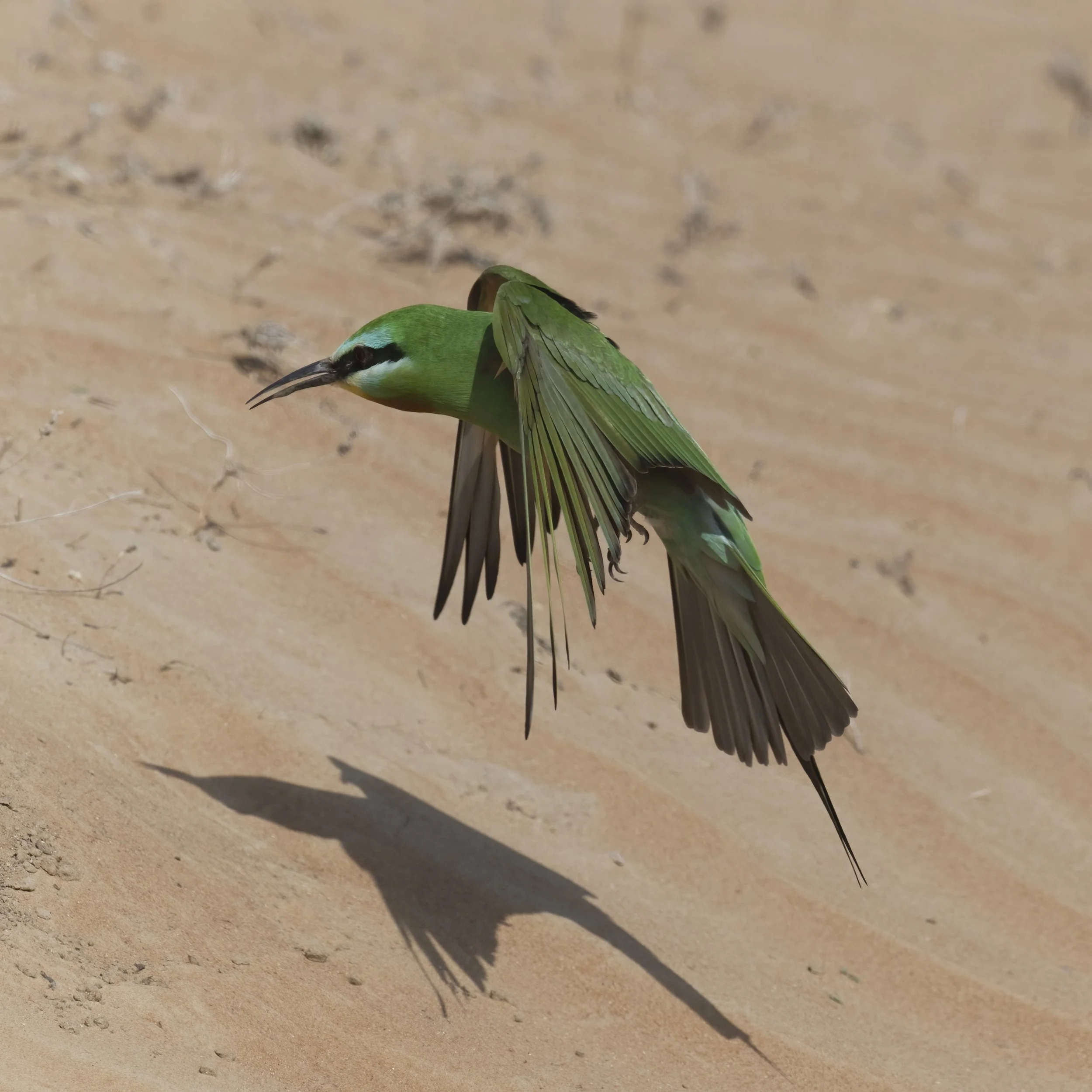
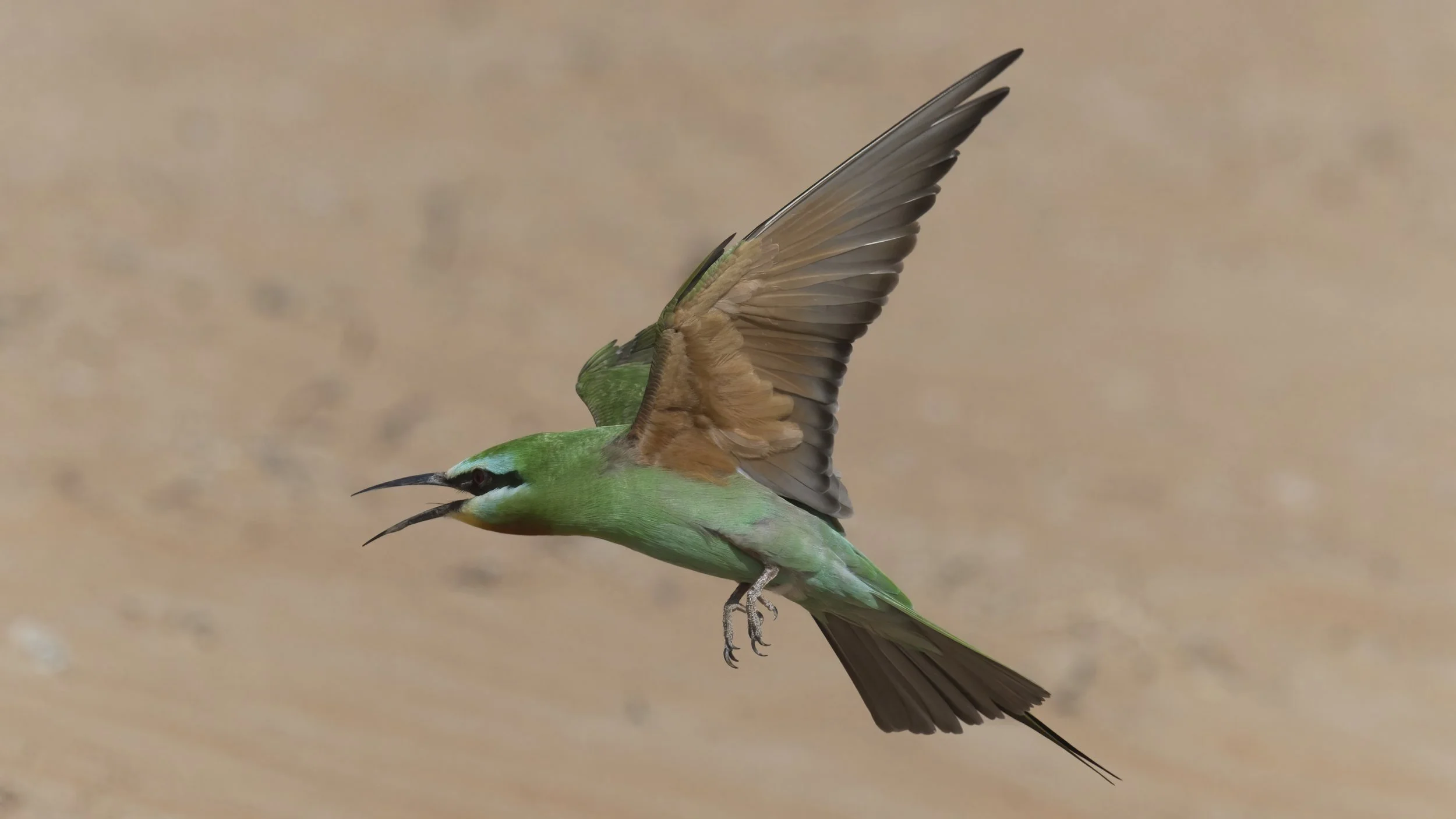
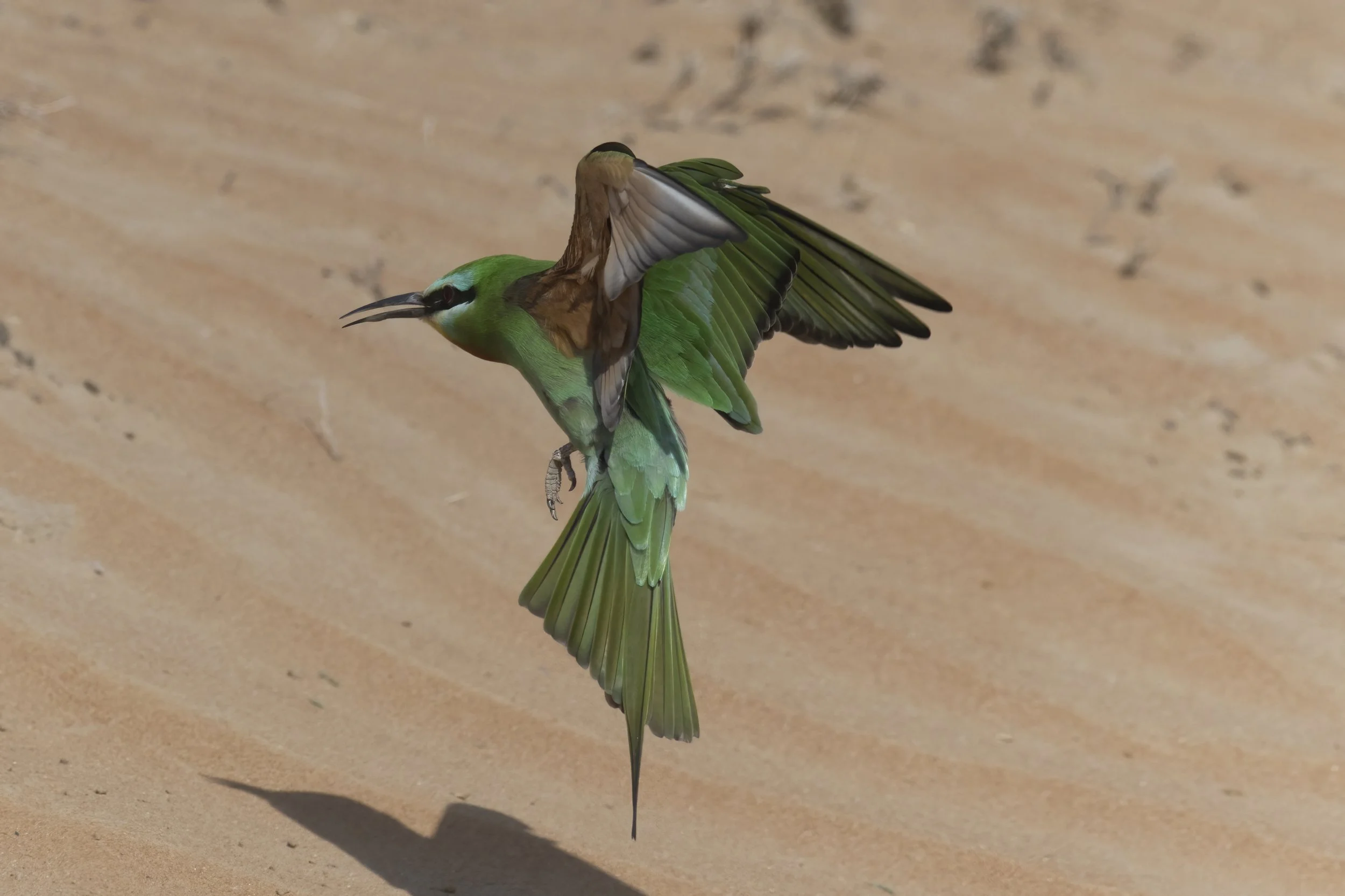
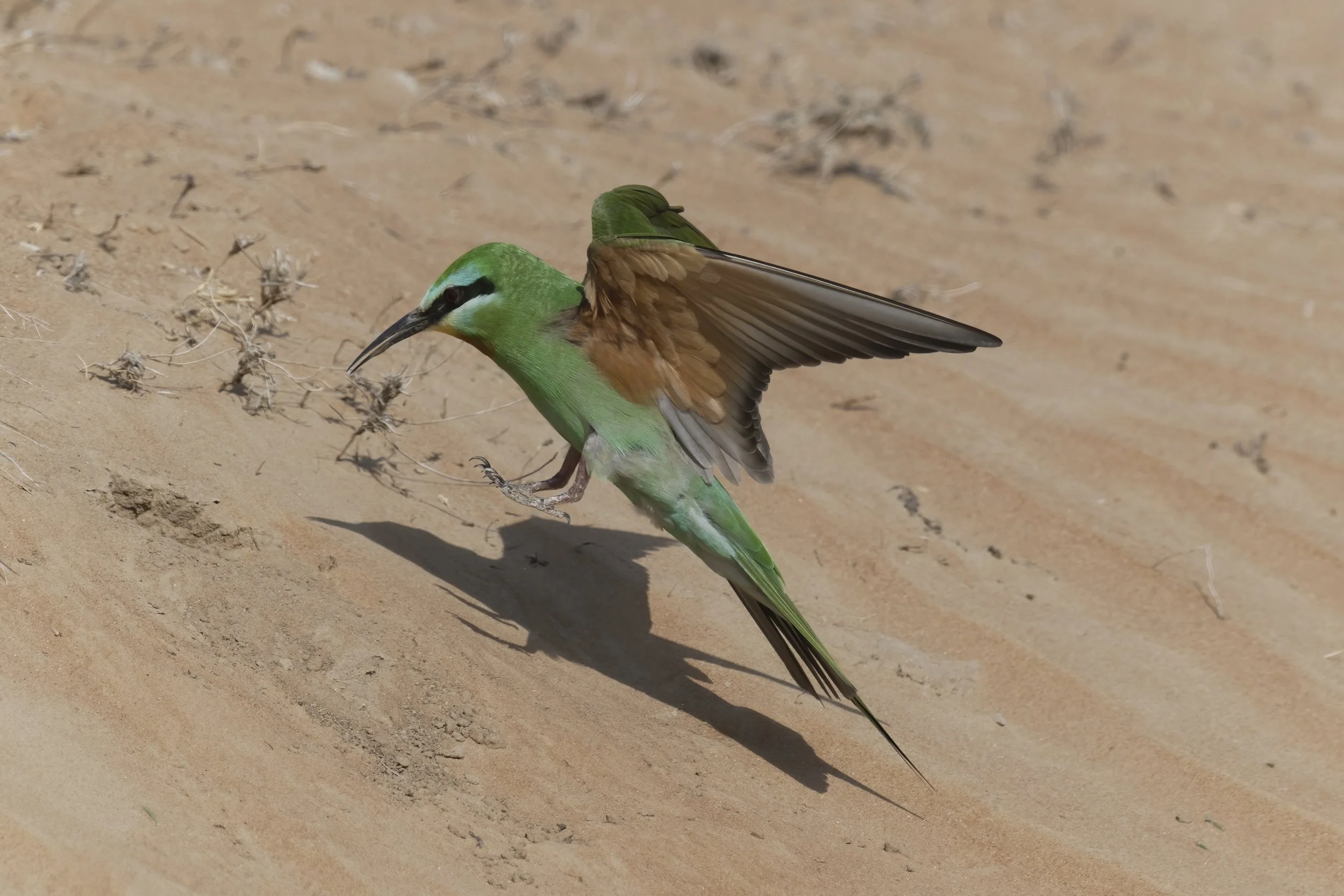
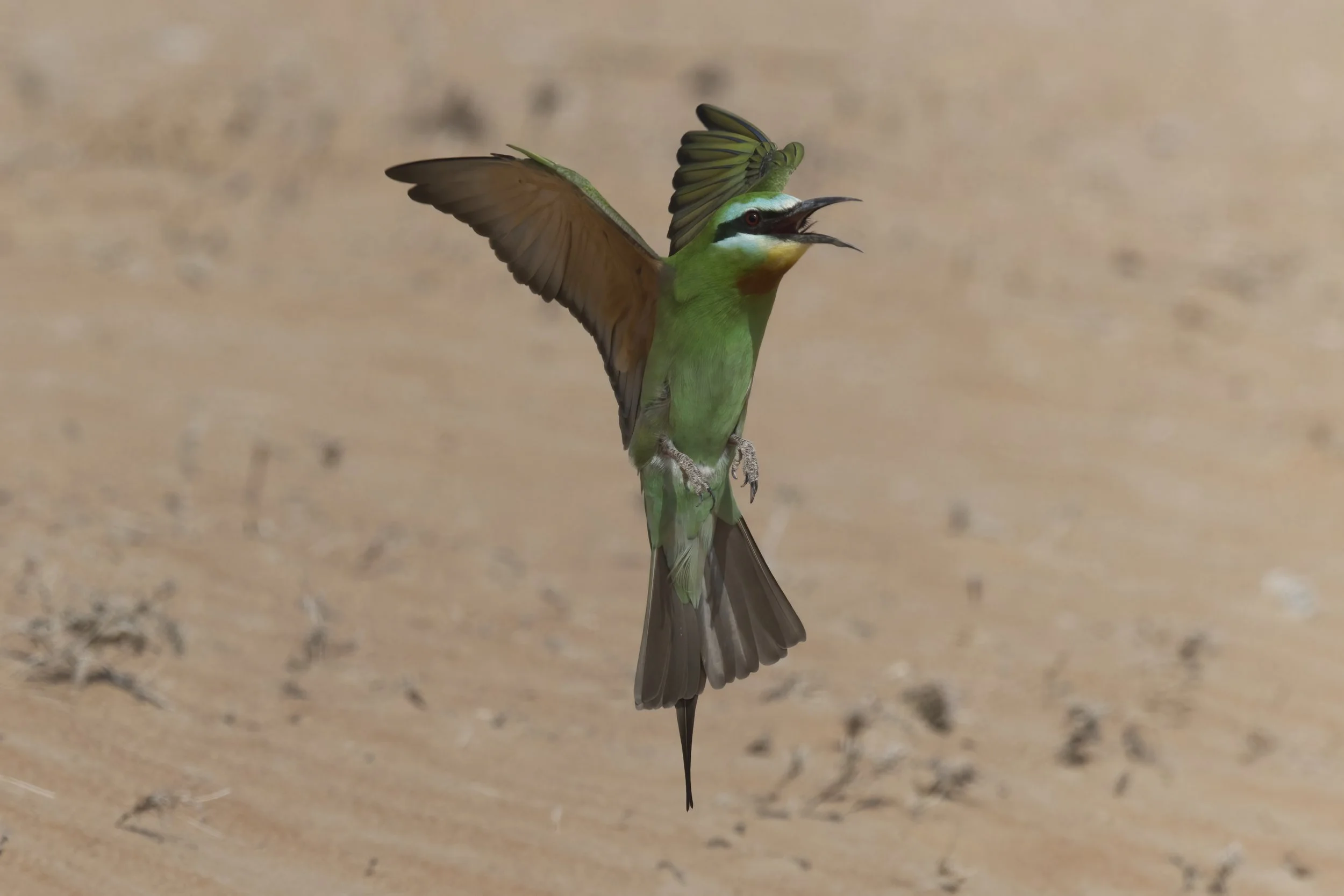
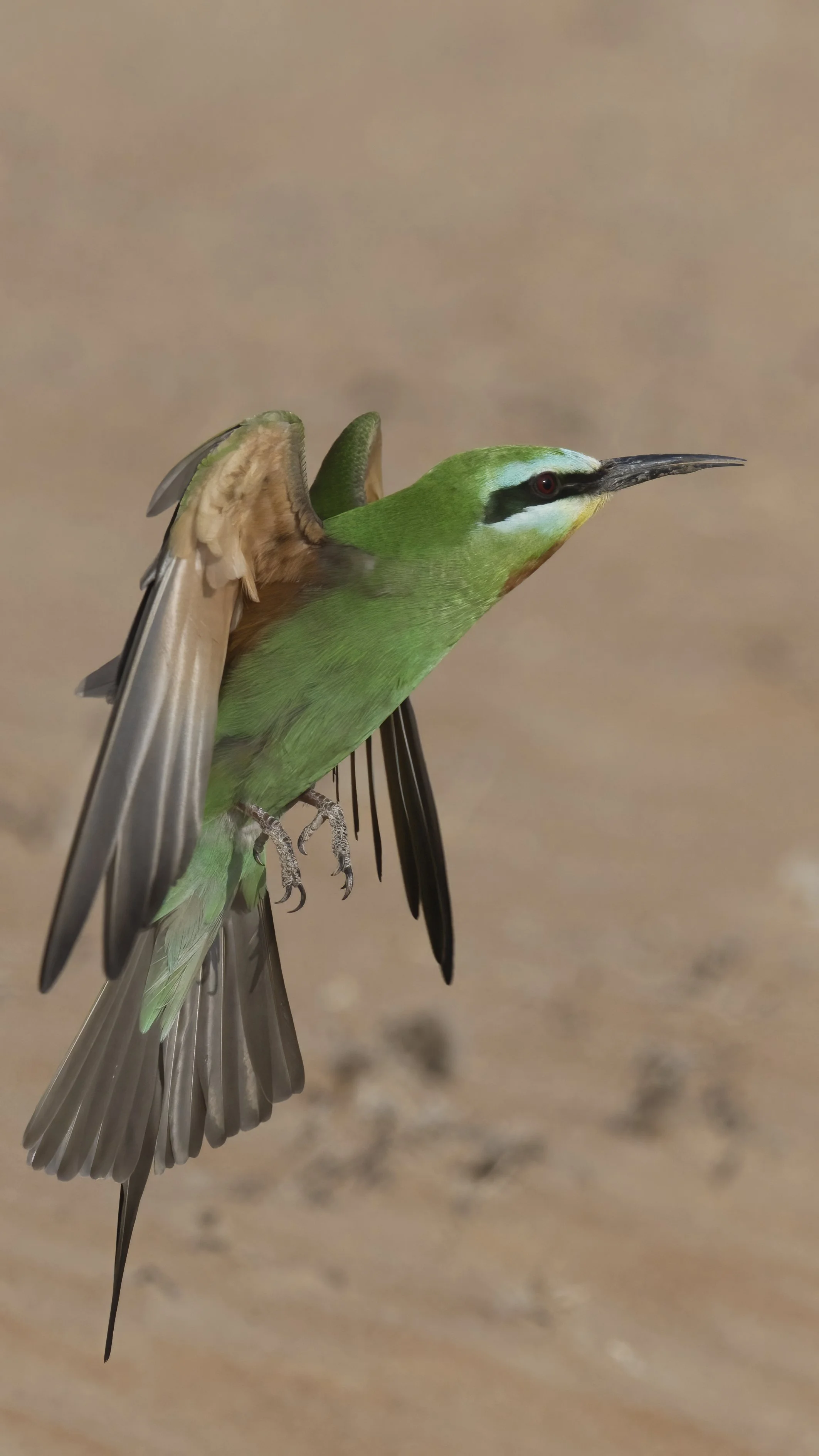
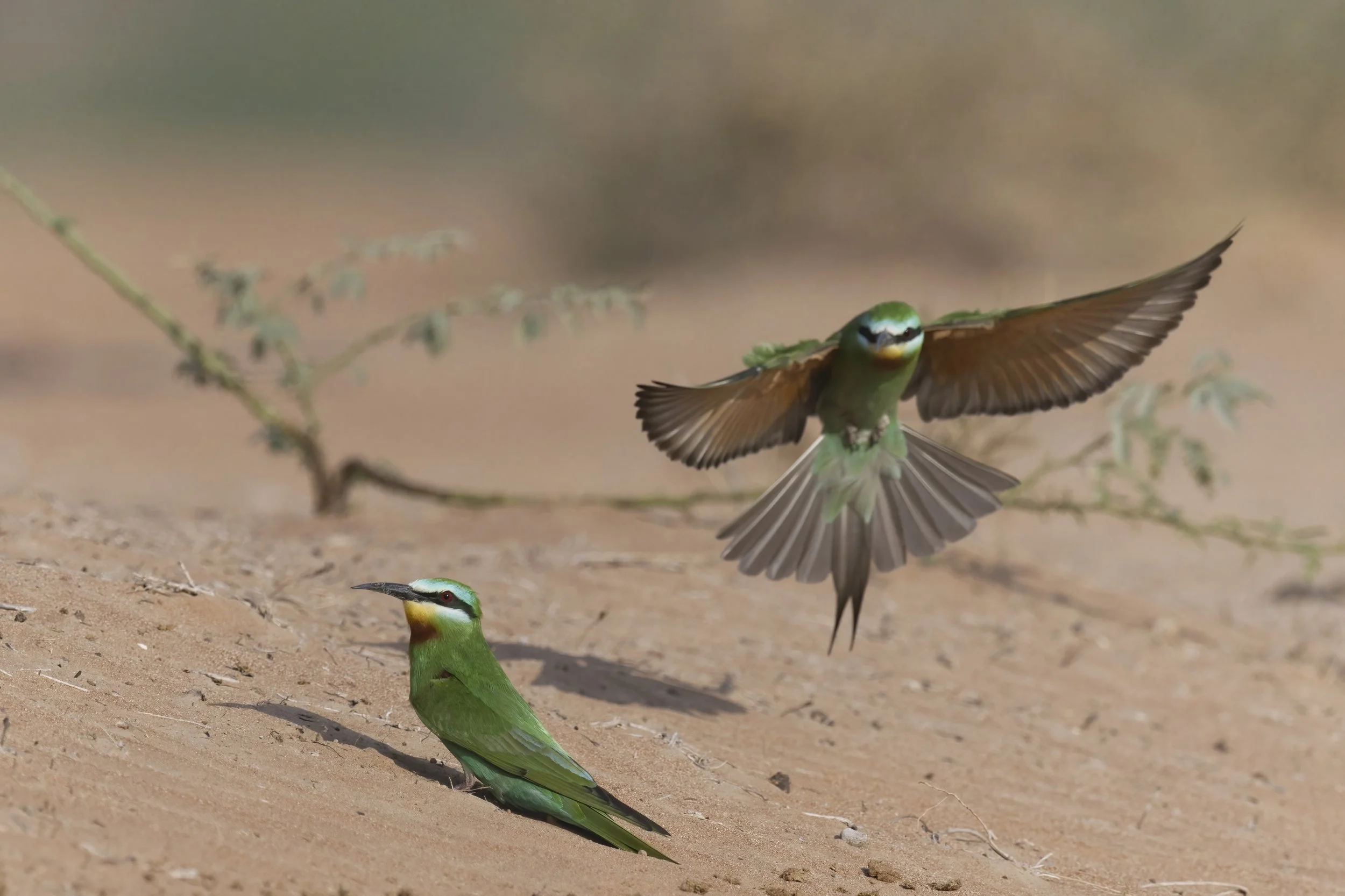
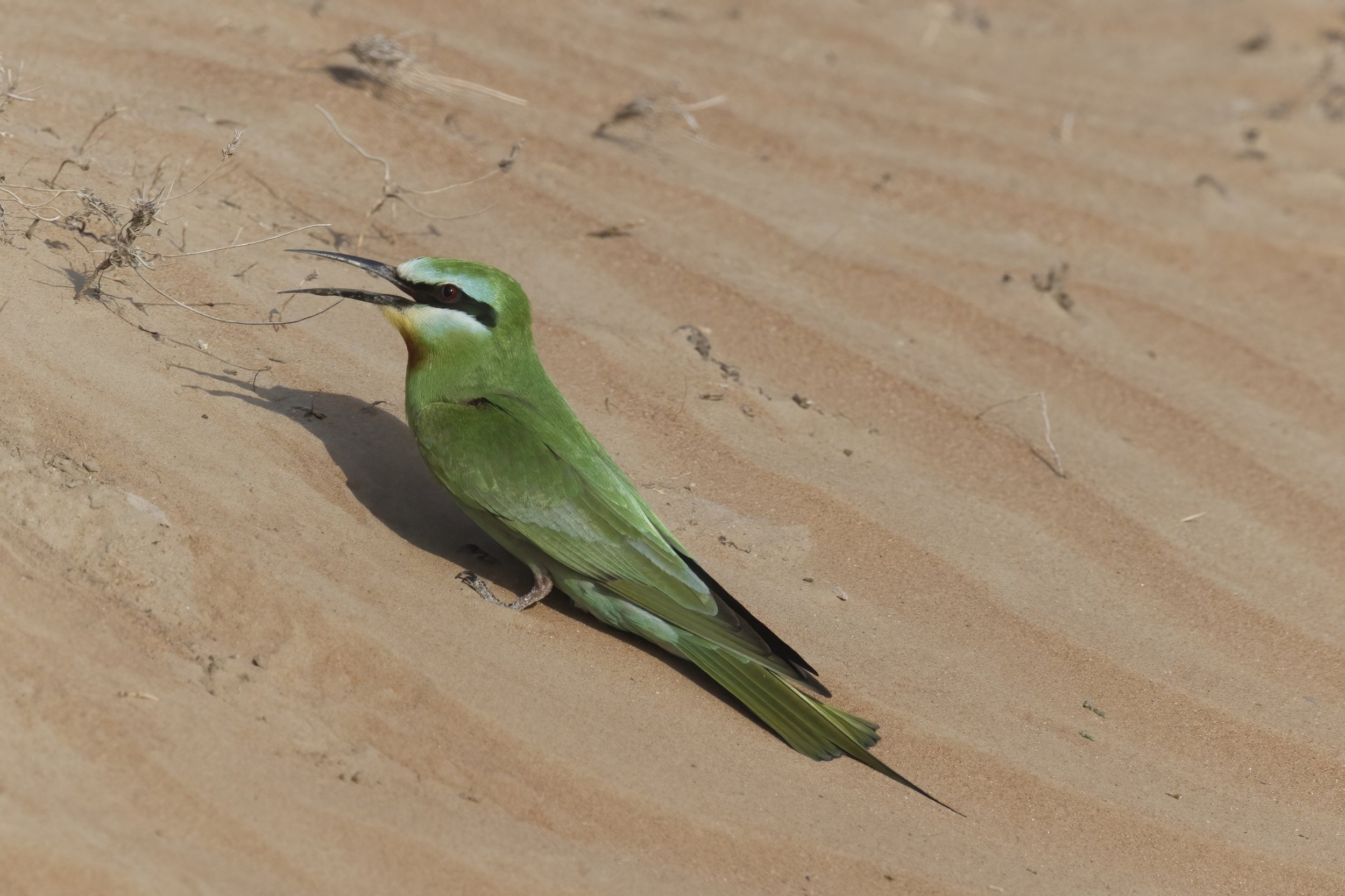
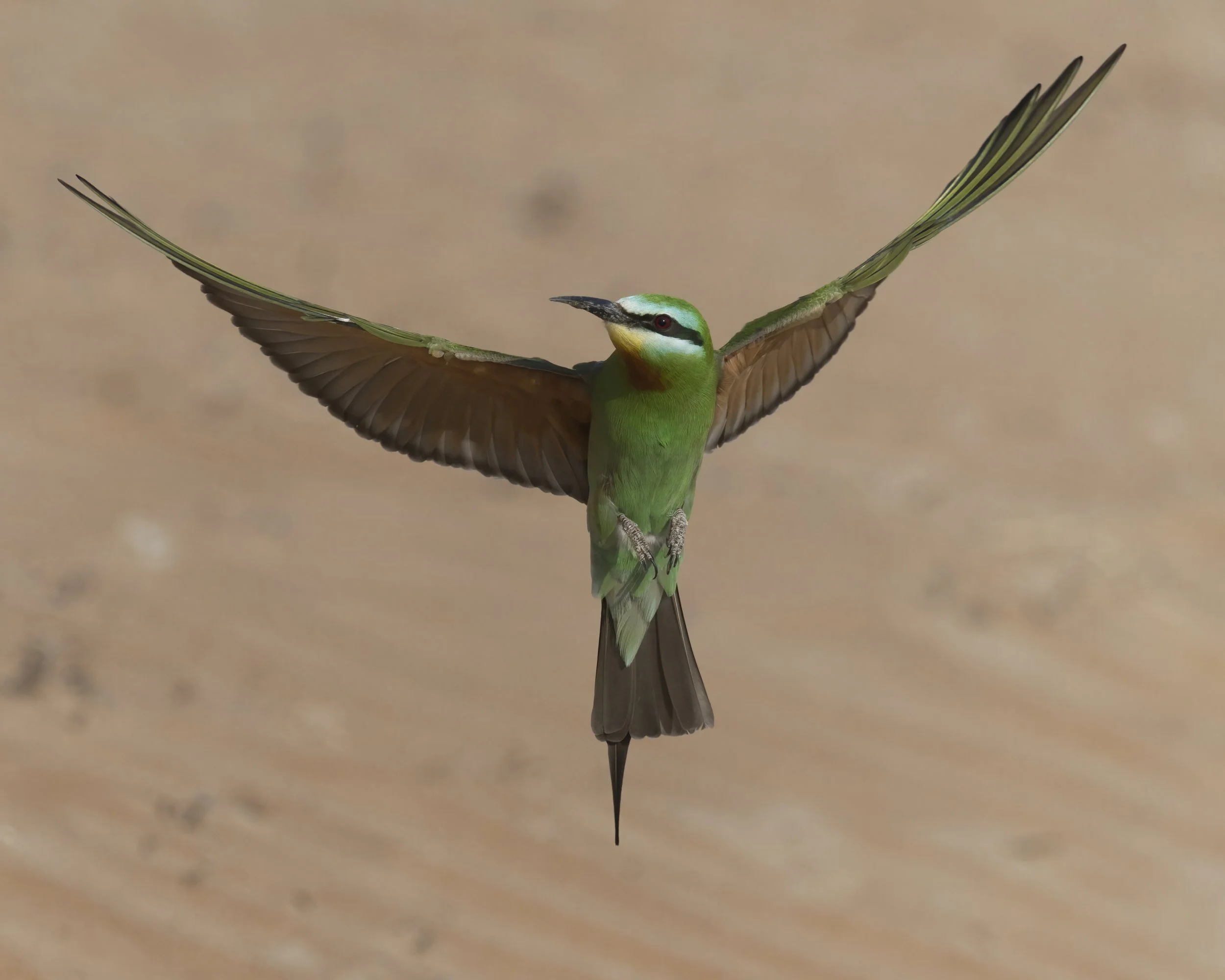
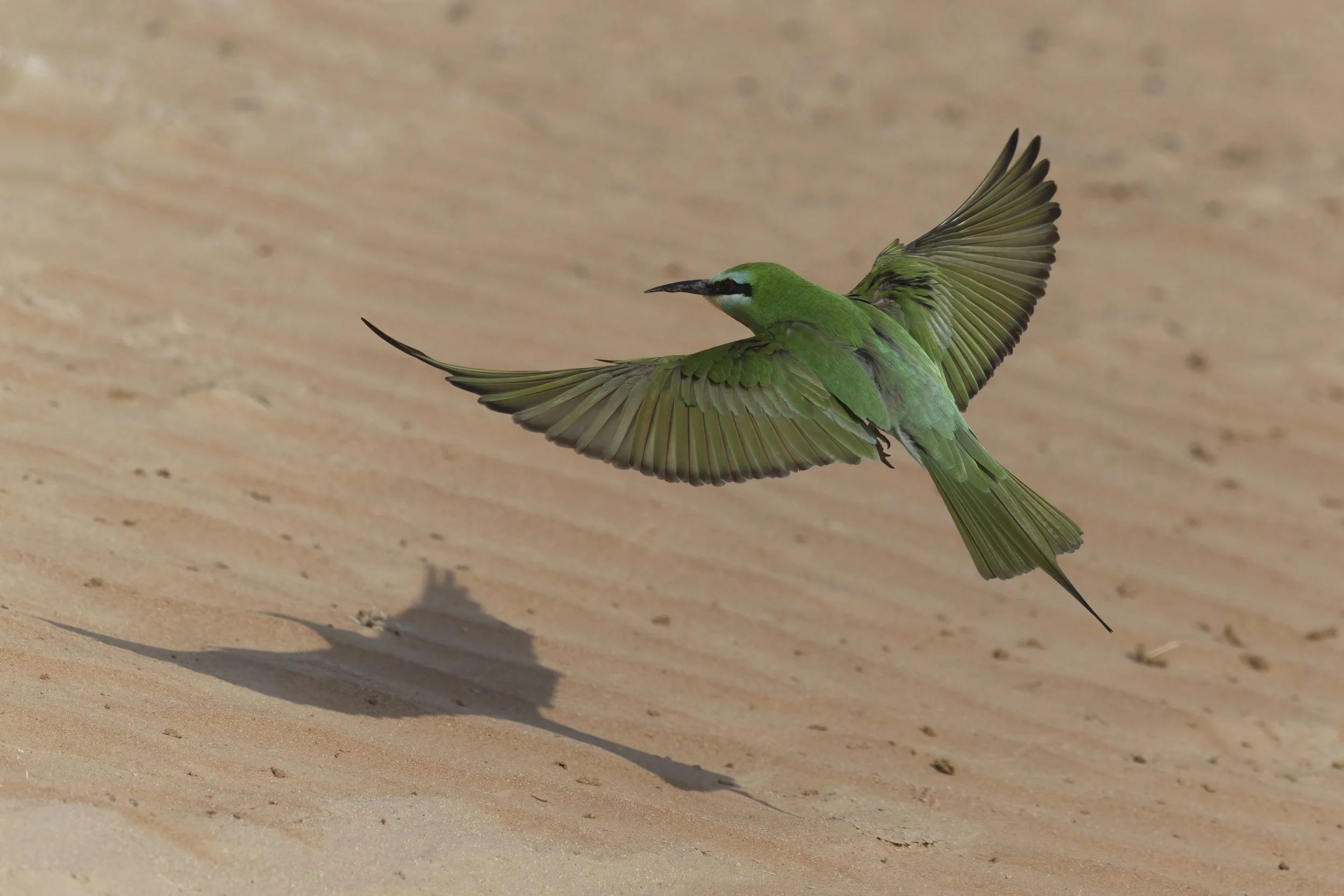
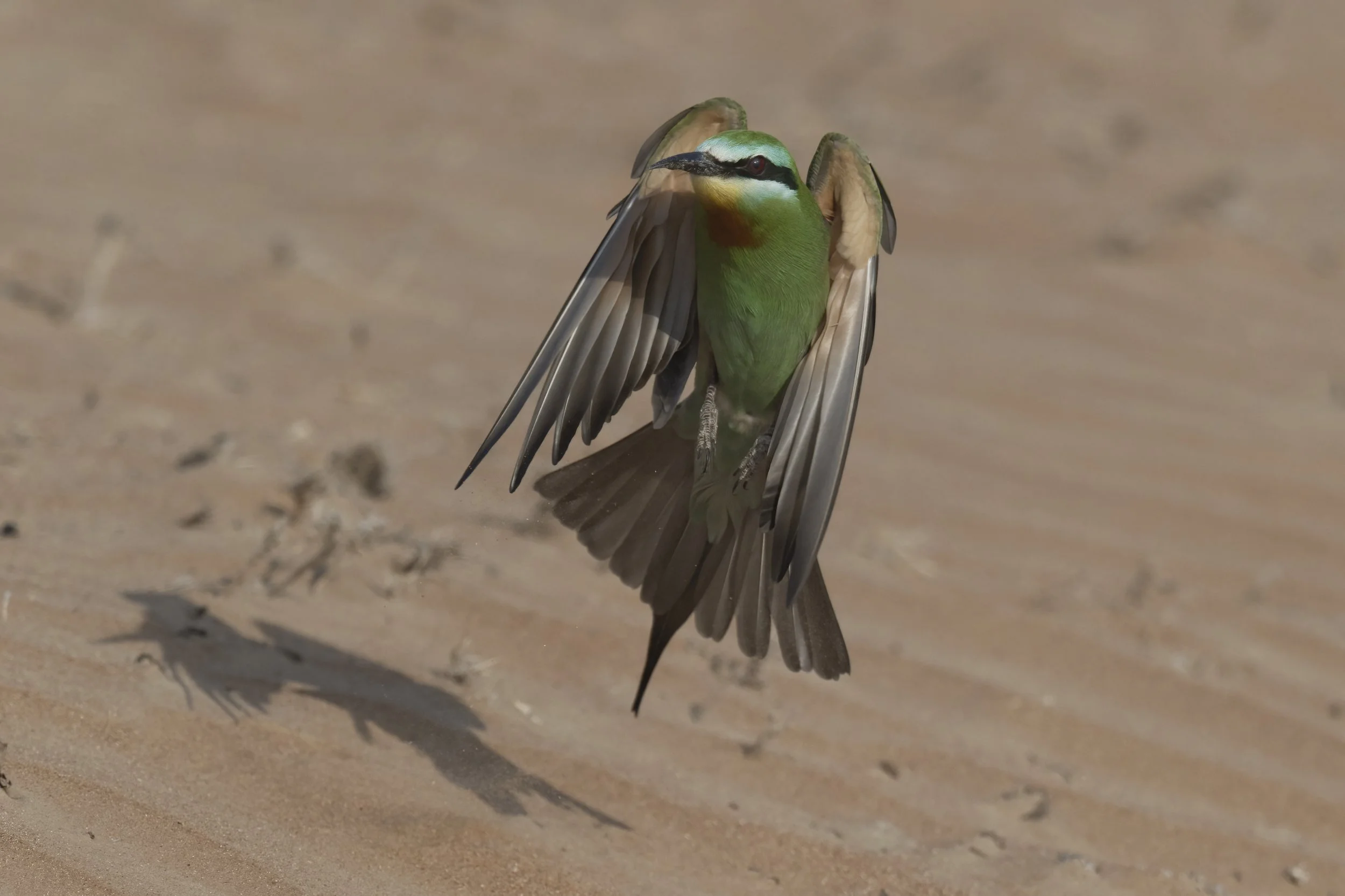
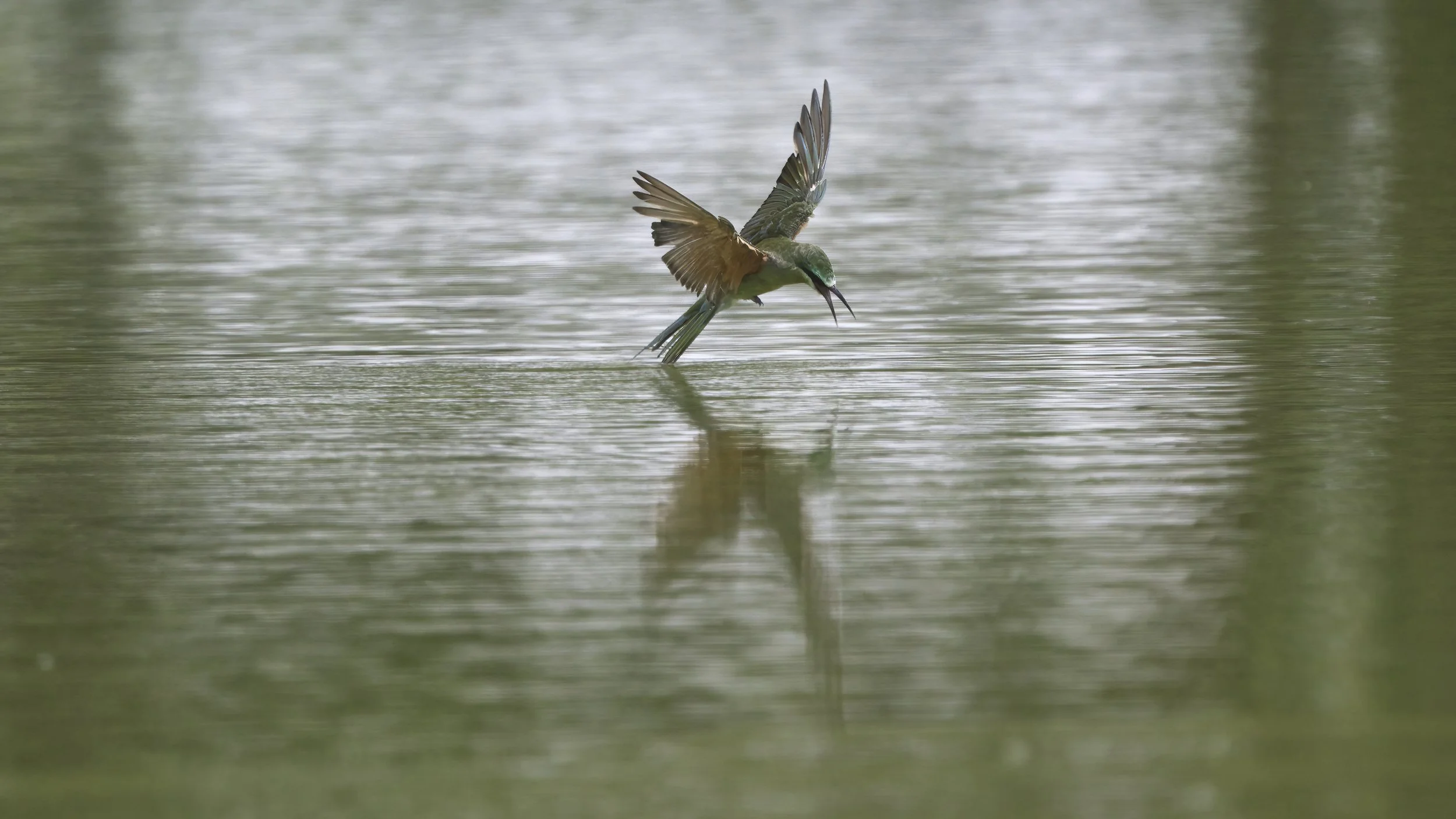
The Blue-cheeked Bee-eater (Merops persicus) is a striking and agile bird known for its vibrant green plumage, distinctive blue cheeks, and elongated, pointed wings. In UAE its Common migrant and declining breeding visitor, it passes through the UAE during its seasonal movements between breeding grounds in Central Asia and wintering areas in Africa. Often seen in open areas, wetlands, and along coastlines, it skillfully catches insects mid-air, especially bees and dragonflies. Its graceful flight and social nature make it a captivating species to observe, particularly when gathered in flocks before migration. With its dazzling colors and aerial acrobatics, the Blue-cheeked Bee-eater is a highlight for birdwatchers and photographers alike.
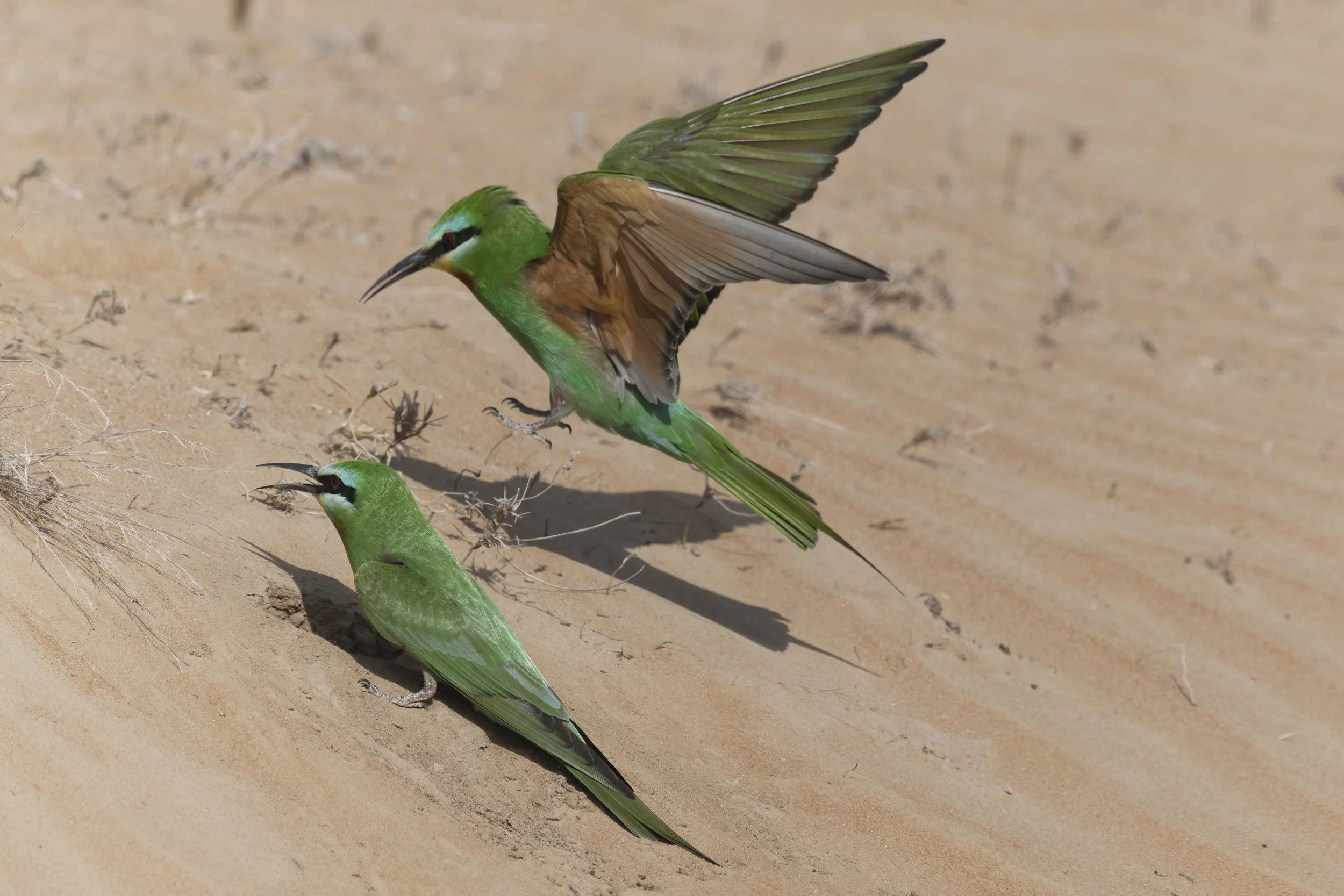
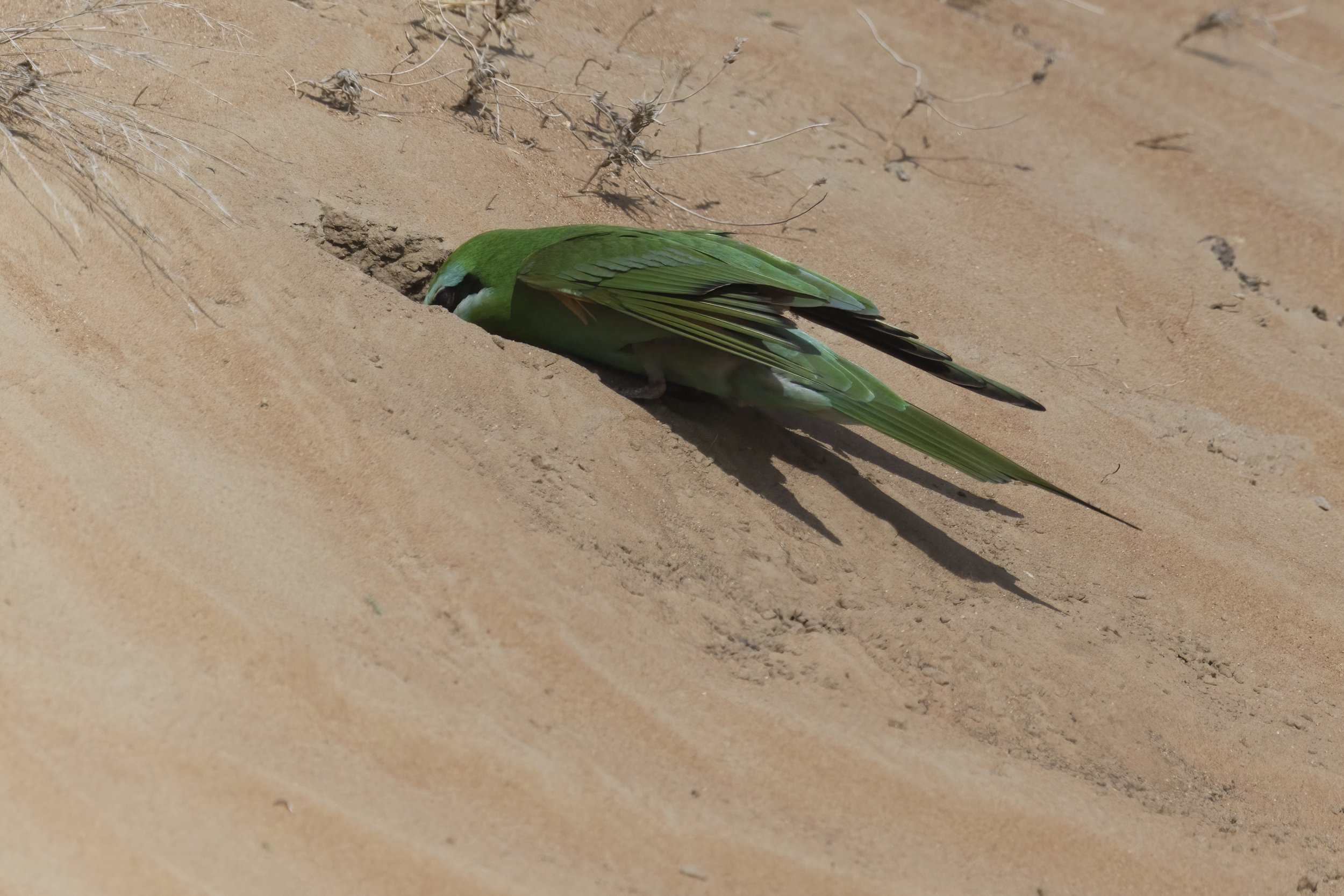
The Blue-cheeked Bee-eater (Merops persicus) nests in colonies, often choosing sandy banks, cliffs, or flat ground with soft soil where they can dig long horizontal tunnels that end in a nesting chamber. These burrows can extend up to 1–2 meters deep, offering protection from predators and harsh weather. Nesting typically occurs during the spring and summer months, depending on the region. In the UAE, breeding is rare but has been recorded, mostly in remote or undisturbed areas. Both the male and female participate in digging the tunnel and caring for the eggs. A typical clutch consists of 4 to 8 white eggs, which are incubated for about 20 days. After hatching, the chicks are fed a steady diet of insects, especially bees, wasps, and dragonflies, brought in by both parents. Blue-cheeked Bee-eaters often return to the same nesting site year after year, and their colonies can grow significantly in size when conditions are favorable.
يُعد طائر الوروار أزرق الخدّين طائرًا لافتًا ورشيقًا، يتميز بريشه الأخضر الزاهي، وخدّيه الأزرقين المميزين، وأجنحته الطويلة والمدببة. في دولة الإمارات، يُعتبر مهاجرًا شائعًا وزائرًا متكاثرًا متراجعًا، حيث يمر عبر الدولة خلال تنقلاته الموسمية بين مناطق التكاثر في آسيا الوسطى ومناطق الشتاء في أفريقيا. يُشاهد غالبًا في المناطق المفتوحة، والأراضي الرطبة، وعلى طول السواحل، حيث يصطاد الحشرات بمهارة أثناء الطيران، خاصة النحل واليعاسيب. تجعل طيرانه الأنيق وطبيعته الاجتماعية منه نوعًا جذابًا للمراقبة، خصوصًا عند تجمعه في أسراب قبل الهجرة. وبألوانه المبهرة وحركاته الجوية البهلوانية، يُعد الوروار أزرق الخدّين من أبرز الطيور لهواة مراقبة الطيور والمصورين على حد سواء
يعشش الوروار أزرق الخدّين في مستعمرات، وغالبًا ما يختار ضفافًا رملية، أو منحدرات، أو أراضي مستوية ذات تربة ناعمة، حيث يقوم بحفر أنفاق أفقية طويلة تنتهي بحجرة تعشيش. قد يصل طول هذه الجحور إلى 1–2 متر، مما يوفر حماية من المفترسات والظروف الجوية القاسية. يحدث التعشيش عادة خلال فصلي الربيع والصيف، حسب المنطقة. في الإمارات، يُعد التكاثر نادرًا لكنه سُجّل في بعض المناطق النائية أو غير المضطربة. يشارك كل من الذكر والأنثى في حفر النفق والعناية بالبيض. يتكون العش عادة من 4 إلى 8 بيضات بيضاء، ويتم حضنها لمدة تقارب 20 يومًا. بعد الفقس، تُغذّى الفراخ بنظام غذائي غني بالحشرات، خاصة النحل والدبابير واليعاسيب، حيث يجلبها كلا الأبوين. وغالبًا ما تعود هذه الطيور إلى نفس مواقع التعشيش عامًا بعد عام، وقد تنمو مستعمراتها بشكل ملحوظ عند توفر الظروف المناسبة



Other Species
-
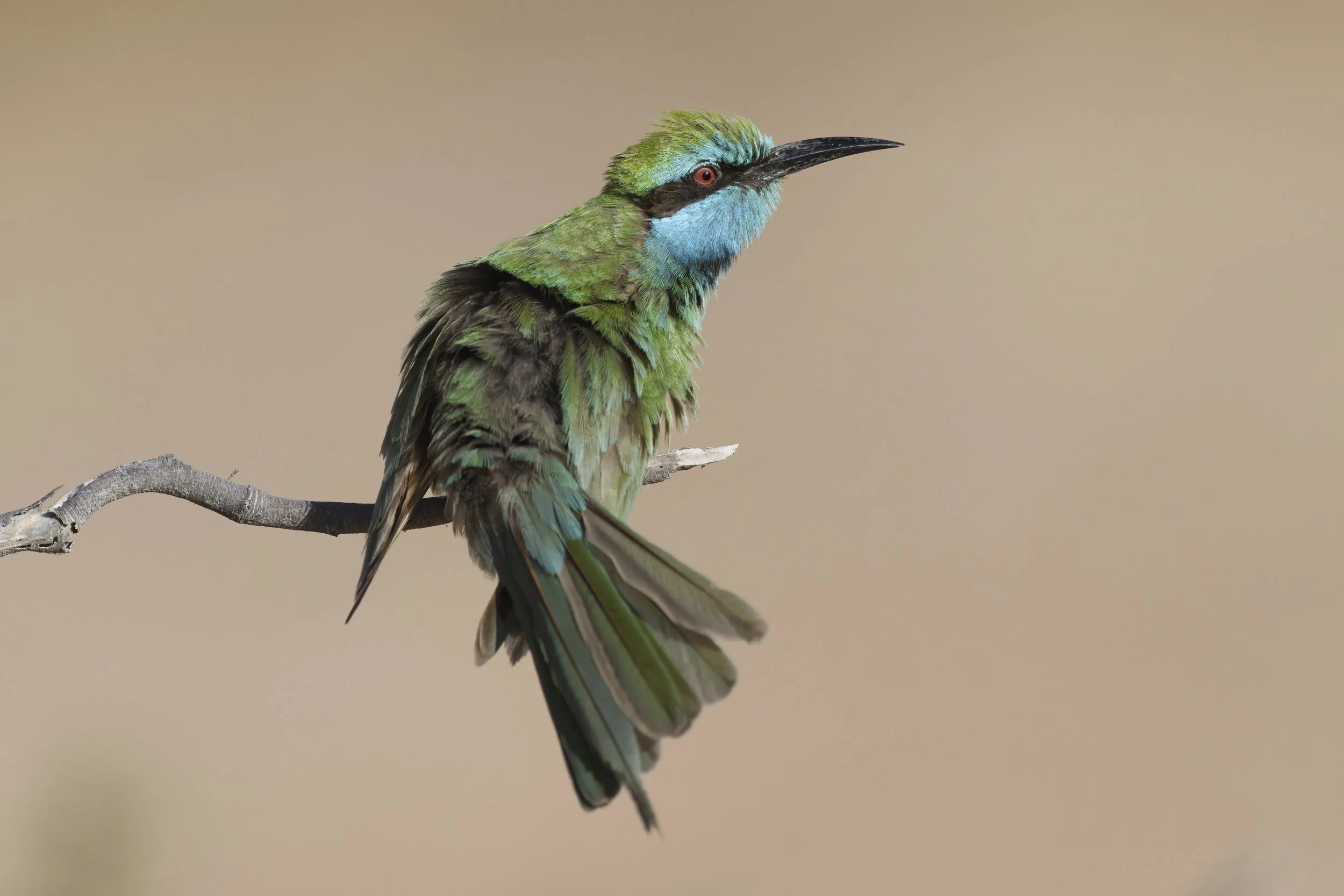
Arabian Green Bee Eater (Merops cyanophrys)
-
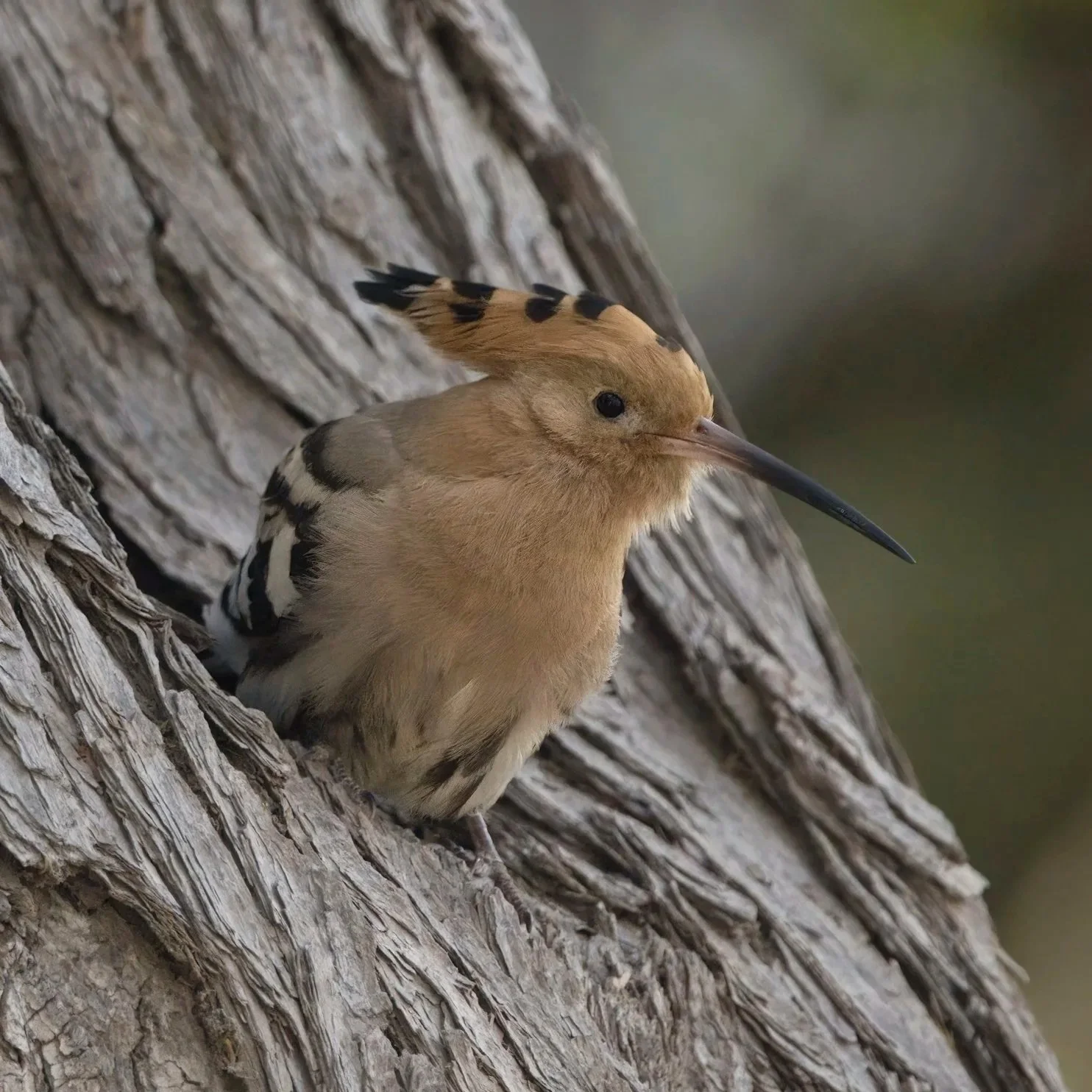
Eurasian Hoopoe (Upupa epops)
-
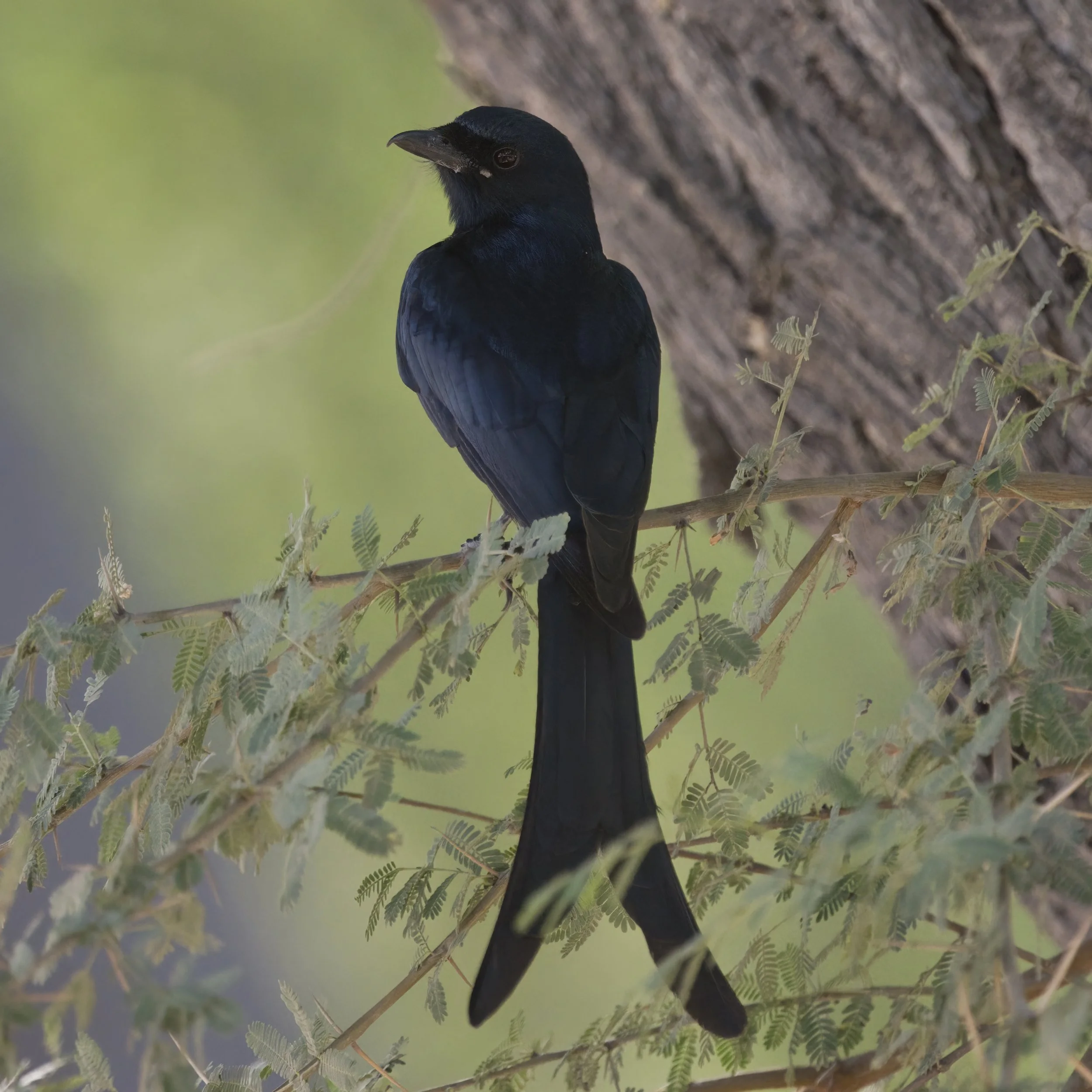
Black Drongo (Dicrurus macrocercus)
-
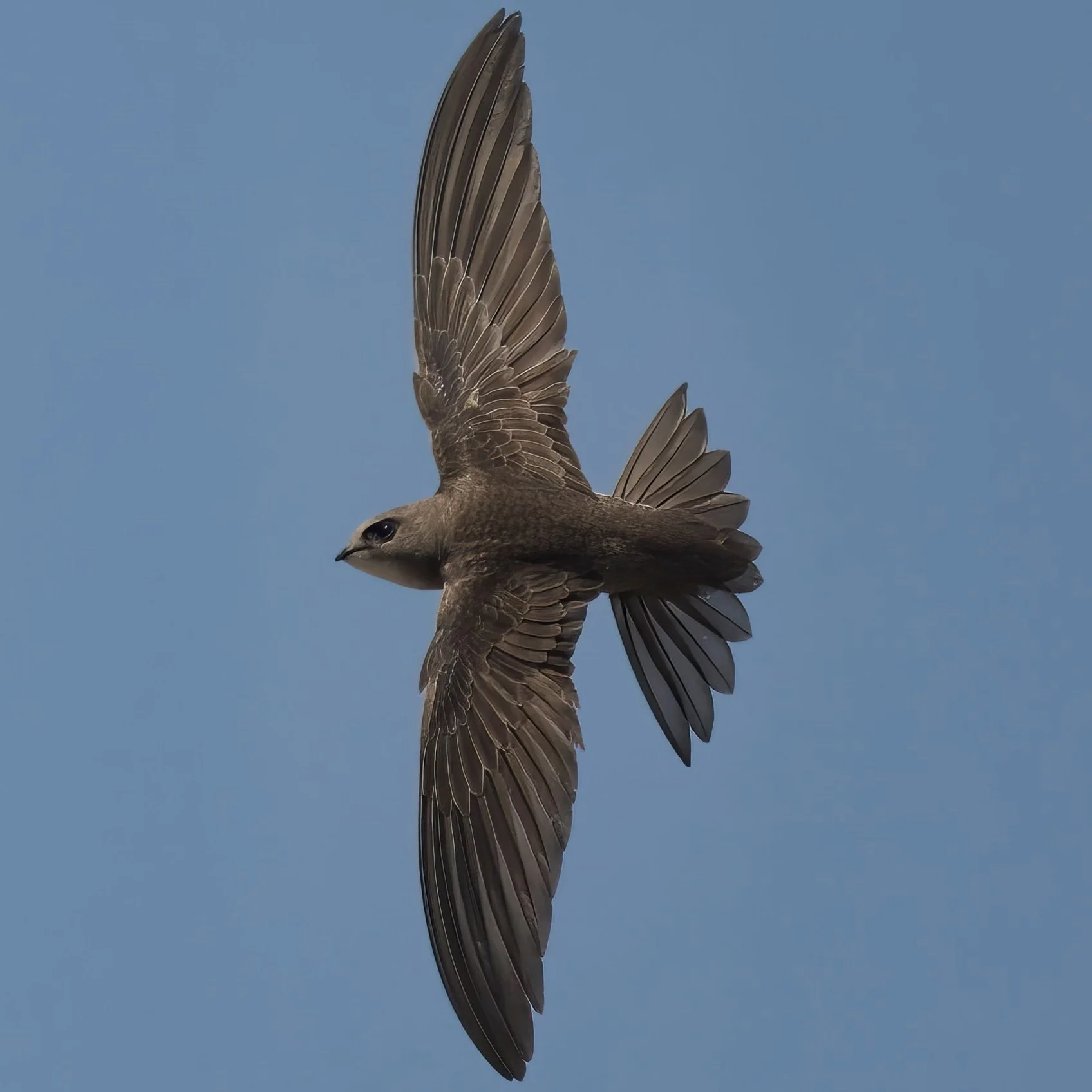
Pallid Swift (Apus pallidus)