

Desert Monitor \ Varanus griseus
(الورل الصحراوي)
Adult Desert Monitors commonly measure approximately 80–130 cm in total length, although size varies according to age, sex, population and environmental conditions.
Their colour usually ranges from sandy yellow and light brown to grey, with darker bands or markings across the body and tail. This pattern provides effective camouflage against sand, gravel and dry vegetation. Younger animals often show stronger, more contrasting bands than adults.
The Desert Monitor can also be recognised by its powerful claws, muscular limbs, long tail and forked tongue.
The Desert Monitor (Varanus griseus), known in Arabic as الورل الصحراوي, is one of the largest native lizards found in the UAE’s desert environments. It is a powerful, ground-dwelling predator with a long neck, narrow head, strong limbs, an elongated tail and a deeply forked tongue used to investigate scents in its surroundings.
Despite its imposing appearance, the Desert Monitor normally avoids people. It should be watched from a respectful distance and must never be chased, cornered or handled.
Checkout Shawn Parker profile on instagram.
The Desert Monitor is an opportunistic carnivore. Its diet can include large insects, rodents, lizards, snakes, birds, eggs and other small animals. Carrion may also be consumed when available.
It searches actively across the ground, using its forked tongue and highly developed sense of smell to locate prey. Strong limbs and claws allow it to dig into loose soil, burrows and nesting sites.
Desert Monitors occupy sandy deserts, gravel plains, semi-desert scrub and other dry areas with soil suitable for digging. Burrows provide protection from extreme temperatures and serve as resting and shelter sites.
They are most likely to be active during suitable daytime temperatures, particularly during the warmer months. Activity may decrease during periods of extreme heat or cold.
Desert Monitors are generally solitary and spend much of their active period searching for food. They are fast runners and powerful diggers.
When threatened or prevented from escaping, a Desert Monitor may hiss, inflate its body, open its mouth or strike with its tail. These are defensive behaviours rather than attempts to pursue people. Giving the animal space normally allows it to retreat.
The Desert Monitor is classified as Least Concern globally because of its wide distribution, although populations may still be affected locally by habitat disturbance, road mortality, persecution and illegal collection.
Varanus griseus is listed in CITES Appendix I, which places strict controls on international commercial trade. It is also specifically included in UAE wildlife-protection legislation.
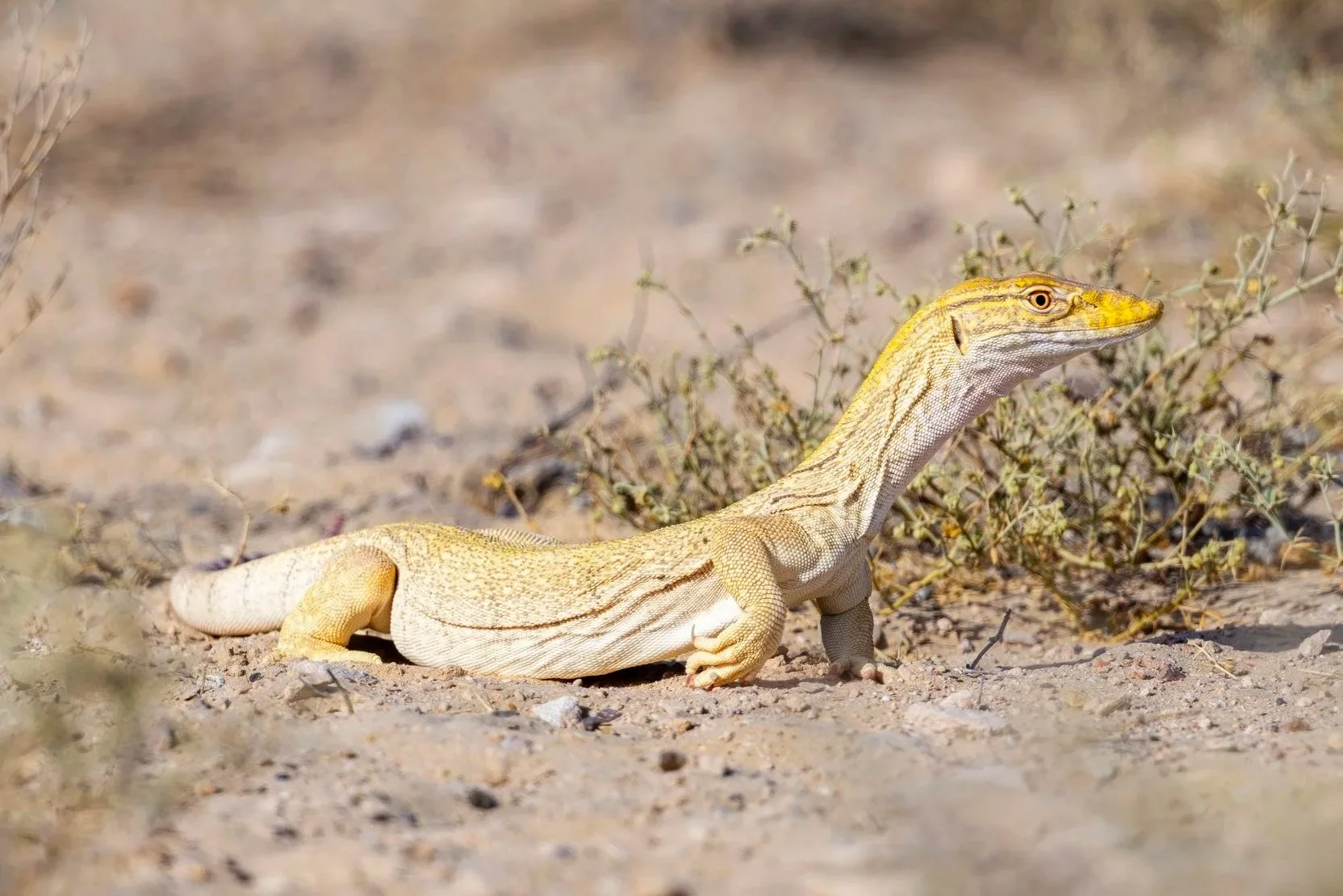
Photo Credit: Shawn Parker
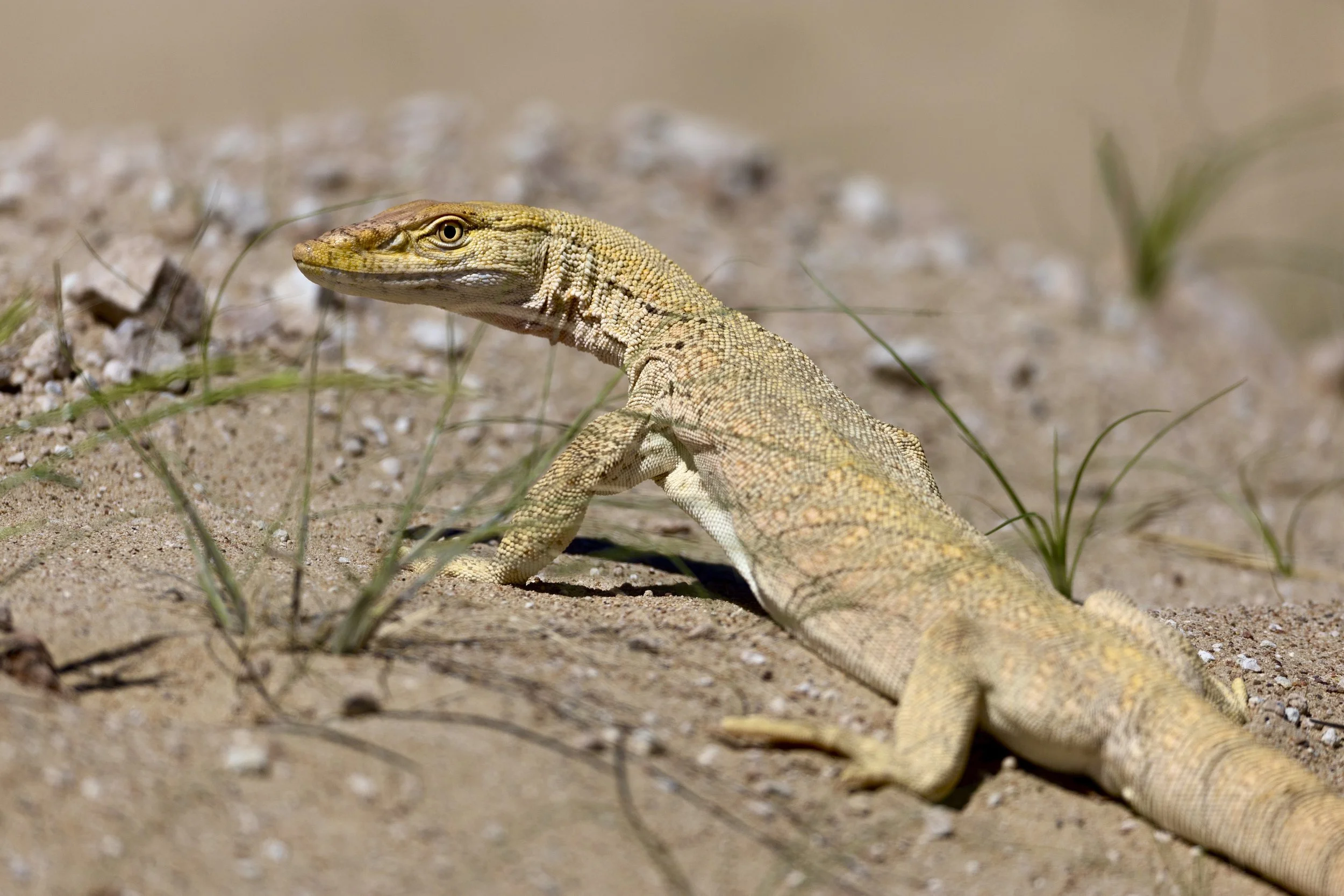
Photo Credit: Shawn Parker
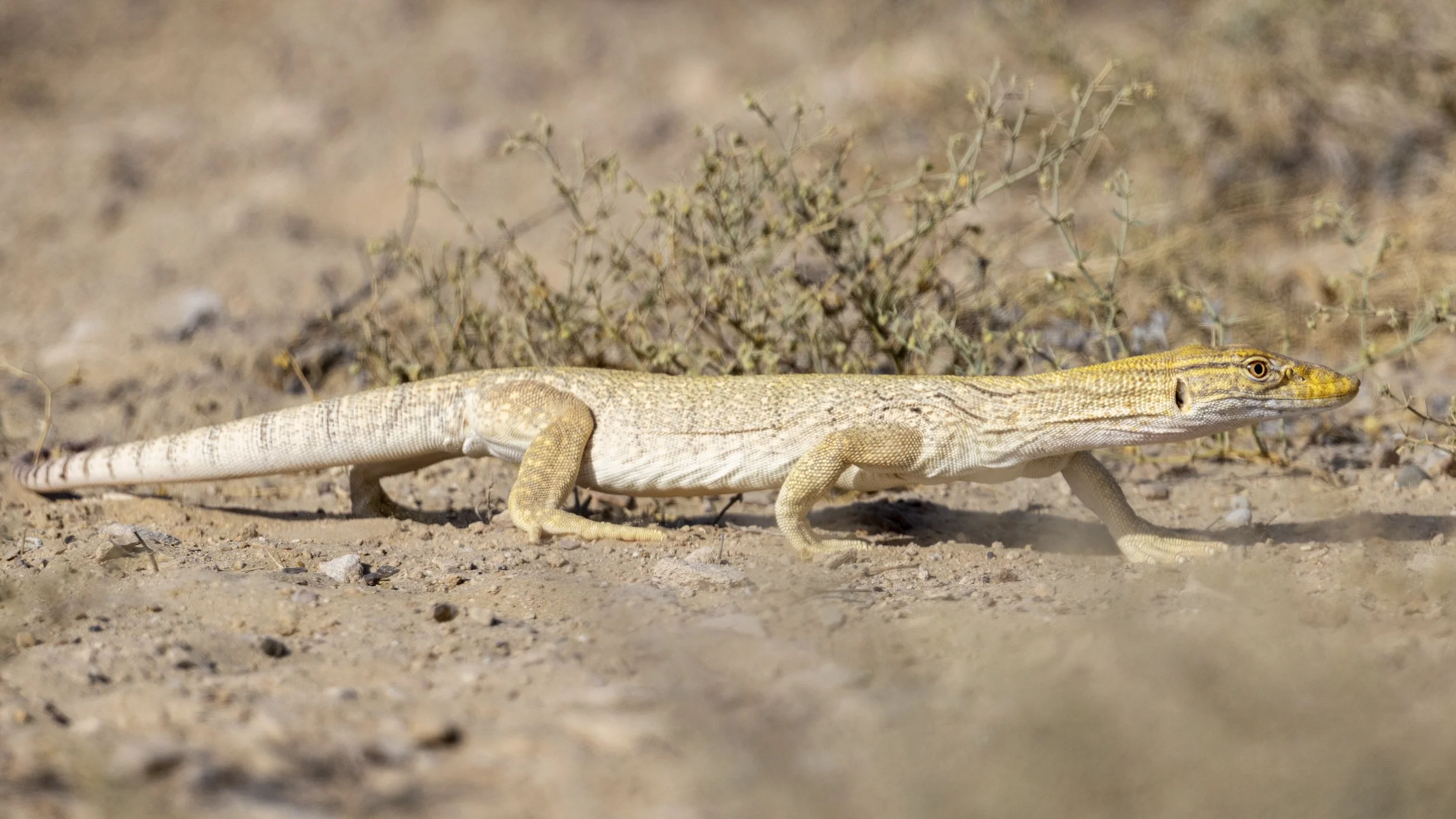
Photo Credit: Shawn Parker
Frequently Asked Questions
-
Adults commonly reach around 80–130 cm in total length, including the tail.
-
It normally avoids people and does not seek confrontation. However, it is a strong wild reptile capable of biting, scratching or striking with its tail when cornered or handled.
-
Its diet includes insects, rodents, reptiles, birds, eggs, small vertebrates and occasionally carrion.
-
It occurs in open desert, gravel plains, sandy areas and arid scrub where it can dig or use burrows for shelter.
-
It is primarily a daytime species, although its activity changes with temperature and season.
-
Yes. It is listed in CITES Appendix I and receives legal protection within the UAE.
Other Species
-
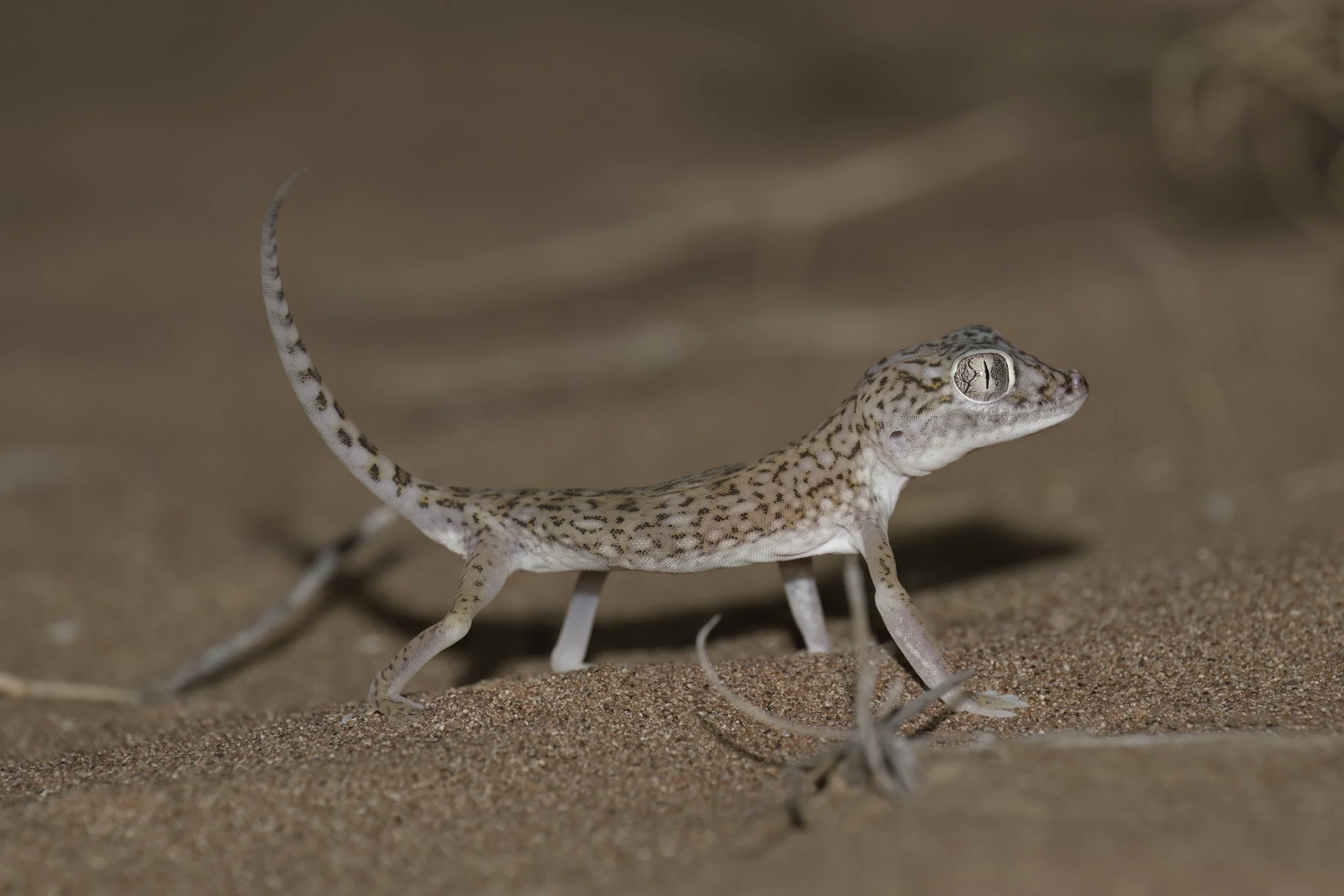
Sand Gecko (Stenodactylus doriae)
-
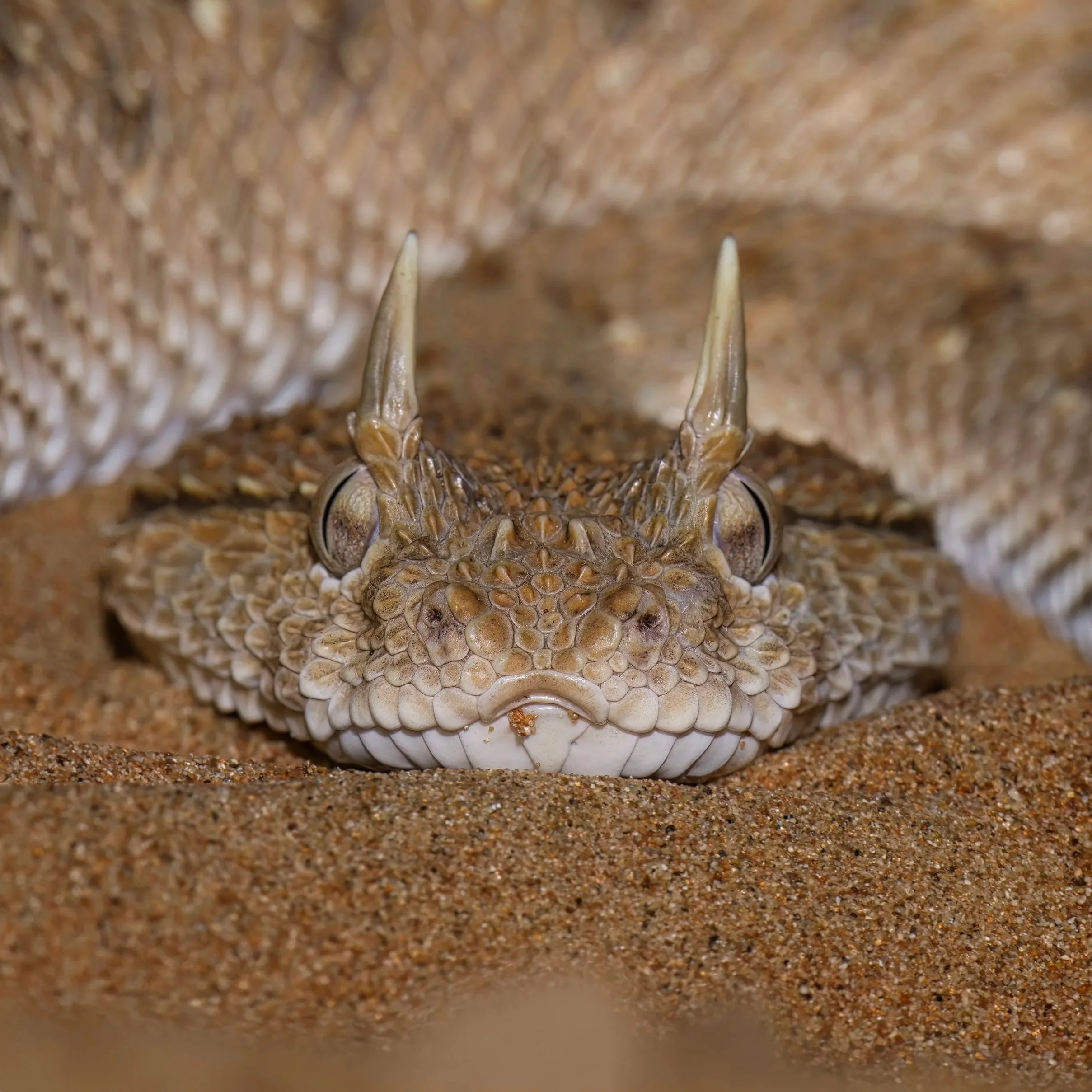
Arabian Horned Viper (Cerastes gasperettii)
-

Arabian Fat-tailed Scorpion (Androctonus ammophilus)
-
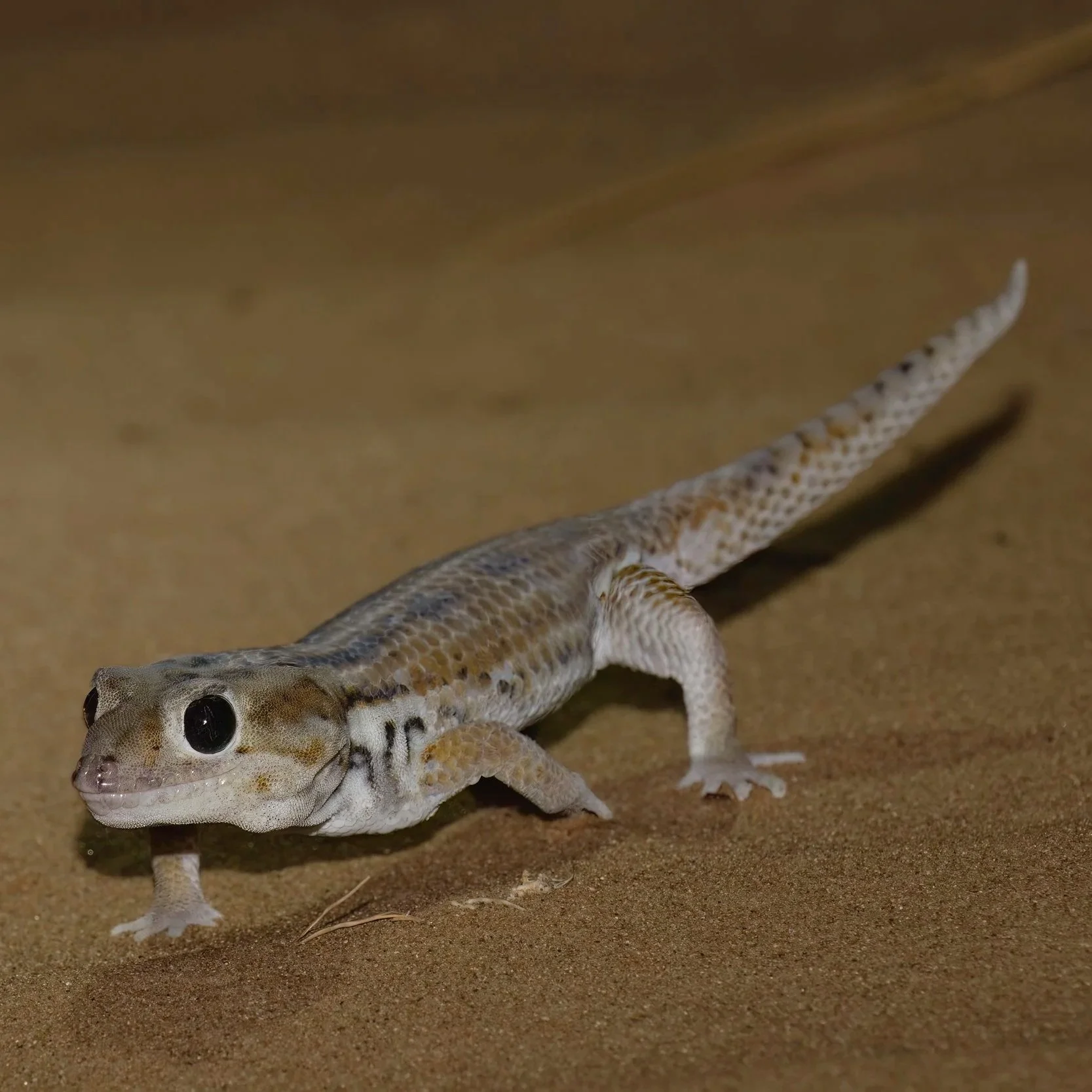
Keyserling's Wonder Gecko (Teratoscincus keyserlingii)