

Grey Plover \ Pluvialis squatarola
(الزقزاق الرمادي)
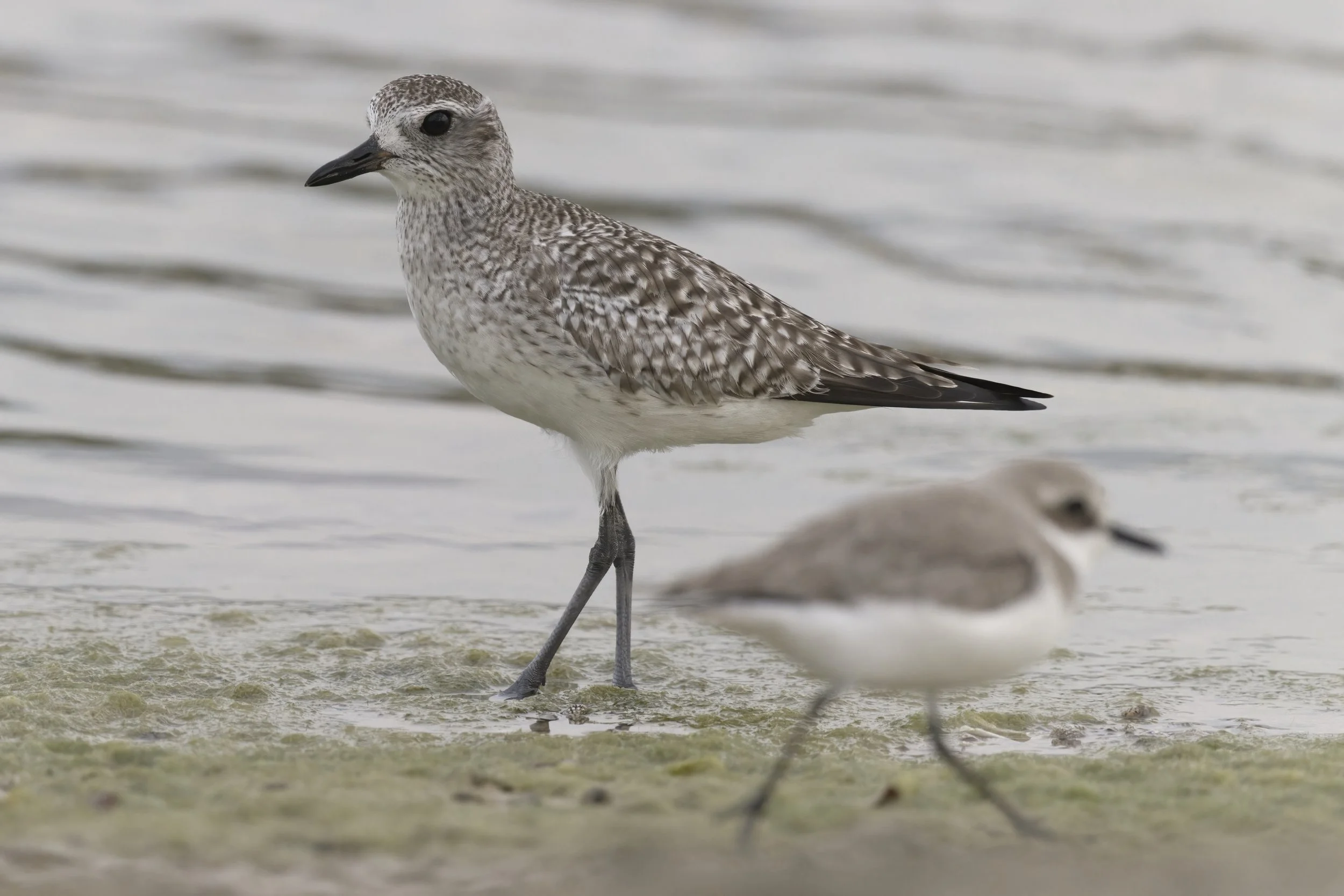
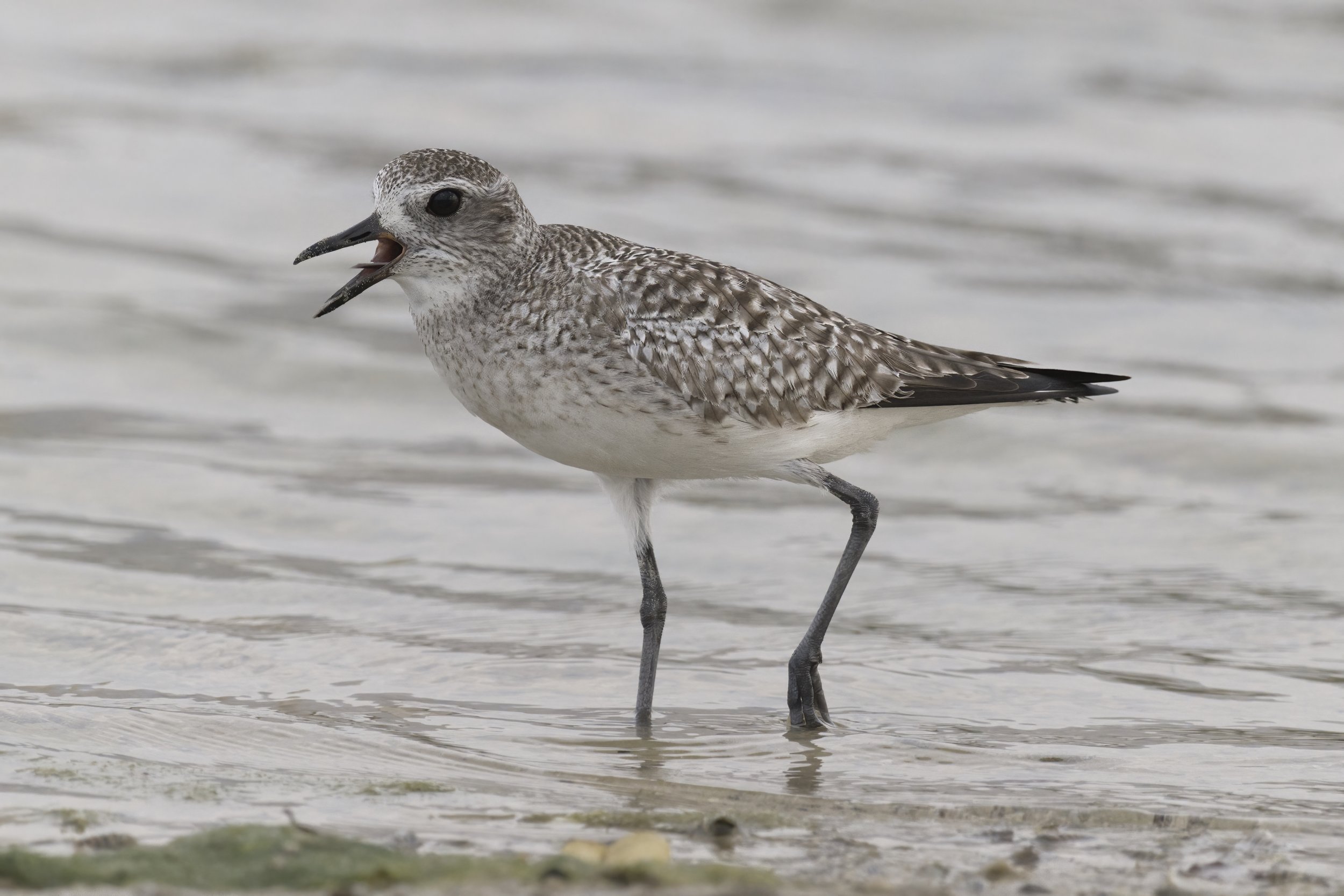
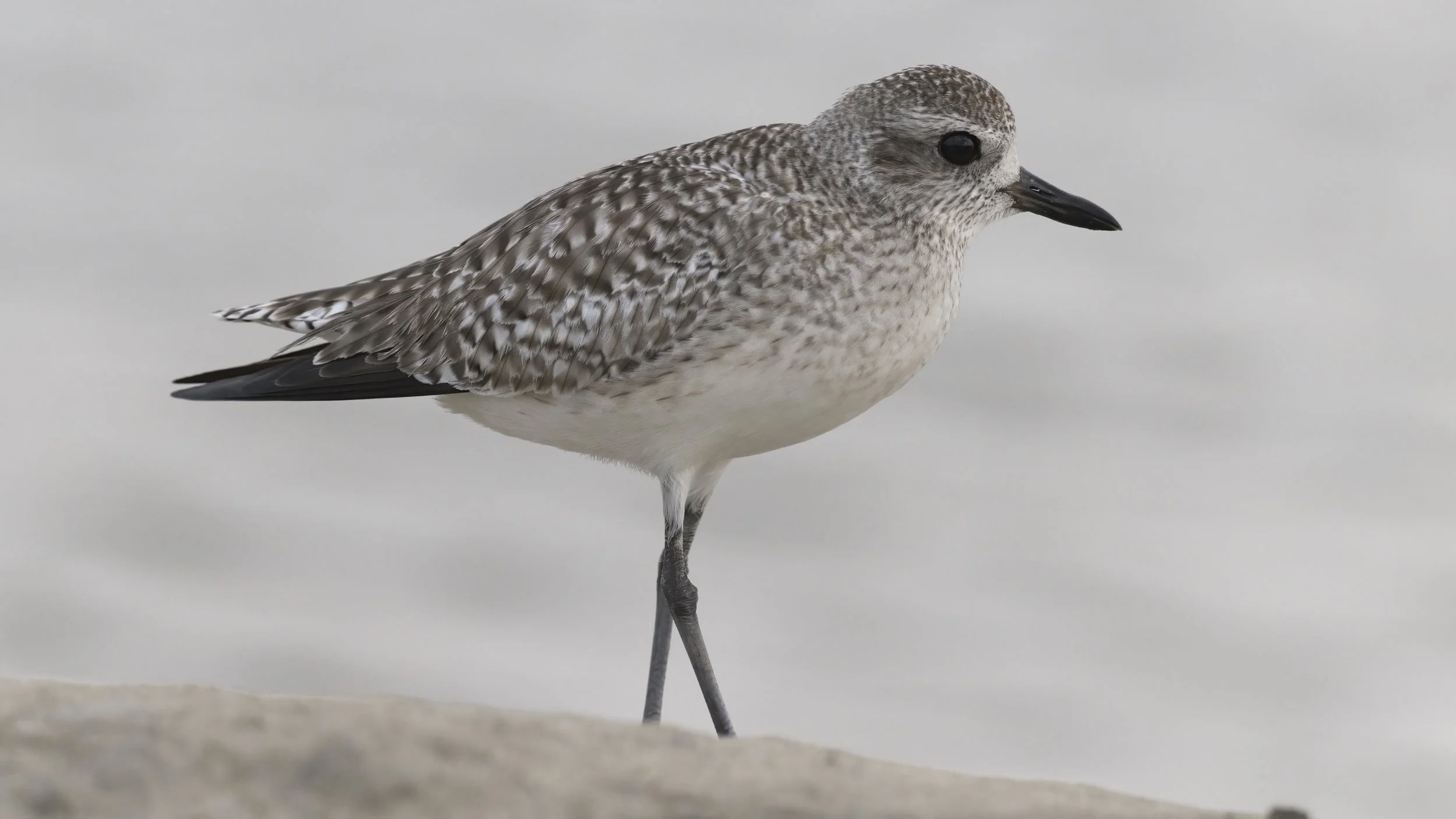
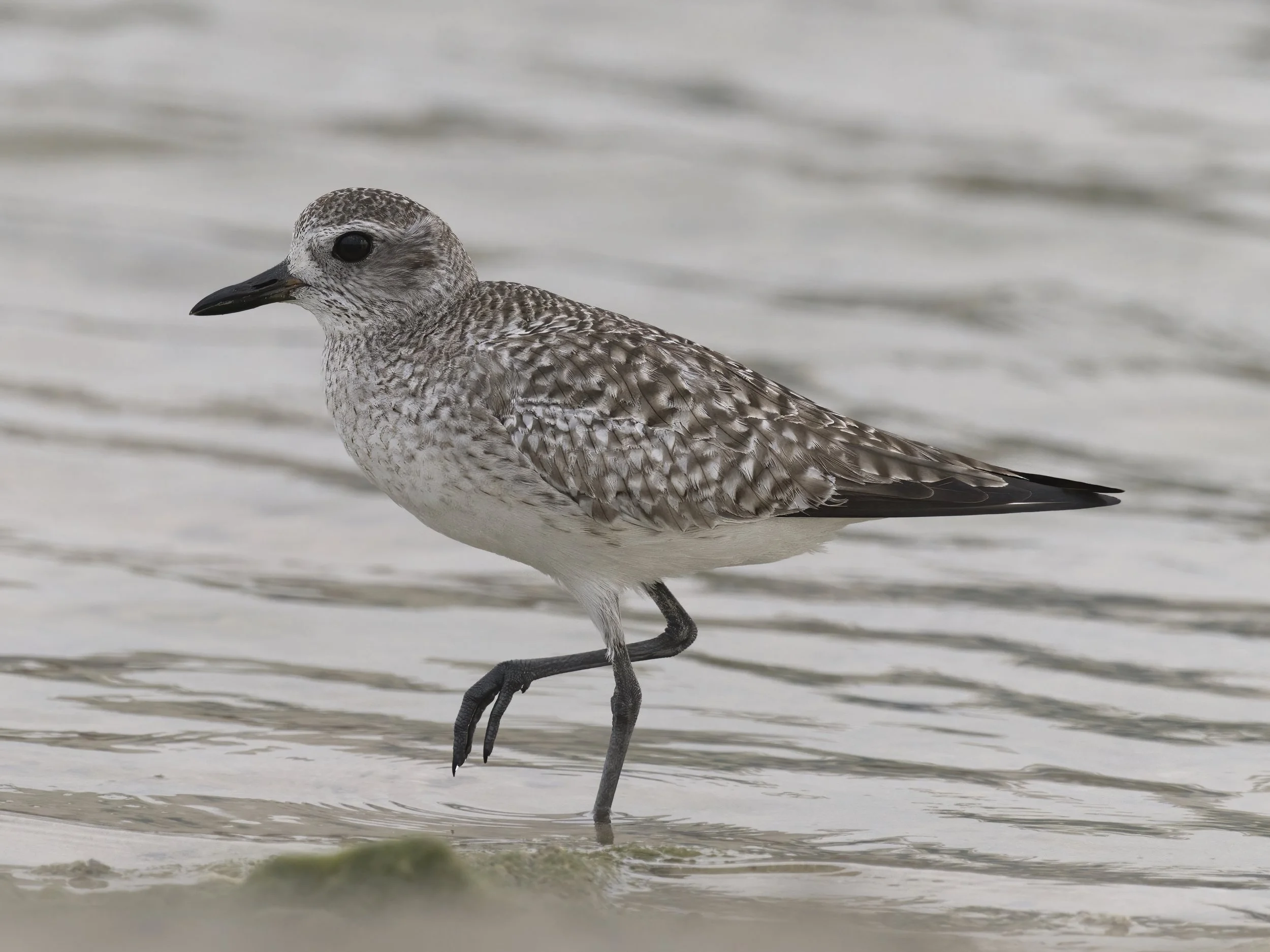
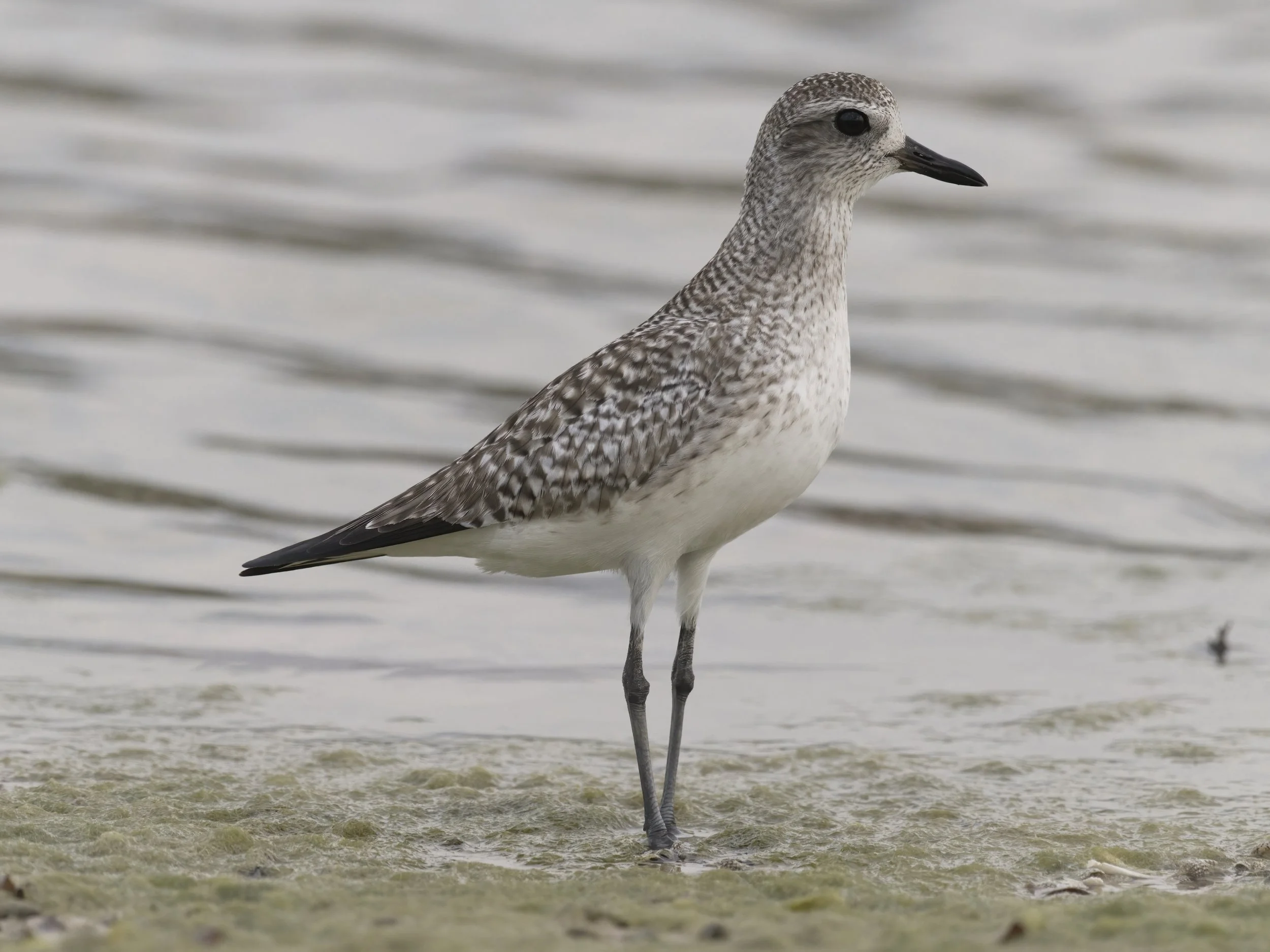
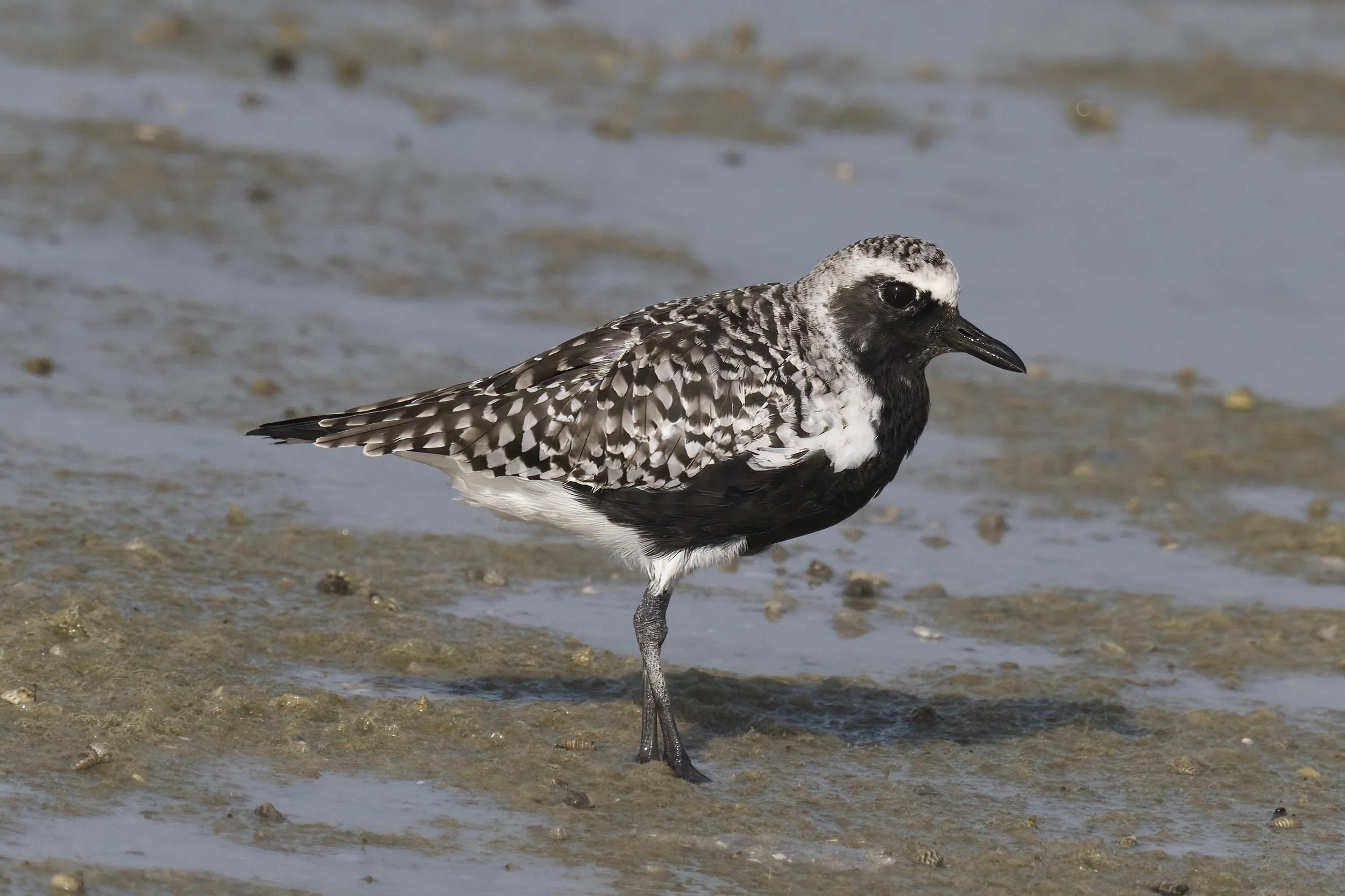
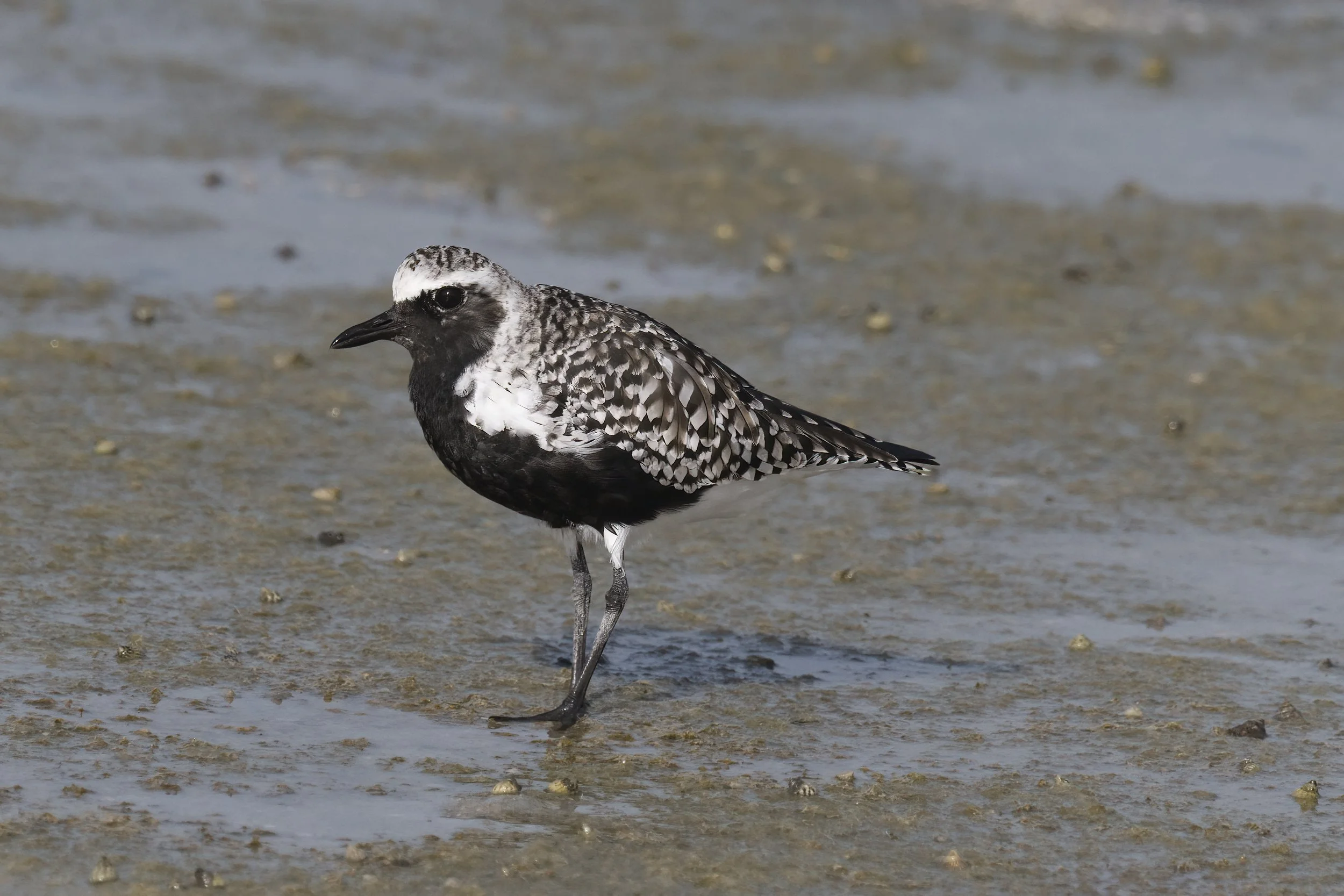
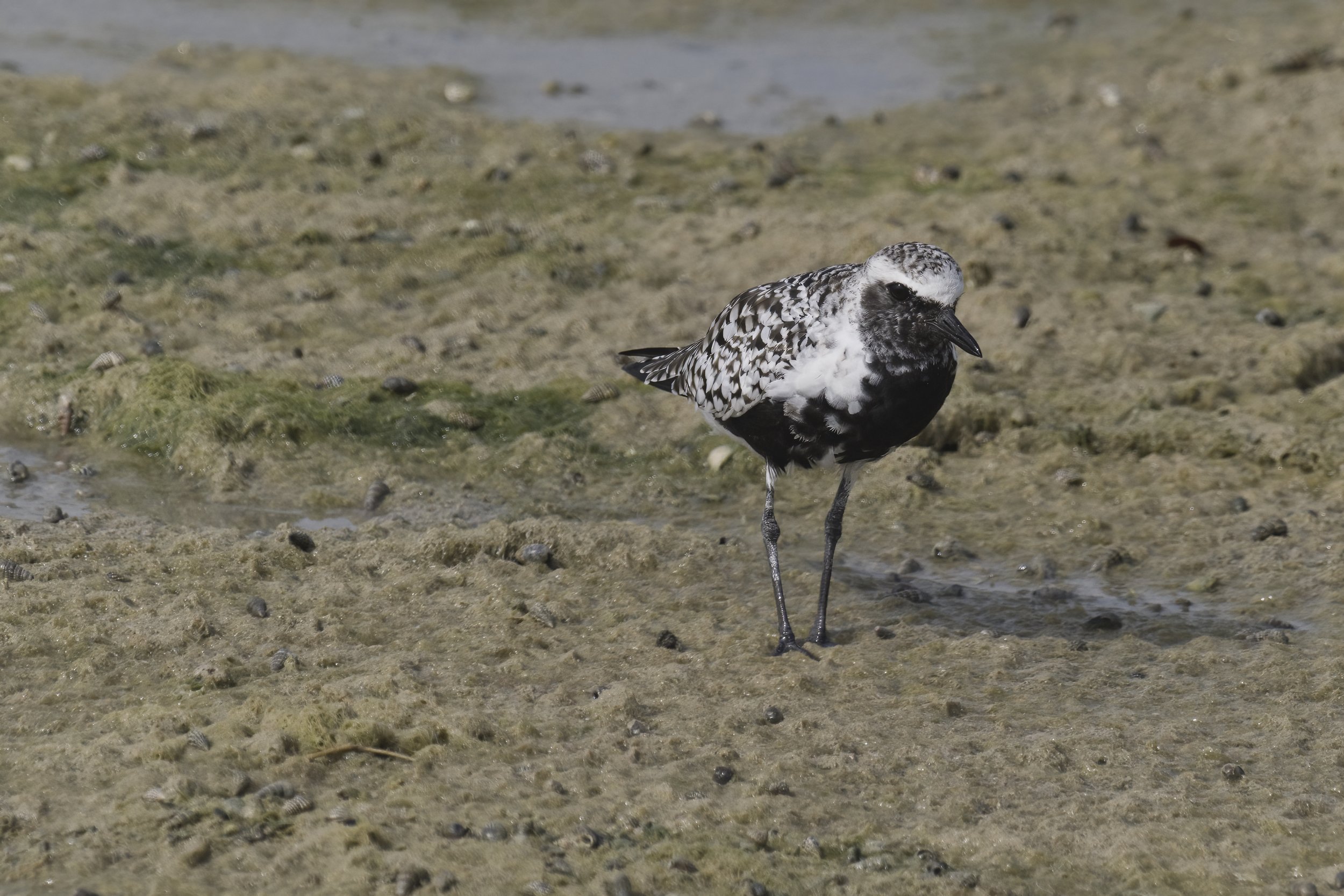
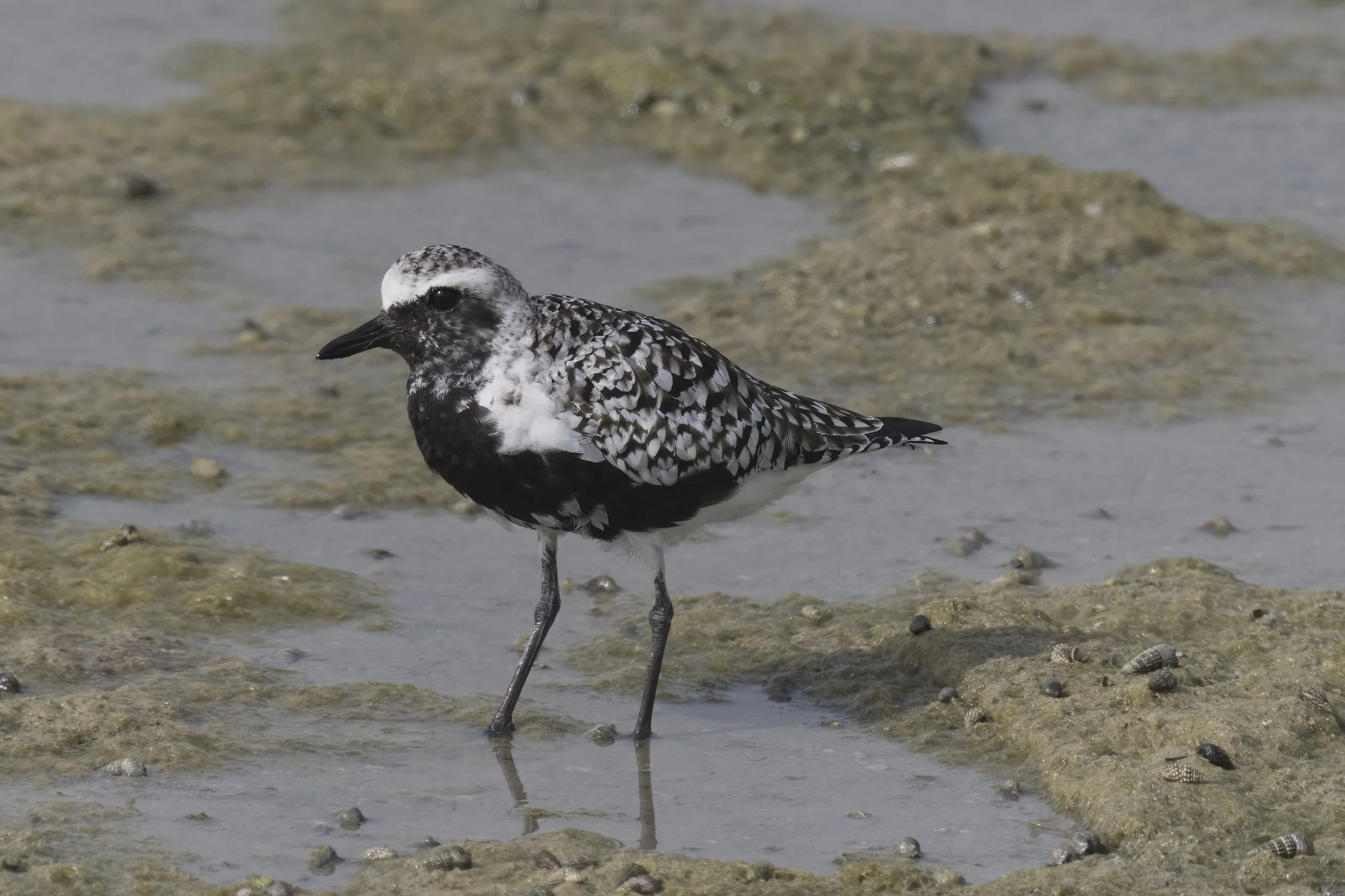
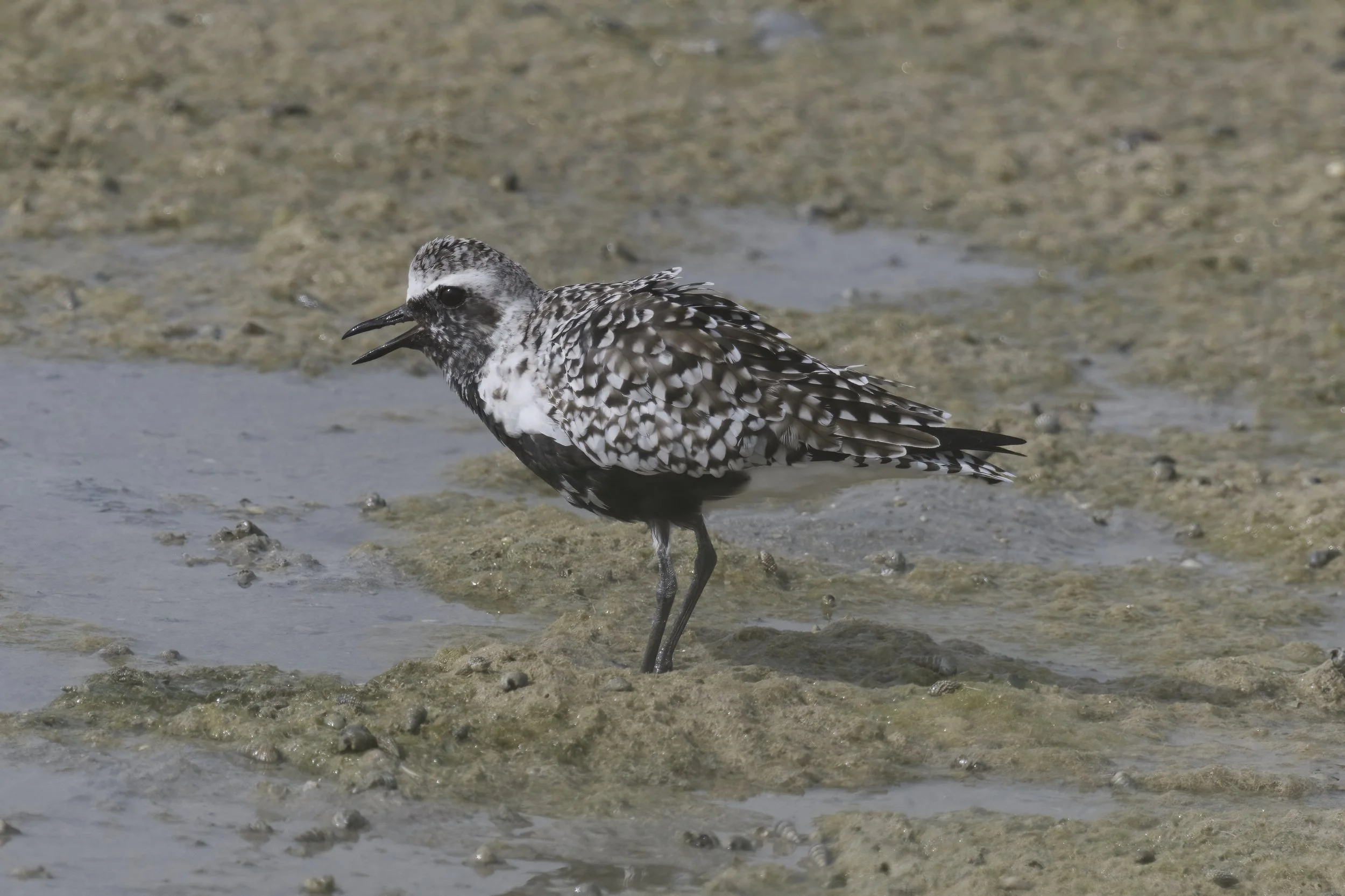
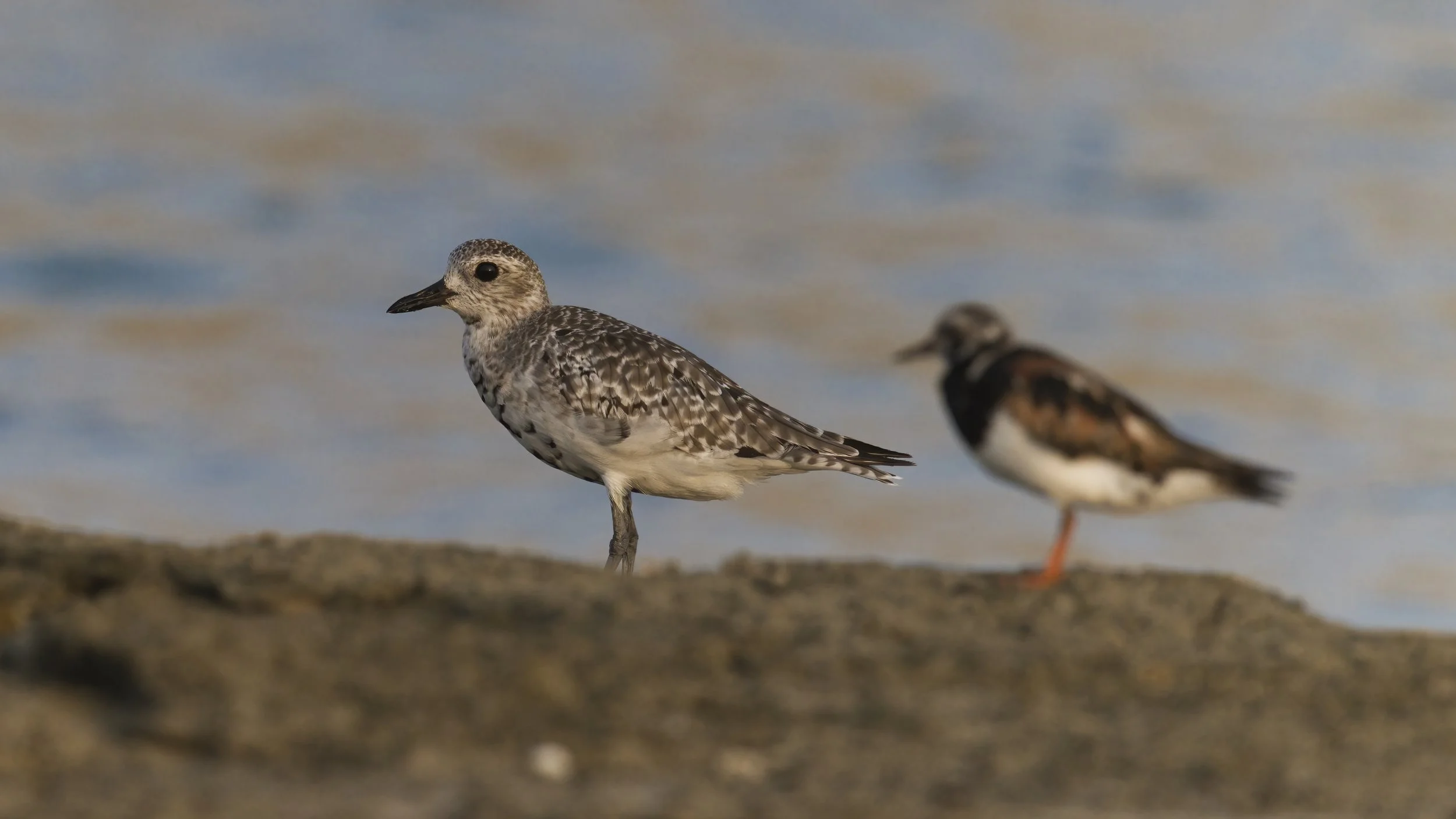
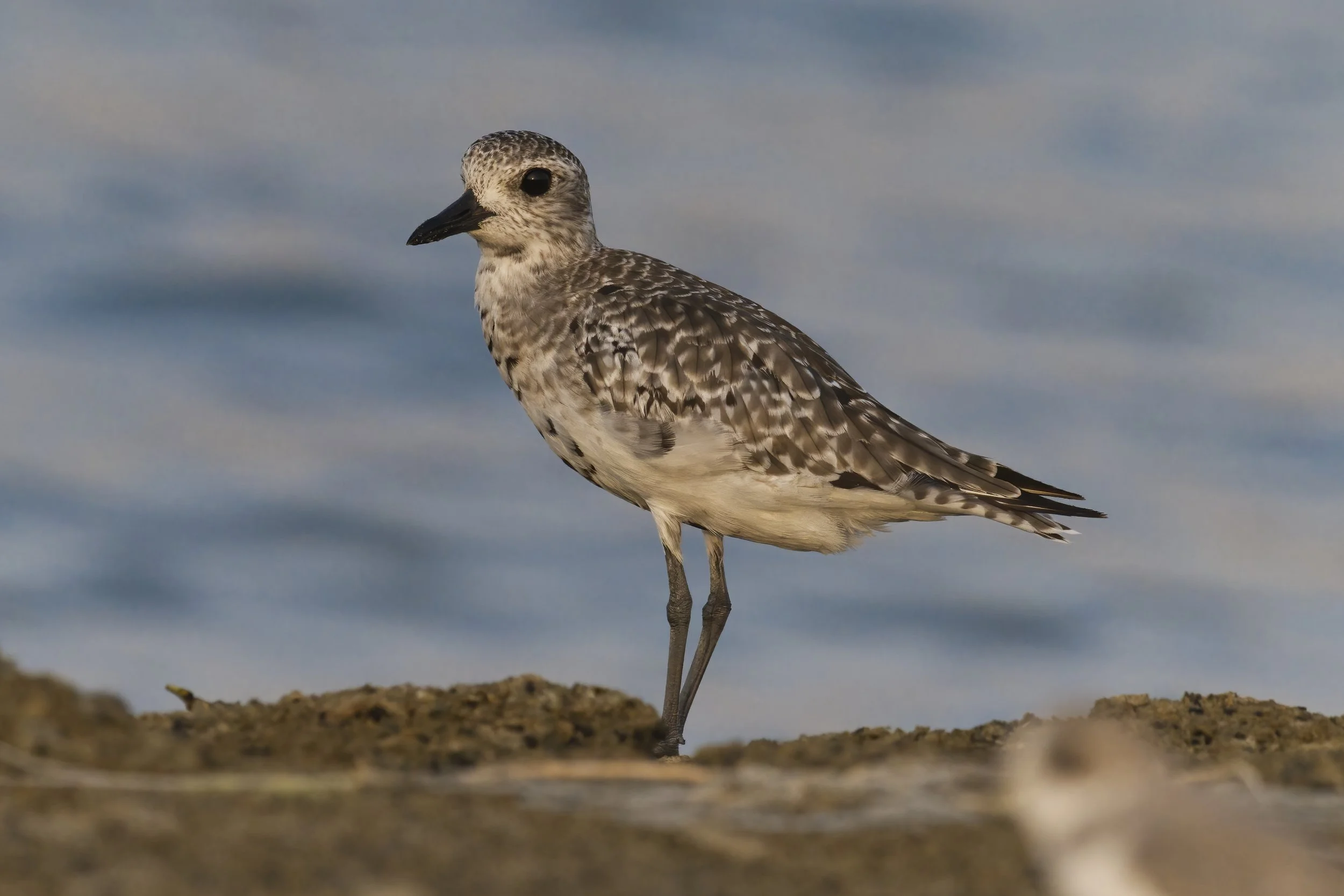
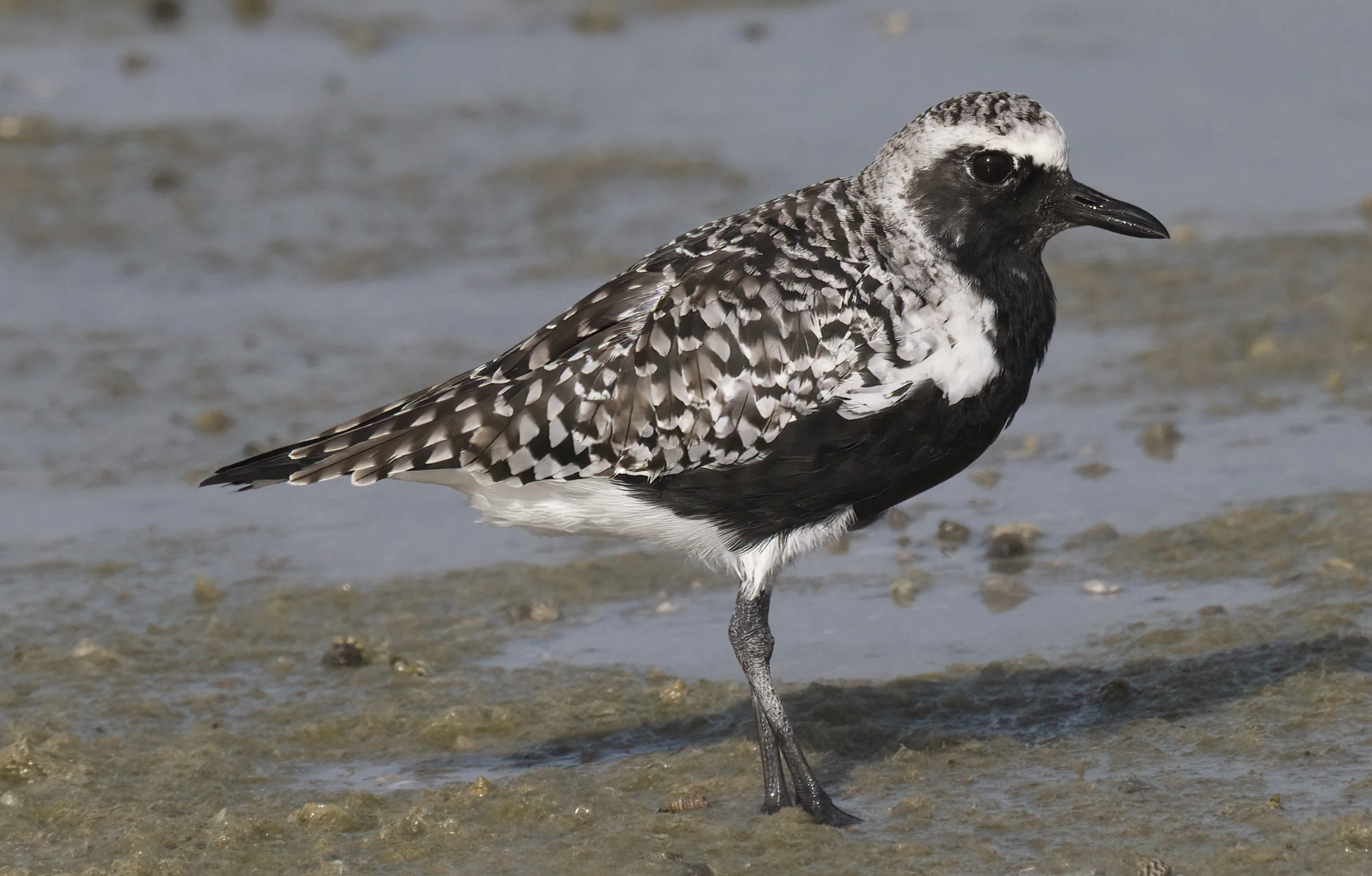
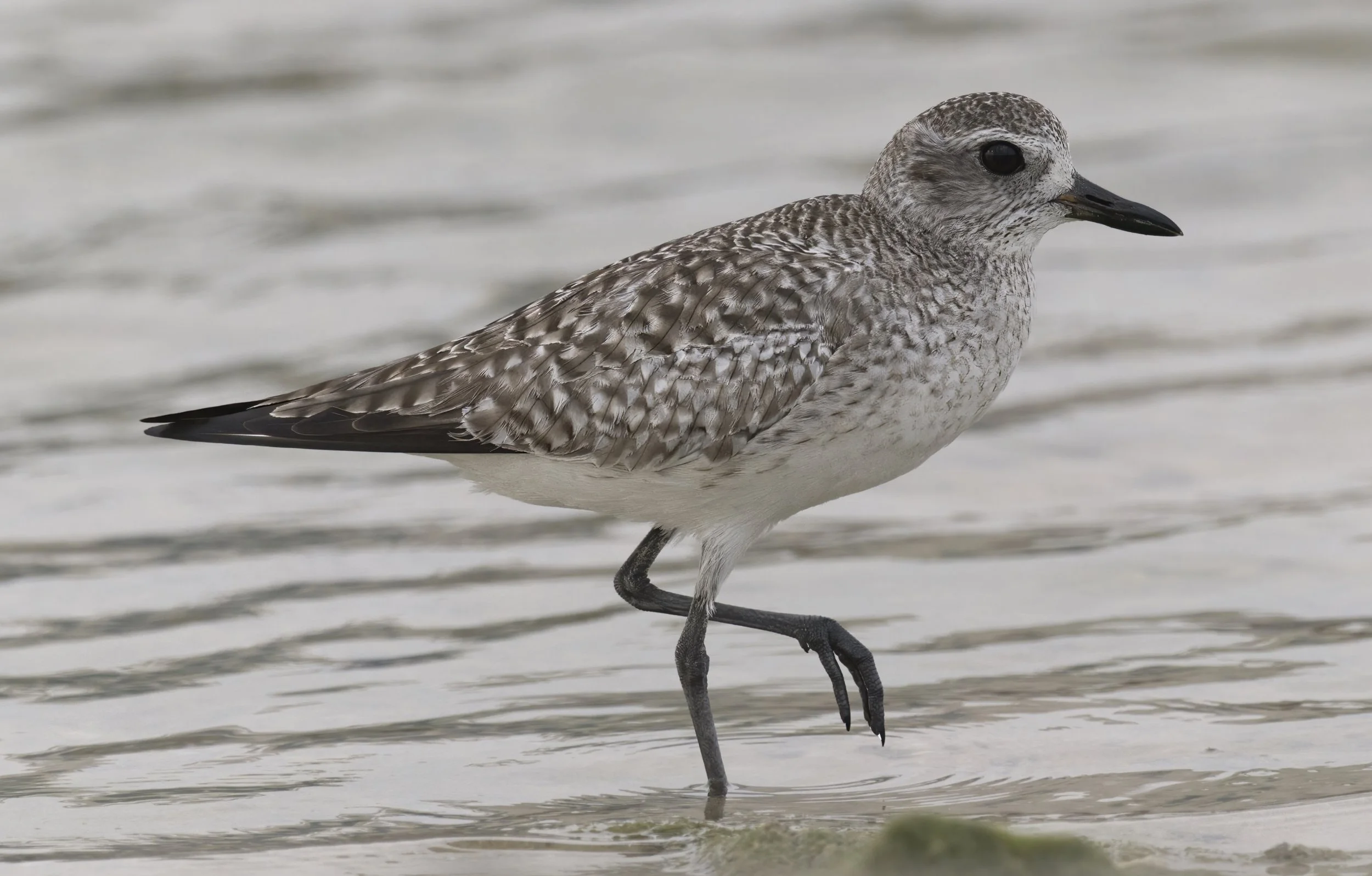
The Grey Plover (Pluvialis squatarola), also known as the Black-bellied Plover in North America, is a large, sturdy shorebird commonly found along coastal regions during migration and winter. It is easily recognized by its gray-and-white non-breeding plumage, robust black bill, and characteristic white rump visible in flight. During the breeding season, in the Arctic tundra, it dons a striking black face, belly, and throat with contrasting white and mottled gray upperparts.
Grey Plovers frequent tidal flats, estuaries, and sandy shores, where they forage for invertebrates like worms, mollusks, and crustaceans by probing the substrate or picking prey from the surface. They are solitary feeders but often gather in flocks during high tide or migration. In the UAE, this species is a regular winter visitor and an important part of the coastal birdlife, contributing to the diversity of wetland ecosystems. Conservation of its habitats is vital to ensure the survival of this globally widespread species, especially amidst threats like coastal development and climate change.
الزقزاق الرمادي، المعروف أيضًا في أمريكا الشمالية باسم الزقزاق أسود البطن، هو طائر ساحلي كبير قوي البنية يُشاهَد كثيرًا على السواحل خلال فترات الهجرة وفي الشتاء. ويُعرَف بسهولة بريشه الشتوي الرمادي والأبيض، ومنقاره الأسود القوي، والعجز الأبيض الواضح أثناء الطيران. أمّا في موسم التكاثر، الذي يقضيه في تندرا القطب الشمالي، فيكتسب مظهرًا لافتًا يتمثل في وجه وحلق وبطن سوداء تتباين مع الأجزاء العلوية المرقشة بالرمادي والأبيض
ويرتاد الزقزاق الرمادي السهول الطينية المتأثرة بالمد والجزر، ومصبات الأنهار، والشواطئ الرملية، حيث يتغذى على اللافقاريات مثل الديدان، والرخويات، والقشريات، إما بتحسس الطين أو بالتقاط الفرائس من السطح. وهو غالبًا يتغذى منفردًا، لكنه قد يتجمع في أسراب خلال المد العالي أو أثناء الهجرة. وفي الإمارات العربية المتحدة، يُعَدّ هذا النوع زائرًا شتويًا منتظمًا وعنصرًا مهمًا في الحياة الطيرية الساحلية، حيث يساهم في إثراء تنوع النظم البيئية الرطبة. وتبقى حماية موائله أمرًا أساسيًا لضمان استمرار هذا النوع واسع الانتشار عالميًا، خاصة في ظل التهديدات المتزايدة مثل التوسع الساحلي وتغير المناخ

Other Species
-
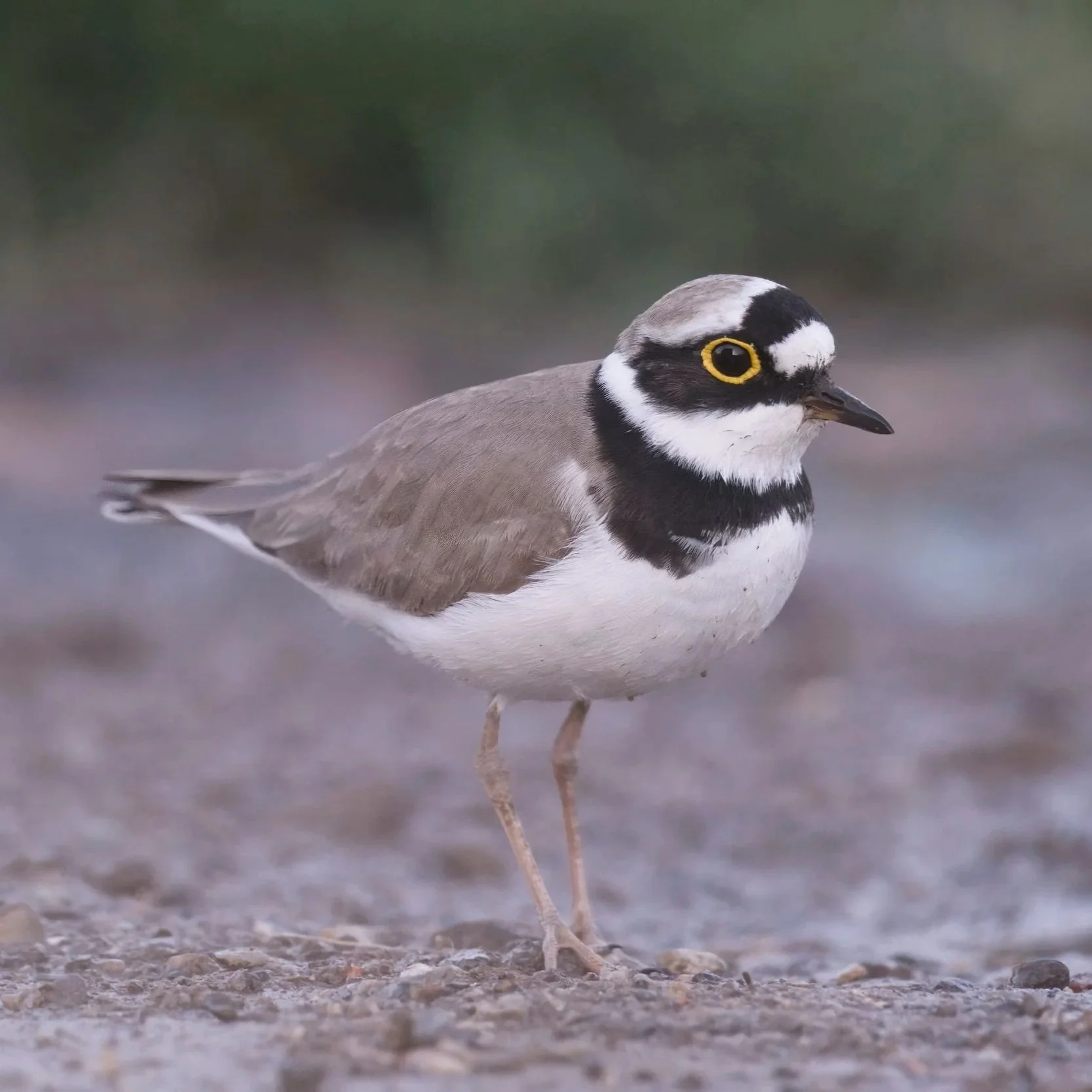
Little Ringed Plover (Charadrius dubius)
-
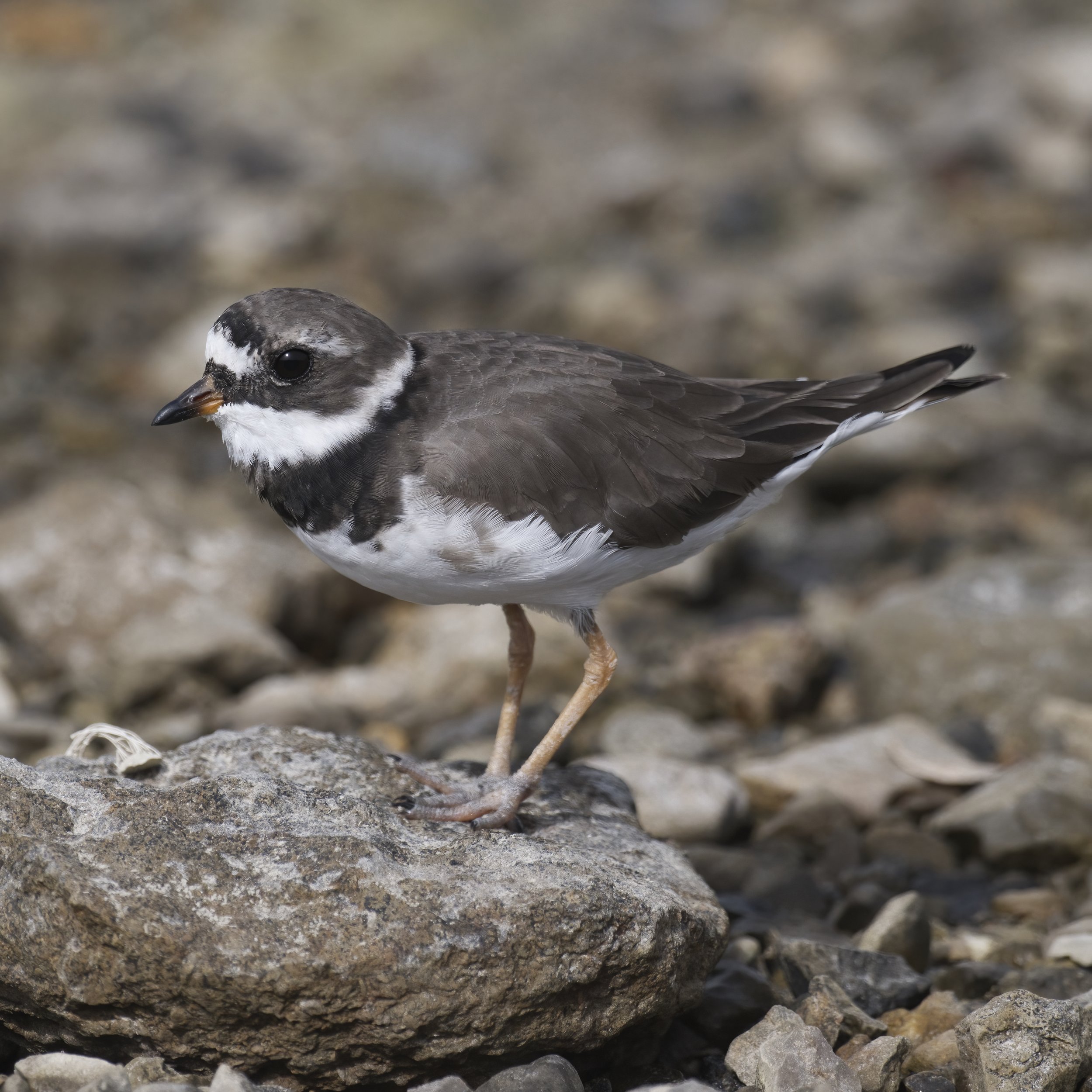
Common Ringed Plover (Charadrius hiaticula)
-
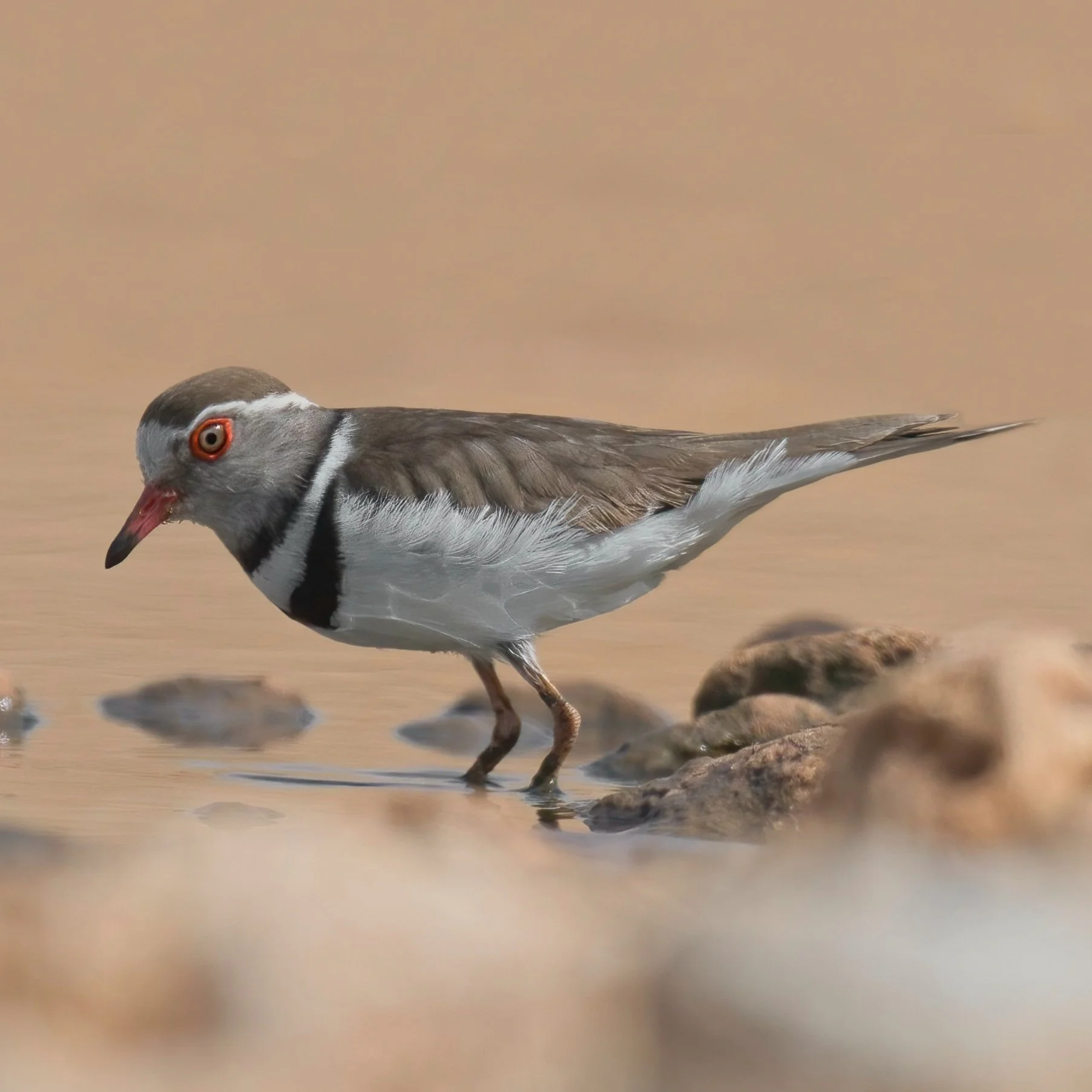
African Three-banded Plover (Charadrius tricollaris)
-
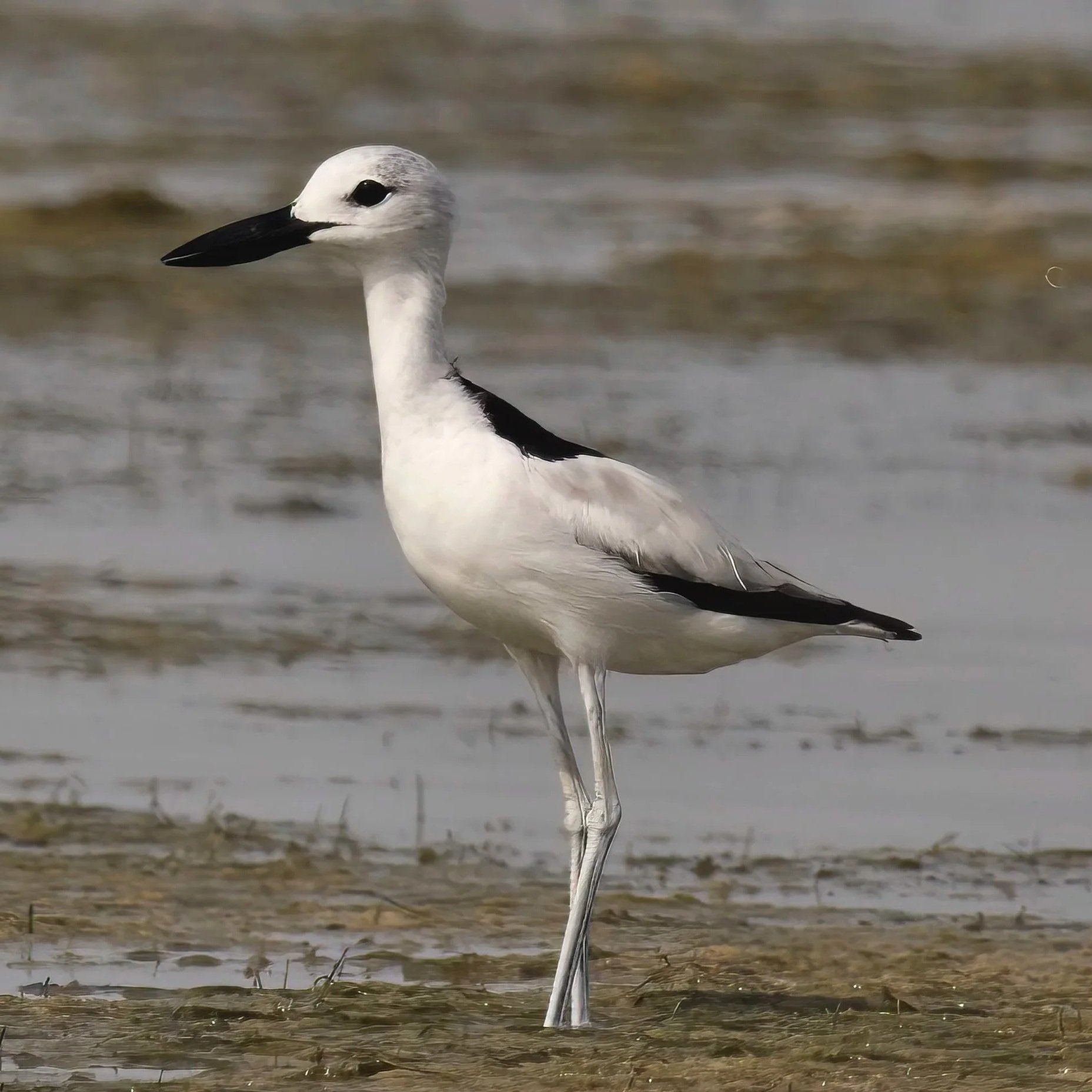
Crab Plover (Dromas ardeola)