

Pallid Scops-owl (بومة الأشجار المخططة) \ Otus brucei **
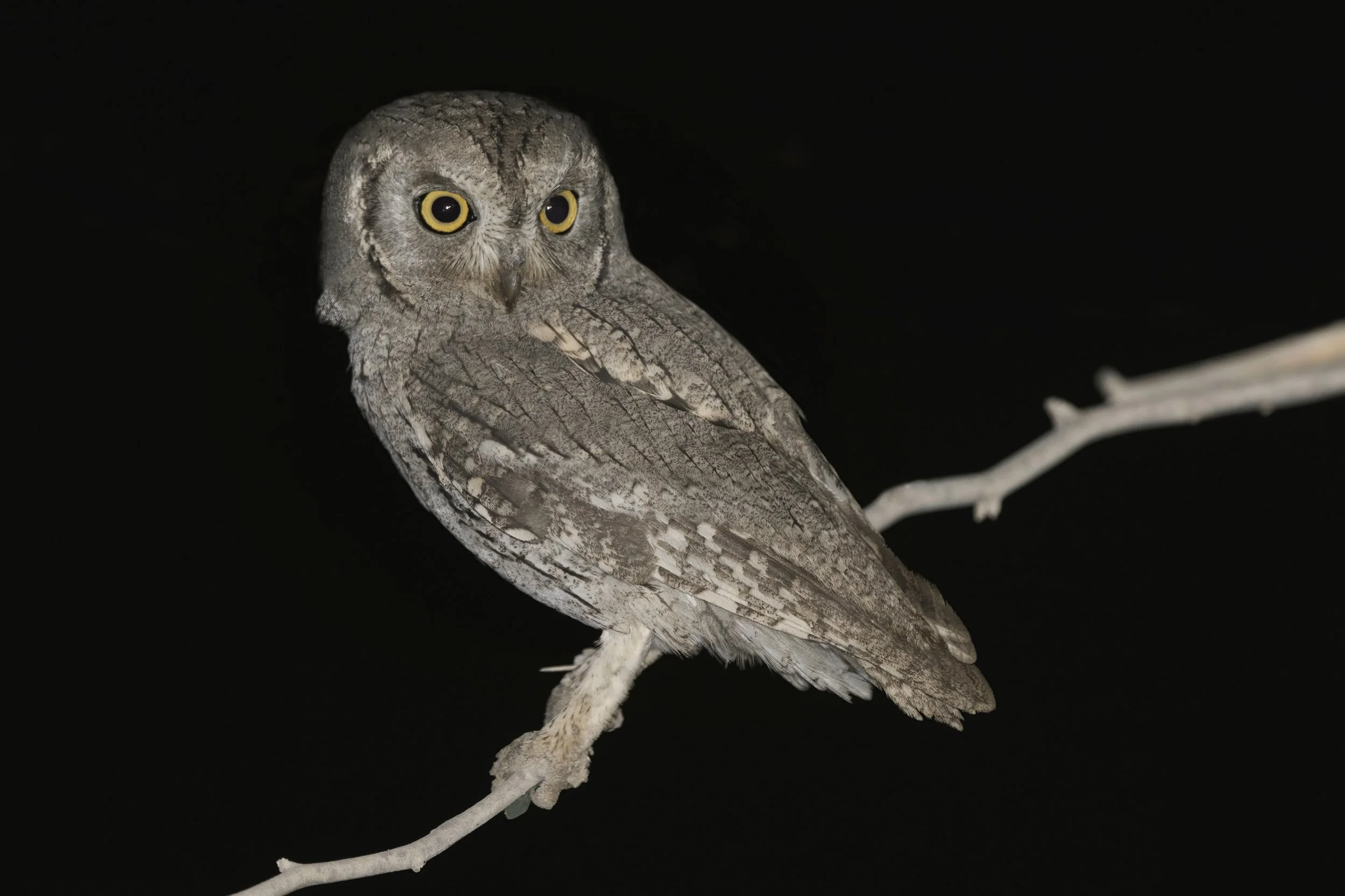
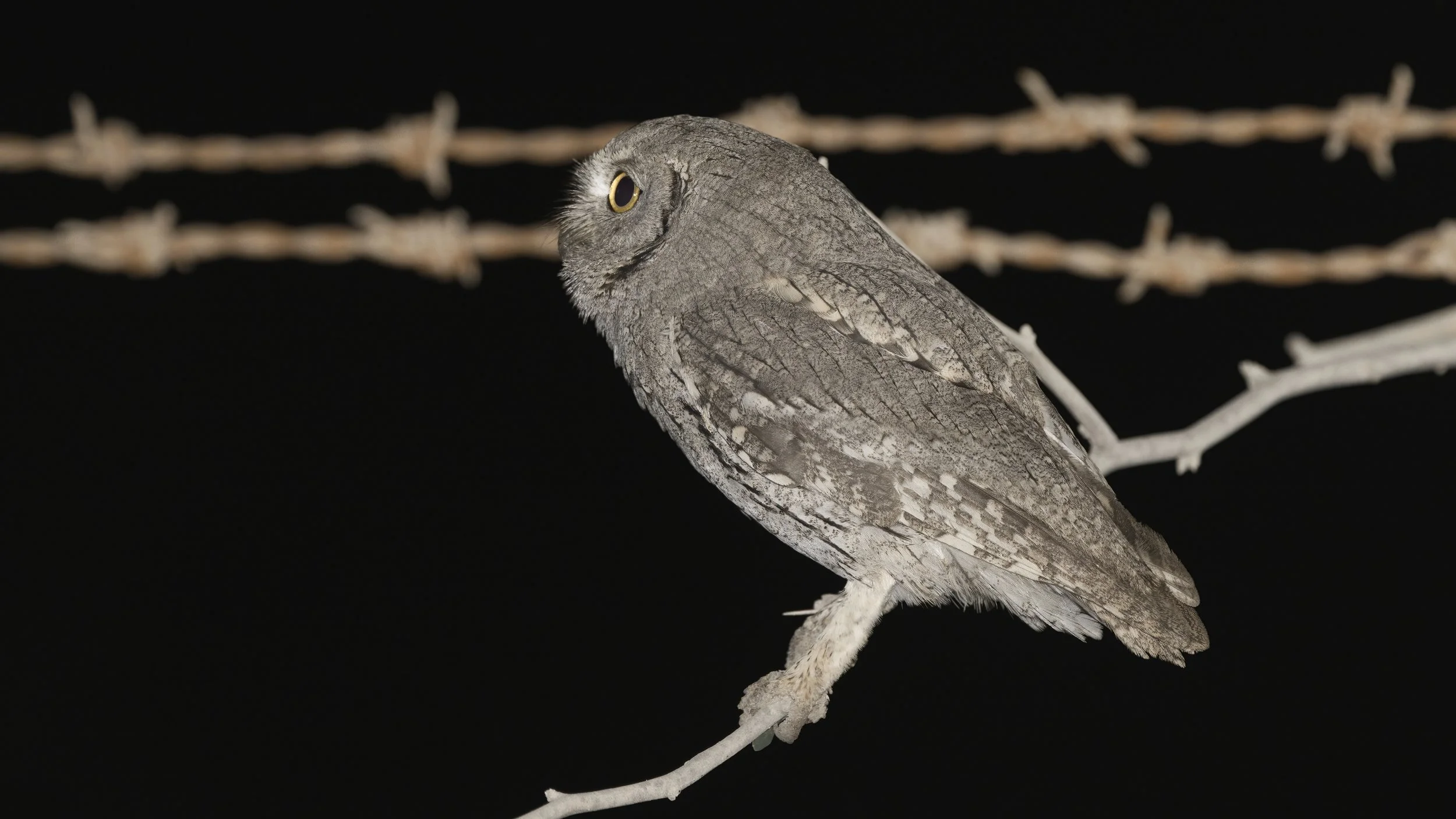
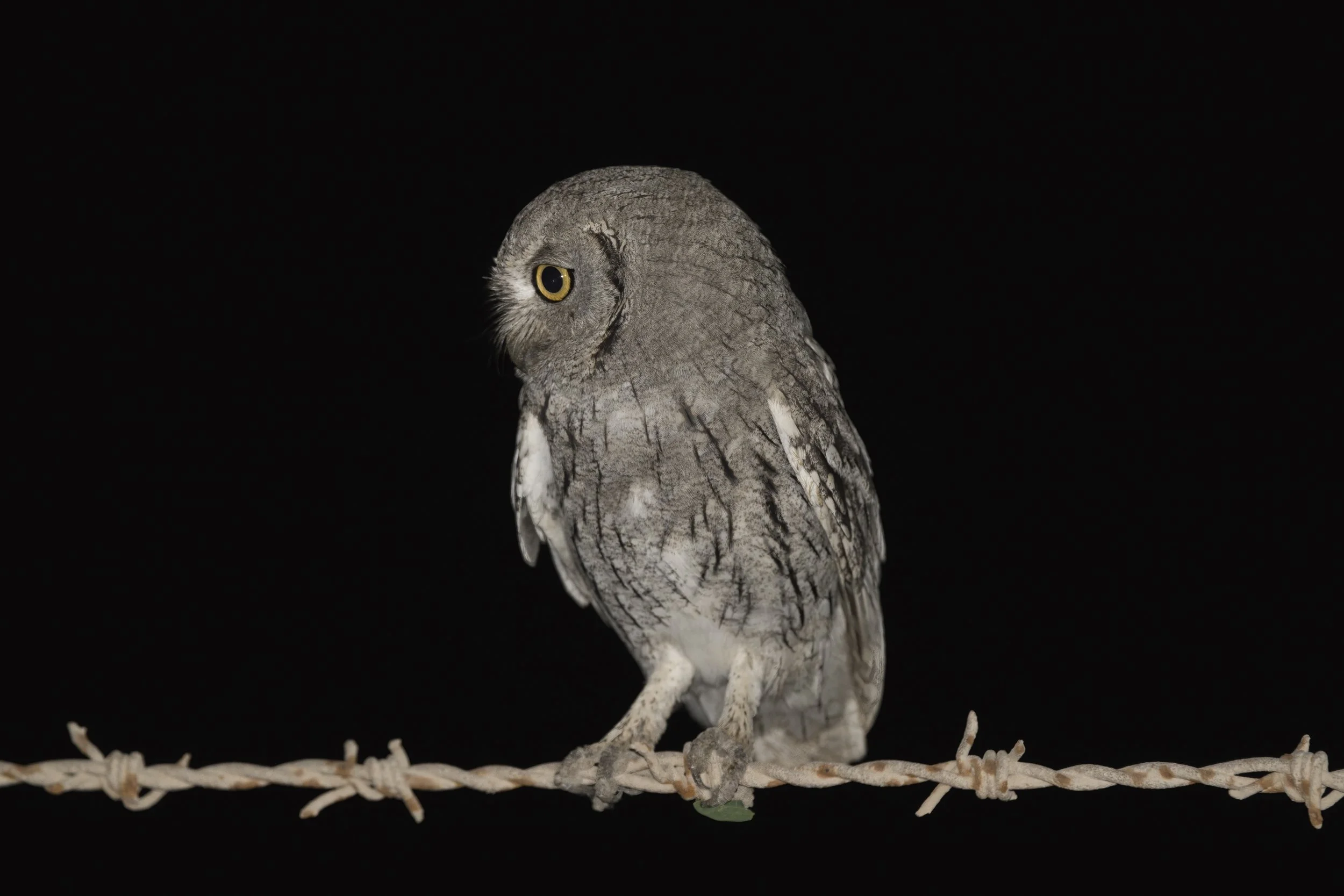
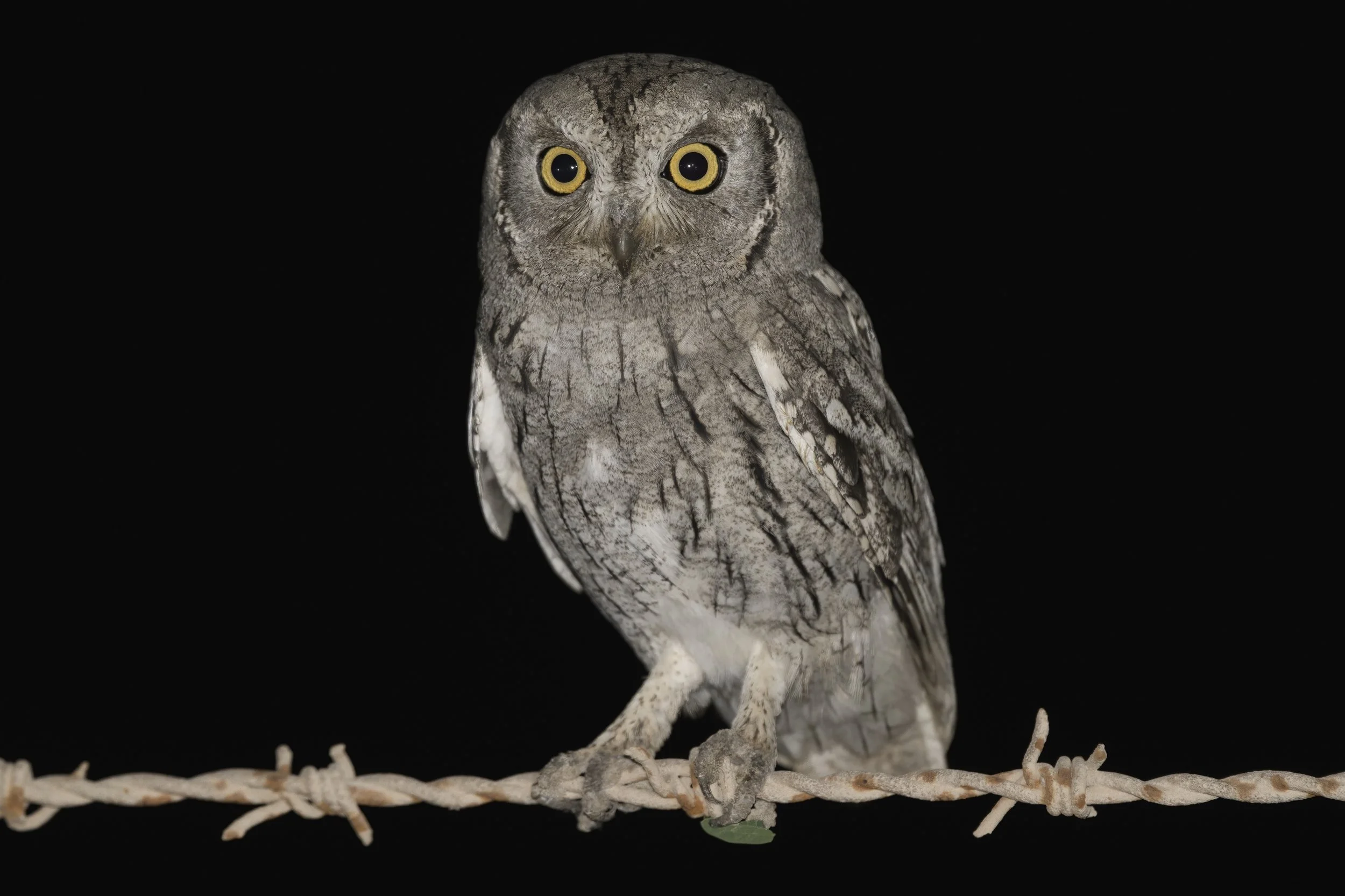
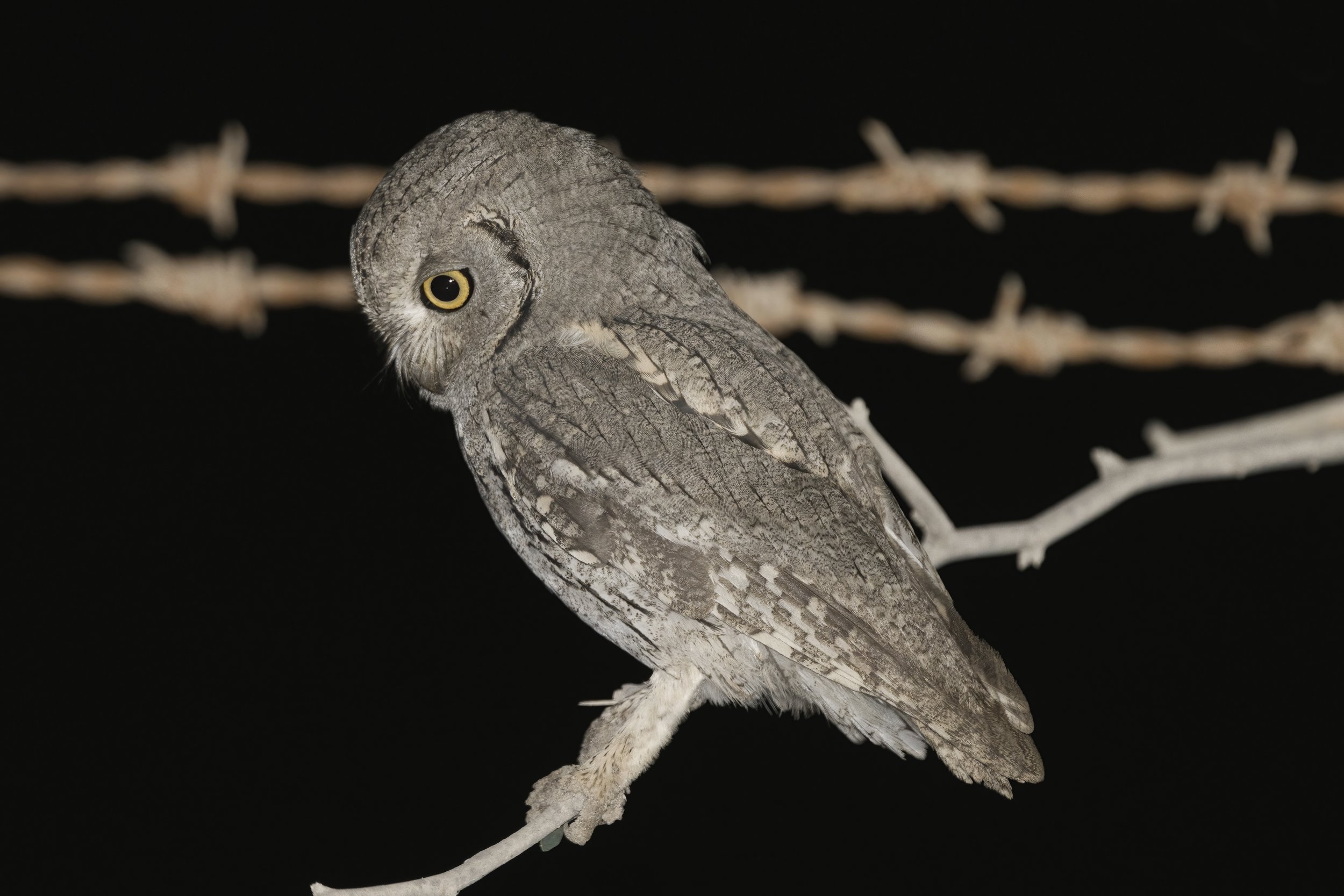
The Pallid Scops-owl (Otus brucei) is a small, charming owl species notable for its delicate appearance and cryptic coloration. This diminutive owl stands out for its pale, sandy-grey plumage, perfectly adapted to its preferred habitat of semi-desert woodlands, dry scrubland, and groves of trees across North Africa, the Middle East, and parts of Central Asia. The Pallid Scops-owl is particularly admired for its remarkable camouflage, blending seamlessly with tree bark and foliage, often making it nearly invisible during daylight hours. At night, its distinct, soft, repetitive whistle helps birdwatchers identify it in the darkness. Primarily insectivorous, this owl deftly hunts insects and occasionally small rodents. Its quiet nature, combined with its elusive habits, makes spotting and photographing the Pallid Scops-owl a rewarding experience sought by many bird enthusiasts and wildlife photographers.
The Pallid Scops-owl (Otus brucei) closely resembles the Eurasian Scops-owl (Otus scops), but several key differences help distinguish the two. The Pallid Scops-owl is typically slightly larger, measuring around 19–22 cm in length, with a wingspan of 50–60 cm and weight ranging from 60–120 grams. In comparison, the Eurasian Scops-owl is usually a bit smaller, averaging 16–20 cm in length, with a wingspan of 48–54 cm and weights of around 60–135 grams, slightly overlapping in size and weight.
The most noticeable difference is their plumage: the Pallid Scops-owl has notably paler, sandy-gray feathers adapted to arid environments, whereas the Eurasian Scops-owl displays darker, brownish-grey plumage with more pronounced streaks and markings suited to wooded and forested areas. Habitat preferences further set them apart—the Pallid Scops-owl favors open, semi-desert scrublands and sparse groves in arid regions of the Middle East and Central Asia, while the Eurasian Scops-owl prefers denser woodlands, parks, and gardens across a broader range from Europe to Asia.
Vocally, both species emit characteristic calls, but the Pallid Scops-owl’s whistle tends to be softer and more monotonous, contrasting the clearer, higher-pitched, and more rhythmic calls of the Eurasian Scops-owl. These distinctions help birdwatchers and researchers reliably identify each species in the field.
The “ears” of a Pallid Scops Owl (and most other owls with similar tufts) are not ears at all. They’re simply feather tufts, sometimes called plumicorns. These tufts have nothing to do with hearing — the actual ears of an owl are small openings hidden under the feathers on the sides of its head, slightly asymmetrical to help the bird pinpoint sound direction with astonishing accuracy.
The Pallid Scops Owl doesn’t keep its ear tufts erect all the time. It raises them in specific situations — mainly as part of its body language. These “ears” aren’t used for hearing at all; they’re purely visual signals that help the owl communicate or camouflage itself.
They’re usually raised when:
The owl feels alert or threatened — to appear taller or more intimidating.
It’s trying to blend into bark or branches, breaking its outline when roosting during the day.
During territorial defense or mild agitation, especially if another owl or predator is nearby.
They’re usually flattened when the bird is relaxed, sleepy, or at ease — especially during daytime roosts when it feels safe.
So, in short:
→ Raised “ears” = alert, defensive, or camouflaging.
→ Flattened “ears” = relaxed, comfortable, or resting.
You could think of them as mood indicators — a little like how a cat’s ears move depending on its state of mind.
Related Species
-
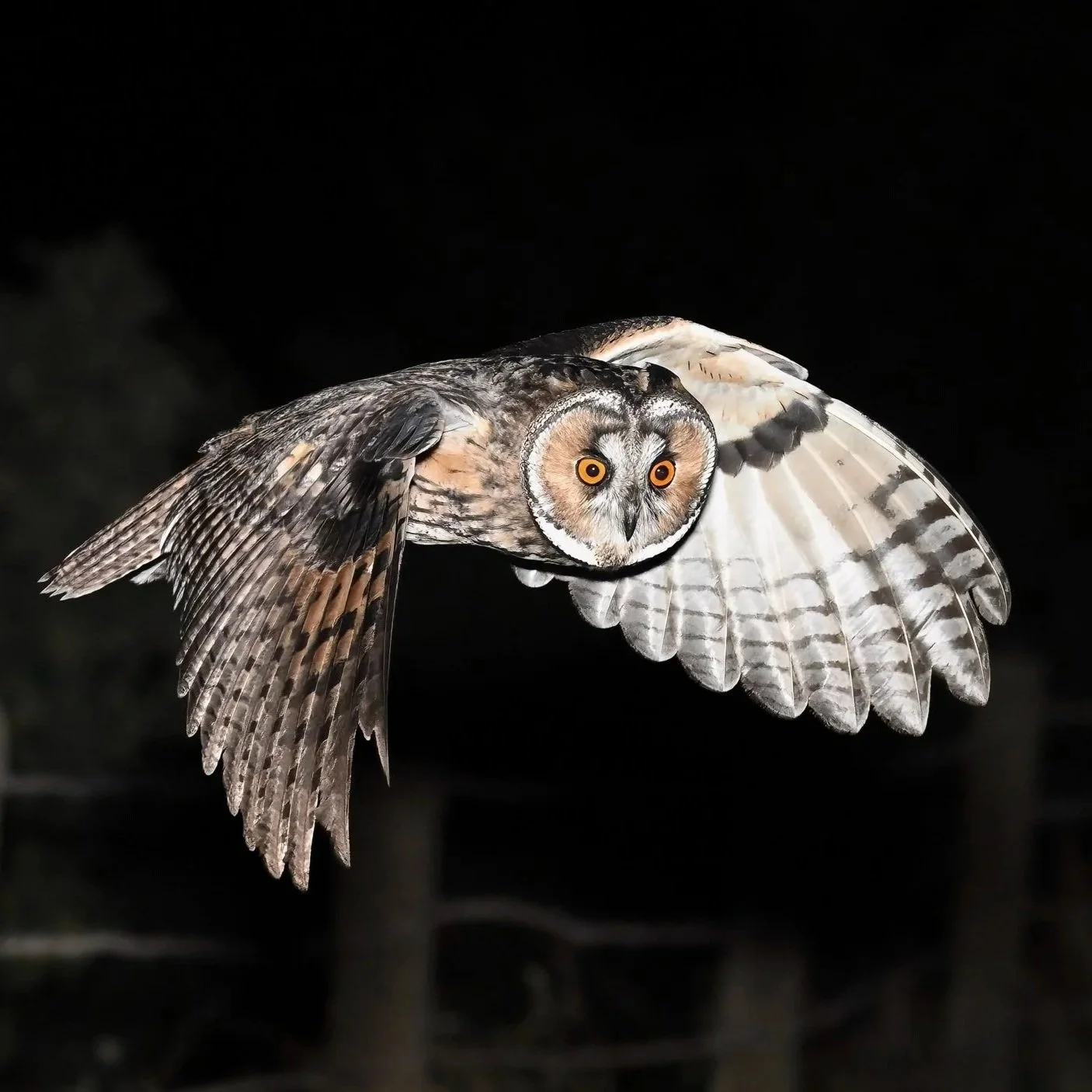
Long-eared Owl (Asio otus)
-
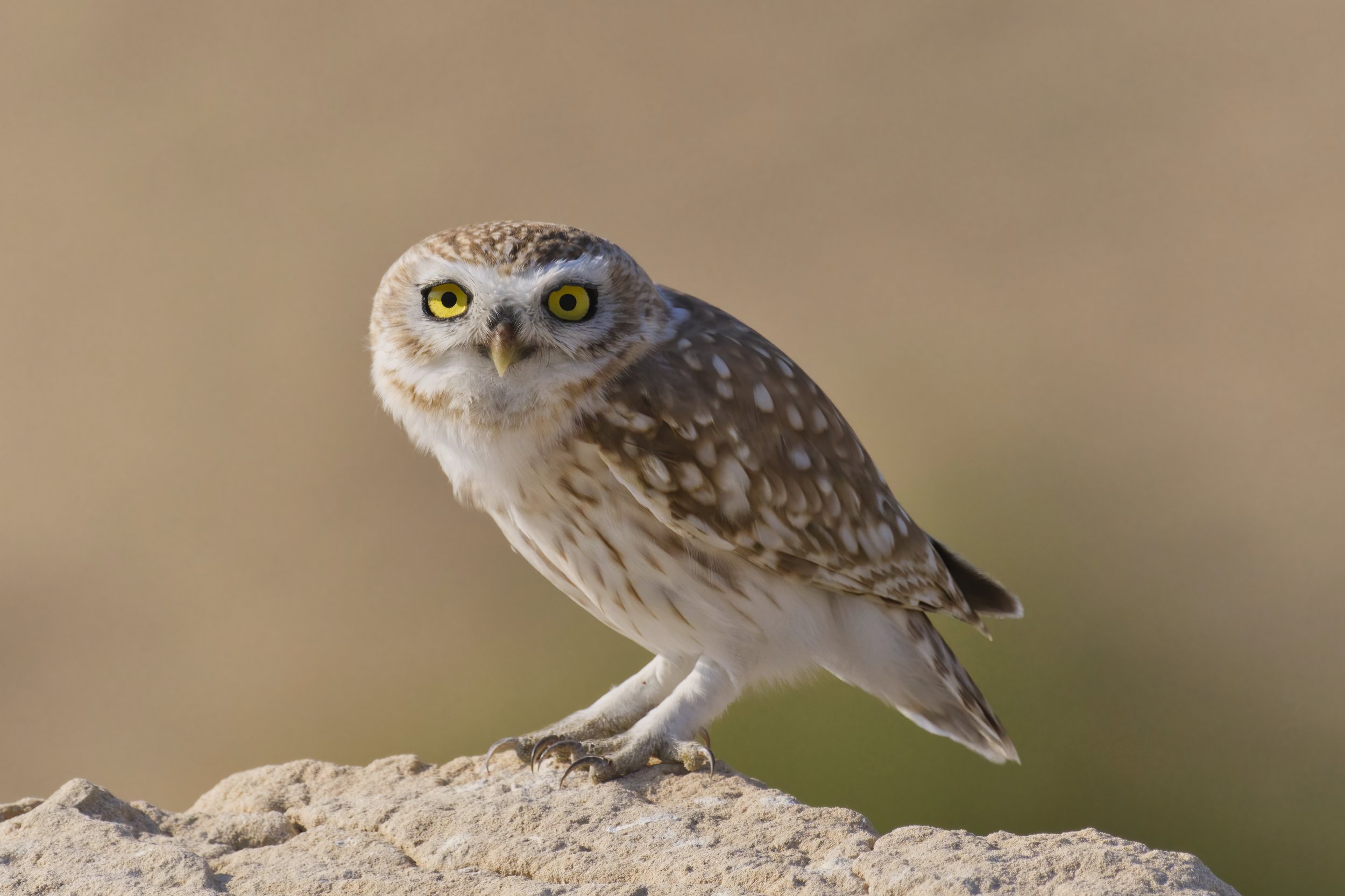
Little Owl (Athene noctua)
-
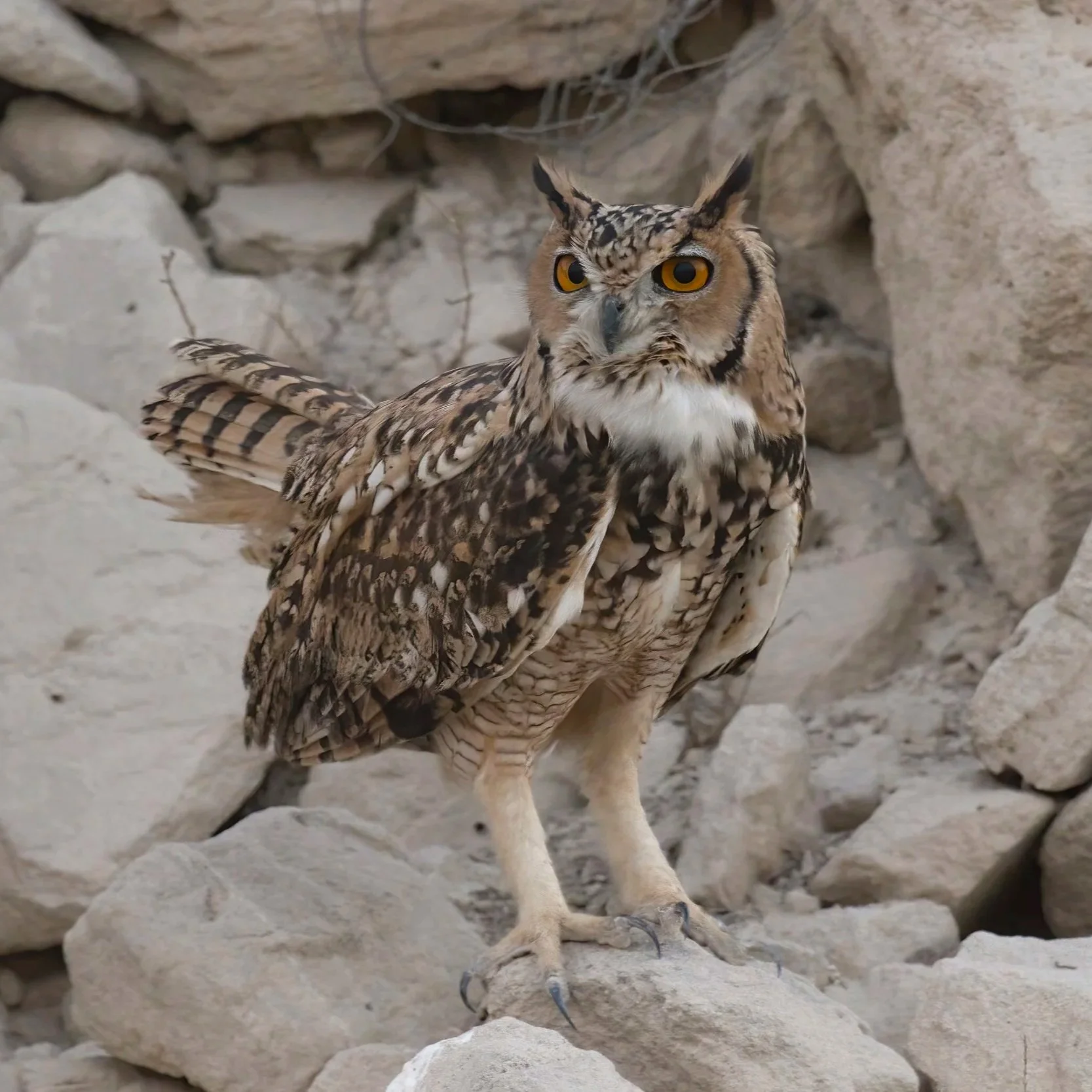
Pharaoh Eagle-owl (Bubo ascalaphus)
-
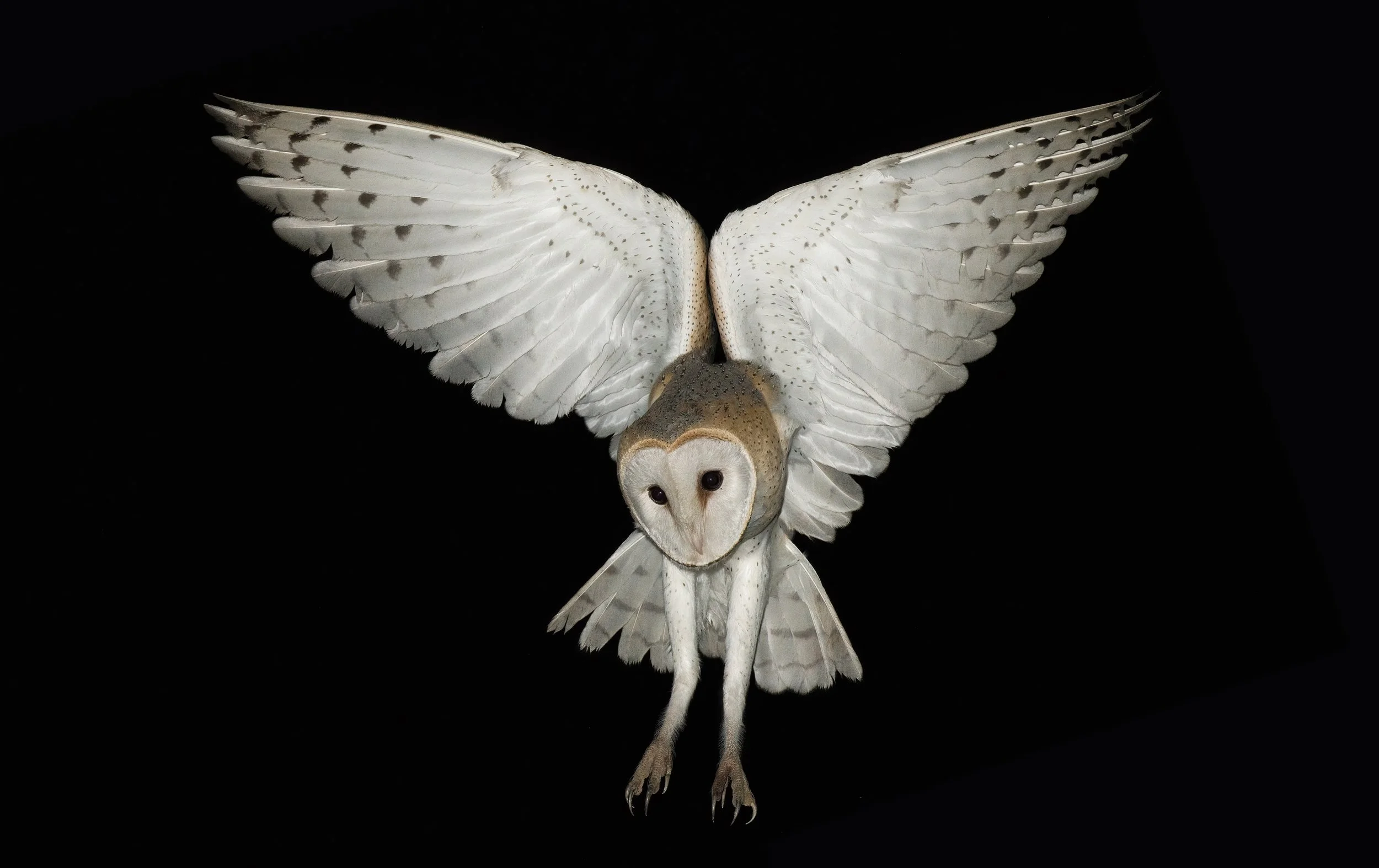
Barn Owl (Tyto alba)
| NOT EVALUATED | DATA DEFICIENT | LEAST CONCERN** | NEAR THREATENED | VULNERABLE | ENDANGERED | CRITICALLY ENDANGERED | EXTINCT IN THE WILD | EXTINCT |
|---|---|---|---|---|---|---|---|---|
| NE | DD | LC | NT | VU | EN | CR | EW | EX |