

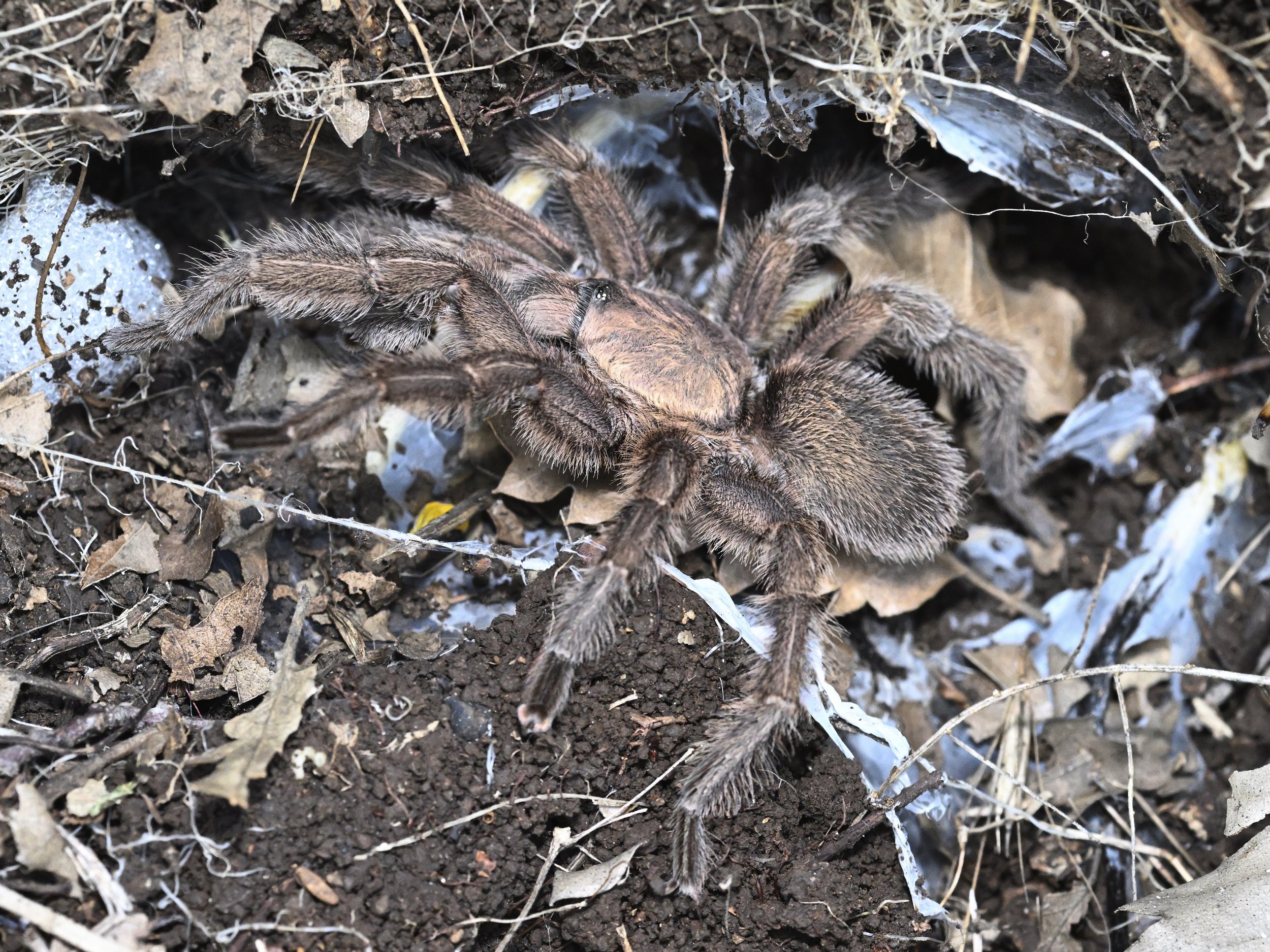
Black Tarantula \ Chaetopelma olivaceum
(الرتيلاء السوداء)
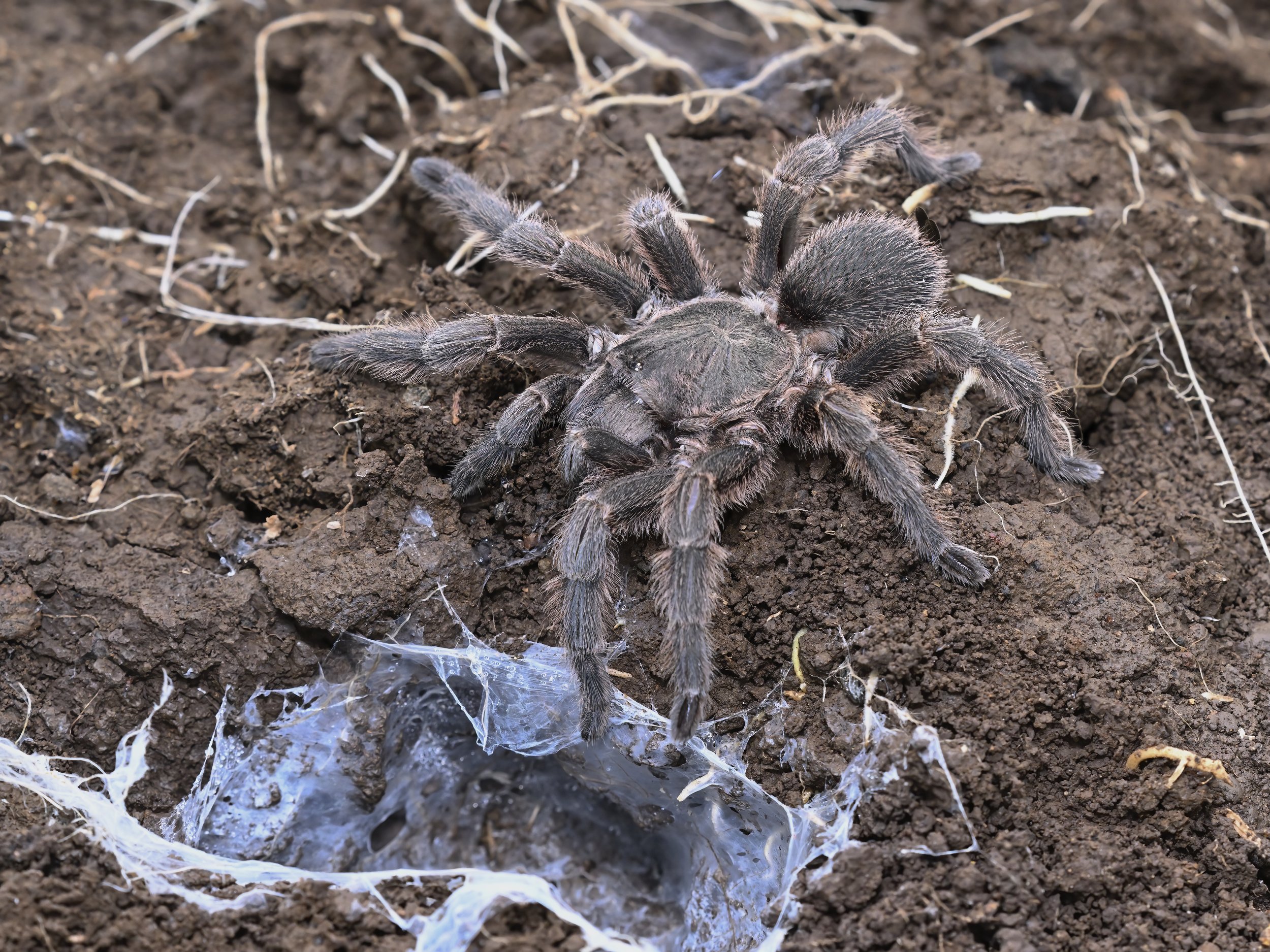
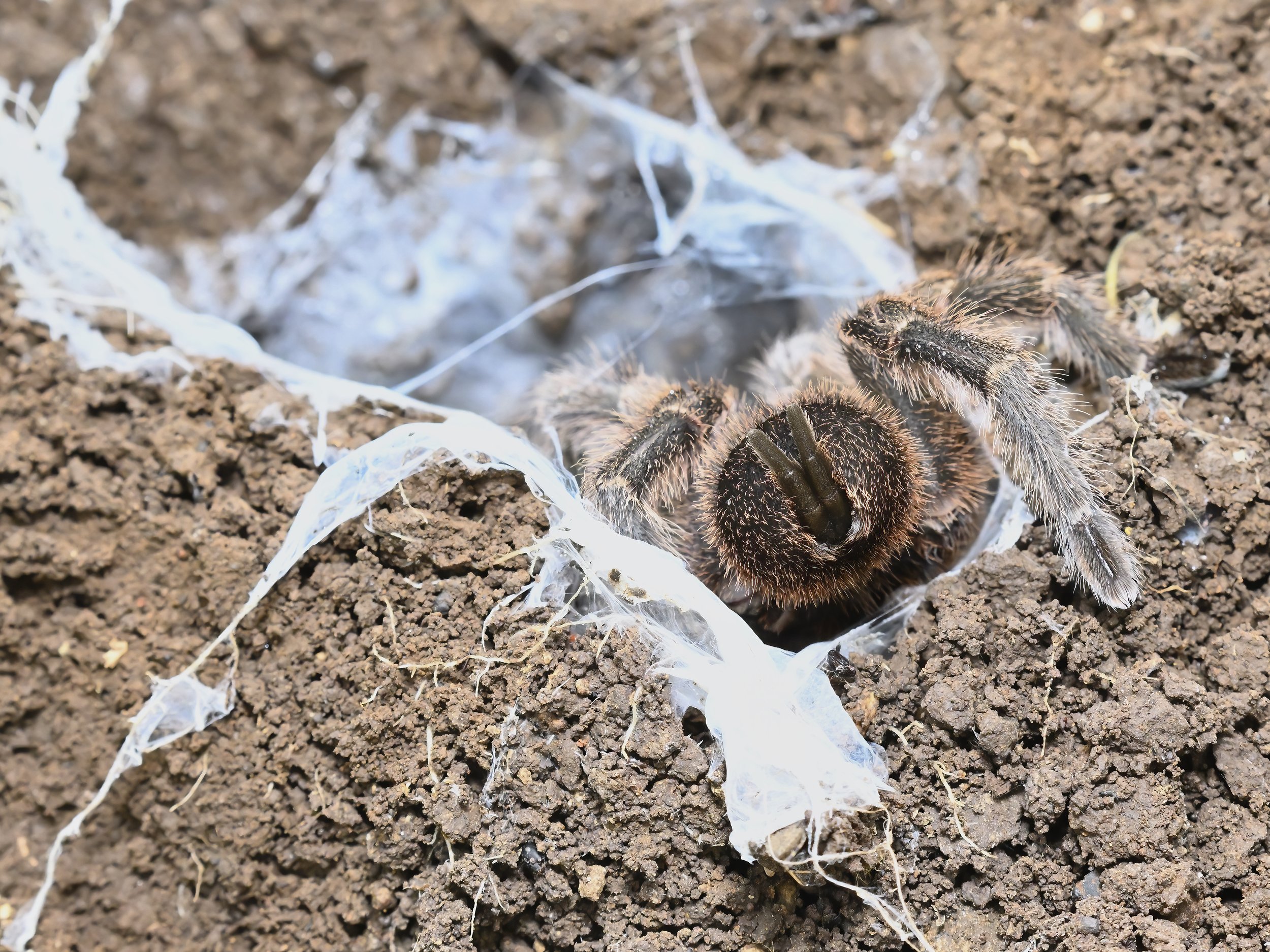
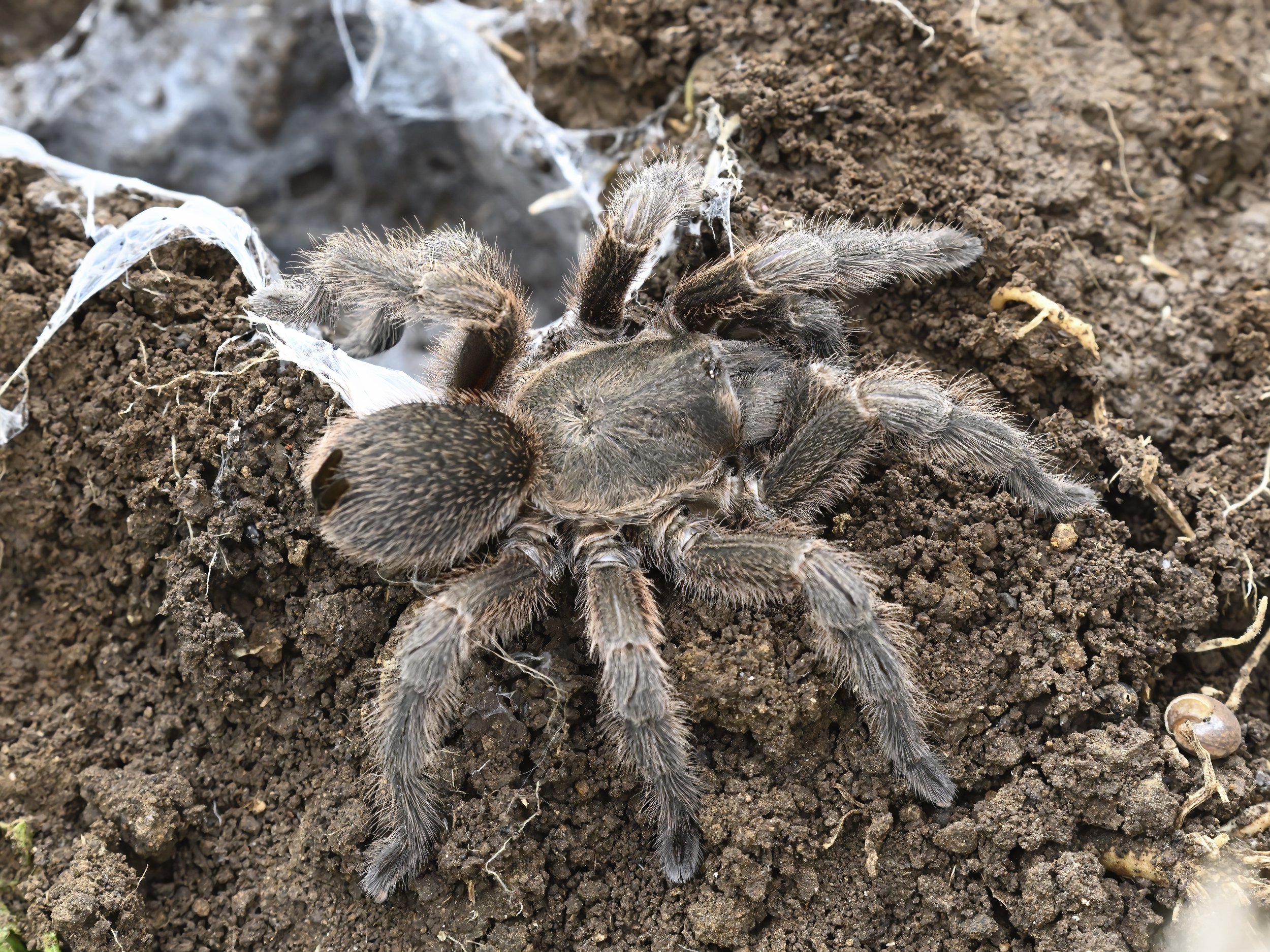
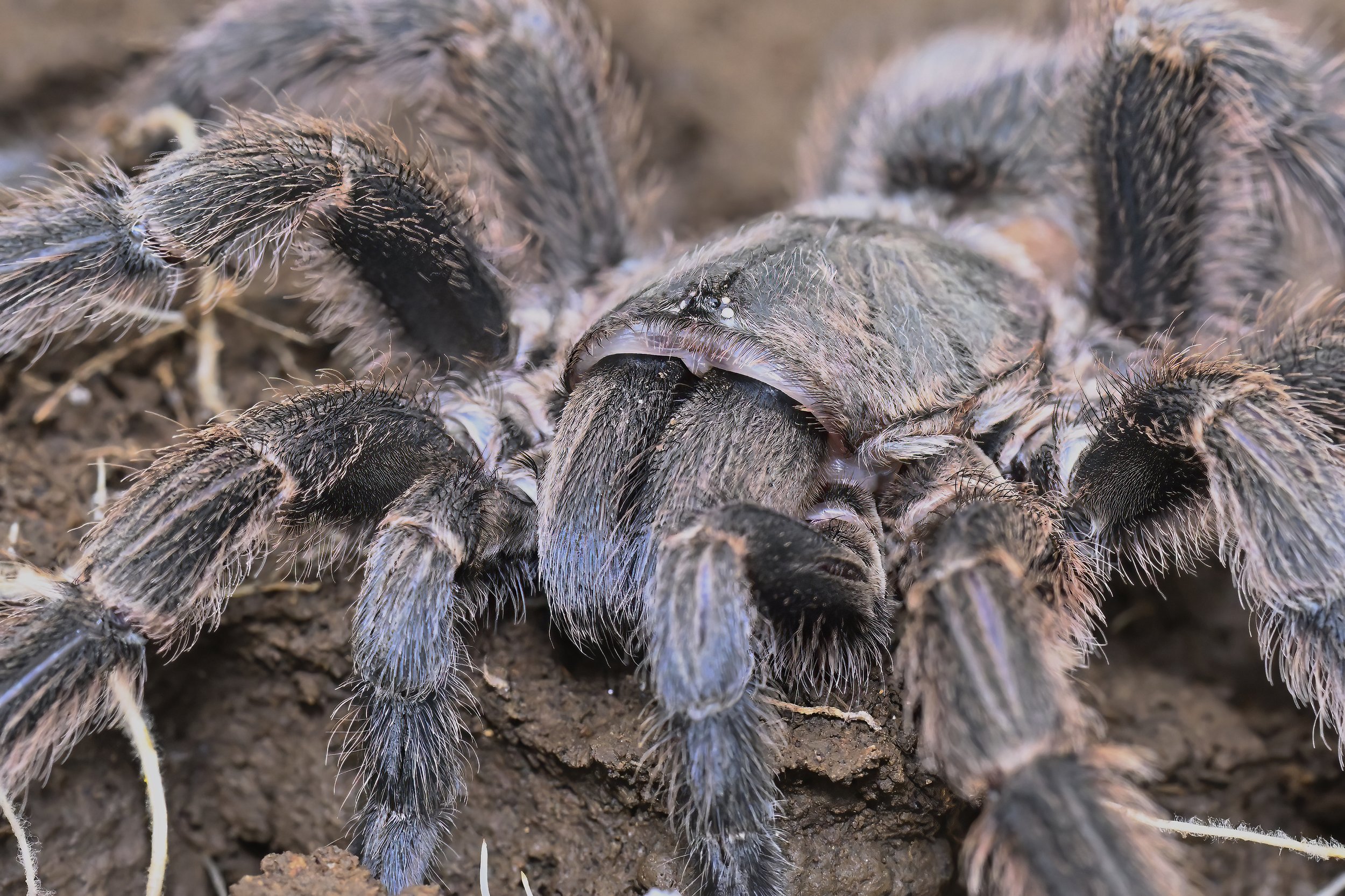
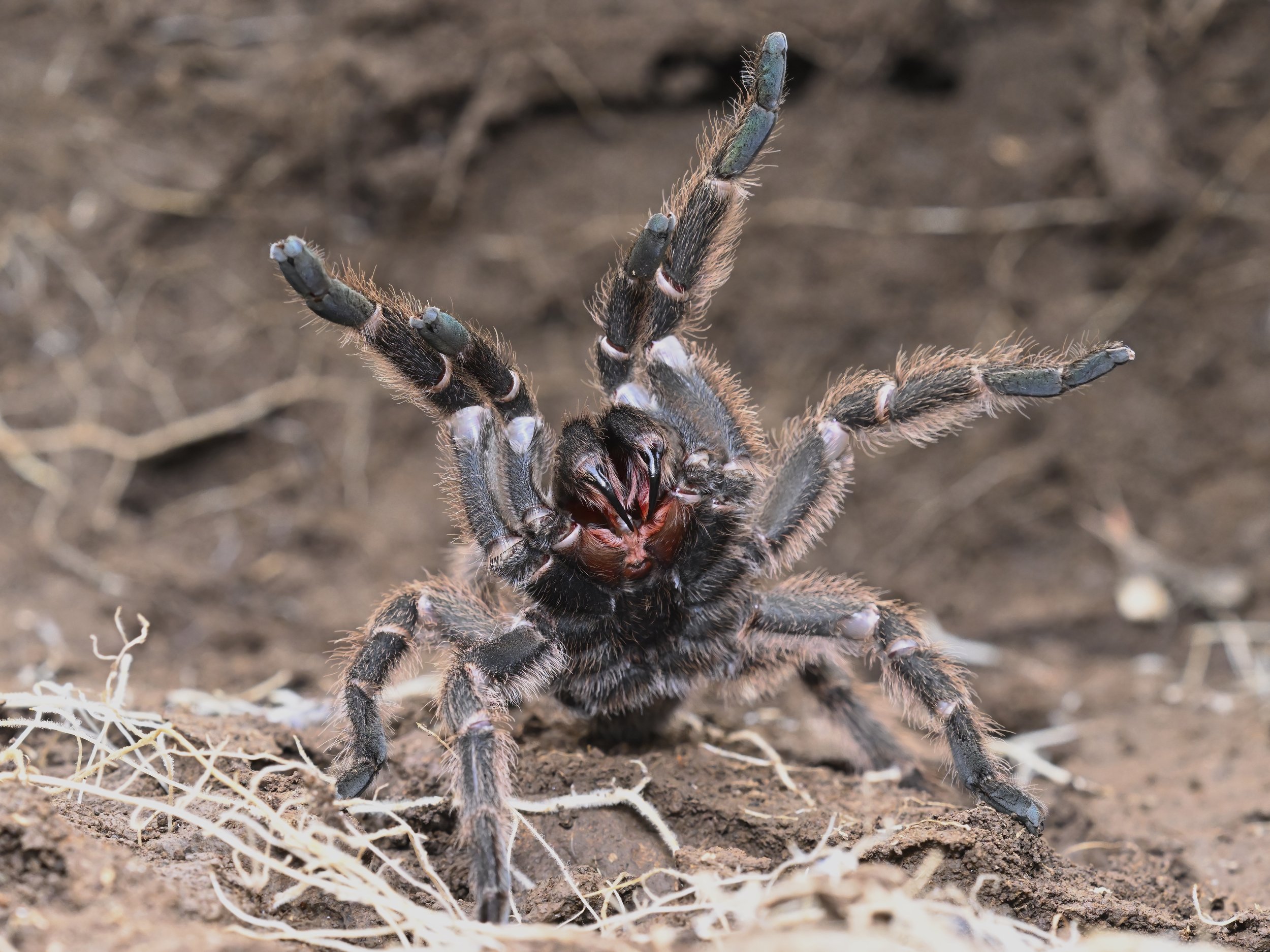
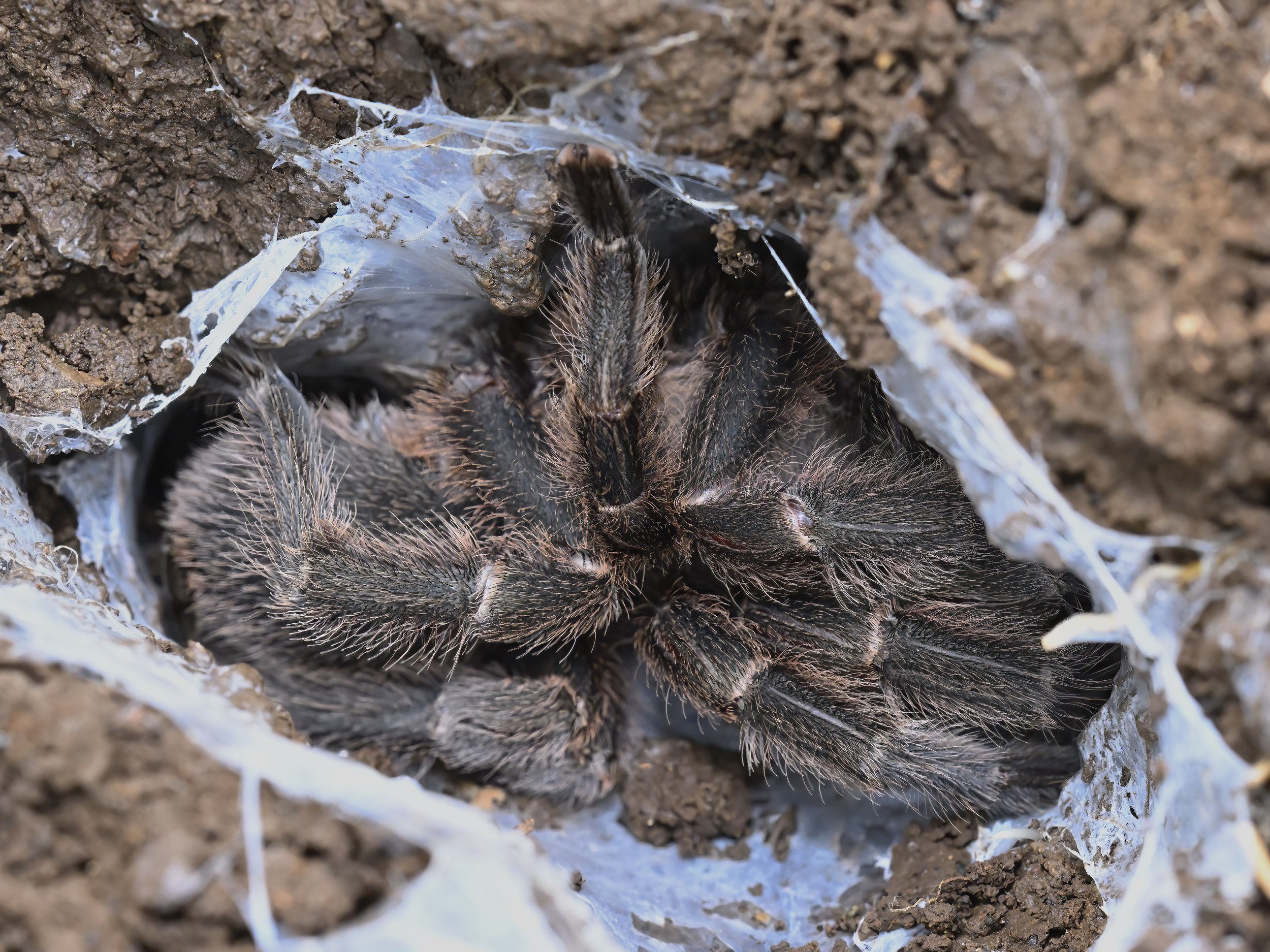
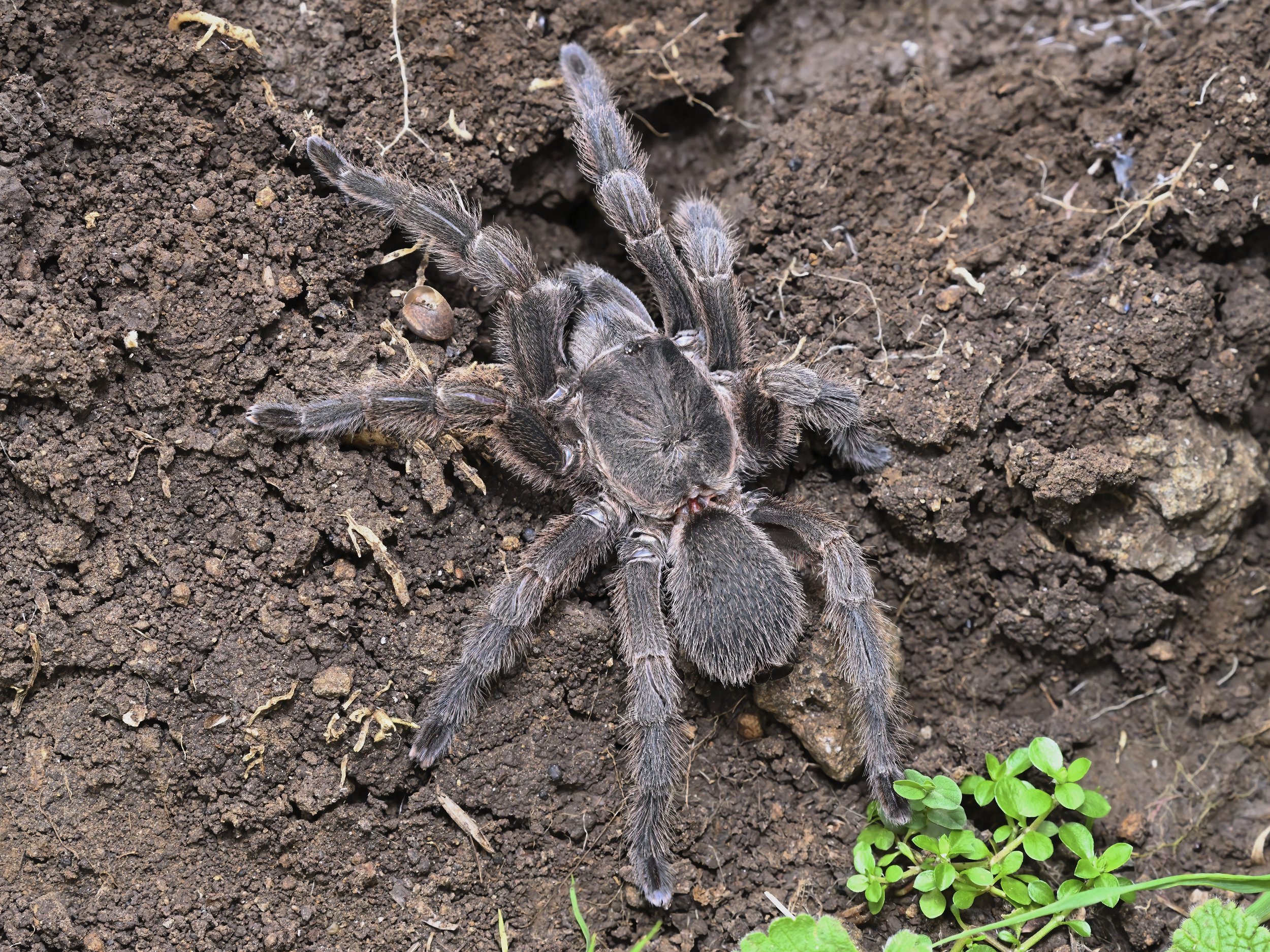
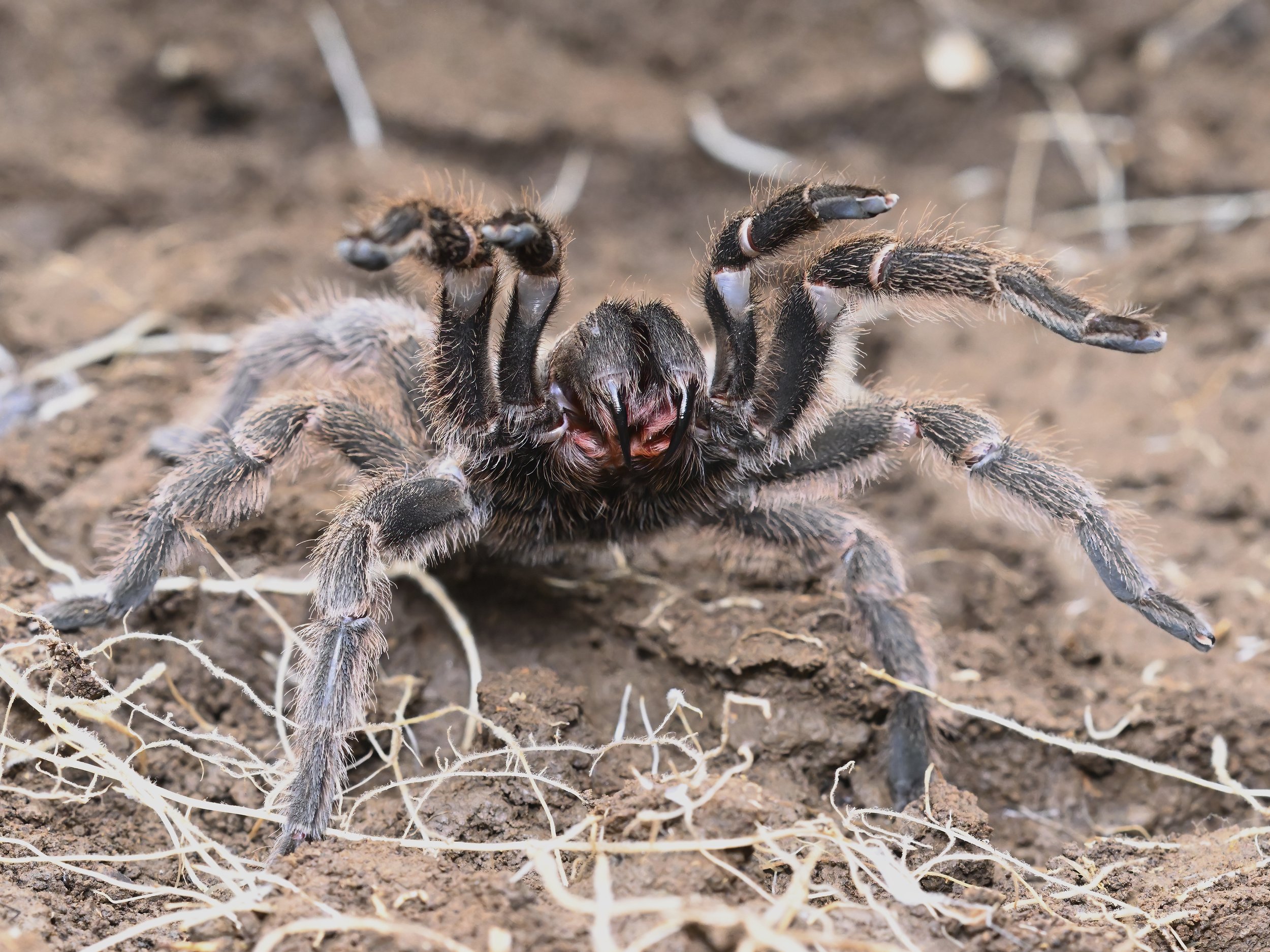
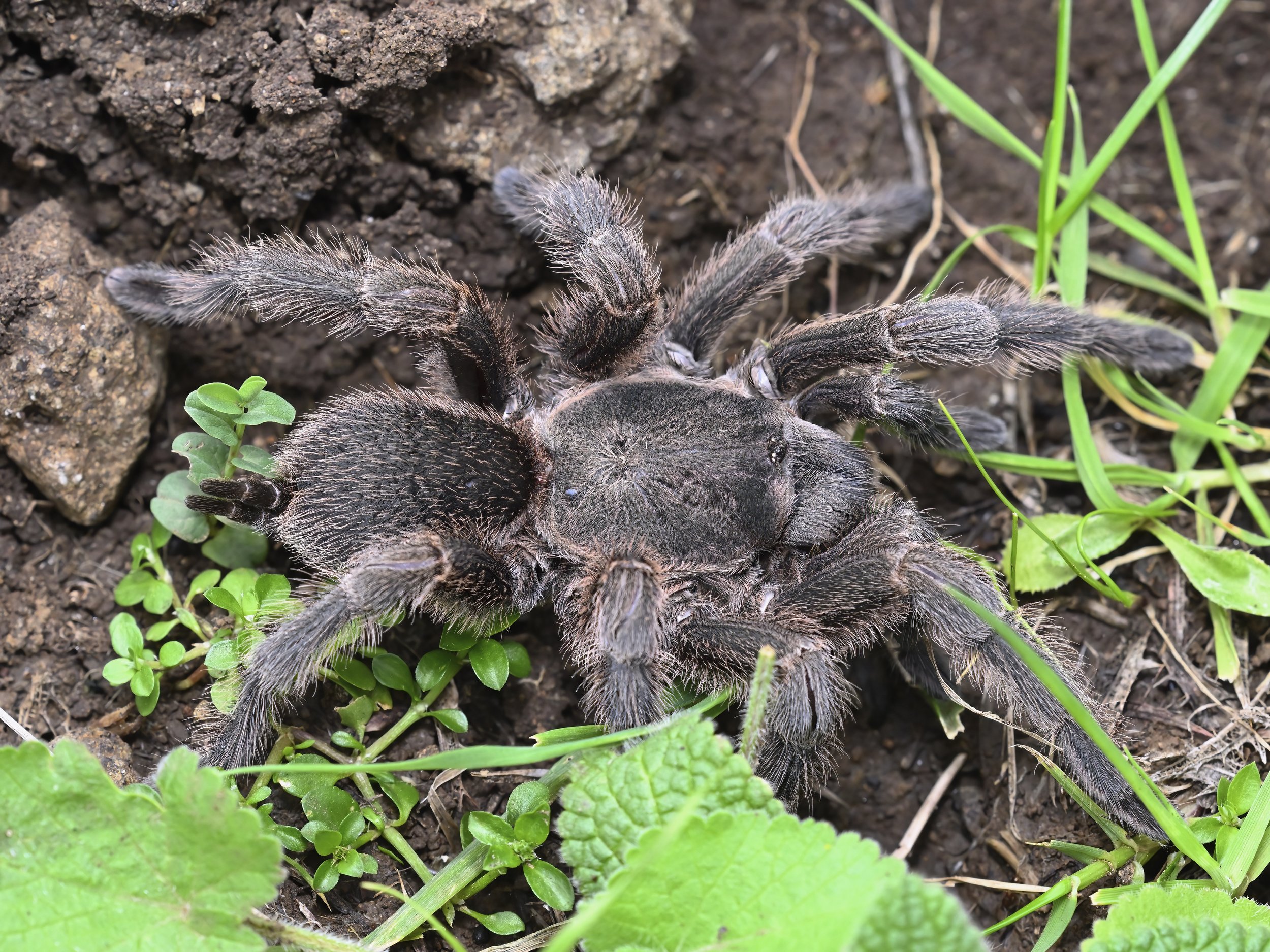
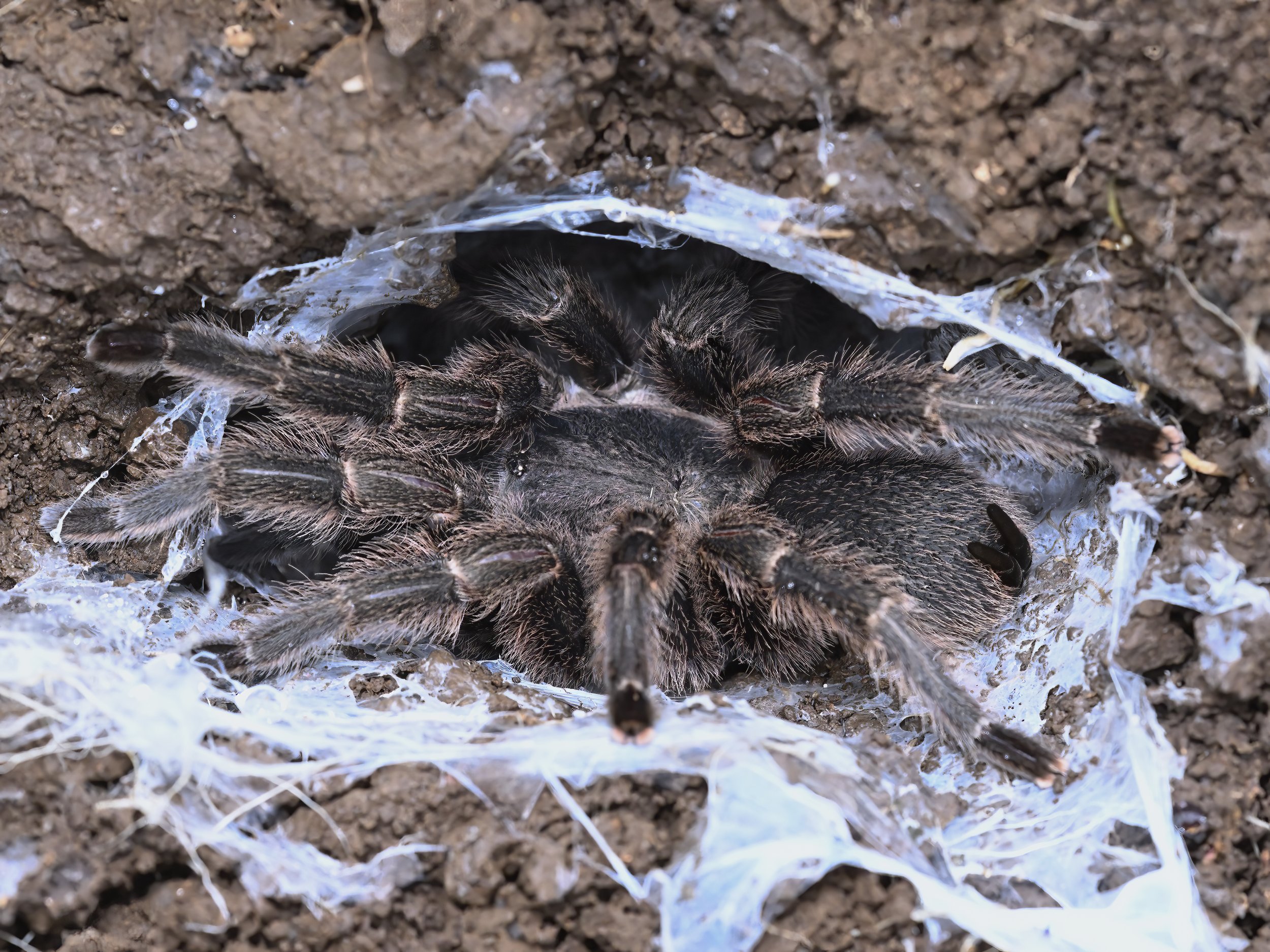
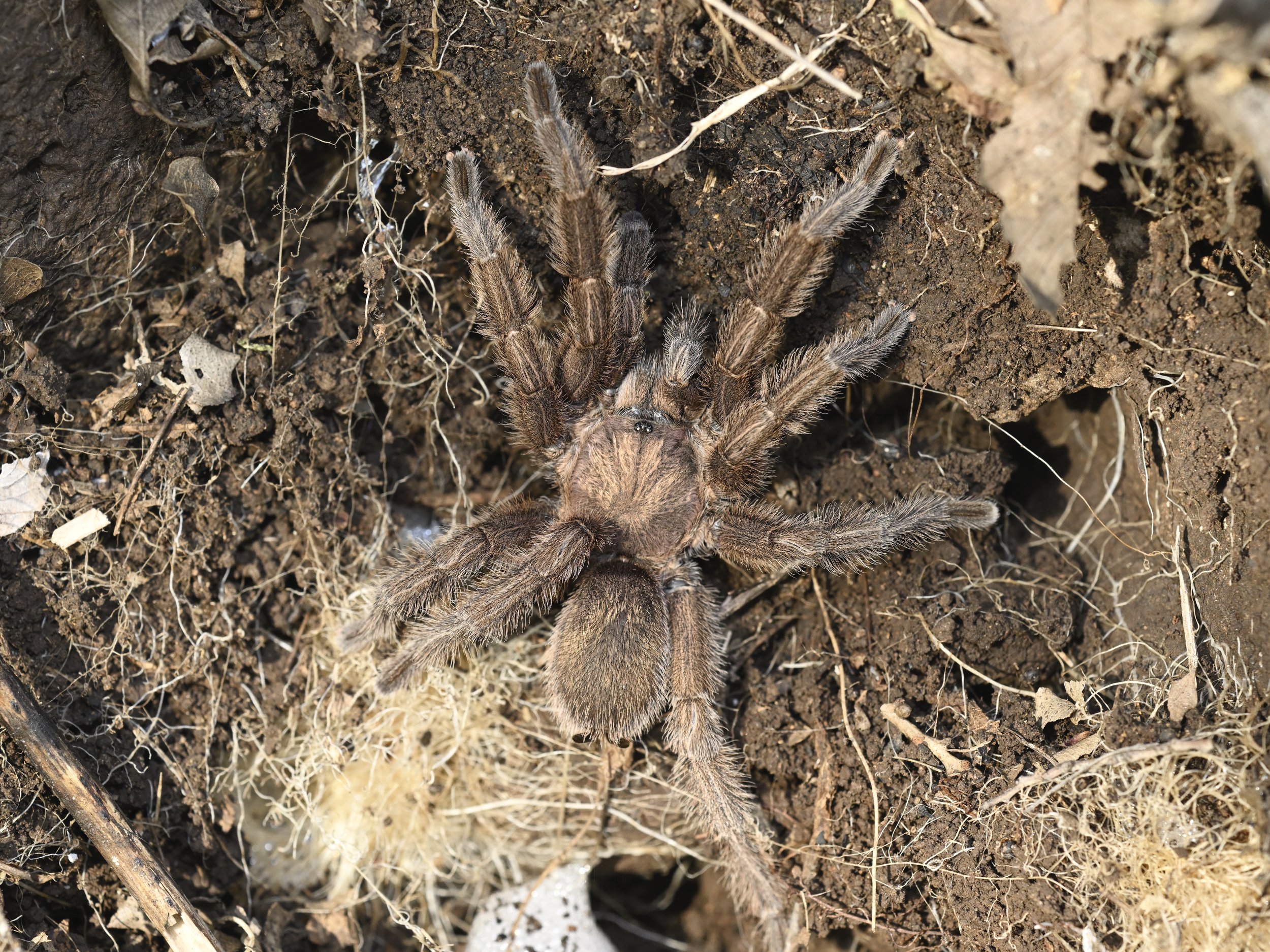
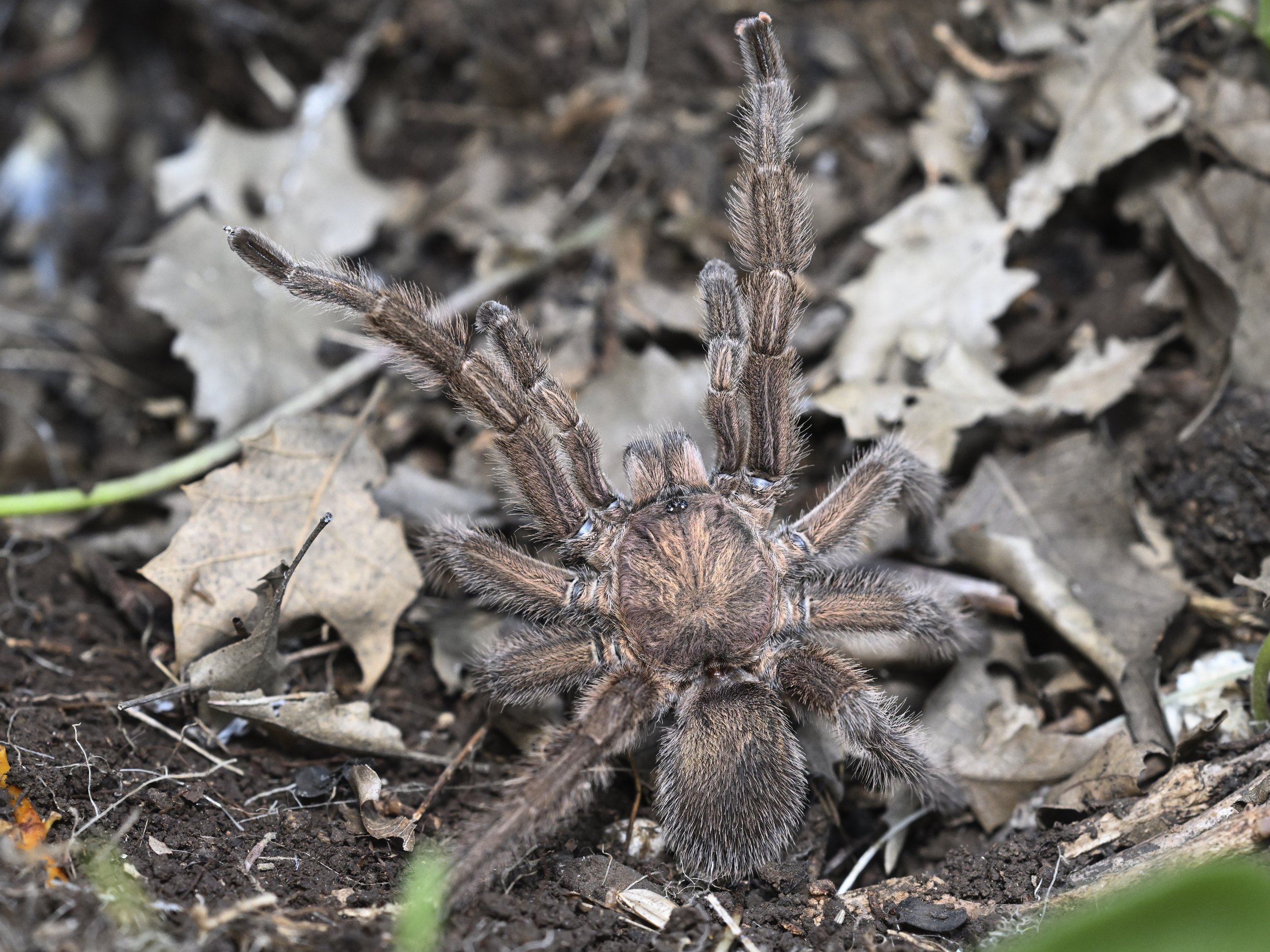
The Black Tarantula, scientifically known as (Chaetopelma olivaceum), is an intriguing arachnid species found in regions around the eastern Mediterranean, including Cyprus, Turkey, and parts of the Middle East. Renowned for its distinctively dark coloration, this tarantula typically displays a deep black or dark brown exoskeleton, making it easily distinguishable from other tarantula species. With a leg span ranging from 12 to 15 centimeters, the Black Tarantula boasts a formidable appearance. Its habitat includes dry and rocky areas, where it constructs burrows for shelter. Primarily nocturnal, it emerges at night to hunt a variety of prey, including insects and other small invertebrates. Despite its formidable appearance, the Black Tarantula is generally non-aggressive, relying on its urticating hairs and fangs for defense. As a species adapted to arid environments, it has developed mechanisms to thrive in regions with limited water sources. The Black Tarantula serves as a captivating subject for arachnid enthusiasts, contributing to the rich biodiversity of its native habitats.
يُعد العنكبوت الرتيلاء الأسود نوعًا مثيرًا من العناكب يوجد في مناطق شرق البحر الأبيض المتوسط، بما في ذلك قبرص وتركيا وأجزاء من الشرق الأوسط. يتميز بلونه الداكن الواضح، حيث يظهر عادةً بلون أسود عميق أو بني داكن، مما يجعله سهل التمييز عن أنواع الرتيلاء الأخرى. ويبلغ امتداد أرجله ما بين 12 و15 سنتيمترًا، مما يمنحه مظهرًا قويًا وملفتًا
يعيش هذا النوع في البيئات الجافة والصخرية، حيث يقوم بحفر جحور يستخدمها كمأوى. وهو كائن ليلي النشاط، يخرج ليلًا لاصطياد مجموعة متنوعة من الفرائس، بما في ذلك الحشرات واللافقاريات الصغيرة الأخرى. وعلى الرغم من مظهره المهيب، فإن الرتيلاء الأسود غالبًا غير عدواني، ويعتمد في دفاعه على شعيراته المهيجة وأنيابه
وباعتباره نوعًا متكيفًا مع البيئات القاحلة، فقد طوّر آليات تساعده على البقاء في المناطق ذات الموارد المائية المحدودة. ويُعد هذا العنكبوت موضوعًا شيقًا لعشاق العناكب، كما يساهم في إثراء التنوع الحيوي في موائله الطبيعية


Other Species
-

Mediterranean Banded Centipede (Scolopendra cingulata)
-
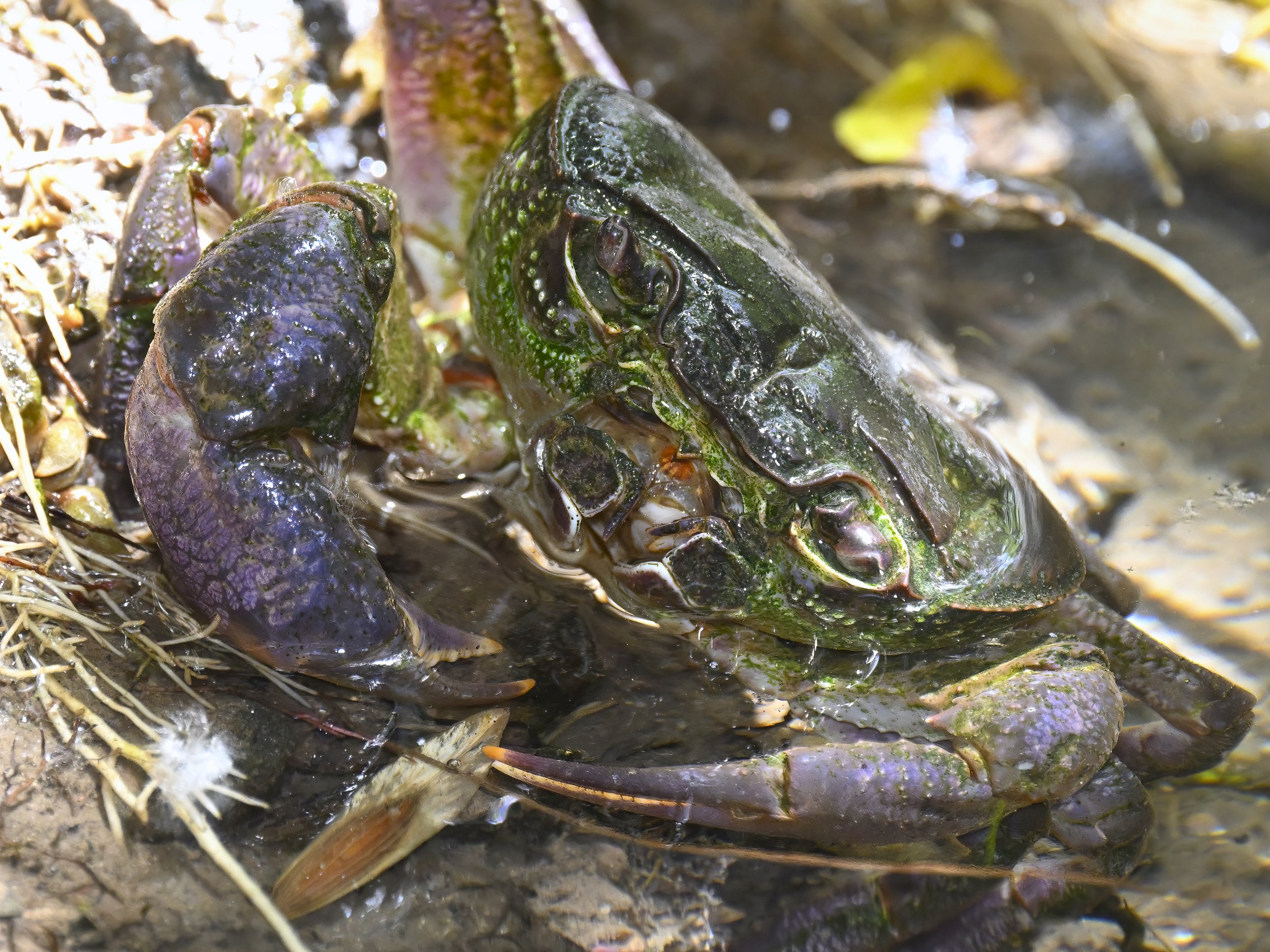
Levantine Freshwater Crab (Potamon potamios)
-
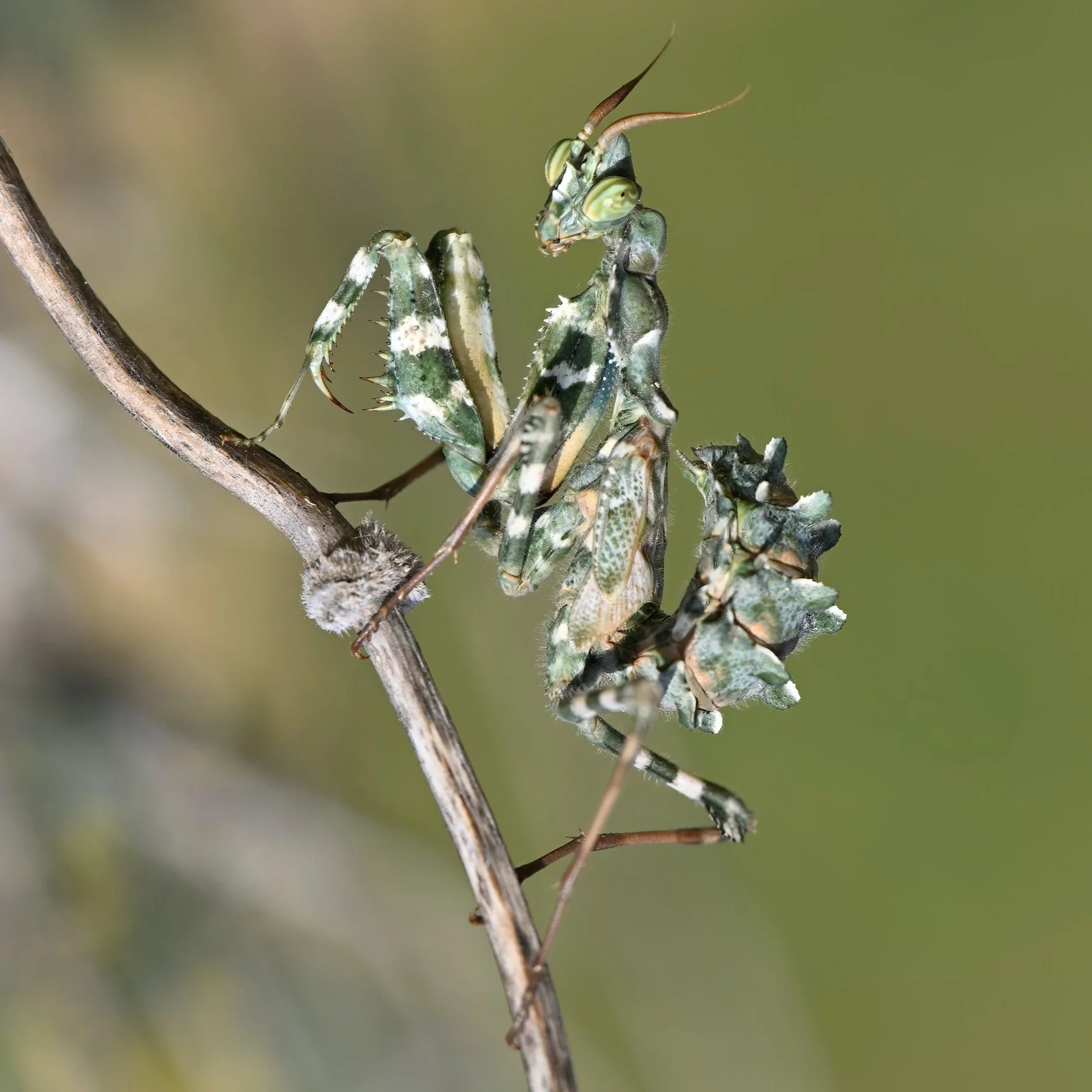
Thistle Mantis (Blepharopsis mendica)
-
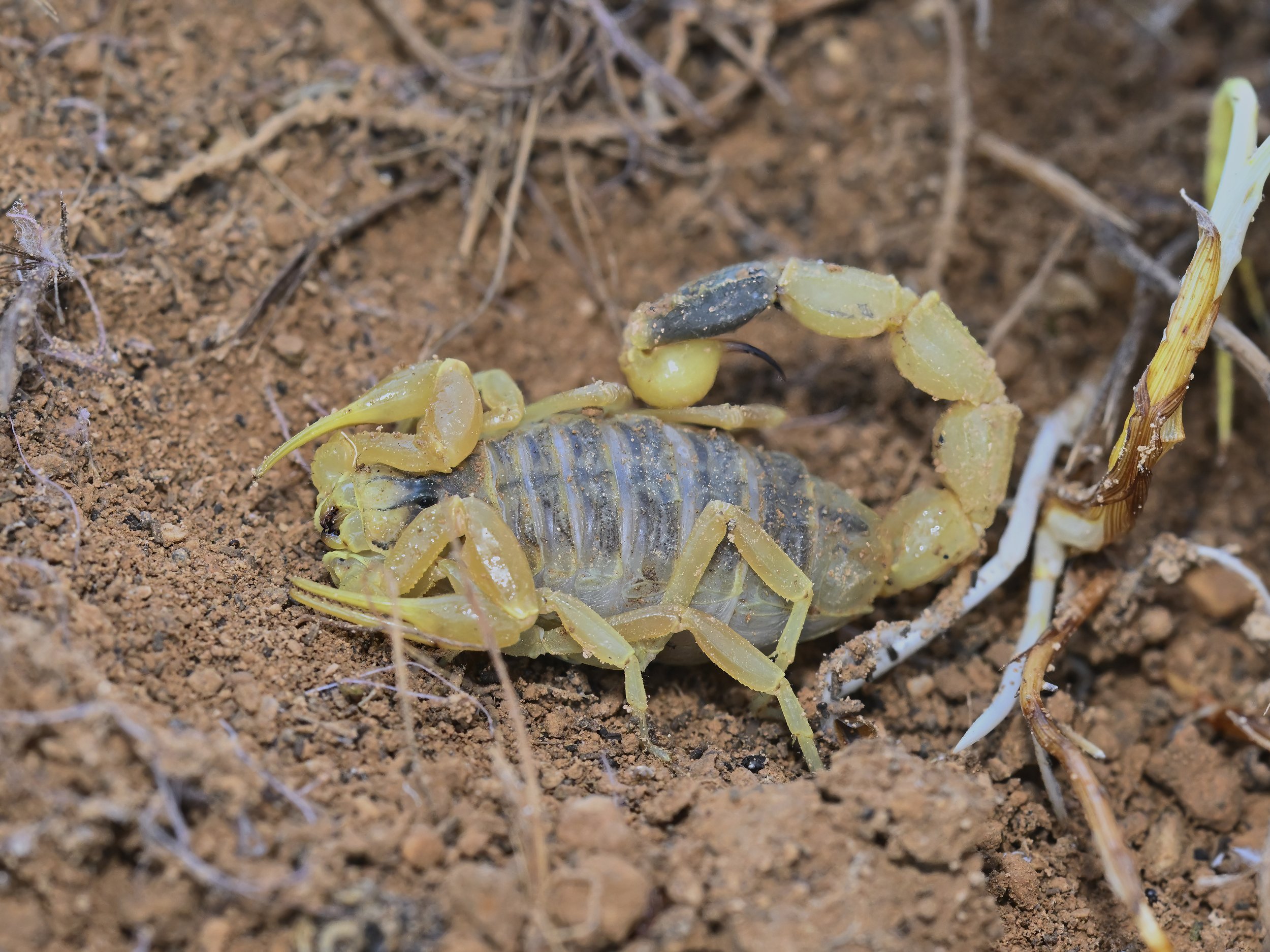
Deathstalker Scorpion (Leiurus abullahbayrami)