
The Best Camera Bag for Wildlife Photography? Why I Switched to Tactical Backpacks
Every wildlife photographer eventually starts collecting camera bags.
You buy one for your first camera and lens. Then you buy a larger lens, so you need a larger bag. Then another lens arrives, more batteries, camouflage, water, field equipment — and suddenly you are searching for another backpack.
I went through exactly the same process.
But once I started working with large and heavy super-telephoto lenses such as the Nikon 800mm f/5.6 and Nikon 400mm f/2.8, I reached a point where normal camera bags stopped making sense for the way I photograph wildlife.
The lens alone could dominate the entire bag.
And wildlife photography requires carrying much more than a camera and lens.
Eventually, I stopped looking for the perfect camera bag.
Instead, I built a camera carrying system around the way I actually work in the field.
The Problem With Camera Bags for Large Wildlife Lenses
Most camera backpacks are designed around compartments.
That works very well when your equipment consists of a camera body and several relatively small lenses.
Put a large 400mm f/2.8, 600mm or 800mm lens into the equation and everything changes.
The lens becomes the bag.
It consumes most of the internal space, leaving relatively little room for everything else needed during a wildlife photography trip.
For me, that can include:
Spare batteries
Water
Microphone
Camouflage suit or blanket
Small field chair
Game caller
Additional clothing during winter
Personal equipment
Other field accessories
Suddenly the question is no longer:
“Which camera bag can hold my camera?”
The better question is:
“How can I comfortably carry my complete field setup?”
That distinction changed the way I choose bags.
Why I Started Using Tactical Backpacks for Wildlife Photography
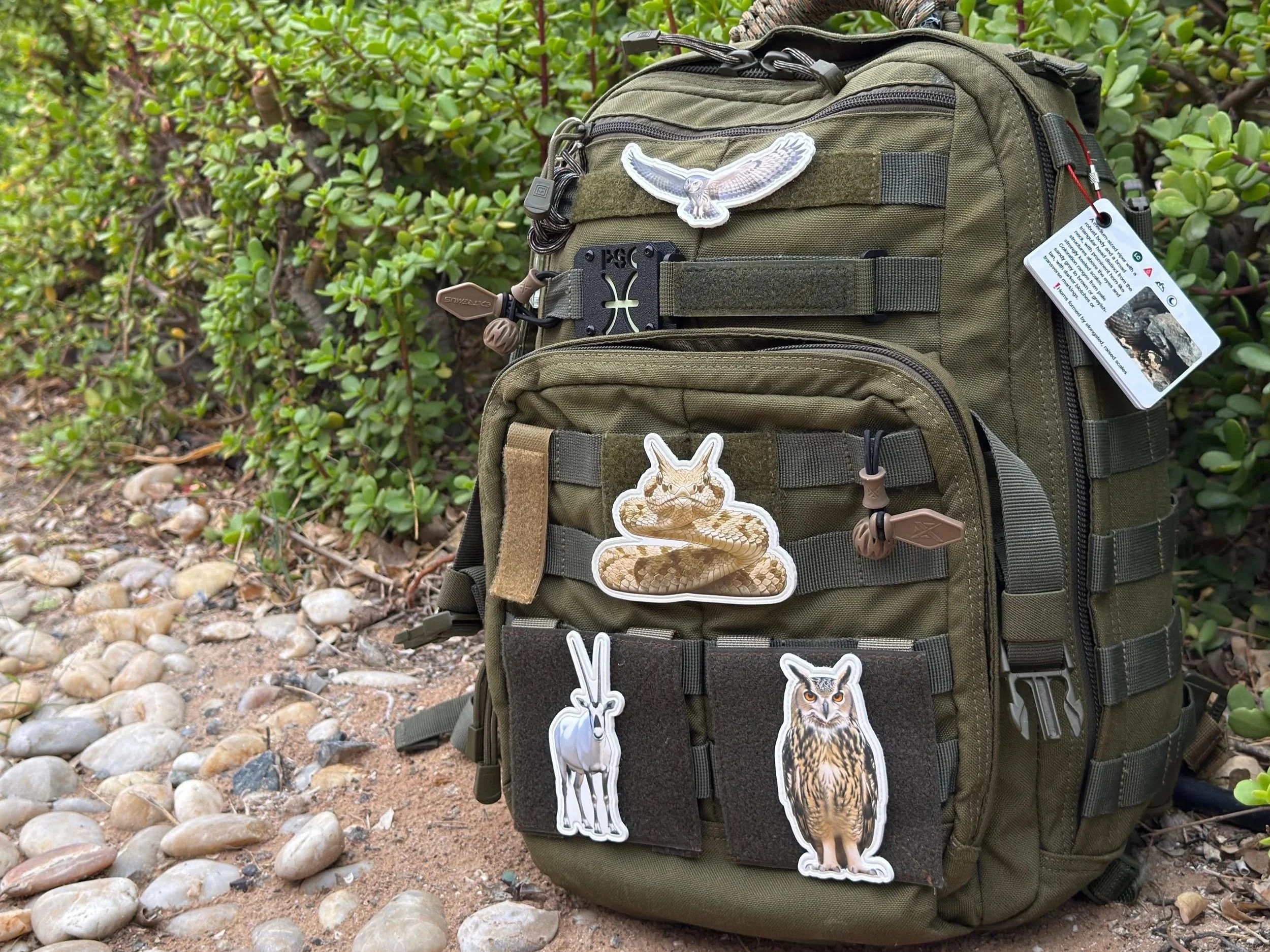
I began experimenting with tactical and military-style backpacks rather than traditional camera bags.
They were not originally designed for photographers, which means they also have limitations, but several characteristics work extremely well for the type of wildlife photography I do.
They are designed for heavy loads
Large wildlife lenses are heavy.
Once you combine the lens, camera body, water and field equipment, carrying comfort becomes much more important than the number of padded dividers inside a bag.
A proper harness, supportive hip belt and good weight distribution can make a significant difference during longer walks.
MOLLE changes everything
One of my favourite features of tactical bags is MOLLE webbing.
Instead of trying to fit everything inside one fixed camera compartment, I can attach additional pouches where I need them.
One trip may require additional water.
Another may require camouflage equipment.
Another may require batteries, audio equipment or other accessories.
I can configure the backpack for the shoot rather than buying another bag.
They are built for field conditions
Wildlife photography is rarely gentle on equipment.
Bags get placed on sand, rocks and gravel. They are exposed to dust, heat and vegetation and are constantly loaded and unloaded from the vehicle.
I want something designed to be used rather than something I need to protect.
They don't look like traditional camera bags
This is another advantage I appreciate.
A tactical backpack does not immediately advertise that it contains expensive photographic equipment.
Depending on the colour, it can also blend naturally into the type of desert, mountain and outdoor environments where I normally work.
My Main Wildlife Photography Backpacks
I currently use two larger Tasmanian Tiger packs depending on how much equipment I need to carry.
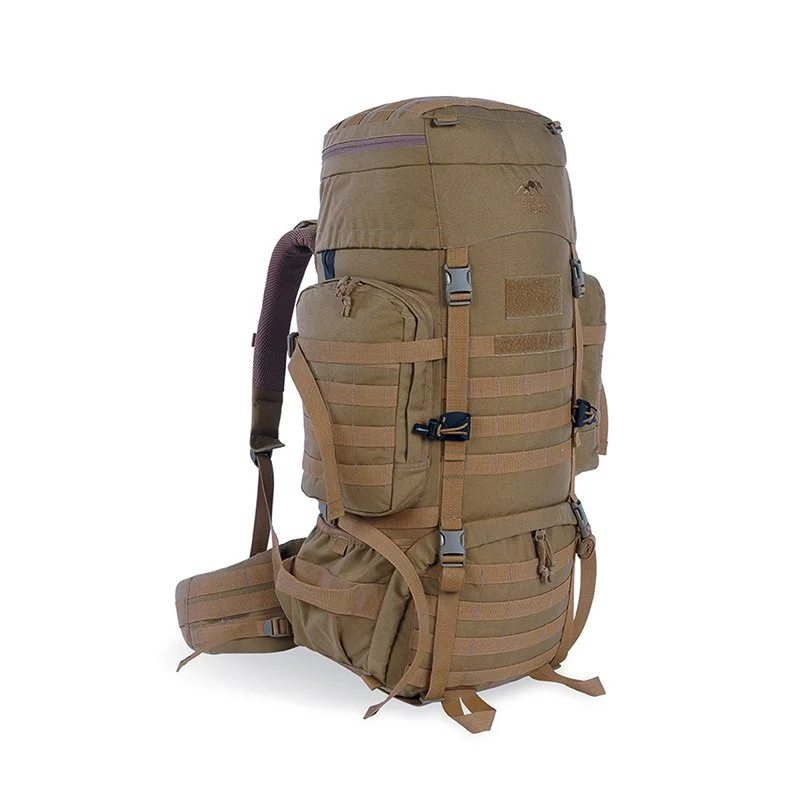
Tasmanian Tiger TT Raid Pack MKIII
This is one of my main field backpacks.
For me, it sits in a useful middle ground: large enough for serious field equipment without automatically becoming an expedition-sized pack.
I especially like the ability to configure external pouches through the MOLLE system.
Instead of forcing every piece of equipment into the main compartment, I can decide where different pieces of gear should go depending on the trip.
That modularity is one of the biggest reasons I moved toward tactical bags.
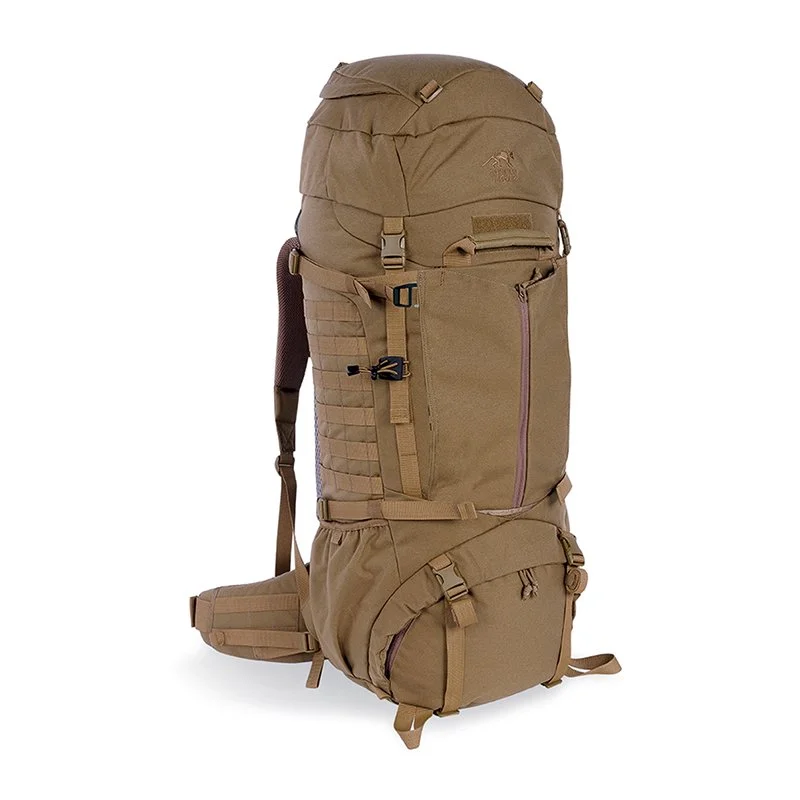
Tasmanian Tiger TT Pathfinder MKII
When the equipment list becomes significantly larger, I use the Pathfinder.
This is not something I would carry simply because I can fill it.
A bigger backpack usually means you will find a way to put more things inside it.
But when the trip genuinely requires a heavy field load, having a pack designed around carrying that load makes much more sense to me than trying to squeeze everything into a conventional photography backpack.
But Tactical Backpacks Are Not Camera Bags
There is an important point here.
A tactical backpack is designed to carry equipment.
It is not automatically designed to protect a camera or a very expensive super-telephoto lens.
That means I don't simply throw the camera and lens into an empty backpack.
Camera equipment still needs appropriate padding and protection from movement and impact.
This is one reason I think photographers should stop searching for one bag that performs every possible job perfectly.
I prefer different solutions for different stages of the trip.
For Transport: I Use a Hard Case
When moving equipment from home to the shooting location, particularly when the equipment is travelling inside the vehicle, I use a Pelican hard case.
This solves a completely different problem.
The priority during transport is protection.
The priority once I start walking is mobility.
Trying to force one bag to be the best transportation case, hiking backpack, camera organizer and instant-access shooting bag usually creates compromises somewhere.
So I separate those jobs.
Hard case for transport.
Backpack for carrying field equipment.
Dedicated lens bag when the long lens itself needs to be carried over distance.
That system has worked much better for me.
For Long Hikes With a Super-Telephoto Lens
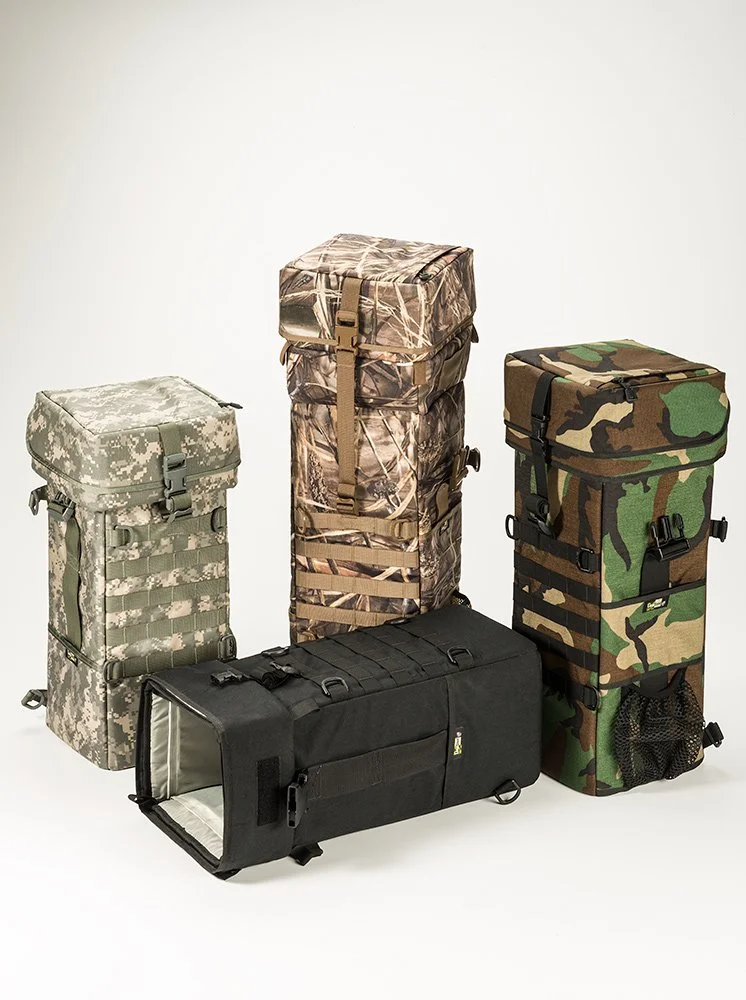
If I know I will be walking a long distance with the large lens, I sometimes use a dedicated LensCoat Long Lens Xpandable bag.
This is a very different solution from a general backpack.
Instead of trying to carry an entire photography kit, its main purpose is transporting the large lens efficiently.
That can make much more sense when the 600mm or 800mm lens is the centre of the shoot.
For wildlife photographers using very large primes, this is something worth considering:
Do you actually need a camera backpack — or do you need a long-lens backpack?
They are not necessarily the same thing.
For Herping and Lighter Trips
Not every wildlife trip requires an enormous backpack.
For a normal day of herping, I usually go much lighter and use a 5.11 RUSH 12.
The camera equipment requirement is smaller, and mobility becomes more important.
This is another reason I don't believe there is one “best camera bag for wildlife photography.”
The correct bag depends on the mission.
A desert bird photography session with an 800mm lens is completely different from a night herping trip.
Your bag should reflect that.
How to Choose a Camera Bag for Wildlife Photography
Before buying another camera backpack, I would ask five questions.
1. What is the largest lens you actually carry?
Don't choose the bag around your smallest setup.
Lay out your biggest realistic combination — camera body, telephoto lens, hood and teleconverter if you normally use one.
That is your starting point.
2. Do you carry the camera assembled?
This matters enormously with big lenses.
Some photographers transport the camera and lens separately.
Others want the camera attached to the lens so they can start shooting quickly.
Your bag needs to accommodate the way you actually work, not simply the dimensions of the lens.
3. How far will you walk?
A bag that feels perfectly acceptable between the house and the car can become completely different after several kilometres.
With heavy wildlife equipment, the carrying system matters.
Shoulder straps, back support, hip belt and weight distribution become more important as the load increases.
4. What else goes into the field with you?
This is where I think many photographers underestimate their requirements.
Put everything you normally carry on the floor before choosing a bag.
( Camera, Lens, Batteries, Water, Camouflage, Chair, Clothing, Accessories, Now choose a backpack, Not the other way around).
5. Are you solving transport or field access?
These are different problems.
If your main priority is maximum protection while travelling, a hard case may be better.
If you need to hike, a backpack makes more sense.
If you need to walk with a large super-telephoto lens already configured, a dedicated long-lens bag may be the better solution.
You may discover that the best camera bag is actually more than one bag.
My Wildlife Photography Bag System
After years of changing bags as my equipment became larger, I stopped trying to find one backpack to do everything.
My system today is simple:
Hard case
For protected transport between home, vehicle and location.
Tactical backpack
For carrying the wider field equipment required during wildlife photography.
Dedicated long-lens bag
For longer walks when the super-telephoto lens is the priority.
Smaller tactical pack
For lighter trips such as herping where I don't need the complete photography setup.
That flexibility is more valuable to me than having one enormous traditional camera backpack.
Is a Tactical Backpack Better Than a Camera Backpack?
Not necessarily.
If you carry a mirrorless camera with a 100–400mm or similar lens and a few accessories, a normal camera backpack may be the simplest and safest solution.
Traditional photography bags have excellent padded organization and are designed specifically around photographic equipment.
But the equation changes as the equipment gets larger.
When you start carrying lenses such as a 400mm f/2.8, 600mm or 800mm together with serious field equipment, it becomes worth looking beyond conventional camera bags.
For me, tactical backpacks solved the carrying problem, while hard cases and dedicated lens bags solved the protection and access problems.
That distinction made much more sense than continuously buying bigger camera backpacks.
Frequently Asked Questions
-
There isn't one bag that is best for every wildlife photographer. The correct choice depends primarily on your largest lens, total equipment load, how far you walk and whether you need to carry the camera with the lens attached.
-
For very large super-telephoto lenses, look specifically at bags designed for long lenses rather than only general camera backpacks. Measure your complete shooting setup, including the camera body and lens hood configuration you normally use.
-
They can be excellent for carrying heavy field equipment because of their load-carrying systems, durability and modular storage. However, most are not padded internally like photography bags, so cameras and lenses need appropriate protection.
-
I use both because they solve different problems. A hard case gives me protection during transport, while a backpack gives me mobility once I enter the field.
-
That depends on your shooting style and the bag. Carrying the setup assembled can give faster access, but it requires a bag long enough to protect the complete camera-and-lens combination safely.
Final Thoughts
The longer I photographed wildlife, the less interested I became in finding the “perfect camera bag.”
Instead, I started thinking about the entire journey of the equipment.
How will I transport it?
How far will I carry it?
How quickly do I need access to it?
What else needs to come with me?
And how large is the lens that I am actually taking into the field?
Once I started asking those questions, my choice of bags changed completely.
For photographers using smaller wildlife lenses, a traditional camera backpack can be perfect.
For photographers working with heavy super-telephoto lenses, however, it may be worth looking beyond photography bags altogether.
Sometimes the best camera bag for wildlife photography isn't a camera bag at all.

The Arabian Horned Viper survives through patience, precision, and perfect adaptation to the desert.
This morale patch is made from high-quality PVC, built to last, and safe for everyday use. Featuring a hook-and-loop backing, it can be attached easily to any bag, T-shirt, hat, or gear with a compatible loop panel.
This is not just a patch.
It’s a symbol of resilience — and the quiet strength of waiting.
Inspired by real wildlife in the UAE.
Designed to spark awareness.