

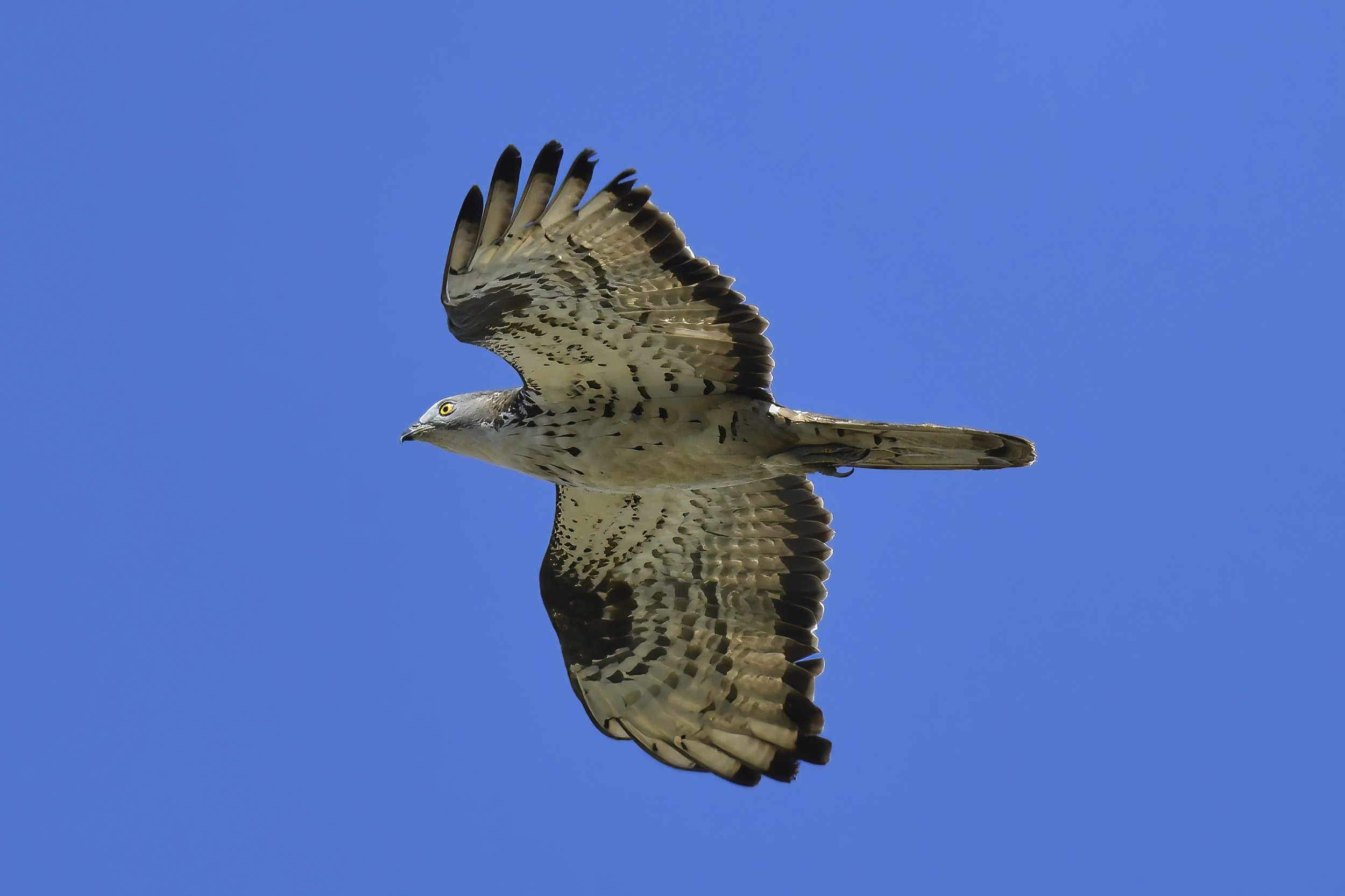
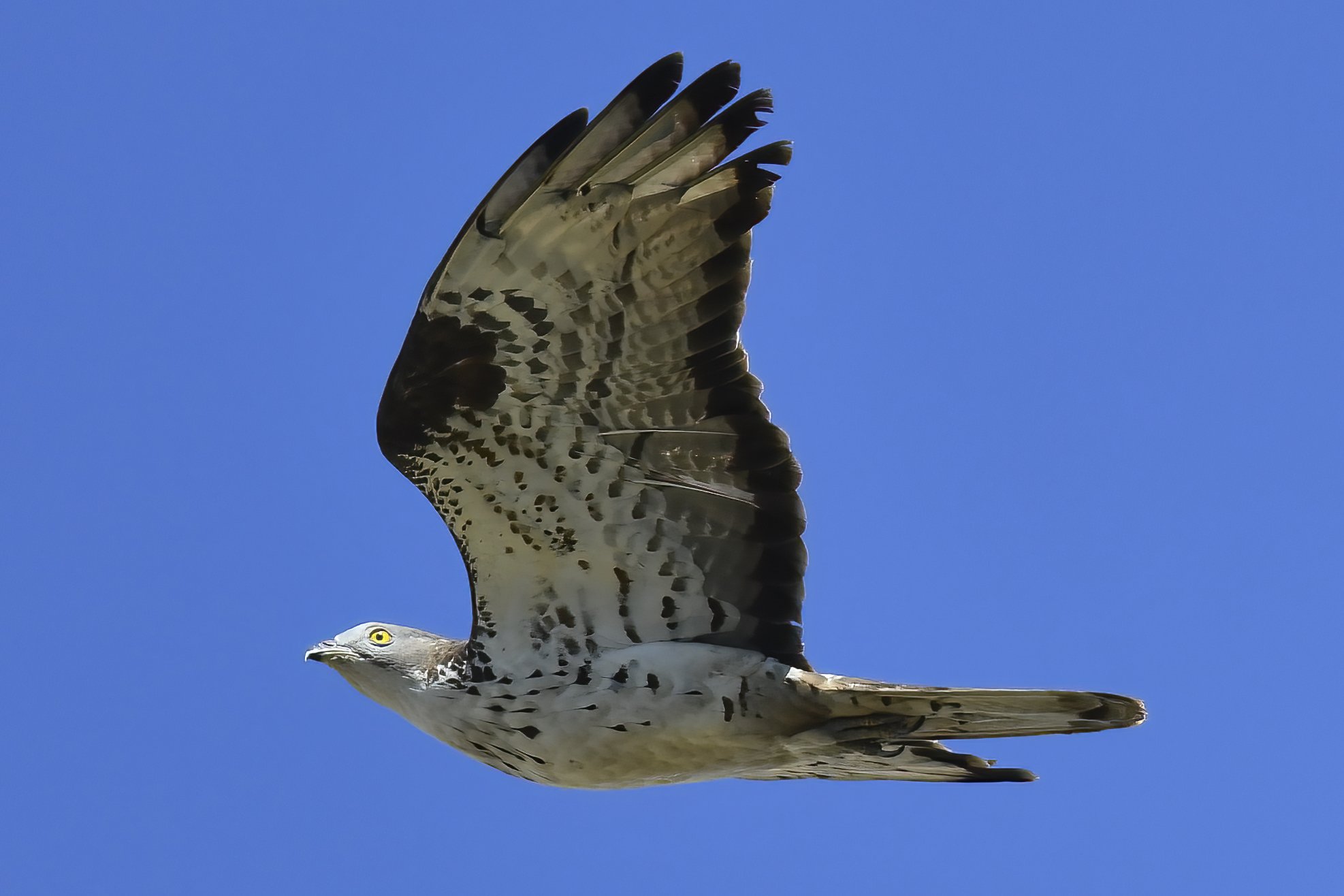
European Honey Buzzard \ Pernis apivorus
(حوام العسل الأوروبي)
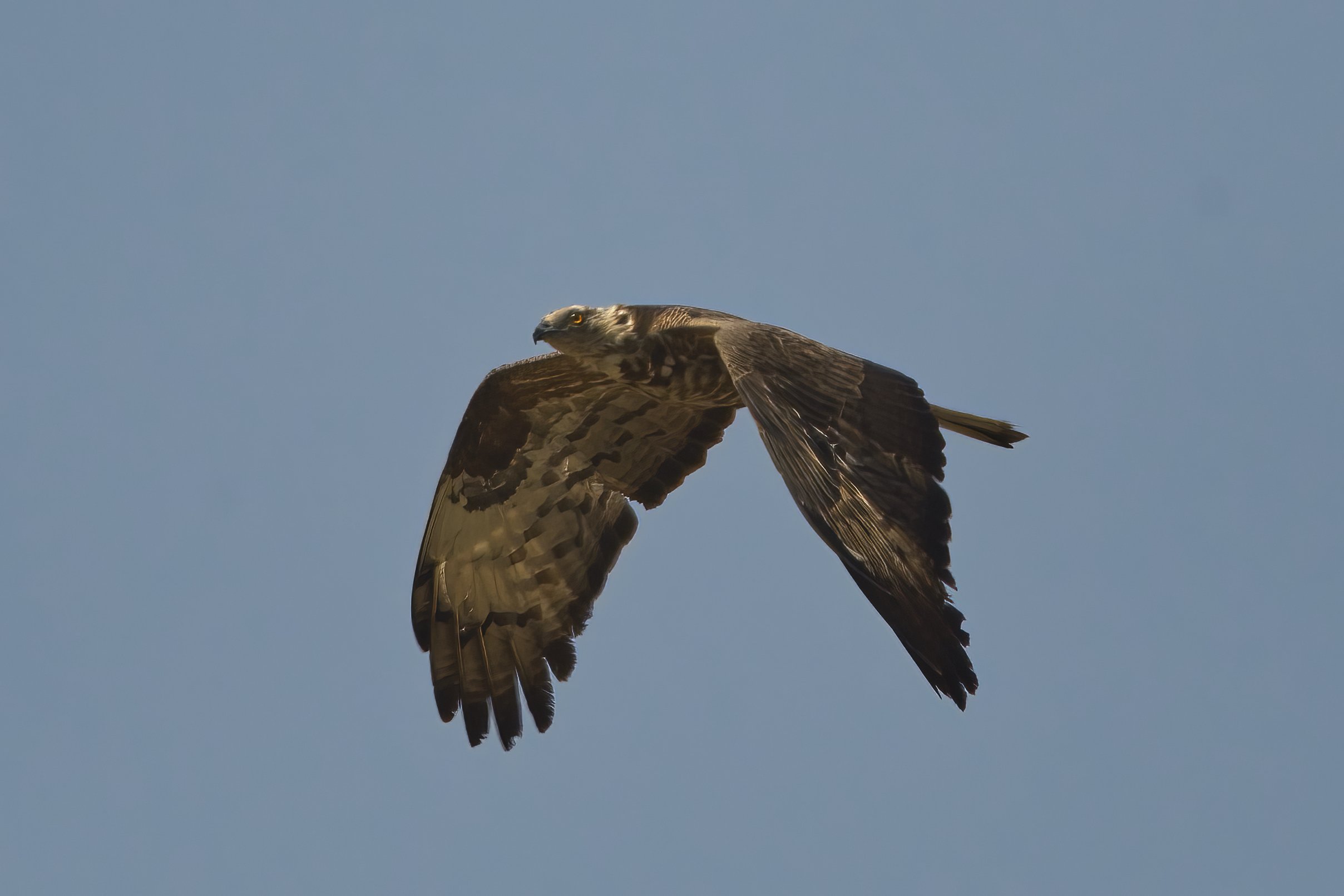
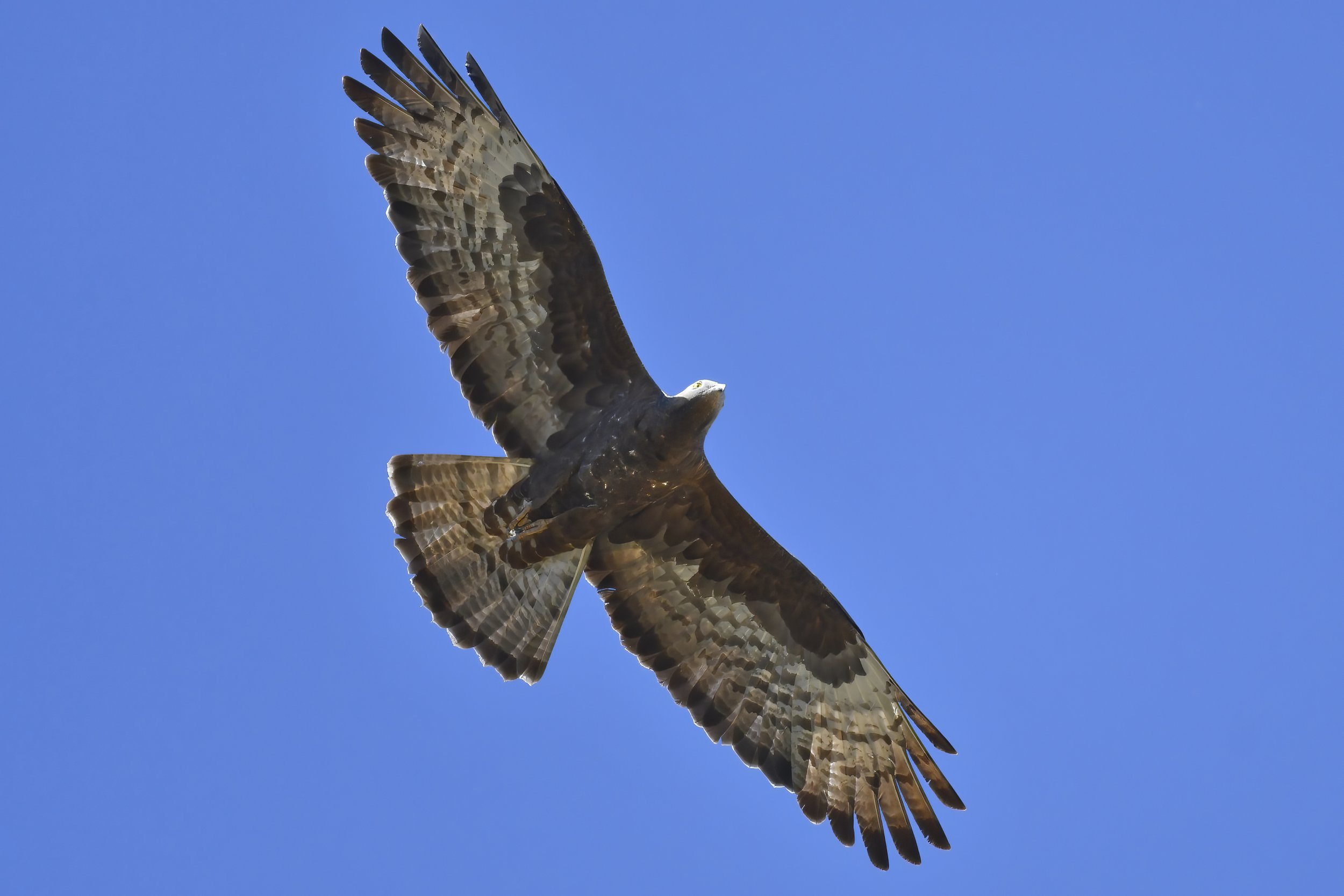
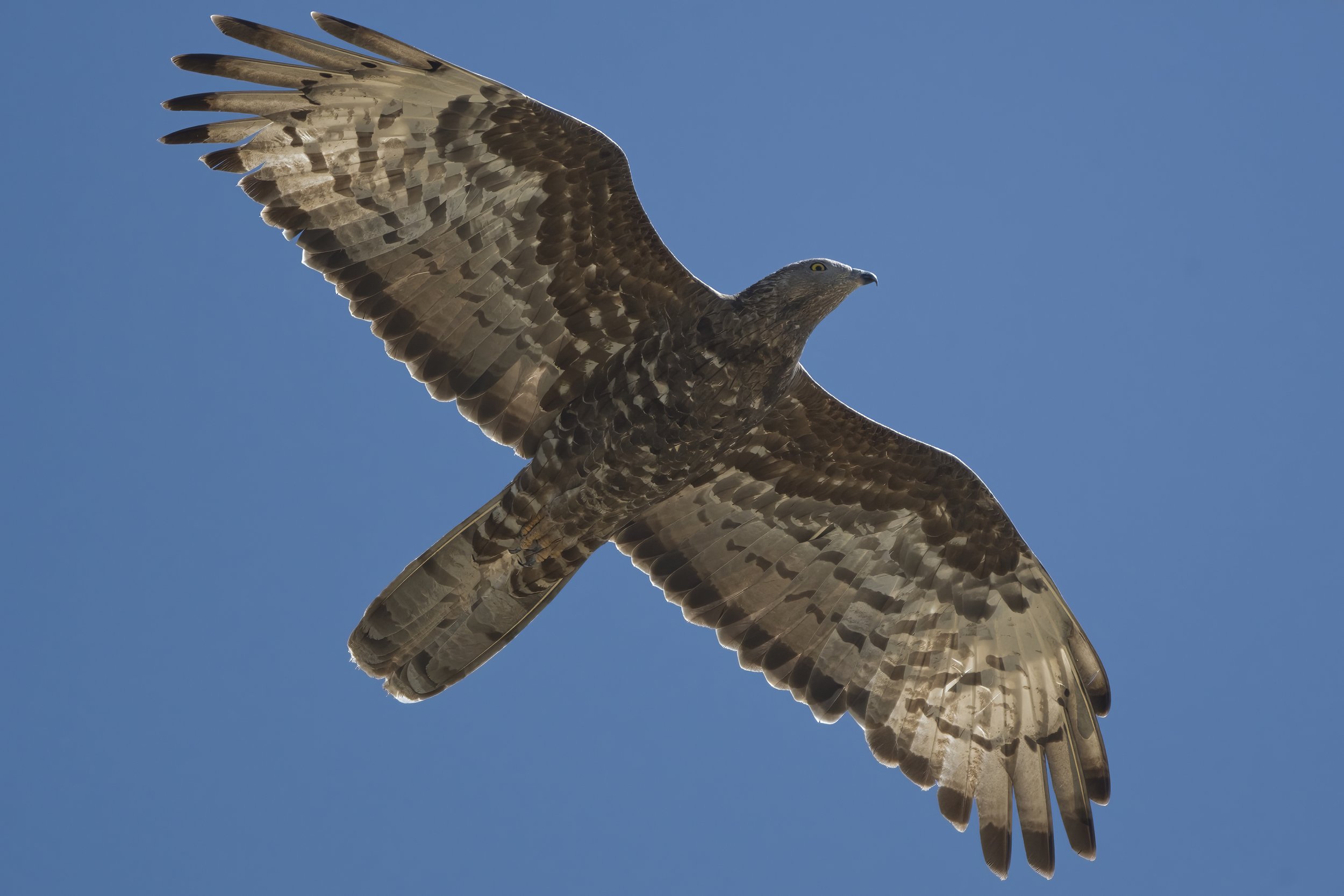
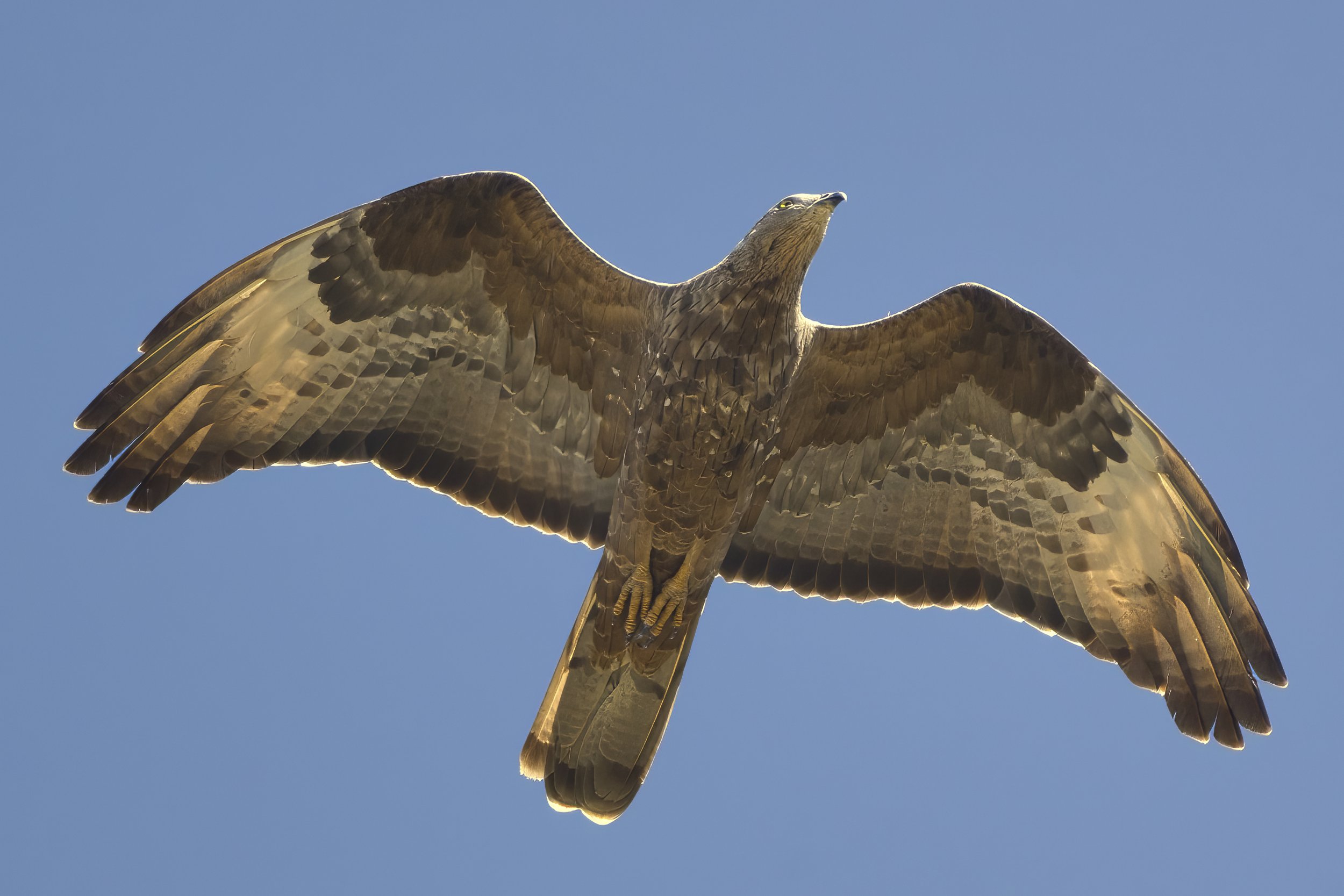
The European Honey Buzzard (Pernis apivorus) is a sleek and agile raptor renowned for its unique feeding habits and aerial prowess. Unlike traditional raptors, the Honey Buzzard primarily feeds on the larvae, pupae, and nests of social insects, particularly wasps and hornets, earning it its distinctive name. With its slender body, long wings, and long, banded tail, this bird of prey is perfectly adapted for maneuvering through dense forest canopies in pursuit of its insect prey. Found across much of Europe and into parts of Asia and Africa during migration, the European Honey Buzzard is a migratory species, spending the summer breeding season in temperate forests and then migrating to warmer regions for the winter. Despite its preference for secretive nesting sites and elusive behavior, the European Honey Buzzard is a symbol of ecological balance, playing a vital role in controlling insect populations and maintaining the health of forest ecosystems.
يُعَدُّ عُقاب العسل الأوروبي من الجوارح الرشيقة والماهرة في الطيران، ويشتهر بعاداته الغذائية الفريدة وقدرته الكبيرة على المناورة في الجو. وعلى خلاف كثير من الطيور الجارحة الأخرى، يعتمد هذا النوع في غذائه أساسًا على يرقات الحشرات الاجتماعية وعذارها وأعشاشها، ولا سيما الدبابير والزنابير، ومن هنا جاءت تسميته المميزة. وبفضل جسمه النحيل، وأجنحته الطويلة، وذنبه الطويل، يتمتع هذا الطائر بتكيف ممتاز يسمح له بالتحرك بمهارة بين تيجان الغابات الكثيفة أثناء بحثه عن فرائسه.
وينتشر هذا النوع في مساحات واسعة من أوروبا ويمتد إلى أجزاء من آسيا وأفريقيا خلال الهجرة، وهو طائر مهاجر يقضي موسم التكاثر الصيفي في الغابات المعتدلة، ثم ينتقل إلى المناطق الأدفأ في الشتاء. وعلى الرغم من تفضيله لمواقع التعشيش المستترة وسلوكه المراوغ، فإن عُقاب العسل الأوروبي يُعَدّ رمزًا للتوازن البيئي، إذ يؤدي دورًا مهمًا في التحكم في أعداد الحشرات والمساهمة في الحفاظ على صحة النظم البيئية الحرجية
Other Species
-
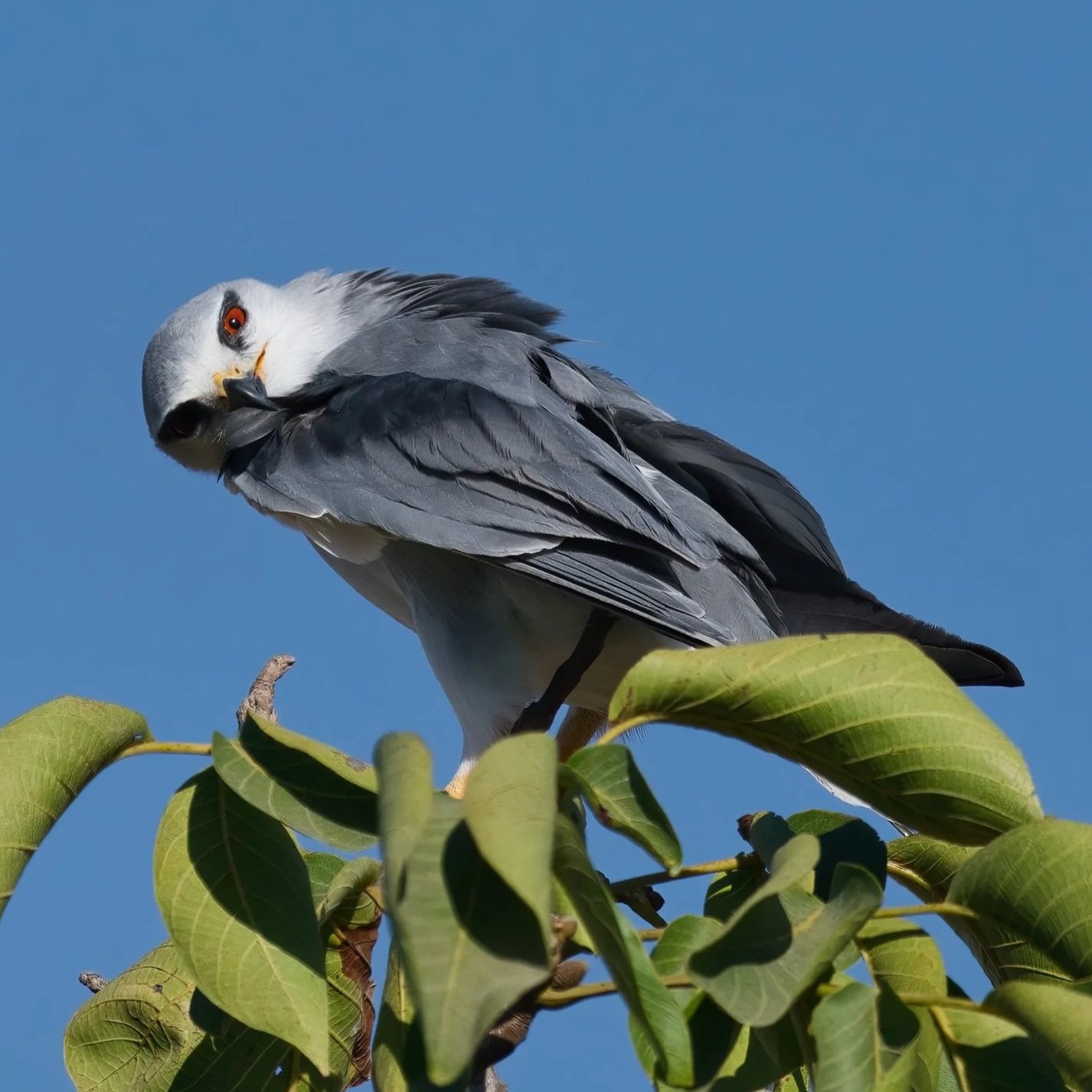
Black-winged Kite (Elanus caeruleus)
-
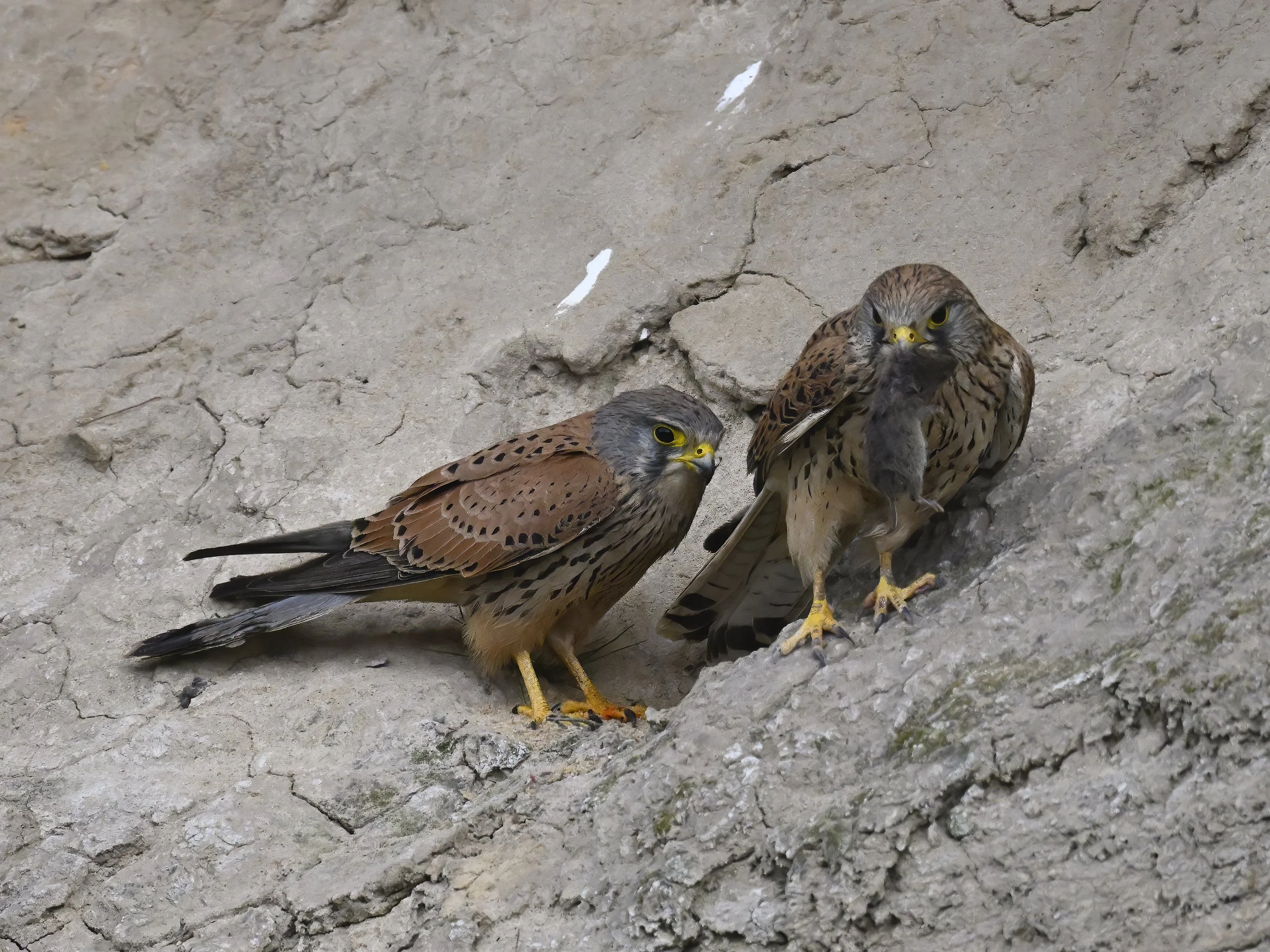
Eurasian Kestrel (Falco tinnunculus)
-
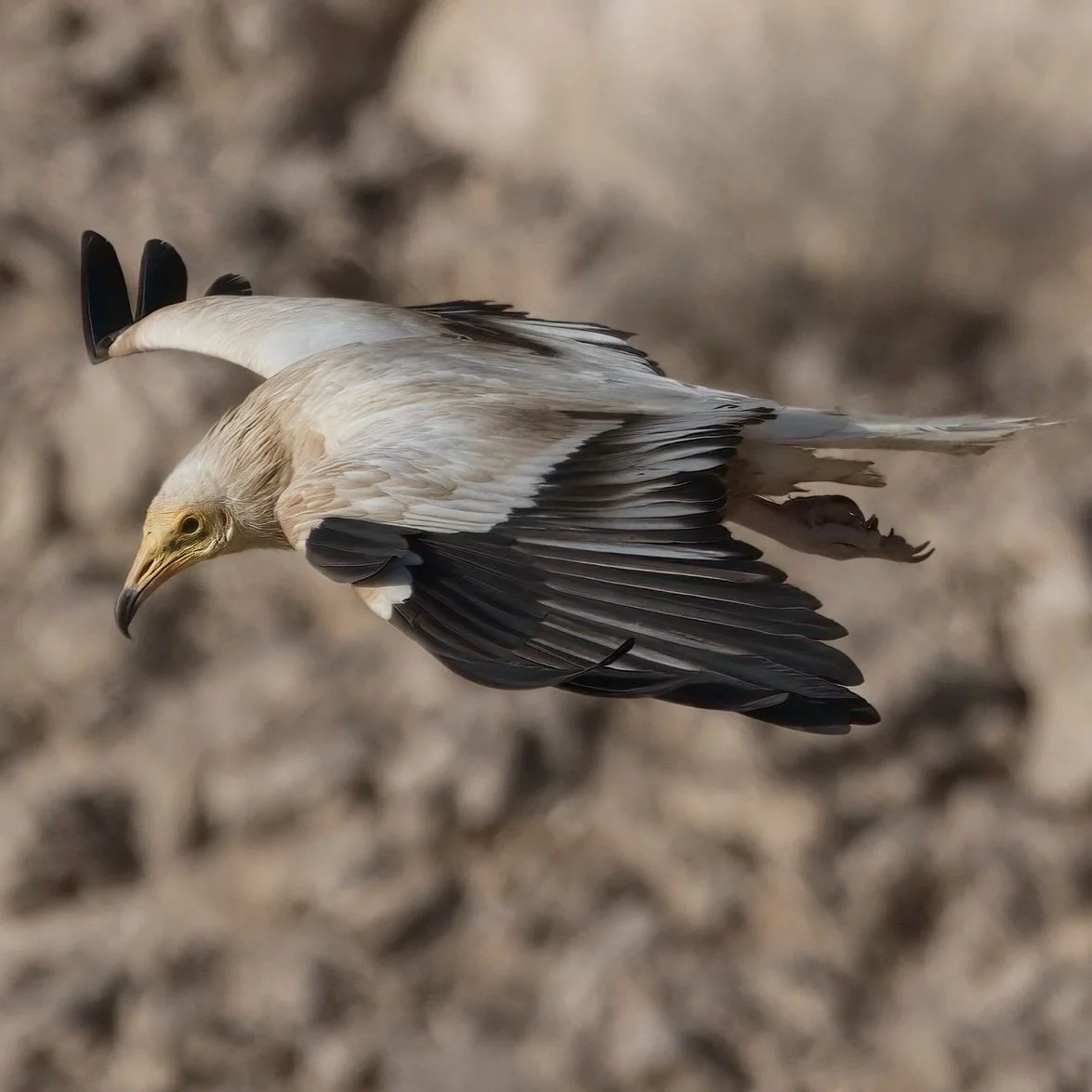
Egyptian Vulture (Neophron percnopterus)
-
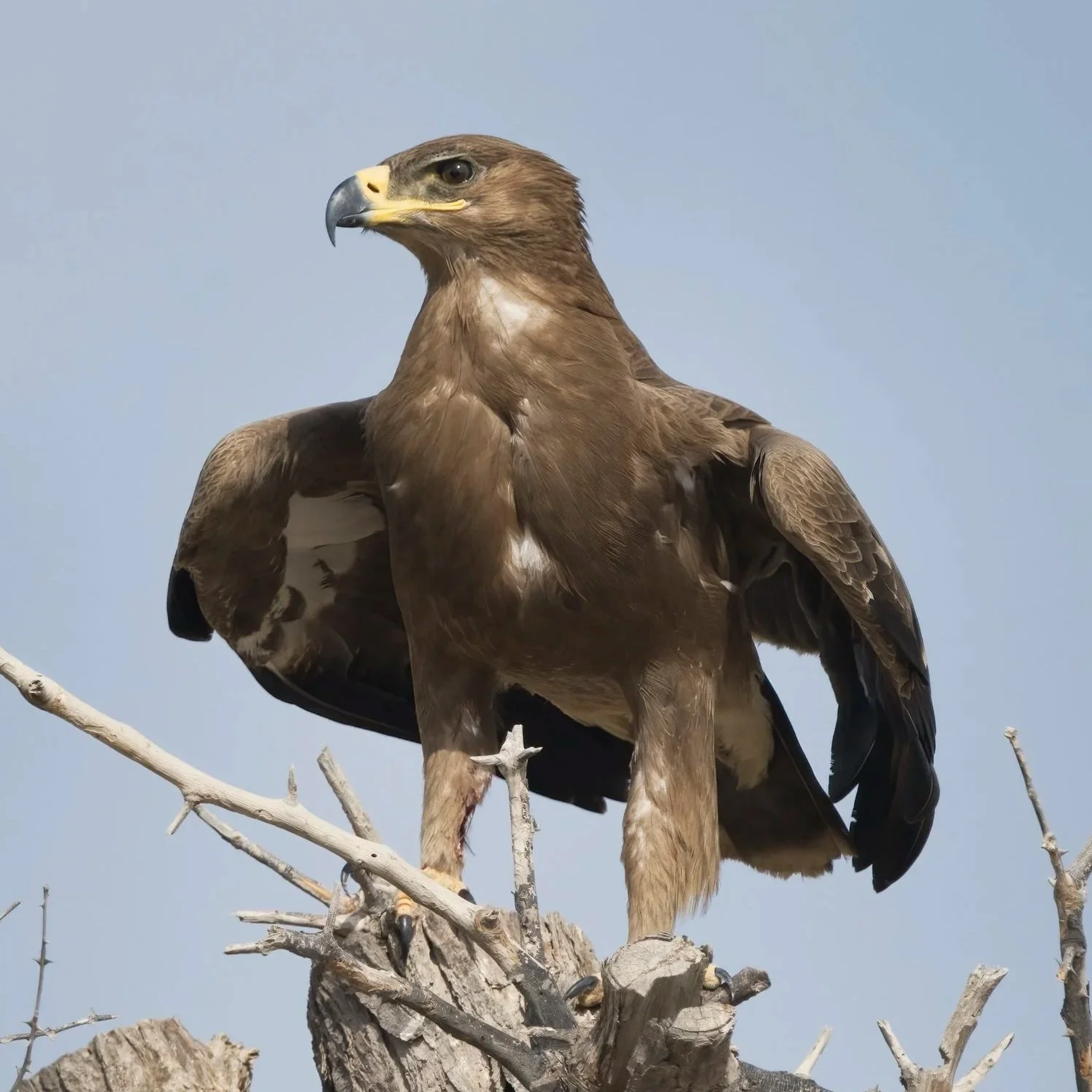
Steppe Eagle (Aquila nipalensis)