

Mammals of the UAE
The United Arab Emirates is home to a remarkable group of mammals adapted to deserts, mountains, gravel plains, wetlands, coastal habitats, and human-modified landscapes. From iconic species such as the Arabian Oryx, Arabian Gazelle, Arabian Sand Gazelle, and Arabian Red Fox to smaller nocturnal mammals like Desert Hedgehogs and Cheesman’s Gerbils, UAE mammals reveal how wildlife survives in one of the region’s harshest environments. This page brings together photographed mammal species from the UAE, with notes on identification, habitat, behavior, conservation status, and the importance of protecting the natural landscapes that support them.
Arabian Oryx \ Oryx leucoryx
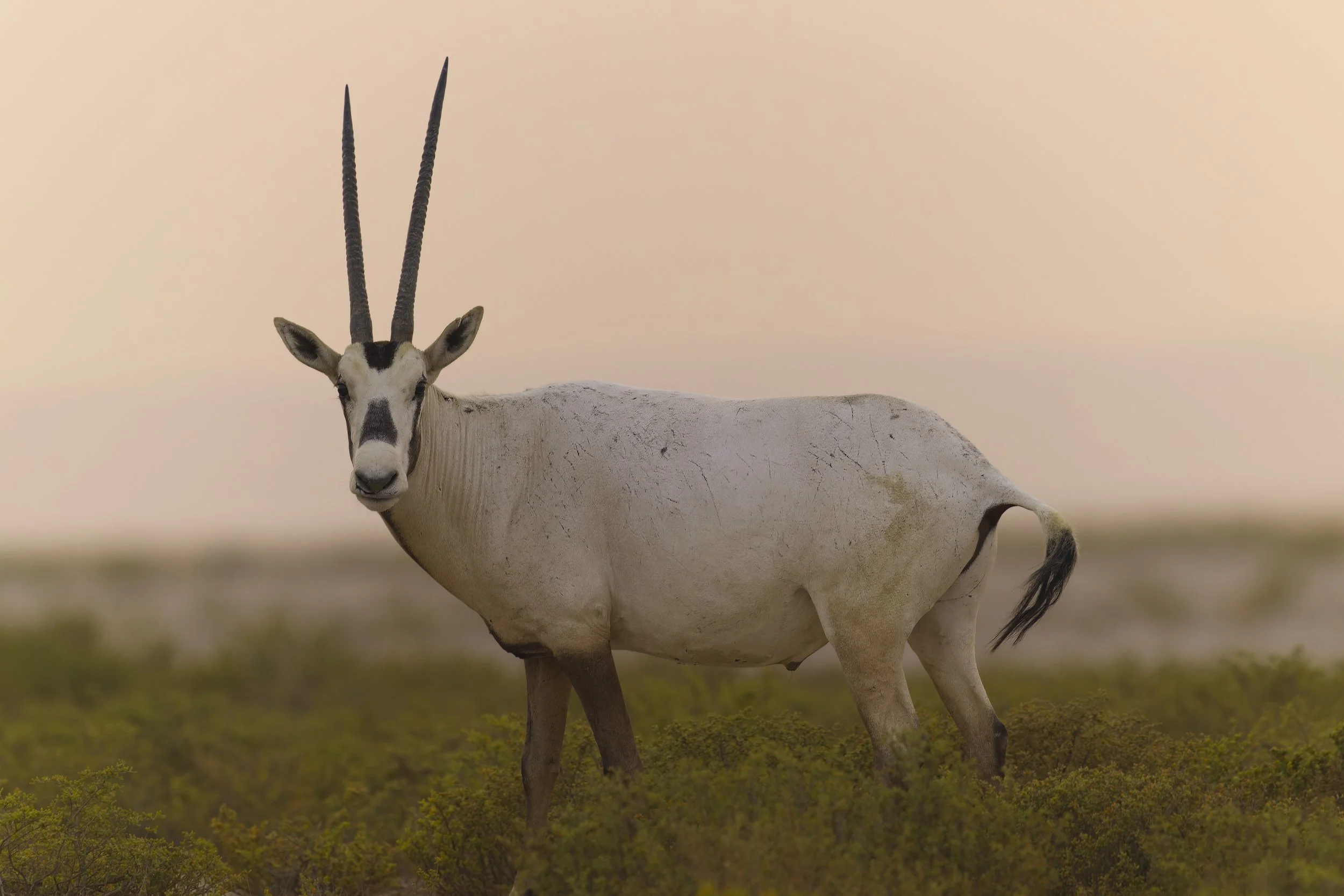
Also known as the white oryx, is a graceful and iconic antelope native to the deserts of the Arabian Peninsula. Characterized by its brilliant white coat, black facial markings, and long, slender, straight horns, it is well-adapted to arid environments, with specialized kidneys to conserve water and the ability to detect rainfall from a distance to find fresh grazing areas. Once extinct in the wild due to overhunting, the Arabian Oryx became a symbol of successful conservation efforts following reintroduction programs in Oman, Saudi Arabia, and the UAE. Today, protected reserves such as the Arabian Oryx Protected Area in Abu Dhabi provide them with safe habitats where they can thrive. The Arabian Oryx represents resilience and is a testament to regional efforts in wildlife conservation.
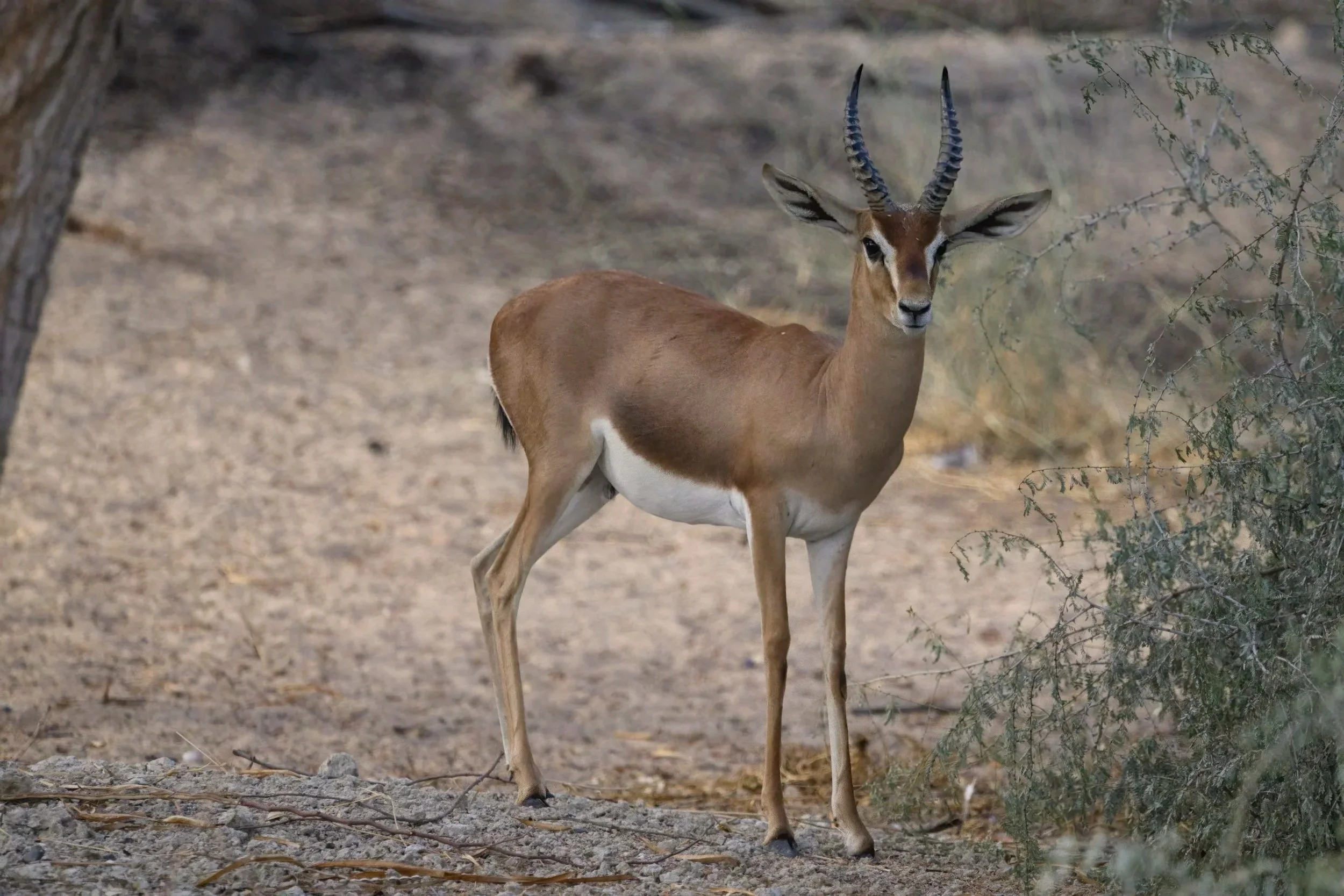
Arabian Gazelle \ Gazella arabica
Is a slender and agile antelope native to the arid deserts and rocky landscapes of the Arabian Peninsula. Known for its elegant build and swift movements, it has a sandy-brown coat with a white underside, helping it blend seamlessly into its environment. Both males and females possess short, slightly curved horns, although those of males are thicker and more prominent. This gazelle is well-adapted to harsh desert conditions, capable of surviving on minimal water by deriving moisture from the plants it consumes. Arabian Gazelles are social animals, often found in small herds, though solitary individuals are also common. Unfortunately, habitat loss and overhunting have led to a significant decline in their populations, making them a focus of conservation efforts in the region. These gazelles symbolize the beauty and resilience of desert wildlife.
Arabian Sand Gazelle \ Gazella marica
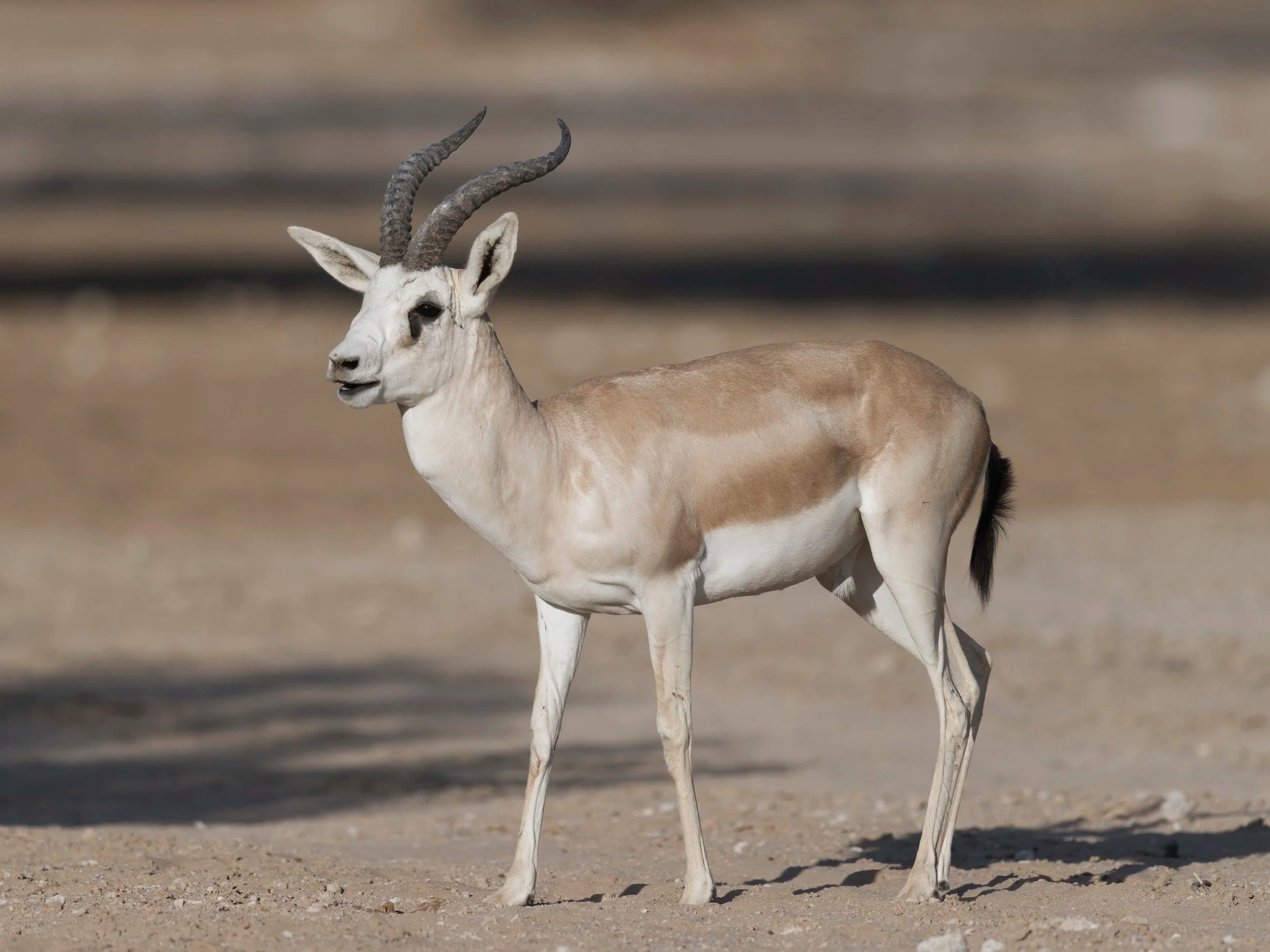
Or Rhim Gazelle, is a graceful and endangered species native to the arid deserts of North Africa. Adapted to extreme environments, it has pale sand-colored fur that reflects sunlight and helps it blend seamlessly into its surroundings. Its long, slender horns curve gently backward, and its large eyes are well-suited for low-light conditions. The Rhim Gazelle is highly adapted to desert life, obtaining most of its water from the moisture in the plants it consumes and being able to survive without direct water sources for extended periods. Unfortunately, habitat loss and poaching have significantly reduced its population, making conservation efforts critical for its survival. This elegant gazelle is a symbol of resilience in one of the harshest habitats on Earth.
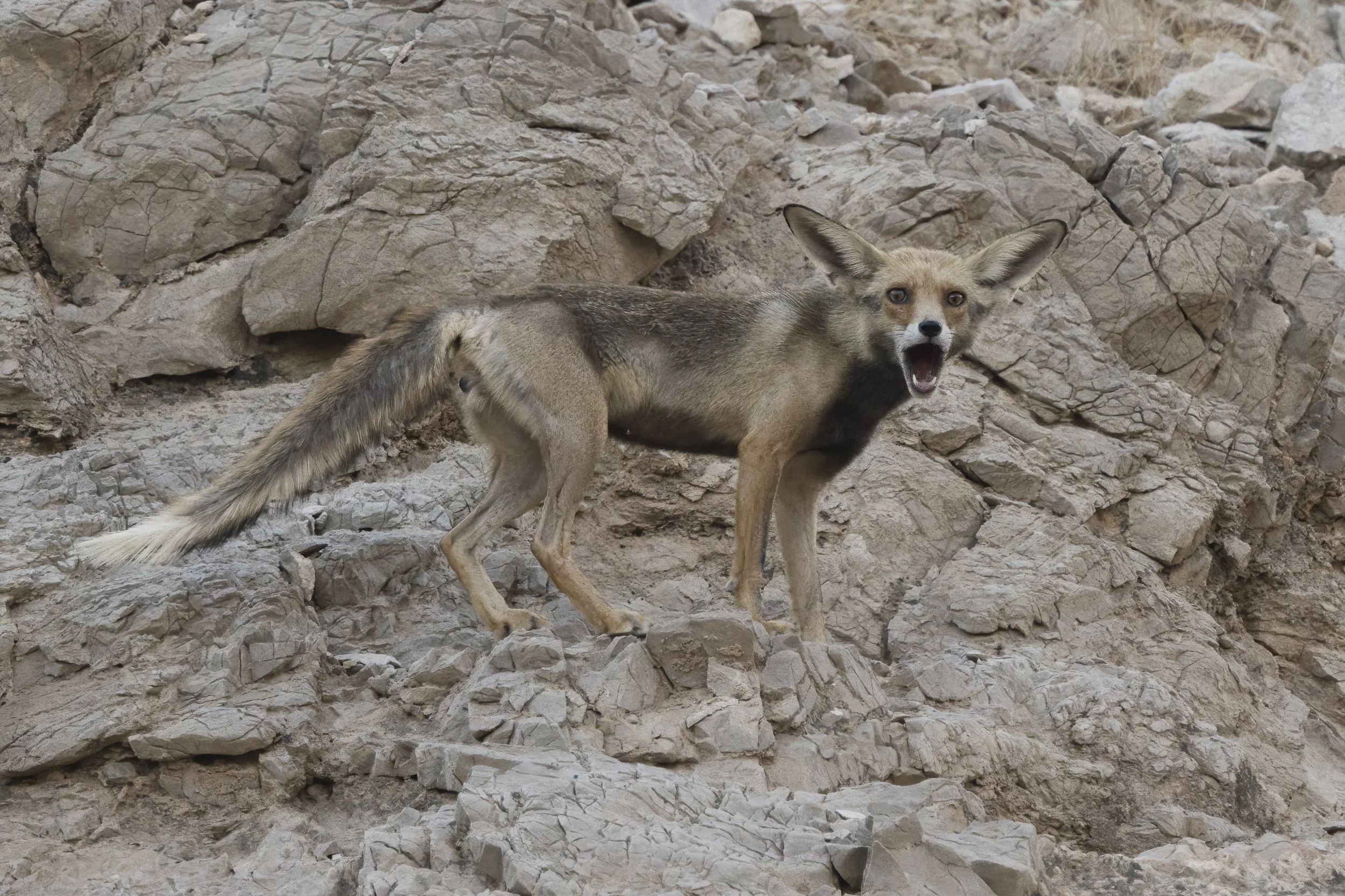
Arabian Red Fox \ Vulpes vulpes arabica
Is a desert-adapted subspecies of the red fox found across the Arabian Peninsula, including the United Arab Emirates. Smaller and more slender than its northern relatives, it has large ears for heat dissipation and a pale sandy to reddish-brown coat that blends with desert landscapes. Nocturnal by nature, it emerges at night to hunt rodents, birds, reptiles, and insects, supplementing its diet with fruits when available. Highly adaptable, the Arabian Red Fox thrives in deserts, mountains, and even near human settlements, often denning in burrows, rock crevices, or under vegetation. Despite its resilience, it faces threats from habitat encroachment, road accidents, and occasional persecution. As an important predator in the UAE’s ecosystems, it helps regulate small animal populations and reflects the adaptability of wildlife to extreme desert conditions.
Cheesman’s Gerbil \ Gerbillus cheesmani
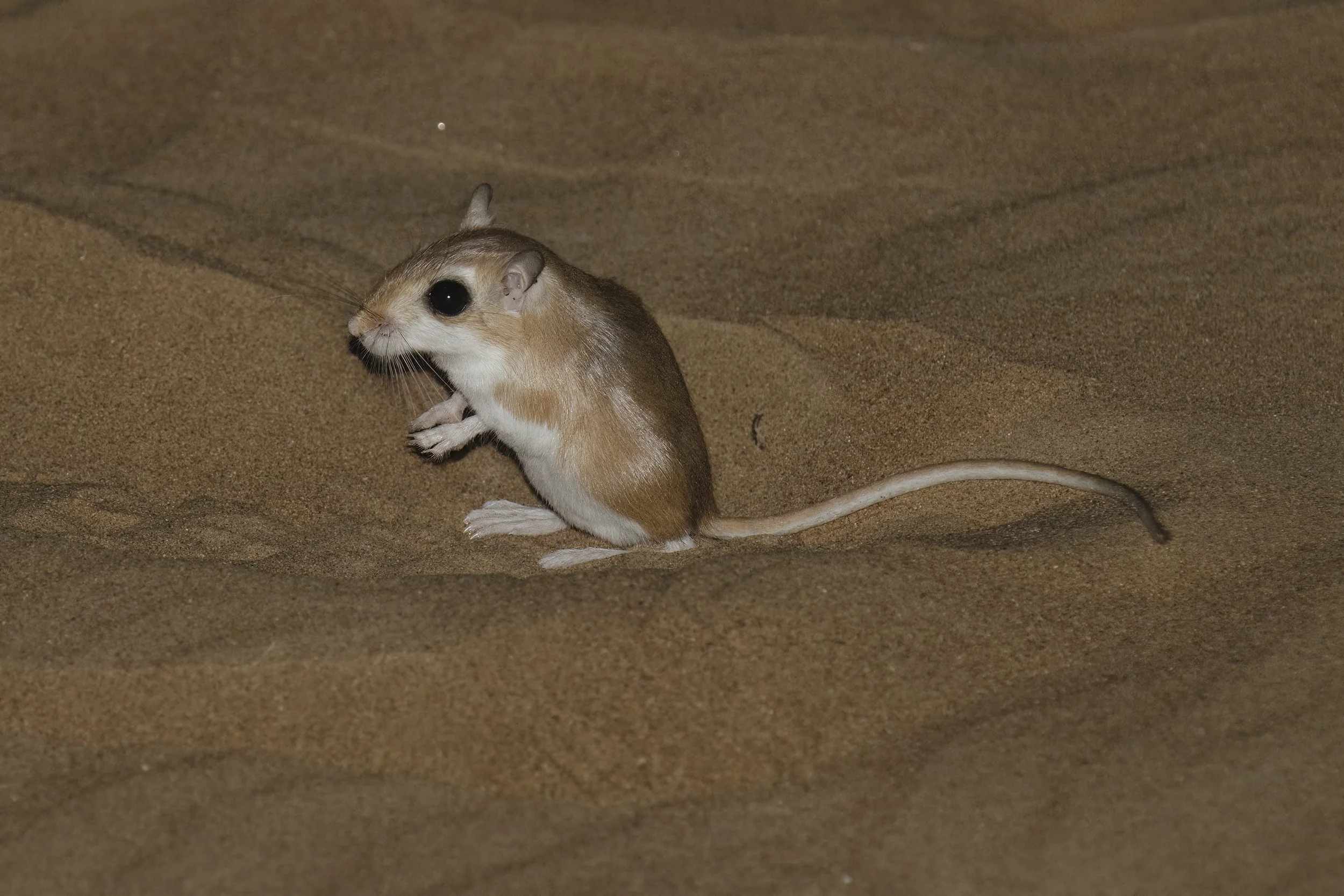
Is a small nocturnal rodent native to the deserts of the Arabian Peninsula, including the United Arab Emirates, Oman, Saudi Arabia, and parts of Iran. Adapted to harsh arid environments, it prefers sandy plains and dunes where it excavates burrows to escape the daytime heat and avoid predators. The species is characterized by its pale sandy-brown fur, long tail with a tufted tip, and large eyes and ears that aid in nocturnal activity. Its diet consists mainly of seeds, roots, and insects, making it an important part of the desert food web, both as a seed disperser and as prey for owls, snakes, and small carnivores. Cheesman’s Gerbil is considered common and widespread across its range, with no major conservation threats identified, although habitat disturbance from expanding human activity and off-road vehicles can locally affect populations.
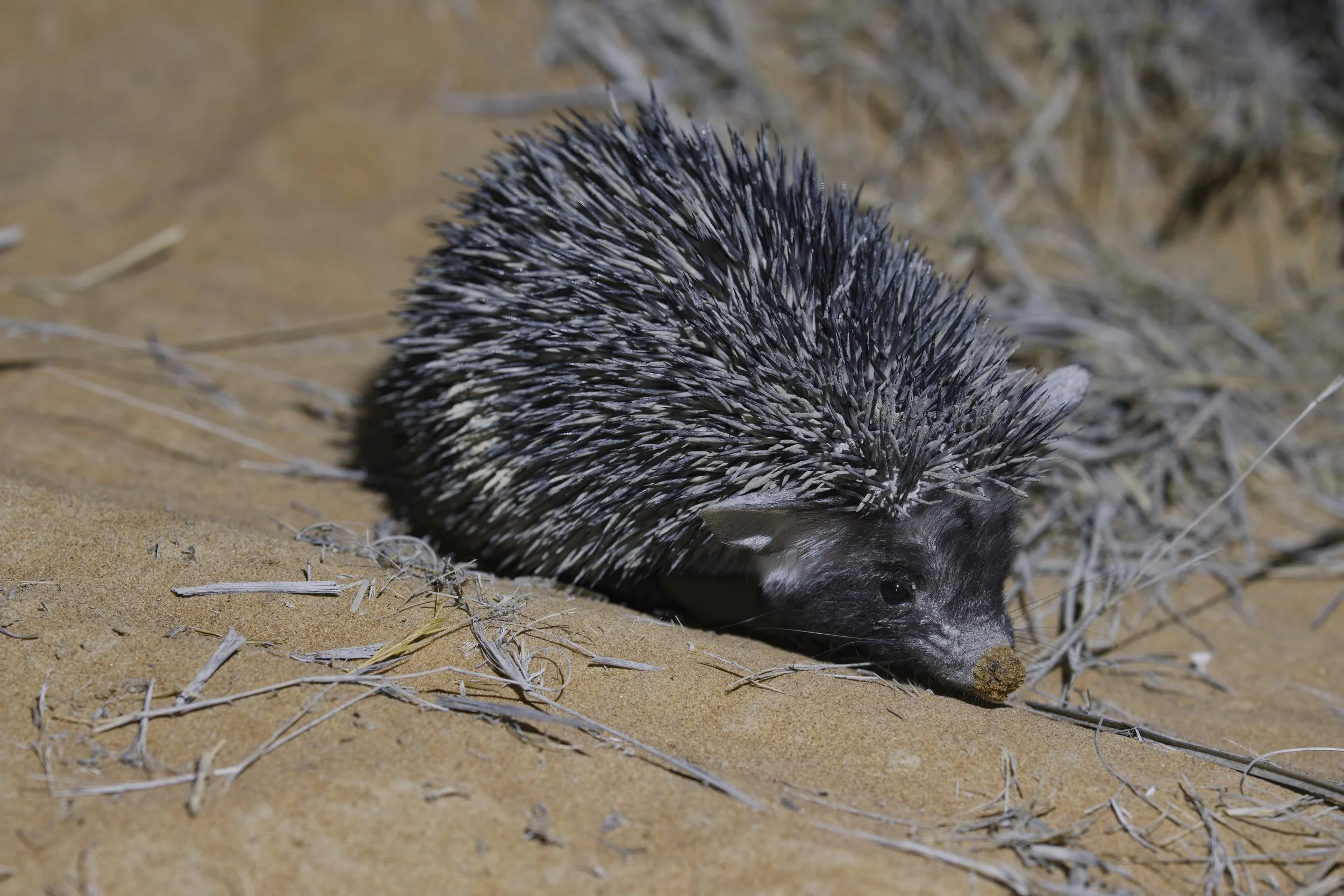
Desert Hedgehog \ Paraechinus aethiopicus
Is one of the smallest hedgehog species, found across arid regions of the Middle East and North Africa, including the UAE. Perfectly adapted to desert life, it is nocturnal and spends the day hidden in burrows or under vegetation. At night, it forages for insects, small invertebrates, and even scorpions, making it an important part of the desert ecosystem. Its spiny coat protects it from predators, and when threatened, it curls tightly into a ball — a classic hedgehog defense.
Although globally listed as Least Concern, the Desert Hedgehog is rarely seen in the wild due to its secretive, night-time habits. In the UAE, it survives in fragmented habitats but faces threats from road traffic, urban development, and pesticide use that reduces its food sources. Spotting one in the wild is always a special encounter, reminding us how rich and diverse desert wildlife truly is. Protecting its fragile habitat ensures that these shy little mammals continue to thrive in the Arabian desert.
Cape Hare \ Lepus capensis
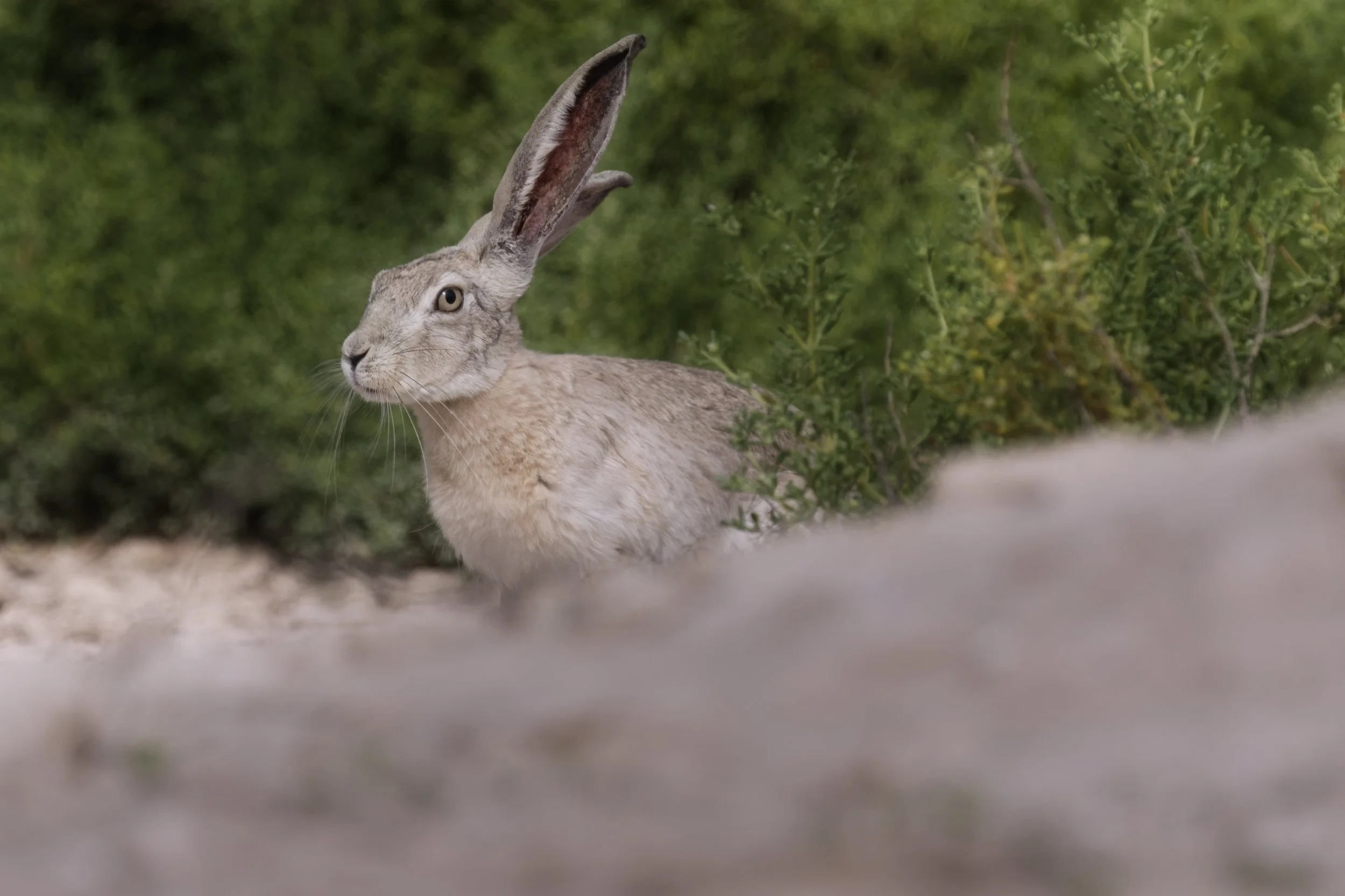
Is one of the quiet desert mammals of the United Arab Emirates, often overlooked because of its secretive and mostly nocturnal behavior. Built for open, arid landscapes, it is usually associated with deserts, gravel plains, sandy areas, and lightly vegetated wadis, where its long ears, slender body, and powerful hind legs help it detect danger and escape quickly across exposed ground. In the UAE, it feeds mainly on grasses, herbs, shoots, and desert plants, playing a small but important role in the food chain as both a grazer and prey for predators such as foxes, raptors, and owls. Although it can survive in harsh dry environments, its presence still depends on healthy natural habitats with enough cover and seasonal vegetation, making it a subtle indicator of the condition of the country’s desert ecosystems.
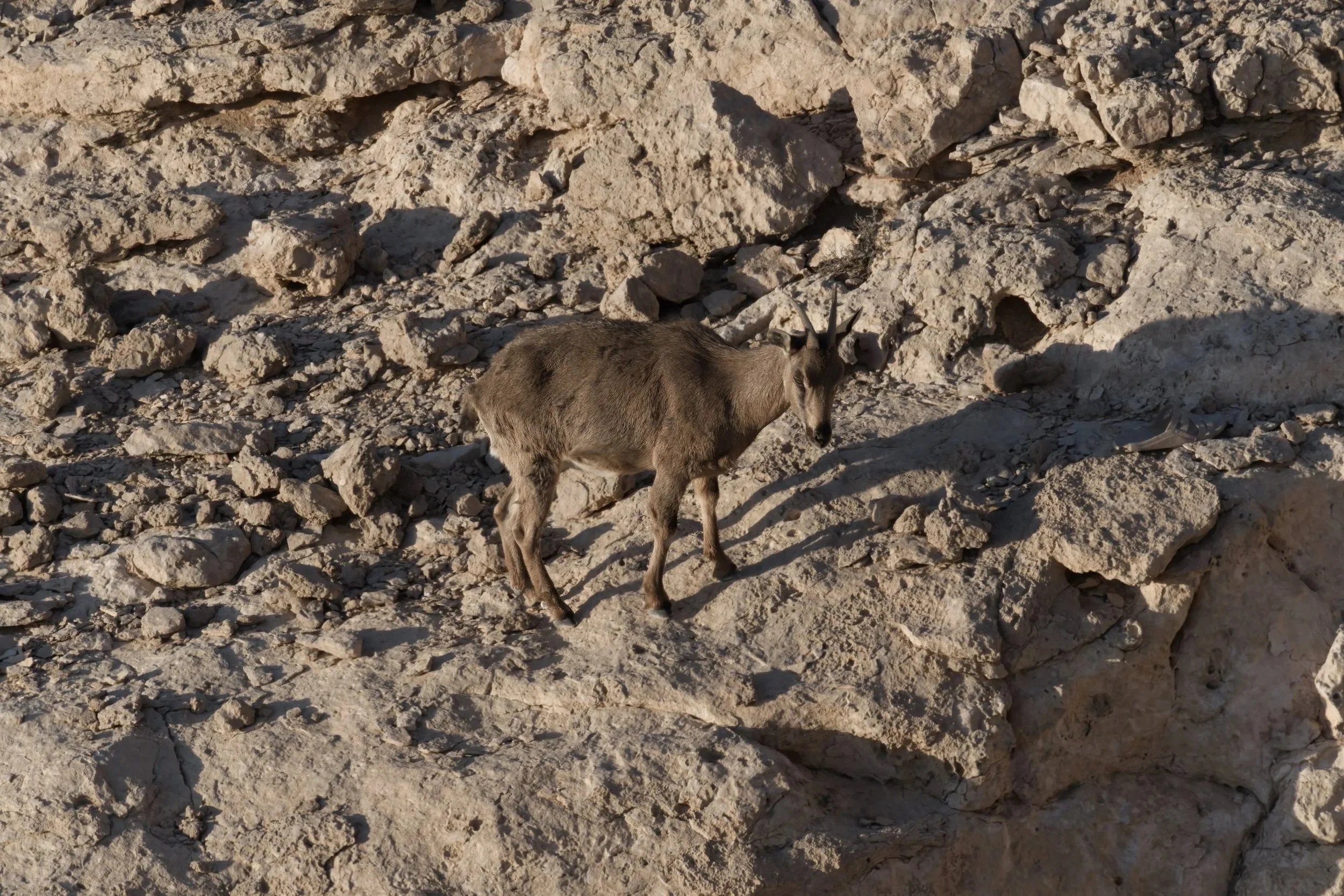
Arabian Tahr \ Arabitragus jayakari
A rare mountain ungulate and one of the most important native mammals of the United Arab Emirates. It is endemic to the mountains of northern Oman and the UAE, with a very limited range and a strong connection to steep rocky terrain. In the UAE, it is mainly associated with rugged mountain slopes and wadis, with an important small population recorded on Jebel Hafit in Abu Dhabi. The Abu Dhabi Red List notes that the species prefers north-facing slopes between 1,000 and 1,800 m, where cooler conditions, higher rainfall, and more diverse vegetation provide better feeding and shelter.
Built for life on cliffs and steep slopes, the Arabian Tahr has a compact body, strong legs, and excellent climbing ability. It feeds mainly on mountain vegetation, including grasses, shrubs, leaves, and seasonal growth after rainfall. Its survival in the UAE depends on quiet mountain habitats with enough vegetation and limited disturbance. The species is threatened by habitat loss, development around mountain areas, competition with livestock, and possible disease transmission from domestic goats. Globally, it is listed as Endangered (EN), while the Abu Dhabi assessment treats the Jebel Hafit population as Critically Endangered (CR) because of its very small and isolated population.
Mammals in the UAE are distributed across several key habitats. Desert plains and dunes support species such as Arabian Oryx, Arabian Sand Gazelle, Desert Hedgehog, and Cheesman’s Gerbil. Mountain and wadi systems can provide shelter, movement corridors, and cooler microhabitats for foxes and other mammals. Coastal and wetland areas also support marine and semi-aquatic mammals in the wider UAE biodiversity picture. Together, these habitats show that UAE mammal diversity is not limited to open desert, but connected to a wider ecological network.