

Arabian Oryx \ Oryx leucoryx
(المها العربي)
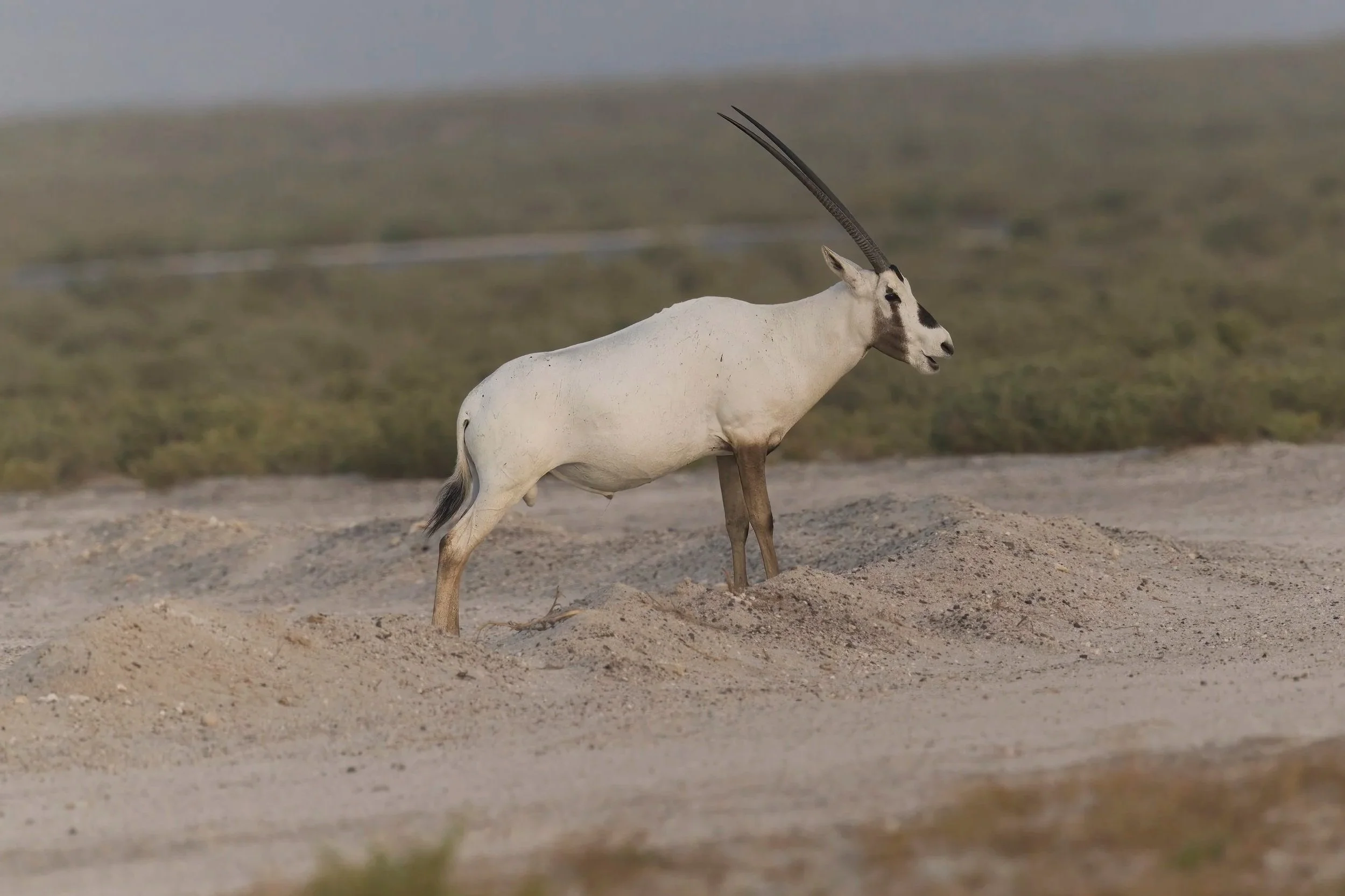
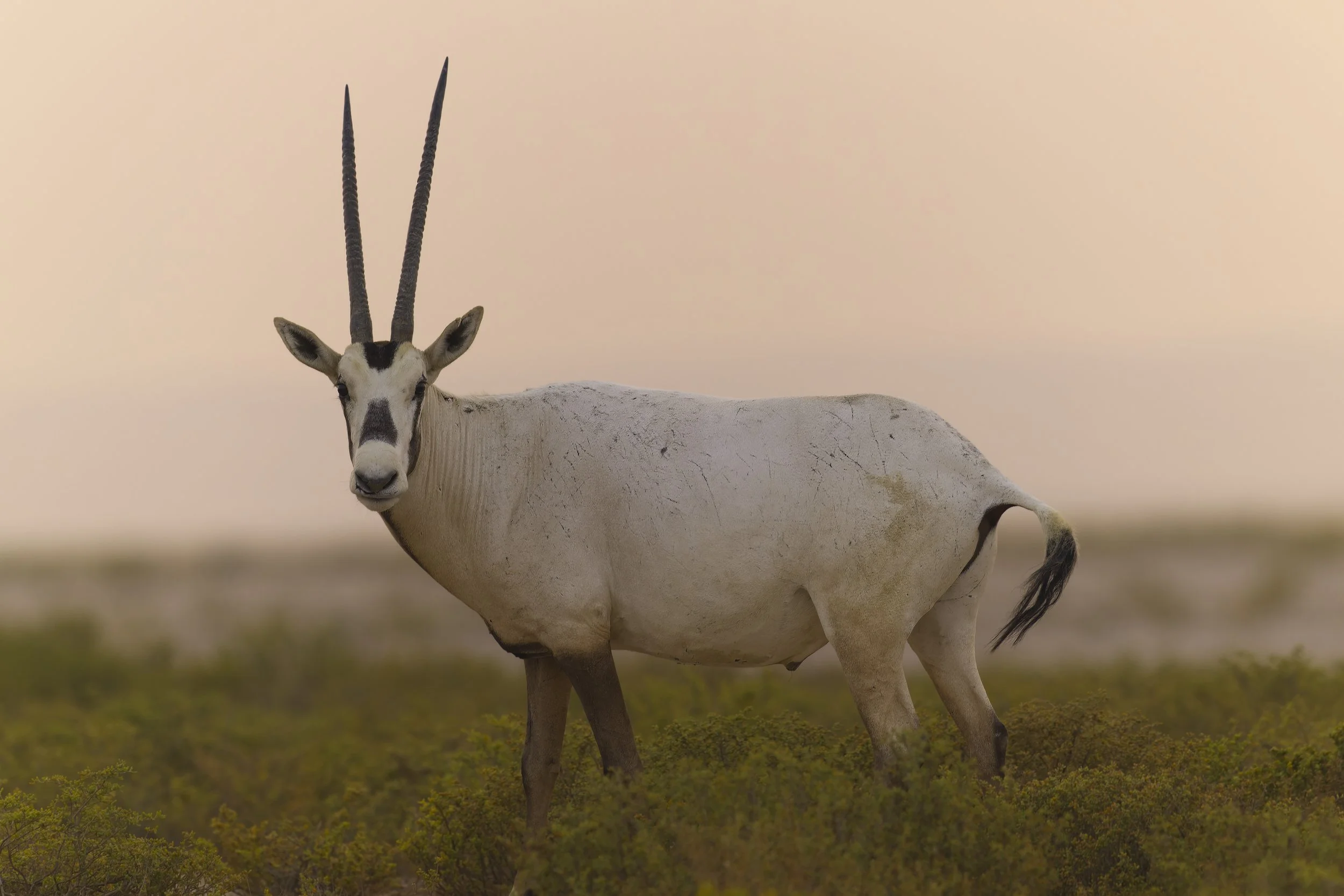
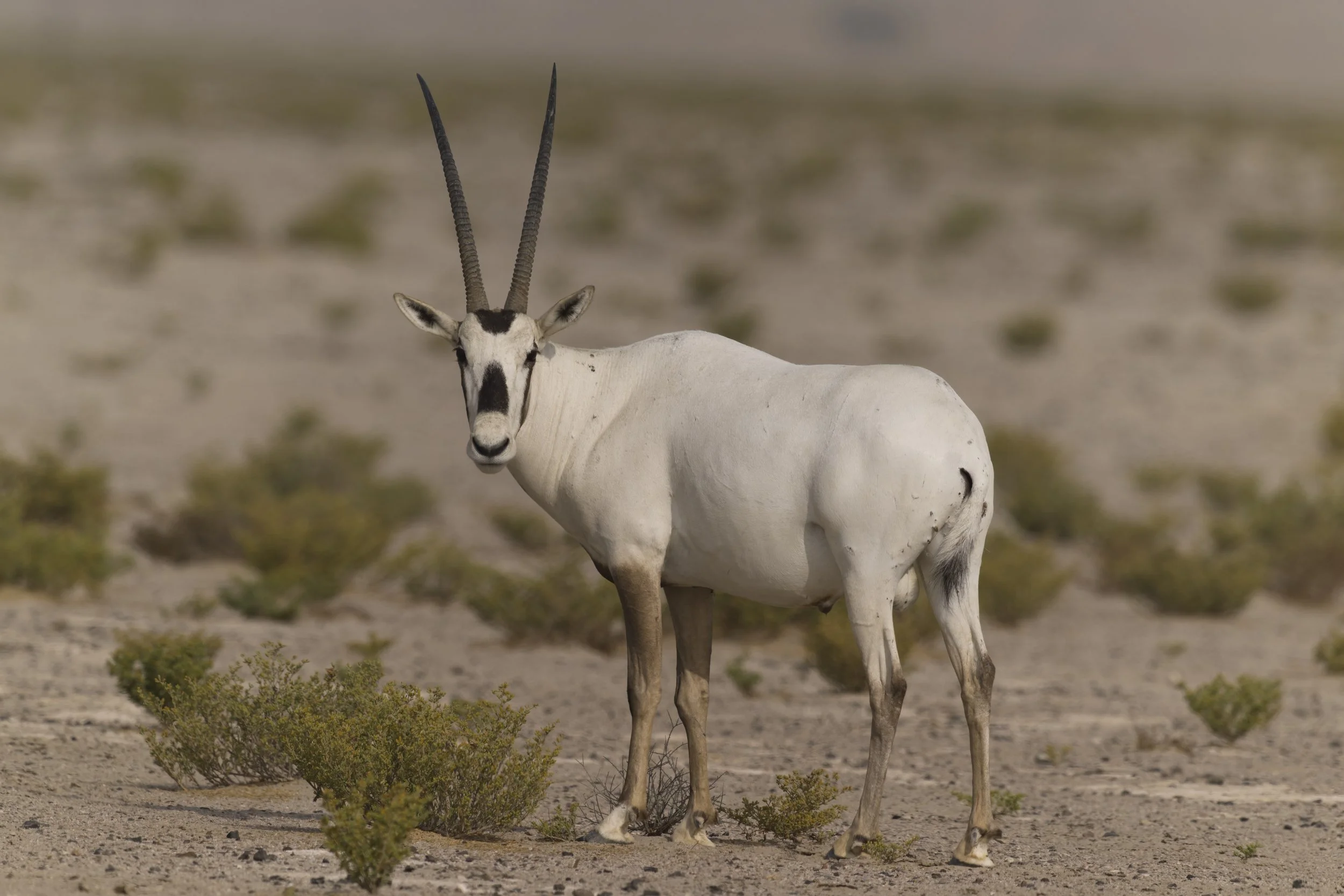
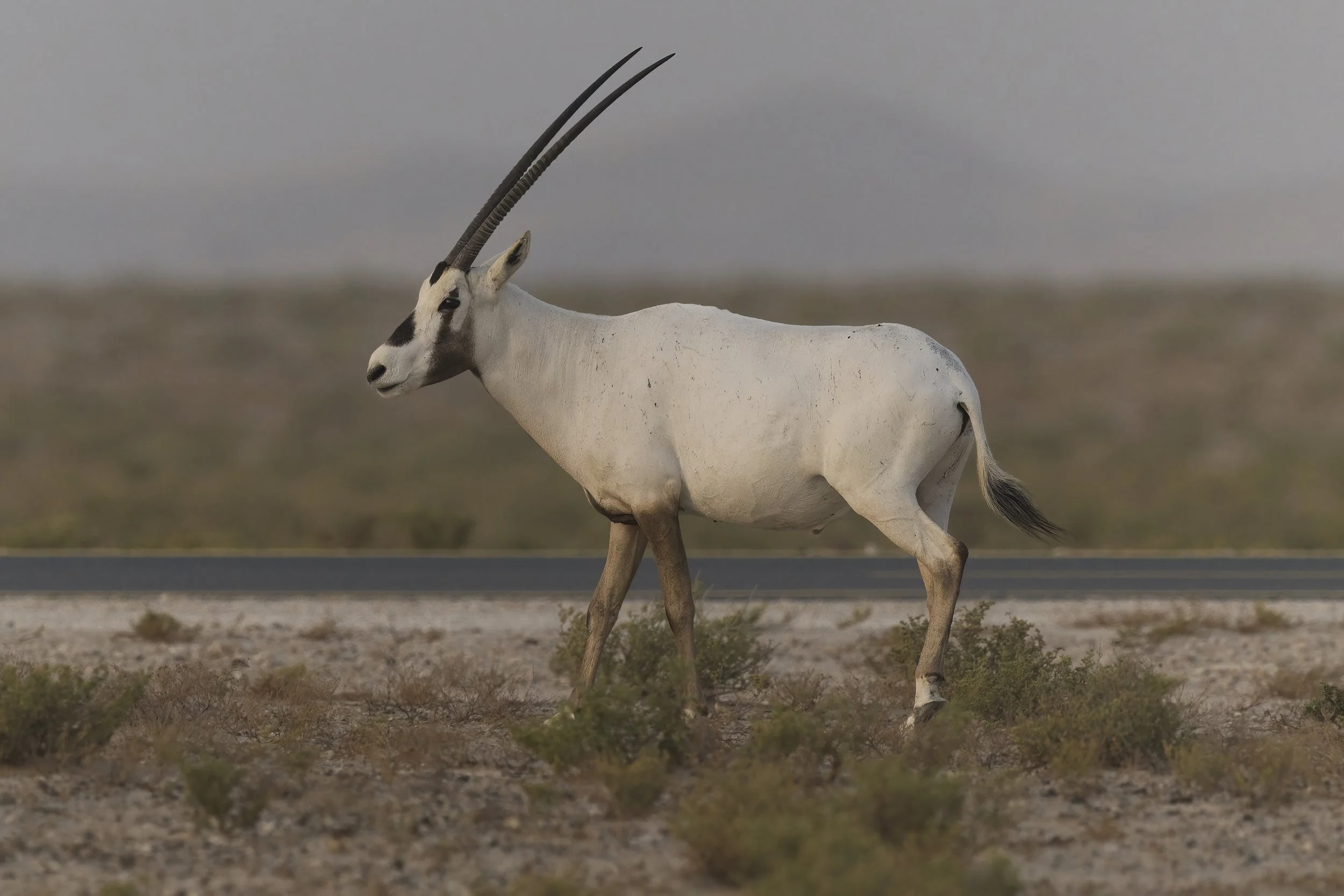
The Arabian Oryx (Oryx leucoryx), known in Arabic as المها العربي, is a native desert antelope of the Arabian Peninsula and one of the UAE’s most recognisable wildlife species. Its white coat, dark facial and leg markings, broad hooves and long, nearly straight horns make it easy to distinguish from the gazelles that share its desert habitat.
Once declared extinct in the wild, the Arabian Oryx has returned through captive breeding, habitat protection and carefully managed reintroduction programmes. It is now established in protected areas across parts of its former range and is listed as Vulnerable on the IUCN Red List.
The Arabian Oryx is a medium-sized antelope with a predominantly white coat that reflects strong desert sunlight. Dark markings occur around the eyes, muzzle and legs, while both males and females carry long horns.
Male horns are generally thicker and often slightly shorter than those of females. Its broad hooves spread its weight over loose sand, helping it move efficiently across dunes and open desert terrain.
Arabian Oryx inhabit sandy and stony deserts, gravel plains and arid steppe environments. Within the UAE, most established populations occur in protected desert reserves where habitat, breeding and herd health can be managed.
The species may travel considerable distances in response to rainfall and the appearance of fresh vegetation. This mobility allows herds to take advantage of temporary grazing areas in landscapes where food and water availability change rapidly.
The Arabian Oryx is herbivorous, feeding on grasses, herbs, leaves, roots, bulbs and desert shrubs. It obtains much of its moisture from vegetation and can survive for extended periods without directly drinking water.
Its pale coat helps reflect sunlight, while specialised physiological and behavioural adaptations reduce heat stress. Arabian Oryx are often most active during cooler periods around dawn and dusk and may rest in shade during the hottest part of the day.
Arabian Oryx usually live in small herds, although group size changes according to habitat conditions and available food. Herds may move across large areas following rainfall and new plant growth.
During the hottest hours, individuals conserve energy by resting and reducing movement. Their ability to locate favourable feeding areas is essential for survival in the unpredictable desert environment.
Hunting and capture caused the Arabian Oryx to disappear from the wild by the early 1970s. Captive breeding and reintroduction programmes later restored populations in the UAE and several other countries across the Arabian Peninsula.
The species’ return is one of the region’s most significant conservation achievements. However, continued habitat protection, genetic management, anti-poaching measures and long-term population monitoring remain important to its recovery.
Arabian Oryx FAQ
-
The Arabian Oryx is called المها العربي, pronounced approximately as Al Maha Al Arabi.
-
No. The species became extinct in the wild during the early 1970s but was restored through captive breeding and reintroduction. It is currently classified as Vulnerable.
-
Yes. Both sexes have long horns, although male horns are generally thicker and often slightly shorter.
-
It feeds on grasses, herbs, leaves, roots, bulbs and shrubs, obtaining much of its moisture from desert vegetation.
-
Most established populations live within protected reserves and managed desert habitats, particularly in Abu Dhabi.
-
It obtains moisture from the plants it eats, reduces activity during extreme heat and uses physiological adaptations that help conserve water.
Other Species
-
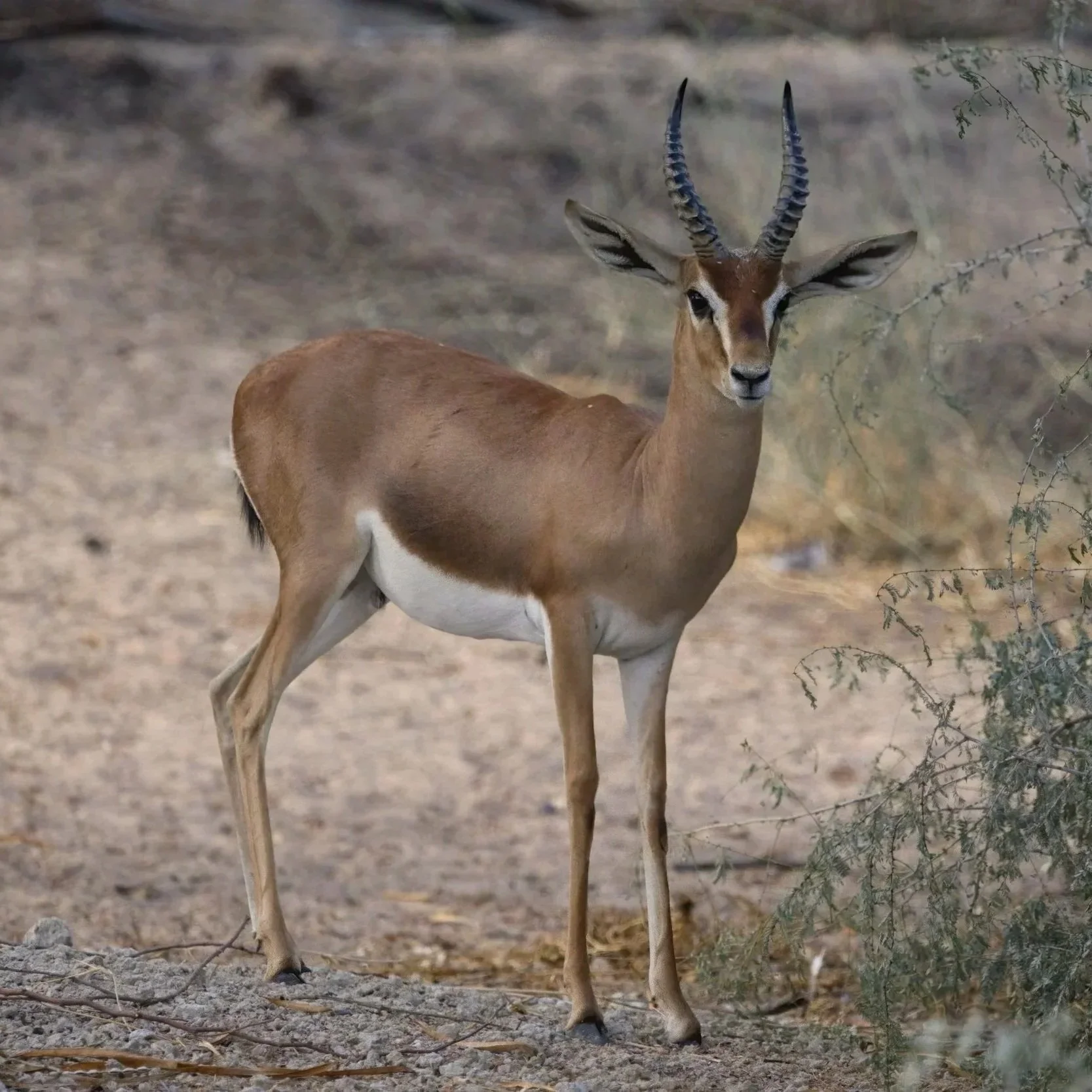
Arabian Gazelle (Gazella arabica)
-
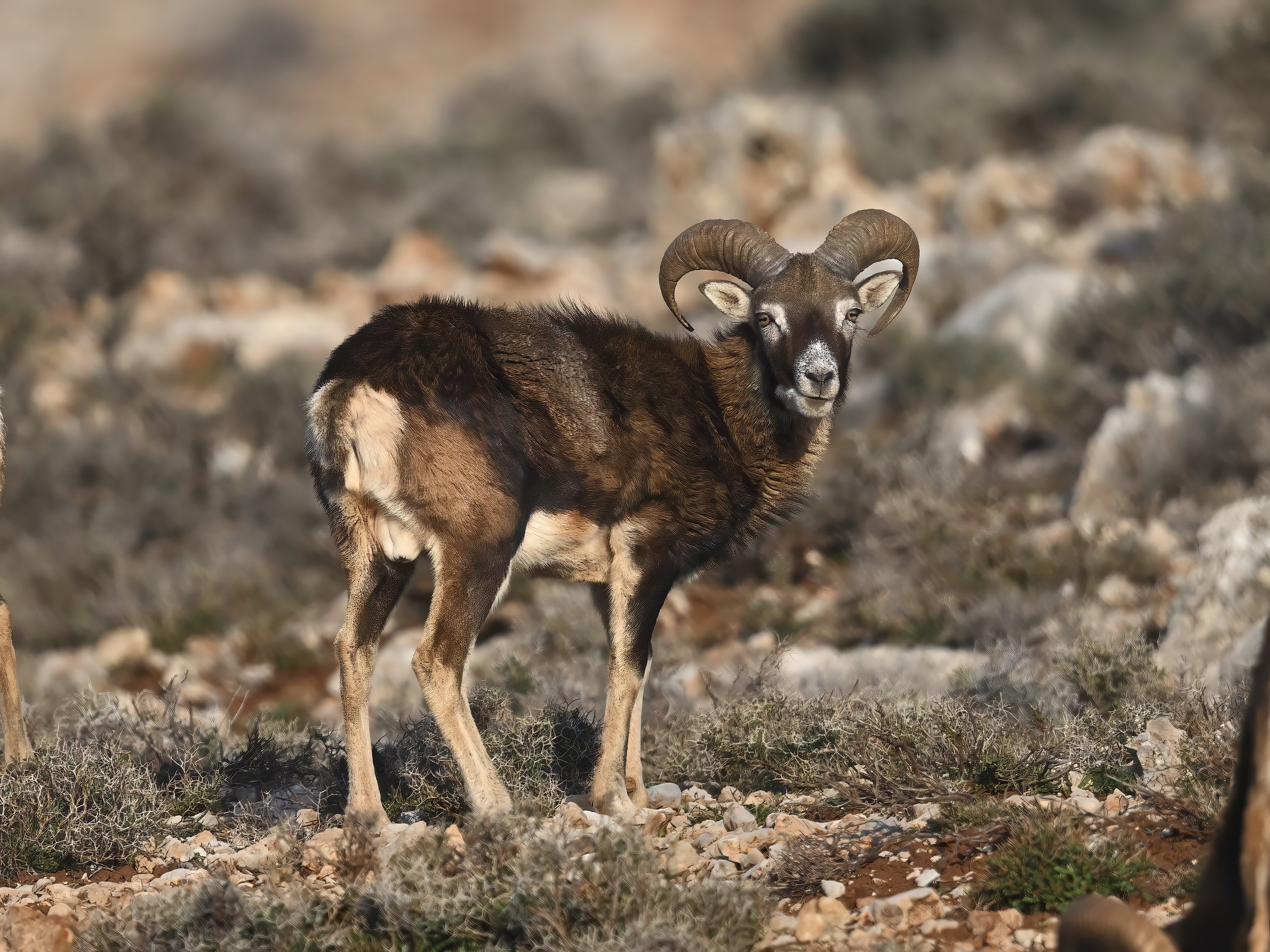
Corsican Mouflon (Ovis aries musimon)
-
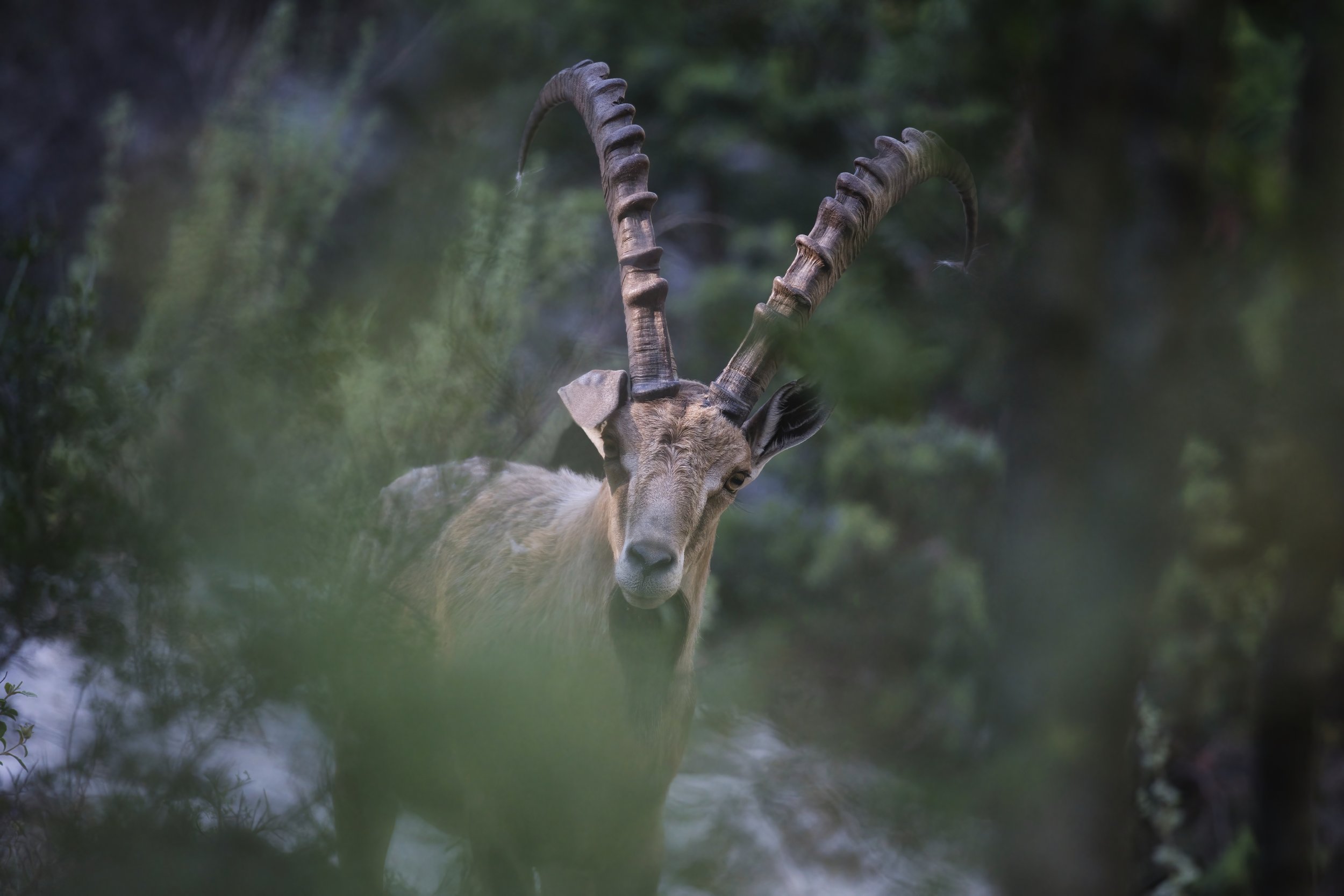
Nubian Ibex (Capra nubiana)
-
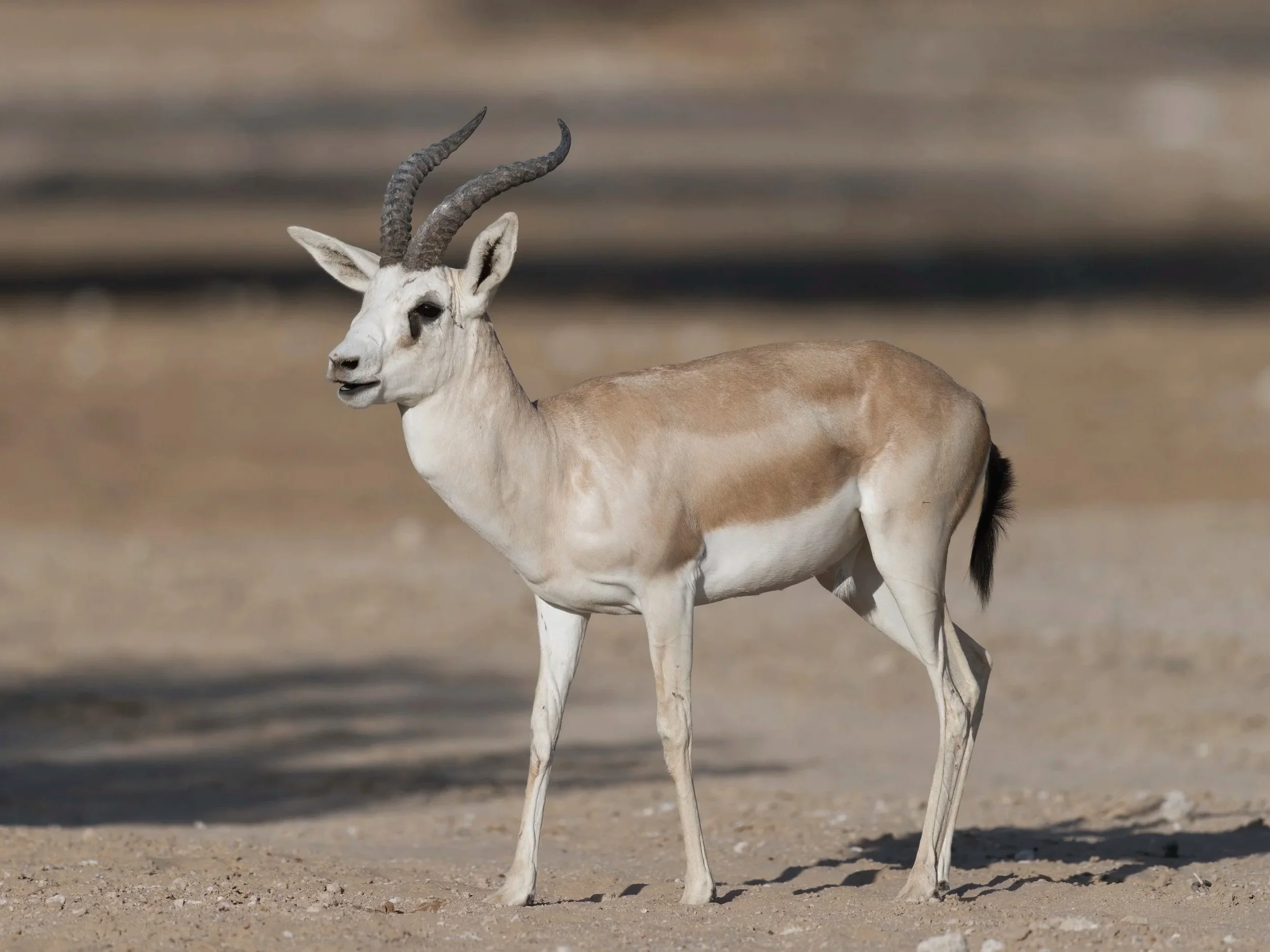
Arabian Sand Gazelle (Gazella marica)