

Short-eared Owl \ Asio flammeus
(بومة قصيرة الأذن)
The Short-eared Owl (Asio flammeus) carries the quiet character of the open landscape. Unlike many owls that hide in forests or rocky cliffs, this species favors wide horizons—grasslands, coastal flats, marshes, and open desert plains where the wind moves freely across the ground. Its name comes from the small ear tufts that are often barely visible, giving the bird a rounded, almost gentle expression. When hunting, the Short-eared Owl glides low over the terrain with slow, buoyant wingbeats, scanning the ground for movement. Rodents form the core of its diet, and its flight often resembles that of a harrier as it drifts methodically across the landscape at dusk or even during daylight.
Across much of its global range, the Short-eared Owl is a migratory species, appearing seasonally where food is abundant. In the United Arab Emirates, it is considered a scarce winter visitor, usually observed in open desert plains, agricultural fields, or coastal wetlands during migration and winter months. Its presence is often brief and unpredictable, yet when it appears, the sight of this pale owl floating silently over the landscape is one of the most memorable encounters for birdwatchers and wildlife photographers alike.
البومة قصيرة الأذنين تحمل طابع الهدوء الذي يميز المشاهد المفتوحة. وعلى خلاف كثير من البوم التي تختبئ في الغابات أو الجروف الصخرية، تفضّل هذه البومة الأفق الواسع—السهول العشبية، والسواحل، والمستنقعات، والسهول الصحراوية المفتوحة حيث تتحرك الرياح بحرية. ويأتي اسمها من خصلات الأذن الصغيرة التي غالبًا ما تكون بالكاد مرئية، مما يمنحها مظهرًا مستديرًا هادئًا
وعند الصيد، تنزلق هذه البومة على ارتفاع منخفض فوق الأرض بحركات جناح بطيئة وخفيفة، تراقب أي حركة على السطح. وتشكل القوارض الجزء الأساسي من غذائها، وغالبًا ما يشبه طيرانها طيران المرزات، إذ تتحرك بانسيابية عبر المشهد عند الغسق أو حتى خلال النهار
وعلى امتداد نطاقها العالمي، تُعَدّ البومة قصيرة الأذنين نوعًا مهاجرًا يظهر موسميًا حيث يتوفر الغذاء. وفي الإمارات العربية المتحدة، تُصنَّف كزائر شتوي نادر، تُشاهَد عادة في السهول الصحراوية المفتوحة، والحقول الزراعية، والأراضي الرطبة الساحلية خلال فترات الهجرة والشتاء. ويكون ظهورها غالبًا قصيرًا وغير متوقع، إلا أن مشهد هذه البومة الفاتحة وهي تحلّق بصمت فوق الأرض يبقى من أجمل وأندر اللحظات لهواة مراقبة الطيور والمصورين
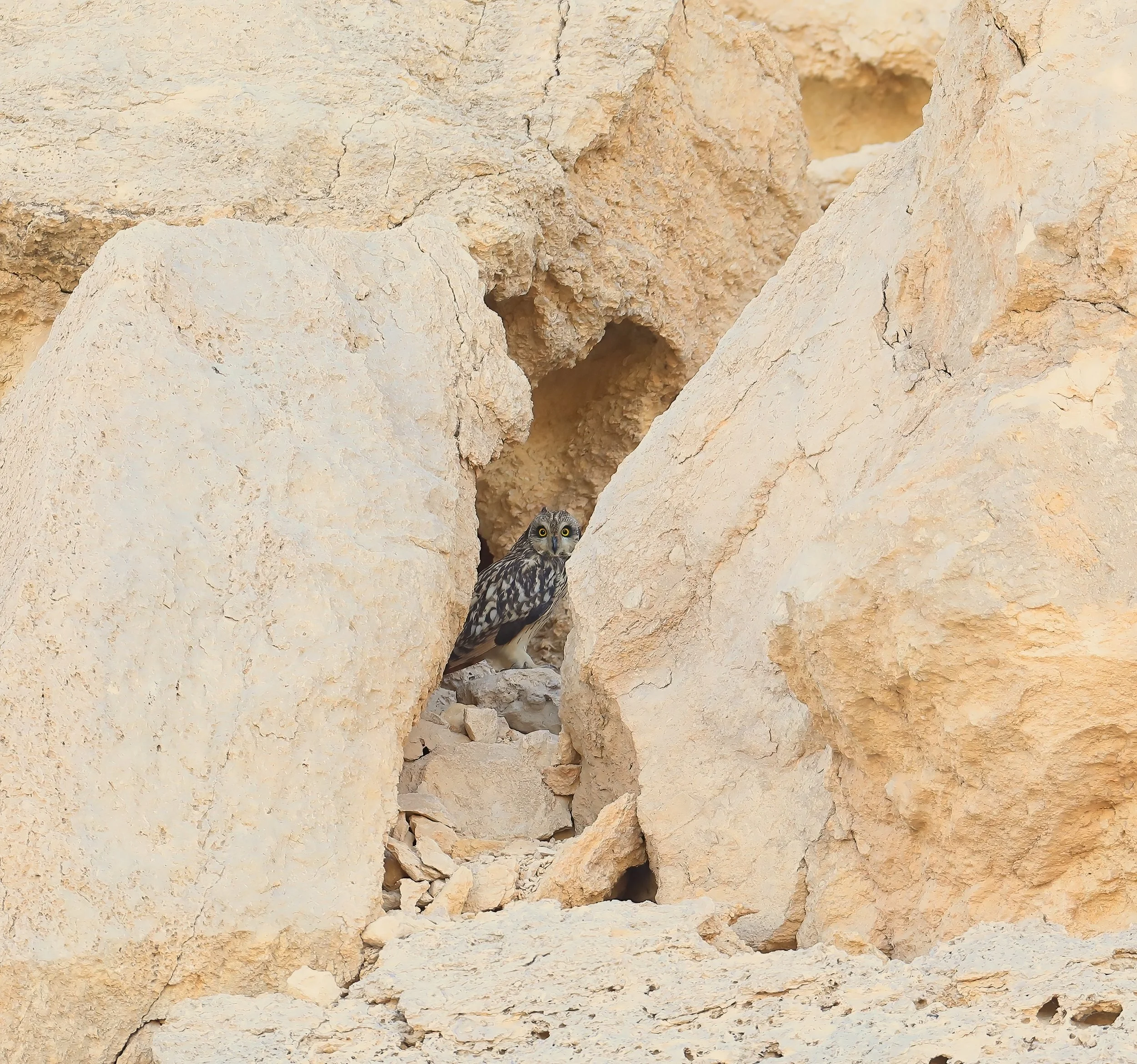
Photo Credit: Paul Kinnock
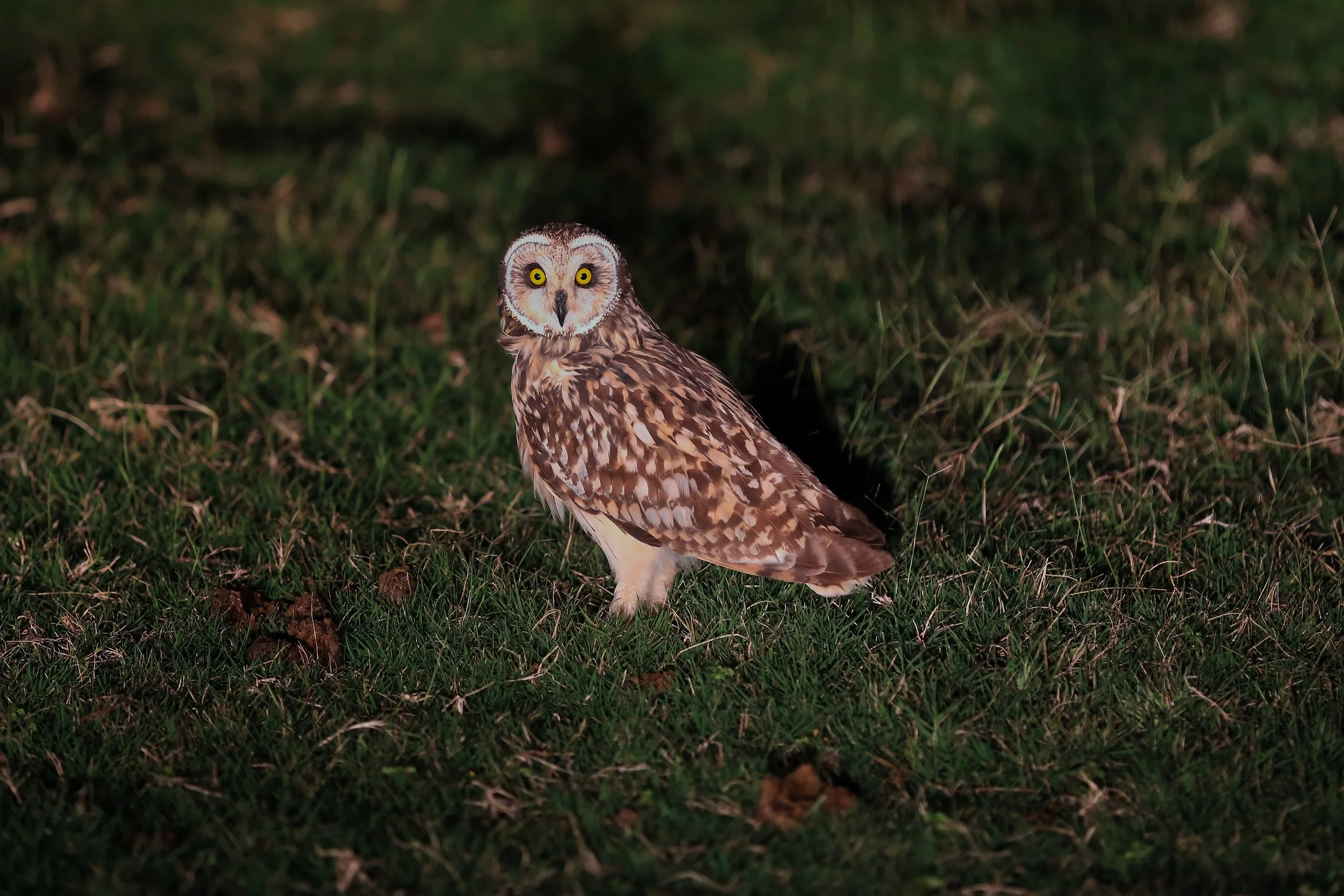
Photo Credit: Paul Kinnock
Other Species
-
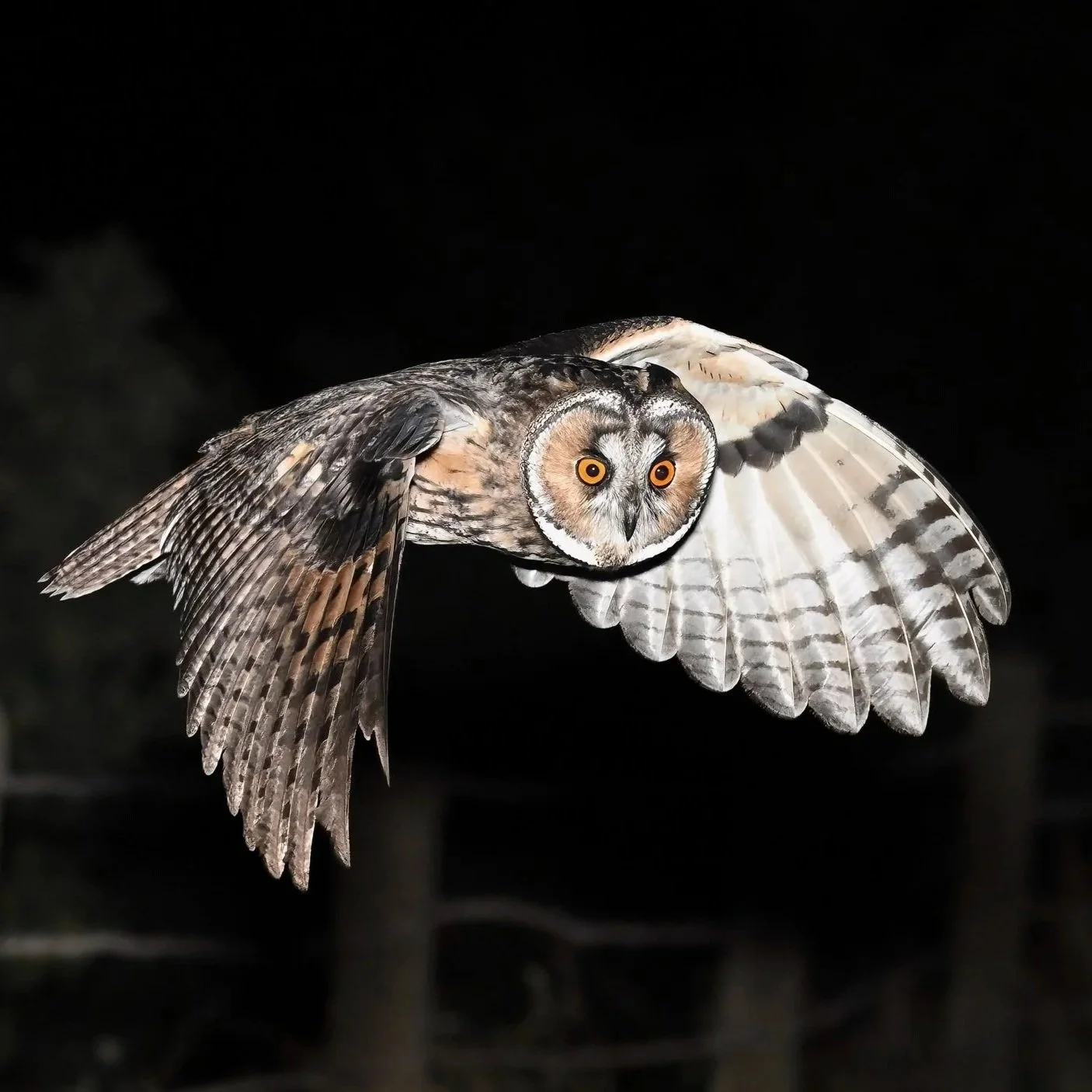
Long-eared Owl (Asio otus)
-
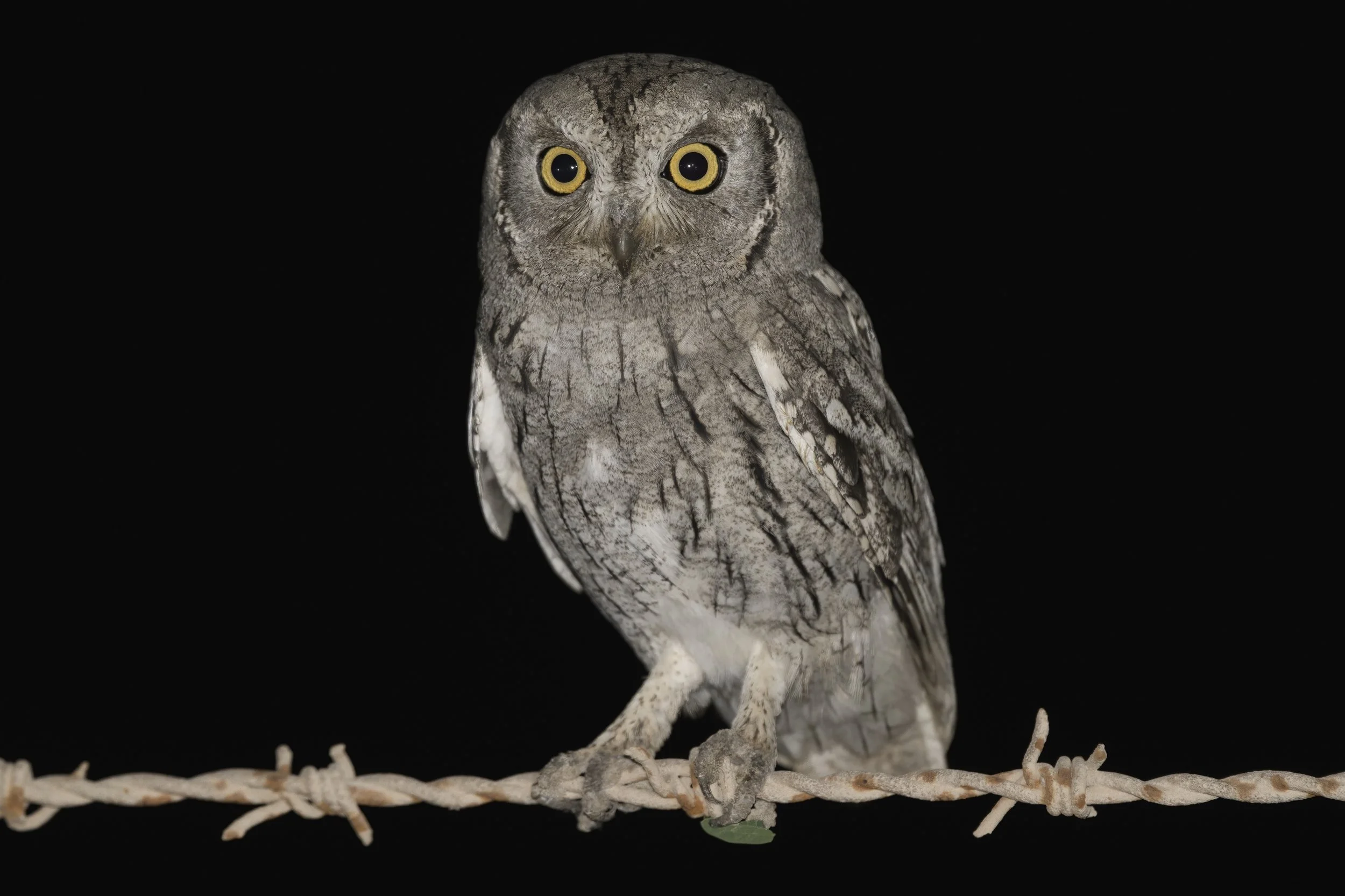
Pallid Scops-owl (Otus brucei)
-
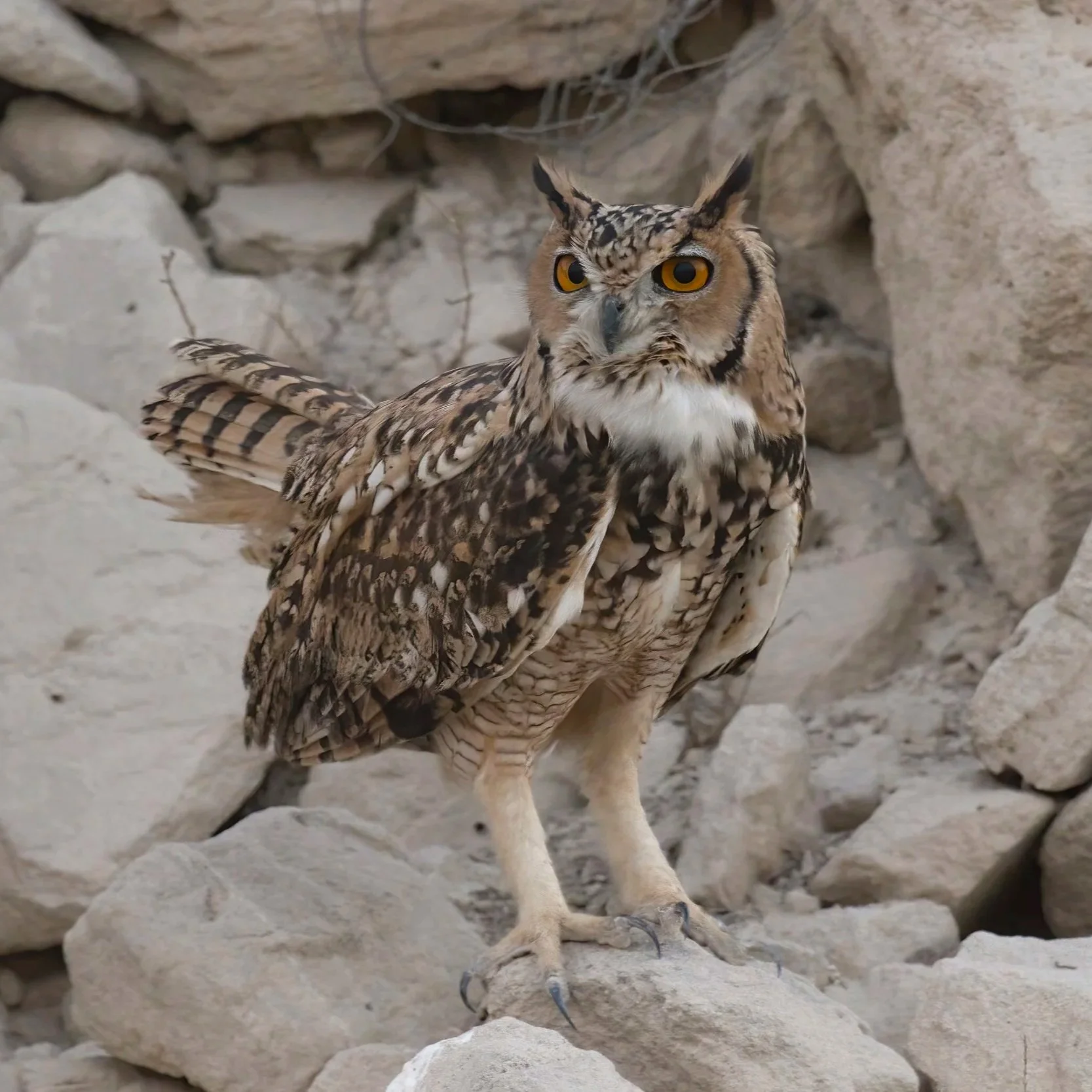
Pharaoh Eagle-owl (Bubo ascalaphus)
-
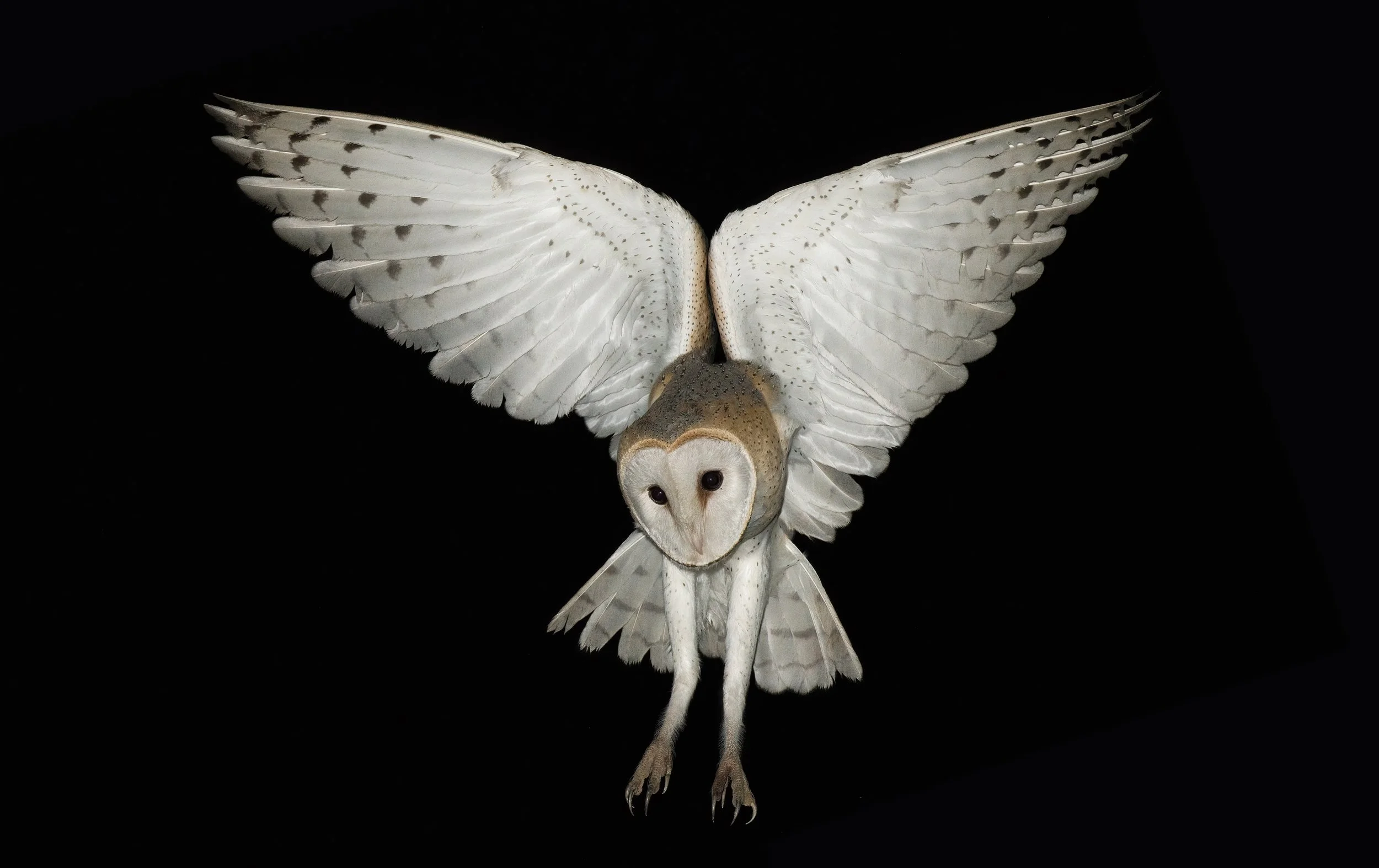
Barn Owl (Tyto alba)