

Night Mountain Herping in the UAE: Searching the Rocks After Dark
When people think about herping in the UAE, most imagine open desert, soft sand, snake tracks, and a flashlight beam crossing the dunes. But the mountains are a completely different world.
Night mountain herping is not just desert herping moved to a higher place. The terrain changes. The species change. The way you search changes. Even the way you walk changes.
In the Hajar Mountains, every step matters. You are not only looking for wildlife; you are also reading the rocks, checking the slopes, listening to the night, and making sure your next foot placement is safe. The animals are often there, but they do not always make themselves easy to find.
This is what makes mountain herping special.
It is slower, more demanding, and often less predictable than desert herping. But when the mountain comes alive after sunset, it can produce some of the most rewarding wildlife encounters in the UAE.
What Is Night Mountain Herping?
Night mountain herping is the search for reptiles, amphibians, scorpions, spiders, and other nocturnal wildlife in mountain habitats after dark.
In the UAE, this usually means exploring rocky wadis, gravel slopes, boulder fields, cliffs, dry streambeds, mountain farms, and high-elevation tracks. Unlike desert herping, where you may scan open ground or follow tracks in sand, mountain herping is more about microhabitats.
You are looking at cracks in rocks, shaded ledges, stone walls, loose gravel, small caves, dry wadi edges, vegetation pockets, and warm surfaces that hold heat after sunset.
A good mountain herping night is not always about walking far. It is about looking properly.
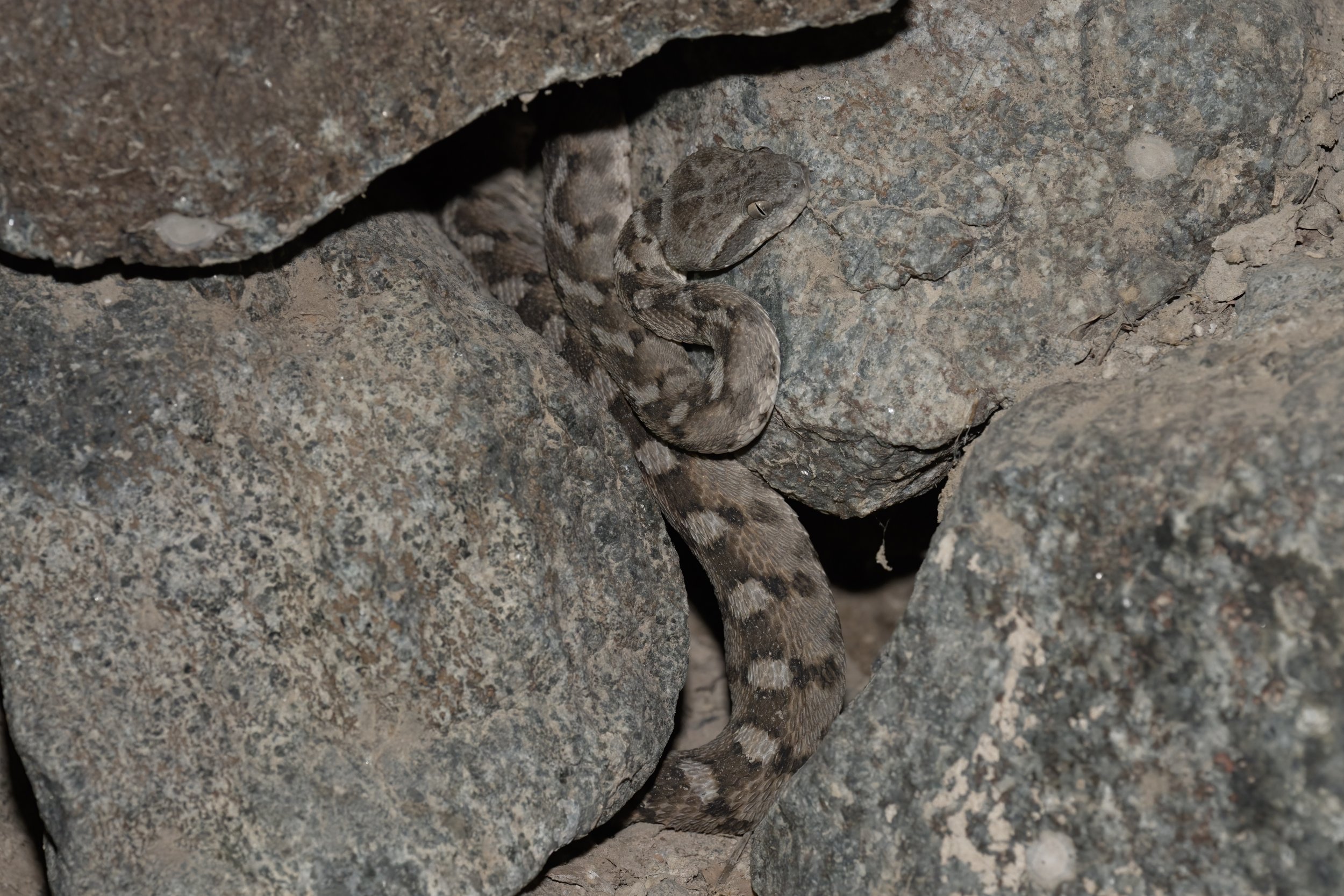
Hajar Saw-scaled Viper \ Echis omanensis
Best Time for Night Mountain Herping
The best time usually starts shortly after sunset, when the rocks are still holding warmth from the day. Many reptiles use this period to move, hunt, or position themselves near ambush spots.
In hot months, activity may begin later, especially if the rocks remain too warm at sunset. In cooler periods, the first few hours after dark can be very productive.
For mountain herping, the timing depends on several things: temperature, humidity, wind, moonlight, elevation, and how much heat the rocks stored during the day.
A warm, calm night can be excellent. A windy mountain night can feel alive to humans but quiet for reptiles. After light rain or humidity, some places can become more active, especially around wadis and vegetation pockets.
In the mountains, the same location can feel empty one night and full of life on another.
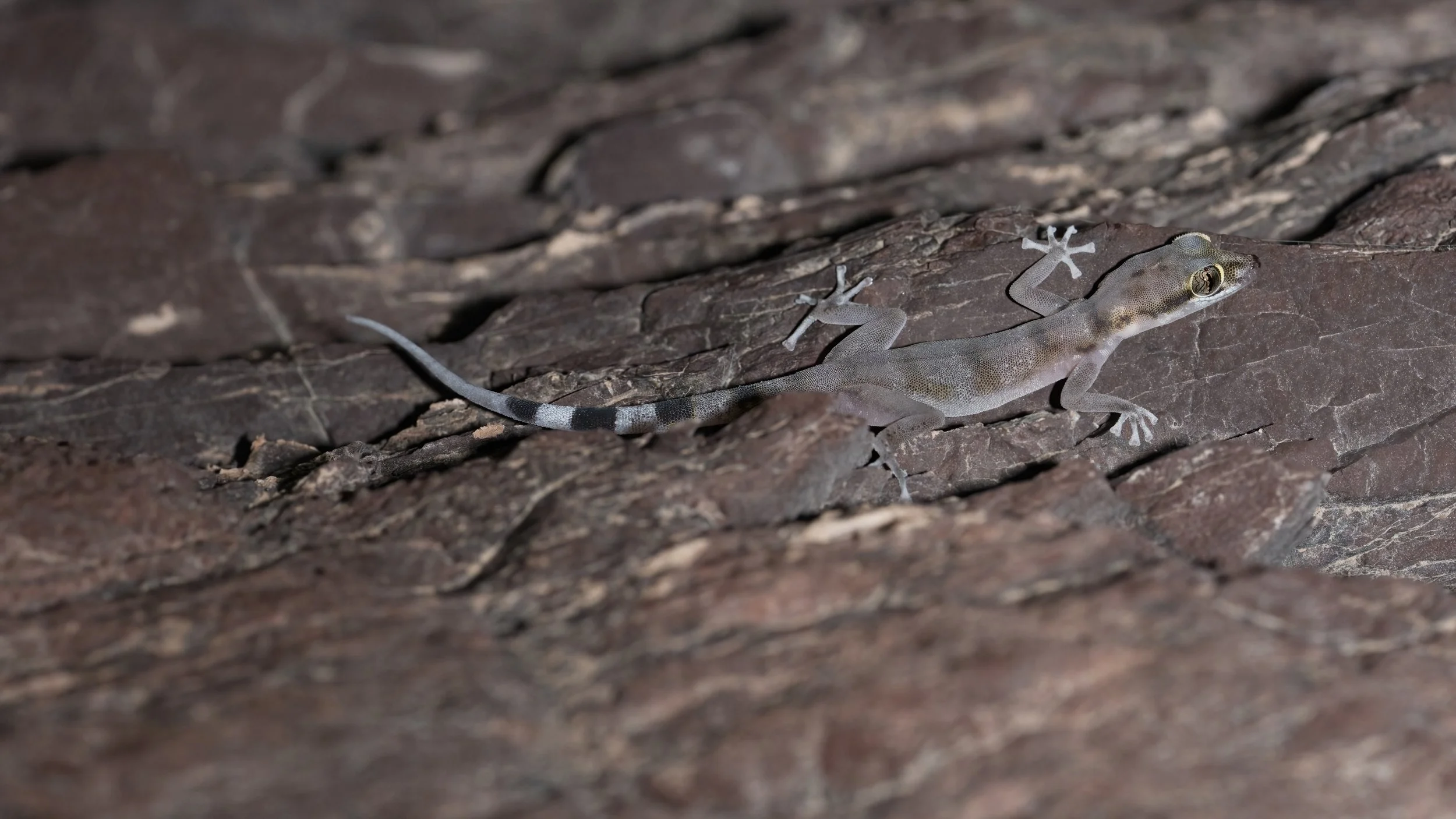
Gallagher’s Leaf-toed Gecko \ Asaccus gallagheri
The Challenges of Night Mountain Herping
The mountains are not like the desert.
In the desert, you may have open space, softer ground, and sometimes clear tracks to follow. In the mountains, there are often no trails. You are moving across loose rocks, steep slopes, gravel, boulders, dry wadis, and broken terrain. Every step needs attention.
This makes night mountain herping physically demanding. You may be carrying camera gear, lights, spare batteries, water, safety equipment, and sometimes a heavy lens. The climb is hard, but getting down can be even harder, especially when your legs are tired and the rocks are loose.
The search itself is also different.
The desert gives you space. The mountains give you structure. In open desert, movement can be easier to detect. In rocky habitats, animals have countless hiding places. A gecko can disappear into a crack in one second. A snake can slide between rocks or stay motionless beside a boulder and become almost invisible.
This is why mountain herping requires a slower eye.
You are not only scanning the ground. You are scanning layers: the base of boulders, vertical rock faces, ledges above eye level, cracks under your feet, and shadows where the flashlight does not immediately reach.
Heat and humidity can make the search even harder. In summer, the mountain can feel like it is still releasing the day’s heat long after sunset. A location that looks easy on a map can become exhausting at night.
This is one reason mountain herping should never be treated like a casual night walk. The wildlife is only part of the challenge. The terrain itself demands respect.
Good mountain herping is slow, careful, and controlled.
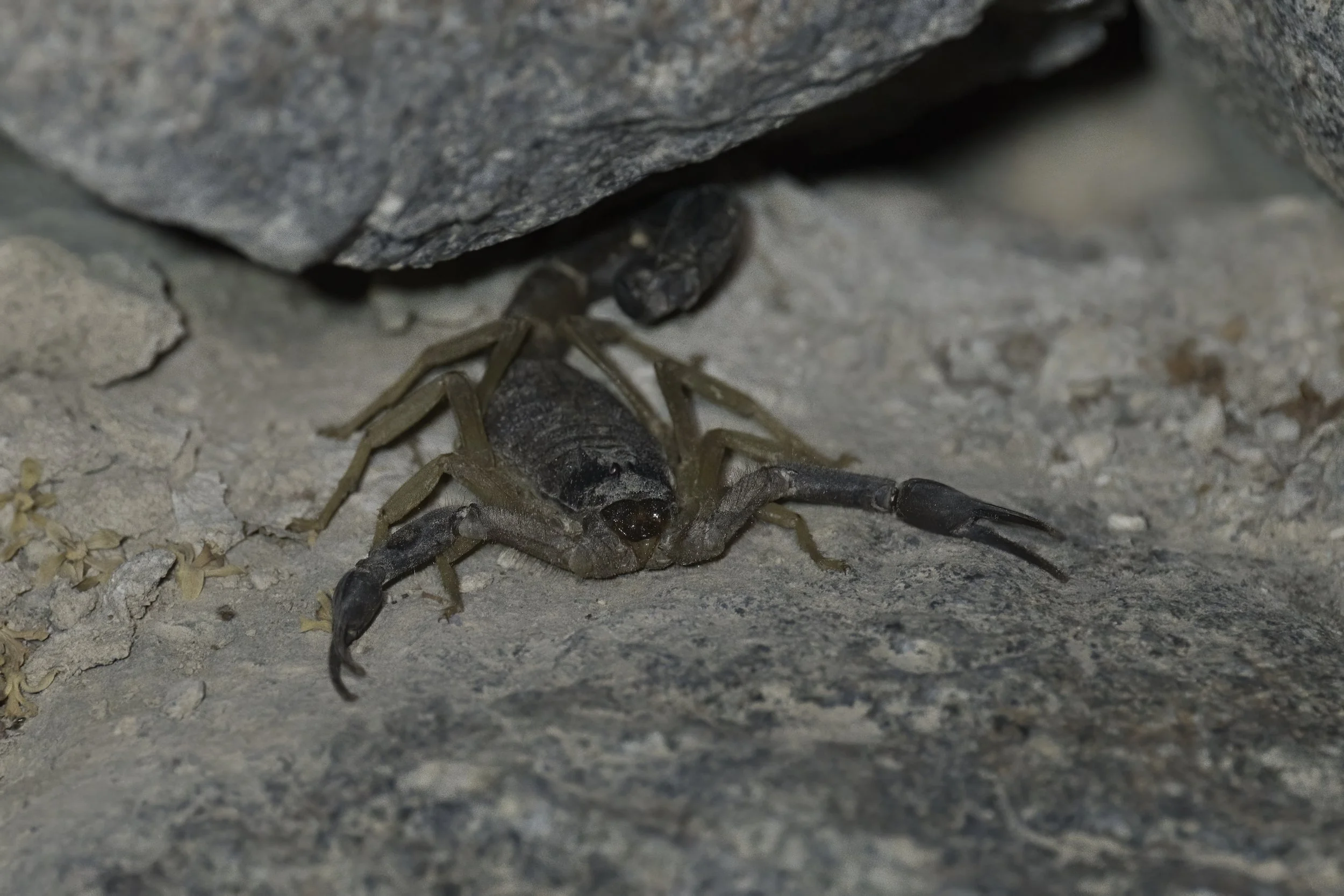
Jayakar’s Scorpion \ Hottentotta jayakari
What to Look For
Mountain herping is mostly about details.
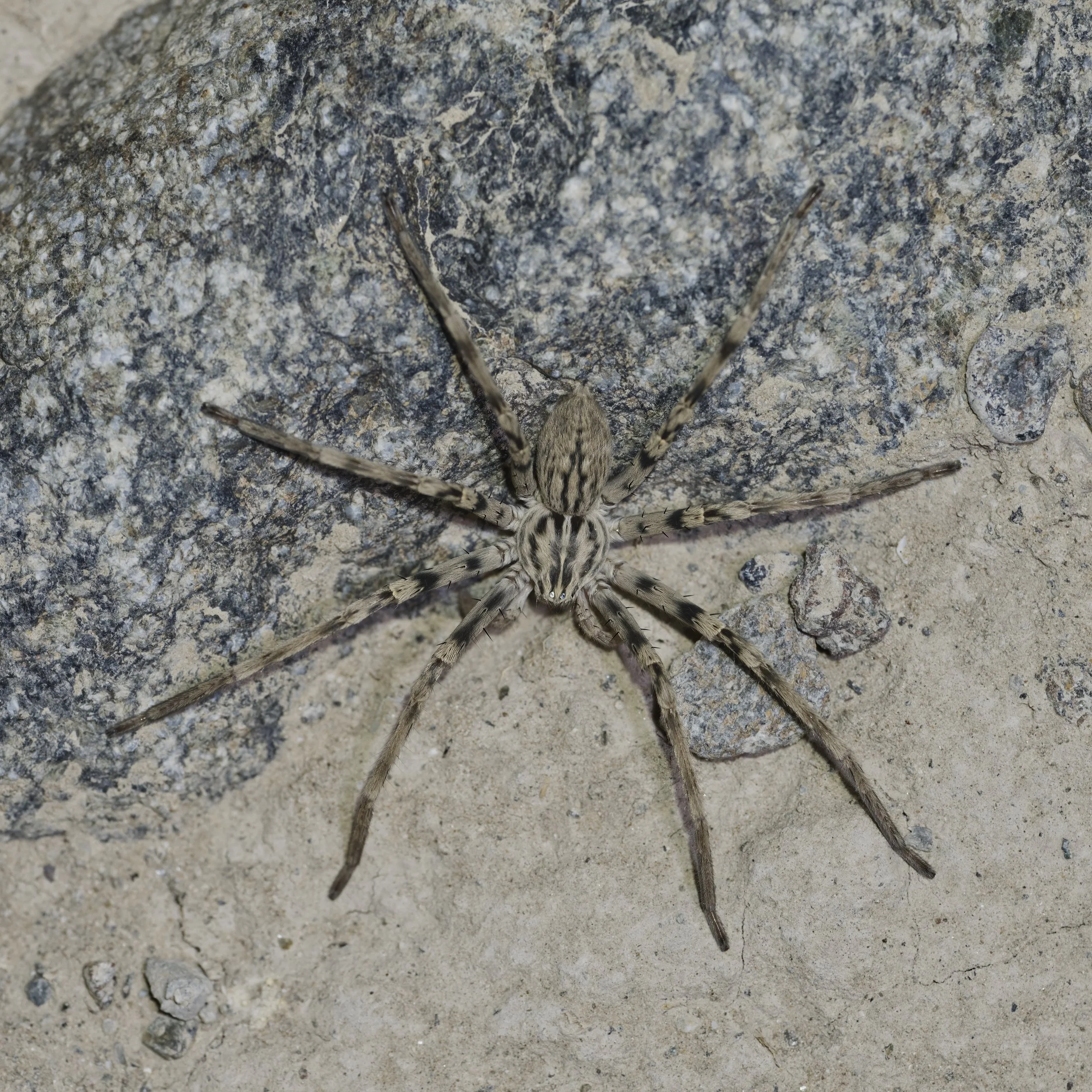
You look for a line that does not match the stone. A head shape at the edge of a crack. A tail on a ledge. A on a vertical wall. A scorpion glowing under UV light. A snake resting beside a boulder, waiting for prey to pass.
Some of the best places to scan include rock faces with cracks and ledges, the base of large boulders, dry wadi beds, stone walls, gravel slopes, vegetation growing between rocks, and shaded areas that stay slightly cooler or more humid than the open slope.
The key is not to rush.
Mountain wildlife often gives you only a small clue. If you move too fast, you miss it.
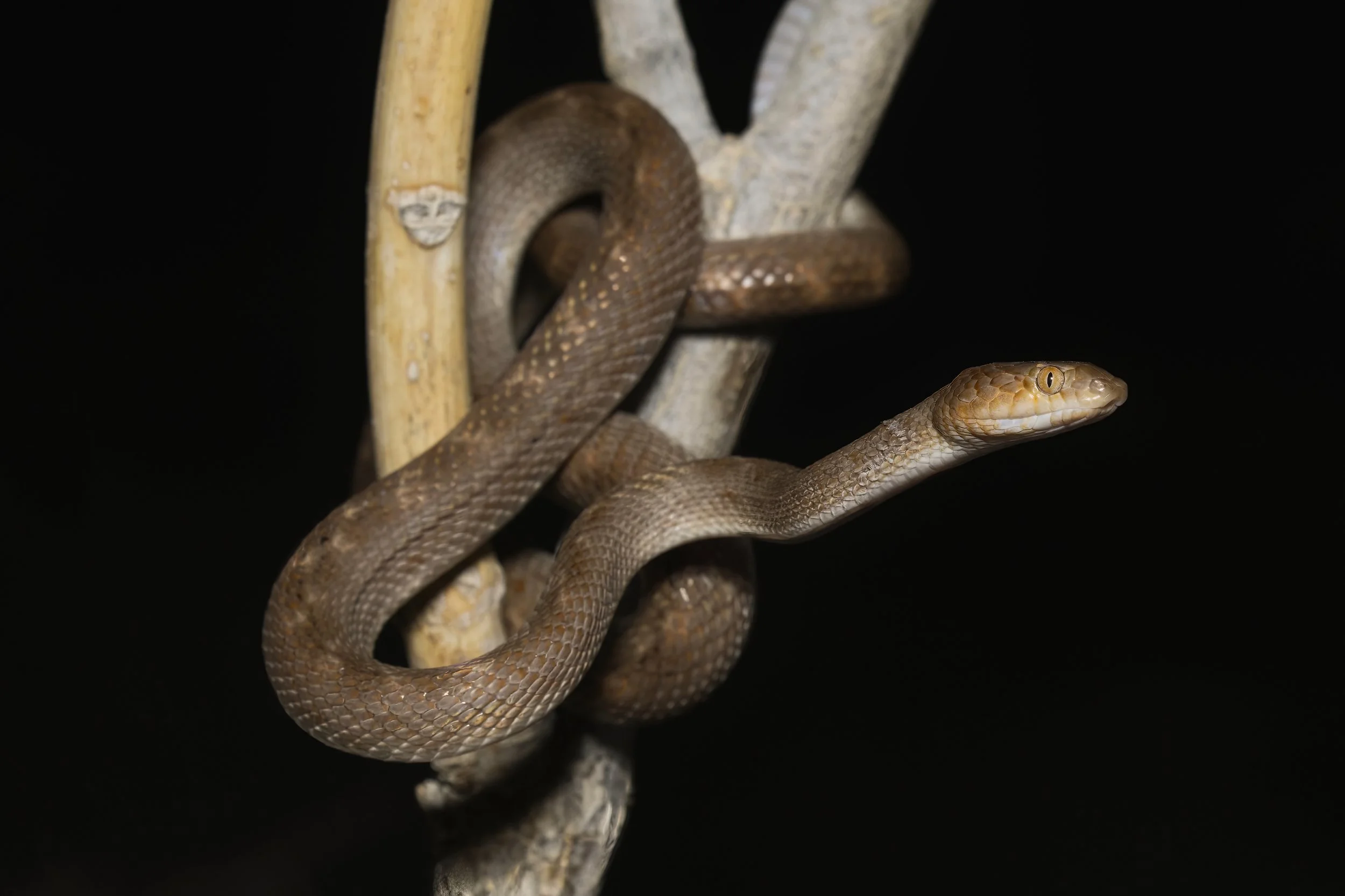
Arabian Cat Snake \ Telescopus dhara
Expected Species in UAE Mountain Herping
The exact species depend on the location, elevation, season, and habitat type, but the mountains of the UAE can hold a very interesting mix of reptiles and other nocturnal wildlife.
Possible mountain reptiles include geckos, snakes, scorpions, spiders and insects.
Some of the species that may be encountered or targeted in suitable areas include:
Persian False-horned Viper \ Pseudocerastes persicus
Leaf-toed Geckos \ Asaccus species
Fan-footed Geckos \ Ptyodactylus species
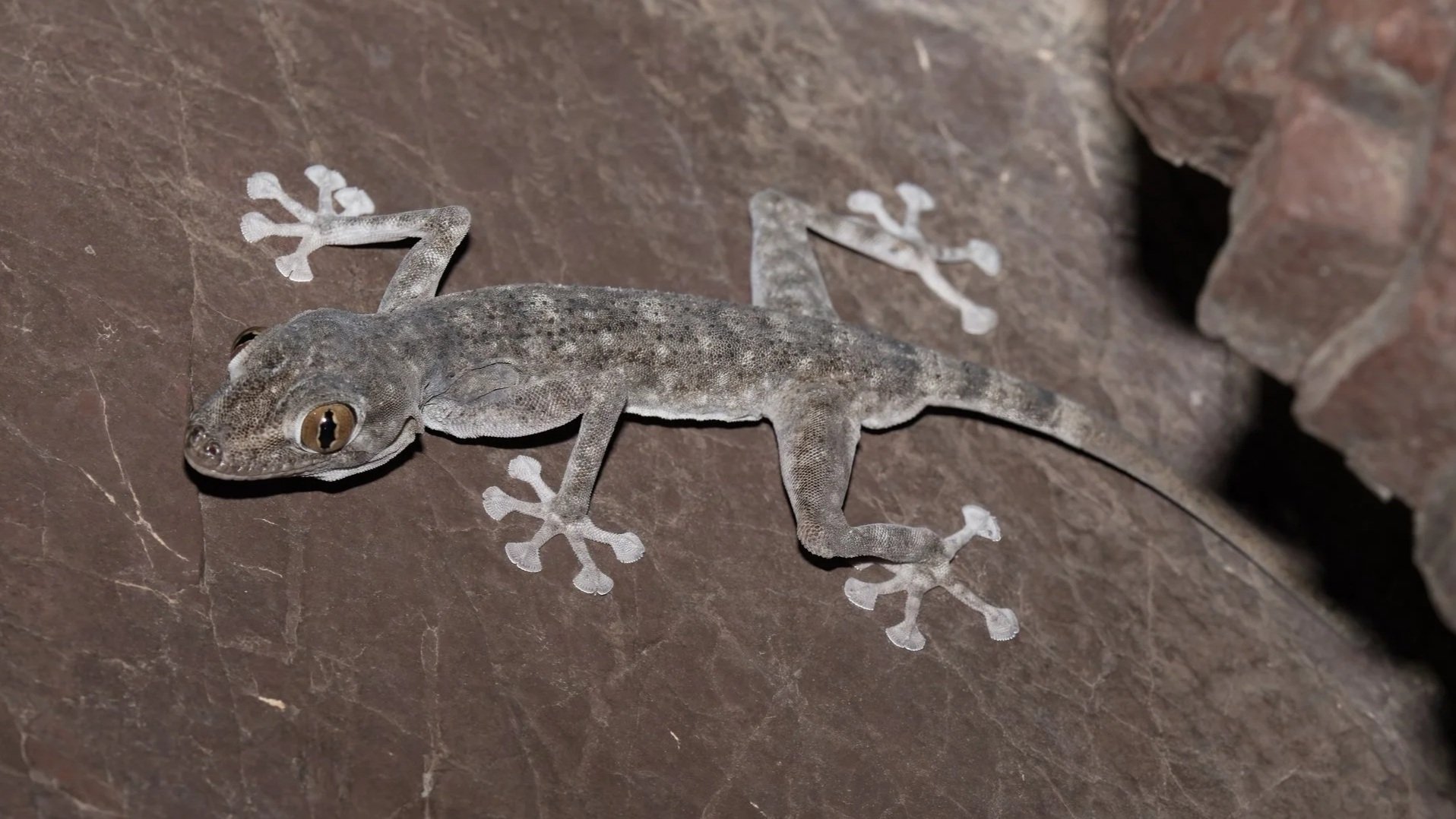
Orlov’s Fan-footed Gecko \ Ptyodactylus orlovi
Safety and Ethics Come First
Mountain herping should always be done with safety and ethics in mind.
Venomous snakes live in some of these habitats. The goal is to observe and photograph, not to touch, chase, stress, or force behavior. A snake does not need to be moved, opened, posed, or handled to make a good photograph.
The best encounters are the ones where the animal is left exactly as it was found.
Safety also means planning the location properly. Some mountain areas are close to borders, private land, protected zones, or places that may require permission. Night access should always be legal and coordinated when needed.
Good fieldwork is not only about finding animals. It is also about respecting the land, the rules, and the wildlife.
Why Join a Guided Night Mountain Herping Trip?
A guided night mountain herping trip is not about walking randomly in the dark.
It is about searching the right habitat, at the right time, with the right approach. It is about knowing where to slow down, where to scan, when to stop, and when to move on.
It is also about safety.
For guests, especially photographers, mountain herping offers a completely different experience from normal wildlife photography. You are not waiting in a hide or driving through open desert. You are moving through the habitat, reading the land, and discovering small nocturnal species that most people never notice.
The mountains of the UAE hold a hidden world after dark.
You just need to know how to look.
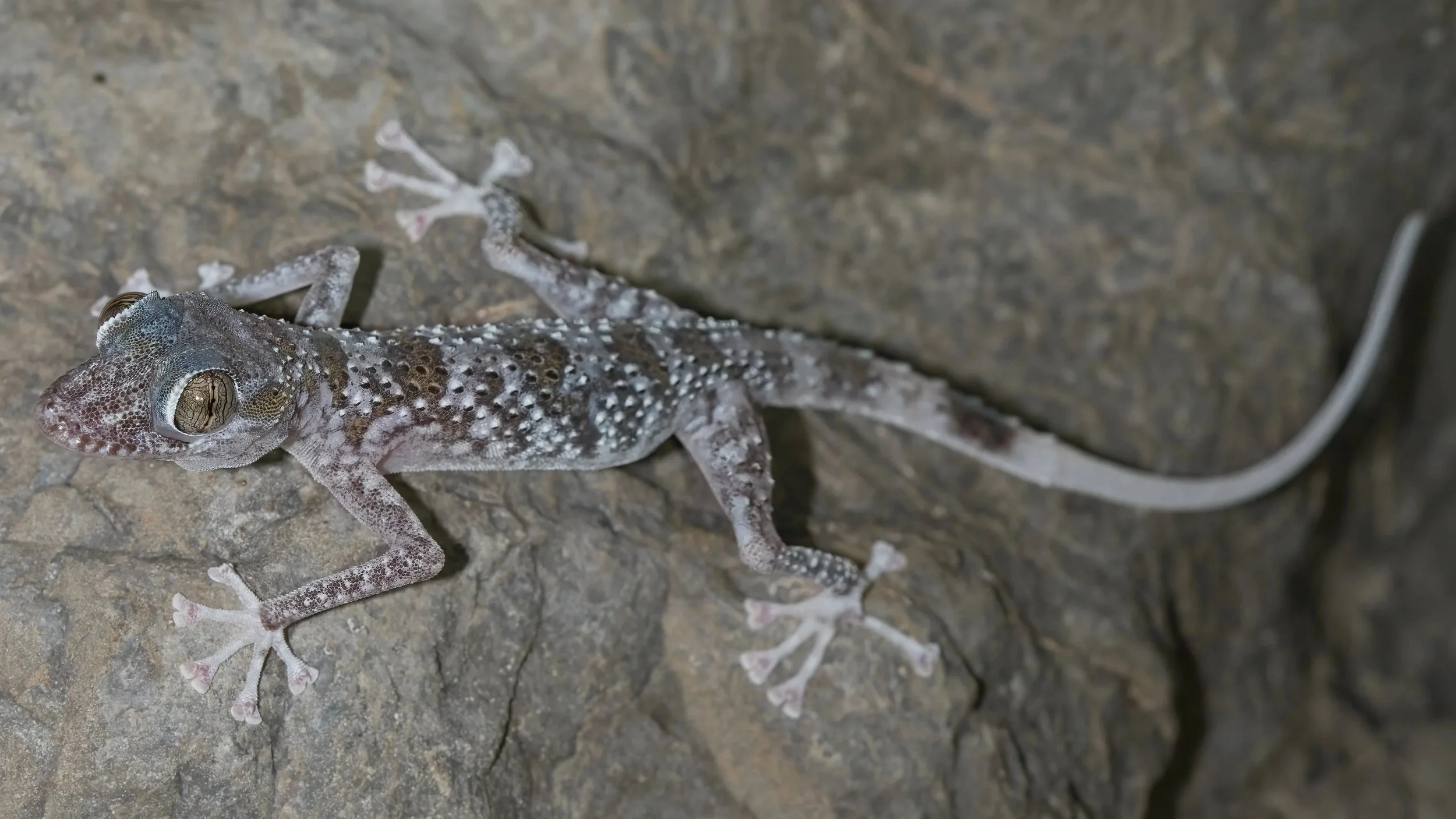
Gardner’s Leaf-toed Gecko \ Asaccus gardneri
Night mountain herping is one of the most challenging and rewarding wildlife experiences in the UAE. It combines field knowledge, patience, physical effort, and respect for the animals and the land.
From geckos on rock walls to scorpions under UV light, and from quiet wadis to the possibility of rare mountain snakes, every trip reveals something different.
At 360 Photography Nature, our herping trips are built around ethical observation, safe field practice, and real wildlife documentation. The aim is simple: to experience the hidden life of the UAE mountains without disturbing it.
Join us in the field and discover what the mountains reveal after dark.
-
Yes. Night mountain herping is usually more physically demanding than desert herping. In the desert, the ground is often more open and you may have tracks to follow. In the mountains, there are often no clear trails, the terrain is rocky and uneven, and every step needs attention.
The search is also harder because animals can disappear quickly into cracks, under rocks, or between boulders.
-
The best time is usually after sunset, when the rocks are still holding warmth from the day. In cooler months, the first few hours after dark can be very productive. In hot summer months, activity may start later, especially if the rocks remain too hot early in the evening.
Weather, wind, humidity, elevation, and moonlight can all affect activity.
-
Night mountain herping can reveal geckos, snakes, skinks, scorpions, spiders, solifuges, and other nocturnal wildlife.
In suitable mountain habitats, possible species include leaf-toed geckos, fan-footed geckos, Arabian Cat Snake, Omani / Hajar Saw-scaled Viper, and in rare cases, the Persian False-horned Viper.
-
Yes, but it is rare and unpredictable. The Persian False-horned Viper, Pseudocerastes persicus, is one of the most difficult and exciting mountain vipers to search for in the UAE.
It is usually associated with rocky habitats, boulder areas, and higher elevations. Finding it requires research, patience, safe access, and repeated field effort.
-
It can be risky if done without preparation. The main challenges are rocky terrain, loose stones, steep slopes, heat, fatigue, darkness, and the presence of venomous snakes.
With proper planning, the right equipment, careful movement, and ethical distance from wildlife, night mountain herping can be done safely.
-
No. The main approach is observation and photography without touching, chasing, or disturbing the animal.
Venomous snakes should always be observed from a safe distance. A good wildlife encounter is one where the animal is left exactly as it was found.
-
You do not need to be an athlete, but you should be comfortable walking over rocky and uneven ground at night.
Mountain herping is more demanding than a normal wildlife walk. The pace is slow, but the terrain can be tiring, especially when climbing or descending.
-
Good footwear, water, a headlamp or flashlight, spare batteries, and comfortable field clothing are important. For photographers, a camera with a suitable lens and a diffused light setup can be useful.
The guide will usually carry the main field and safety equipment, but guests should still be prepared for walking in rocky terrain after dark.
-
Yes. It is one of the best ways to photograph nocturnal reptiles and invertebrates in natural habitat.
However, mountain photography at night can be challenging. Animals may be on rocks, walls, ledges, or inside cracks, and the light needs to be controlled carefully. The goal is to photograph the subject without disturbing it.
-
A guided trip helps you search the right habitat, at the right time, with a safer and more ethical approach.
Mountain herping is not about walking randomly in the dark. It is about reading terrain, scanning microhabitats, understanding animal behavior, and knowing when to slow down. A guide also helps manage safety, access, and wildlife ethics.

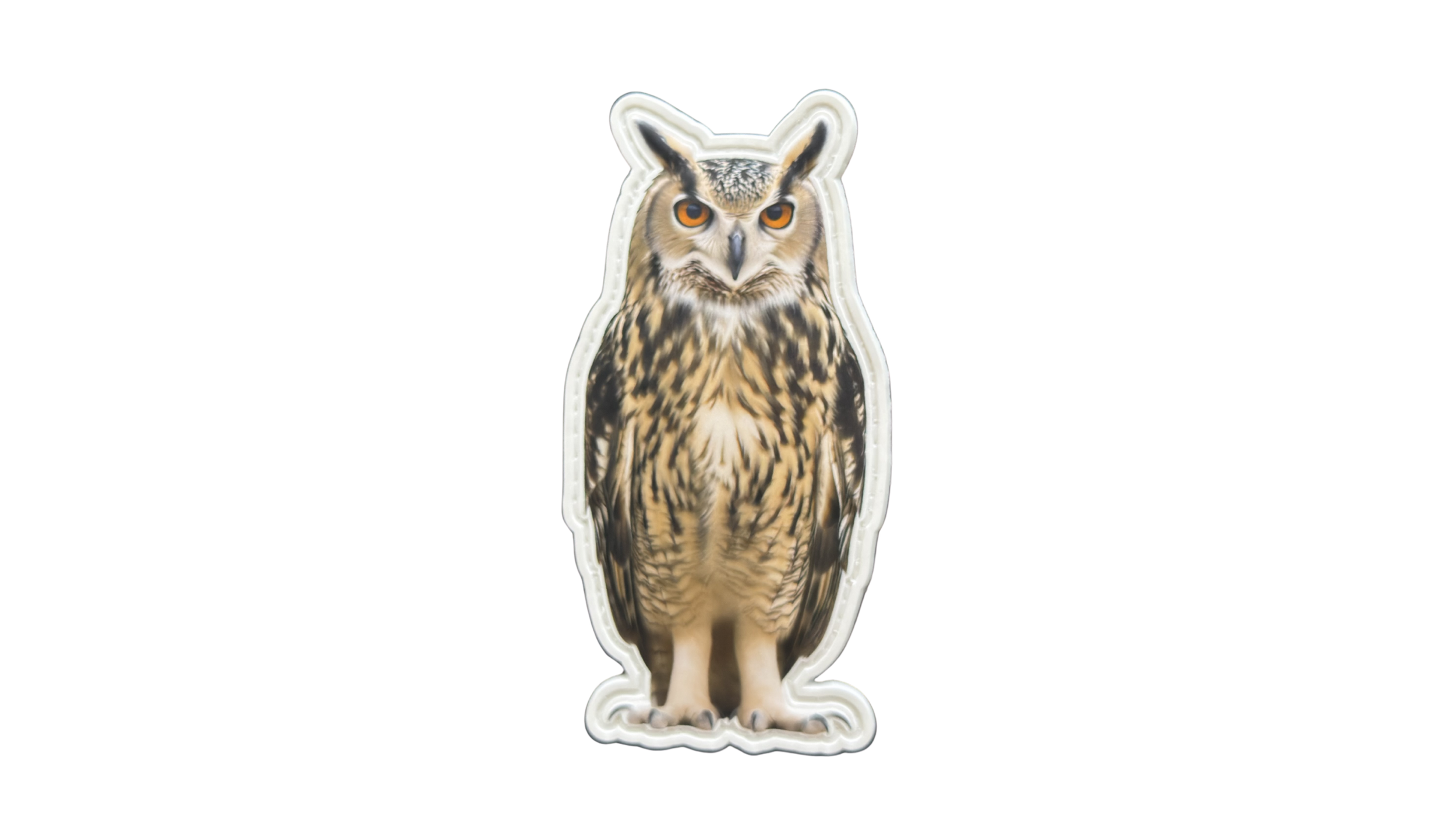

This Arabian Oryx morale patch is inspired by one of the strongest symbols of survival in the desert — a species that once disappeared, and was brought back.
This morale patch is made from high-quality PVC, built to last, and safe for everyday use. Featuring a hook-and-loop backing, it can be attached easily to any bag, T-shirt, hat, or gear with a compatible loop panel.
This is not just a patch.
It’s a reminder of resilience, and a way to carry that story with you.
Inspired by real wildlife in the UAE.
Designed to spark awareness.