

Night Desert Herping in the UAE: Snakes, Geckos & Scorpions After Dark
Many people cross the desert during the day and see only sand, shrubs, gravel, heat, and silence.
But after sunset, the desert changes.
As the surface cools and the light disappears, a hidden world begins to move. Geckos emerge from cover. Scorpions start hunting. Snakes may cross open ground or wait quietly near vegetation, rocks, or burrows. Small mammals become active, insects move through the sand, and the desert slowly reveals a side most people never see.
This is what makes night herping in the UAE desert one of the most interesting wildlife experiences in the country.
It is not fast. It is not loud. It is not about chasing animals. It is about slowing down, reading the ground, understanding habitat, and observing reptiles and nocturnal wildlife with care and respect.
At 360 Photography Nature, our herping trips are built around ethical field observation, photography, safety, and real wildlife encounters in natural conditions.
Quick Answer: What Is Night Herping in the UAE Desert?
Night herping is the search for reptiles, amphibians, scorpions, and other nocturnal wildlife after sunset. In the UAE desert, it can include geckos, snakes, skinks, scorpions, small mammals, insects, and other species that are difficult to observe during the day.
The best night herping is slow, careful, ethical, and guided by field knowledge. The goal is not to handle or disturb wildlife, but to observe, photograph, and understand how these animals survive in one of the harshest environments in the region.
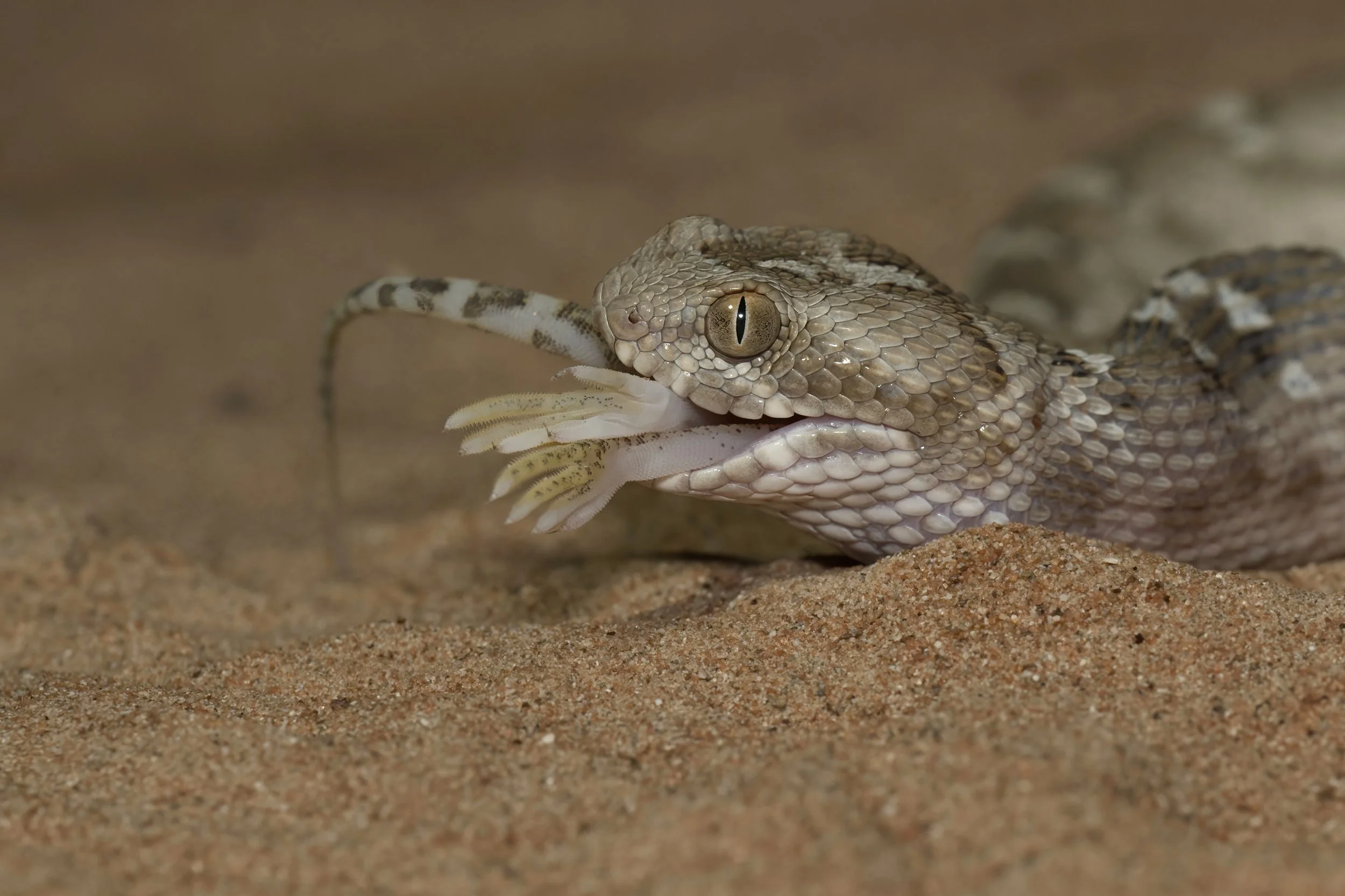
Sindh Saw-scaled Viper feeding on Middle Eastern Short-fingered Gecko
Why the UAE Desert Comes Alive at Night
During the day, the desert can be extremely hot. Many reptiles and small animals avoid the worst of the heat by staying underground, hidden beneath vegetation, tucked under stones, or resting inside burrows.
At night, the conditions become more suitable.
The sand cools. The air becomes easier to move through. Predators and prey begin to appear. This is when the desert becomes active, but not in an obvious way. You need to move slowly and look carefully.
A person walking quickly through the desert may see nothing.
A person who knows how to read small signs may notice a gecko on open sand, fresh tracks crossing a dune, a scorpion moving between shrubs, or the shape of a snake partly hidden against the ground.
This is why herping is so different from casual desert walking. The desert is not empty. It is just quiet.
Best Time for Night Herping in the UAE Desert
The best time for night herping depends on the season, temperature, wind, moonlight, and recent weather.
In general, activity begins after sunset, once the surface temperature starts to drop. On warm nights, the first few hours after dark can be very productive. In hotter months, some species may become more active later in the evening, when the desert has cooled slightly.
A typical night herping window may begin shortly after sunset and continue into the late evening.
However, there is no fixed rule. Some nights feel perfect and produce very little. Other nights may look quiet at first and then suddenly become active. This uncertainty is part of herping.
Unlike a zoo, a wildlife trip does not guarantee animals. The value comes from being in the right habitat, at the right time, with the right approach.
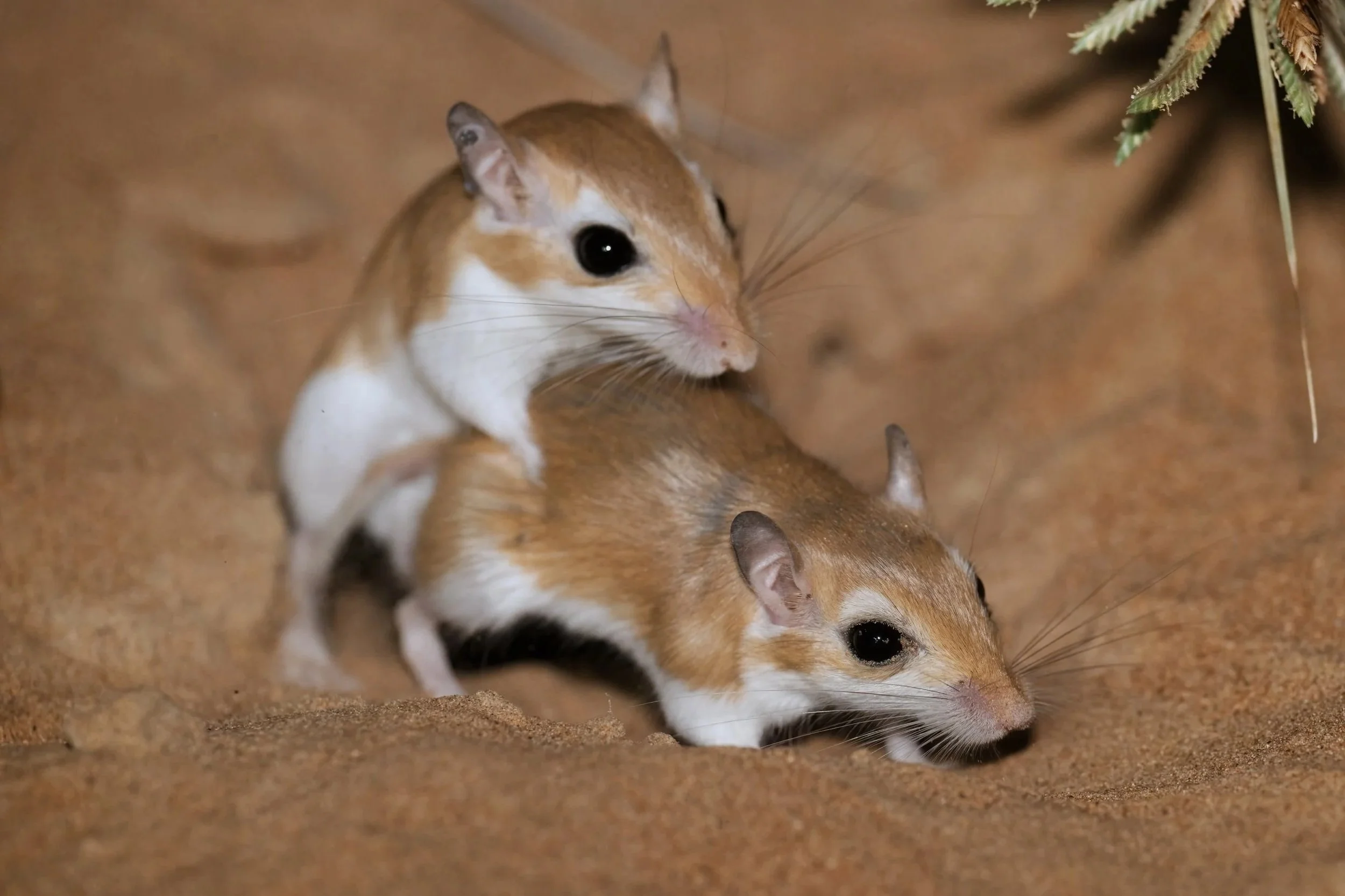
Cheesman's Gerbil mating
What to Look For During Desert Night Herping
Night herping is not only about seeing the animal directly. It is also about understanding signs.
In the UAE desert, we look for:
Fresh tracks on sand.
Small movement near shrubs or gravel patches.
Geckos sitting low on open ground.
Scorpions moving at night.
Burrow entrances and active trails.
Snake tracks crossing sand or gravel.
Insects and other prey that may attract predators.
Temperature changes between open sand, rocks, and vegetation.
Good herping depends on patience. Many species are small, well-camouflaged, and active for short periods. A gecko can vanish into the sand. A snake may remain perfectly still. A scorpion can disappear between stones or under vegetation.
This is why rushing does not work.
You need to slow your steps, scan carefully, and avoid damaging the habitat around you.
Possible Species in the UAE Desert at Night
The UAE desert supports a surprising variety of reptiles and nocturnal wildlife. Depending on location, season, habitat, and conditions, night herping may offer chances to observe species such as:
Keyserling’s Wonder Gecko
A beautiful desert gecko often associated with sandy and gravelly habitats. It is one of the special species people hope to see during night herping.
Middle Eastern Short-fingered Gecko
A small nocturnal gecko that can be found moving across open ground or near desert vegetation.
Arabian Sand Boa
A secretive snake adapted to life in loose sand. It is often difficult to find because of its hidden lifestyle.
Arabian Horned Viper
One of the most iconic desert snakes of Arabia. It is a powerful example of desert adaptation and should always be observed from a safe distance.
Sindh Saw-scaled Viper
A small but highly venomous viper that may be encountered in suitable desert, gravel plain, and semi-desert habitats. It is usually active at night and can be difficult to notice because of its excellent camouflage. This species should always be observed from a safe distance and never handled or disturbed.
Moila Snake
A distinctive desert snake that may be encountered in suitable habitats, often moving quietly across the ground.
Crowned Leaf-nosed Snake
A small and elegant desert snake, often difficult to detect because of its size and movement.
Scorpions
Different scorpion species may be active at night, including desert-adapted species that hunt across sand, gravel, and vegetation zones.
Small mammals and insects
Herping nights are not only about reptiles. Gerbils, beetles, moths, spiders, and other nocturnal life all form part of the desert system.
Not every species appears on every trip. Wildlife depends on habitat, timing, season, and luck. A good herping trip is not only measured by the number of animals seen, but by the quality of the field experience and what each encounter teaches.
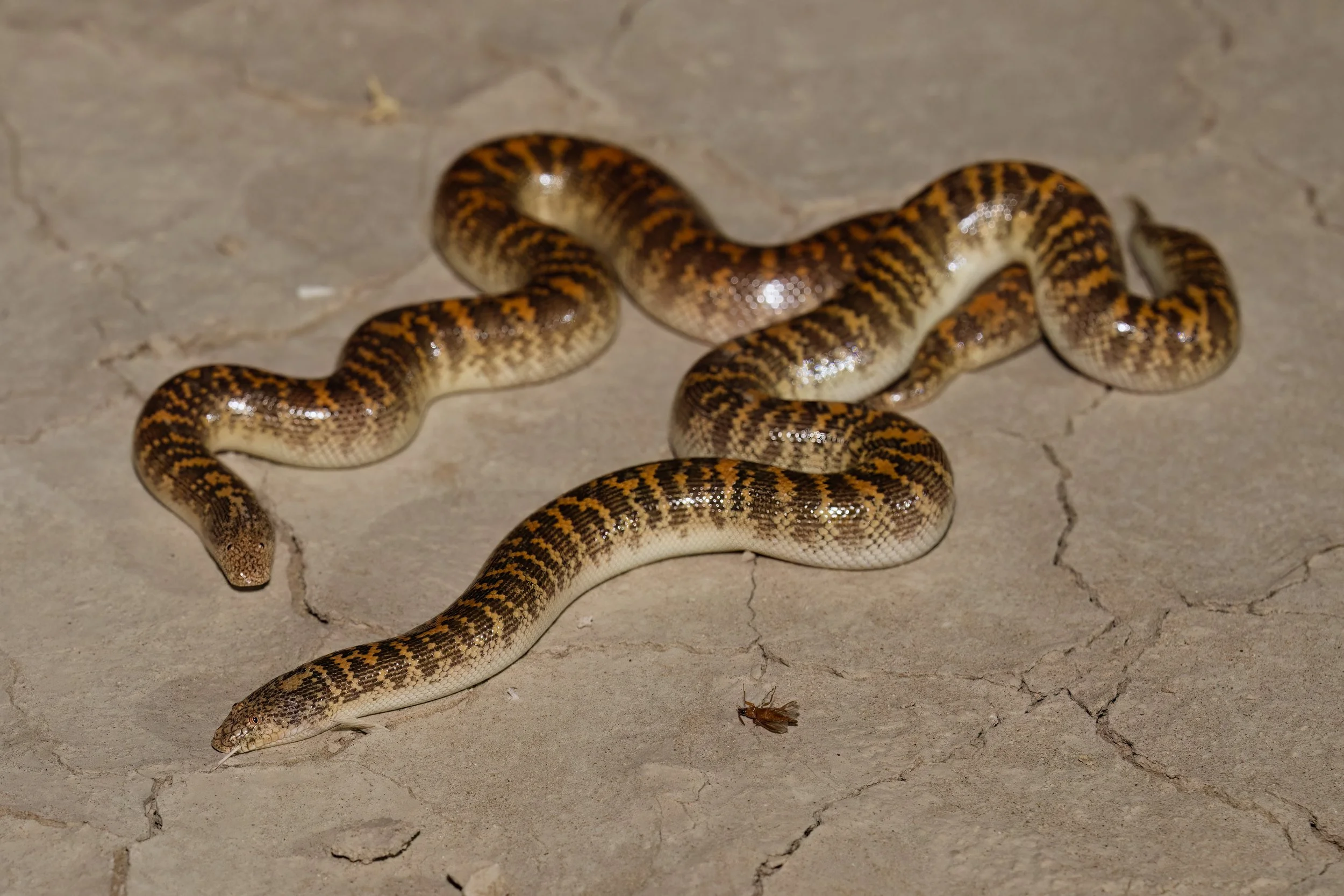
Arabian Sand Boa pairing for the mating season
How Night Herping Is Different from Bird Photography
Many wildlife photographers begin with birds or mammals before discovering herping. The difference is huge.
Bird photography often depends on distance, long lenses, flight paths, calls, migration, perches, and open views. You may wait in a hide, work from a car, or track movement across the sky.
Mammal photography often depends on patience, dawn and dusk activity, tracks, scent trails, camera traps, and quiet waiting.
Herping is different.
It happens closer to the ground. It depends on temperature, microhabitats, surface texture, and small signs most people ignore. You are not looking far away. You are reading what is directly around you.
A bird may announce itself with a call or a flight movement.
A gecko may appear as a tiny shape on sand.
A snake may be almost invisible until your eyes adjust.
A scorpion may be active only within a small patch of habitat.
Herping teaches a different kind of observation. It makes you slower, more careful, and more aware of the land beneath your feet.
Photography Challenges During Night Herping
Night herping photography is technically different from bird and mammal photography.
You are often working in darkness, with small subjects, reflective eyes, uneven ground, and limited time. Light must be controlled carefully. Too much light can flatten the image or disturb the animal. Too little light can make focusing difficult.
The goal is not just to get a record shot. The goal is to photograph the animal in a way that keeps it natural, calm, and connected to its habitat.
Good night herping photography often depends on:
Controlled lighting.
Low, respectful positioning.
Keeping the habitat visible.
Avoiding stress to the animal.
Working quickly when needed.
Knowing when to stop.
A strong reptile photo does not need forced behavior. It does not need an open mouth, a defensive pose, or a staged scene.
A natural moment is usually stronger.
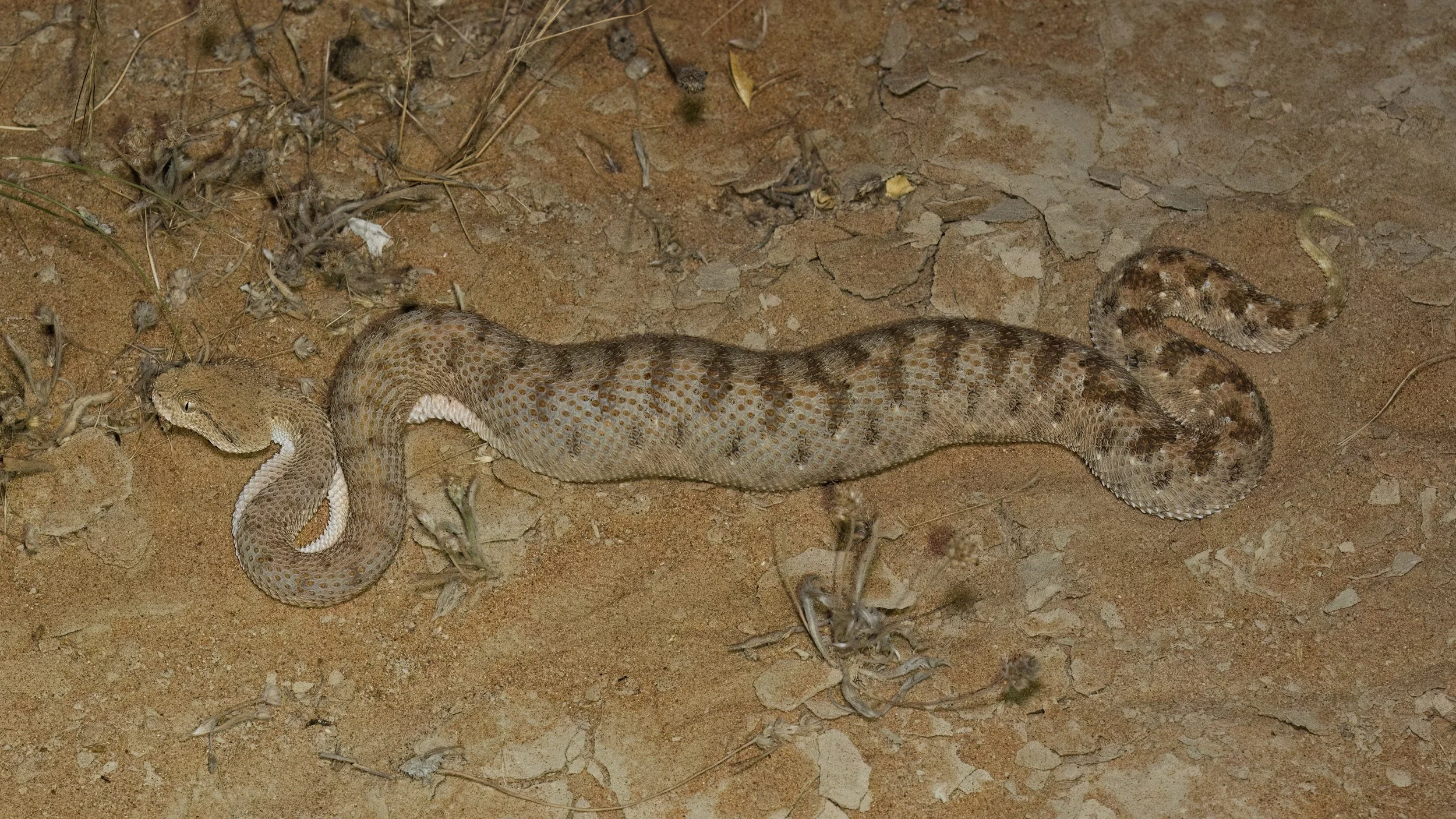
Arabian Horned Viper digesting a rodent hunted earlier
Ethics: The Most Important Part of Herping
Herping can easily become harmful when people treat animals as objects for photos.
At 360 Photography Nature, the main approach is simple: observe, photograph, learn, and leave the animal as we found it.
We do not force animals into dramatic poses.
We do not stress snakes for open-mouth photos.
We do not blow on geckos to force behavior.
We do not stage animals for fake scenes.
We do not treat wildlife as entertainment.
Sometimes, in rare situations, a guide may need to make a controlled decision for safety or animal welfare, but this is not the normal approach. The normal approach is non-interference.
Many people do the wrong thing not because they are bad people, but because no one taught them better. This is why guided herping is also educational. It helps people understand how to enjoy reptiles and nocturnal wildlife without harming them.
The animal always comes first.
Is Night Herping Safe?
Night herping can involve venomous animals, rough terrain, heat, low visibility, and remote areas. It should be taken seriously.
A safe herping experience depends on preparation, local knowledge, calm behavior, proper footwear, enough water, and an understanding of what not to do.
The most important rule is simple: never touch or approach wildlife carelessly.
Snakes, scorpions, and other desert animals do not need to be feared, but they do need to be respected. A good guide helps guests observe them safely while keeping the animals undisturbed.
For beginners, visitors, families, and photographers new to the UAE desert, joining an experienced guide is the best way to experience herping responsibly.
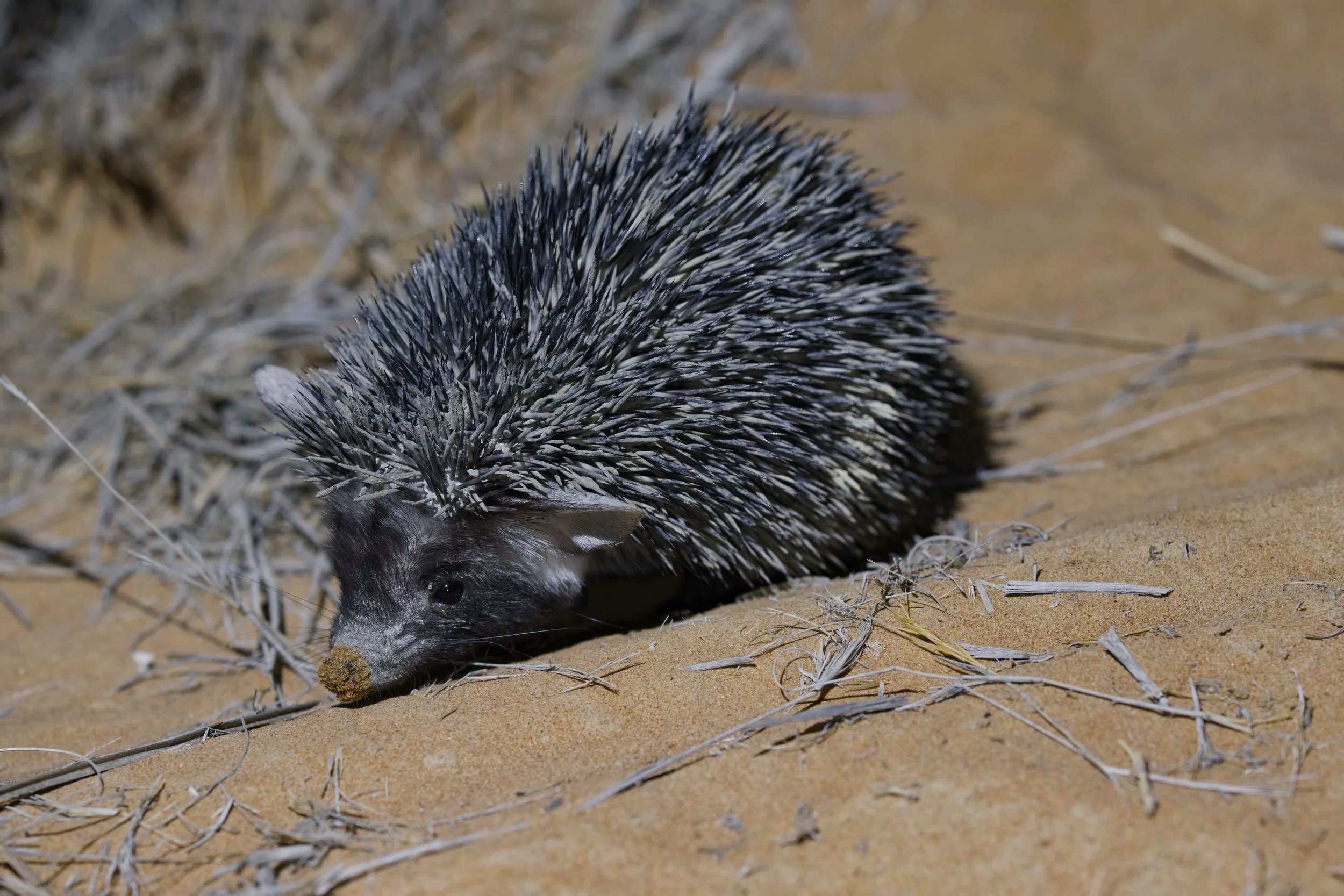
Its always a good night if we encountered Desert Hedgehog
Why Join a Guided Herping Trip in the UAE?
You can walk into the desert at night and see nothing.
Or you can enter the same habitat with someone who understands animal movement, tracks, microhabitats, seasonal activity, and ethical observation.
A guided herping trip gives you a better chance to understand what is happening around you. It also helps you avoid unsafe behavior, protect wildlife, and photograph species in a more respectful way.
Our guided herping trips are designed for:
Wildlife photographers.
Nature lovers.
Visitors to the UAE.
Residents looking for a different outdoor experience.
Families interested in wildlife education.
Bird photographers who want to explore reptiles.
People who want to understand the desert after dark.
These trips are private, field-based, and built around real wildlife rather than staged encounters.
The Desert Is Not Empty
The UAE desert can look silent from a distance.
But when you step into it after dark, slow down, and begin to notice the small signs, it becomes something else. Tracks cross the sand. Eyes reflect in the beam. A gecko moves between shadows. A snake leaves a soft line across the ground. A scorpion disappears beneath a shrub.
This is the real desert.
Not empty.
Not lifeless.
Just hidden.
Night herping gives people a chance to see that hidden world with respect, patience, and understanding.
If you want to experience the UAE desert after dark through ethical wildlife observation and photography, you can join one of our private guided herping trips with 360 Photography Nature.
Explore. Learn. Protect.
-
Night herping can be safe when done with proper guidance, preparation, and respect for wildlife. The UAE desert may include venomous snakes, scorpions, rough terrain, and high temperatures, so beginners should avoid going alone and should never touch wildlife.
-
The best time is usually after sunset, when the desert begins to cool and nocturnal animals become active. Exact timing depends on season, temperature, wind, moonlight, and recent weather.
-
Possible encounters include geckos, skinks, snakes, scorpions, insects, and small mammals. Species vary depending on habitat, season, and field conditions.
-
Yes. A guided herping trip is suitable for beginners when led safely and ethically. It is also a good way to learn how to observe reptiles without disturbing them.
-
Yes. Herping offers excellent opportunities for reptile, macro, nocturnal, and habitat-based photography. It is very different from bird photography because it requires slower movement, careful lighting, and close attention to the ground.
-
The main approach is not to touch, move, or disturb wildlife. Observation and photography should happen with minimal impact. Any rare intervention should only be for safety or animal welfare, not for entertainment or staged photos.
-
Bird watching often focuses on calls, flight, migration, and distant observation. Herping focuses more on ground signs, temperature, microhabitats, tracks, rocks, shrubs, and nocturnal movement.

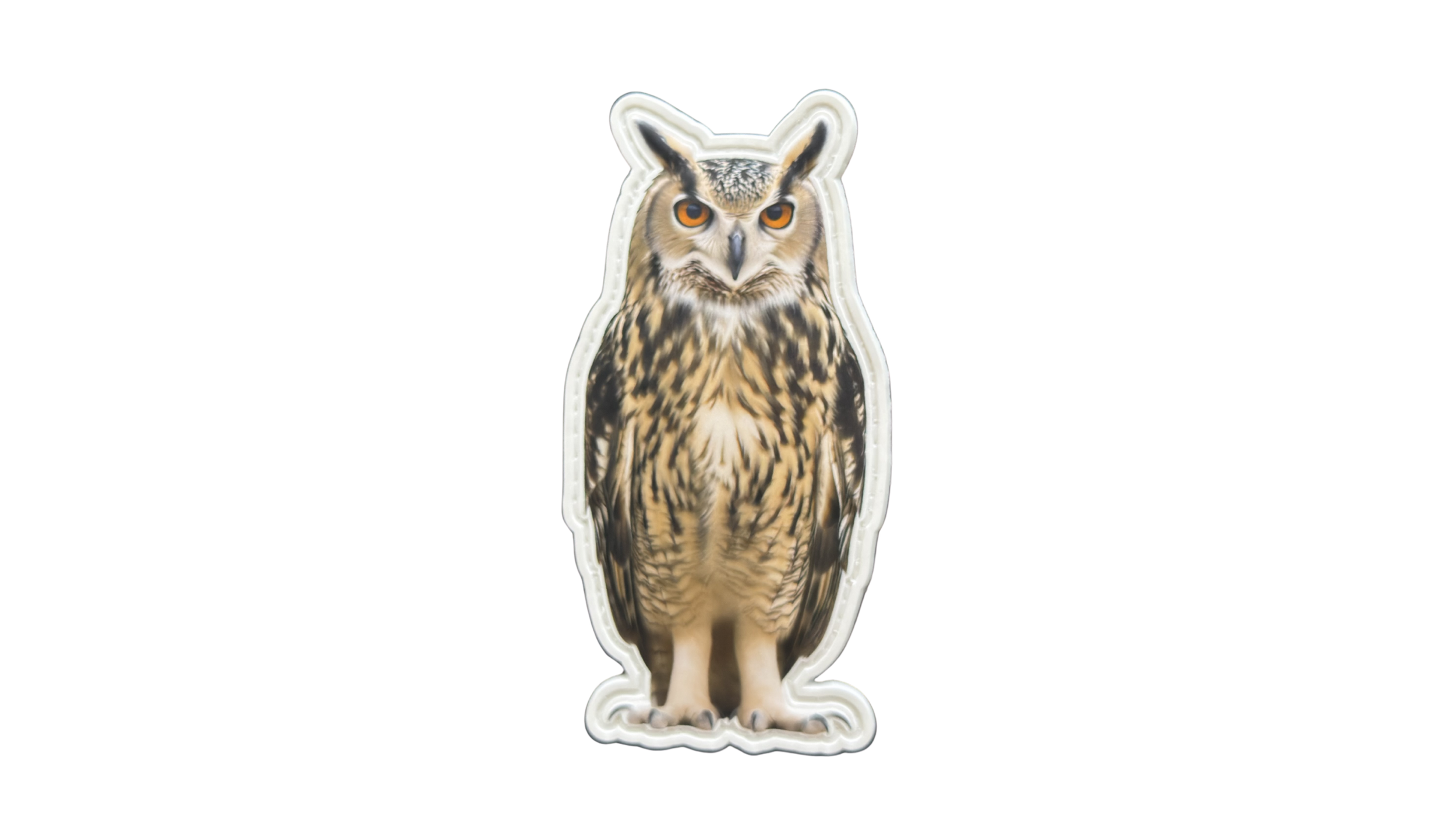

This Arabian Oryx morale patch is inspired by one of the strongest symbols of survival in the desert — a species that once disappeared, and was brought back.
This morale patch is made from high-quality PVC, built to last, and safe for everyday use. Featuring a hook-and-loop backing, it can be attached easily to any bag, T-shirt, hat, or gear with a compatible loop panel.
This is not just a patch.
It’s a reminder of resilience, and a way to carry that story with you.
Inspired by real wildlife in the UAE.
Designed to spark awareness.