

Owl Eye Colors: What Do They Really Mean?
Owls are among the most recognizable birds in the world, and one of their most striking features is their eyes. Depending on the species, an owl's irises may appear bright yellow, deep orange, or almost black. These colours have long fascinated bird enthusiasts, leading to a popular belief that an owl's eye colour reveals whether it hunts during the day or at night.
There is some truth behind this idea—but it is far from a strict rule.
While research has found an evolutionary association between iris colour and activity patterns across owl species, eye colour alone cannot reliably determine when an individual species is active. Habitat, prey availability, season, and behaviour all play important roles.
Why Do Owls Have Different Eye Colors?
An owl's eye colour is determined primarily by pigmentation in the iris, particularly melanin and other pigments inherited through evolution.
Different owl species have evolved different iris colours over millions of years. While scientists have found broad patterns linking iris colour with activity rhythms, these patterns overlap considerably between species.
Instead of thinking of eye colour as a "schedule," it is better viewed as one characteristic among many that help identify an owl.
Yellow Eyes
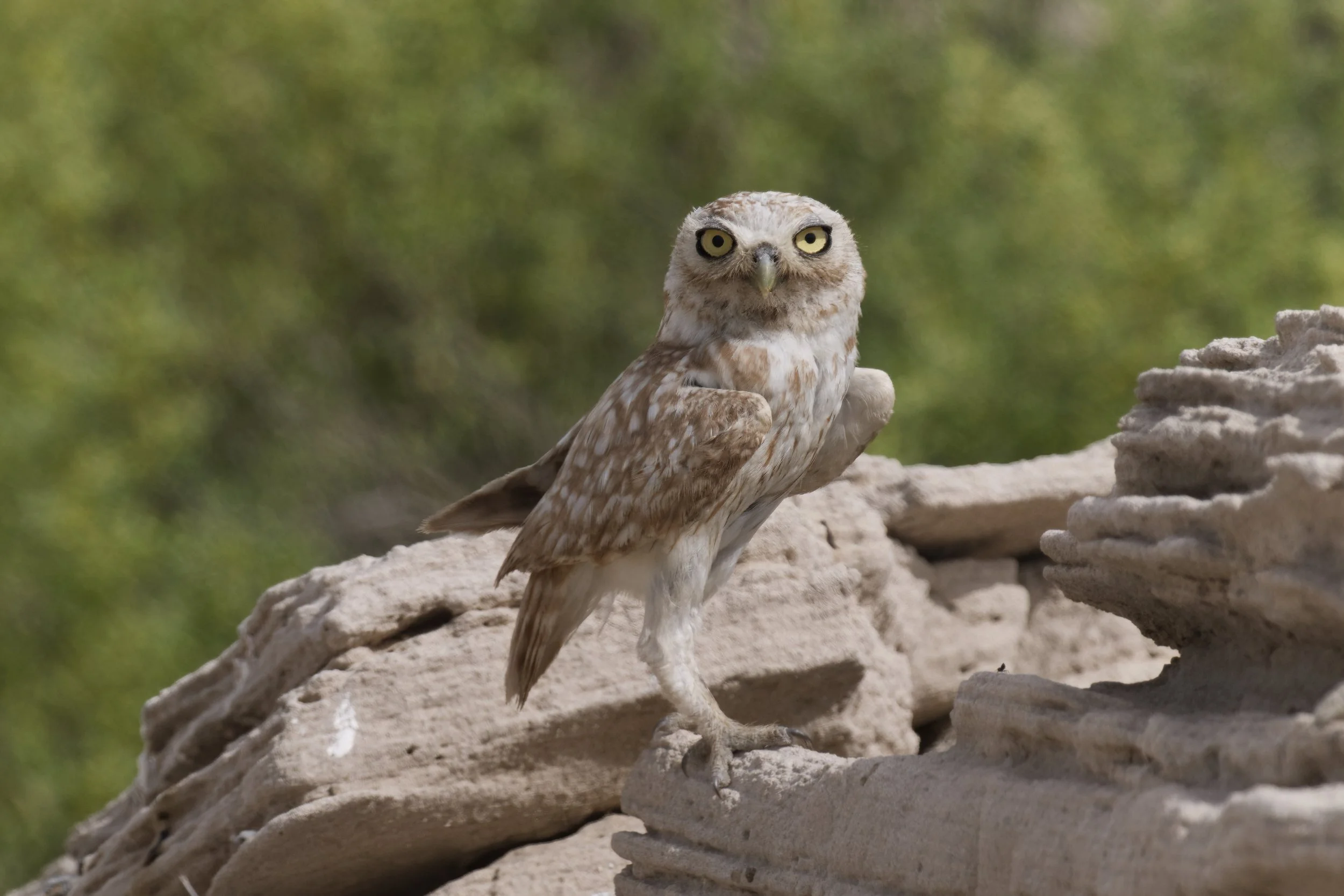
Little Owl
Yellow irises are found in species such as:
Little Owl (Athene noctua)
Snowy Owl (Bubo scandiacus)
Great Horned Owl (Bubo virginianus)
Great Grey Owl (Strix nebulosa)
Many people associate yellow eyes with daytime hunting. While several yellow-eyed owls are regularly active during daylight, others—such as the Great Horned Owl—are primarily nocturnal.
Rather than indicating a fixed activity pattern, yellow eyes simply occur across a variety of owl species with different lifestyles.
Orange Eyes
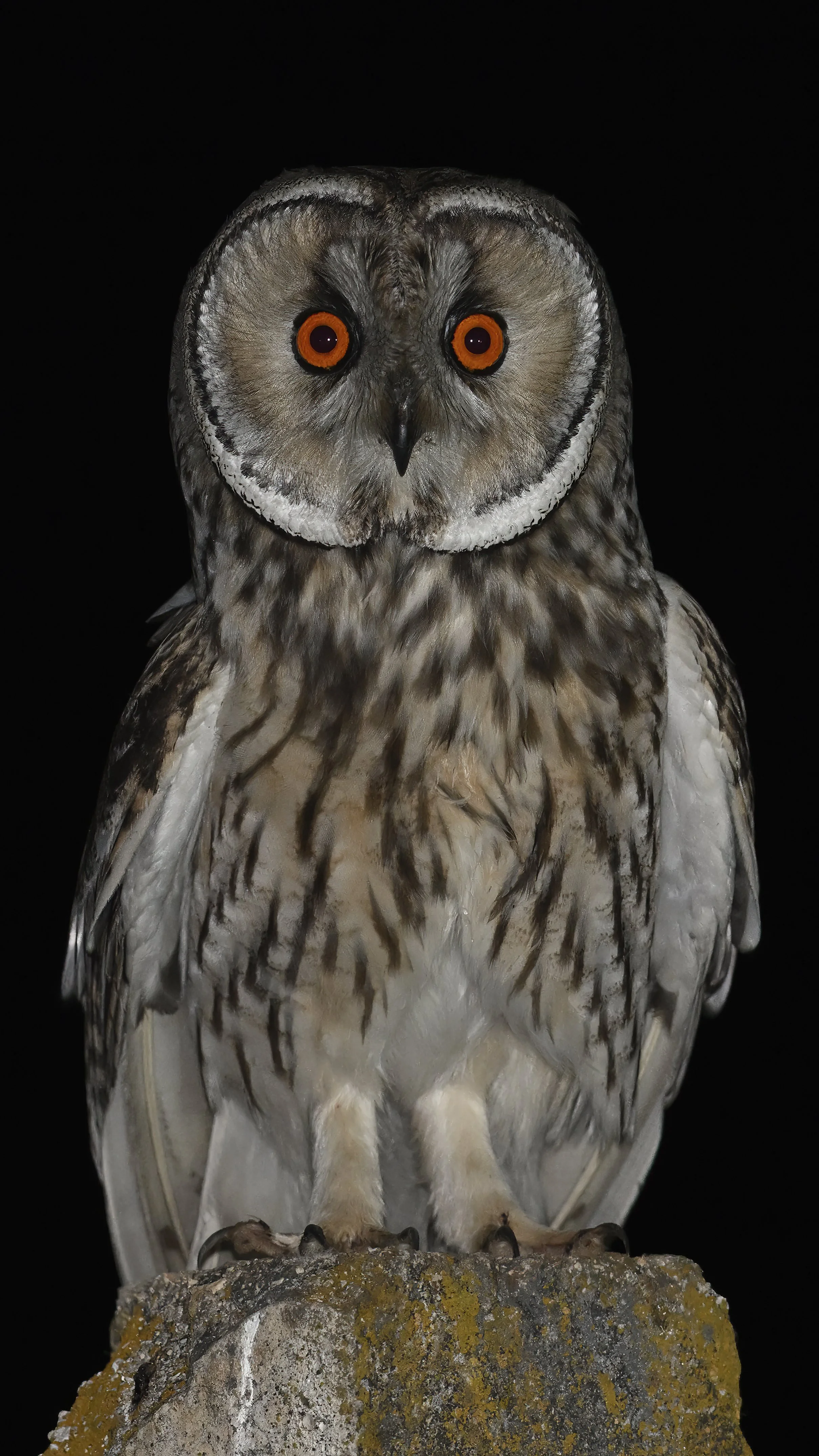
Long-eared Owl
Orange irises are commonly seen in species including:
Eurasian Eagle-Owl (Bubo bubo)
Long-eared Owl (Asio otus)
These owls often become active around sunset and remain active throughout the night. Although orange eyes are sometimes linked with crepuscular behaviour, many orange-eyed owls are predominantly nocturnal.
The colour itself does not determine when an owl hunts.
Dark Brown or Black Eyes
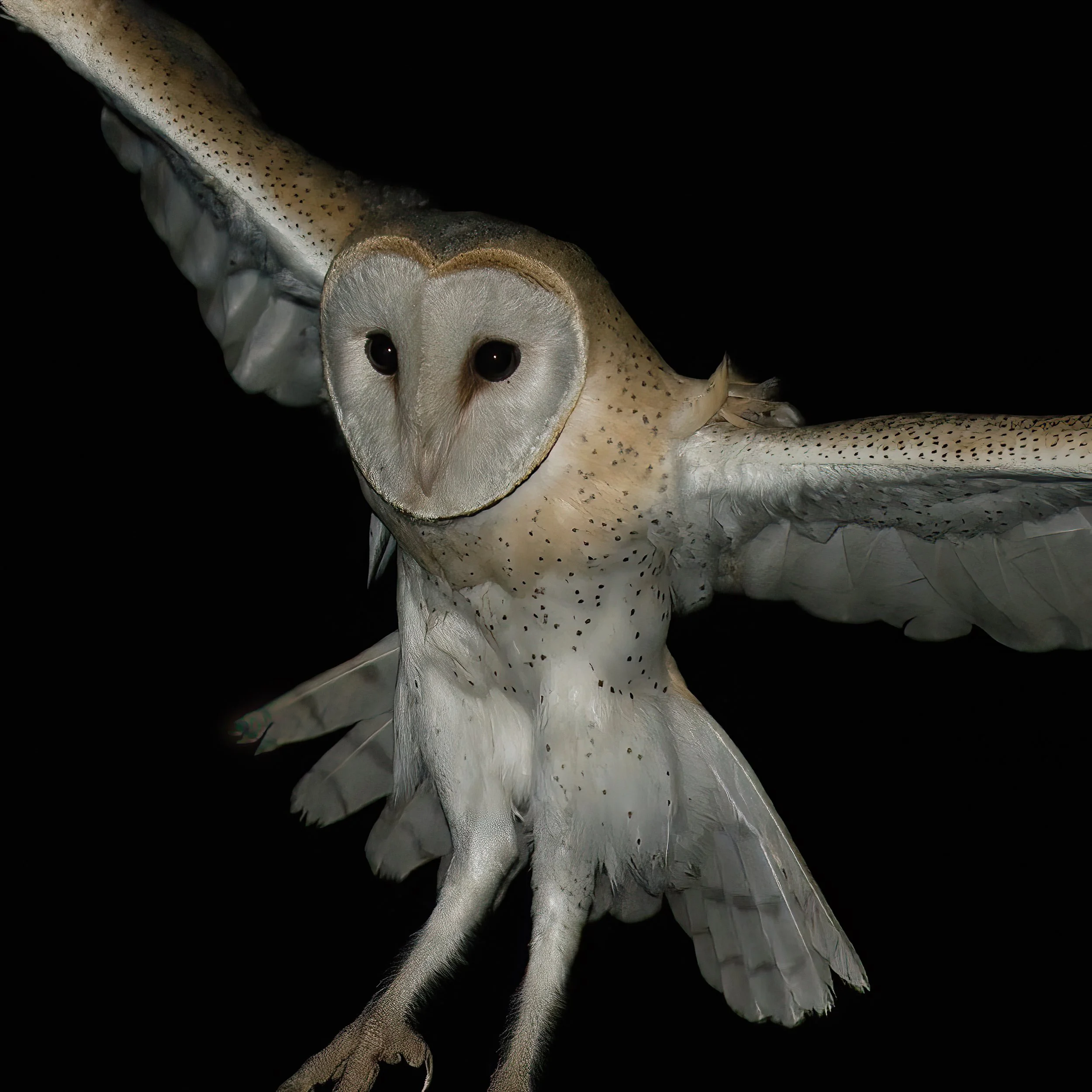
Barn Owl
Dark irises occur in species such as:
Barn Owl (Tyto alba)
Barred Owl (Strix varia)
Scientific studies have found that darker irises are more common among strictly nocturnal owl species. However, this is an evolutionary trend rather than an absolute rule.
Scientists are still investigating why darker irises became more common in nocturnal owls. They may help reduce eye reflections or make the eyes less conspicuous in low-light environments, but their exact evolutionary role is still being studied.






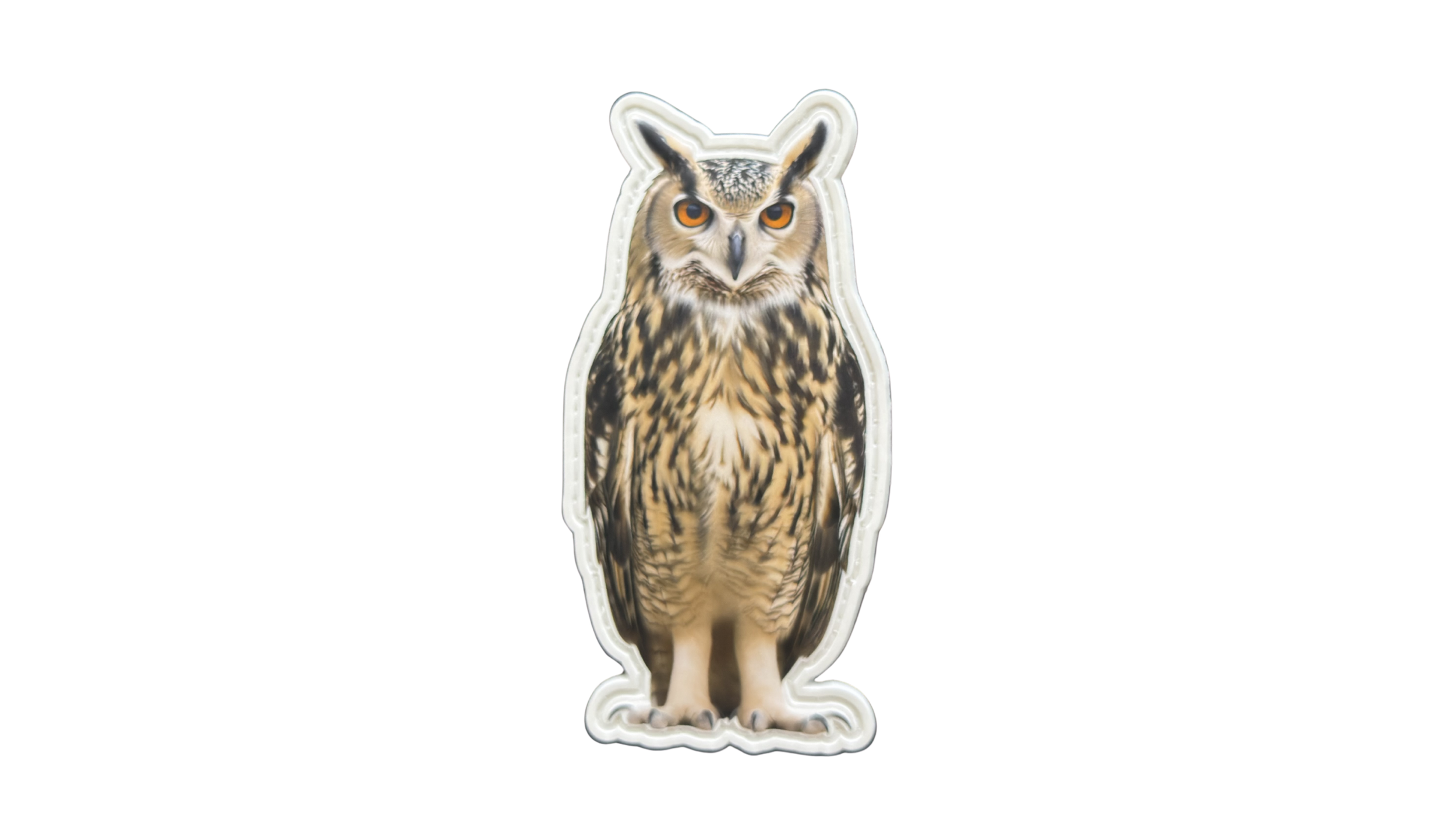
What Actually Helps Owls See at Night?
Eye colour receives a lot of attention, but it plays only a small role in an owl's remarkable vision.
Their exceptional low-light eyesight comes primarily from several anatomical adaptations:
Exceptionally large eyes relative to body size.
Tubular eye shape that gathers more light.
Large pupils.
Retinas rich in rod photoreceptor cells.
Excellent binocular vision for judging distance.
Because owl eyes are almost fixed inside their sockets, they cannot move them around like humans do. Instead, owls rotate their heads by up to 270 degrees, allowing them to scan their surroundings without moving their bodies.
Do Owl Eye Colors Determine When They Hunt?
Not exactly.
Research suggests there is a broad evolutionary relationship between iris colour and activity patterns across owl species.
In general:
Dark eyes are more frequently associated with strictly nocturnal species.
Yellow and orange eyes occur more often among species that are active during daylight or twilight.
However, there are many exceptions, and eye colour alone should never be used to determine whether a particular owl hunts during the day or at night.
Behaviour, habitat, prey, latitude, and season all influence when an owl is active.
-
Depending on the species, owl eyes may appear yellow, orange, amber, brown, or almost black.
-
Not always. While some yellow-eyed species are active during daylight, others, including the Great Horned Owl, are primarily nocturnal.
-
Some orange-eyed owls become active around dusk, but many continue hunting throughout the night.
-
Dark eyes are common among nocturnal owls, but eye colour alone cannot predict an owl's activity pattern.
-
Eye colour is determined by inherited pigmentation and evolved over millions of years. It is useful for identifying species but is not a reliable indicator of behaviour.
-
No. Like all birds, owls require at least a small amount of light. In extremely dark conditions, they rely heavily on their exceptional hearing.
-
Very little. Their eyes are held almost fixed within their sockets, so they rotate their heads instead.
-
Owls can rotate their heads by approximately 270 degrees, allowing them to scan almost their entire surroundings without moving their bodies.
-
There is no evidence that iris colour alone improves night vision. An owl's excellent vision comes mainly from its large eyes, large pupils, and rod-rich retinas.
-
Eye colour can be one helpful feature, but the best identification combines iris colour with facial shape, ear tufts, body size, plumage, habitat, and behaviour.
Conclusion
An owl's eye colour is one of its most captivating features, but it does not tell the whole story.
While scientists have identified broad evolutionary patterns linking iris colour with activity rhythms, there is no simple rule that yellow eyes mean daytime hunters or black eyes mean nighttime hunters. Every owl species has evolved its own combination of behaviours and adaptations to thrive in its environment.
The next time you encounter an owl, admire the colour of its eyes—but remember that its true hunting ability comes from a remarkable combination of vision, hearing, silent flight, and millions of years of evolution.