

Snakes and Ancient Gods: Why Serpents Were Worshipped, Feared, and Respected
Before Snakes Were Feared, They Were Sacred
Today, many people react to snakes with fear. One movement in the sand, one shape under a rock, one raised head in the beam of a flashlight, and the instinct is immediate: step back.
But in the ancient world, snakes were not seen only as dangerous animals. They were symbols. They were guardians, healers, enemies, protectors, underworld beings, water spirits, and signs of divine power.
This makes sense when you look closely at the animal itself.
A snake disappears into the ground and returns. It sheds its skin and appears renewed. It moves without legs, silently and smoothly, as if it belongs to another world. Some snakes carry venom powerful enough to kill, while others live quietly beside humans, controlling rodents and becoming part of the landscape.
To ancient people, this was not just biology. It was meaning.
The snake became one of the most powerful animals in mythology because it carried two opposite truths at the same time: life and death, healing and danger, protection and chaos.
Wadjet: The Cobra That Protected the Pharaoh
In ancient Egypt, one of the strongest snake symbols was the cobra goddess Wadjet.
Wadjet was associated with Lower Egypt and was often represented as a cobra. Her image became part of royal symbolism, especially through the uraeus, the rearing cobra worn on the forehead of the pharaoh’s crown. This was not decoration only. It represented divine protection and royal authority.
The cobra on the king’s brow sent a clear message: the ruler was protected by a sacred force.
This is one of the most powerful examples of how ancient people saw snakes. The cobra was dangerous, yes, but that danger became protection when connected to the gods. The same animal feared in the wild became a guardian of kings.
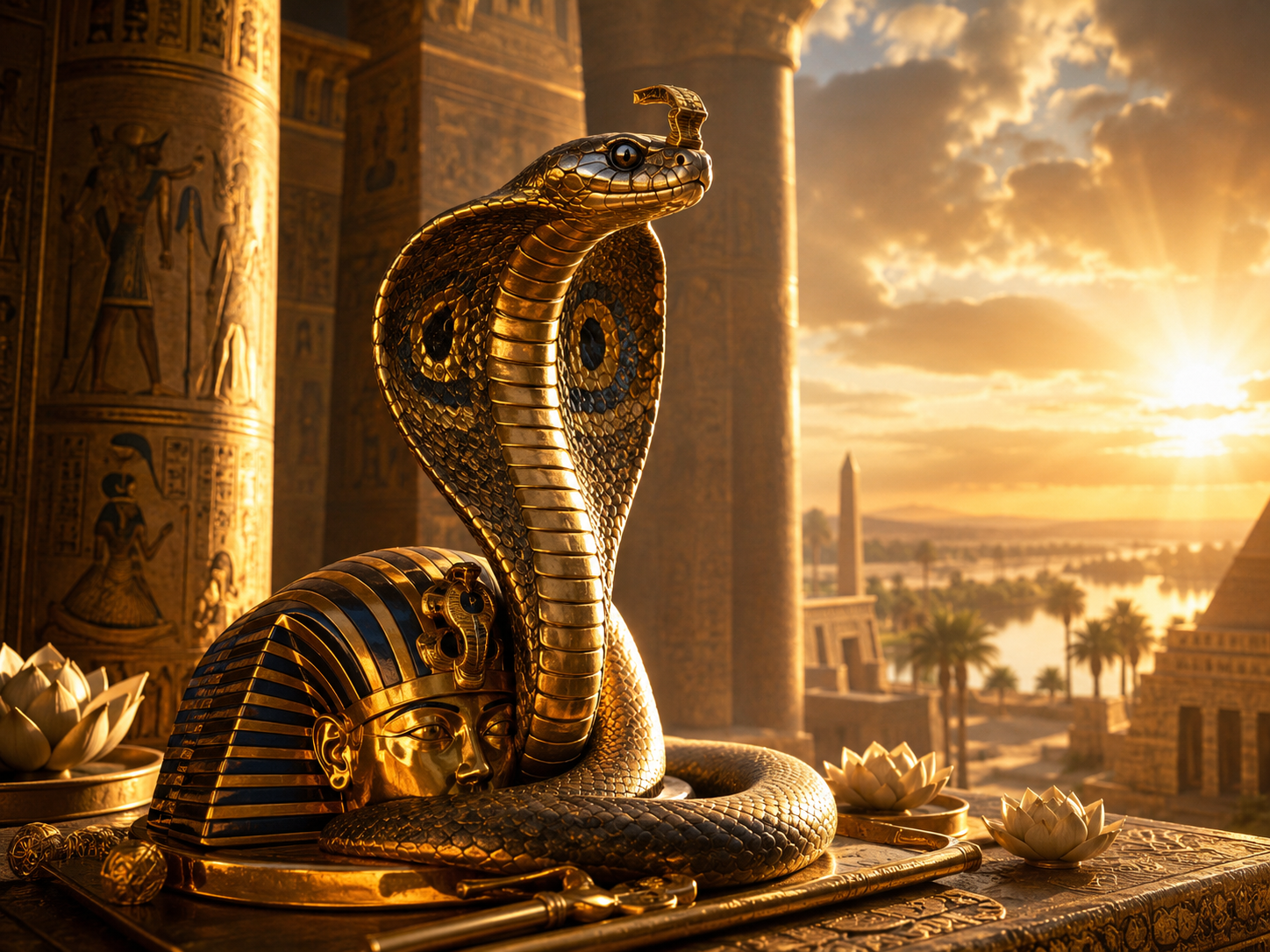
Wadjet, AI-generated illustration, reference
Apophis: The Serpent of Chaos
Not every sacred snake was protective.
In Egyptian mythology, Apophis, also known as Apep, represented chaos. He was imagined as a great serpent and enemy of the sun god. While Wadjet protected royal power, Apophis symbolized the forces that threatened order, light, and life.
This contrast is important.
The ancient Egyptians did not treat snakes as one simple symbol. A snake could protect the pharaoh, but another serpent could represent darkness and destruction. The animal was powerful enough to carry both meanings.
This is why snakes appear so often in mythology. They are never simple. They can be guardian or enemy, healer or killer, sacred animal or monster.

Apophis, AI-generated illustration, reference
Asclepius: The Snake as Healing
In ancient Greece, the snake appeared in a very different role.
Asclepius, the god of medicine and healing, was often shown with a staff and a single snake coiled around it. This symbol, known as the Rod of Asclepius, remains one of the most recognizable medical symbols in the world.
Why would a snake represent healing?
Part of the answer may be renewal. A snake sheds its skin, and this natural process can easily become a symbol of recovery, transformation, and life continuing after illness. In ancient healing sanctuaries connected to Asclepius, the snake was not only feared; it was sacred.
This is one of the most beautiful transformations of snake symbolism. The same animal that can cause harm also became a sign of medicine.
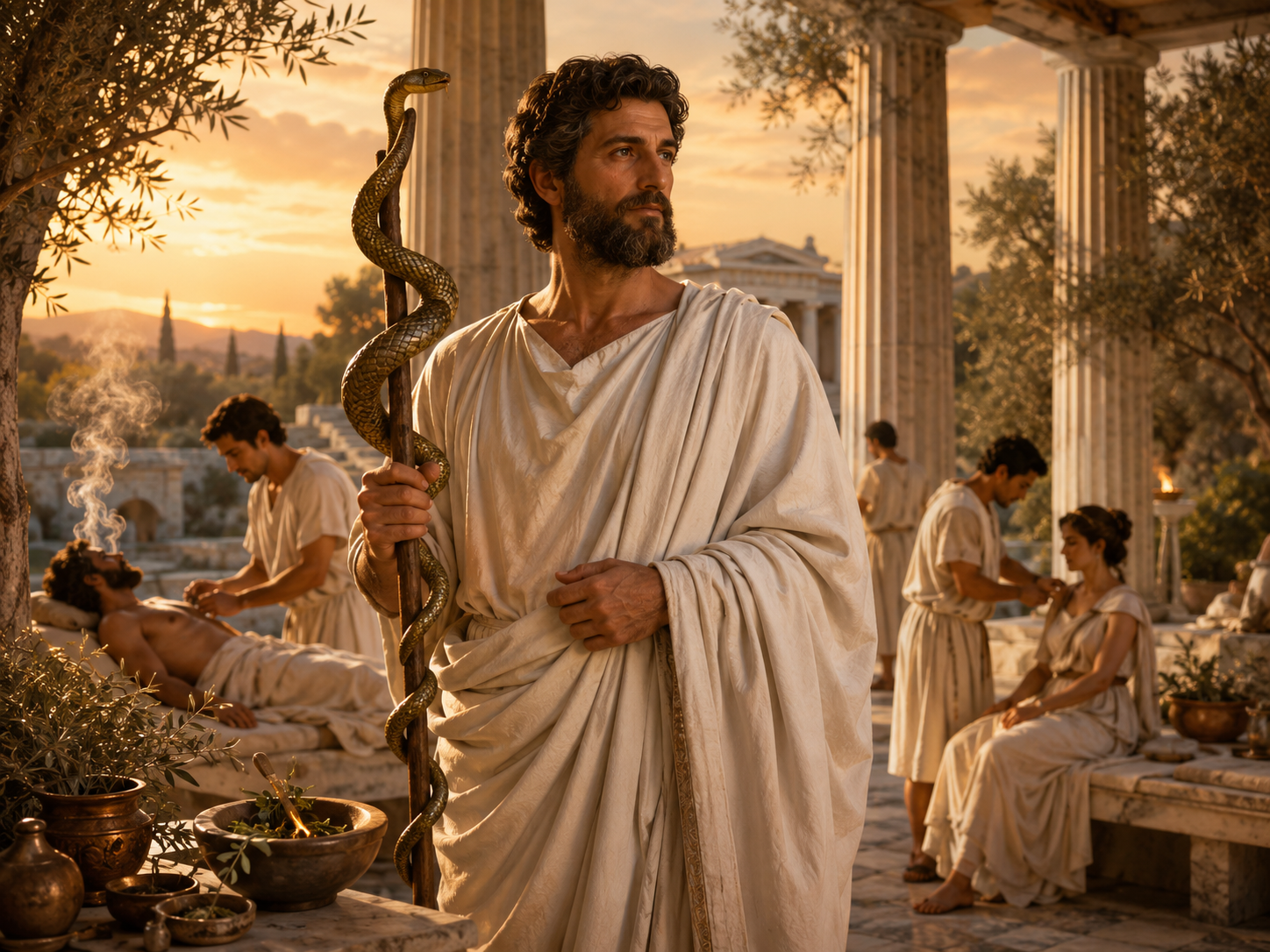
Asclepius
AI-generated illustration, reference
The Minoan Snake Goddess: A Mystery from Crete
One of the most famous ancient snake images comes from Bronze Age Crete: the so-called Minoan Snake Goddess.
The small faience figurines from Knossos show a female figure holding snakes. They are visually striking, but their exact meaning is still debated. Were they goddesses? Priestesses? Symbols of household protection, fertility, or ritual power?
We do not know for sure.
And that uncertainty makes them even more interesting. Not every ancient symbol can be explained completely. Sometimes archaeology gives us the object but not the full story behind it.
What we can say is that snakes were important enough to appear in ritual art. Whether the figure was divine or human, the snake clearly carried sacred meaning.

Minoan Snake Goddess, AI-generated illustration, reference
Ningišzida: Serpents, Vegetation, and the Underworld
In ancient Mesopotamia, snakes were also connected to gods and deep natural cycles.
One important figure was Ningišzida, a Mesopotamian deity associated with vegetation, growth, decay, snakes, and underworld themes. This combination may sound strange at first, but it follows a powerful natural logic.
Plants grow, die back, and return. Snakes shed their skin. Life goes underground and comes back again.
For ancient agricultural societies, this cycle mattered deeply. The snake became connected not only to danger but also to the mystery of life returning after disappearance.
In this way, the serpent was not just an animal of fear. It was also an animal of seasons, soil, roots, death, and renewal.

Ningišzida, AI-generated illustration, reference
Quetzalcoatl: The Feathered Serpent
In Mesoamerica, one of the most visually powerful serpent figures was Quetzalcoatl, the Feathered Serpent.
Quetzalcoatl combines two animals into one divine symbol: the serpent and the bird. The snake belongs to the earth. The feathers connect it to the sky. Together, they create a being that moves between worlds.
In different Mesoamerican traditions, the Feathered Serpent was linked with creation, wind, rain, knowledge, and divine power. To the Maya, a related figure is known as Kukulkan.
This is one of the most beautiful examples of ancient symbolism. A snake was not only a creature of the ground. With feathers, it became a bridge between earth and sky.

Quetzalcoatl, AI-generated illustration, reference
Nāgas: Serpents of Water, Fertility, and Protection
In South Asian traditions, Nāgas are serpent beings connected with water, fertility, agricultural abundance, protection, and sometimes danger.
They are often shown as cobra-like beings or serpent kings and queens. In Hindu, Buddhist, and Jain traditions, Nāgas can be powerful protective figures. They are connected to rivers, rain, underground waters, and the fertility of the land.
Again, the pattern appears: the snake is not only feared. It is respected because it belongs to places humans depend on — water, soil, crops, and hidden spaces beneath the earth.
The same qualities that make snakes mysterious also made them sacred.
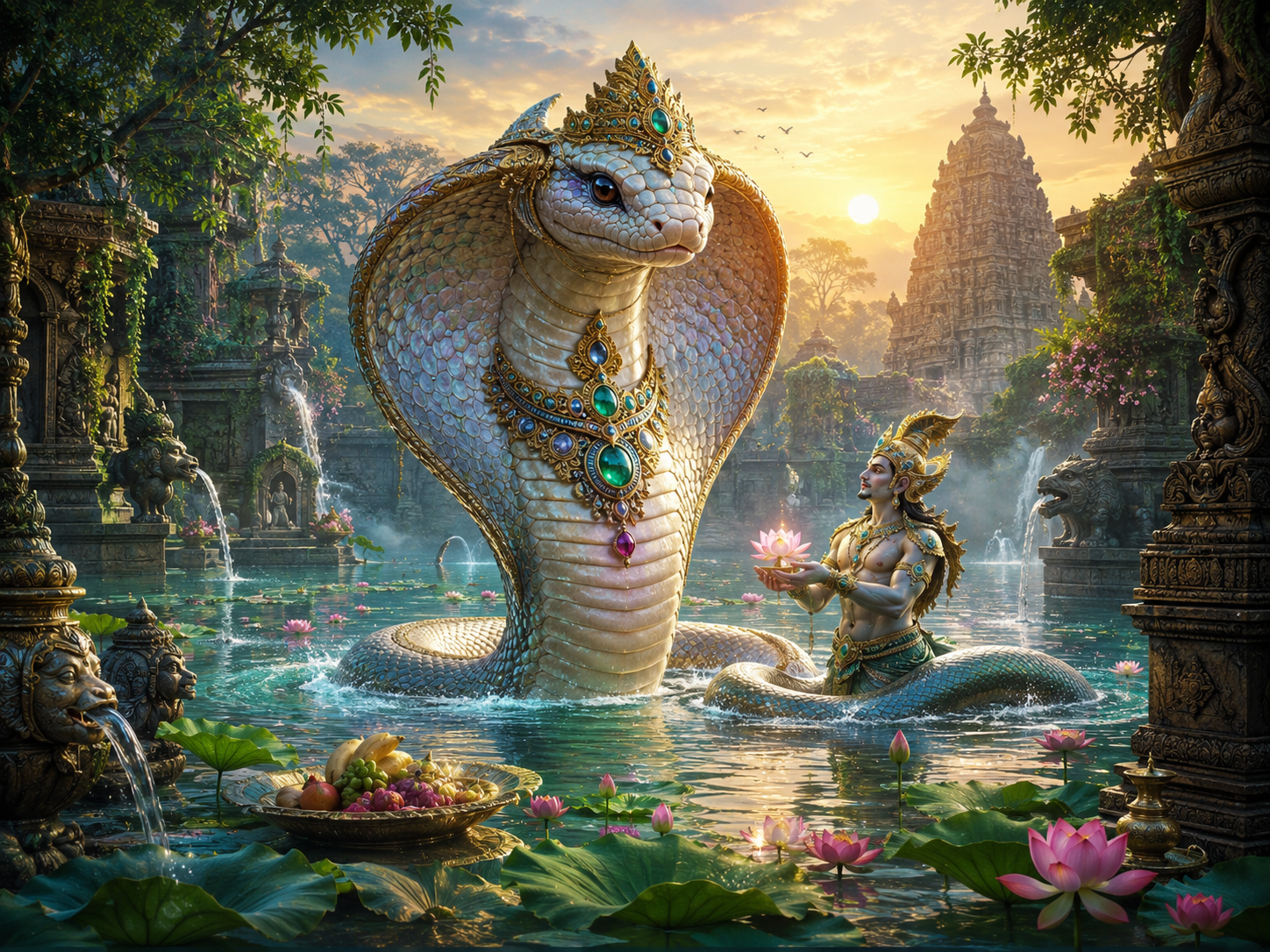
Nāgas, AI-generated illustration, reference
Why Did Ancient People Connect Snakes to Gods?
Across cultures, the meanings change, but the same themes appear again and again.
Snakes shed their skin, so they became symbols of renewal and rebirth.
They live close to the ground and disappear into holes, so they became linked to the underworld, hidden knowledge, and the unseen.
Some are venomous, so they became symbols of danger, power, and divine punishment.
They appear near water, crops, homes, and temples, so they became linked to fertility, protection, and survival.
They move silently, without legs, in a way unlike most animals, so they became symbols of mystery.
This is why snakes are everywhere in ancient mythology. They are animals that force humans to pay attention.
From Ancient Myth to Modern Wildlife Respect
As a wildlife photographer, I do not look at snakes as gods, monsters, or symbols. I look at them first as living animals.
But ancient mythology teaches us something important: people did not always see snakes as creatures to hate. They feared them, yes, but they also respected them. They watched them closely. They gave them meaning. They understood that danger does not remove value.
This is something we need today.
Many snakes are killed not because they are attacking people, but because people do not understand them. Fear becomes a reaction before knowledge has a chance to speak.
In the field, the better approach is different: observe, keep distance, learn behavior, understand habitat, and respect the animal’s role in the ecosystem.
The ancient world surrounded snakes with gods because people recognized their power. Today, we do not need mythology to respect them. We have ecology, photography, conservation, and direct observation.
The lesson is still the same.
A snake is not only something to fear. It is something to understand.
Frequently Asked Questions
-
There was no single snake god across all ancient cultures. Different civilizations connected snakes with different gods and meanings. In Egypt, Wadjet was a cobra goddess of protection, while Apophis represented chaos. In Greece, Asclepius was linked with healing through the serpent-entwined staff. In Mesoamerica, Quetzalcoatl was the Feathered Serpent.
-
Snakes were sacred because they represented powerful natural ideas: rebirth, healing, danger, protection, fertility, water, the underworld, and divine power. Their ability to shed skin made them strong symbols of renewal.
-
In ancient Egypt, snakes had both protective and dangerous meanings. Wadjet, the cobra goddess, protected royal authority and the pharaoh. Apophis, the great serpent, symbolized chaos and opposition to the sun god.
-
The single snake wrapped around a staff is the Rod of Asclepius, connected to Asclepius, the Greek god of medicine and healing. It became one of the most important symbols of medicine.
-
Quetzalcoatl is often known as the Feathered Serpent. He was an important Mesoamerican deity connected with creation, wind, rain, and knowledge. The feathered serpent combines earth and sky symbolism.
Final Thought
Snakes have always lived close to human imagination.
They move through deserts, mountains, farms, forests, rivers, ruins, and myths. They appear in temples and in field guides, in ancient carvings and modern photographs.
The more we learn about them, the more one thing becomes clear: snakes were never just animals of fear.
They were animals of power, mystery, survival, and respect.