What Is Wildlife Photography? Wild Encounters vs Safari, Hides & Baited Photos
What Is Wildlife Photography?
Wildlife photography is not just taking a photo of an animal.
For me, wildlife photography is about the search, the land, the waiting, the failure, the knowledge, and the rare moment when a wild animal finally allows you into its world for a few seconds.
The animal is only one part of the photograph. The real value comes from everything behind it.
How did you find it?
Did you understand the habitat?
Did you read the tracks, the weather, the season, the moon, the temperature, and the behavior?
Did the animal come naturally, or was the moment created for you?
That is where wildlife photography begins.
The Soul of Wildlife Photography Is Scarcity
A real wildlife photograph should feel earned.
Not because the photo must always be technically perfect, but because the encounter itself has value. Sometimes you spend hours, days, or even years looking for one species. Sometimes you return from the field with nothing. Sometimes you find the animal but the photo is not good. Sometimes the animal disappears before you even lift the camera.
This scarcity is part of the soul of wildlife photography.
When an animal appears too easily, too often, too close, and too predictably, something changes. The image may still be beautiful, but the feeling behind it is different.
For me, the personal value of a wildlife photo comes from the effort I put into it. The long search. The failed trips. The quiet nights. The learning. The mistakes. The connection with the land.
Without that, the image becomes just an animal photo.
Is Paid Hide Photography Wildlife Photography?
Paid hides are complicated.
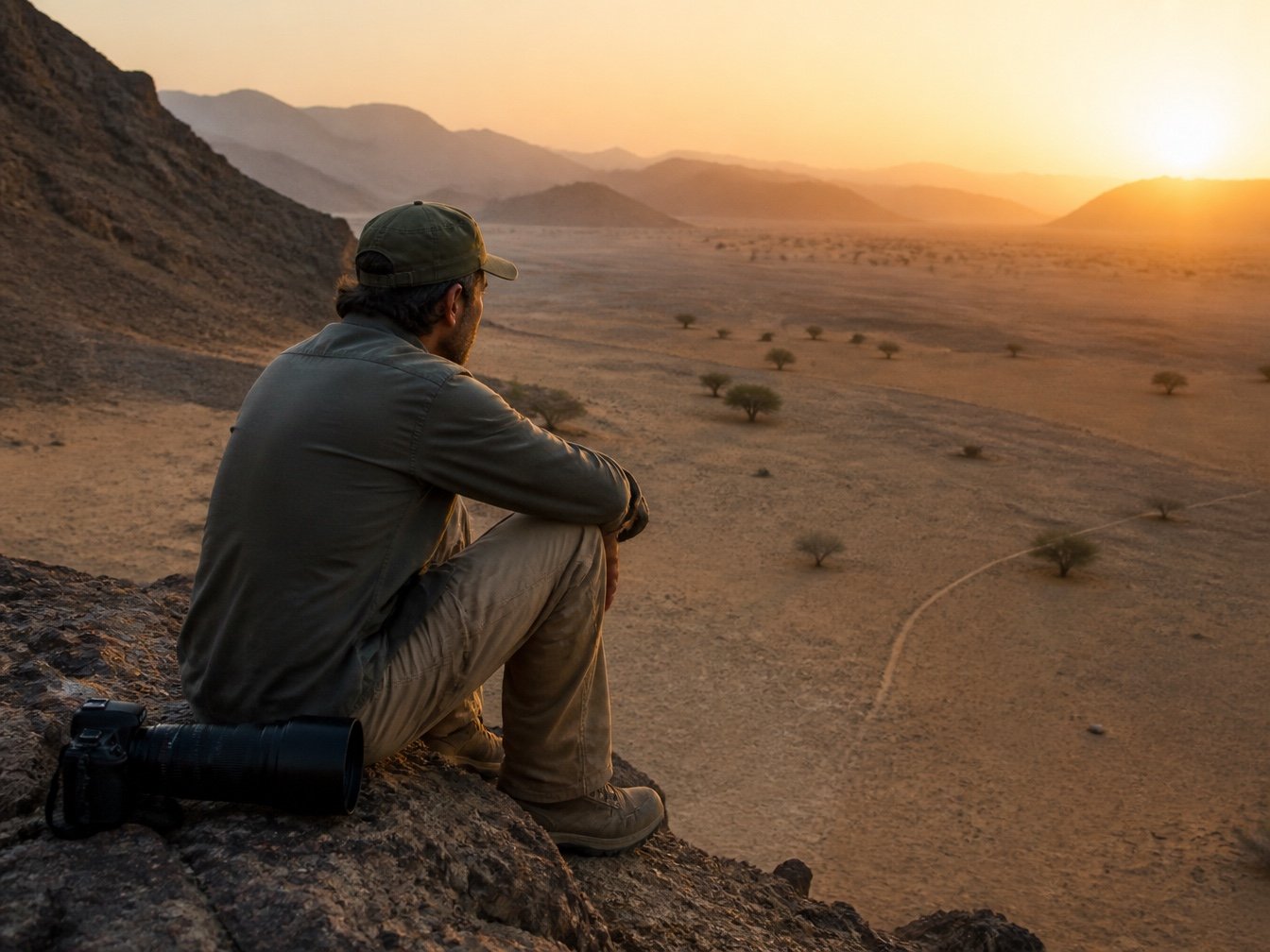
A hide can be ethical when it helps the photographer stay hidden and reduces disturbance. If the animal is moving naturally through its habitat, and the hide simply allows you to observe without pressure, then it can still be close to wildlife photography.
But many paid hides are built to guarantee the shot.
Food is placed in a specific location so the animal comes exactly where the photographer needs it: the right perch, the right rock, the right background, the right distance, and the right light. The photographer pays, waits, and the animal is expected to appear.
For me, this changes the nature of the image.
The animal may still be wild by biology, but the behavior is no longer fully wild. Food changes the relationship between the animal and the human. It can make animals come closer than they normally would. It can make them repeat behavior for photographers. It can make them lose natural caution.
At that point, the photo becomes less about fieldcraft and more about a controlled setup.
That does not mean the image is useless or bad. But it should not be presented as a natural wild encounter. It should be described honestly as baited or controlled hide photography.
Real wildlife photography should be about understanding the animal, not creating a situation where the animal is almost guaranteed to appear.
Are Safari Trips Wildlife Photography?
For many people, safari photography is wildlife photography.
For me, it is not the same.
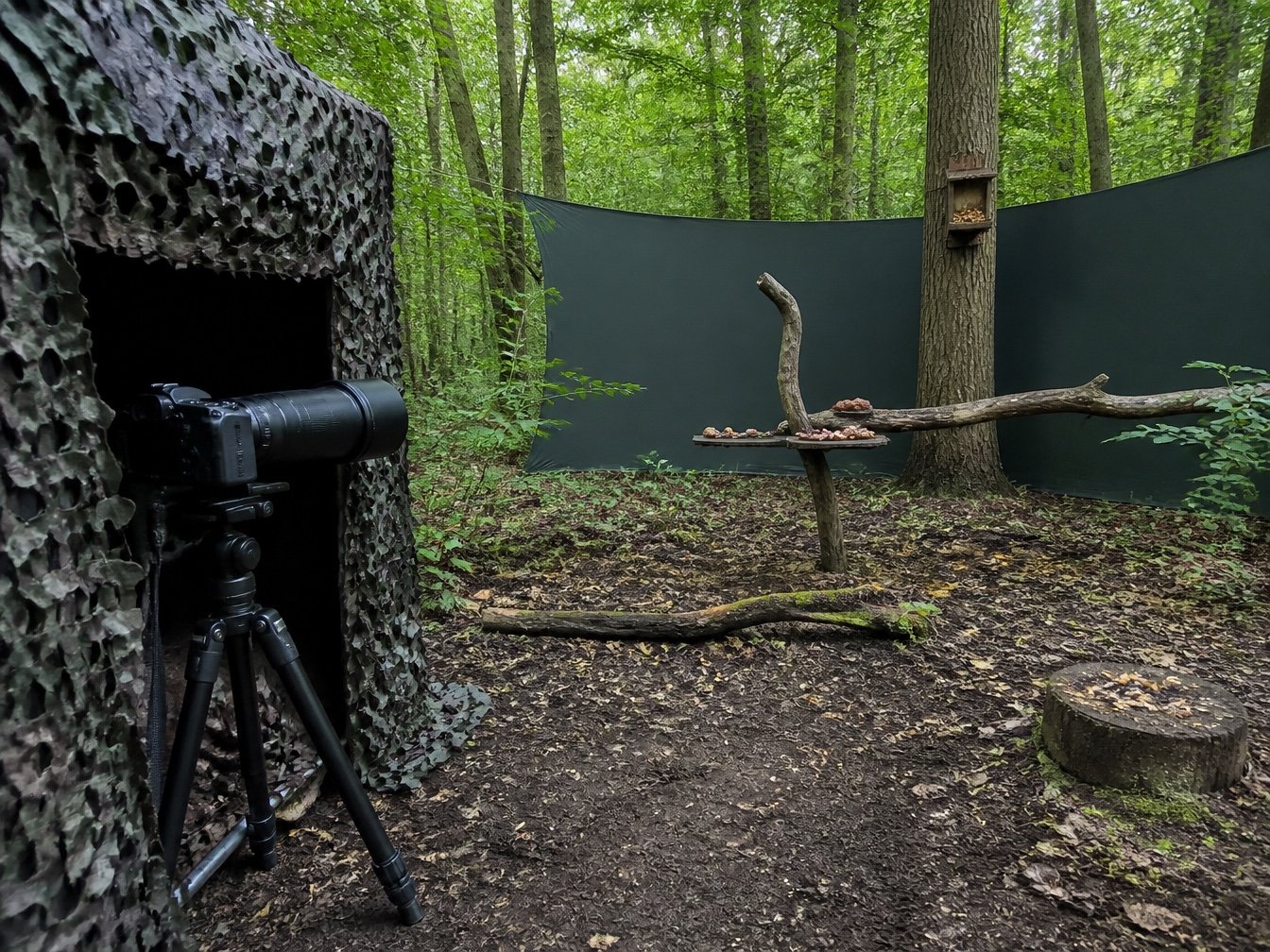
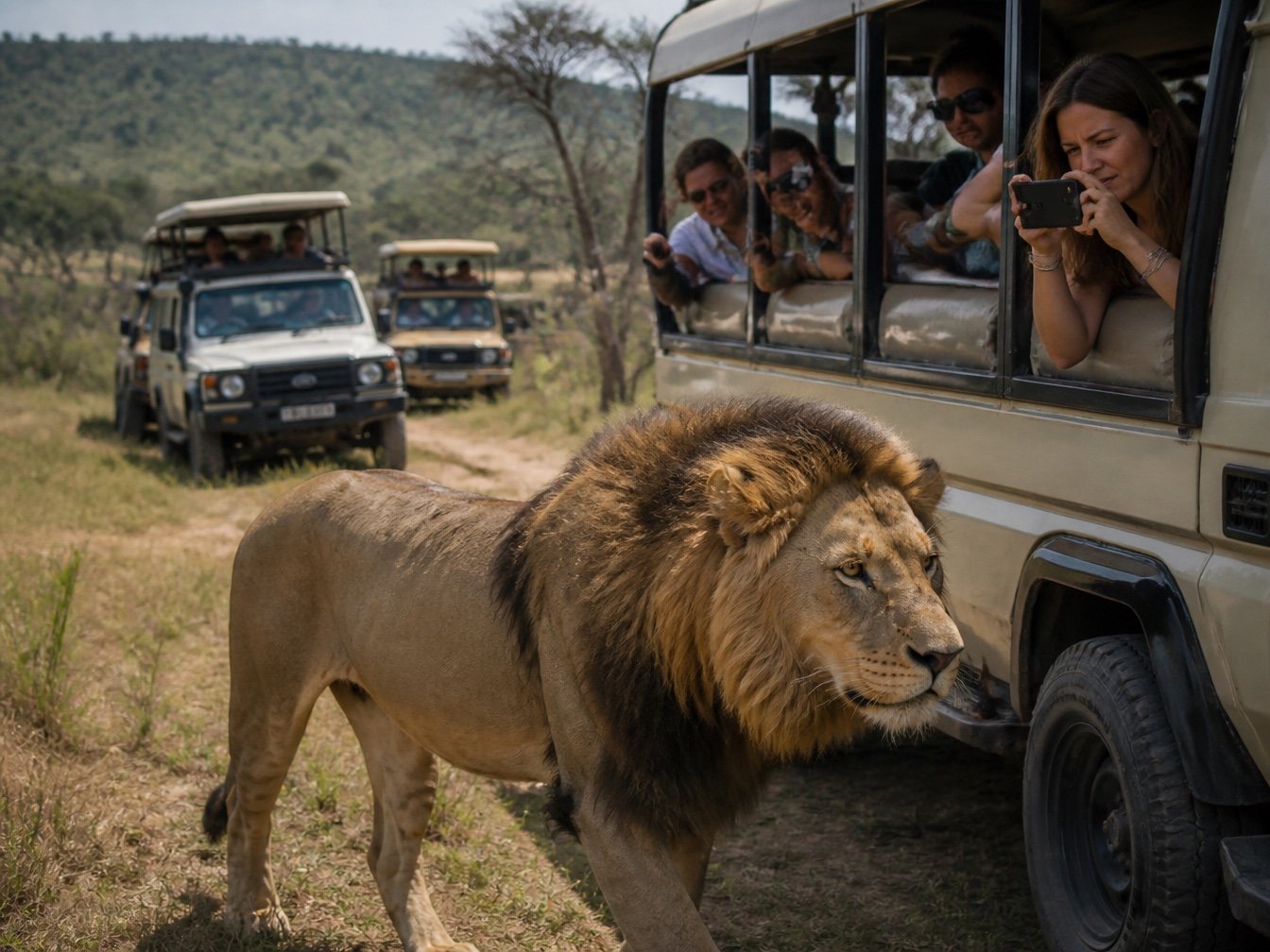
A safari can show wild animals, but the experience is often built around access, comfort, vehicles, guides, routes, and predictable encounters. The photographer is usually taken to the animal. The hard work of reading the land, searching alone, understanding signs, and building the encounter is reduced.
The animal may be wild, but the experience often becomes wildlife tourism.
This becomes even clearer when animals come so close that people can photograph them full frame with mobile phones from the vehicle. For me, wild animals are not supposed to come that close to people as a normal situation. They should keep distance. They should be cautious. They should have the choice to disappear.
If an animal is used to vehicles, used to people, surrounded by cars, and approached closely every day, I personally do not feel the same value in the image. It may still be a beautiful photograph. It may still be a useful memory. But for me, it does not carry the same soul as a photo earned through real fieldwork.
Wildlife photography should not feel like the animal is part of a schedule.
If There Is a Crowd, It Becomes Recreational
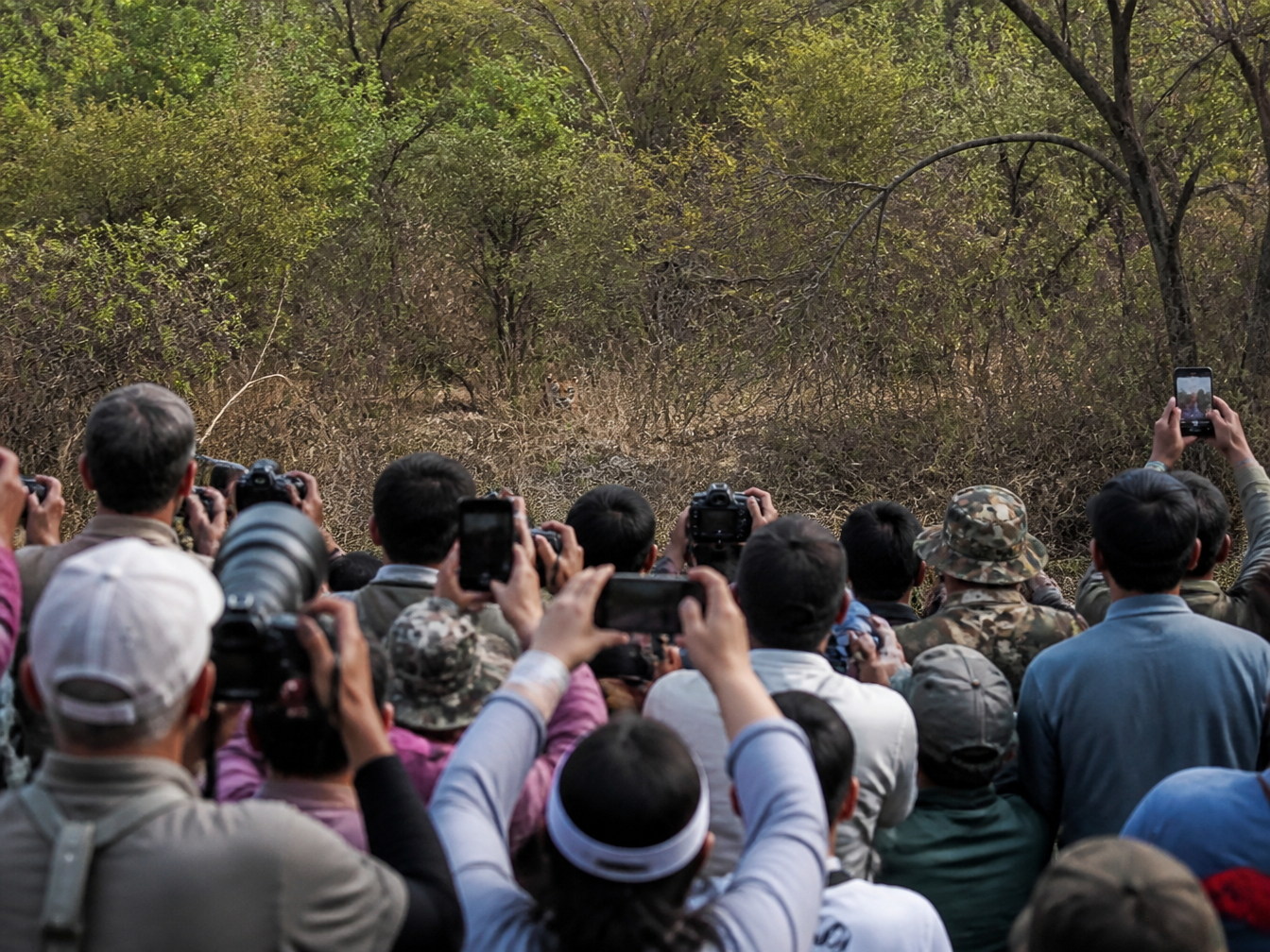
Wildlife photography does not go well with crowds.
When many people gather around the same animal, the experience changes. It becomes less about observation and more about consumption. Cameras, phones, noise, movement, pressure, and competition for angles all change the atmosphere.
At that point, for me, it becomes a recreational wildlife trip, not serious wildlife photography.
Real wildlife photography needs space. It needs patience. It needs quiet. It needs respect for the animal and for the place.
A wild moment becomes weaker when it turns into a public attraction.
My Definition of Wildlife Photography
For me, wildlife photography is the honest documentation of a free animal in its natural habitat, reached through patience, field knowledge, and respect.
The animal should be free to leave.
The behavior should not be created by food or pressure.
The place should matter.
The search should matter.
The photographer should understand more than just camera settings.
A real wildlife photograph is not only about what is in the frame. It is about what happened before the frame.
Final Thought
Not every animal photo is wildlife photography.
Some images are safari photos.
Some are baited photos.
Some are hide photos.
Some are captive or controlled photos.
Some are recreational wildlife memories.
There is nothing wrong with enjoying them, but they should not all be placed in the same category.
For me, wildlife photography is built on difficulty, scarcity, respect, and connection with the land.
The best wildlife photograph is not always the closest one.
It is the one that was earned.
