

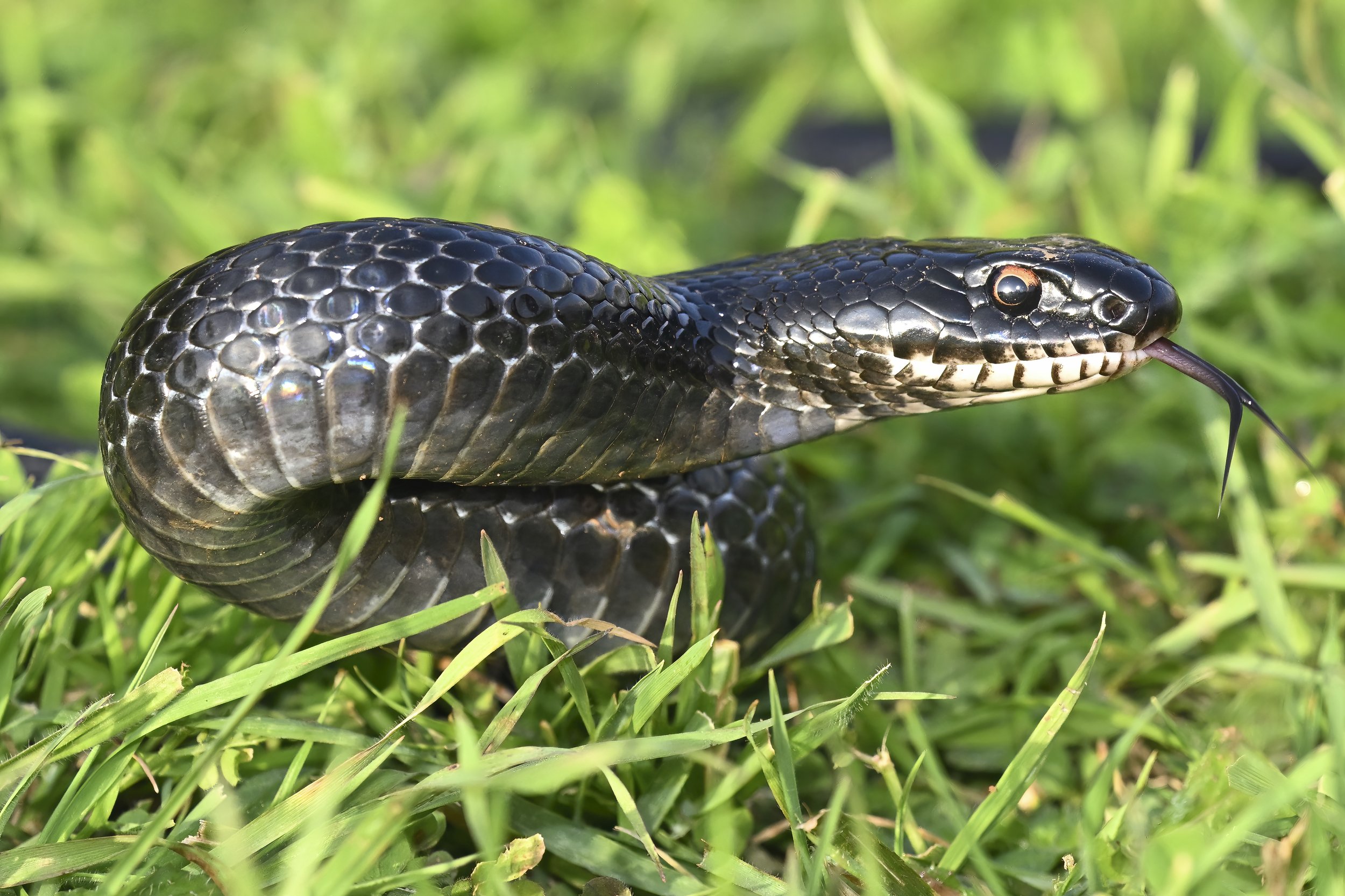
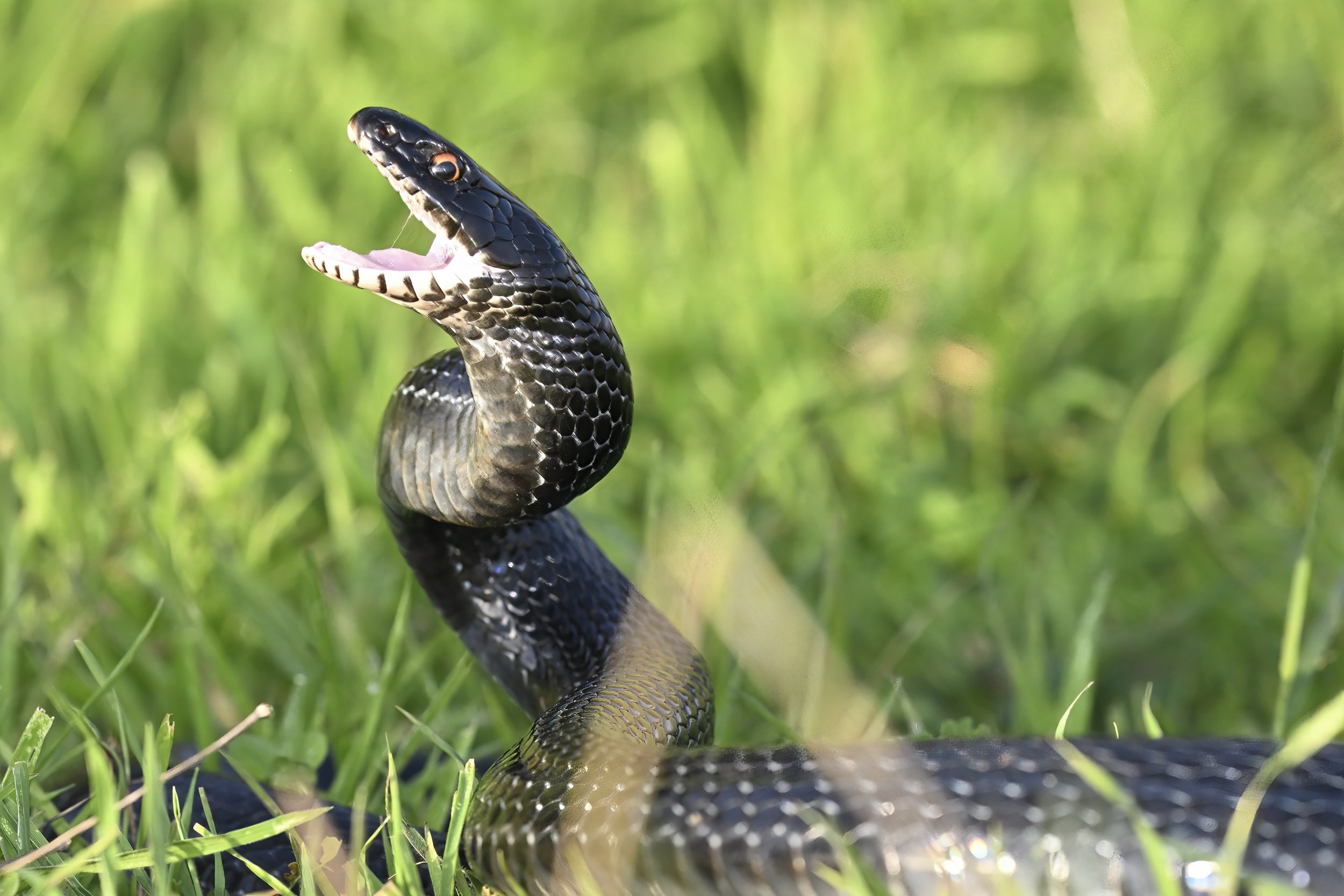
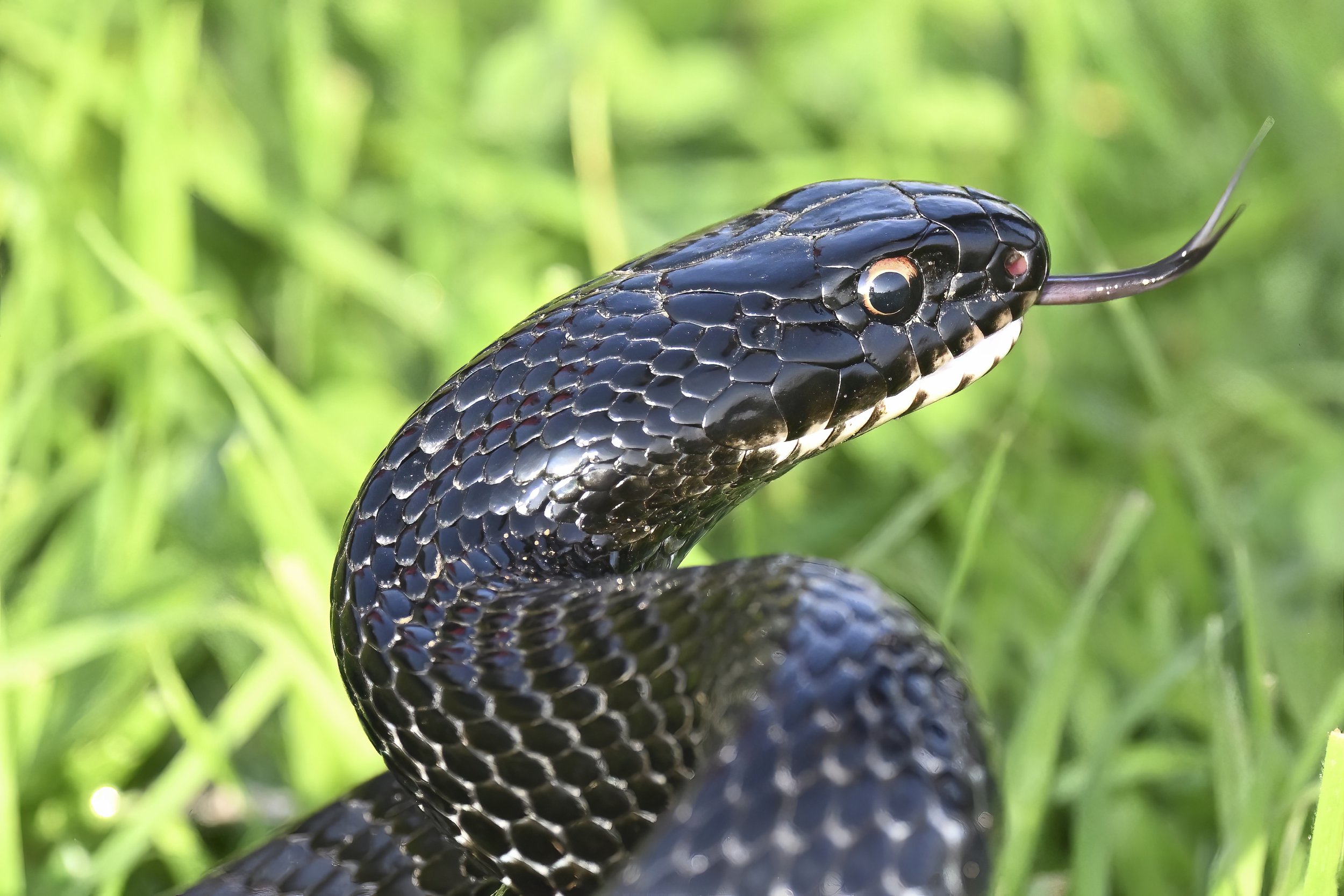
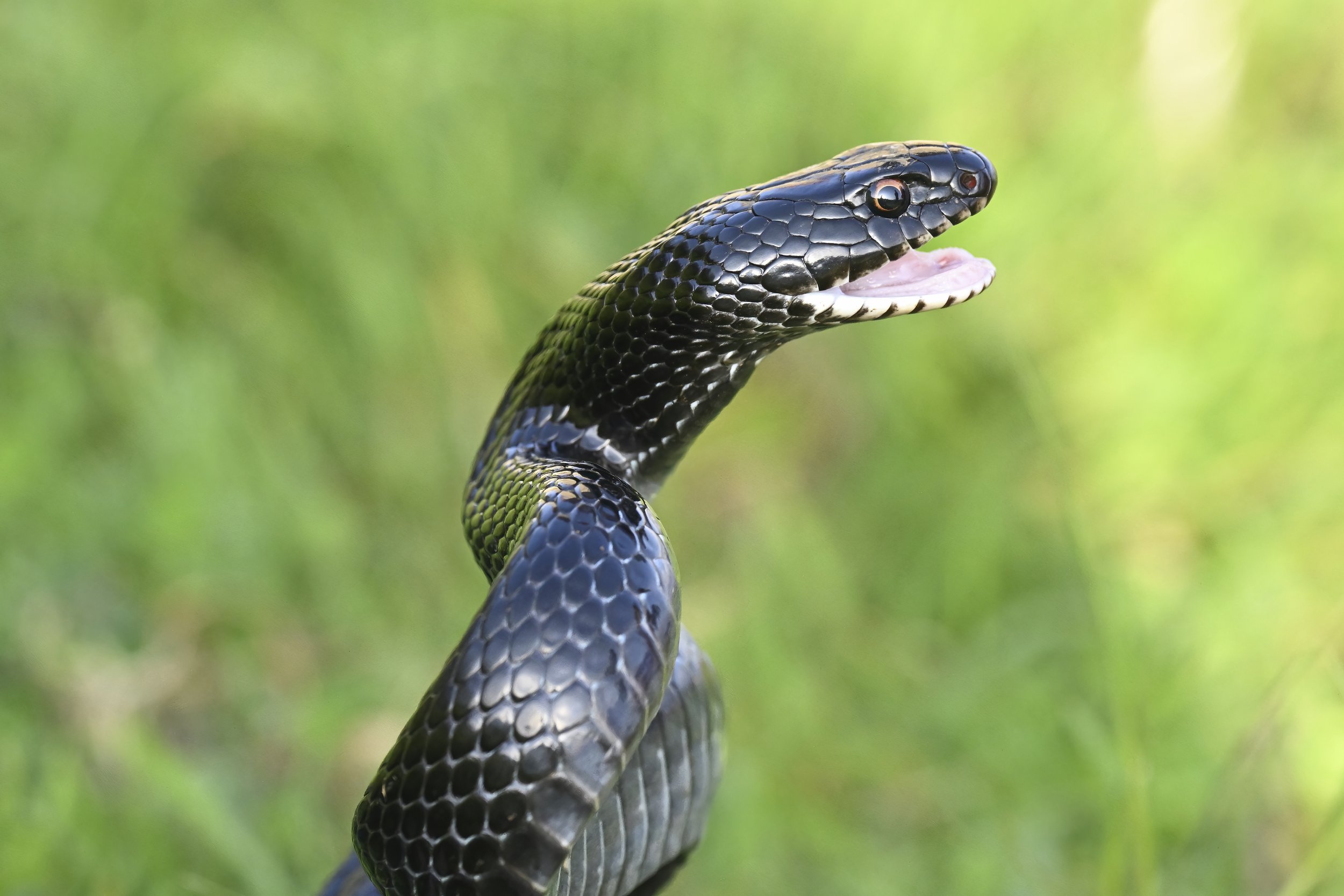
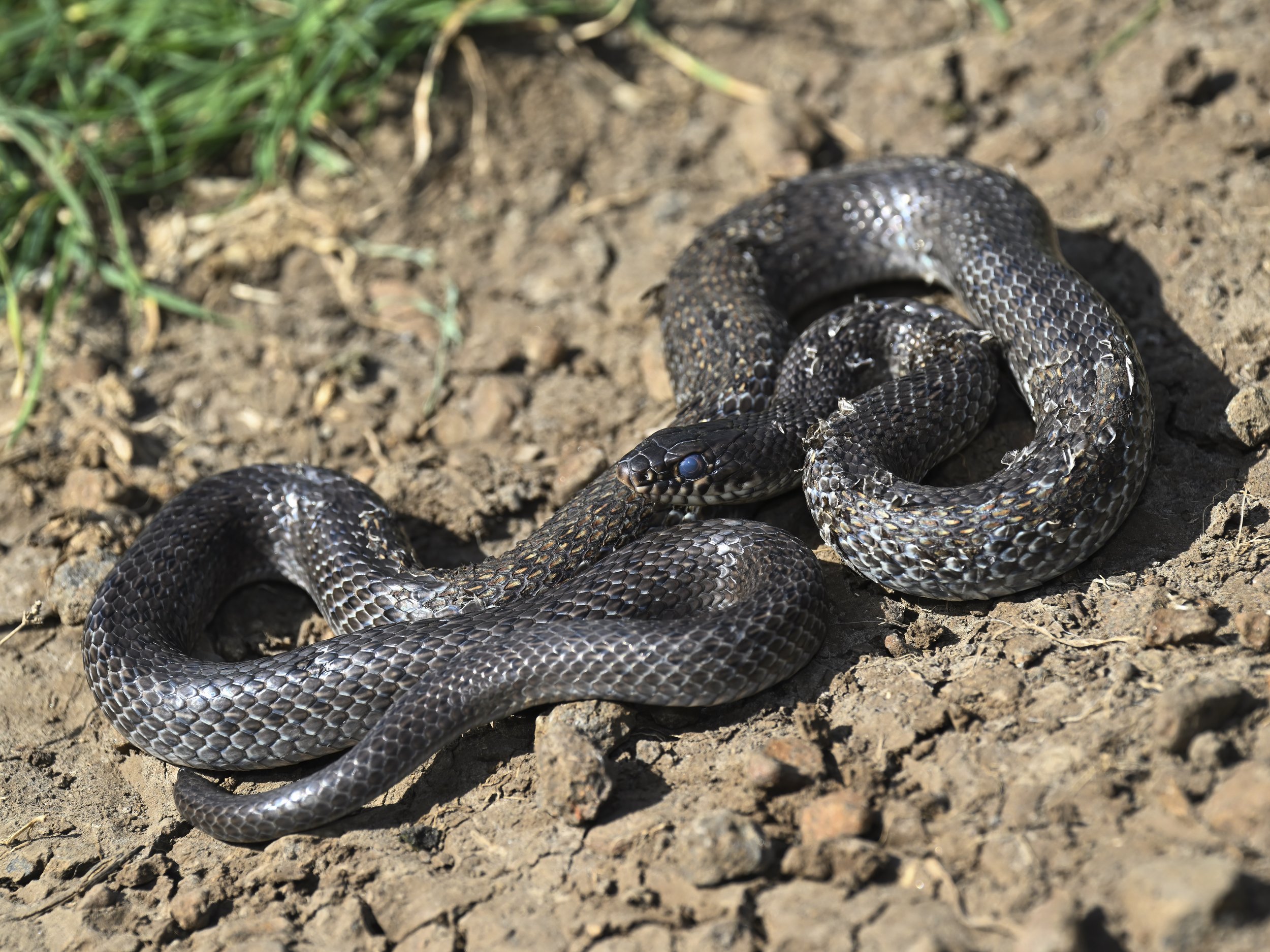
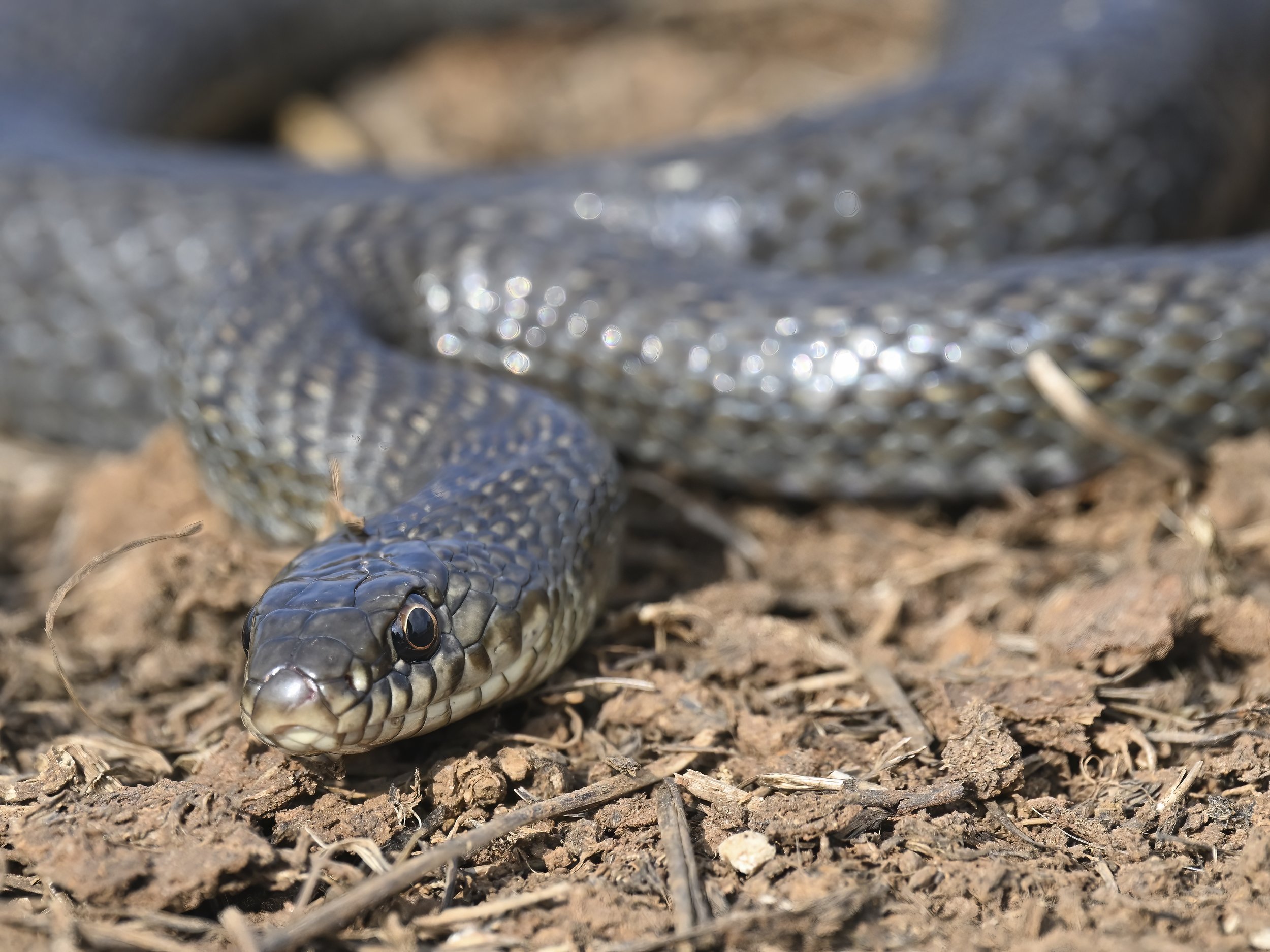
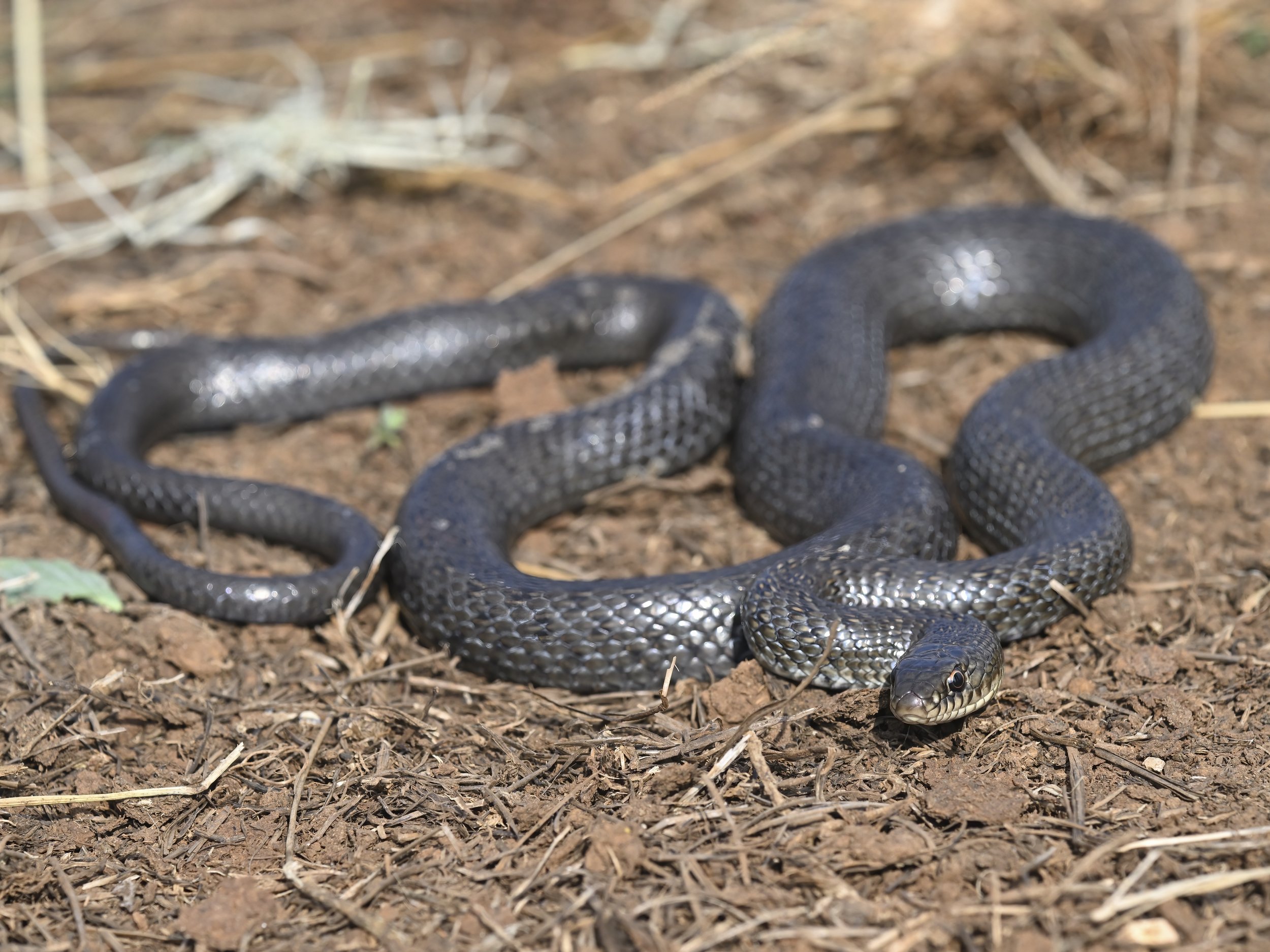
Large Whip Snake\ Dolichophis jugularis
(الحنش الاسود)
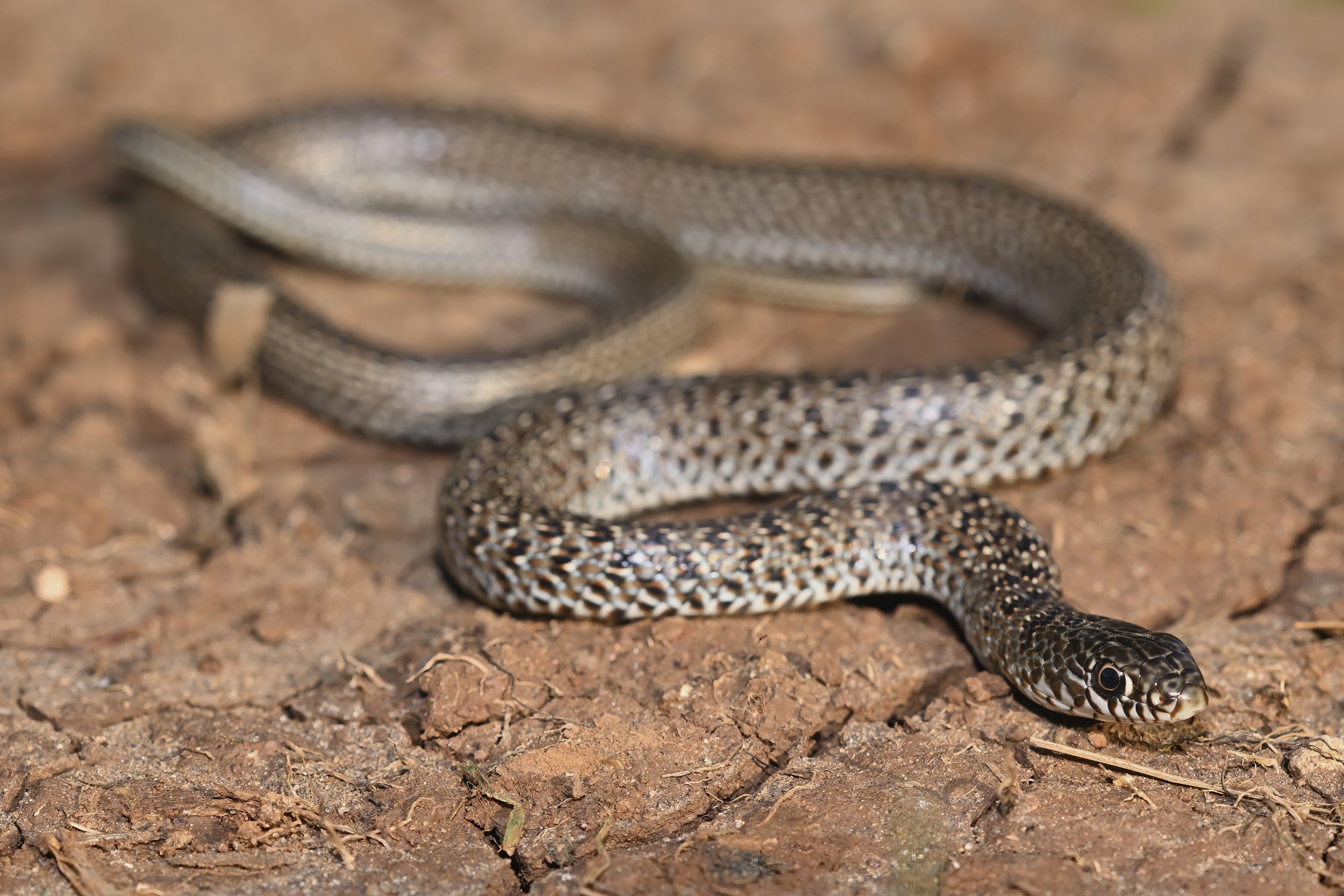
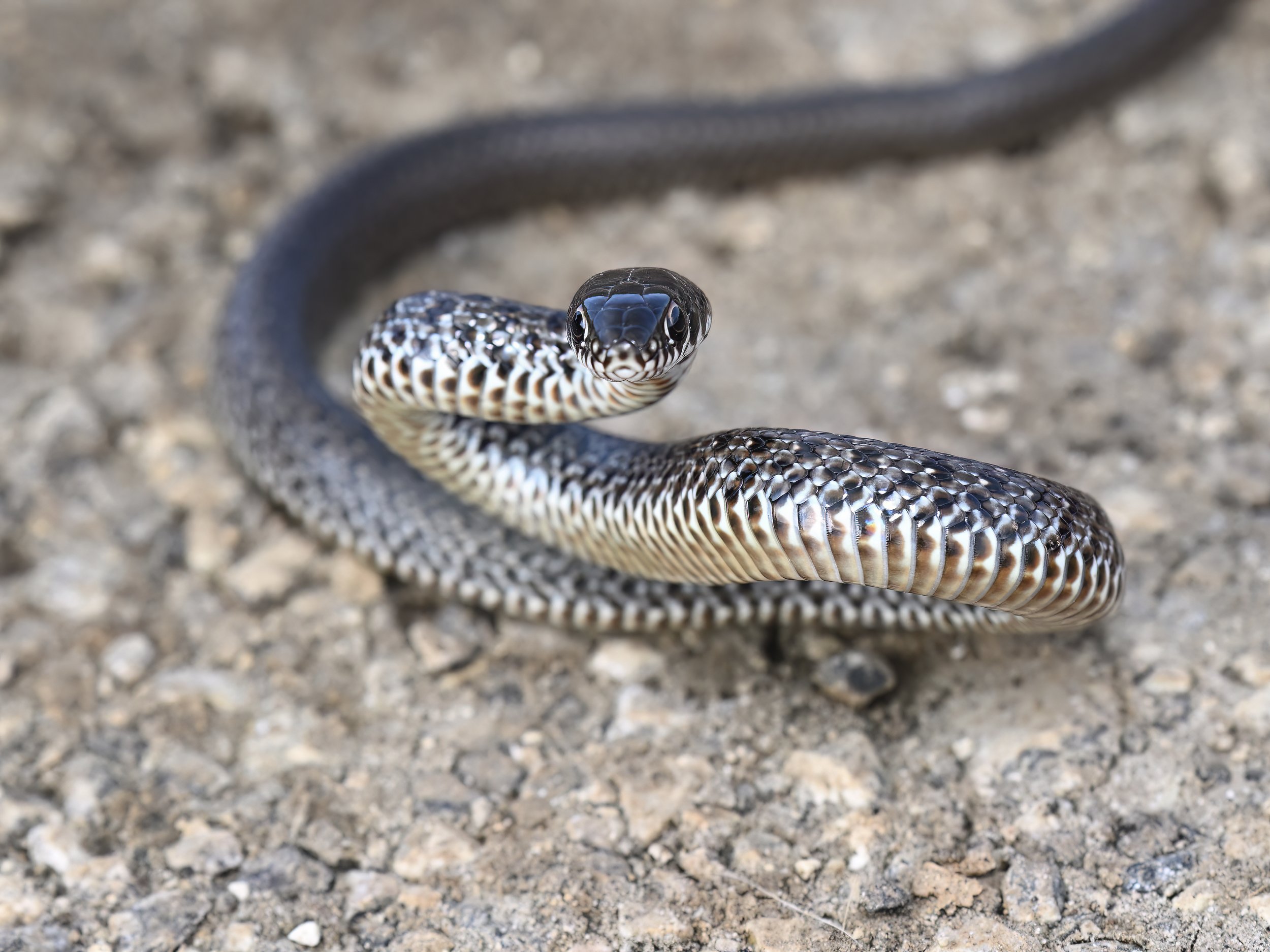
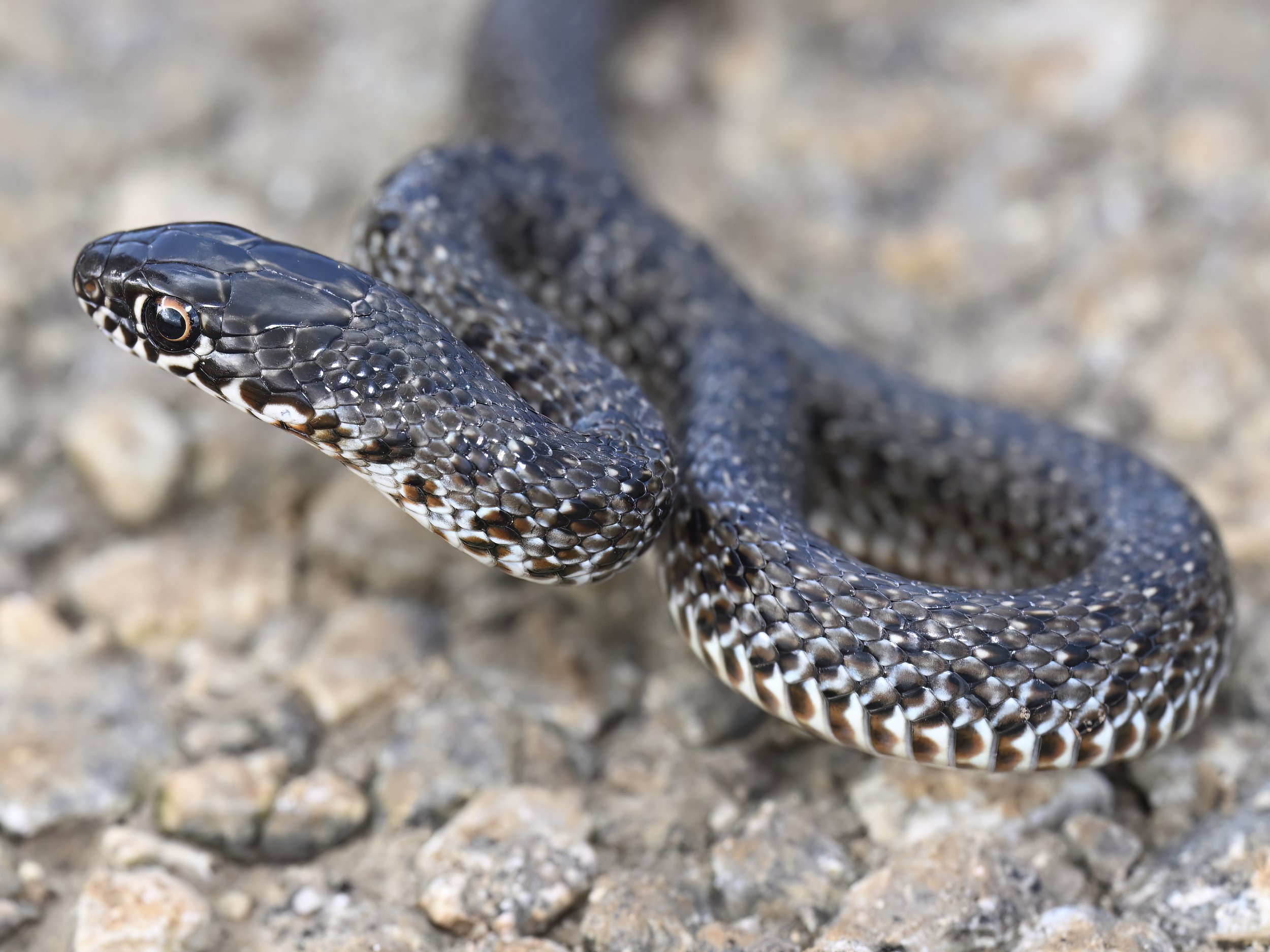
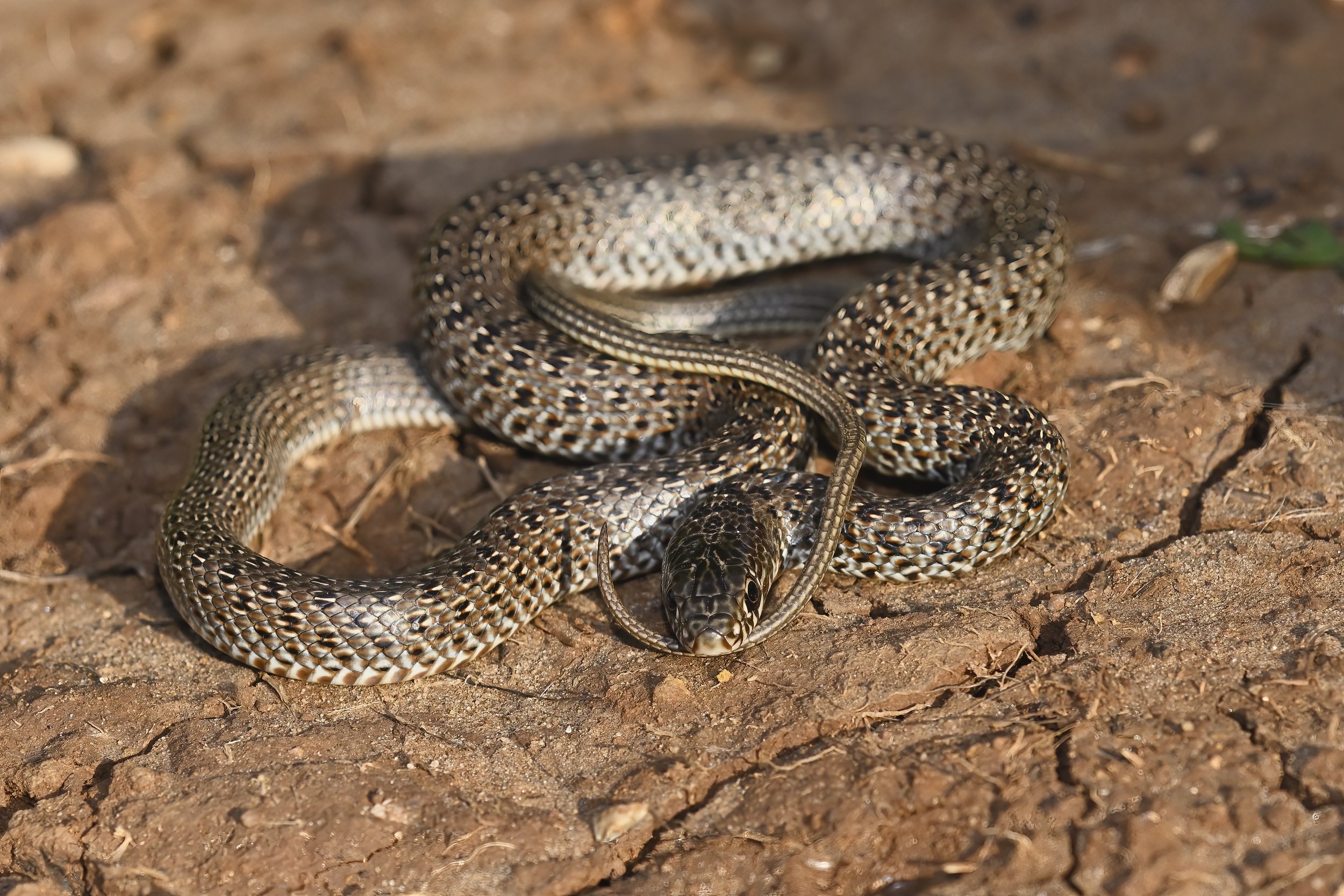
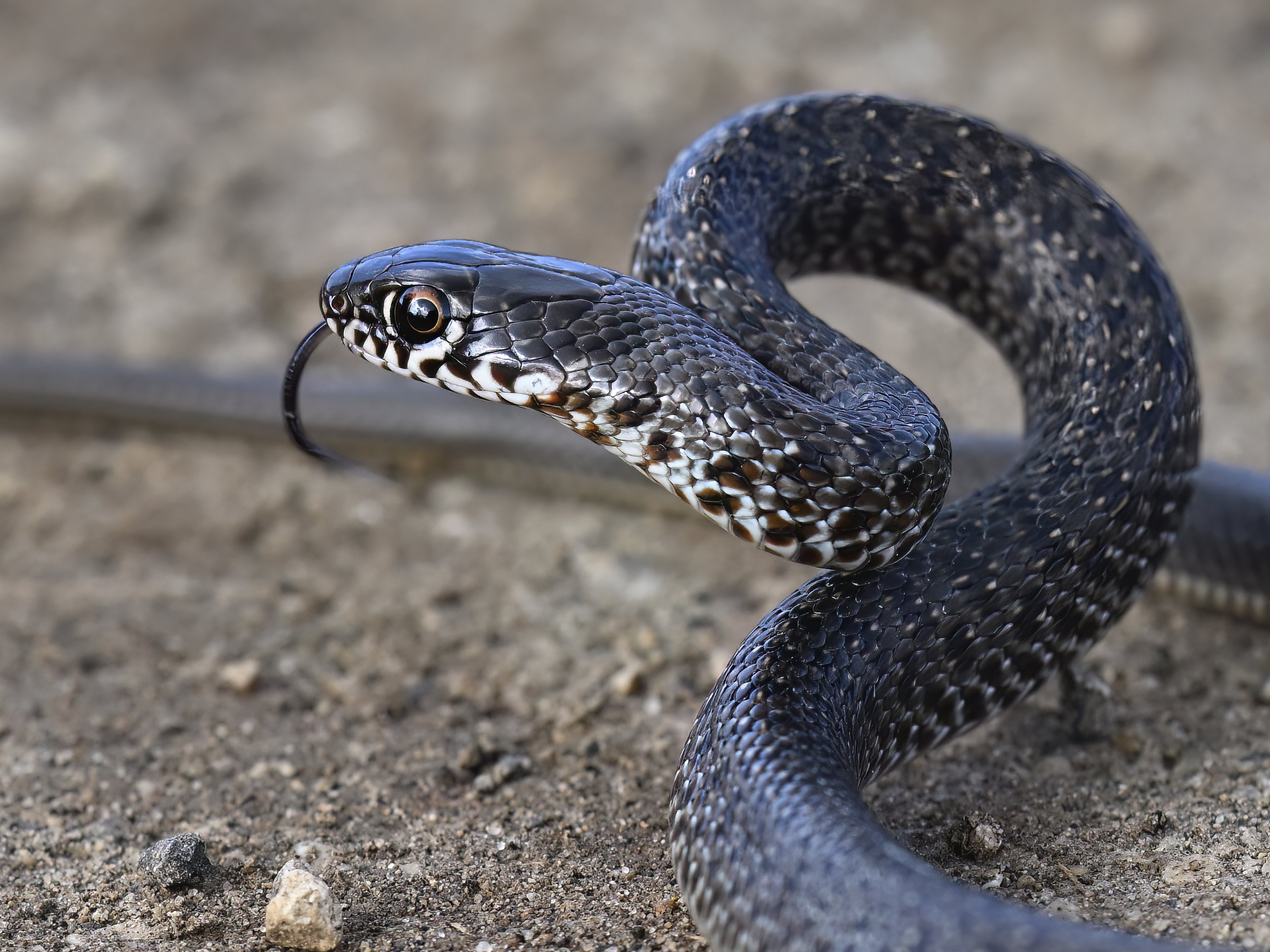
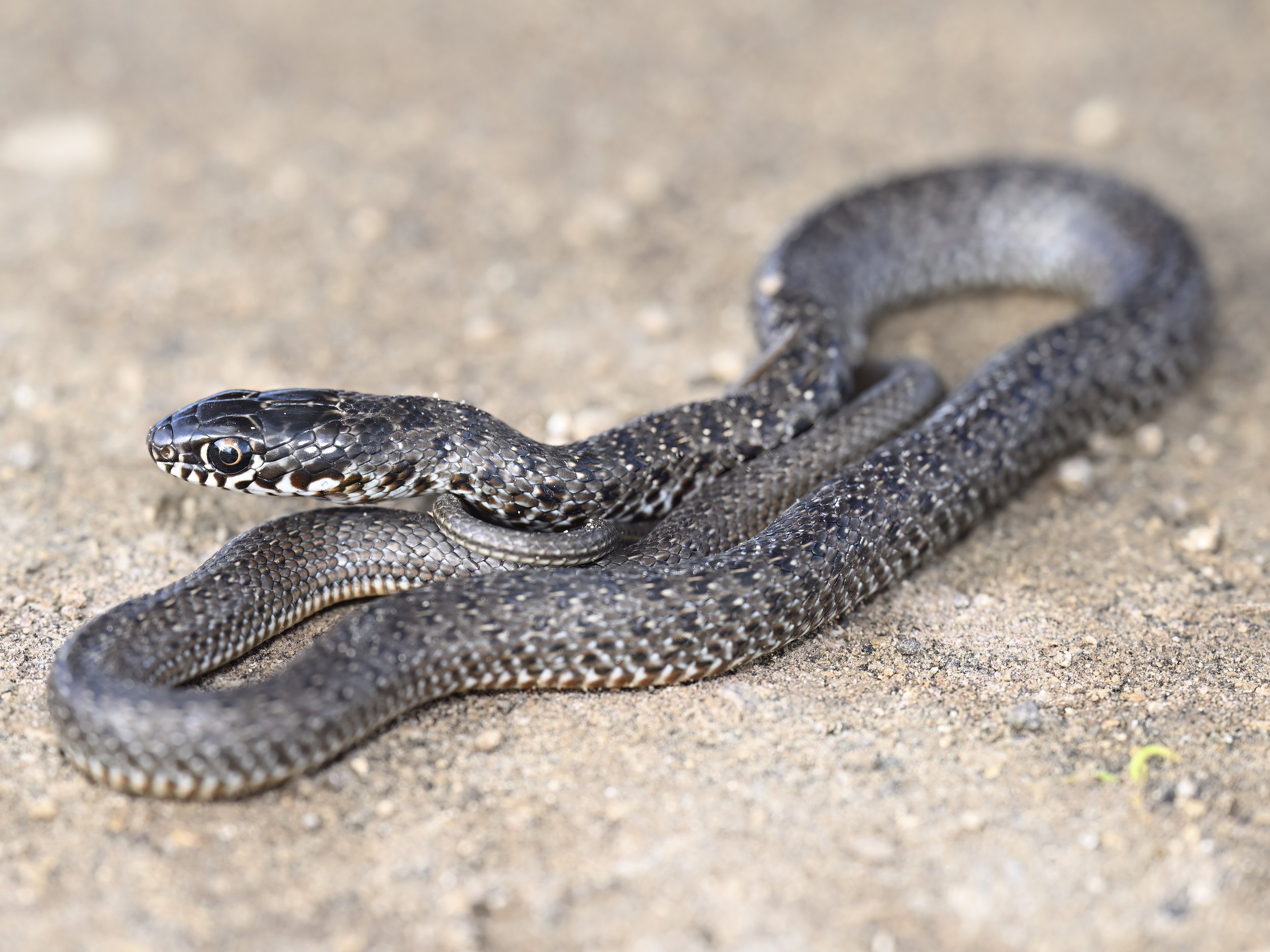
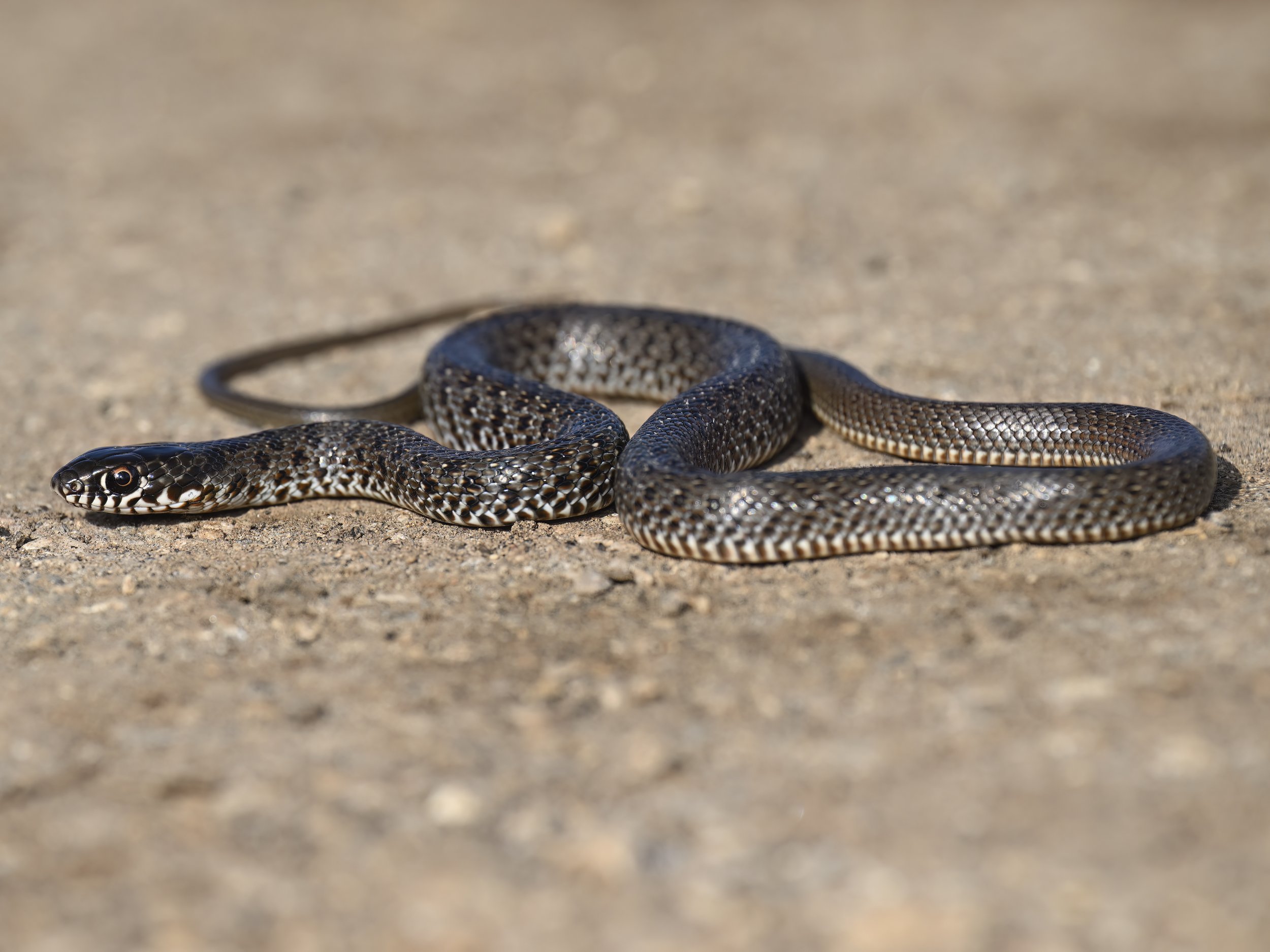
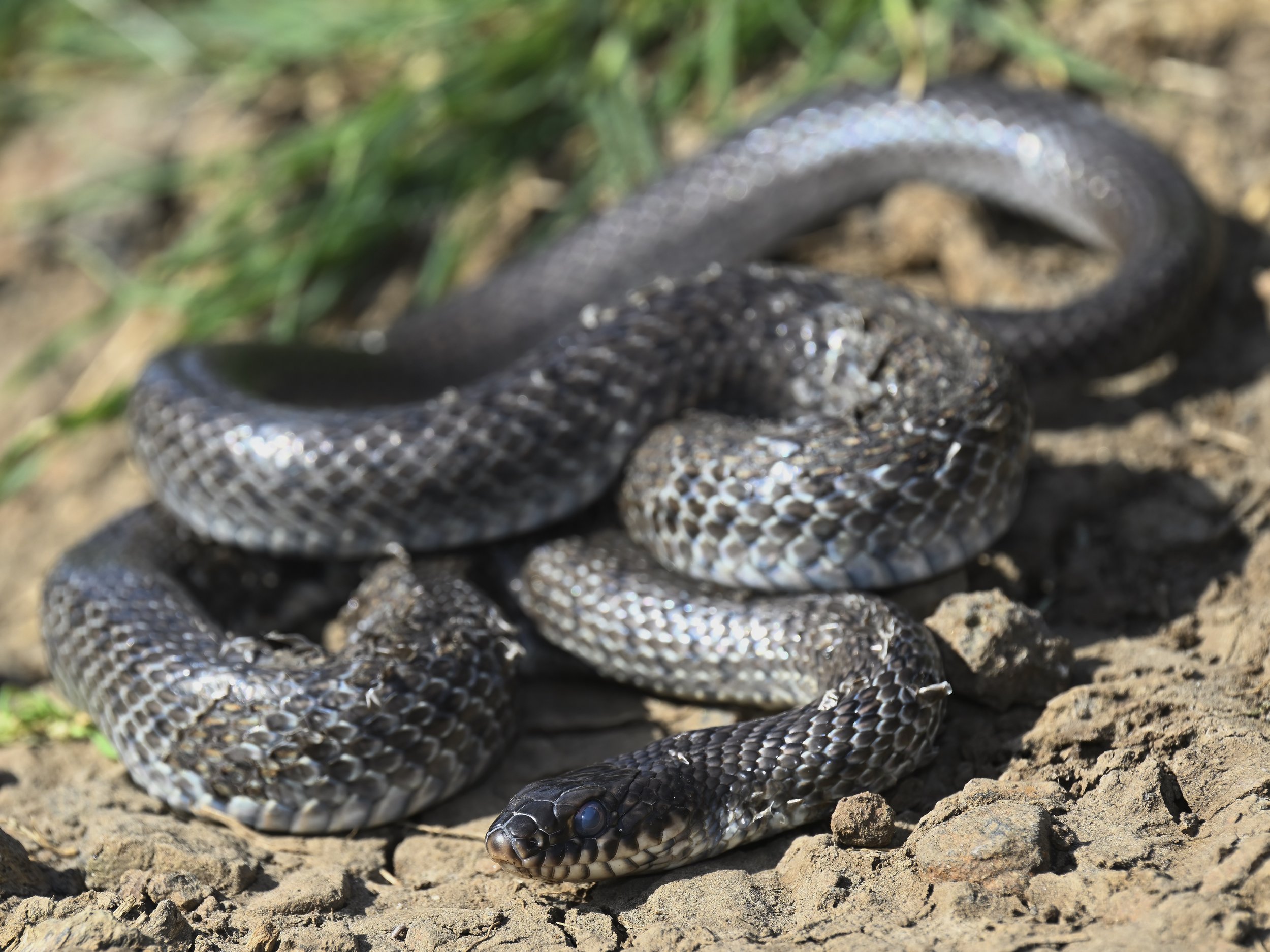
Large whip snake (Dolichophis jugularis), is a captivating snake species native to West Asia, with a distribution encompassing southeastern Europe, the Middle East, and parts of West Asia. Its adaptability is evident in its ability to thrive in various habitats, including rocky slopes, grasslands, scrublands, and even urban areas. Characterized by a slender black glossy and elongated body. Adults of this species can attain lengths exceeding 2.5 meters, making them one of the larger snakes within their range. As carnivores, they prey on small vertebrates such as lizards, rodents, and birds, showcasing remarkable agility in hunting. Reproduction involves the laying of eggs, a common trait among snake species. While specific conservation status details may vary, they are generally not considered globally threatened, though localized threats such as habitat loss may impact certain populations. Studying the black whipsnake provides valuable insights into its ecology, behavior, and significance within the ecosystems it inhabits.
الحنش الأسود هو نوع لافت من الثعابين ينتشر في غرب آسيا، ويشمل نطاقه جنوب شرق أوروبا، والشرق الأوسط، وأجزاء من غرب آسيا. وتظهر قدرته الكبيرة على التكيف من خلال نجاحه في العيش ضمن موائل متنوعة تشمل المنحدرات الصخرية، والمروج، والأراضي الشجيرية، وحتى بعض المناطق الحضرية. ويتميّز هذا النوع بجسمه الطويل النحيل ولونه الأسود اللامع. ويمكن للأفراد البالغة أن تتجاوز 2.5 متر في الطول، مما يجعله من أكبر الثعابين ضمن نطاقه. وبوصفه لاحمًا، فإنه يفترس الزواحف الصغيرة، والقوارض، والطيور، ويُظهر رشاقة ملحوظة في الصيد. ويتكاثر هذا الثعبان بوضع البيوض، وهي سمة شائعة بين كثير من أنواع الثعابين. ورغم أن وضعه الدقيق من ناحية الحماية قد يختلف محليًا، فإنه لا يُعَدّ عمومًا من الأنواع المهددة عالميًا، مع أن فقدان الموائل قد يؤثر في بعض جماعاته على المستوى المحلي. وتوفر دراسة الثعبان السَّوطي الكبير فهمًا مهمًا لبيئته وسلوكه ودوره داخل النظم البيئية التي يعيش فيها




Other Species
-
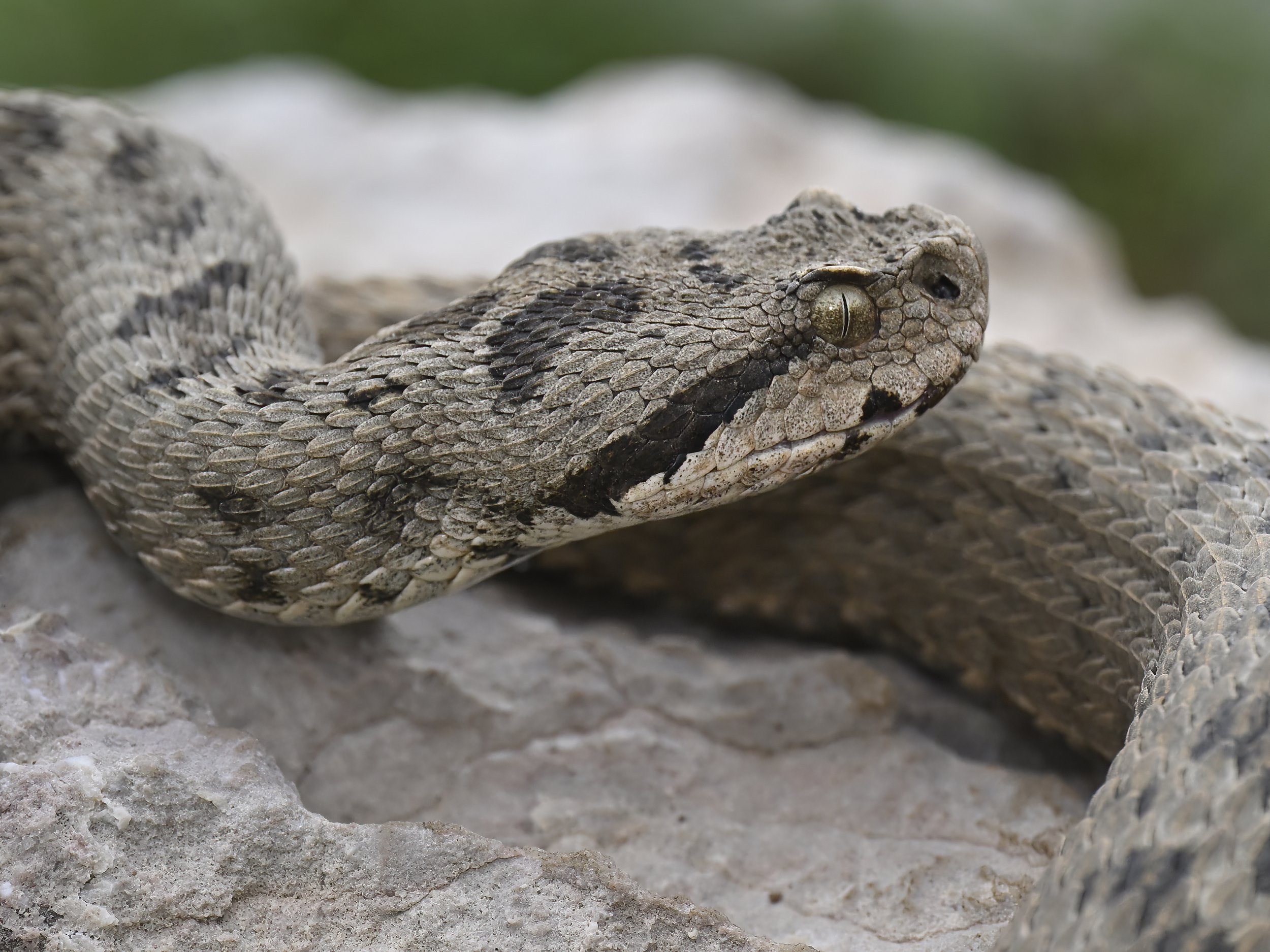
Lebanon Mountain Viper (Montivipera bornmuelleri)
-
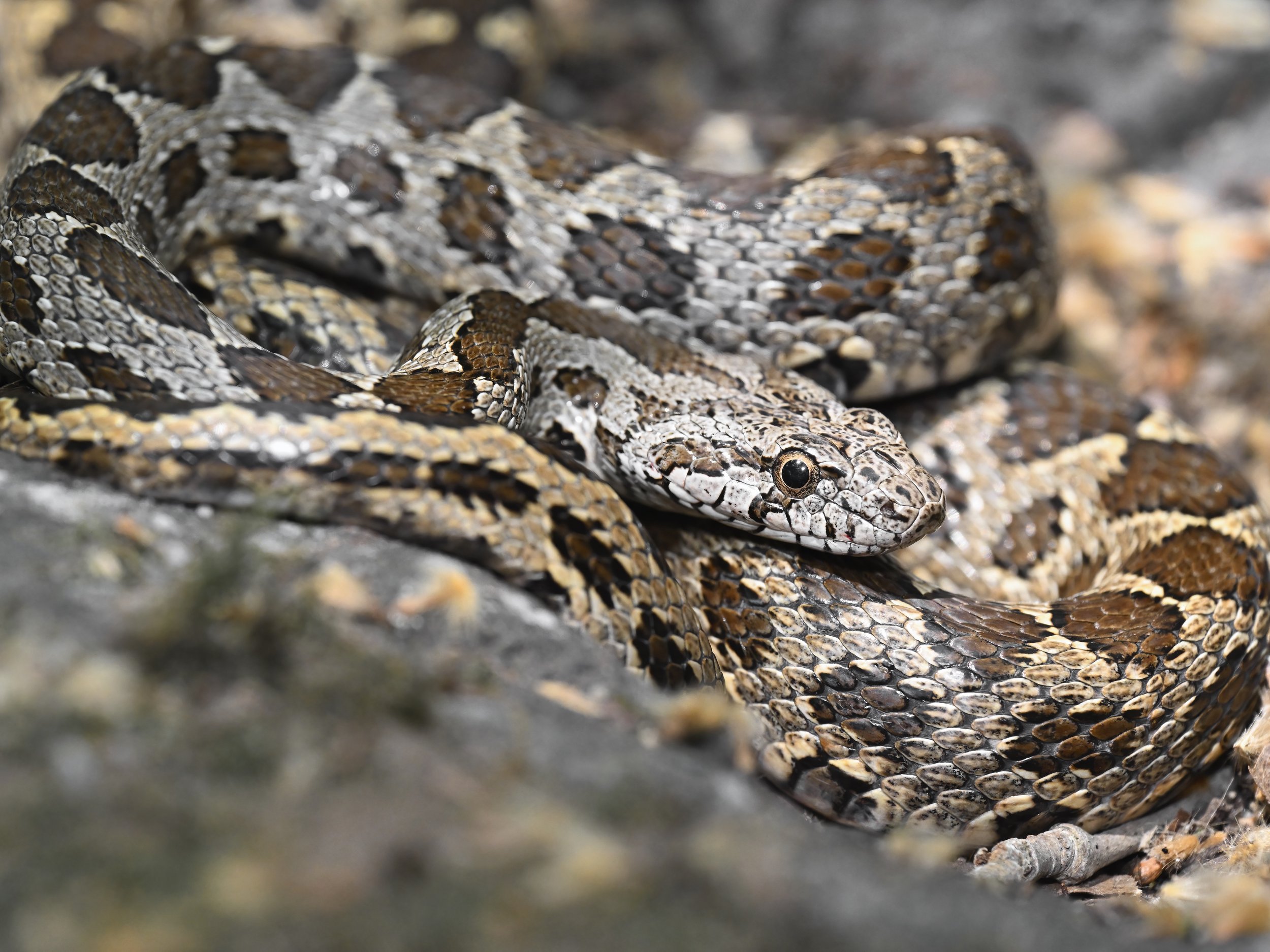
Coin-marked Snake (Hemorrhois nummifer)
-
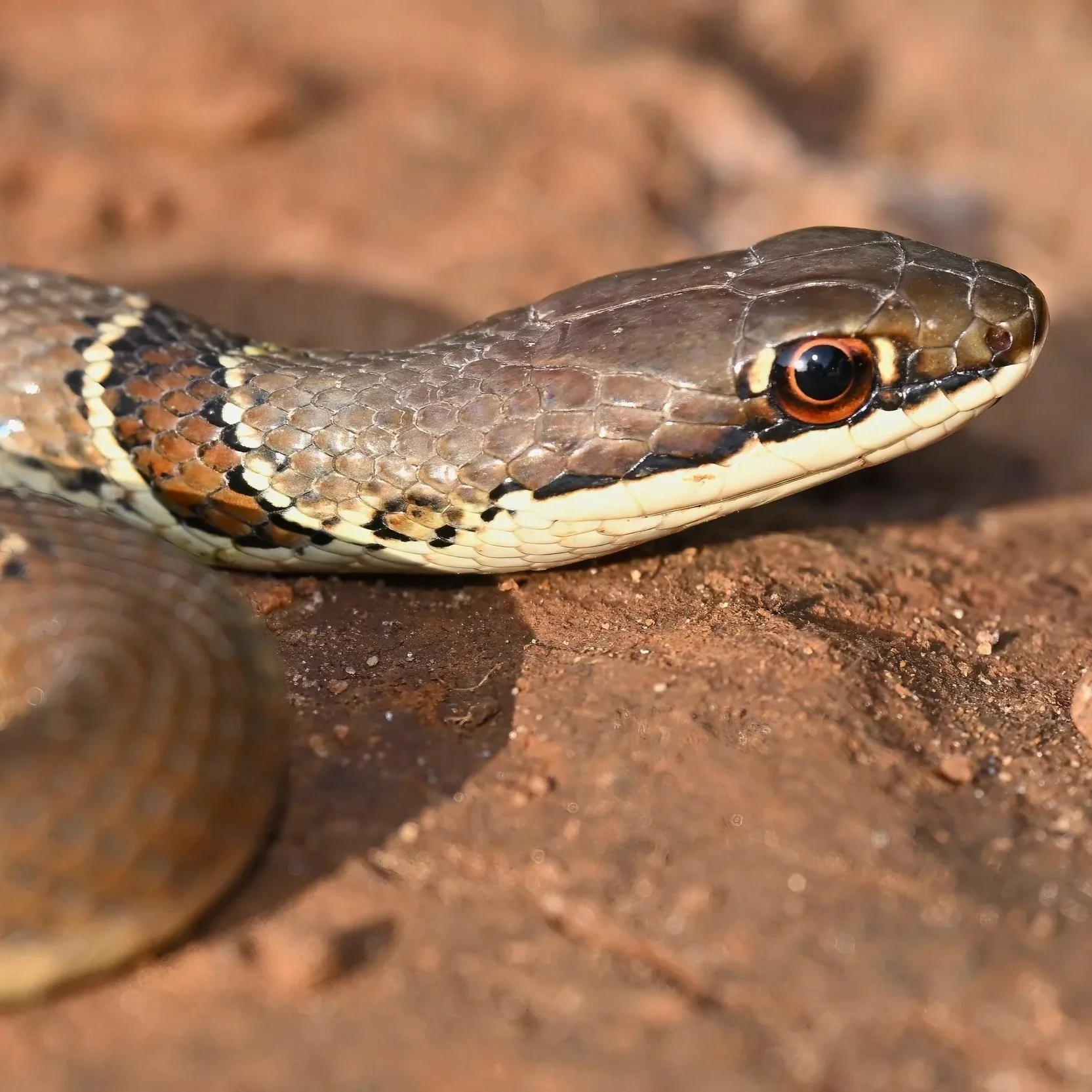
Red Whip Snake (Platyceps collaris)
-
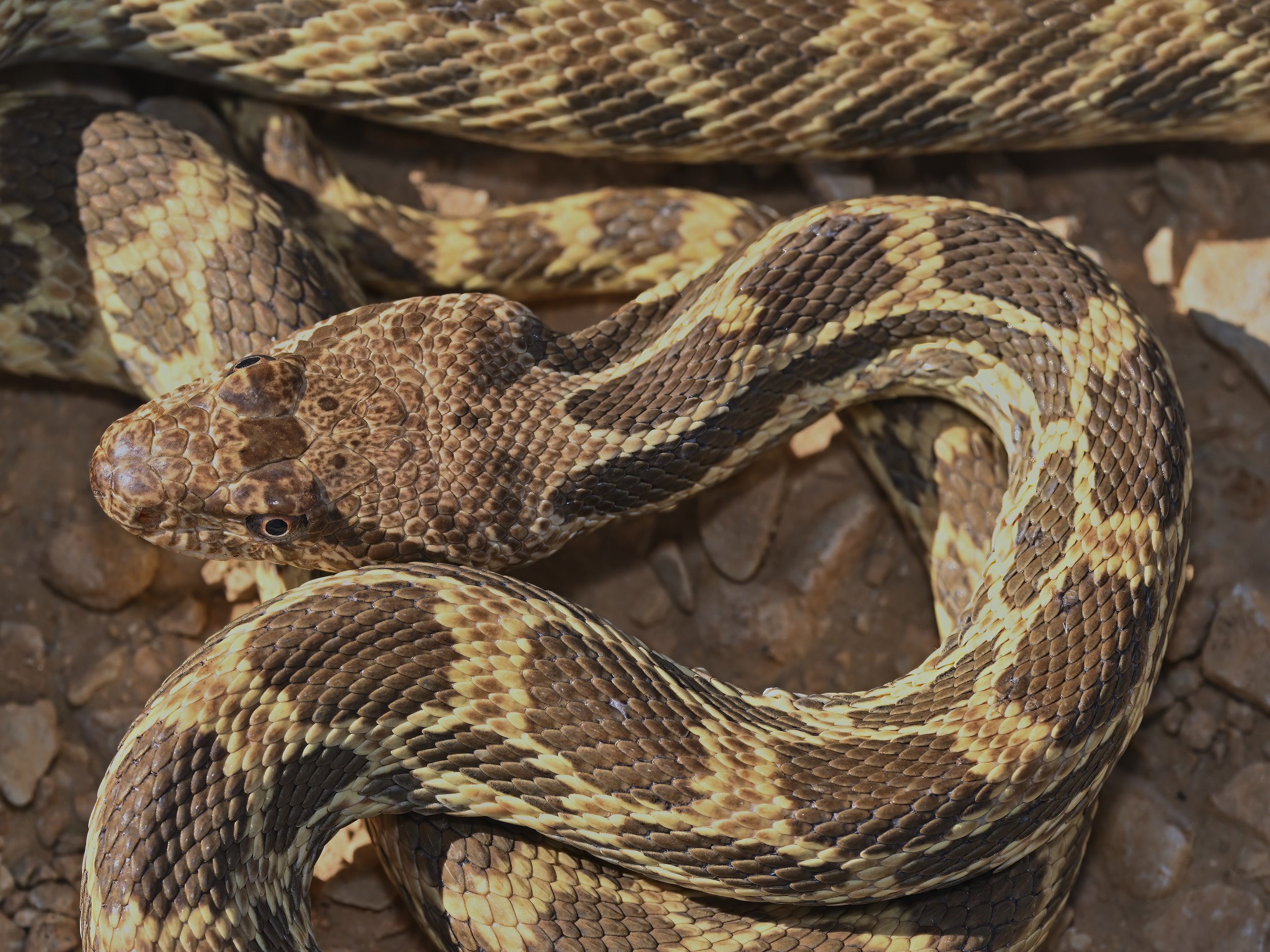
Diadem Snake (Spalerosophis diadema)