
The Unseen Is Already There We often head into the desert to camp, drive off-road, or simply enjoy the scenery, then return home having seen very little wildlife. It is therefore easy to assume that the desert is empty of life. Yet this assumption can be dangerous. When we believe there are no creatures around us, we become less careful about where we drive or camp, how much noise we make, and the traces we leave behind. But the wildlife was there; we simply could not see it.
You can view the full magazine here.
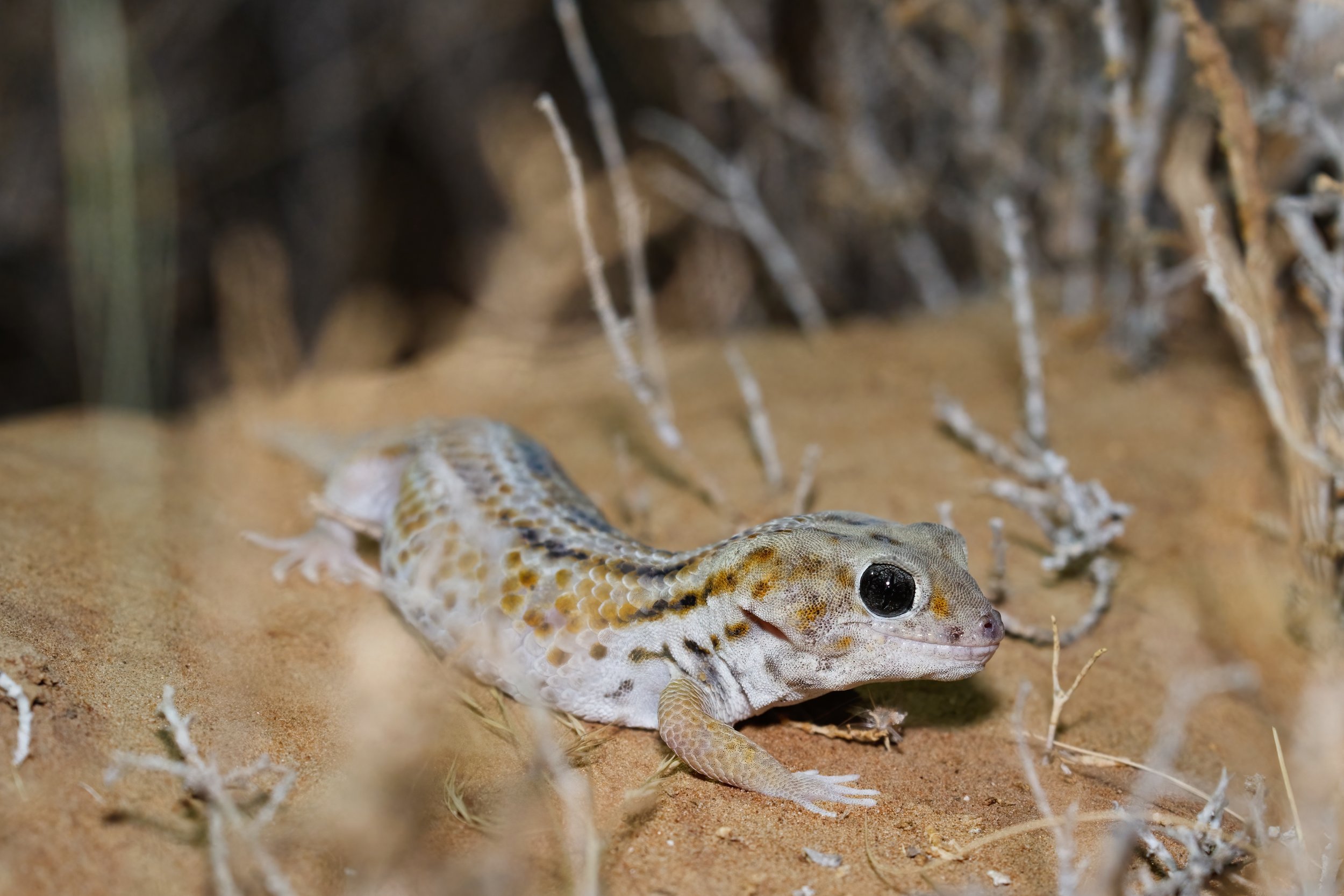
Keyserling’s wonder gecko
(Teratoscincus keyserlingii) is a clear example. Although classified globally as “Least Concern,” it is listed as “Critically Endangered in the United Arab Emirates.” Its local populations are fragmented, making it highly vulnerable to habitat loss and human disturbance. A seemingly empty patch of sand may be an important natural habitat for this species.
Animals Sense Us First
Desert animals often detect us long before we detect
them. They feel vibrations, hear engines and people,
and sense movement. Their natural response is to
hide, remain motionless, move away, or retreat to
safety.
During field visits across the United Arab Emirates,
particularly in Ras Al Khaimah, I encountered many
species that are easily overlooked.
An Invisible Environmental Impact
Our environmental impact is therefore greater than
we see. Disturbance does not always mean finding
an injured animal. A bird may abandon its resting
place, a burrow may be damaged, plants crushed,
or wildlife may avoid an area because of repeated
noise, vehicle movement, or human activity. One
person’s impact may seem limited, but when hun-
dreds or thousands of visitors repeat that behaviour,
environmental pressures become far greater.
Guests in a Living Habitat
The desert is not barren land, but a living ecosys-
tem. When we enter it, we are its guests. We should
drive responsibly, stay on established tracks, avoid
disturbing burrows and plants, maintain a distance
from wildlife, keep noise low, and leave no waste.
Sometimes, the most important wildlife encounter
is the one we never see. Failing to see wildlife does
not mean it is absent; often, it has seen, heard, or
sensed us before we discover its presence.
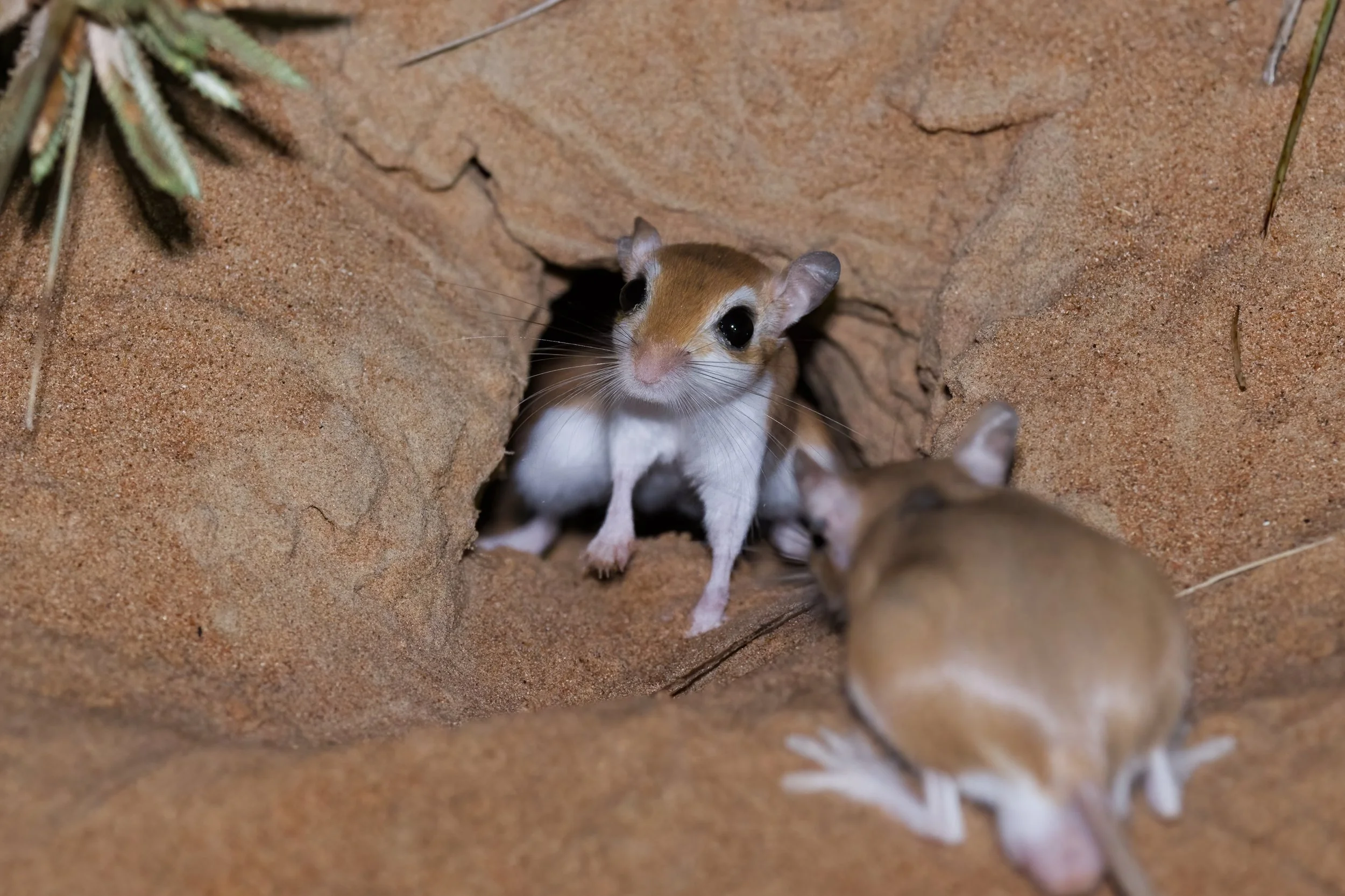
Cheesman’s Gerbil
(Gerbillus cheesmani) is rarely seen by day, spending most of its time inside burrows. Only tracks or tiny openings in the sand may reveal its presence. Although globally classified as “Least Concern,” its burrows can be damaged by vehicles, campsites, and repeated soil disturbance. This requires caution when visiting its natural habitats
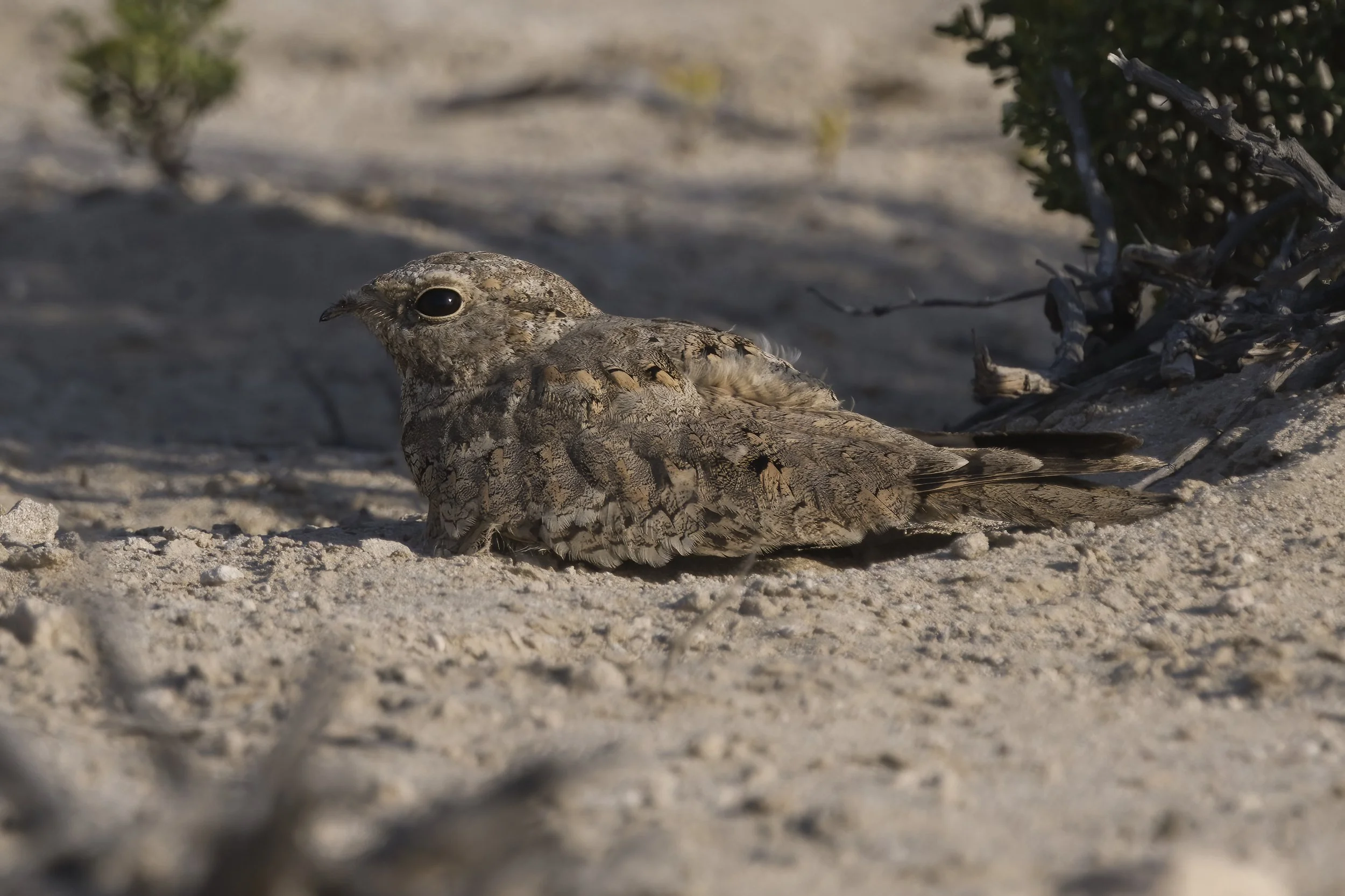
Egyptian Nightjar
(Caprimulgus aegyptius), also classified globally as “Least Concern,” has remarkable camouflage that makes it almost disappear against the desert
floor. Because it rests and nests on the ground, it becomes vulnerable when people, vehicles, and photographers approach too closely.
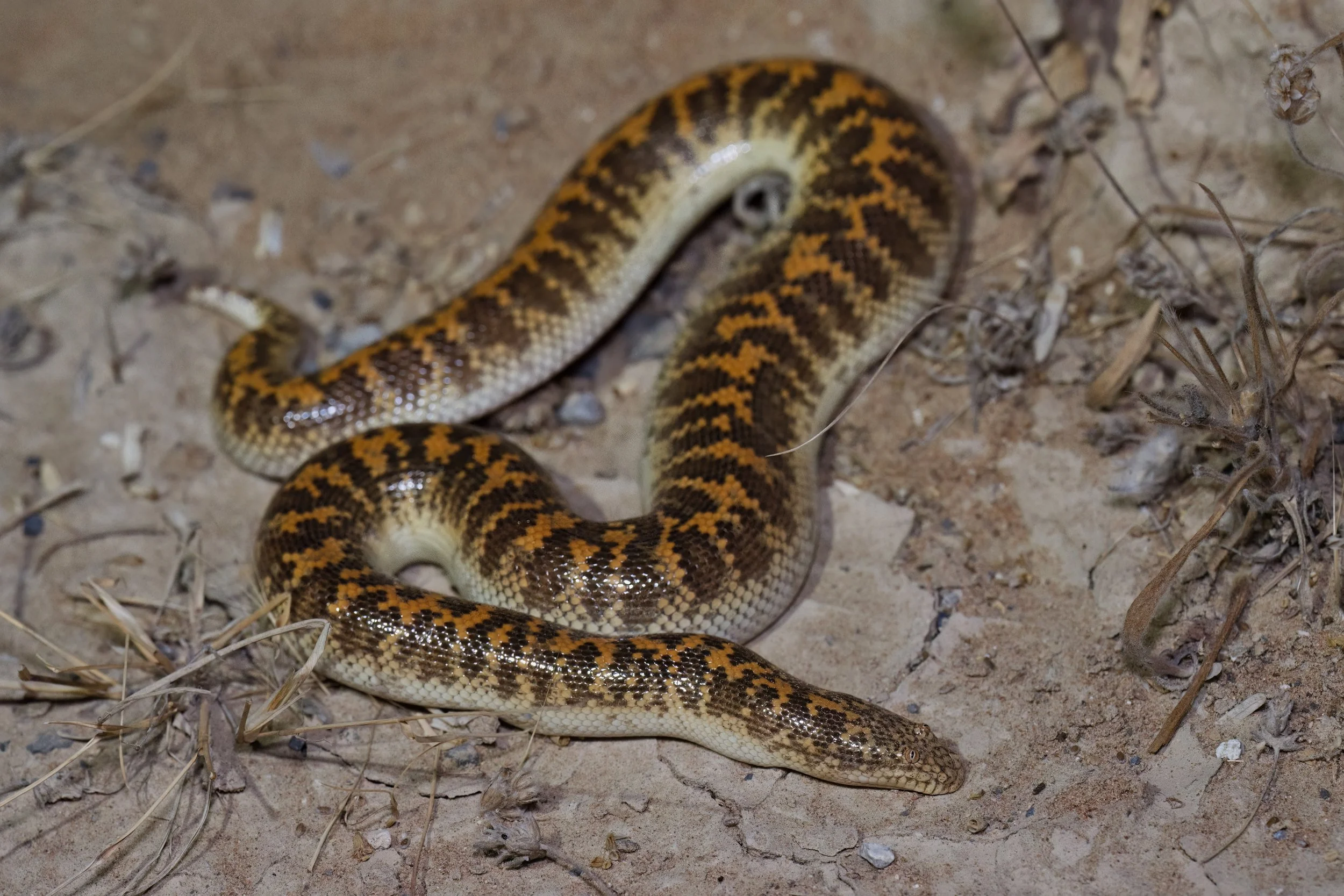
Arabian Sand Boa
Life continues beneath the sand. The Arabian sand boa (Eryx jayakari), globally classified as “Least Concern,” spends most of its time buried below the
surface. A vehicle may cross a seemingly empty dune while passing over reptile habitat, without the driver realizing it.