

Arabian Sand Boa \ Eryx jayakari
( دساس الرمال العربية)
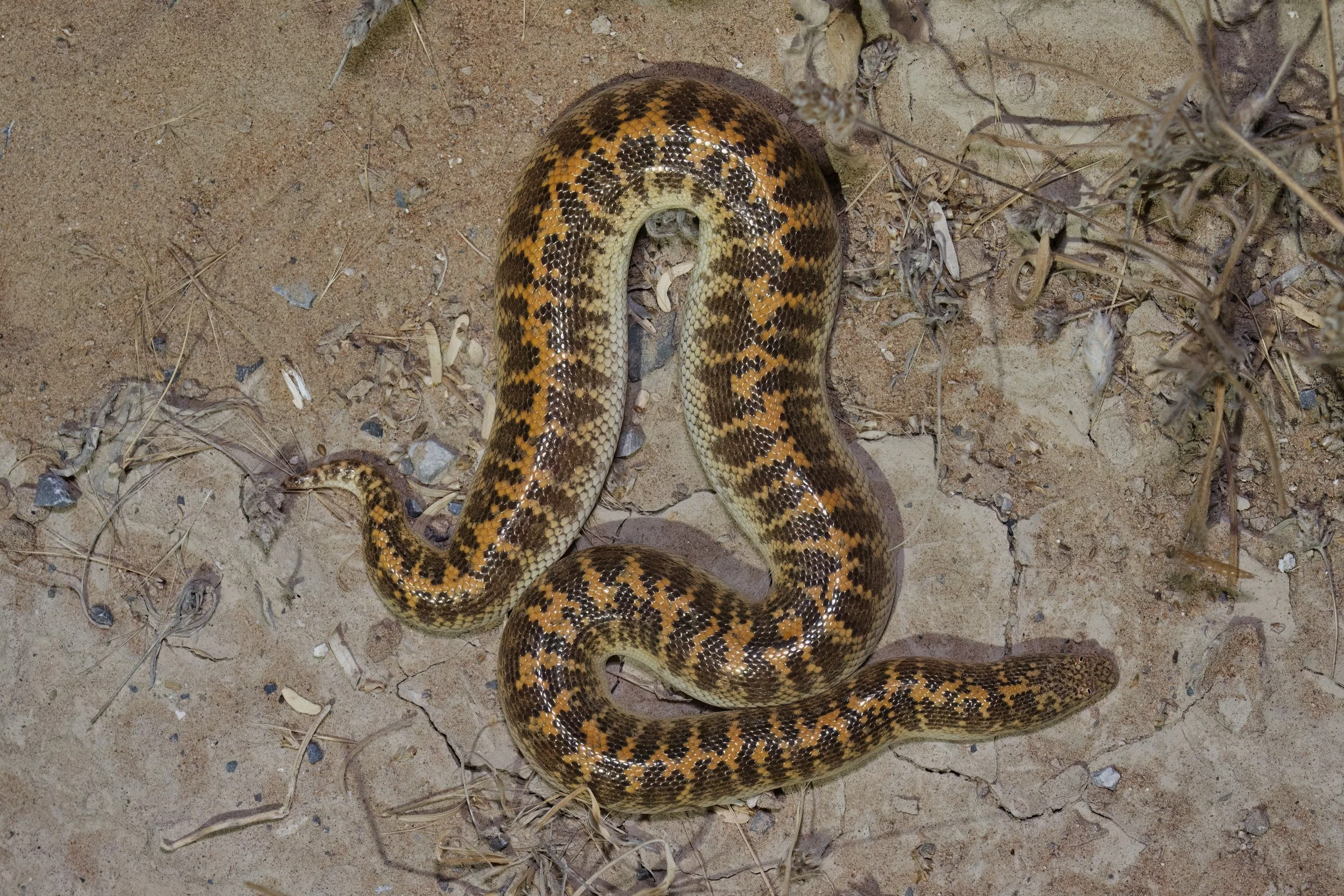
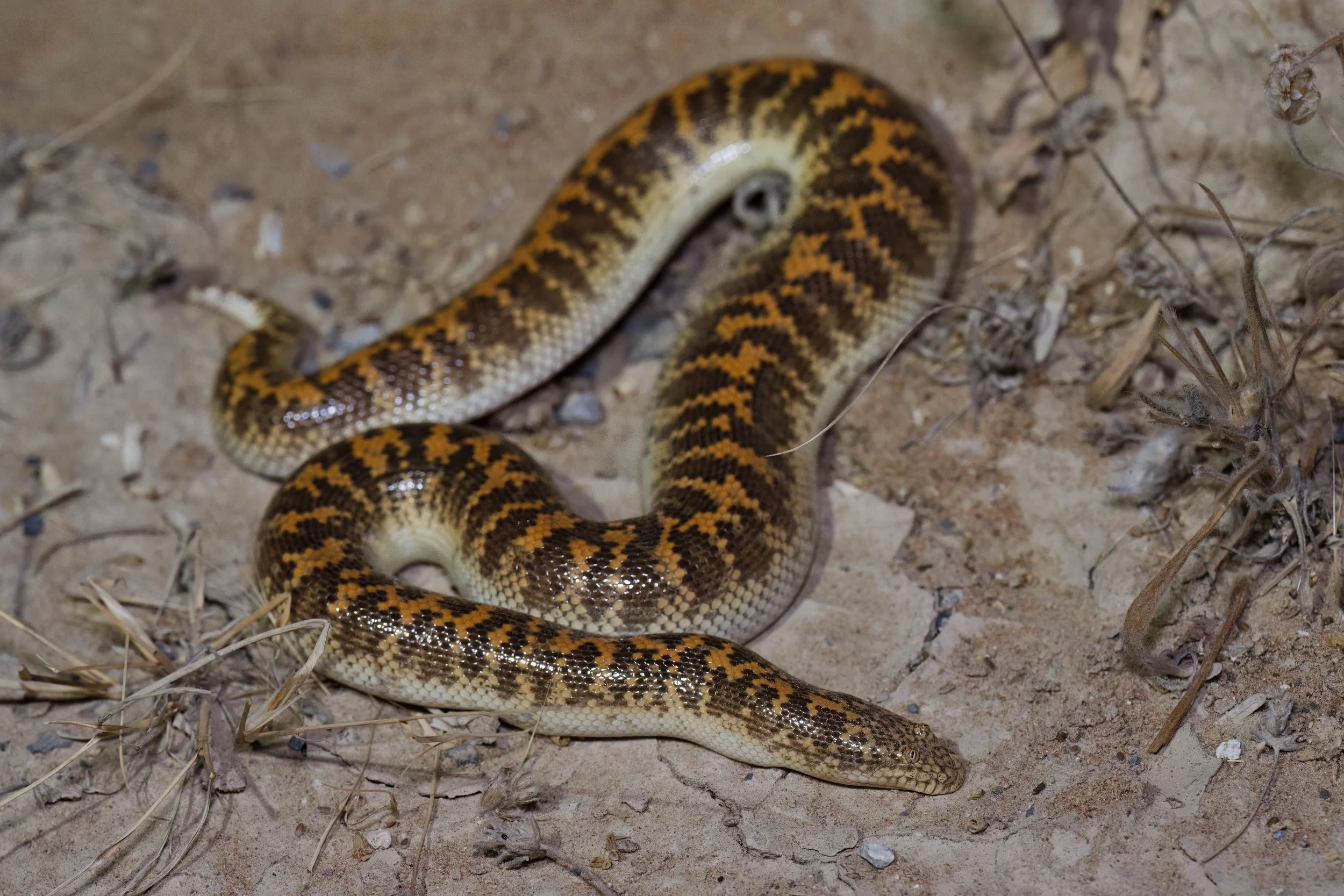
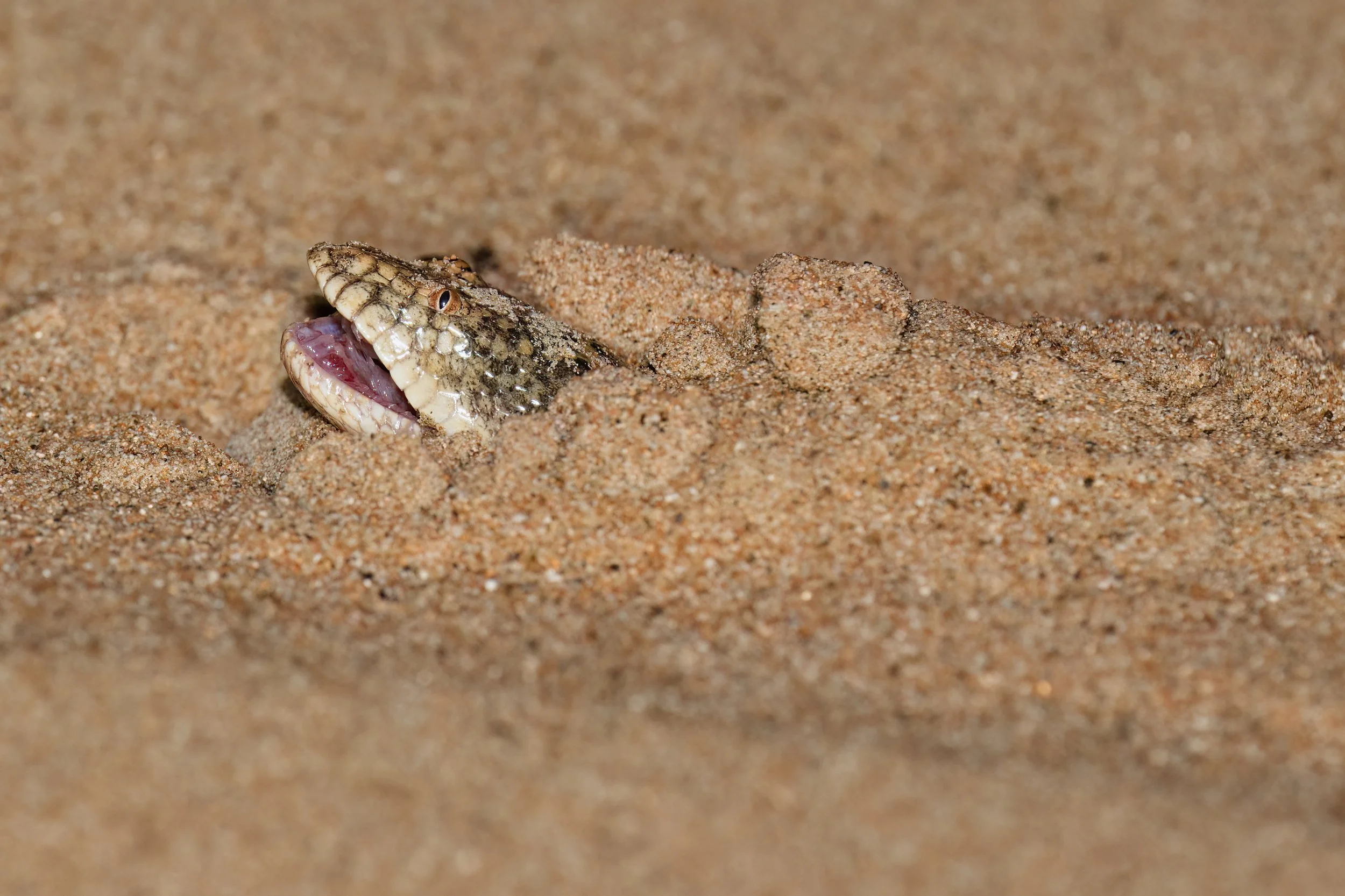
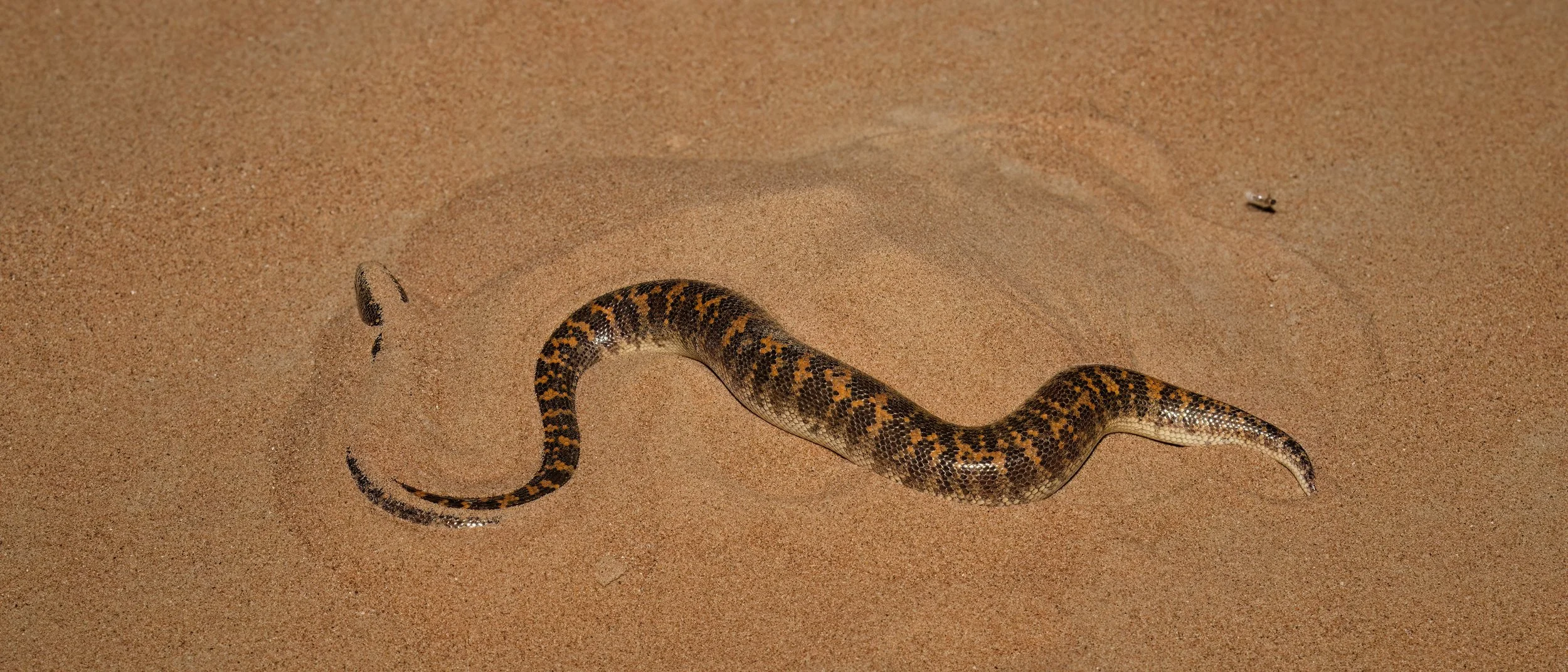
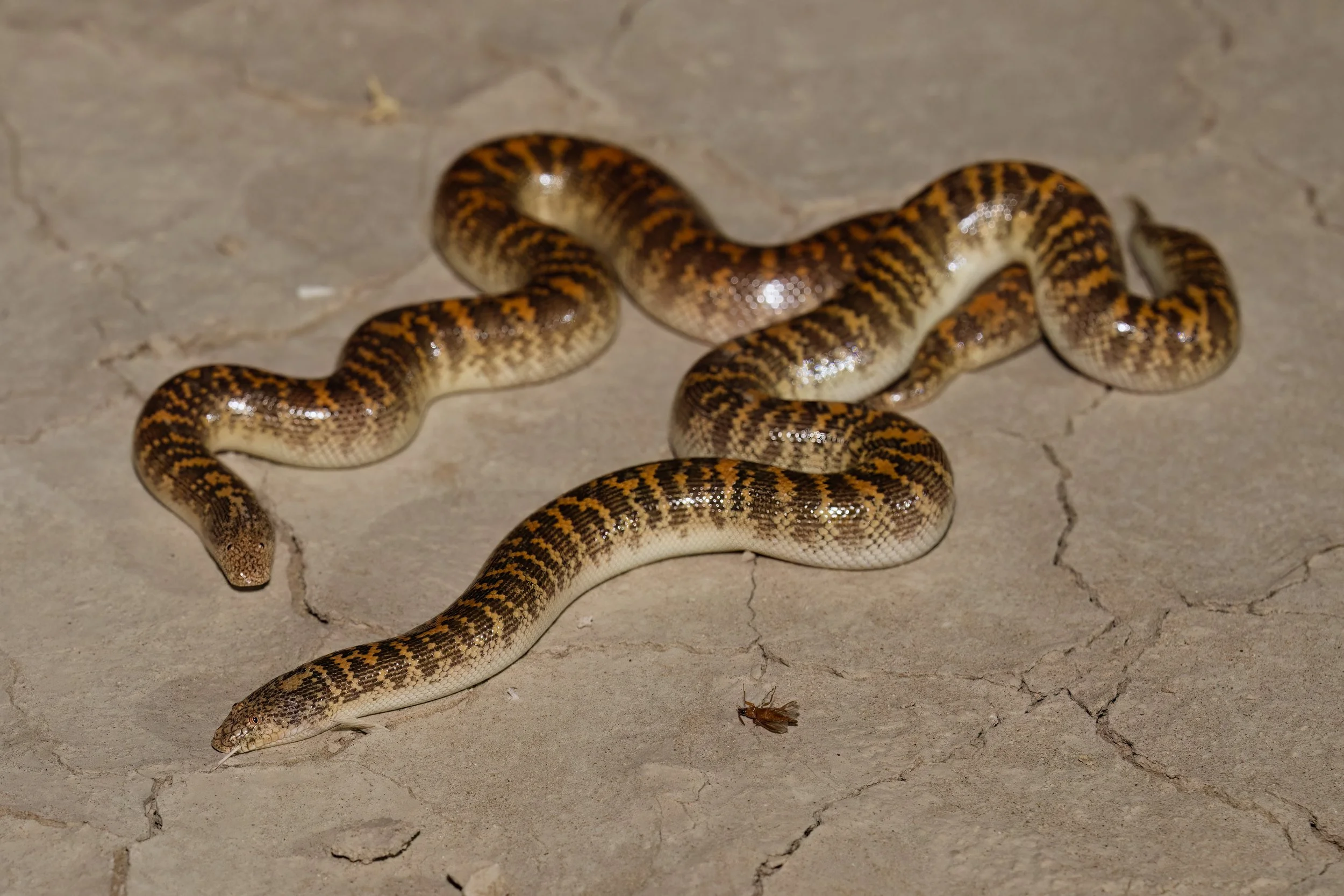
The Arabian Sand Boa (Eryx jayakari) is a small, burrowing desert snake perfectly adapted to life beneath loose sand. With a stout cylindrical body, smooth scales, and a blunt tail that can resemble the head, it spends most of its time partially or fully buried, leaving only its eyes exposed to ambush passing prey. Its coloration ranges from pale sandy beige to light brown, often marked with darker blotches that enhance camouflage in dune and gravel habitats. Non-venomous and primarily nocturnal, the Arabian Sand Boa feeds on small lizards, rodents, and occasionally insects. Rather than fleeing quickly, it relies on concealment and sudden strikes, embodying the quiet, hidden life that defines much of the UAE’s desert biodiversity.
دساس الرمال العربية هي ثعبان صحراوي صغير حفّار، متكيف بشكل مثالي للحياة تحت الرمال المفككة. يتميز بجسم أسطواني ممتلئ، وحراشف ناعمة، وذيل قصير غير مدبب قد يشبه الرأس، ما يساعد في خداع المفترسات. يقضي معظم وقته مدفونًا جزئيًا أو كليًا تحت الرمال، ولا يظهر سوى عينيه أثناء ترصده للفريسة المارة
يتراوح لونه بين الرملي الفاتح والبني الفاتح، وغالبًا ما يكون مزودًا ببقع داكنة تعزز قدرته على التمويه في بيئات الكثبان الرملية والمناطق الحصوية. هذا النوع غير سام وينشط بشكل رئيسي ليلًا، حيث يتغذى على السحالي الصغيرة والقوارض وأحيانًا الحشرات
بدلًا من الهروب السريع، يعتمد على التخفي والضربات المفاجئة، مجسدًا نمط الحياة الهادئ والخفي الذي يميز الكثير من كائنات الصحراء في دولة الإمارات
-
No. The Arabian Sand Boa (Eryx jayakari) is non-venomous and is not considered dangerous to people. It relies on camouflage and constriction to capture small prey rather than venom.
-
The Arabian Sand Boa is generally harmless and avoids confrontation. Like any wild snake, it may defend itself if handled or restrained, but it does not pose a serious threat to people. It should still be observed without touching or disturbing it.
-
In the UAE, it is mainly associated with sandy deserts, dunes and areas with loose soil where it can move beneath the surface. It may also occur in suitable gravelly desert habitats where patches of soft sand are available.
-
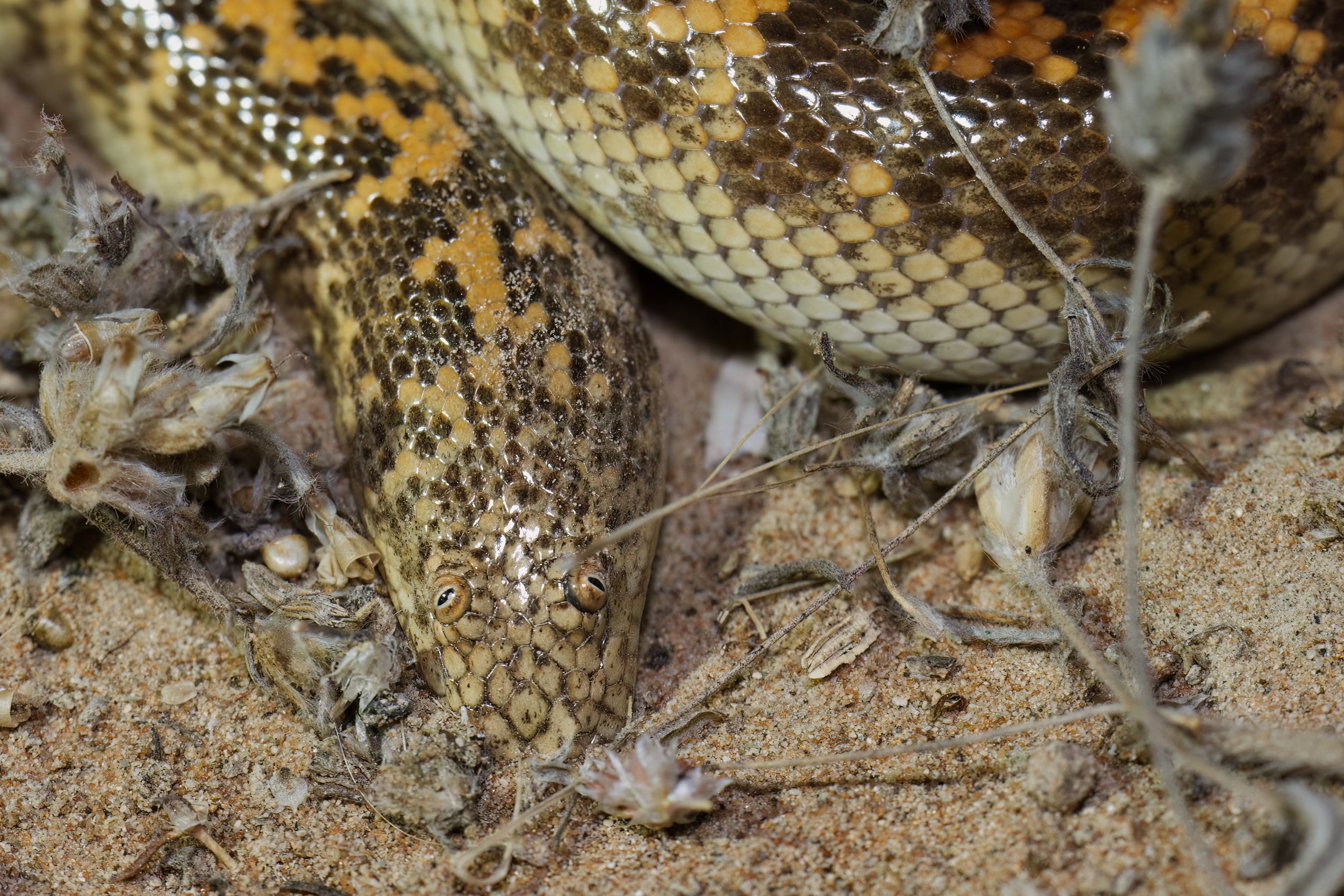
Its small eyes are positioned high on the head so the snake can remain almost completely buried while still watching the surface. This is an adaptation for concealment and ambush hunting.
-
Burying helps it remain hidden from predators, avoid extreme surface temperatures and wait unseen for prey. It often stays beneath the sand with only its eyes or part of its head exposed.
-
It is primarily nocturnal. During the hotter parts of the day, it usually remains concealed beneath the sand and becomes more active after sunset.
-
Its diet includes small desert animals such as geckos, other small reptiles, rodents and arthropods. It usually waits beneath the sand and attacks prey that passes nearby.
-
It is an ambush predator. Rather than chasing prey over long distances, it hides beneath the sand and strikes suddenly when a suitable animal comes within reach.
-
It is a relatively small, thick-bodied snake. Adults are commonly around 30 to 50 centimetres long, although size can vary between individuals.
-
It has a short, thick and cylindrical body, a blunt head, very small eyes positioned high on the head, smooth scales and a short rounded tail. Its colour is usually sandy beige, yellowish or light brown, with darker irregular markings.
-
It can be difficult to observe because it spends much of its life hidden beneath the sand and is mainly active at night. Being rarely seen does not necessarily mean that it is genuinely rare.
-
Observe it from a respectful distance and allow it to move naturally. Do not pick it up, dig it out, relocate it for photography or repeatedly block its movement. Avoid publicly sharing its precise location.
Other Species
-
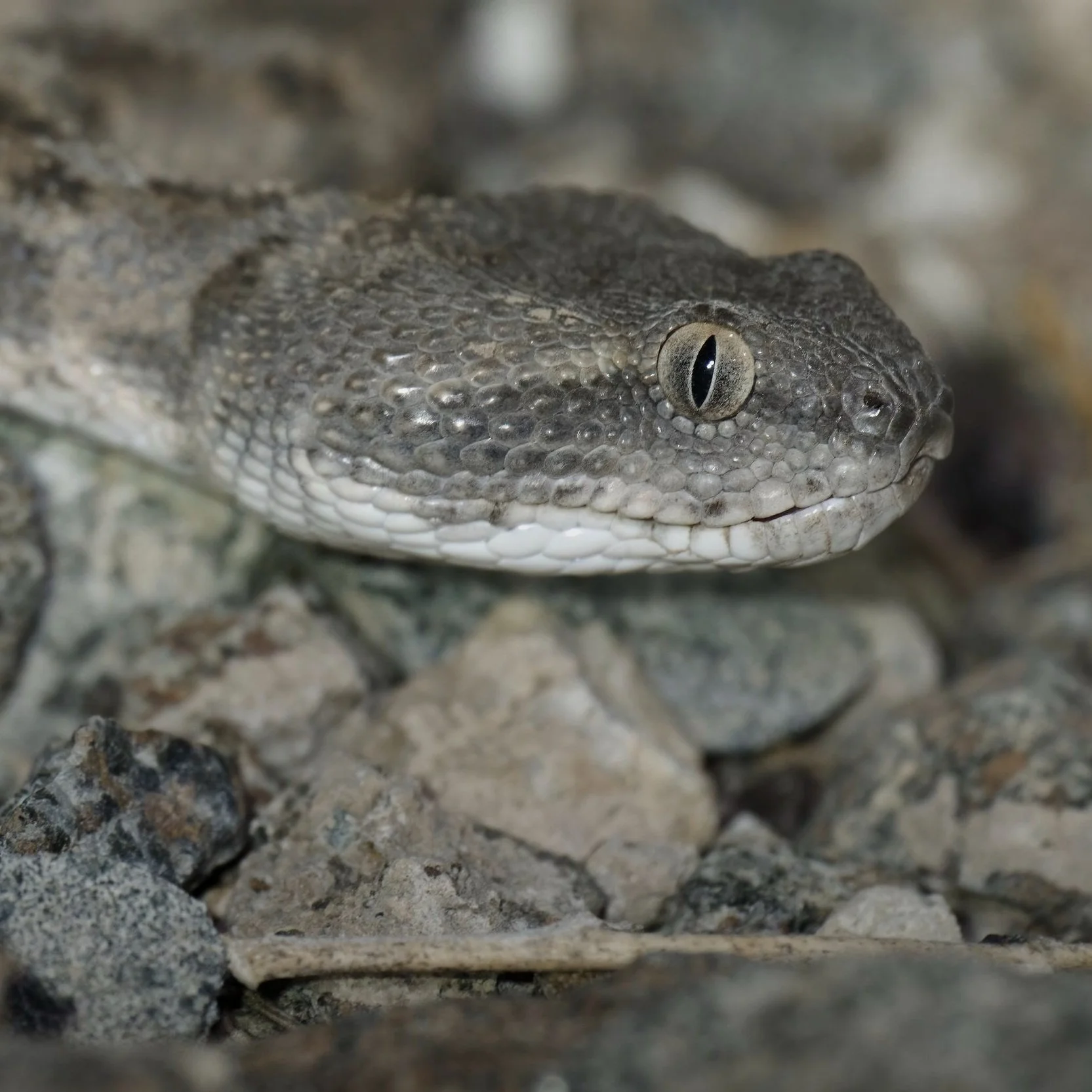
Hajar Saw-scaled Viper (Echis omanensis)
-
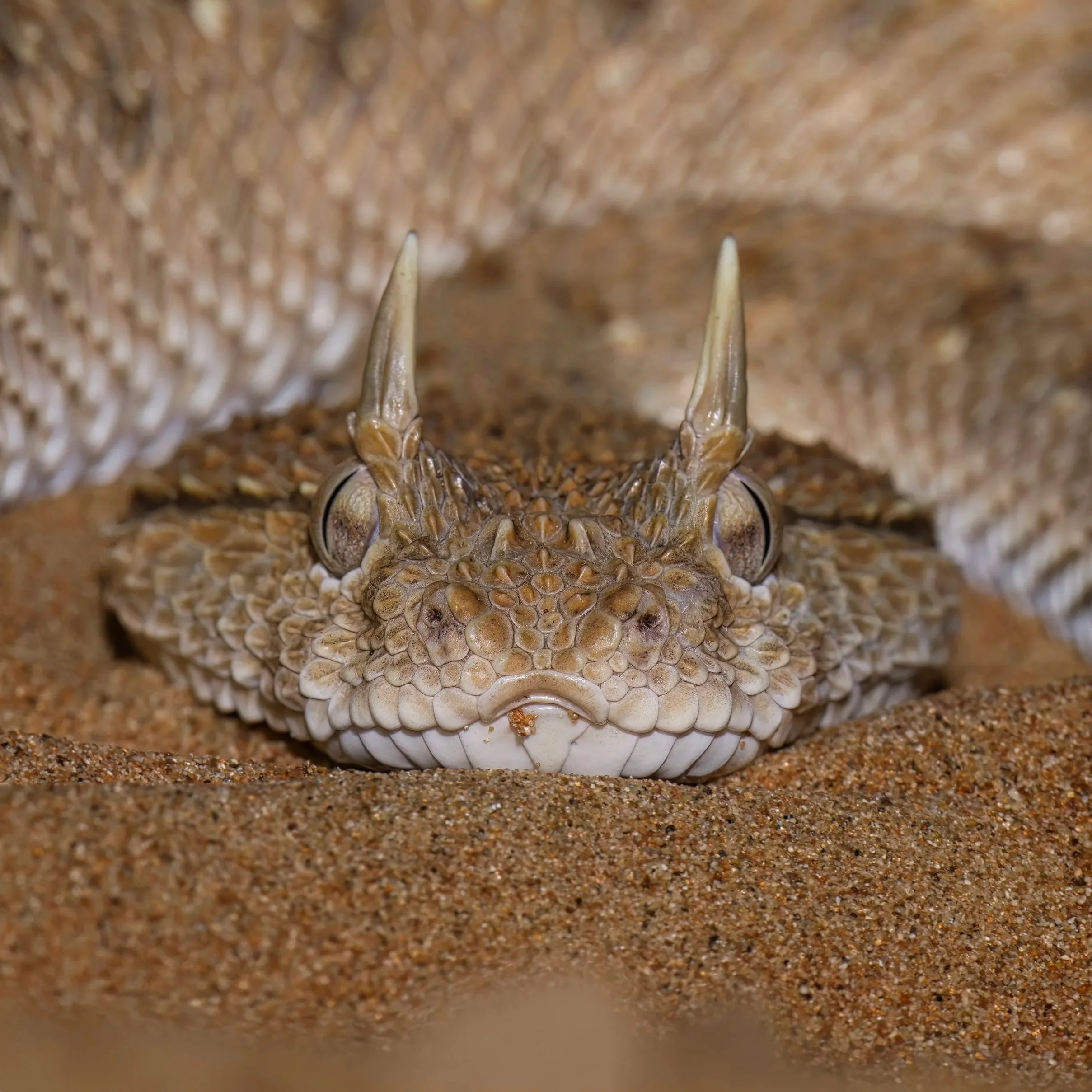
Arabian Horned Viper (Cerastes gasperettii)
-
Sindh Saw-scaled Viper (Echis carinatus)
-
Arabian Cat Snake (Telescopus dhara)