

Bar-tailed Semaphore Gecko \ Pristurus celerrimus
(أبو بريص الصخور العماني )
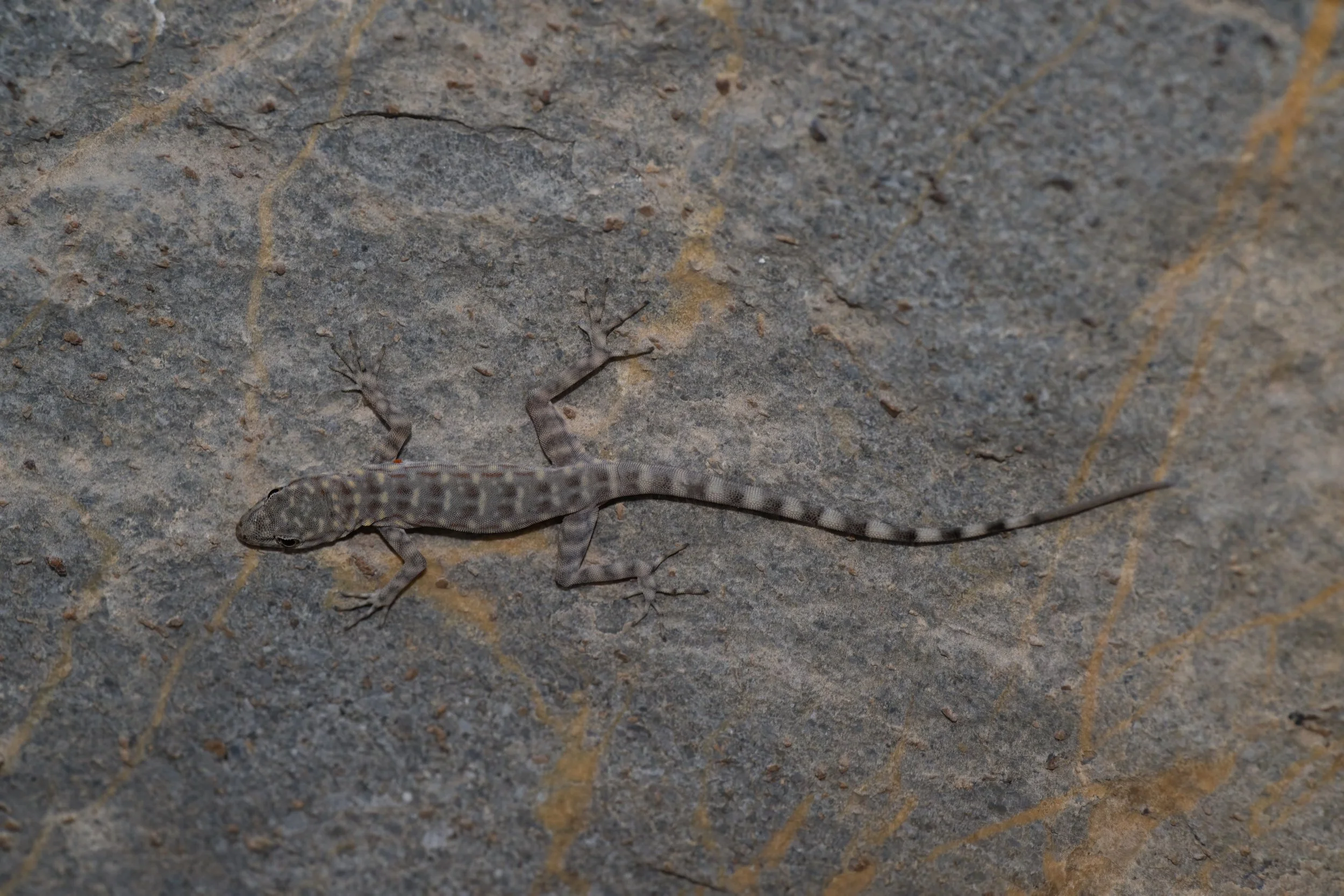
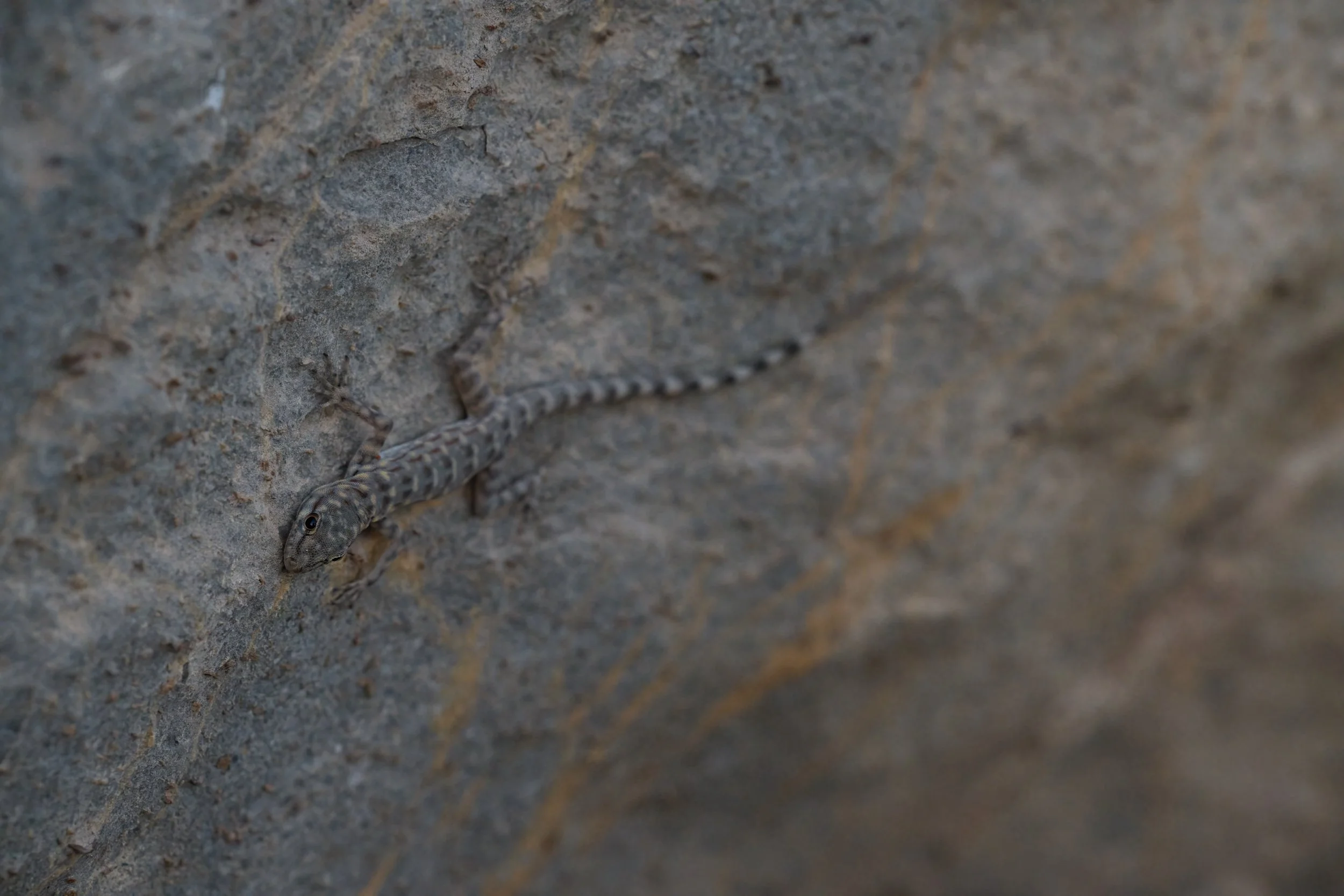
The Bar-tailed Semaphore Gecko (Pristurus celerrimus) is a small, slender gecko of the Hajar Mountains, the range the United Arab Emirates shares with Oman. It belongs to the family Sphaerodactylidae and lives from the tip of the Musandam Peninsula south to the Jebel Akhdar massif. In the UAE it is native and abundant throughout the Hajar Mountains, from sea level up to about 1,400 m. It is a day-active rock dweller of rocks and boulders, and is occasionally found on old houses. Look for a clearly flattened head and body, a relatively large head and long, slender limbs. The upperparts are light brown or grey, usually with yellowish spots on the head and limbs, and a reddish line runs from the nostril through the eye to above the ear. The long, slender tail is flattened from side to side and carries conspicuous dark bars, which give the species its name. Males have dark patches on the white underside in front of and behind the vent. Adults measure about 40 mm from snout to vent. As the name semaphore suggests, these geckos signal to one another: an individual raises its body with the hind end higher, puffs out and flattens its body and throat, and lifts and lowers its straight tail several times. Its tail signalling is considered less developed than in the Rock Semaphore Gecko group. It feeds mainly on ants and other arthropods, and females lay a single hard-shelled egg several times through the year. The gecko photographed here was keeping to the rocks on a mountain top in the Hajar range, a rewarding small lizard to watch and photograph.
أبو بريص الصخور العماني أبو بريص صغير ونحيف يعيش في جبال الحجر، وهي السلسلة الجبلية التي تتقاسمها دولة الإمارات العربية المتحدة مع سلطنة عُمان. ينتمي إلى فصيلة الأبراص كروية الأصابع، ويمتد انتشاره من طرف شبه جزيرة مسندم حتى كتلة الجبل الأخضر جنوبًا. وهو نوع محلي في الإمارات، وفير في جميع أنحاء جبال الحجر، من مستوى سطح البحر حتى ارتفاع نحو 1400 متر. ينشط نهارًا ويعيش بين الصخور والجلاميد، وقد يُشاهد أحيانًا على البيوت القديمة. يمكن التعرف عليه من رأسه وجسمه المفلطحين بوضوح، ورأسه الكبير نسبيًا، وأطرافه الطويلة النحيلة. لون الظهر بني فاتح أو رمادي، وغالبًا ما تظهر بقع صفراء على الرأس والأطراف، ويمتد خط مائل إلى الحمرة من فتحة الأنف مرورًا بالعين حتى ما فوق الأذن. أما الذيل فطويل ونحيل ومضغوط من الجانبين، وتزينه أشرطة داكنة واضحة منحته اسمه. ولدى الذكور بقع داكنة على البطن الأبيض أمام فتحة المجمع وخلفها. ويبلغ طول البالغ نحو 40 ملم من الخطم إلى فتحة المجمع. وكما يوحي اسمه المرتبط بالإشارات، يتواصل أفراد هذا النوع فيما بينهم بإشارات مرئية: يرفع الفرد جسمه بحيث تكون مؤخرته أعلى، وينفخ جسمه وحلقه ويضغطهما من الجانبين، ثم يرفع ذيله المستقيم ويخفضه عدة مرات. وتُعد إشارات الذيل لديه أقل تطورًا منها لدى مجموعة أبو بريص الإشارة الصخري. يتغذى أساسًا على النمل وعلى مفصليات أرجل أخرى، وتضع الأنثى بيضة واحدة صلبة القشرة عدة مرات خلال العام. وقد صُوّر هذا الفرد ملازمًا للصخور على قمة جبلية في جبال الحجر، وهو سحلية صغيرة ممتعة للمراقبة والتصوير
Other Species
-

Keyserling's Wonder Gecko (Teratoscincus keyserlingii)
-

Middle Eastern Short-fingered Gecko (Stenodactylus doriae)
-

Gardner’s Leaf-toed Gecko (Asaccus gardneri)
-

Orlov’s Fan-footed Gecko (Ptyodactylus orlovi)