

Bird Aerial Skills Explained: Flight Techniques and Survival in the Air
Flight is more than movement — it is survival shaped by precision, energy, and adaptation.
Across the landscapes of the UAE, birds use the air in remarkably different ways. Some soar effortlessly for hours, others hover in place, while smaller species rely on speed and agility to capture prey mid-flight. Each aerial skill reflects a balance between environment, hunting strategy, and energy efficiency.
Understanding how birds fly reveals not only how they move, but how they live.
Soaring & Gliding (Energy Efficiency)
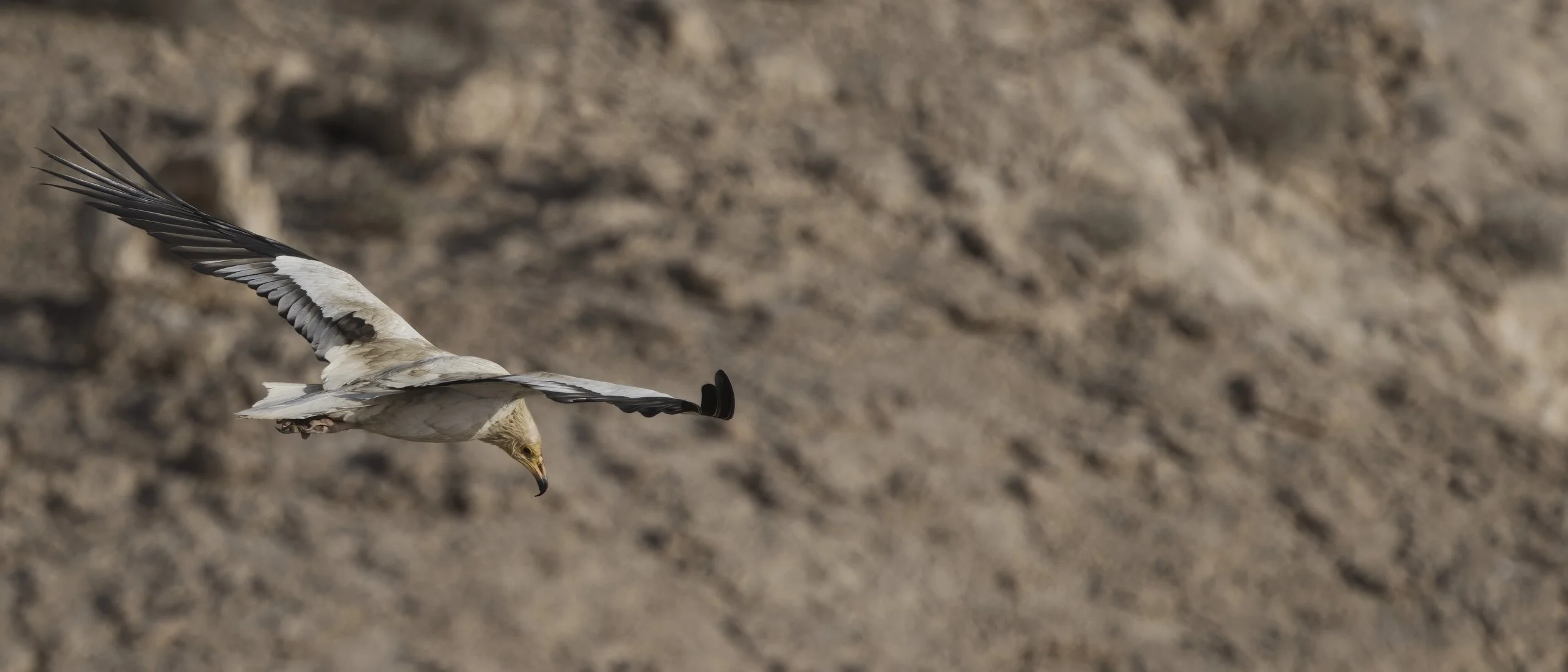
Egyptian Vulture soaring
Large raptors are masters of energy efficiency. With broad wings and minimal wingbeats, they rely on rising warm air currents — thermals — to stay aloft.
By circling within these invisible columns of air, they gain altitude without effort, allowing them to travel vast distances while conserving energy.
Steppe Eagle, Egyptian Vulture, Greater Spotted Eagle, Common Buzzard
Controlled Attack Flight (Speed & Precision)
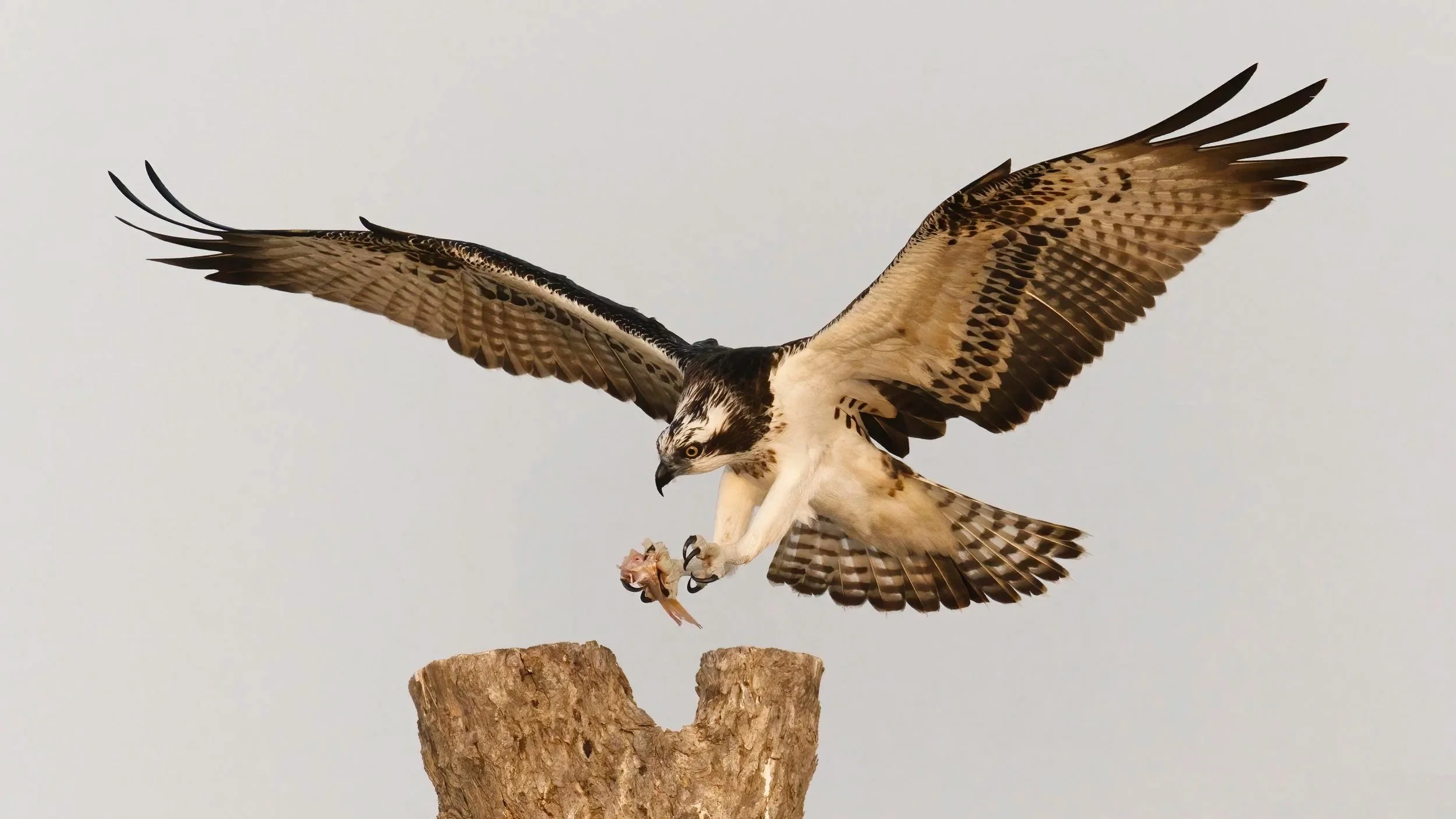
Osprey landing with a fish
Not all aerial attacks rely on extreme speed. Many birds use controlled flight, adjusting angle, speed, and position just before striking.
The Osprey performs powerful dives into water, while kingfishers rely on rapid, short-distance precision strikes. The Pied Kingfisher adds another layer by hovering briefly before diving.
Even closely related species show different hunting strategies depending on habitat and prey.
Osprey, Steppe Eagle, Western Marsh Harrier, Common Kingfisher, Pied Kingfisher, White-throated Kingfisher
Hovering (Stationary Flight Control)

Black-winged Kite hovering
Some birds have the remarkable ability to remain almost motionless in the air.
By flying into the wind and making constant micro-adjustments, they maintain position while scanning the ground for prey. This technique is energy-demanding, but highly effective in open habitats.
Aerial Hunting (Agility & Reflex)
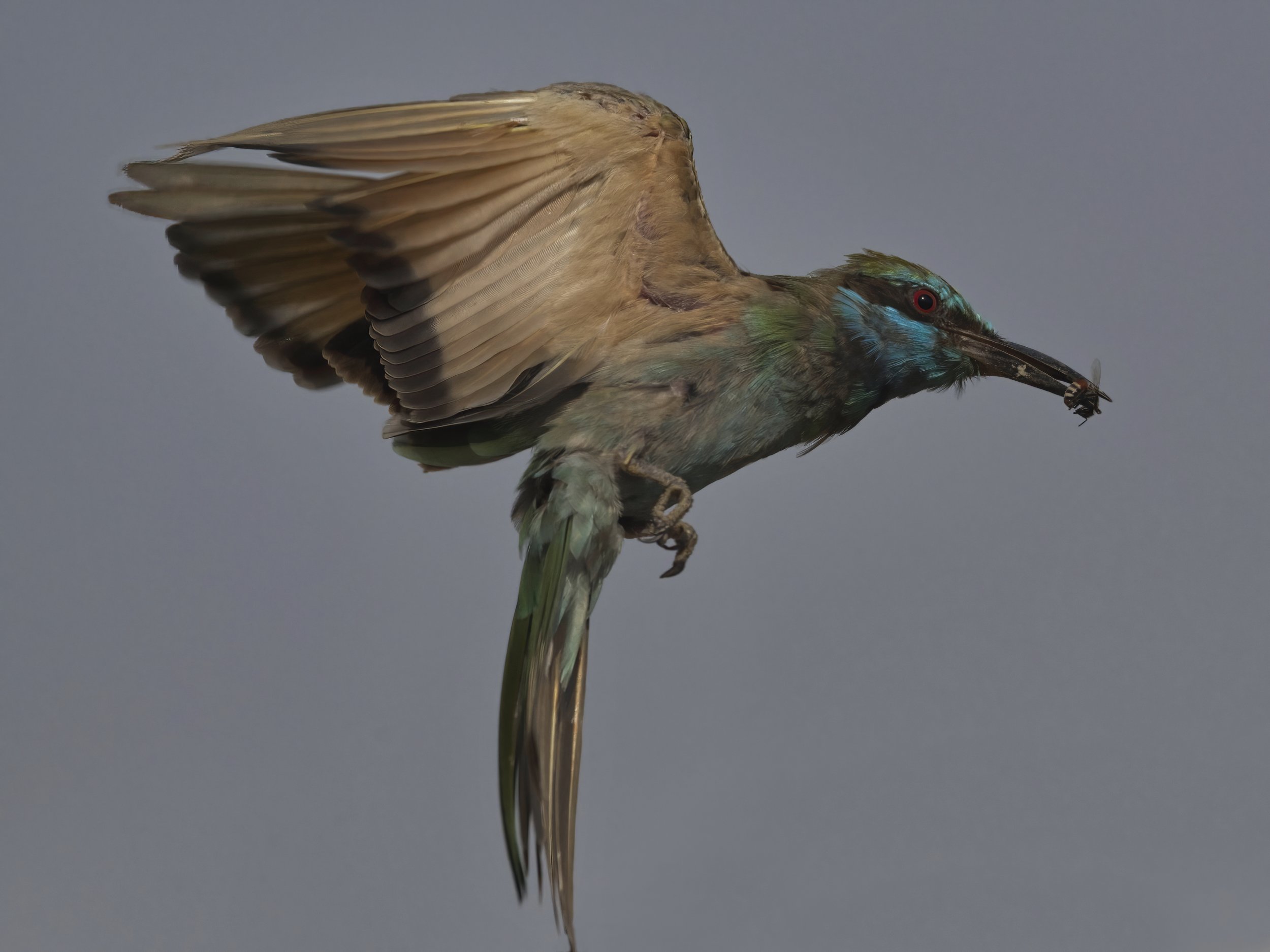
Bee-eater catching insects in flight
Some birds specialize incapturing prey mid-air, relying on agility and rapidreflexes.
Bee-eaters launch from perches to intercept flying insects with remarkable accuracy, often returning to the same perch repeatedly.
Silent Flight (Stealth & Night Hunting)
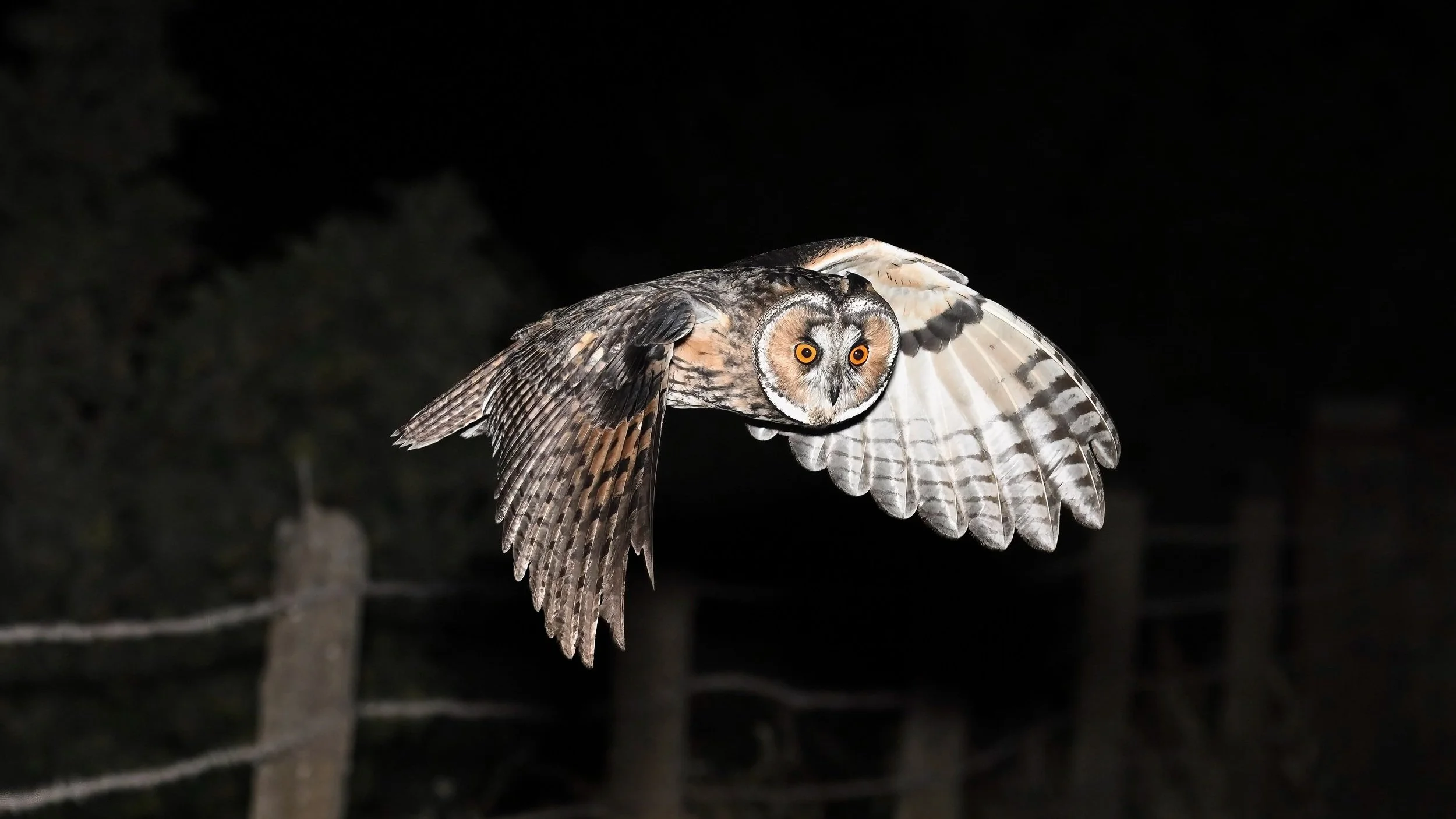
Long-eared Owl lookin for prey
Owls possess one of the most remarkable flight adaptations — near-silent flight.
Specialized feathers reduce noise and turbulence, allowing them to approach prey undetected. Combined with exceptional hearing, this makes them highly effective nocturnal hunters.
Barn Owl, Pharaoh Eagle-Owl, Long-eared Owl, Little Owl, Pallid Scops-owl
Long-Distance Flight (Endurance & Migration)

Black Stork in flight
Long-distance flight is one of the most demanding aerial challenges.
Large birds rely on soaring and thermals to travel thousands of kilometers efficiently. They often migrate in groups, gaining altitude in spirals before continuing their journey.
These species also avoid large water crossings where thermals are weak.
Low-Level Flight (Terrain Adaptation)
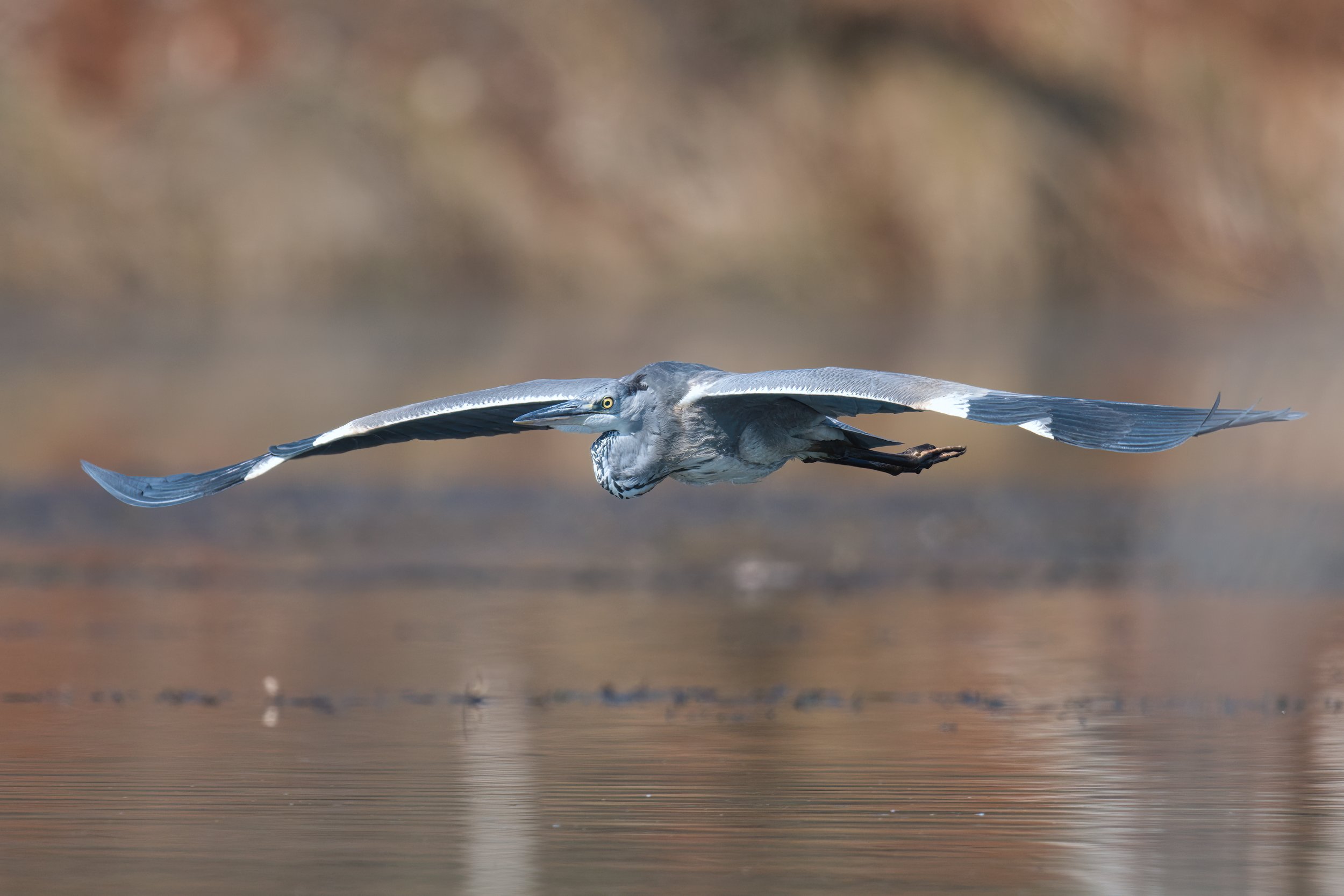
Grey Heron gliding over the swamp
Some birds fly close to the ground or water surface, scanning for movement below.
This low-level flight increases hunting efficiency and allows quick reactions, particularly in wetlands and coastal environments.
Continuous Flight (Endurance & Aerial Life)
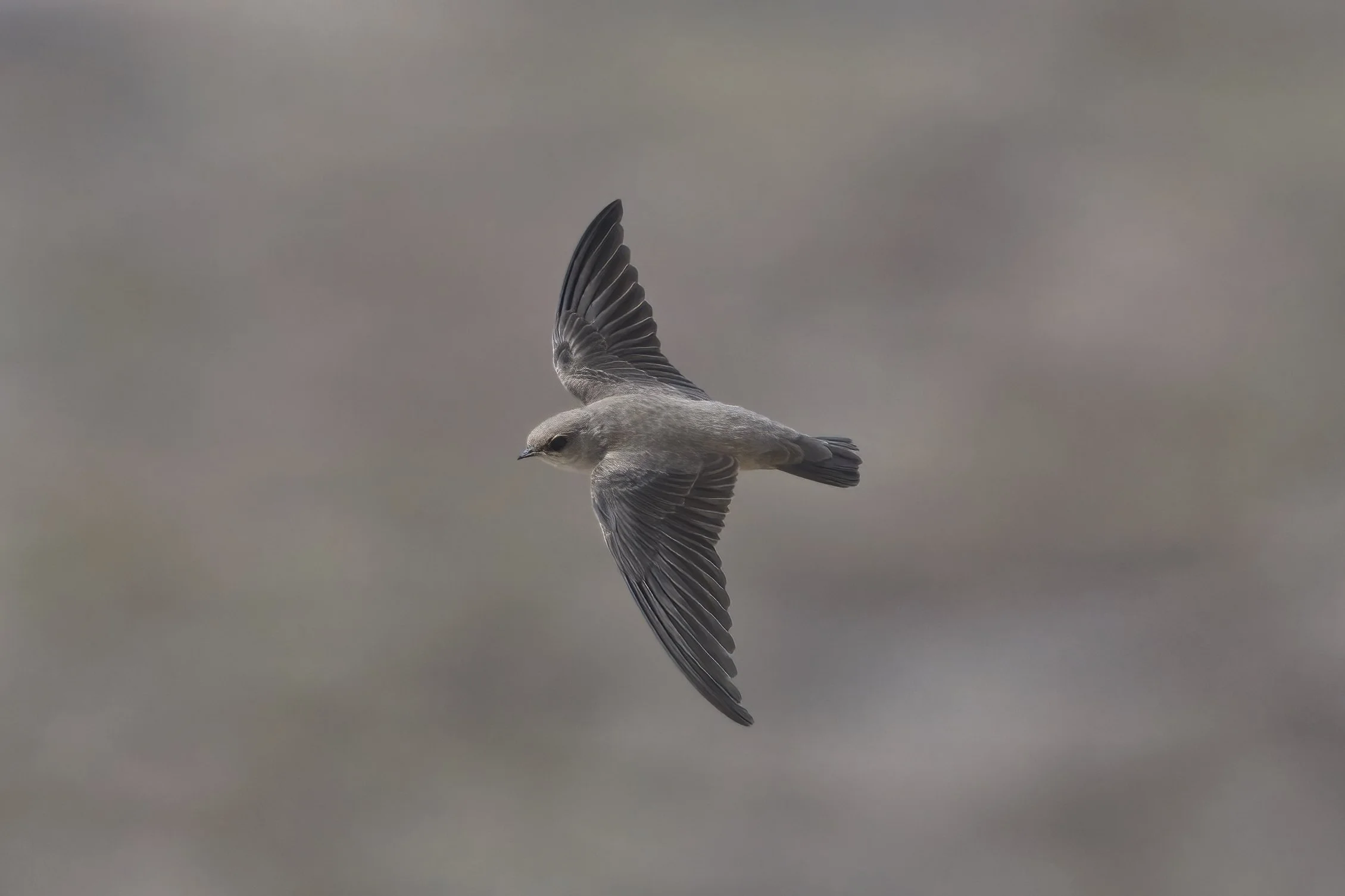
Pale Rock Martin
Some birds are almost entirely adapted to life in the air.
Swifts and martins are built for continuous flight, feeding, and movement with minimal need to land. The Pallid Swift, in particular, spends most of its life airborne, only landing to breed.
The Pale Rock Martin, while more flexible, is highly agile and capable of sustained flight while catching insects in mid-air.
Unlike perch-based hunters such as bee-eaters, these species rely on constant motion, making them among the most aerially adapted birds.
Why Aerial Skills Matter
Different flight styles allow birds to:
reduce energy consumption
exploit different ecological niches
adapt to specific environments
Even within the same habitat, species avoid competition by using the air differently.
Field Insight
From experience in the UAE:
Soaring birds follow predictable thermal patterns
Hovering birds offer stable photographic opportunities
Aerial hunters require fast tracking and anticipation
Owls demand patience and low-light precision
Low-level flight creates dynamic compositions
Understanding flight behavior is one of the most powerful tools in wildlife photography.
Conclusion
A bird’s flight is more than motion — it is a finely tuned balance of energy, control, and adaptation.
Each movement reflects a deeper strategy shaped by survival and environment. By observing how birds fly, we begin to understand not only their behavior, but the invisible forces that shape their world.