

Eastern Sand Gecko \ Stenodactylus leptocosymbotes
(وزغ الرمال الشرقي)
The Eastern Sand Gecko (Stenodactylus leptocosymbotes) is a native, non-venomous ground gecko of the United Arab Emirates, where it lives in arid desert areas from sea level up to about 400 m. It is a medium-sized, sturdy gecko with a large, broad head, big eyes with vertical pupils, and slender toes that lack adhesive pads. Its back is pinkish or light brown, dotted with small dark brown spots and larger blotches or bands, and its short, rounded tail carries three to five bands that stop before the tip. Young animals look different, with a dark tail ending in a white tip. Most of the UAE's ground-dwelling geckos favour sand, but this species chooses firm ground: compact soils such as the gravel plains between dunes and the plains along the edge of the Hajar Mountains, as well as consolidated sand and alluvial plains. It closely resembles its relative the Dune Sand Gecko (Stenodactylus doriae). That species keeps to soft dune sand, which the Eastern Sand Gecko avoids, so the ground underfoot is a useful clue when telling them apart. It is active at night and spends the day hidden in burrows it digs itself, coming out after dark to hunt insects and other arthropods. Females lay clutches of two hard-shelled eggs. The species also occurs in Oman and southeastern Yemen, and the UAE National Red List classes it as Least Concern. Searching flat gravel ground with a torch after sunset is a rewarding way to find and photograph it.
وزغ الرمال الشرقي نوع محلي غير سام من الأوزاغ الأرضية في دولة الإمارات العربية المتحدة، حيث يعيش في المناطق الصحراوية القاحلة من مستوى سطح البحر حتى ارتفاع نحو 400 متر. وهو وزغ متوسط الحجم وقوي البنية، ذو رأس كبير وعريض، وعينين كبيرتين بحدقة عمودية، وأصابع نحيلة تخلو من الوسائد اللاصقة. يكون ظهره ورديًا أو بنيًا فاتحًا، تنتشر عليه نقاط صغيرة بنية داكنة وبقع أو أشرطة أكبر، أما ذيله القصير المستدير فيحمل من ثلاثة إلى خمسة أشرطة تتوقف قبل طرفه. ويختلف شكل الصغار، إذ يكون ذيلها داكنًا وينتهي بطرف أبيض. تفضّل معظم الأوزاغ الأرضية في الإمارات الرمال، أما هذا النوع فيختار الأرض الصلبة، أي التربة المتماسكة مثل السهول الحصوية بين الكثبان والسهول المحاذية لأطراف جبال الحجر، إضافة إلى الرمال المتماسكة والسهول الطميية. ويشبه كثيرًا قريبه وزغ رمال الكثبان. غير أن الأخير يلتزم برمال الكثبان الناعمة التي يتجنبها وزغ الرمال الشرقي، لذا تُعد طبيعة الأرض دليلًا مفيدًا للتمييز بينهما. ينشط هذا الوزغ ليلًا، ويقضي النهار مختبئًا في جحور يحفرها بنفسه، ثم يخرج بعد حلول الظلام لاصطياد الحشرات وغيرها من مفصليات الأرجل. وتضع الإناث بيضتين بقشرة صلبة في كل مرة. ويوجد هذا النوع أيضًا في سلطنة عُمان وجنوب شرق اليمن، وتصنفه القائمة الحمراء الوطنية لدولة الإمارات ضمن فئة غير مهدد بالانقراض. ويُعد البحث في الأراضي الحصوية المنبسطة باستخدام مصباح بعد الغروب طريقة مجزية للعثور عليه وتصويره
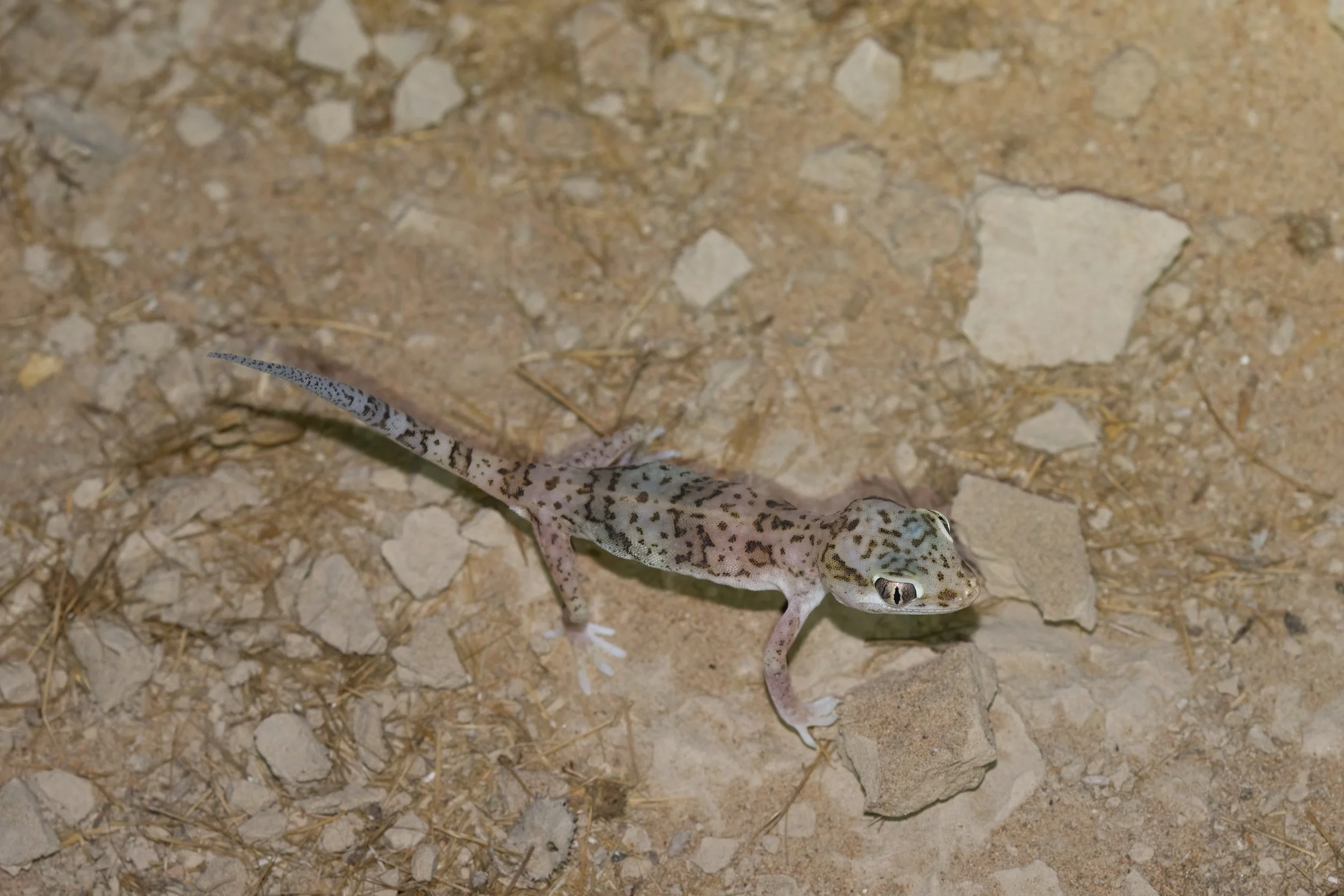
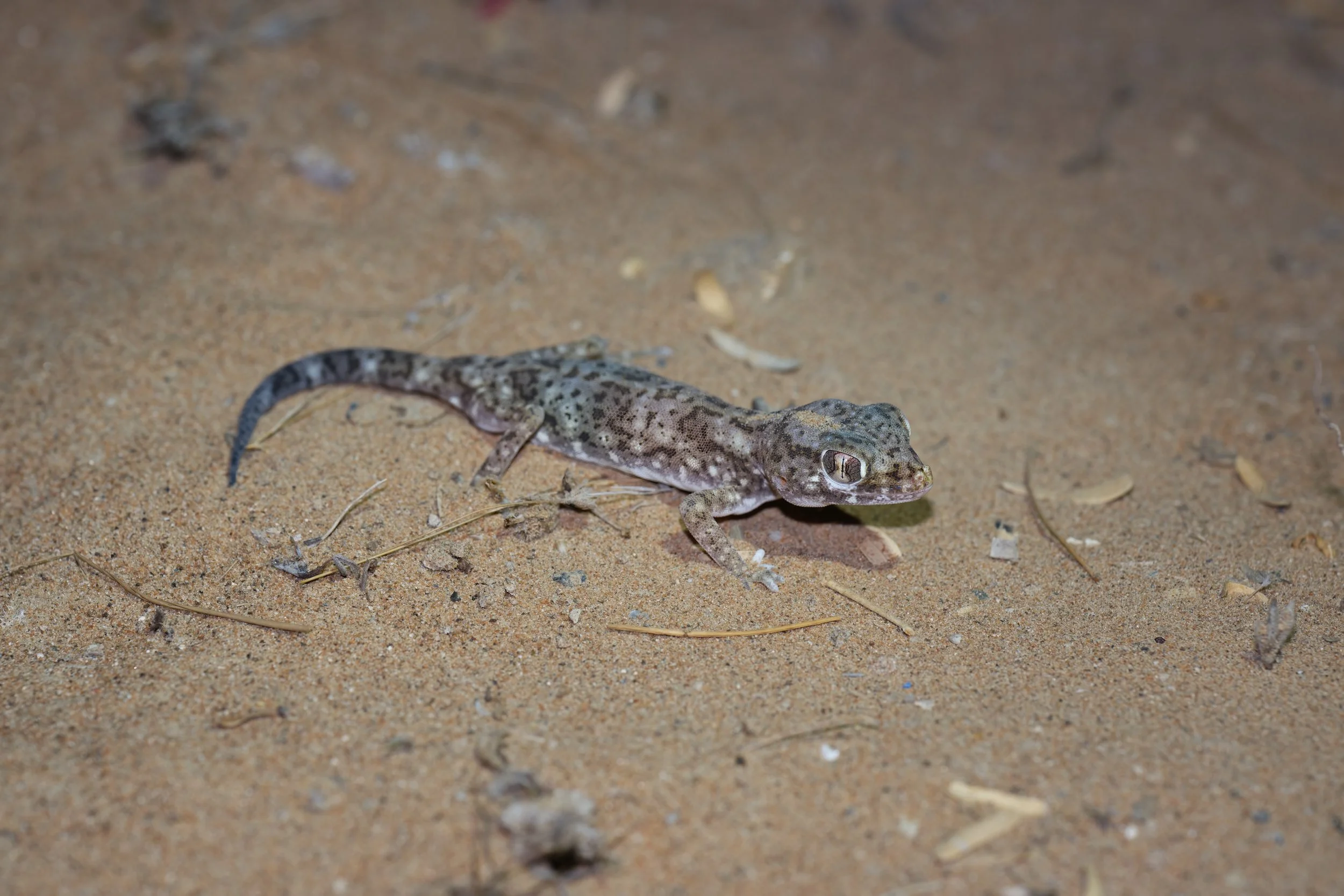
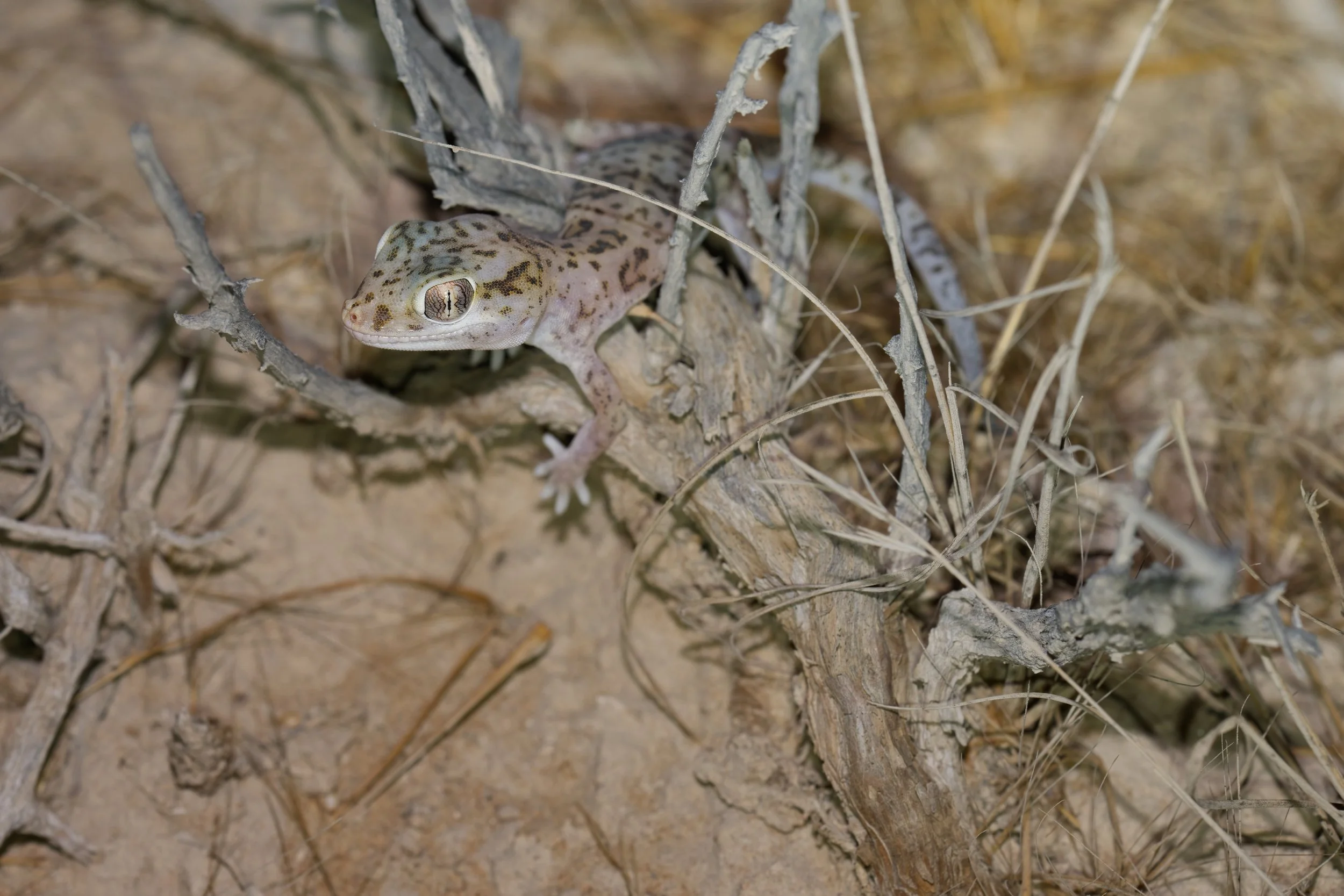
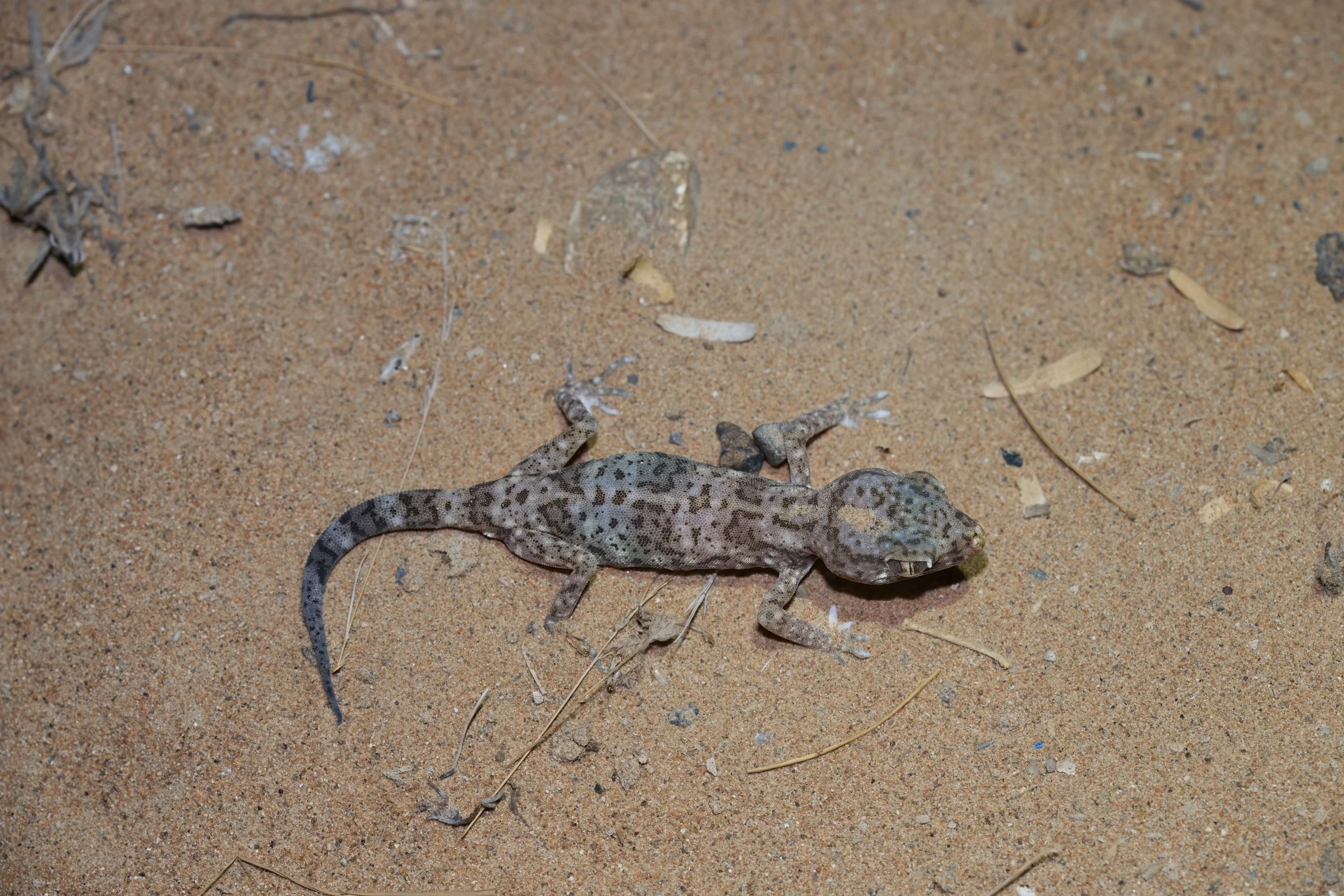
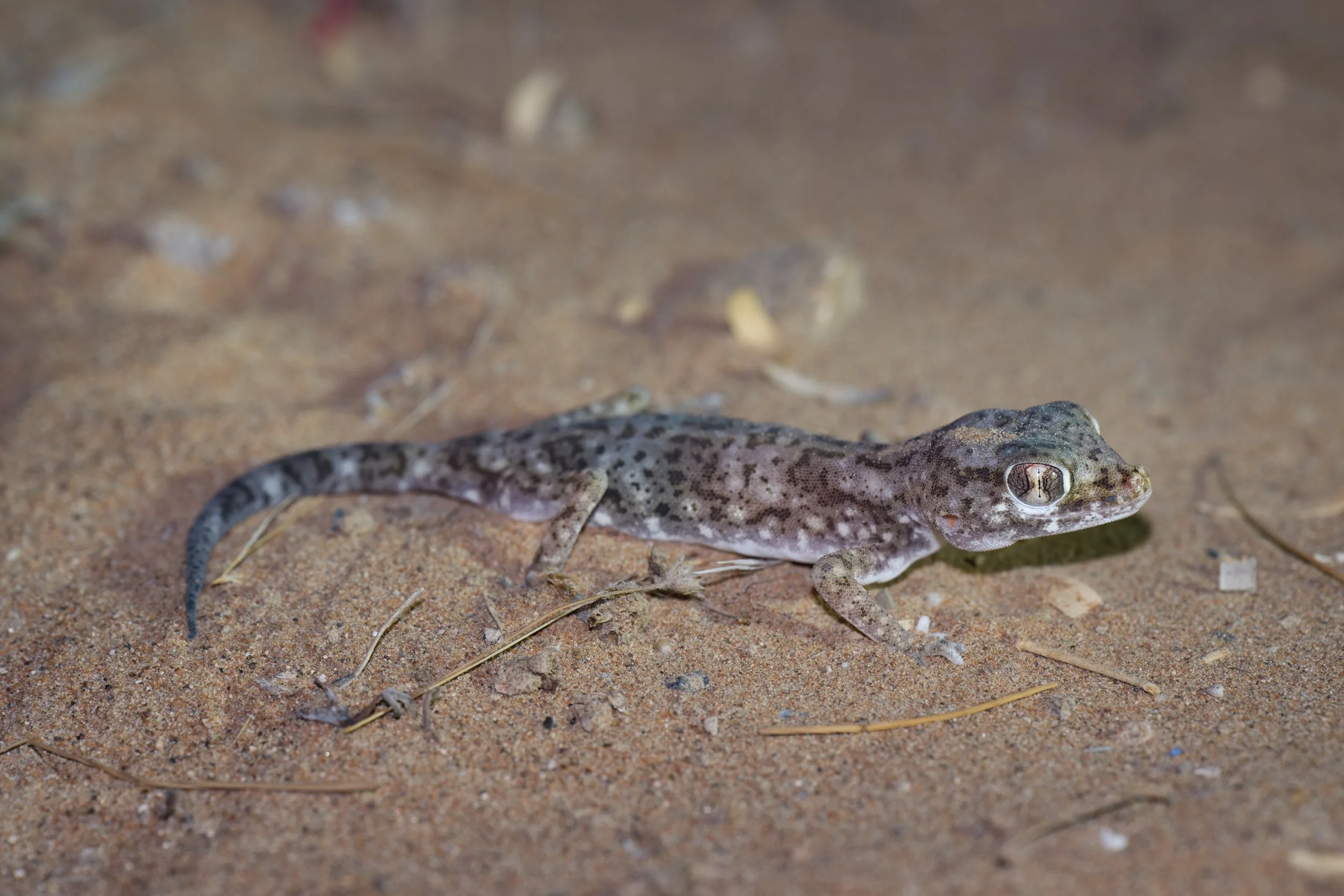
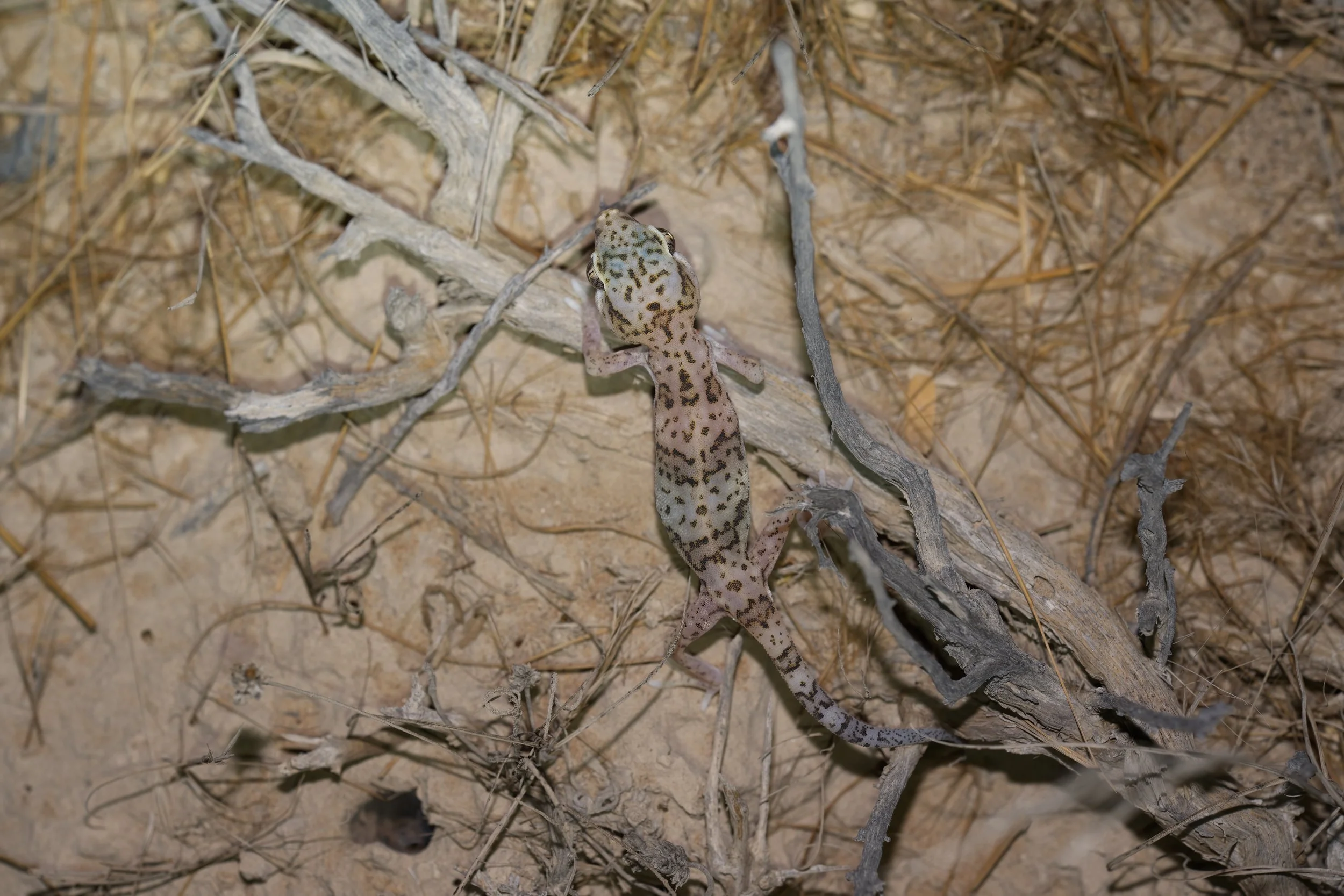
Eastern Sand Gecko or Middle Eastern Short-fingered Gecko?
Two sand geckos of the UAE that look almost the same: big head, large eyes, out at night and hiding in a burrow by day. The best clue is the ground. The Middle Eastern Short-fingered Gecko, called the Dune Sand Gecko in field guides, lives on soft dunes. The Eastern Sand Gecko keeps to firm ground and avoids dunes. Tap each one to compare.
Other Species
-

Keyserling's Wonder Gecko (Teratoscincus keyserlingii)
-

Middle Eastern Short-fingered Gecko (Stenodactylus doriae)
-

Gardner’s Leaf-toed Gecko (Asaccus gardneri)
-

Orlov’s Fan-footed Gecko (Ptyodactylus orlovi)