

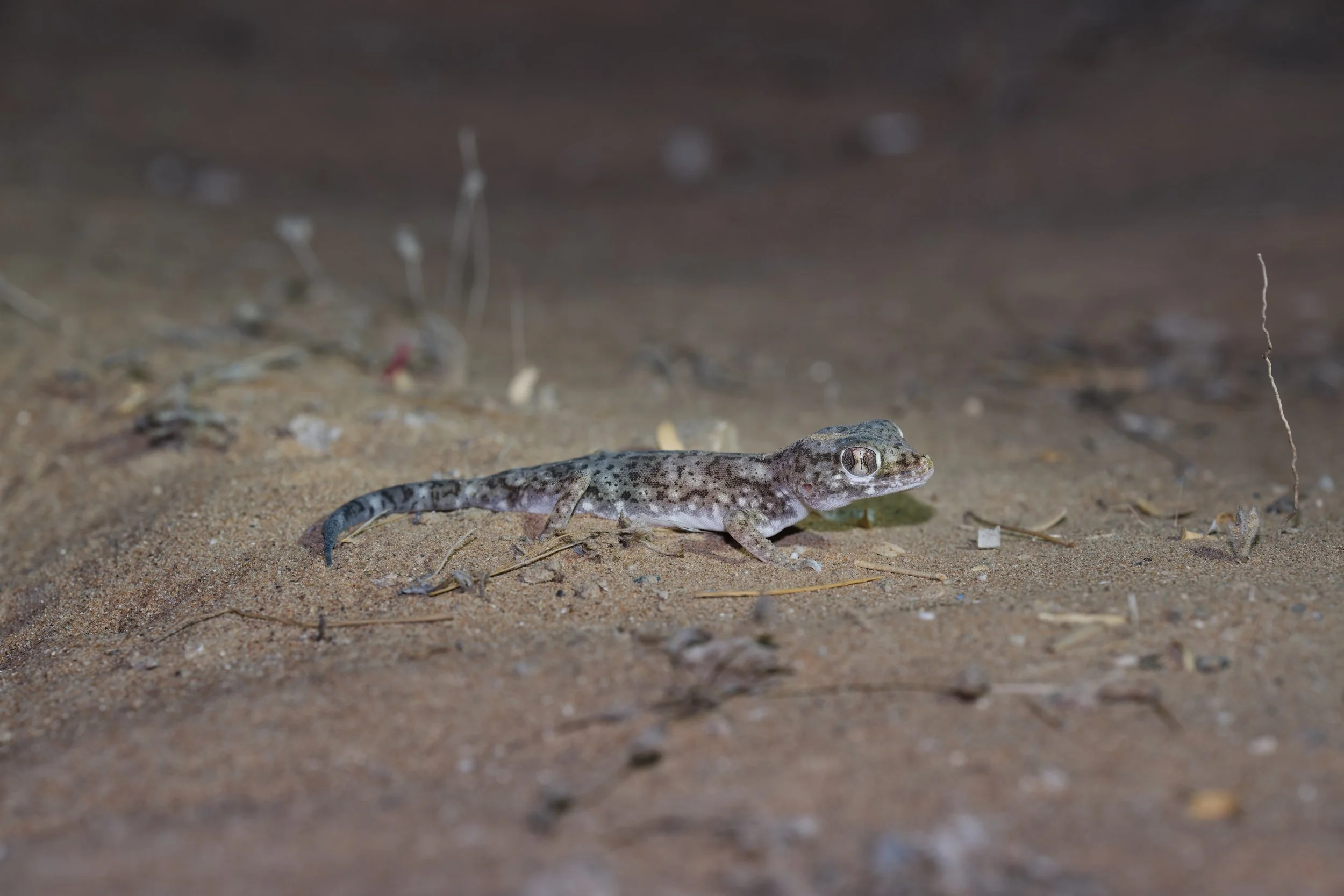
Eastern Sand Gecko
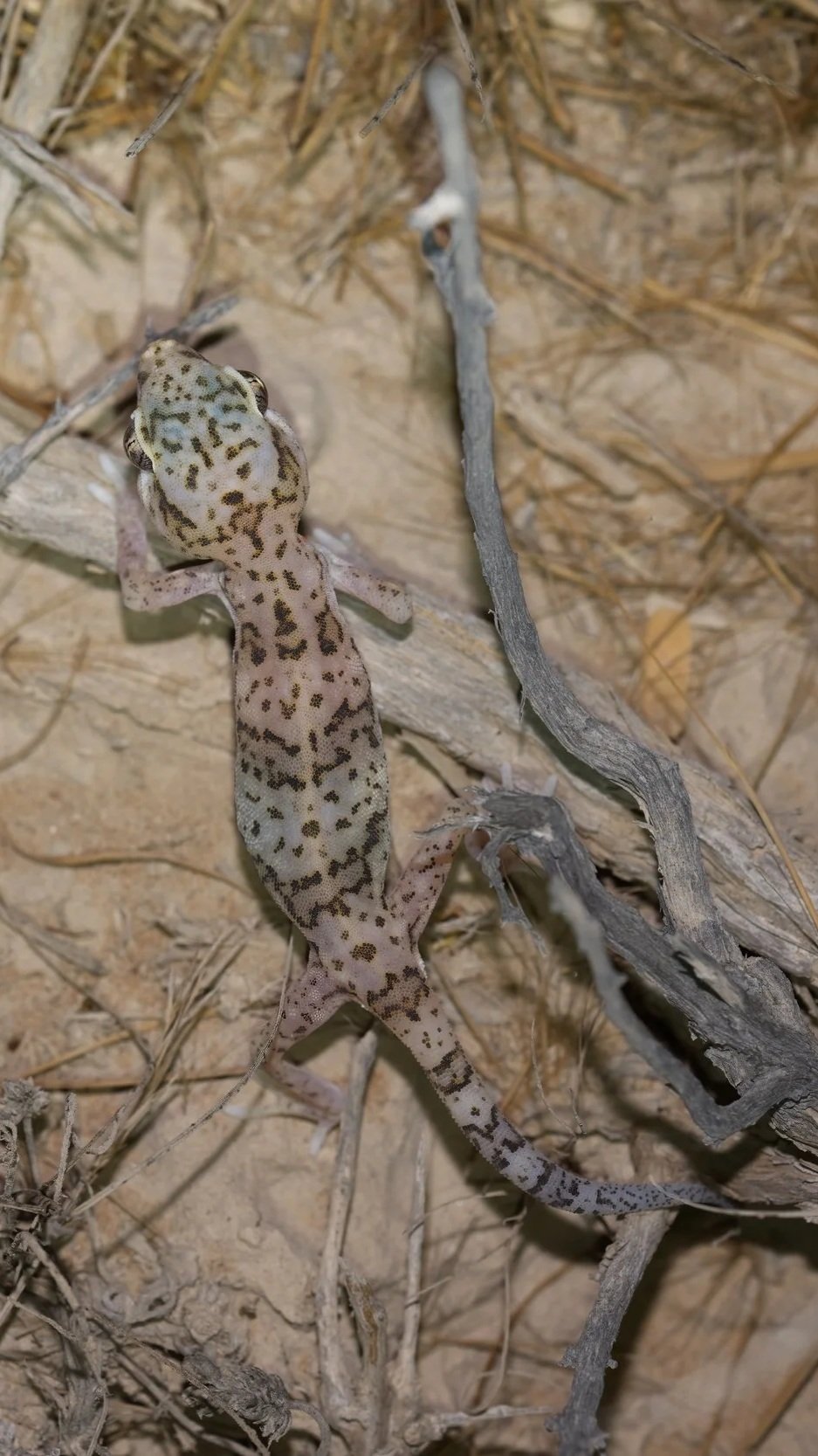
The Eastern Sand Gecko (Stenodactylus leptocosymbotes) is a small, nocturnal reptile adapted to the sandy deserts of the Arabian Peninsula, including the United Arab Emirates. Its slender body, long limbs, and narrow toes fringed with fine scales allow it to move efficiently across loose sand. Its pale beige to sandy-brown coloration, often marked with darker spots and blotches, provides excellent camouflage against the desert landscape.
تُعد وزغة الرمل الشرقية من الزواحف الصغيرة الليلية المتكيفة مع البيئات الصحراوية الرملية في شبه الجزيرة العربية، بما فيها دولة الإمارات العربية المتحدة. تتميز بجسمها النحيل وأطرافها الطويلة وأصابعها الضيقة المحاطة بحراشف دقيقة تساعدها على الحركة بكفاءة فوق الرمال المفككة. ويتراوح لونها بين البيج الفاتح والبني الرملي، مع بقع وعلامات داكنة تمنحها تمويهاً فعالاً في البيئة الصحراوية
Habitat and behavior
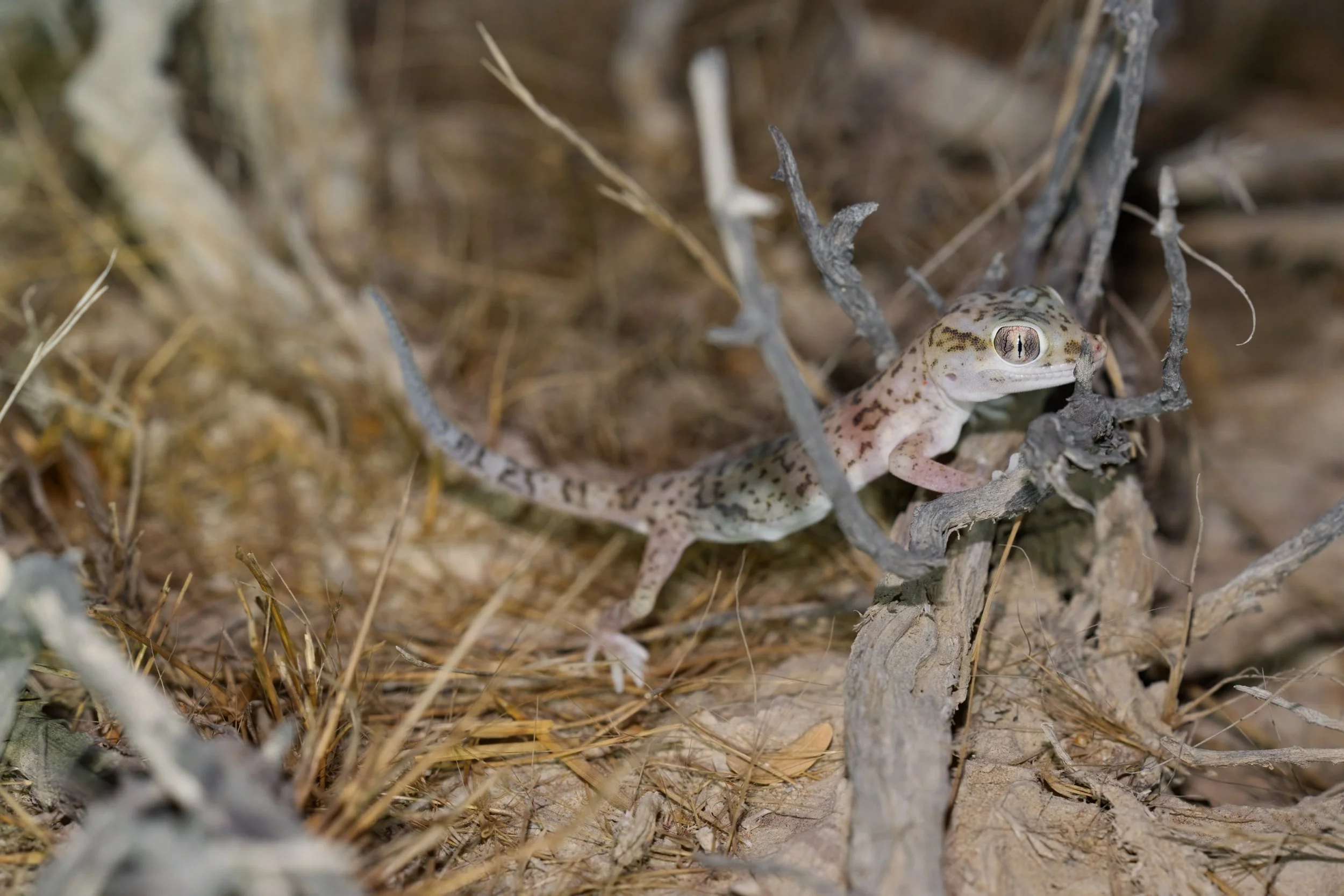
The Eastern Sand Gecko inhabits open sandy deserts, sand sheets, and low dunes, where loose substrates provide suitable conditions for movement and shelter. Primarily nocturnal, it emerges after sunset to hunt small insects and other arthropods, avoiding the extreme daytime heat. During daylight hours, it remains concealed beneath the sand or inside shallow burrows. Its movements often leave delicate tracks on the sand, offering clues to its presence even when the animal itself remains hidden.
تعيش وزغة الرمل الشرقية في الصحاري الرملية المفتوحة والسهول الرملية والكثبان المنخفضة، حيث توفر الرمال المفككة بيئة مناسبة للحركة والاختباء. تنشط بشكل رئيسي خلال الليل، وتخرج بعد غروب الشمس للبحث عن الحشرات الصغيرة وغيرها من المفصليات، متجنبة حرارة النهار الشديدة. وخلال ساعات النهار، تختبئ تحت الرمال أو داخل جحور ضحلة. وغالباً ما تترك حركتها آثاراً دقيقة على سطح الرمال، يمكن الاستدلال من خلالها على وجودها حتى عندما تكون مختبئة
Why this species matters
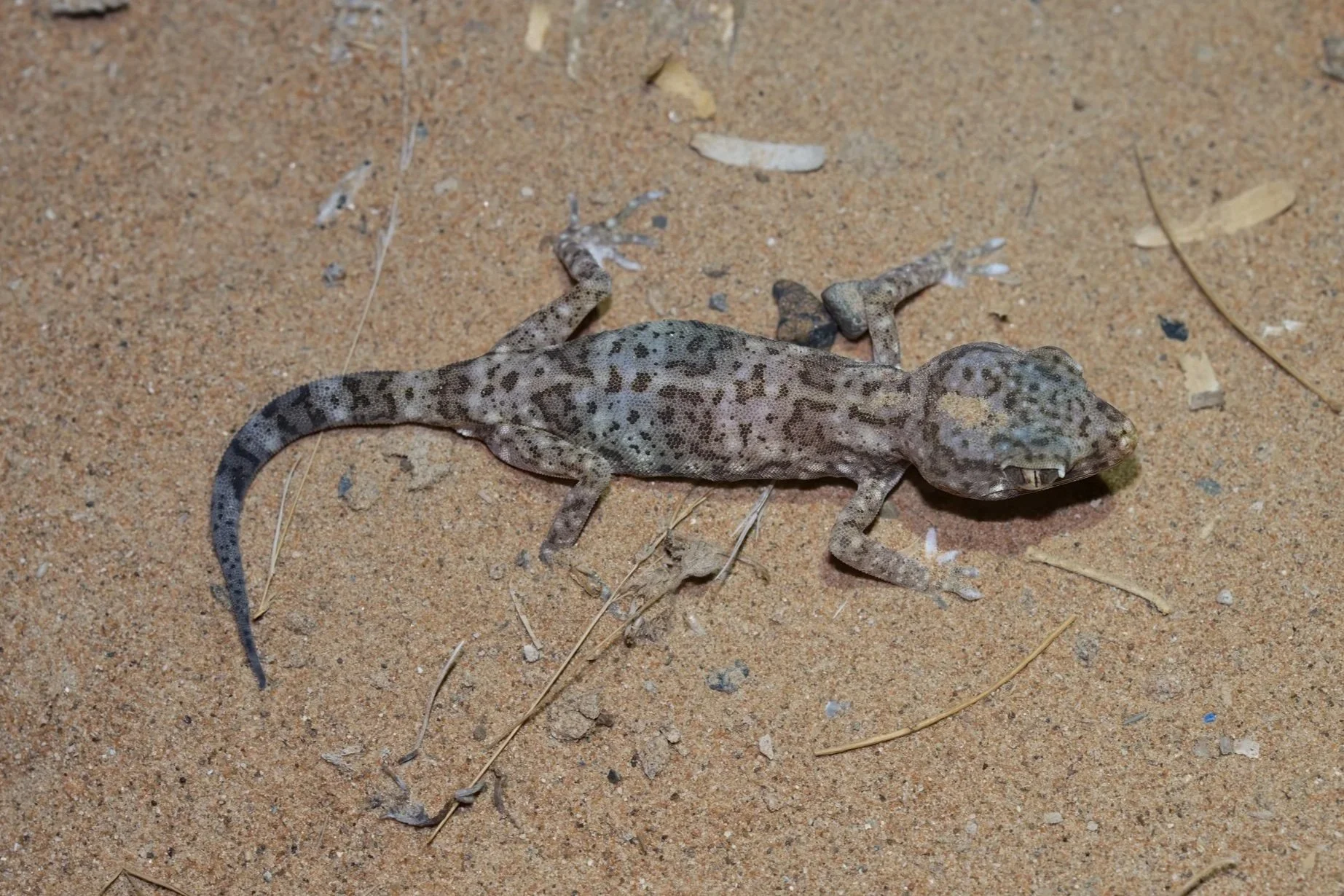
The Eastern Sand Gecko plays a role in desert ecosystems as a predator of small insects and other arthropods, contributing to the balance of desert food webs while also serving as prey for larger animals. Its specialized adaptations demonstrate how reptiles survive in environments characterized by extreme temperatures and limited shelter. Documenting its presence and habitat in the UAE contributes to our understanding of desert biodiversity and highlights the ecological value of sandy landscapes that may otherwise appear largely devoid of life.
تؤدي وزغة الرمل الشرقية دوراً في النظم البيئية الصحراوية من خلال افتراس الحشرات الصغيرة وغيرها من المفصليات، مما يساهم في توازن الشبكات الغذائية، كما تشكل بدورها غذاءً للحيوانات الأكبر حجماً. وتُظهر تكيفاتها المتخصصة قدرة الزواحف على البقاء في بيئات تتميز بدرجات حرارة مرتفعة ومحدودية أماكن الاختباء. ويساهم توثيق وجودها وموائلها في دولة الإمارات في تعزيز فهم التنوع الحيوي الصحراوي، وإبراز القيمة البيئية للموائل الرملية التي قد تبدو للوهلة الأولى خالية من الحياة