

Pharaoh Eagle-owl \ Bubo ascalaphus
(البومة النسرية الفرعونية)
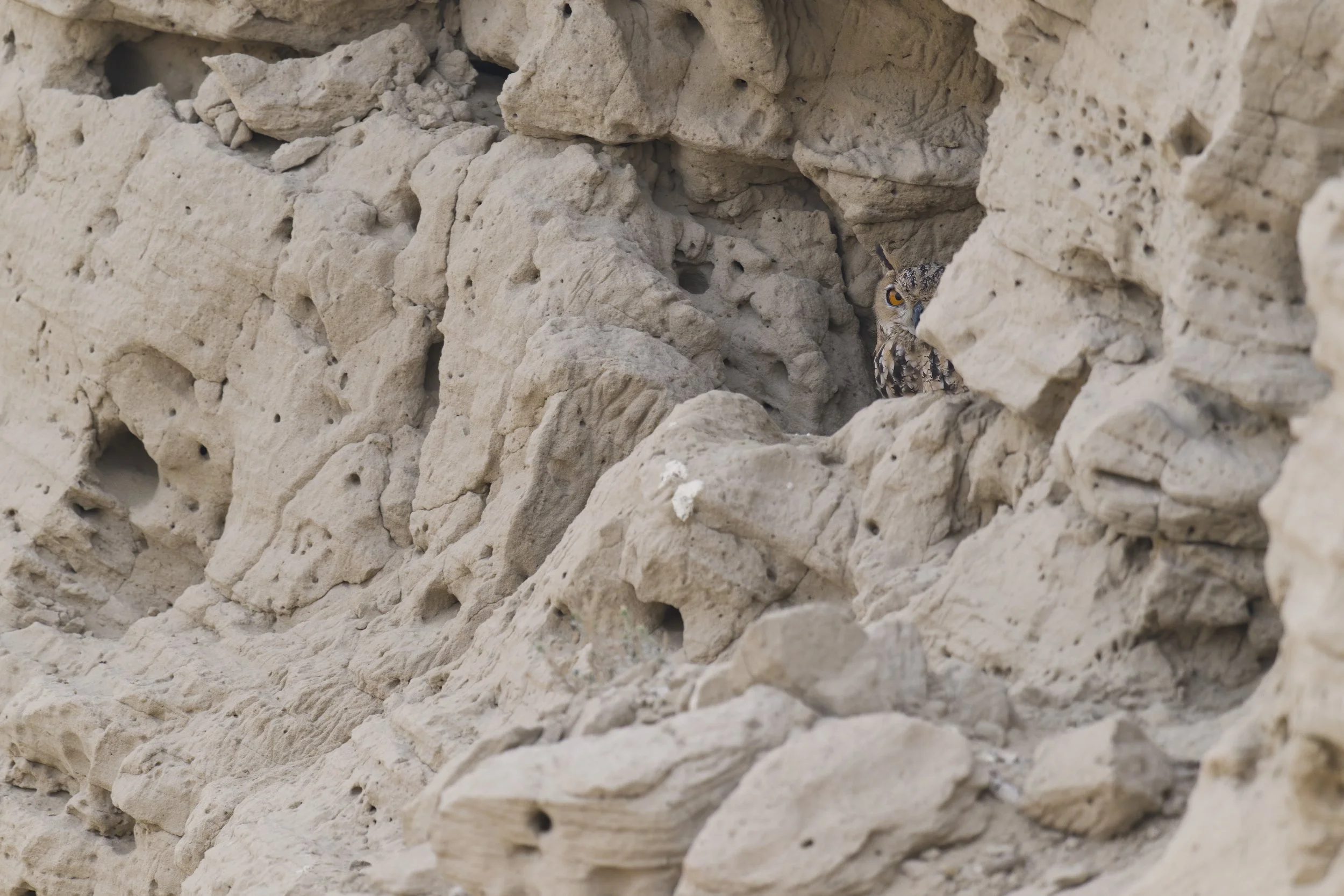
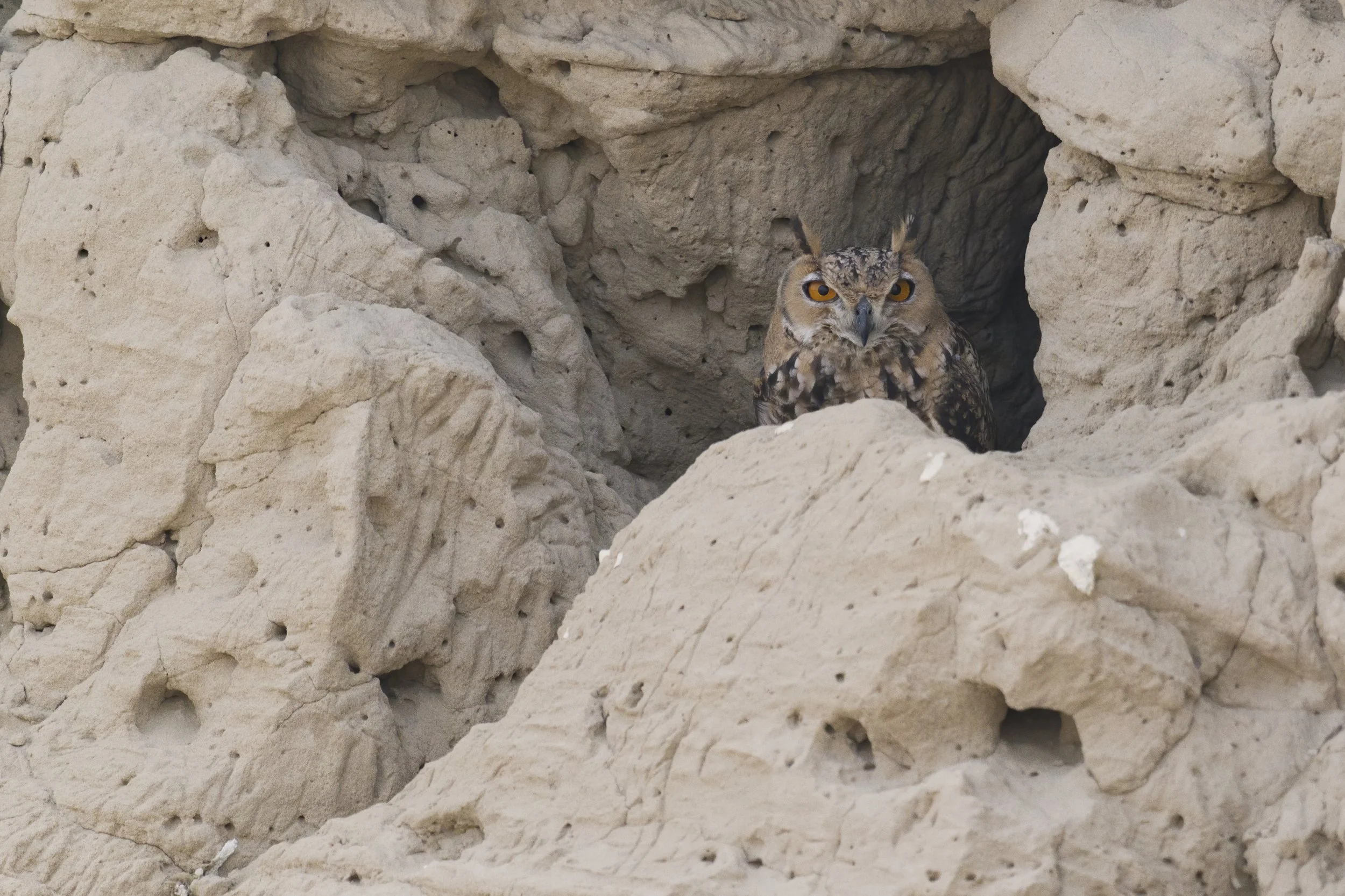
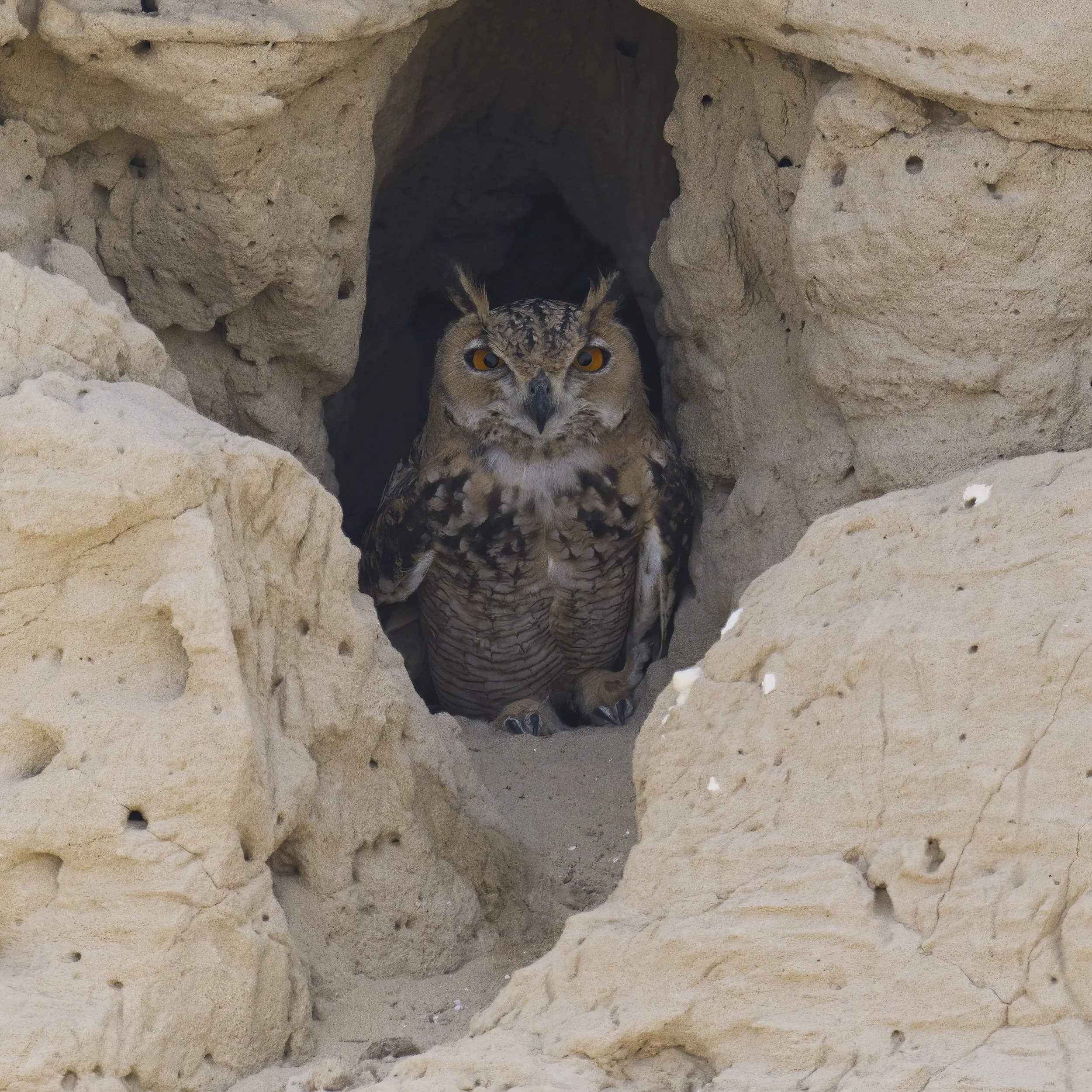
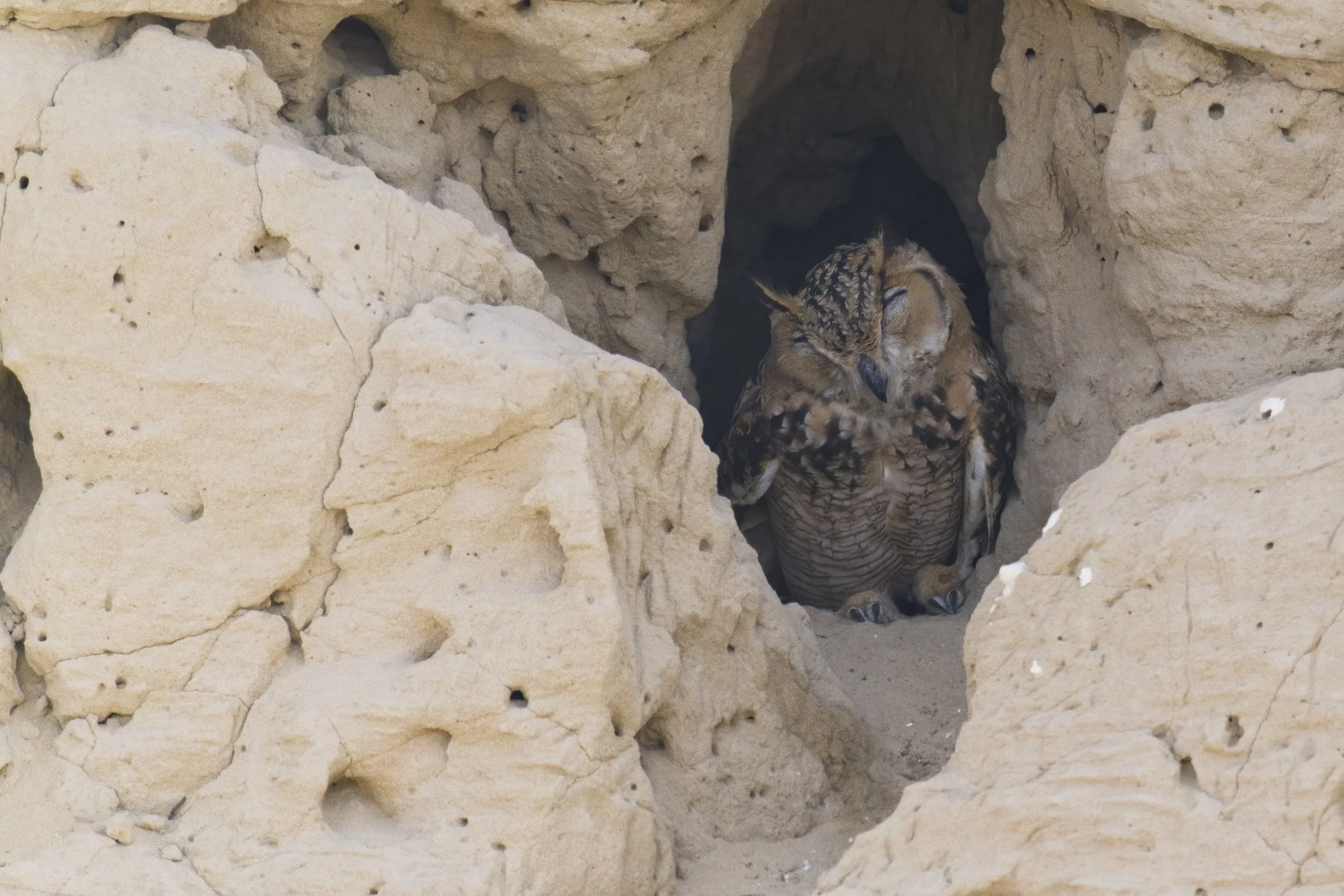
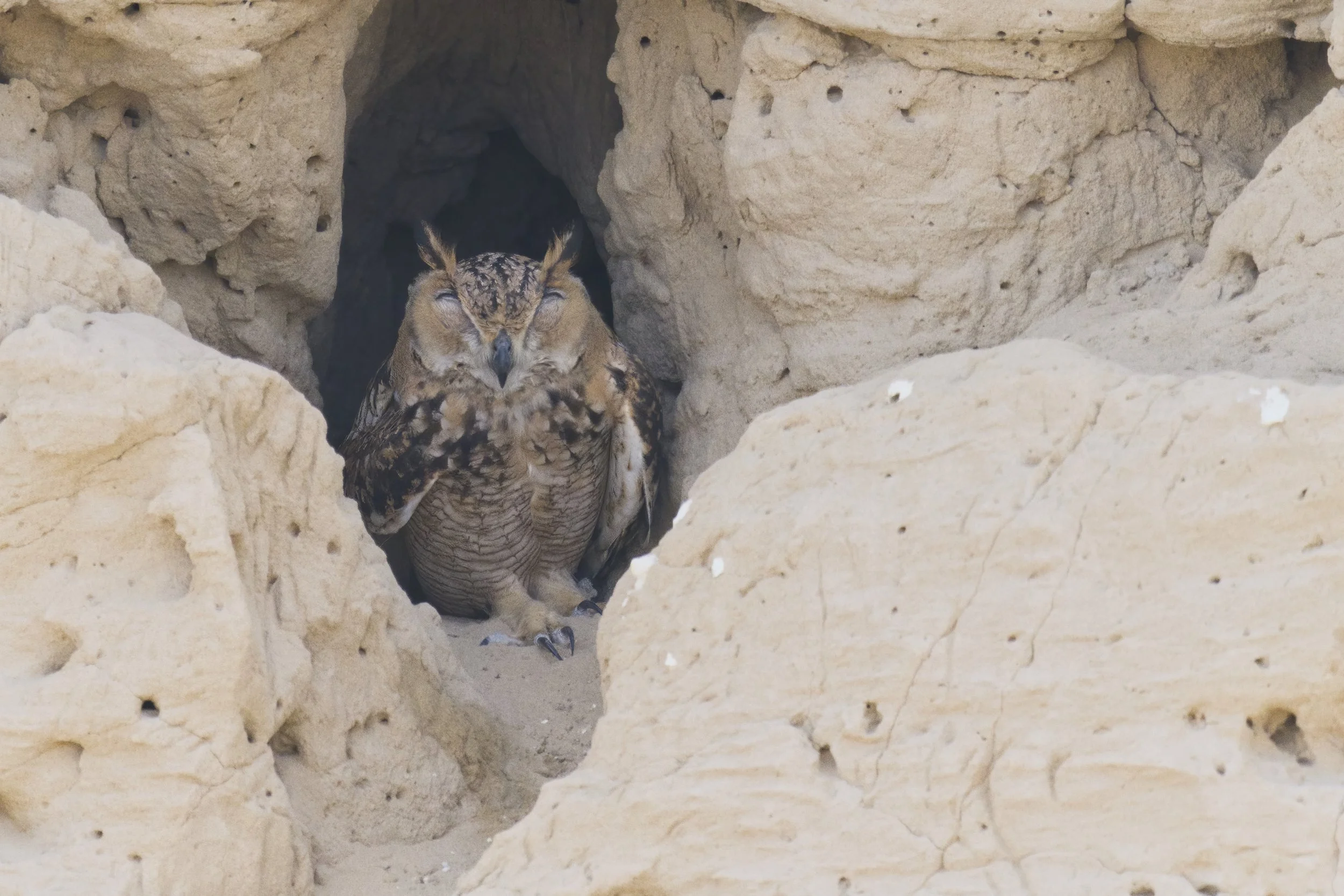
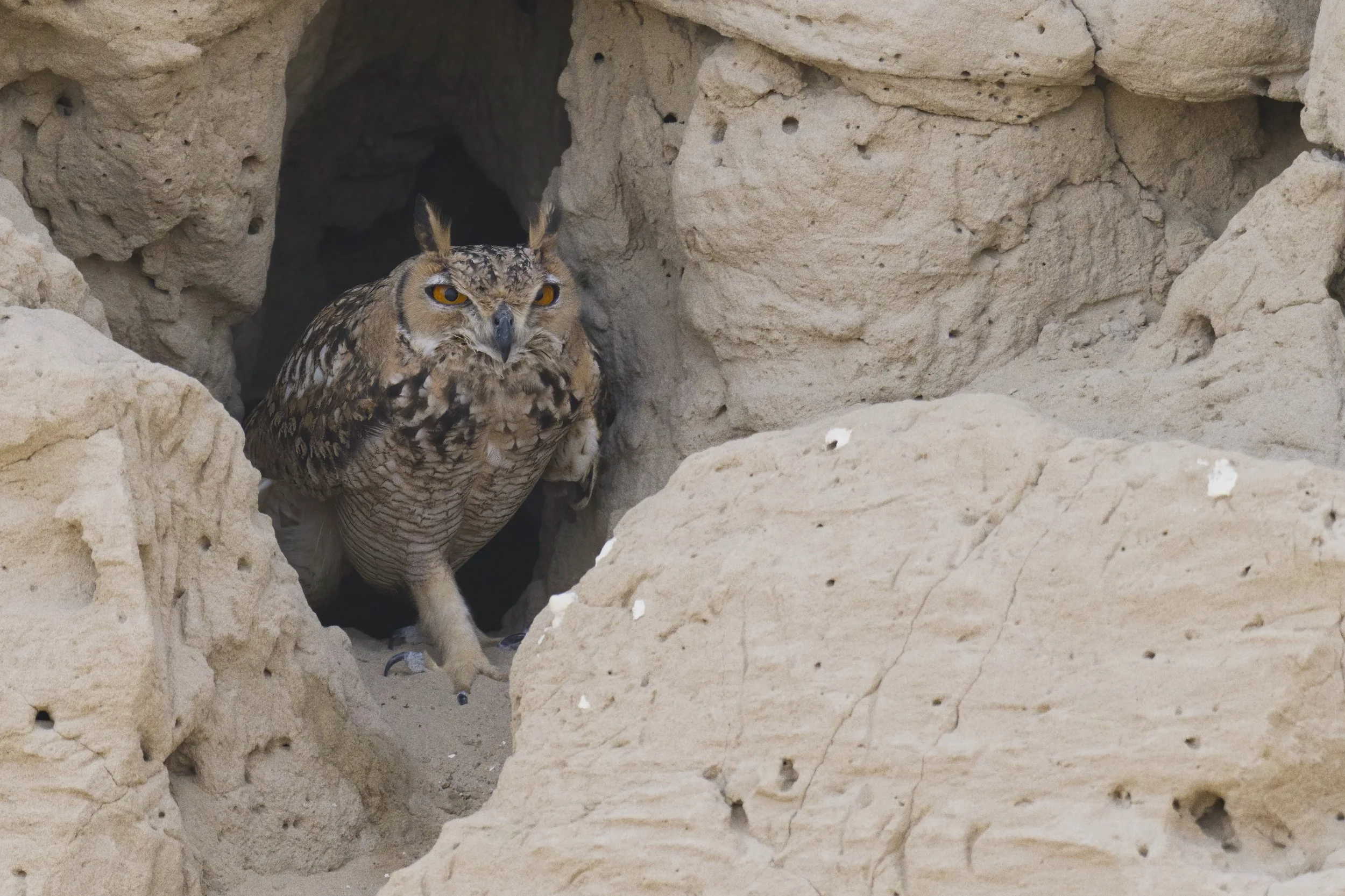
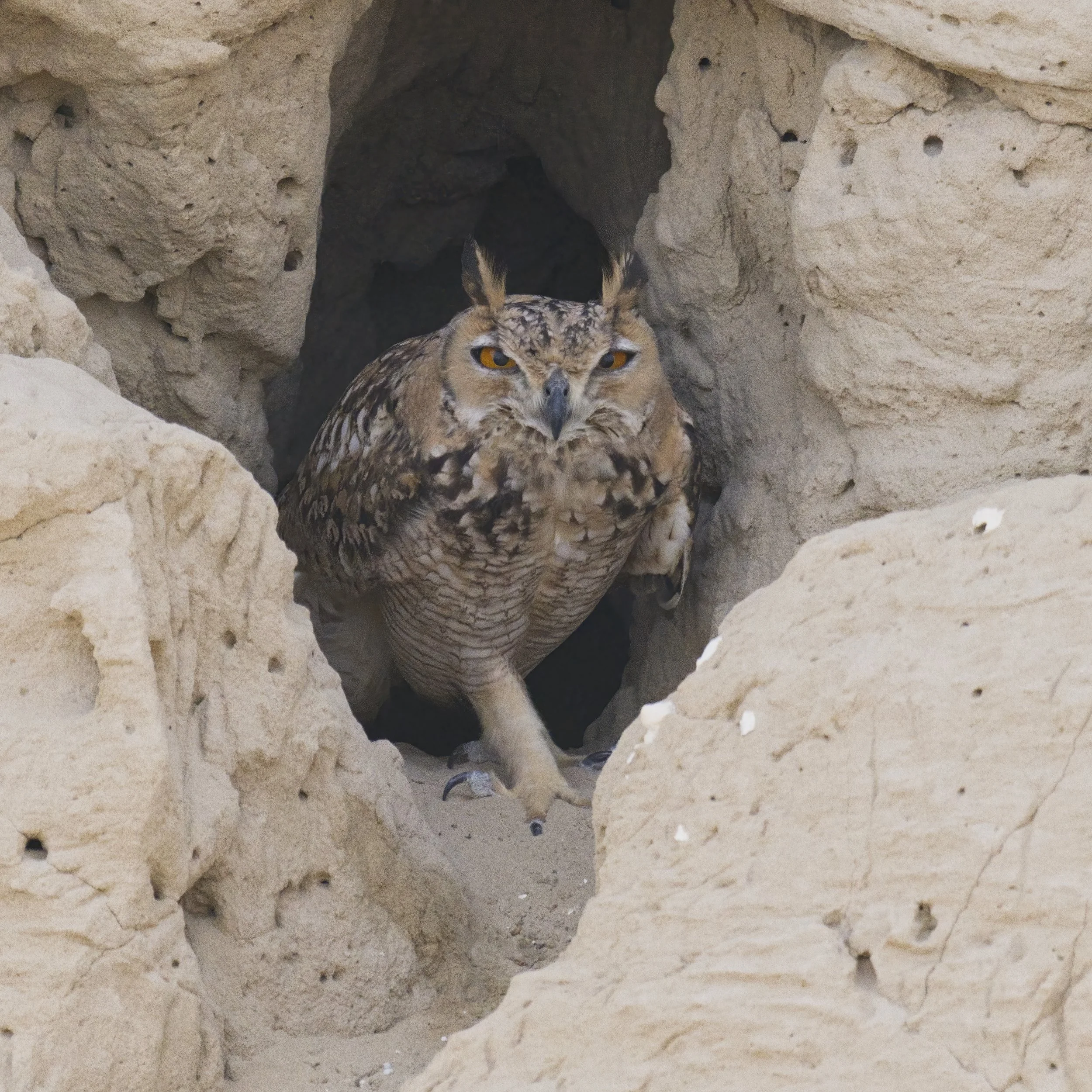
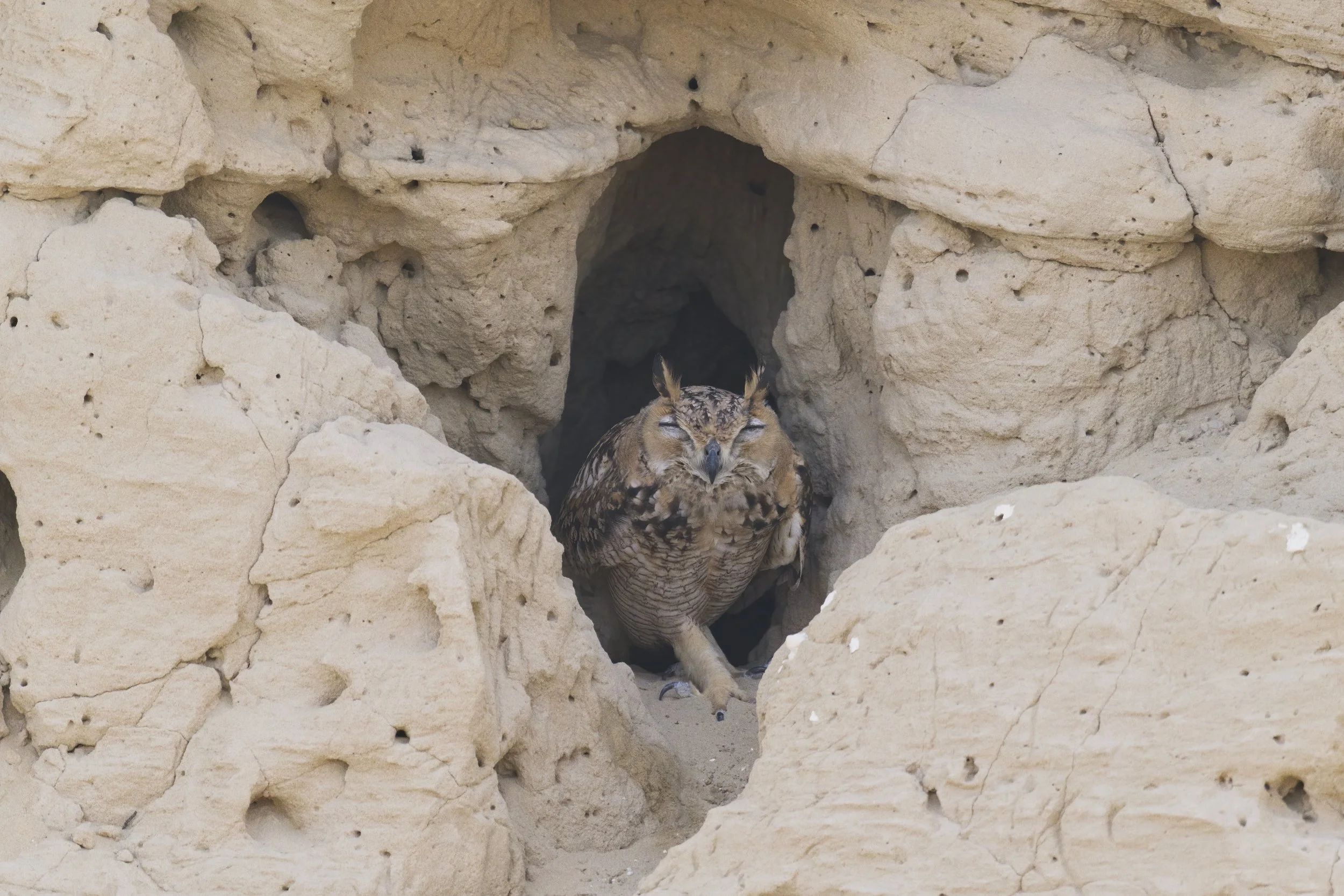
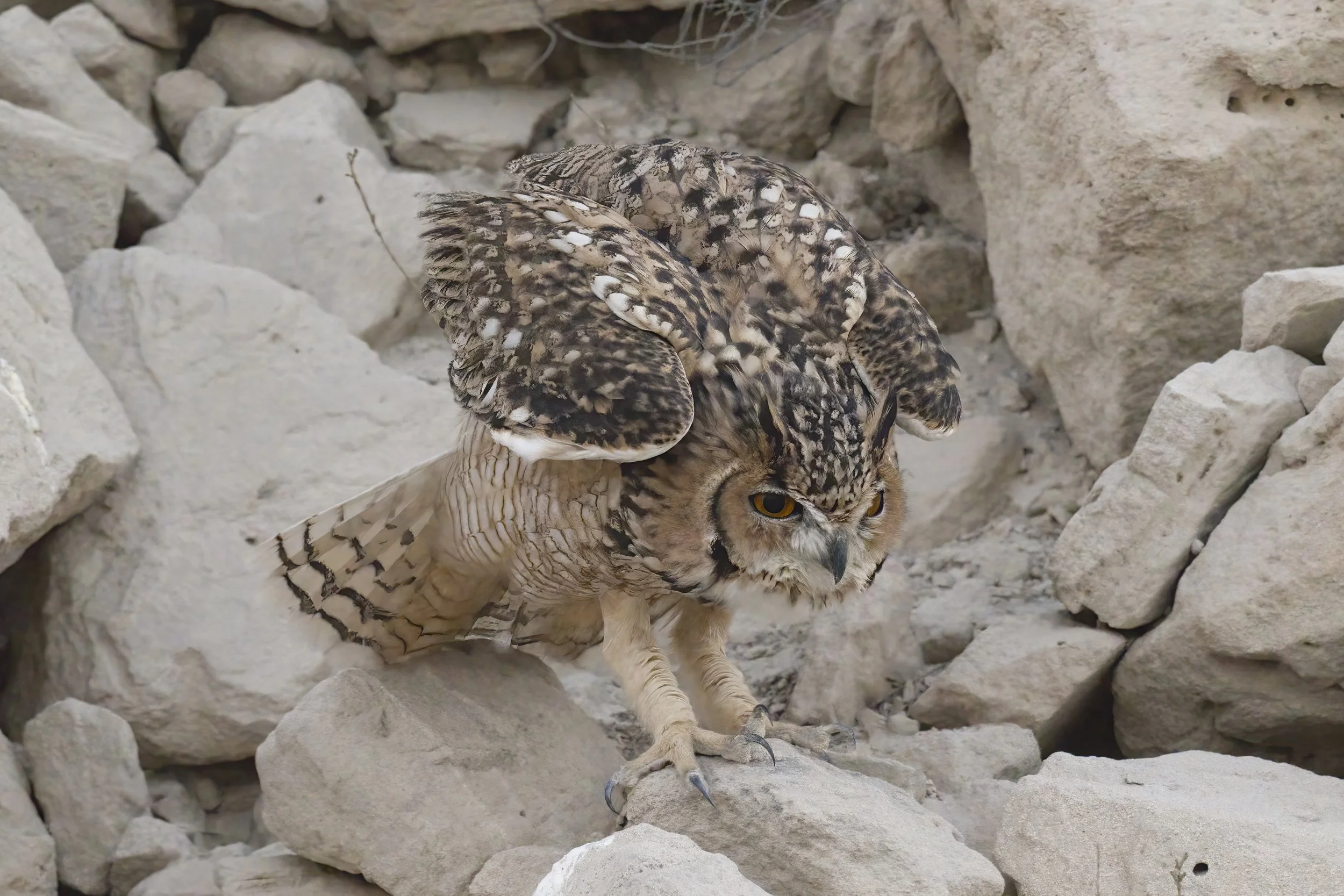
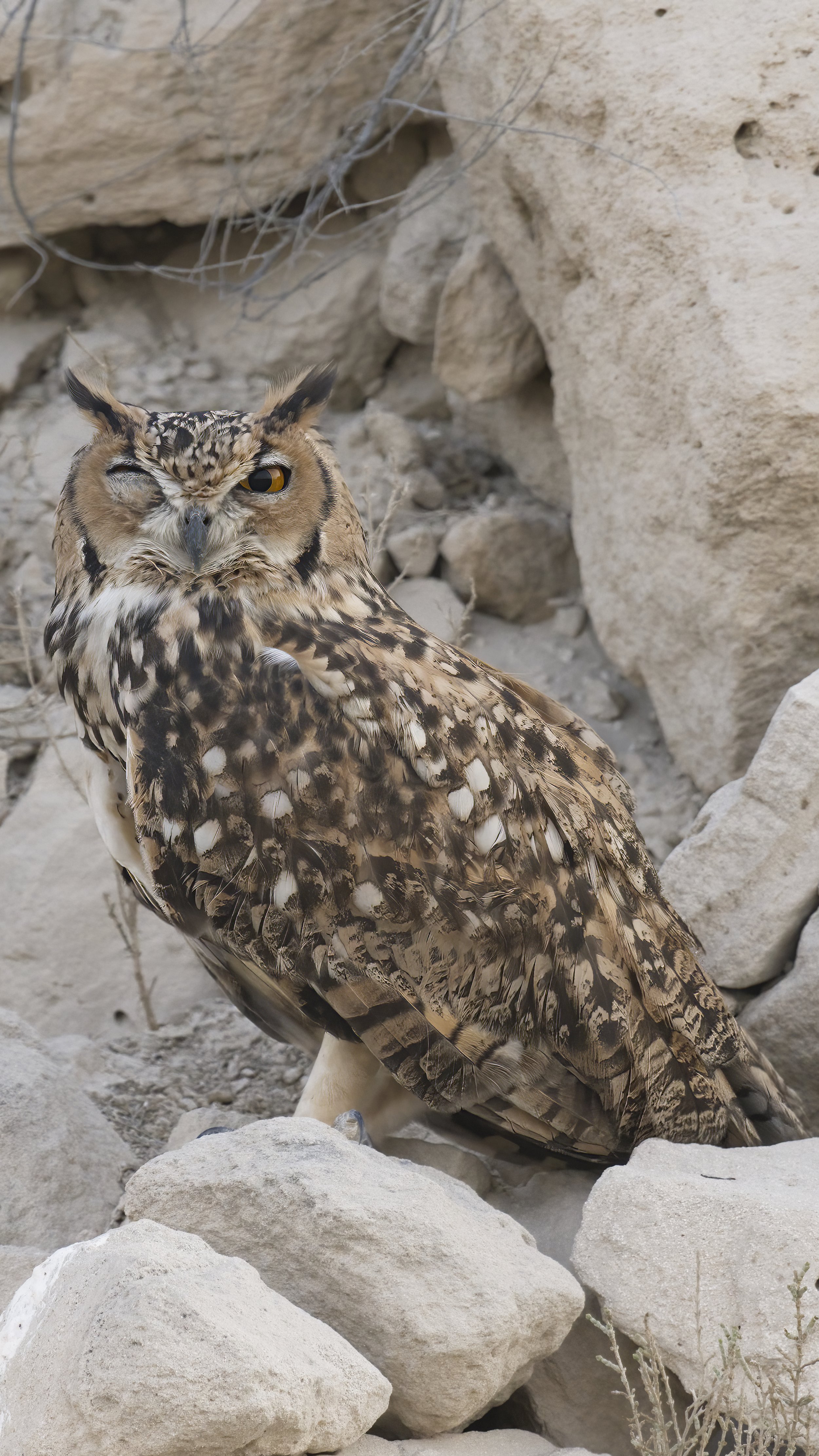
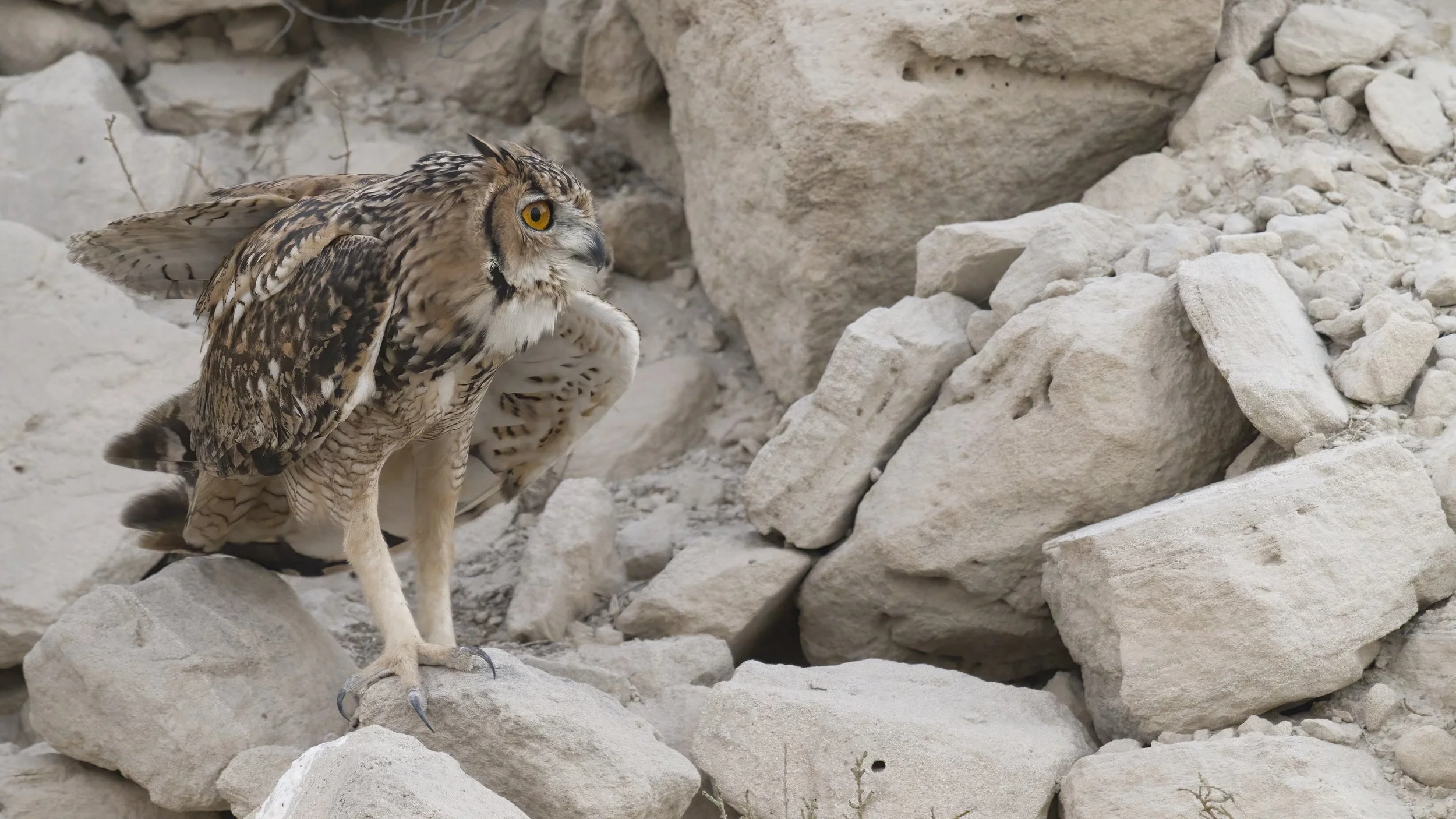
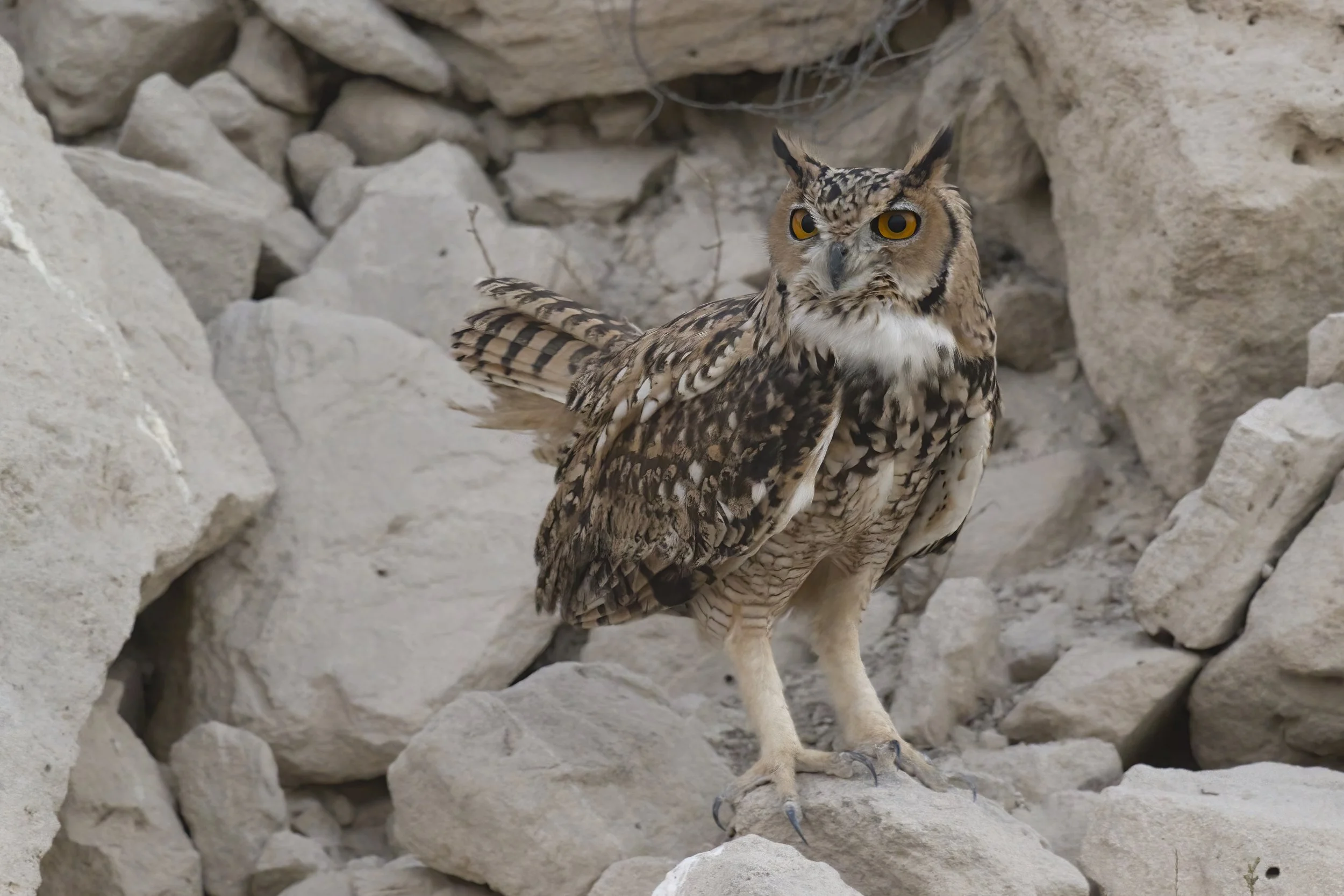
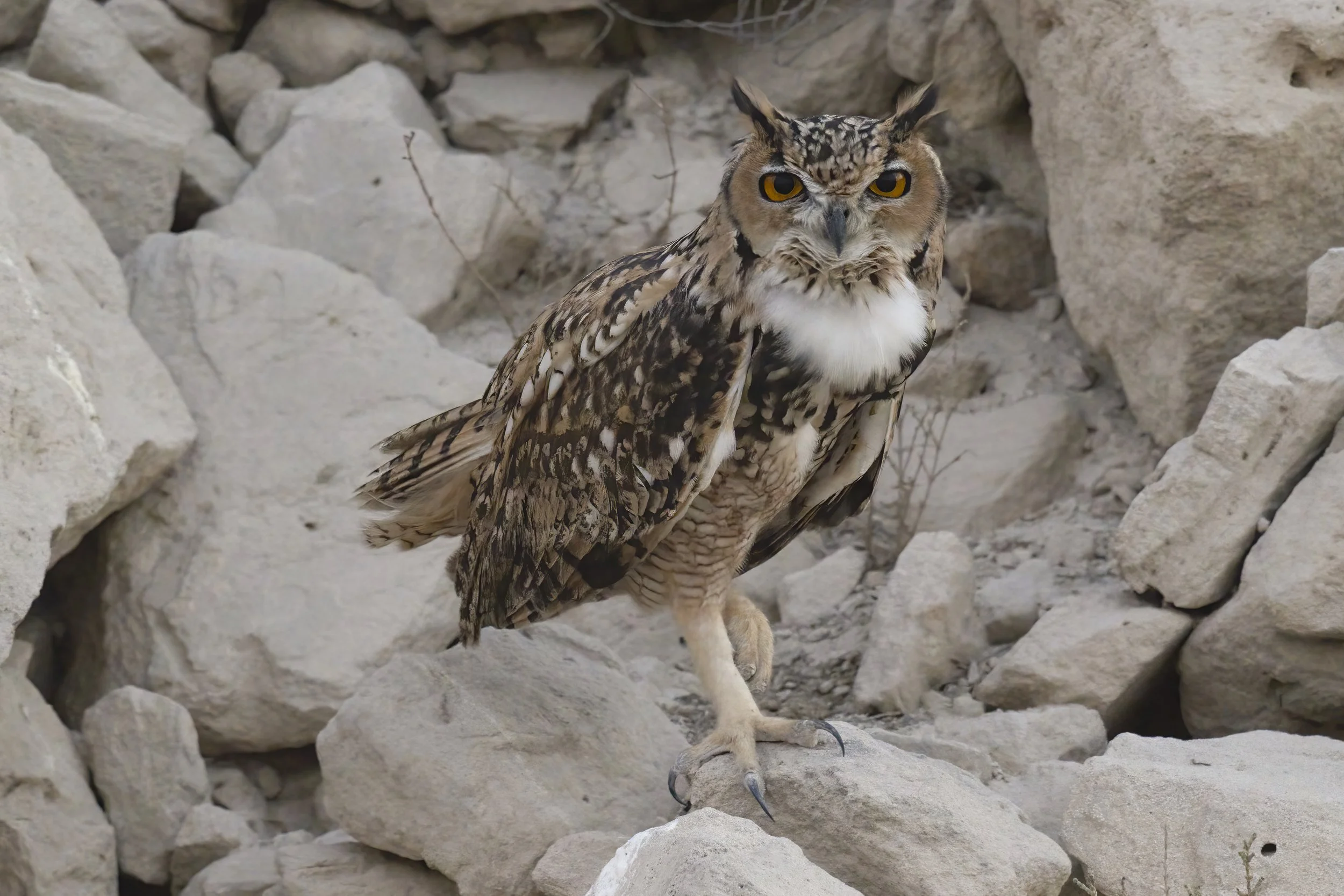
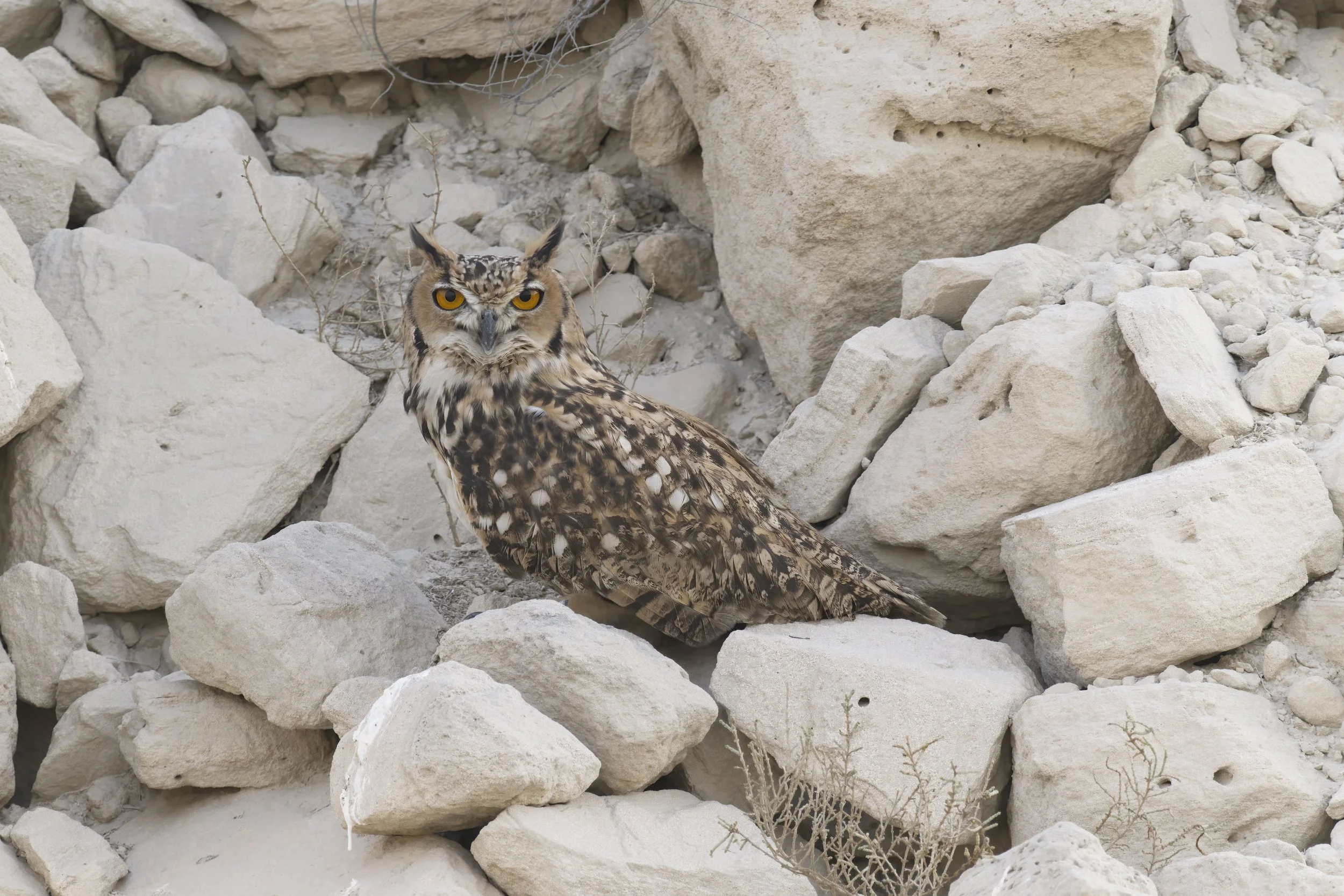
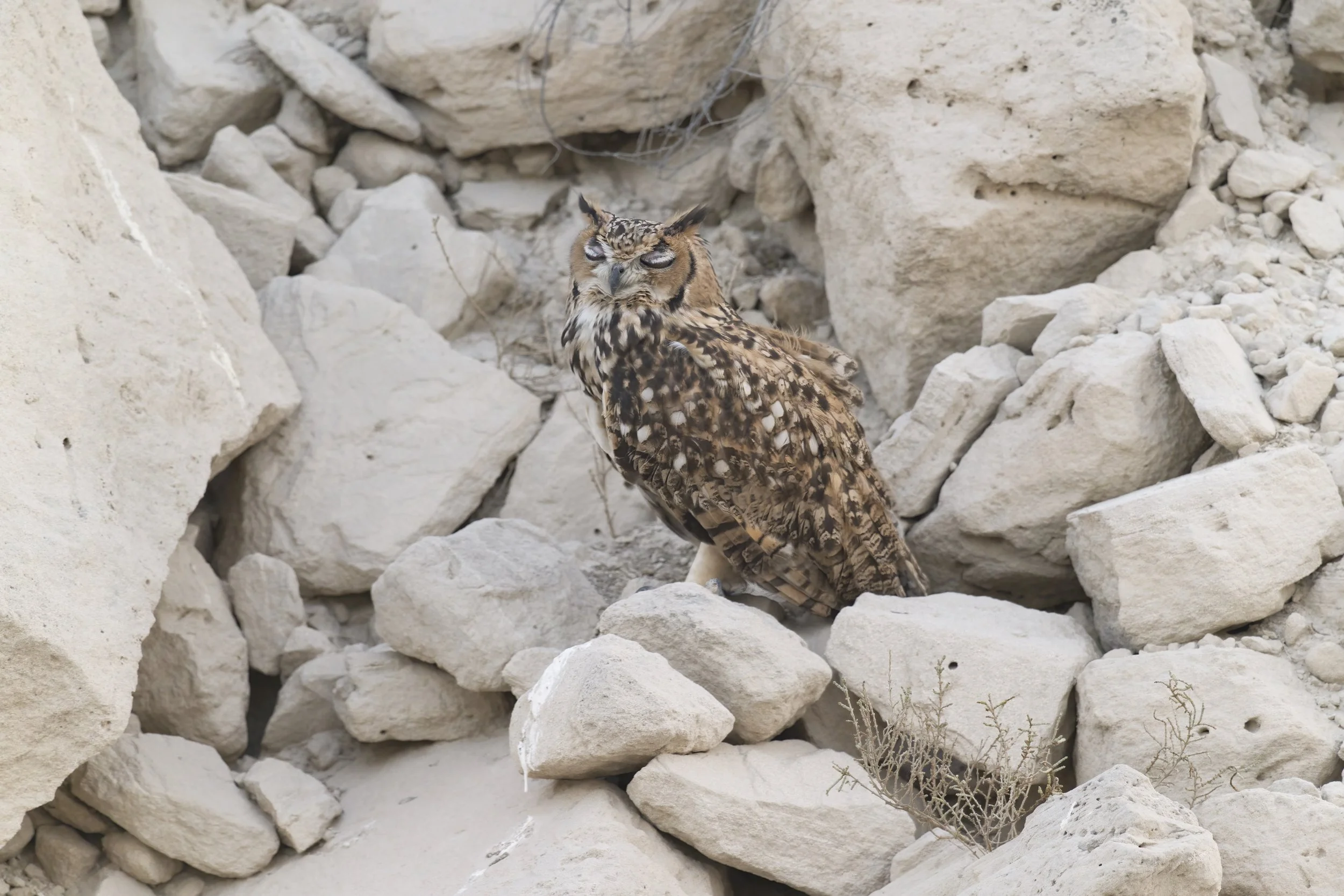
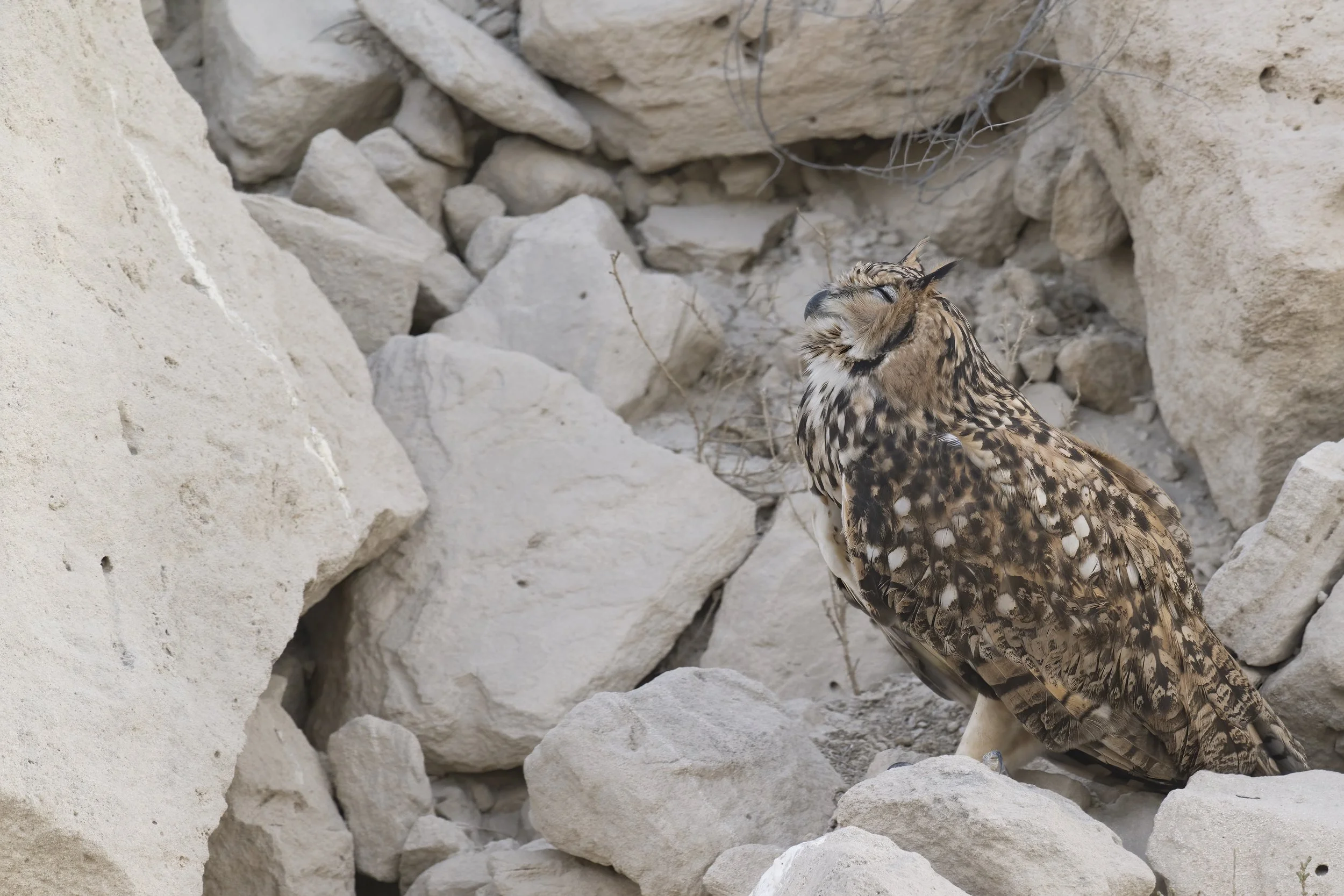
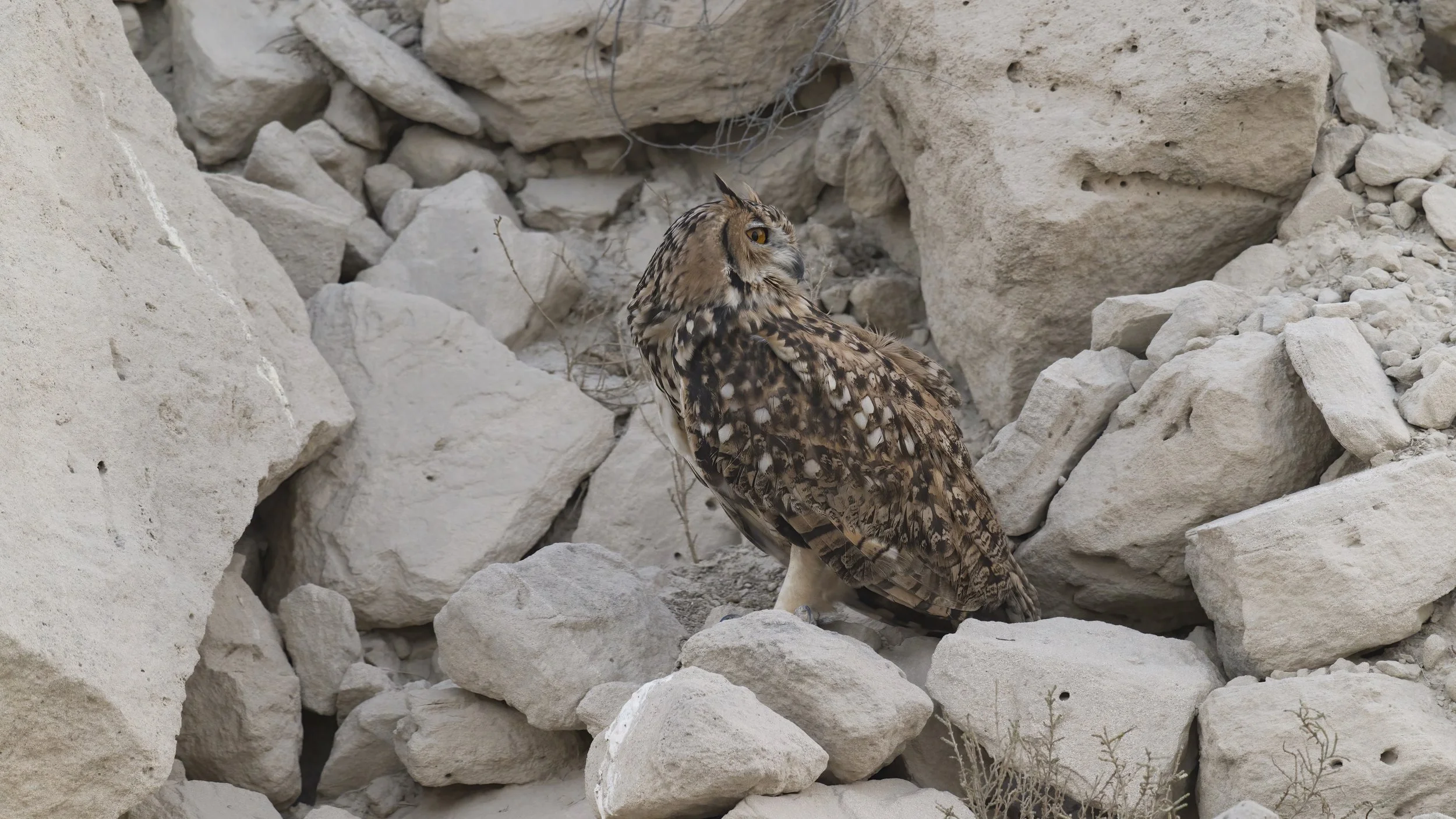
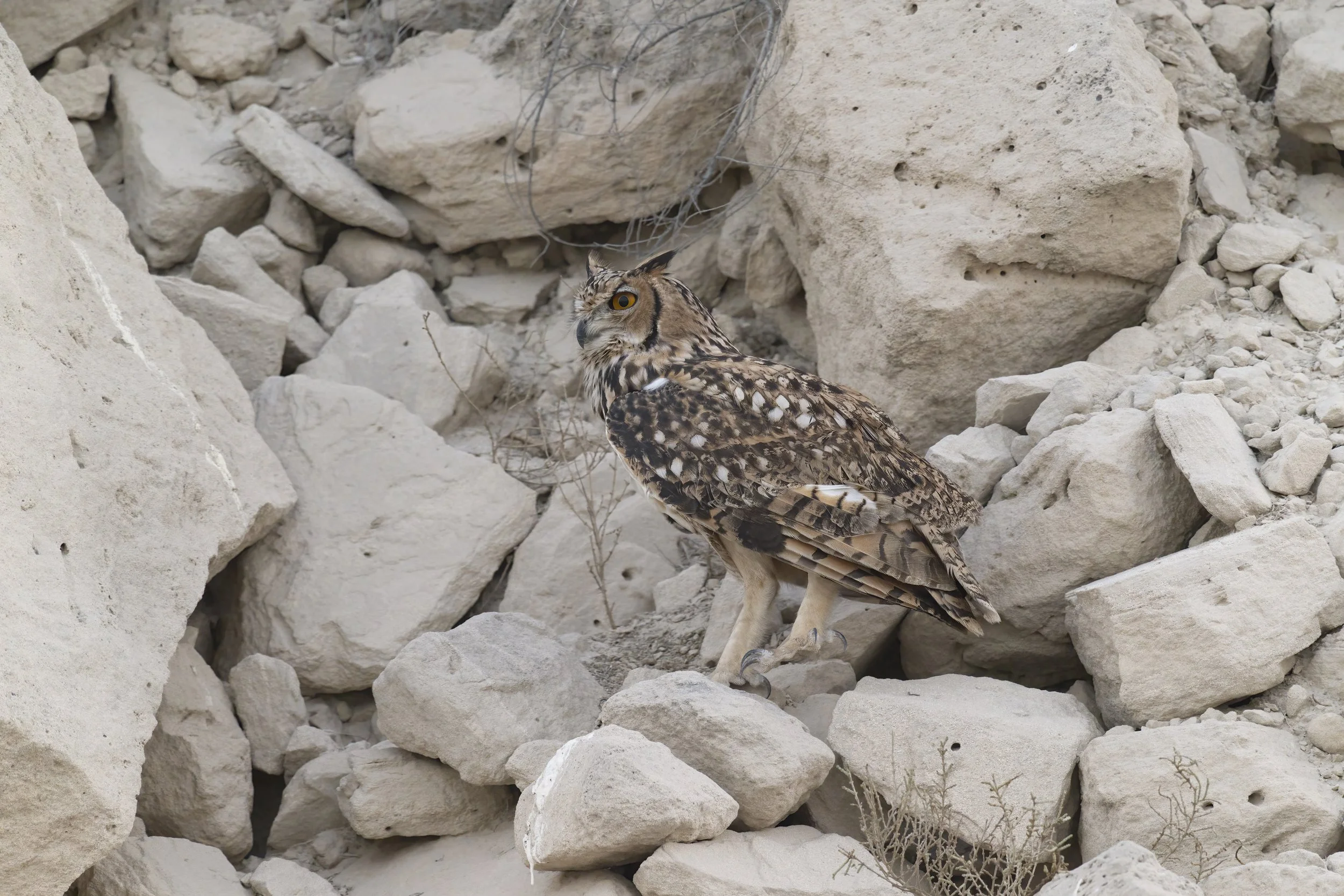
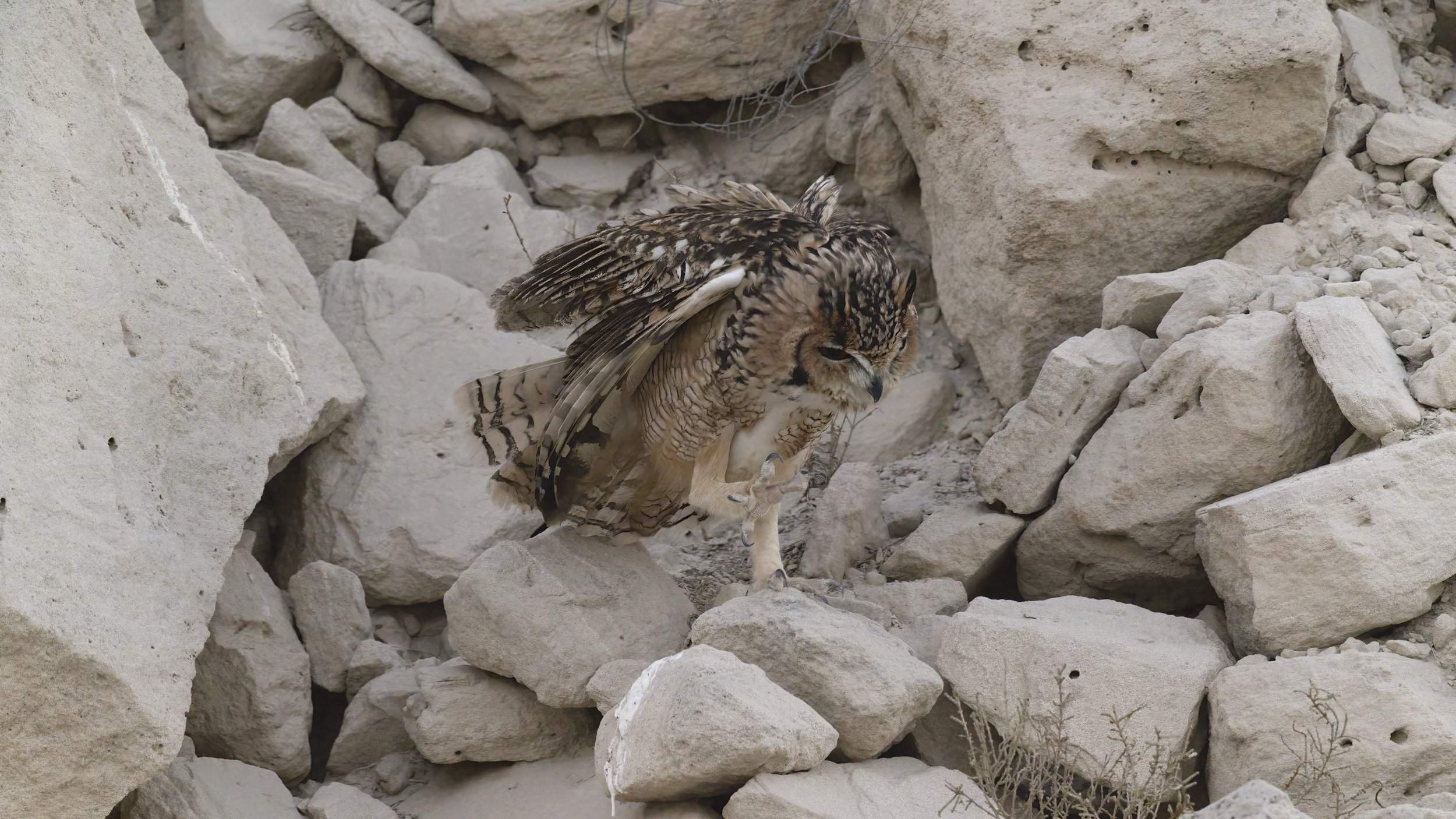
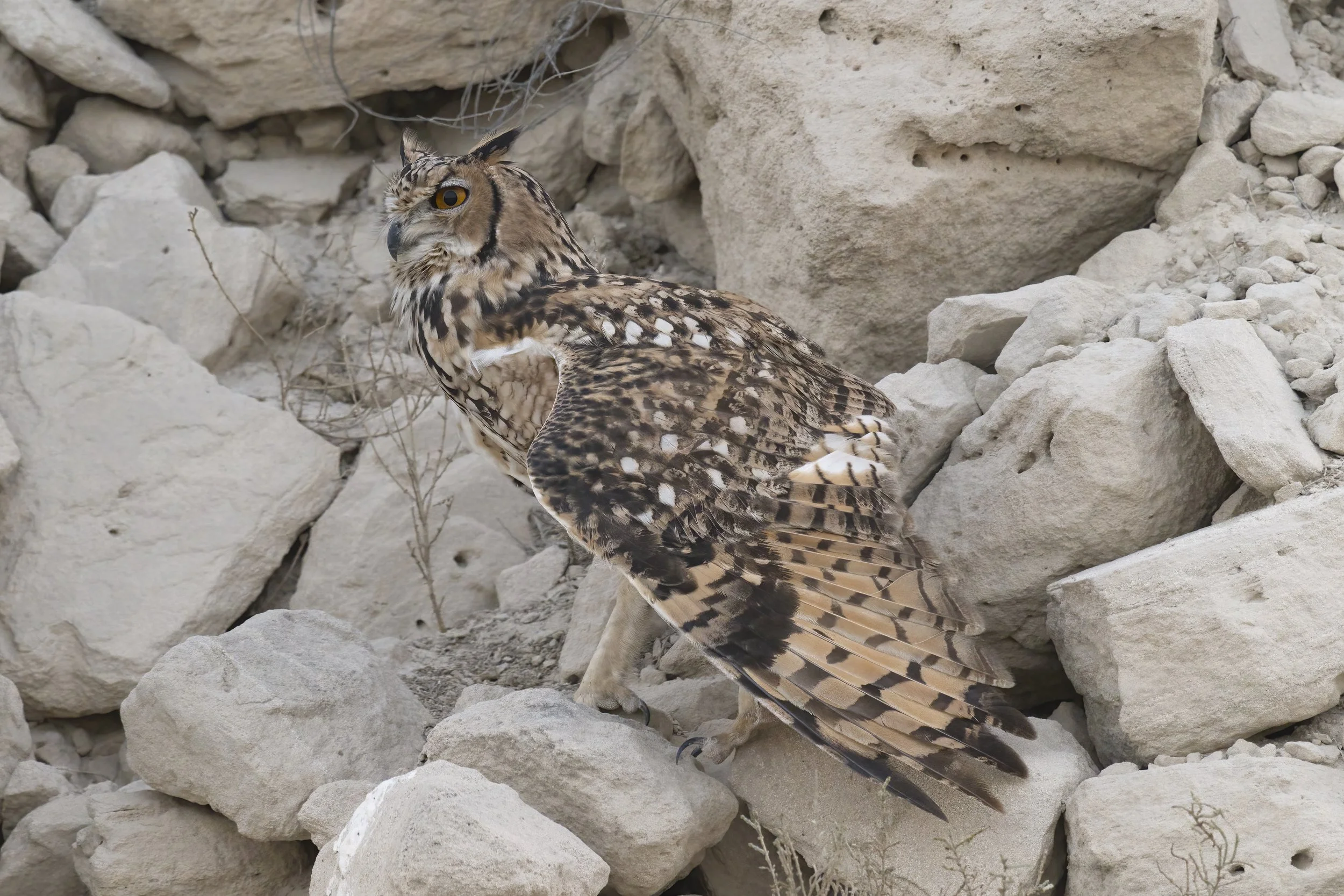
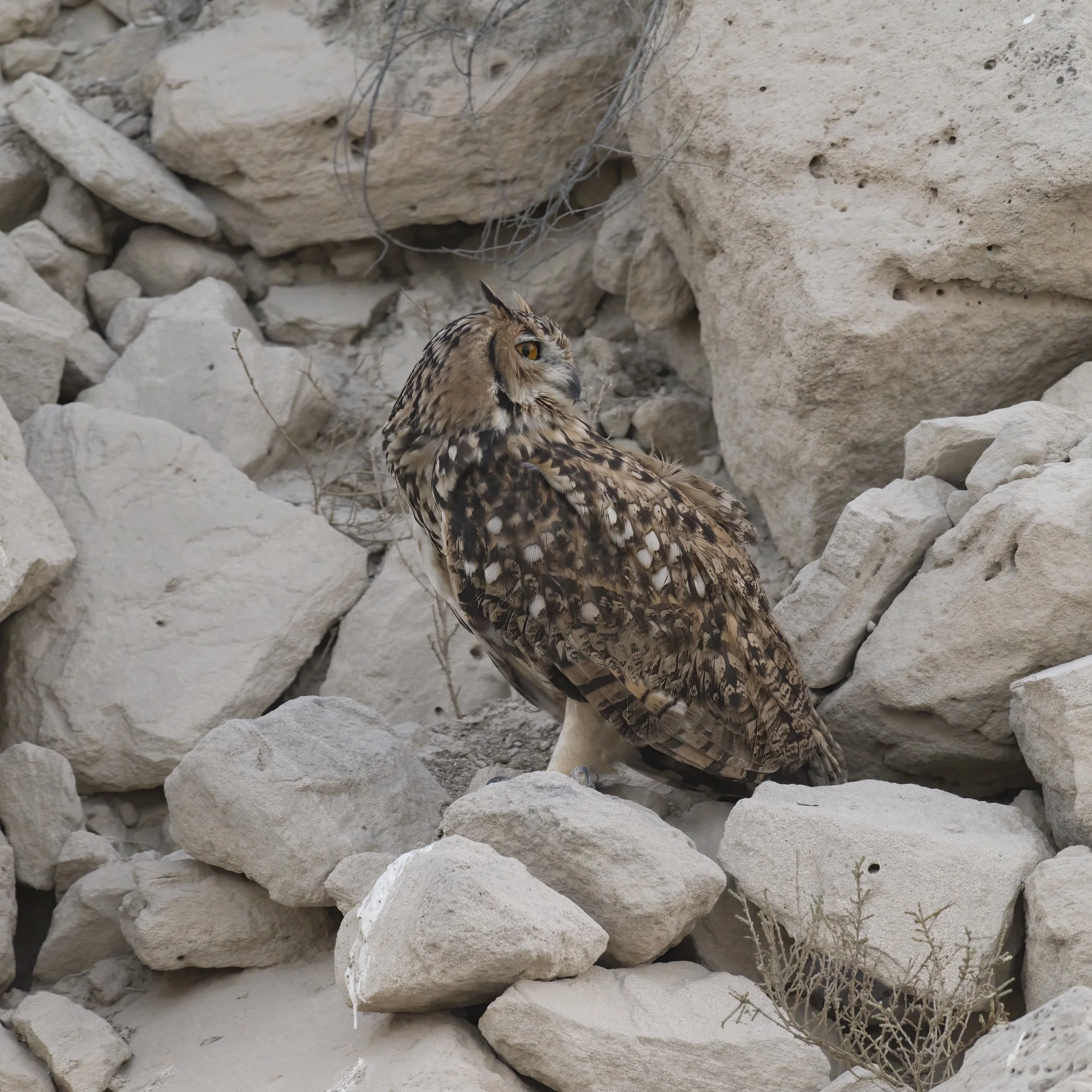
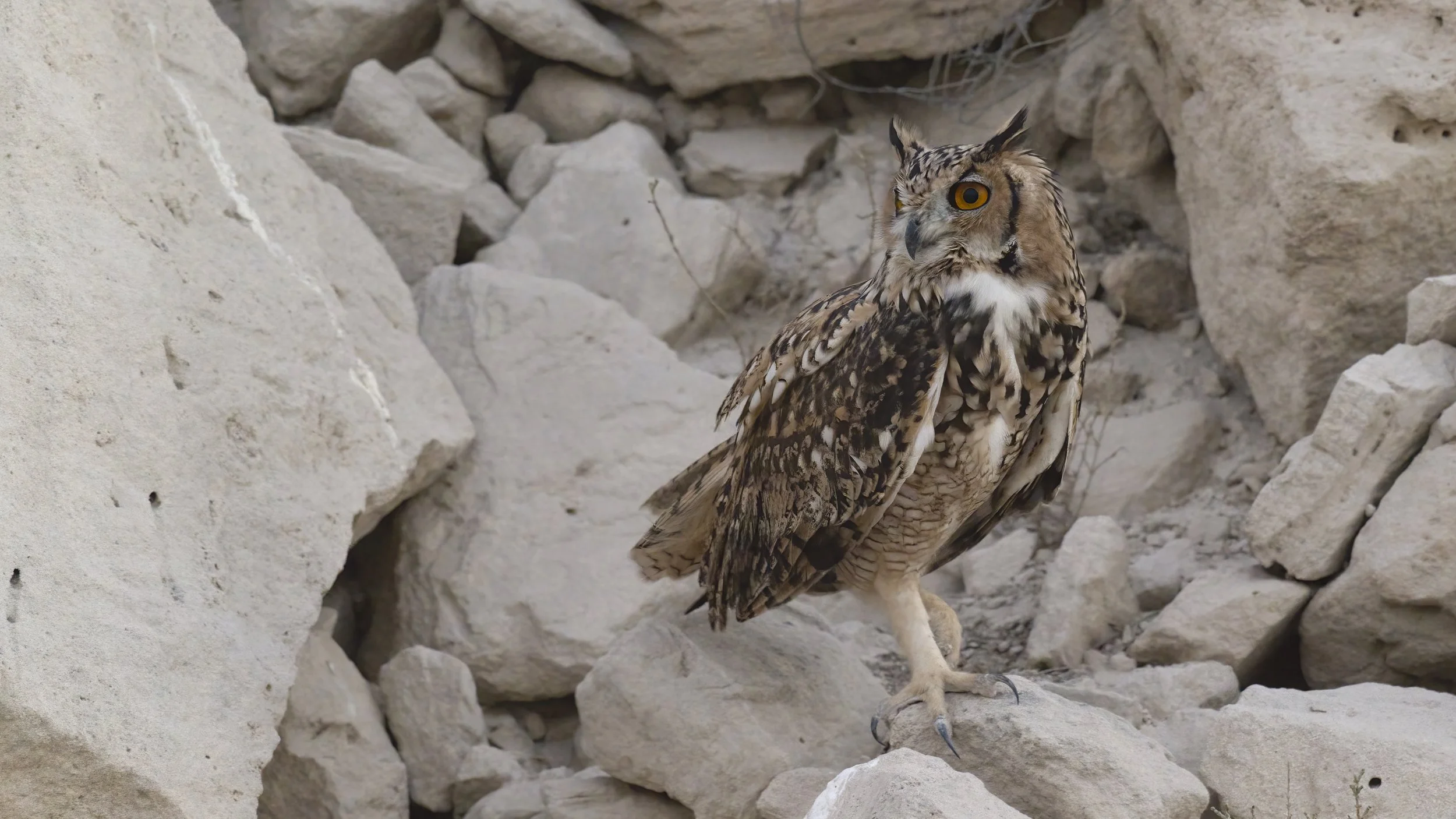
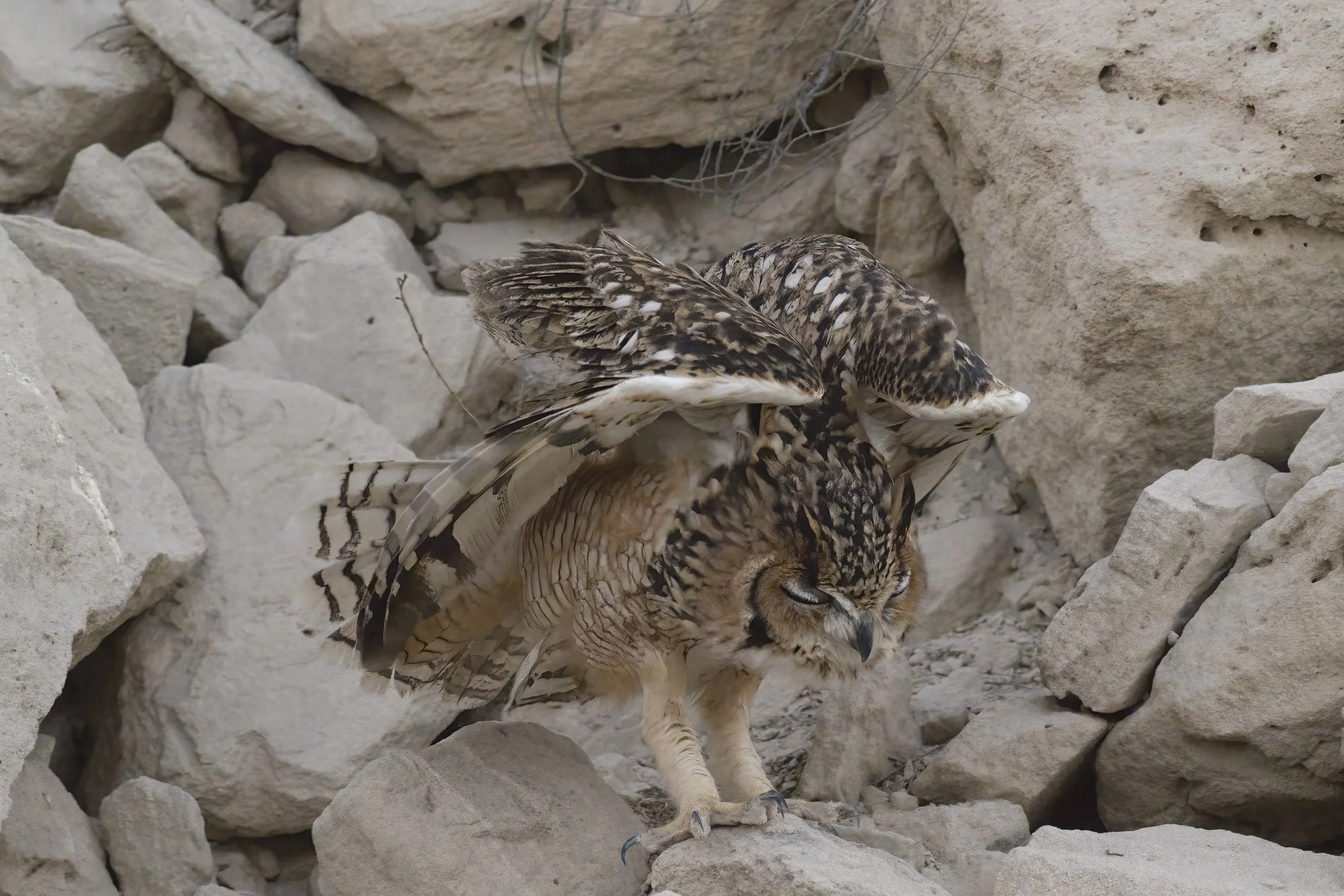
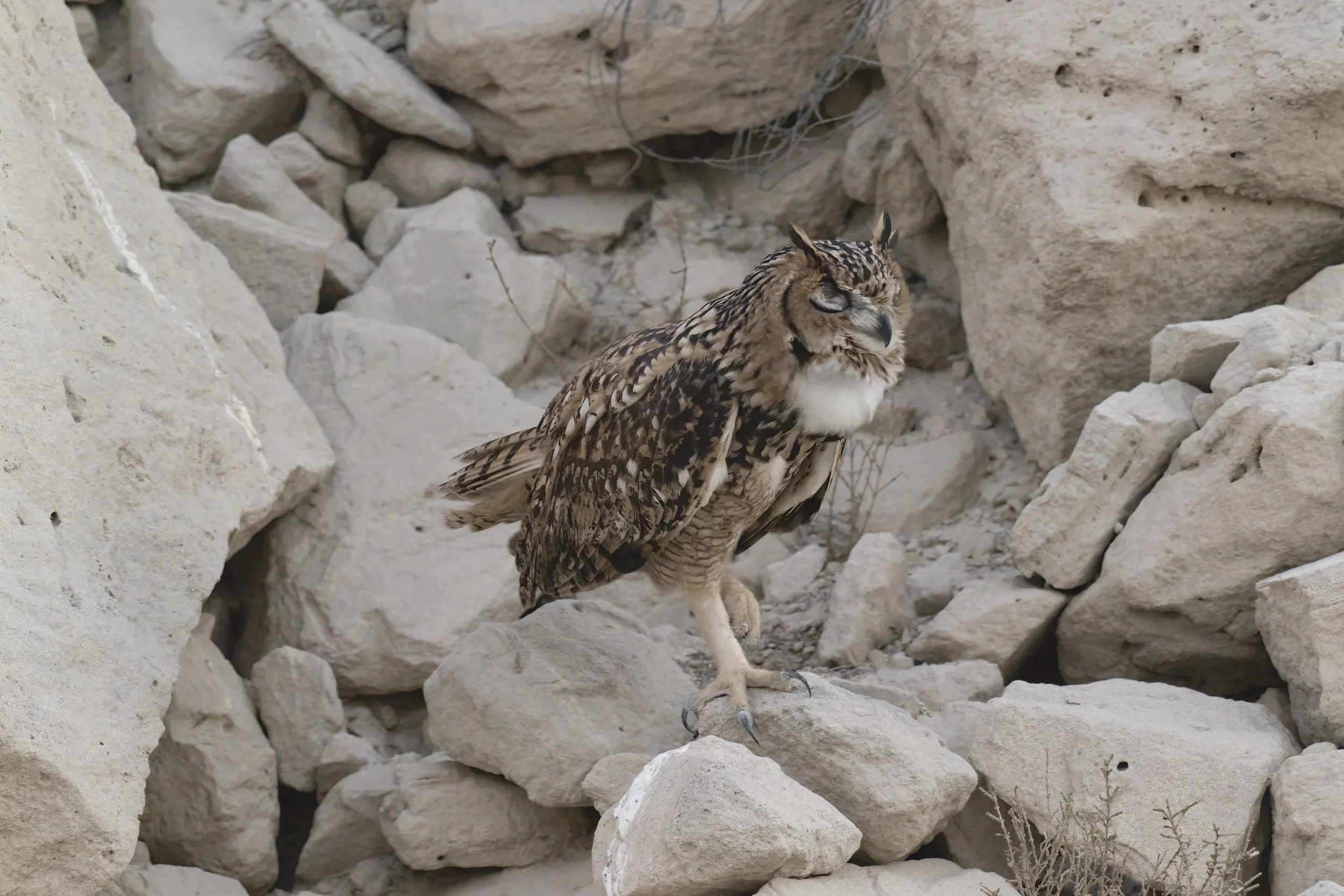
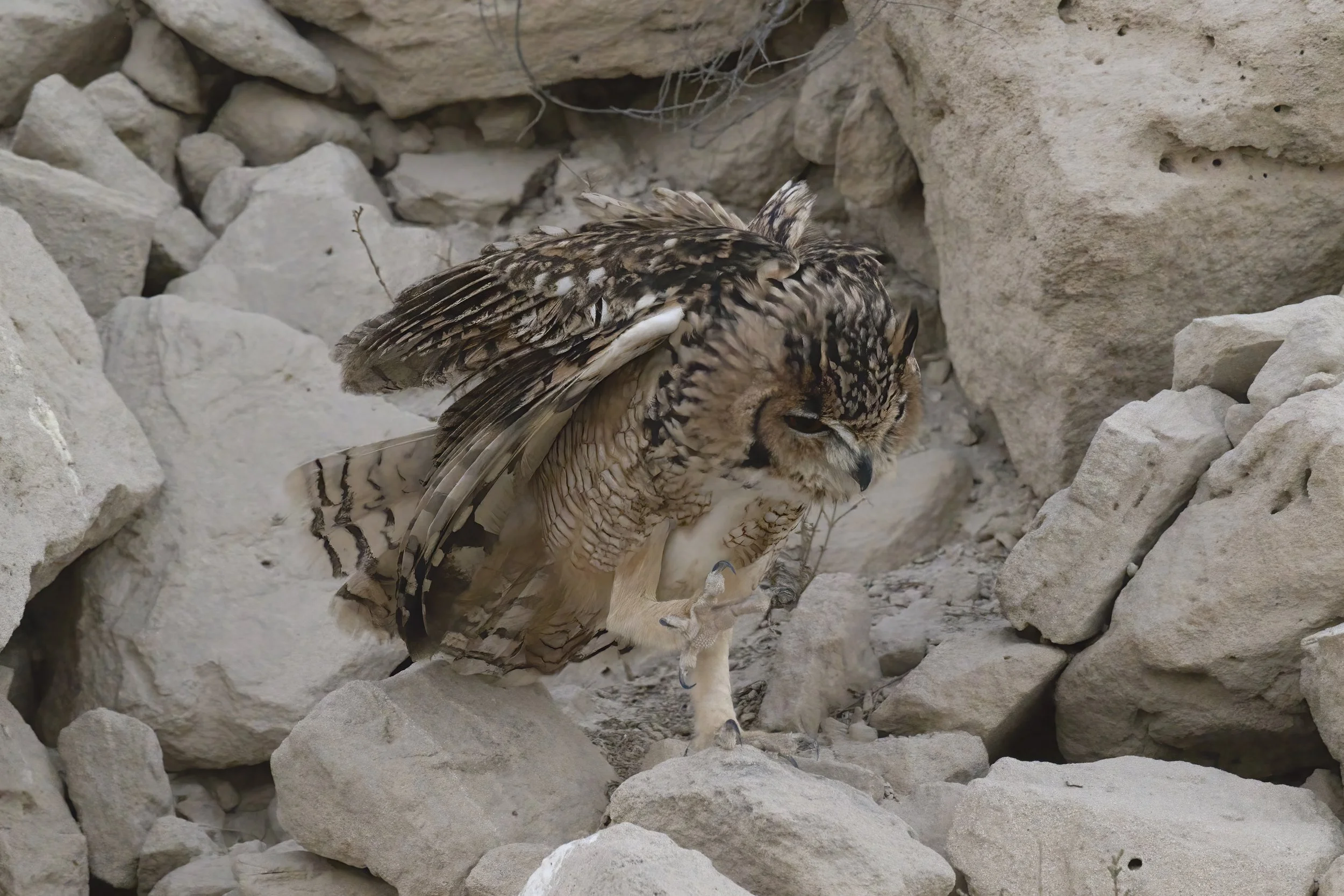
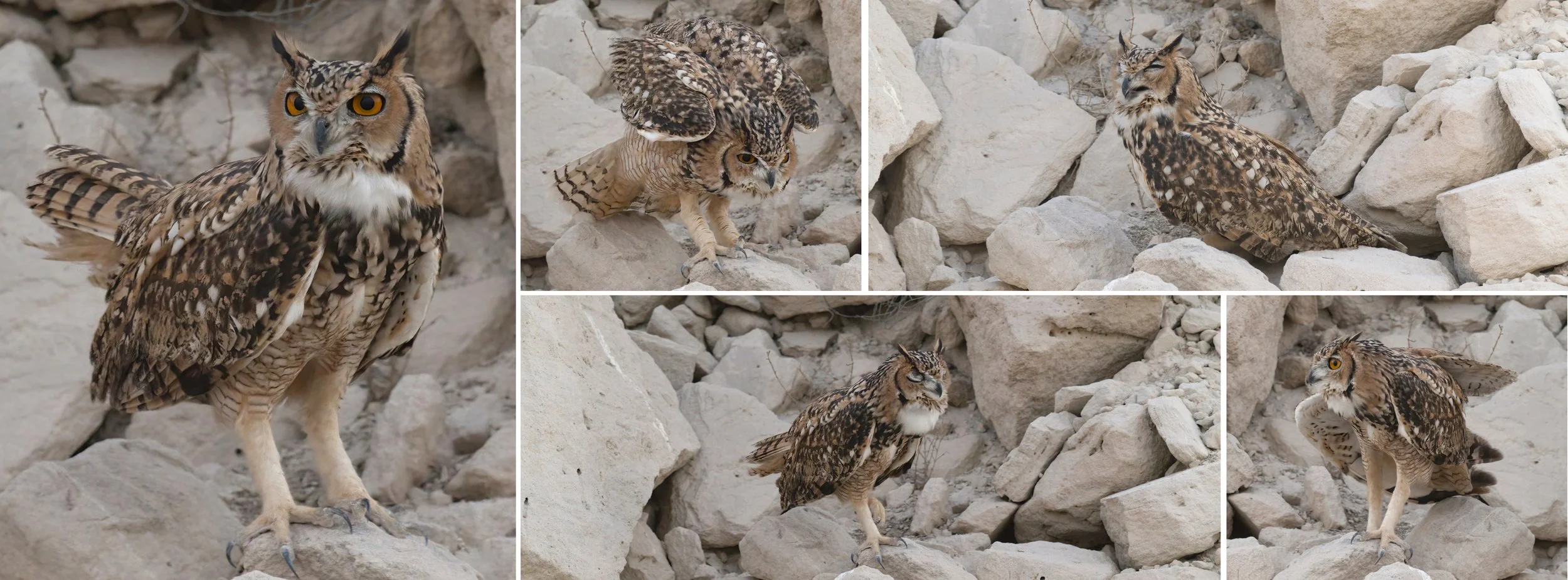
The Pharaoh Eagle-Owl (Bubo ascalaphus) is a captivating and formidable bird of prey, recognized for its substantial size, with an impressive wingspan reaching up to approximately 140 centimeters. Often described as a "ghost of the desert," this owl thrives in rocky deserts and semi-arid terrains across North Africa and the Middle East. Its sandy, intricately patterned plumage allows it to blend effortlessly into its environment, providing exceptional camouflage. Equipped with large amber eyes adapted for night vision, it hunts effectively under cover of darkness, capturing rodents, small mammals, reptiles, and even birds with remarkable precision. Interestingly, despite its large size and powerful presence, it remains surprisingly silent in flight, an adaptation crucial for stealthily approaching prey. The Pharaoh Eagle-Owl is known for its haunting, deep calls that echo across desert canyons, making it an iconic and enigmatic figure in local folklore and a favorite among bird enthusiasts and wildlife photographers.
The Pharaoh Eagle-Owl (Bubo ascalaphus), while impressive, is notably smaller than its cousin, the Eurasian Eagle-Owl (Bubo bubo). The Pharaoh Eagle-Owl typically measures between 45 to 50 cm in length, has a wingspan around 120 to 140 cm, and weighs between 1 to 2 kg. In contrast, the Eurasian Eagle-Owl is substantially larger, with lengths of 58 to 75 cm, wingspans reaching up to 188 cm, and weights from 1.5 to 4.2 kg, making it one of the largest owls in the world.
Habitat preferences also set them apart. The Pharaoh Eagle-Owl thrives predominantly in arid, rocky desert terrains and semi-desert landscapes of North Africa and the Middle East, adapted to survive in harsh, open environments with minimal cover. The Eurasian Eagle-Owl, however, occupies a broader range of habitats, from dense forests and mountainous regions to open steppes across Europe and Asia, showing greater habitat flexibility.
Overall, the Pharaoh Eagle-Owl's smaller size, lighter build, paler sandy plumage, and specialized desert habitat distinguish it clearly from the larger, heavier, and more versatile Eurasian Eagle-Owl.
البومة النسارية الفرعونية هي من الجوارح الليلية الآسرة والقوية، وتتميّز بحجم كبير نسبيًا مع باع جناحين قد يصل إلى نحو 140 سم. وكثيرًا ما توصف بأنها "شبح الصحراء"، إذ تعيش في الصحارى الصخرية والمناطق شبه الجافة عبر شمال أفريقيا والشرق الأوسط. ويمنحها ريشها الرملي الموشى بنقوش دقيقة قدرة ممتازة على الاندماج مع بيئتها، مما يوفر لها تمويهًا فعالًا للغاية. وبفضل عينيها الكهرمانيتين الكبيرتين المهيأتين للرؤية الليلية، تصطاد بكفاءة تحت جنح الظلام، فتقتنص القوارض، والثدييات الصغيرة، والزواحف، وحتى الطيور بدقة ملحوظة. ومن اللافت أنه، رغم حجمها الكبير وحضورها القوي، فإنها تكاد تكون صامتة في الطيران، وهي ميزة مهمة تساعدها على الاقتراب من فرائسها دون أن تُكشف. كما تُعرَف بنداءاتها العميقة الموحية التي يتردد صداها في أودية الصحراء، مما جعلها طائرًا أيقونيًا وغامضًا في الموروث المحلي، ومحبوبة لدى هواة الطيور ومصوري الحياة البرية
وتُعَدُّ البومة النسارية الفرعونية أصغر حجمًا بوضوح من قريبتها البومة الأوراسية النسارية. إذ يتراوح طول البومة النسارية الفرعونية عادة بين 45 و50 سم، ويبلغ باع جناحيها نحو 120 إلى 140 سم، ويتراوح وزنها بين 1 و2 كغ. أما البومة الأوراسية العقابية فهي أكبر بكثير، إذ يتراوح طولها بين 58 و75 سم، وقد يصل باع جناحيها إلى 188 سم، بينما يتراوح وزنها بين 1.5 و4.2 كغ، ما يجعلها واحدة من أكبر أنواع البوم في العالم
كما تختلف البيئات التي يفضلها النوعان بوضوح. فـالبومة النسارية الفرعونية ترتبط أساسًا بالصحارى الجافة الصخرية والمناطق شبه الصحراوية في شمال أفريقيا والشرق الأوسط، وقد تكيفت للبقاء في البيئات المفتوحة القاسية ذات الغطاء المحدود. في المقابل، تشغل البومة الأوراسية العقابية نطاقًا أوسع بكثير من الموائل، يشمل الغابات الكثيفة، والمناطق الجبلية، والسهوب المفتوحة عبر أوروبا وآسيا، مما يعكس مرونة بيئية أكبر
وبصورة عامة، فإن حجم البومة النسارية الفرعونية الأصغر، وبنيتها الأخف، وريشها الرملي الفاتح، وارتباطها المتخصص بالبيئات الصحراوية كلها سمات تميزها بوضوح عن البومة الأوراسية العقابية الأكبر حجمًا والأثقل بنيةً والأوسع انتشارًا من حيث الموائل
Other Species
-
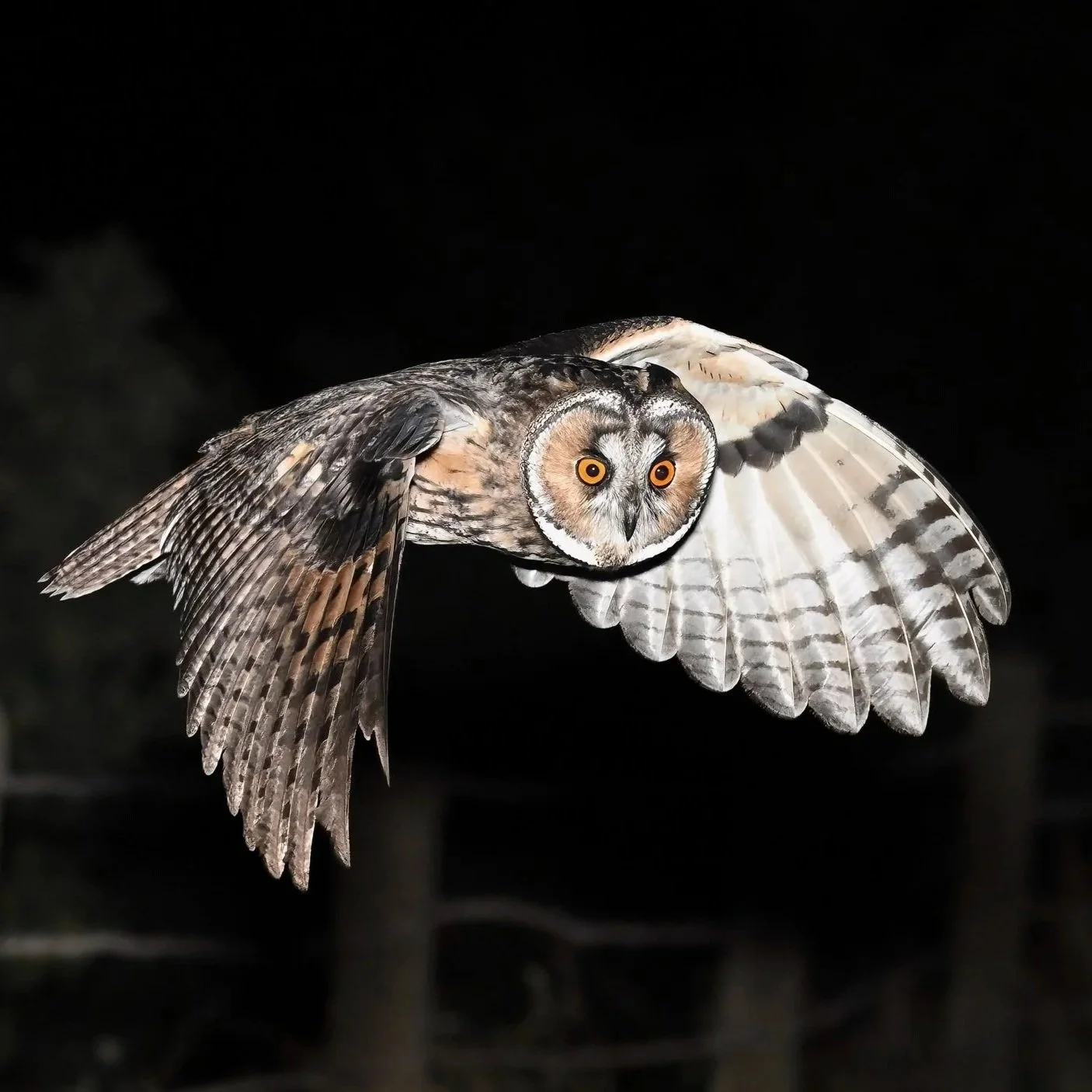
Long-eared Owl (Asio otus)
-
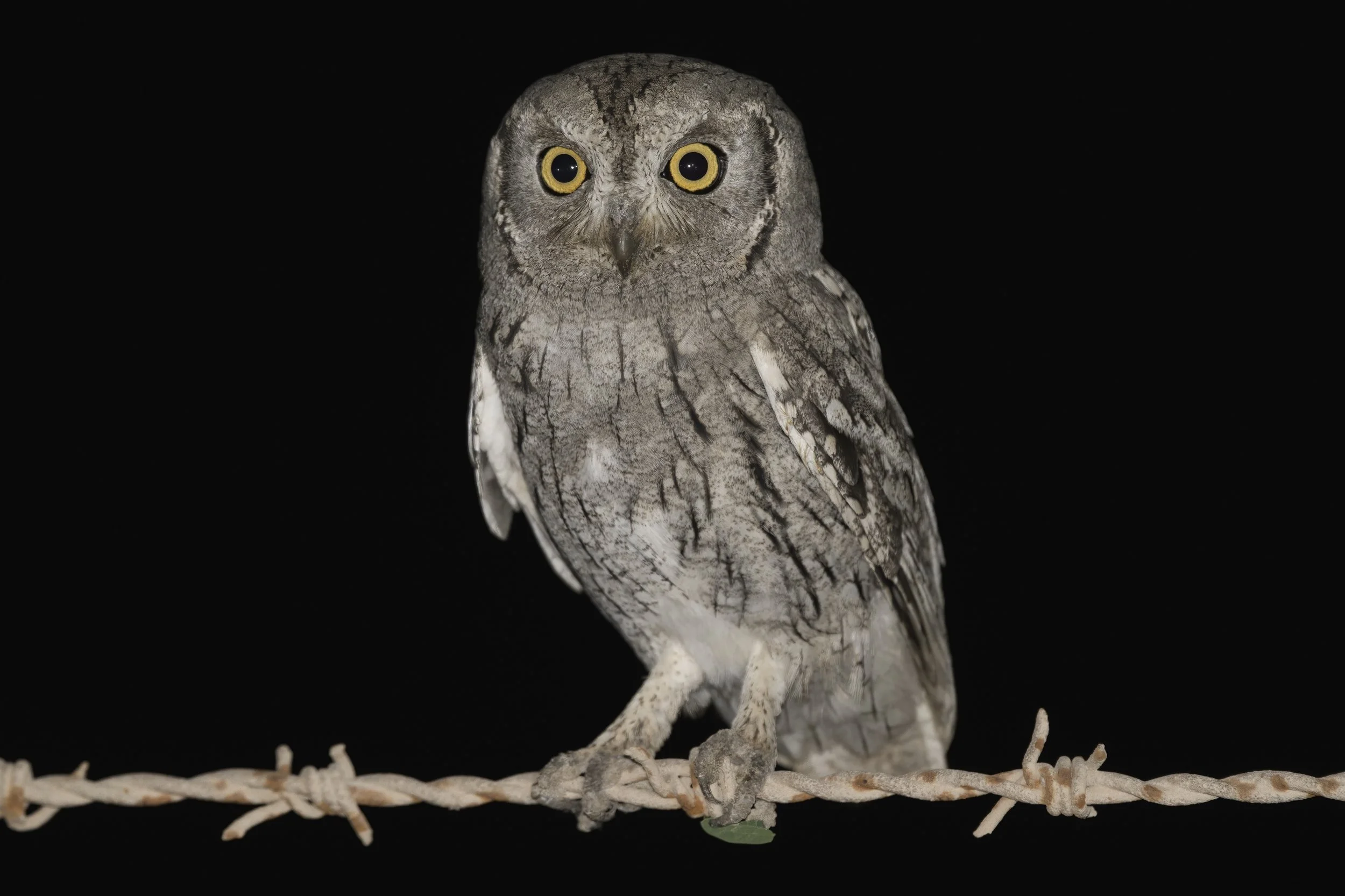
Pallid Scops-owl (Otus brucei)
-
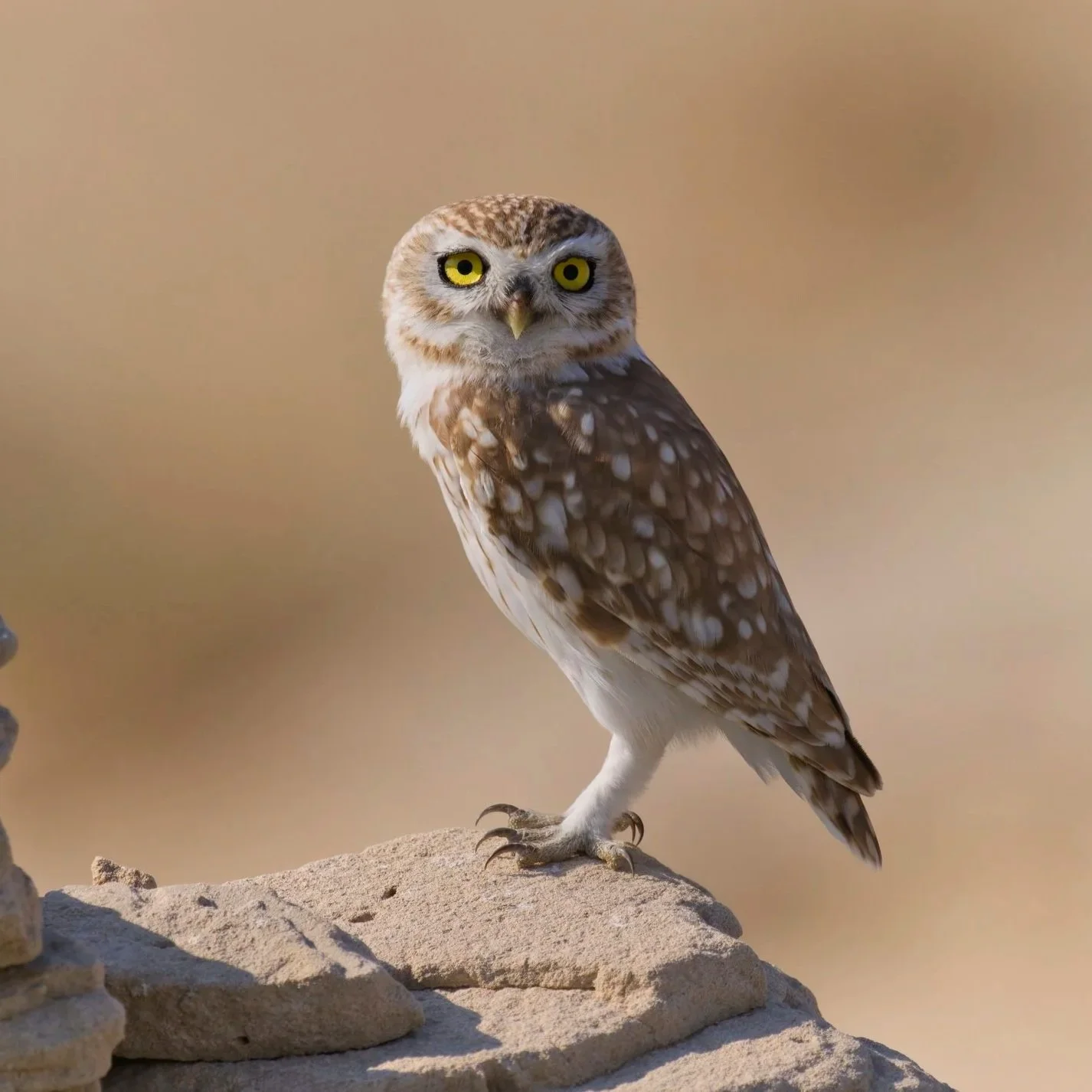
Little Owl (Athene noctua)
-
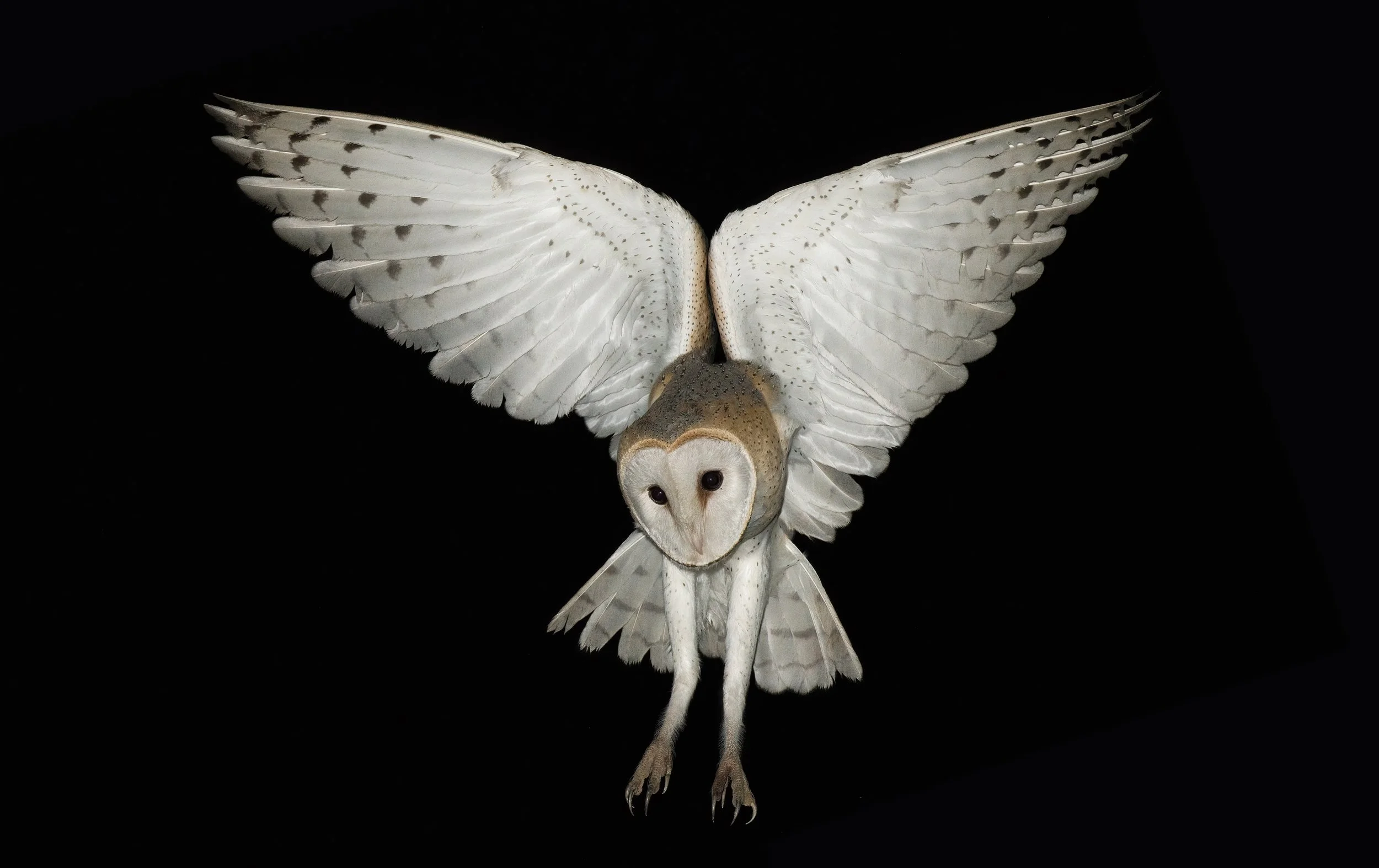
Barn Owl (Tyto alba)
The Pharaoh Eagle-Owl isn’t always where you expect it. Some days it’s perched in plain sight; other days, it vanishes into the desert’s silence. Discover the reasons behind its unpredictable presence — from shifting temperatures and prey movements to its instinct for survival in the wild landscapes of the UAE.