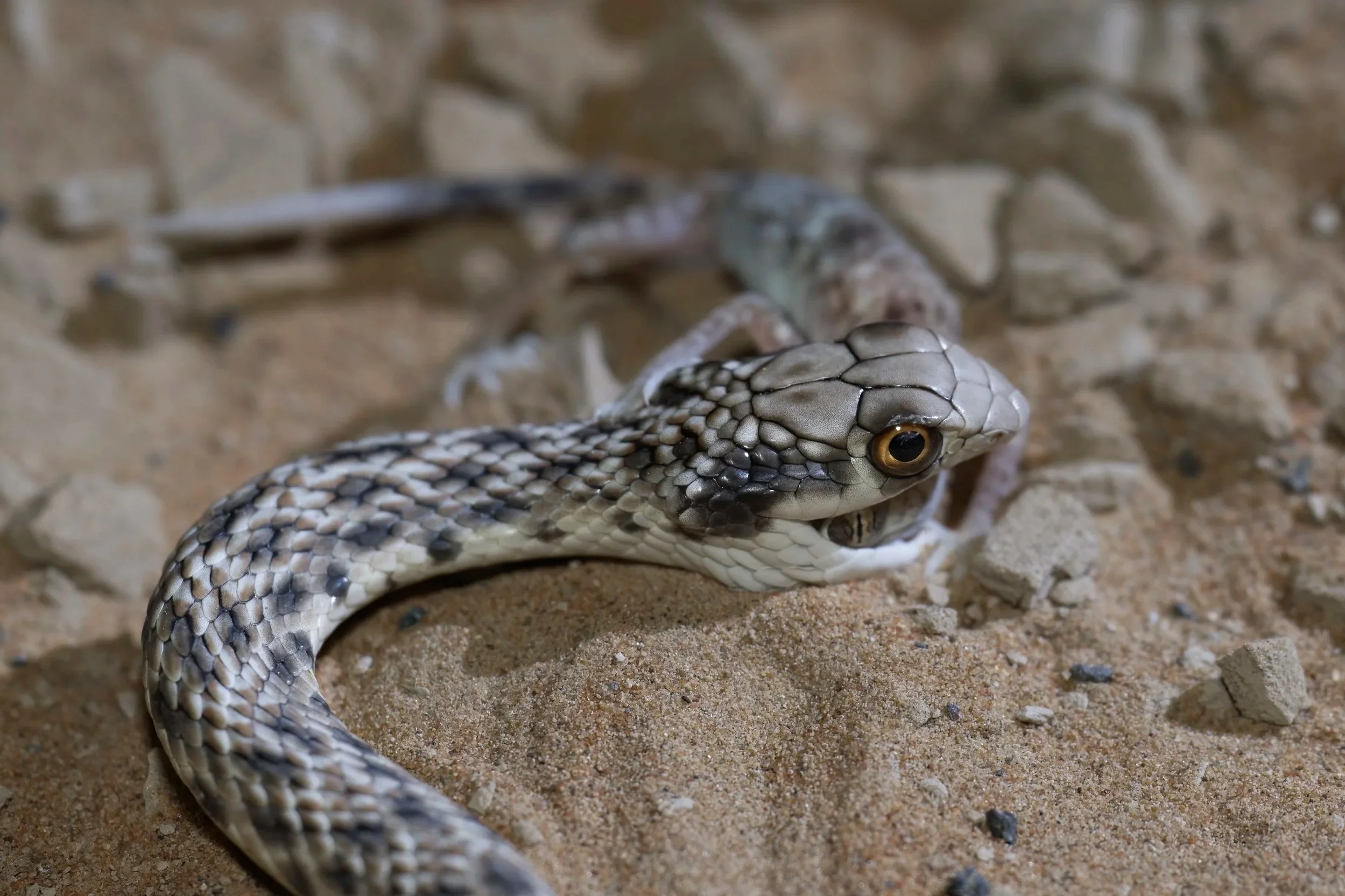

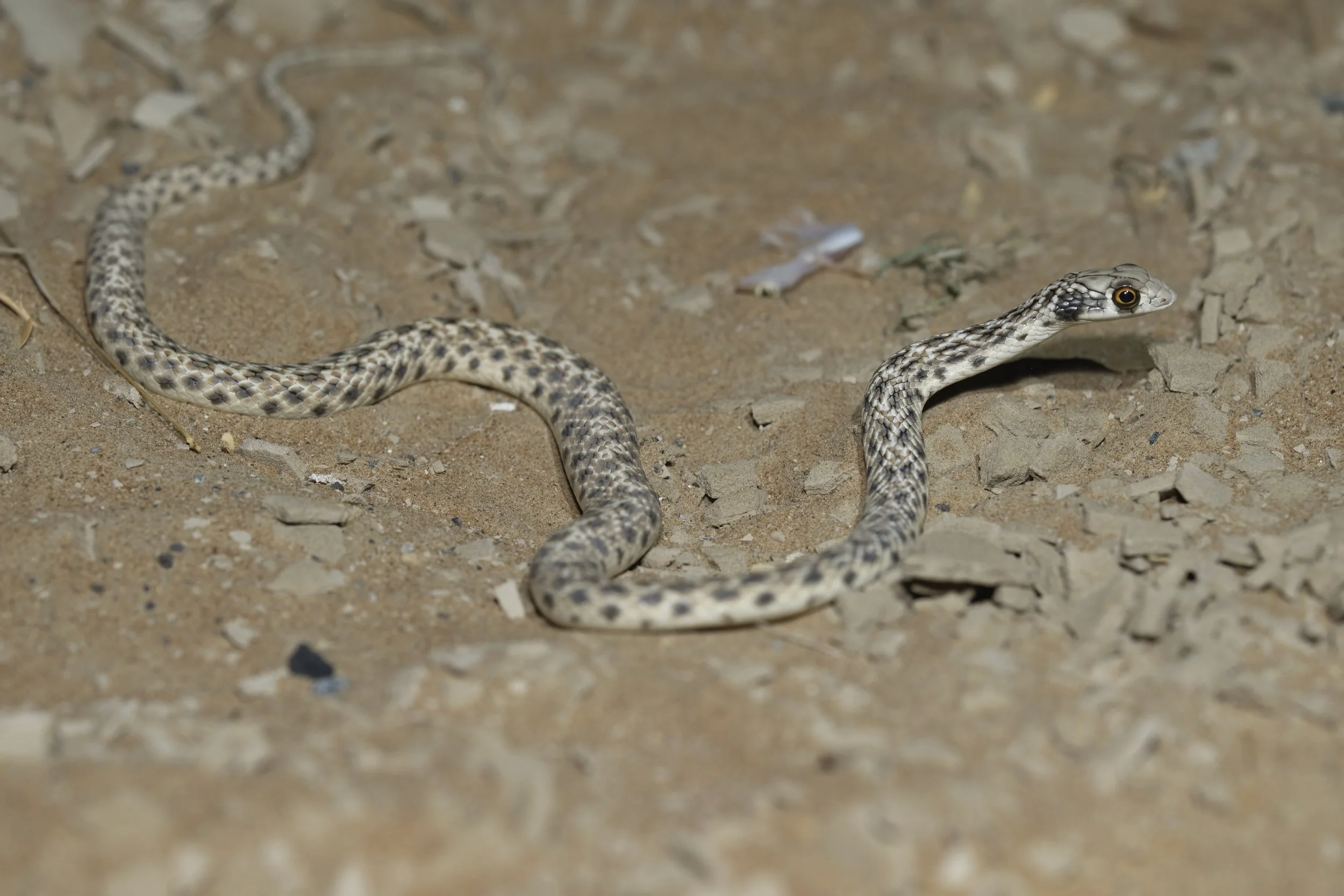
Thrives in arid and semi-arid habitats, including sandy deserts, gravel plains, dry wadis, and rocky foothills across the Middle East and North Africa. It prefers open terrain with loose soil or sand that allows easy burrowing and quick movement, and it may also use abandoned rodent burrows for shelter. Its ability to tolerate high temperatures makes it a characteristic reptile of harsh desert ecosystems.
Habitat
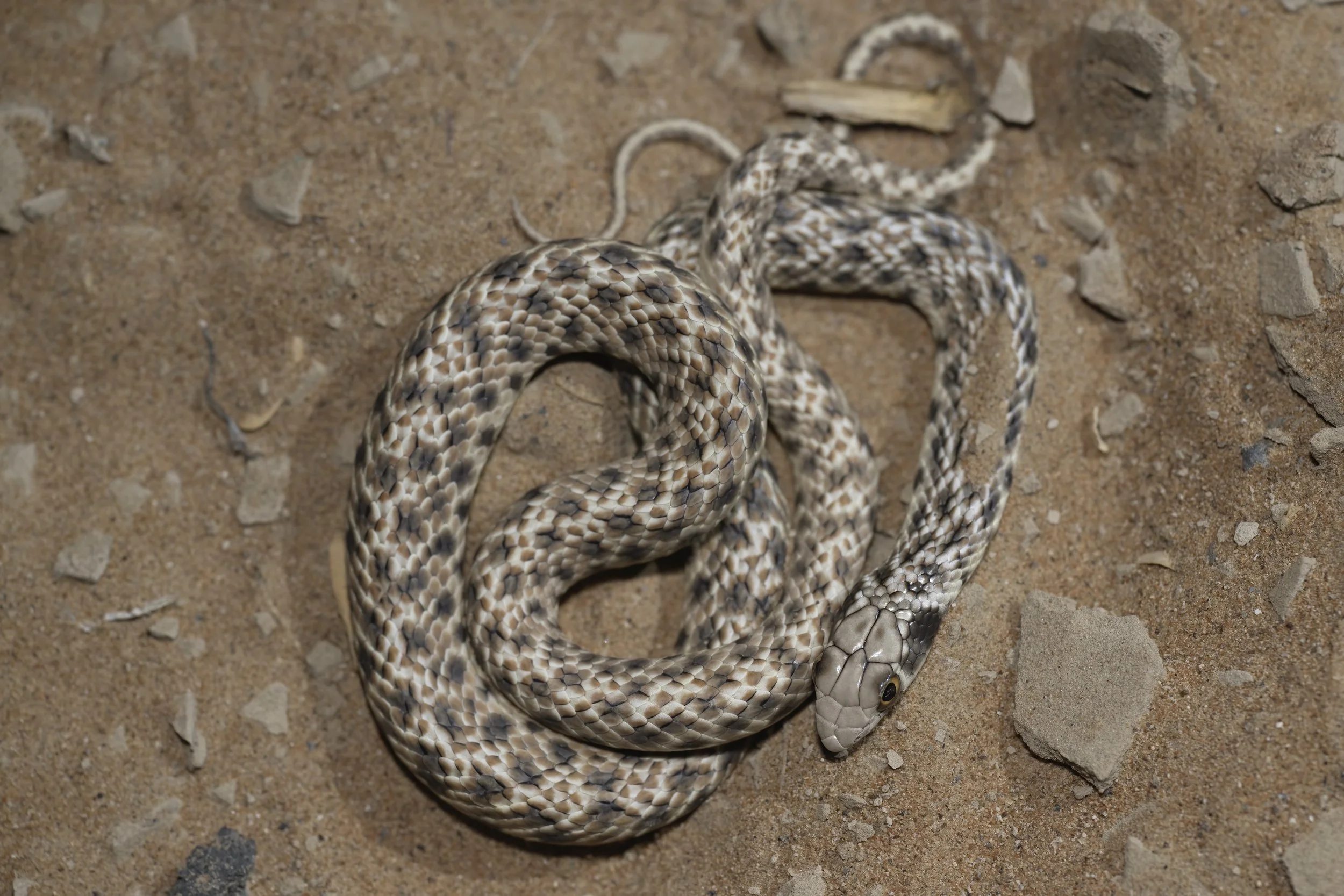
ينجح هذا النوع في العيش في الموائل الجافة وشبه الجافة، بما في ذلك الصحارى الرملية، والسهول الحصوية، والوديان الجافة، والسفوح الصخرية في مناطق واسعة من الشرق الأوسط وشمال أفريقيا. ويفضّل الأراضي المفتوحة ذات التربة المفككة أو الرملية التي تسمح له بالحفر بسهولة والتحرك بسرعة، كما قد يستخدم جحور القوارض المهجورة كملاجئ. وتجعله قدرته على تحمل درجات الحرارة العالية من الزواحف المميزة للنظم البيئية الصحراوية القاسية
Hunting Habits
Active diurnal hunter, relying on both speed and keen vision to locate prey in open desert terrain. It primarily feeds on lizards, such as geckos and agamas. Unlike ambush predators, it actively patrols its habitat, using quick strikes to seize prey. Being rear-fanged and mildly venomous, it subdues its catch by grasping and working the fangs into the prey to deliver venom, which helps immobilize smaller animals.
هذا النوع صياد نهاري نشط، يعتمد على السرعة وقوة البصر للعثور على فرائسه في البيئات الصحراوية المفتوحة. يتغذى بشكل رئيسي على السحالي، مثل الأبراص والضبّيات الصغيرة. وعلى عكس المفترسات التي تعتمد على الكمون، فإنه يجوب موئله بنشاط، مستخدماً ضربات سريعة للإمساك بالفريسة. وبما أنه من الثعابين خلفية الأنياب وذو سم خفيف، فإنه يسيطر على فريسته بالإمساك بها وتحريك الأنياب الخلفية داخل جسمها لإيصال السم، مما يساعد على شل حركة الحيوانات الصغيرة
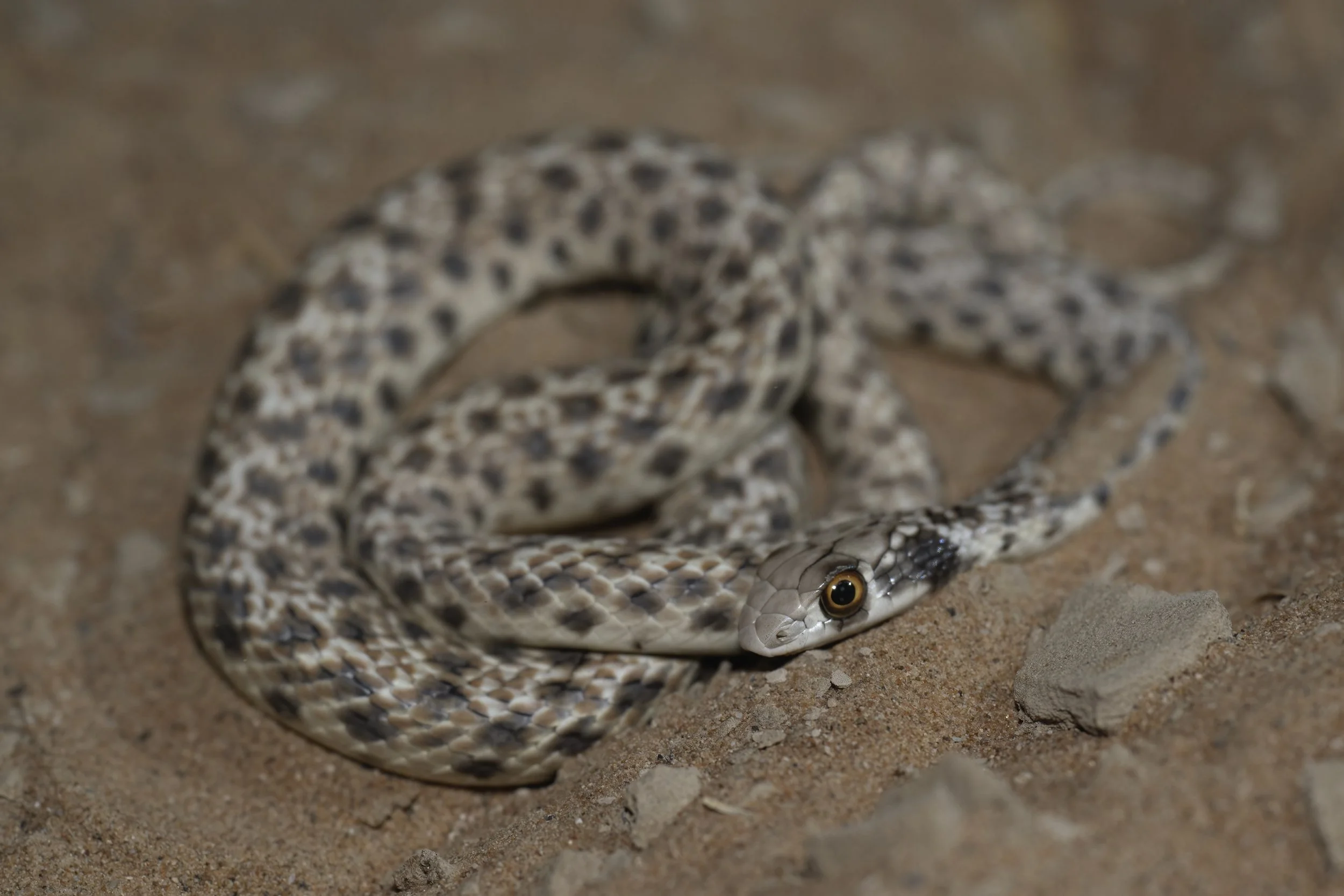
The Moila Snake is a slender, medium-sized colubrid, typically ranging from 1 to 1.5 meters in length, with a distinctly elongated body and long tail. Its head is slightly flattened and broad, giving it a cobra-like profile when threatened, while large eyes with round pupils indicate its largely diurnal activity. The coloration varies from pale sandy beige to light brown, often marked with darker spots or blotches that provide camouflage against desert terrain. One of its most notable traits is its ability to flatten its neck region into a hood, closely resembling a true cobra as a defensive display. The ventral side is lighter, usually whitish or cream. Males are generally larger and more robust than females, and juveniles tend to show stronger dorsal markings that fade with age.
Physical Characteristics
ثعبان الكوبرا الكاذبة هو ثعبان نحيل ومتوسط الحجم من فصيلة الأحناش، يتراوح طوله عادةً بين 1 و1.5 متر، ويمتلك جسماً ممدوداً بوضوح وذيلاً طويلاً. يكون رأسه مفلطحاً قليلاً وعريضاً، مما يمنحه مظهراً شبيهاً بالكوبرا عند التهديد، بينما تشير عيناه الكبيرتان وبؤبؤاه المستديران إلى نشاطه النهاري في الغالب. يتراوح لونه بين البيج الرملي الفاتح والبني الفاتح، وغالباً ما يحمل بقعاً أو علامات داكنة تساعده على التمويه في البيئات الصحراوية. ومن أبرز صفاته قدرته على تسطيح منطقة العنق لتبدو كقلنسوة، في عرض دفاعي يشبه إلى حد كبير مظهر الكوبرا الحقيقية. أما الجانب البطني فيكون أفتح لوناً، وعادةً ما يكون مائلاً إلى الأبيض أو الكريمي. وتكون الذكور عموماً أكبر حجماً وأكثر قوة من الإناث، بينما تُظهر الصغار علامات ظهرية أوضح تميل إلى التلاشي مع التقدم في العمر
Venom Details
The Moila Snake is a rear-fanged colubrid with mild venom that it delivers using enlarged grooved teeth situated at the back of the upper jaw. Its venom is primarily adapted for subduing small prey such as lizards and rodents rather than for defense against larger animals. In humans, bites are uncommon and generally not dangerous; symptoms are usually limited to localized swelling, redness, and mild pain, though sensitive individuals may experience stronger reactions. Because the fangs are positioned far back, effective envenomation often requires the snake to chew on its prey (or a person’s skin if handled carelessly). Unlike true cobras, the Moila Snake does not pose a significant medical threat, but its defensive hooding display can lead to it being mistaken for a venomous species.
ثعبان الكوبرا الكاذبة هو ثعبان من فصيلة الأحناش خلفية الأنياب، يمتلك سماً خفيفاً يحقنه عبر أسنان خلفية متضخمة ومخددة تقع في الجزء الخلفي من الفك العلوي. وقد تكيّف سمه أساساً للسيطرة على الفرائس الصغيرة مثل السحالي والقوارض، وليس للدفاع ضد الحيوانات الأكبر حجماً. أما عند الإنسان، فالعضات غير شائعة وعادةً لا تكون خطيرة؛ إذ تقتصر الأعراض غالباً على تورم موضعي، واحمرار، وألم خفيف، مع احتمال حدوث تفاعلات أقوى لدى الأشخاص الحساسين. وبسبب وجود الأنياب في مؤخرة الفم، فإن حقن السم بفعالية يتطلب غالباً أن يمسك الثعبان بالفريسة ويضغط عليها أو “يمضغها”، وقد يحدث ذلك مع جلد الإنسان إذا تم التعامل معه بإهمال. وعلى عكس الكوبرا الحقيقية، لا يشكل ثعبان المويلة خطراً طبياً كبيراً، لكن سلوكه الدفاعي عند فرد منطقة العنق قد يؤدي إلى الخلط بينه وبين الأنواع السامة الأكثر خطورة