
Habitat
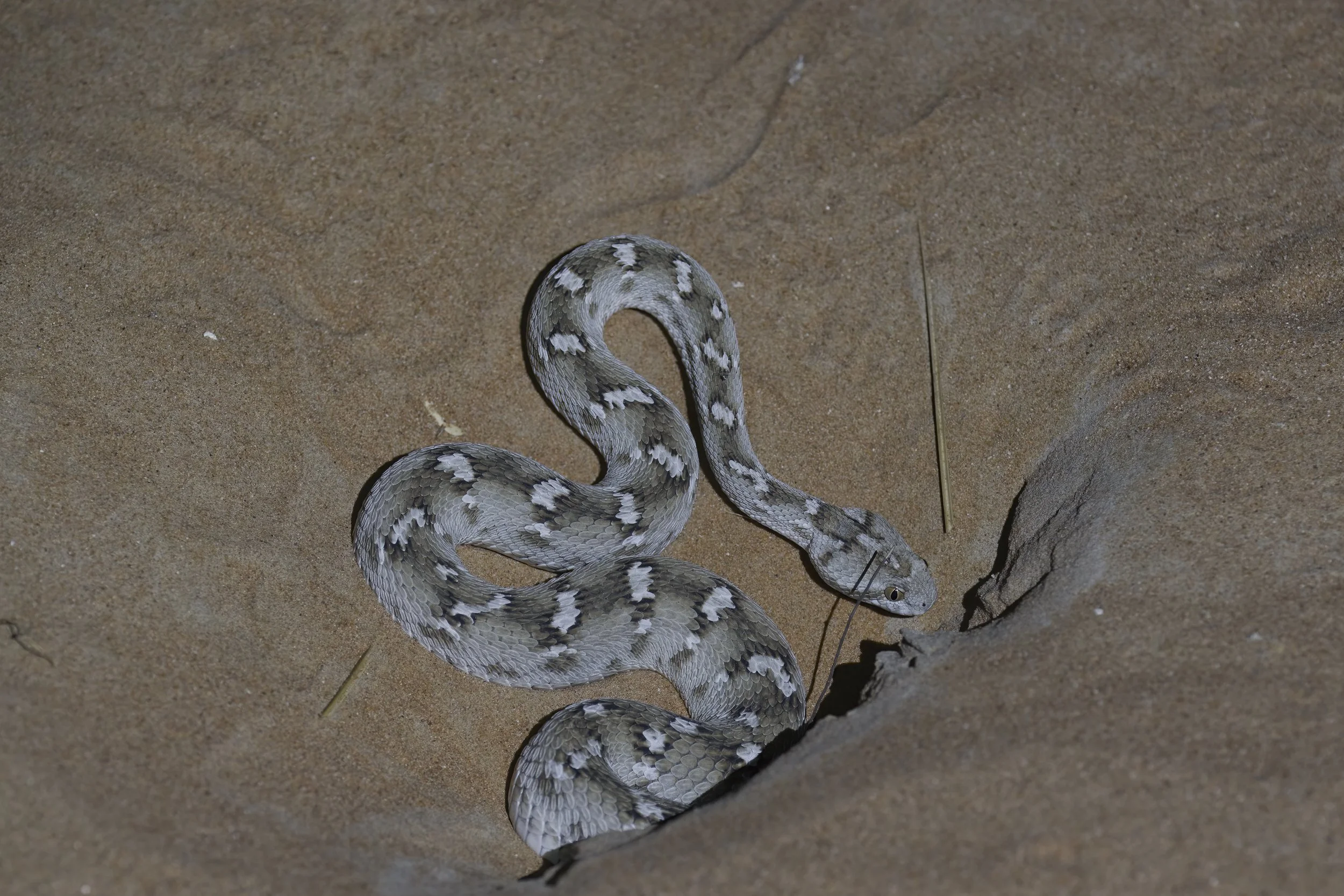
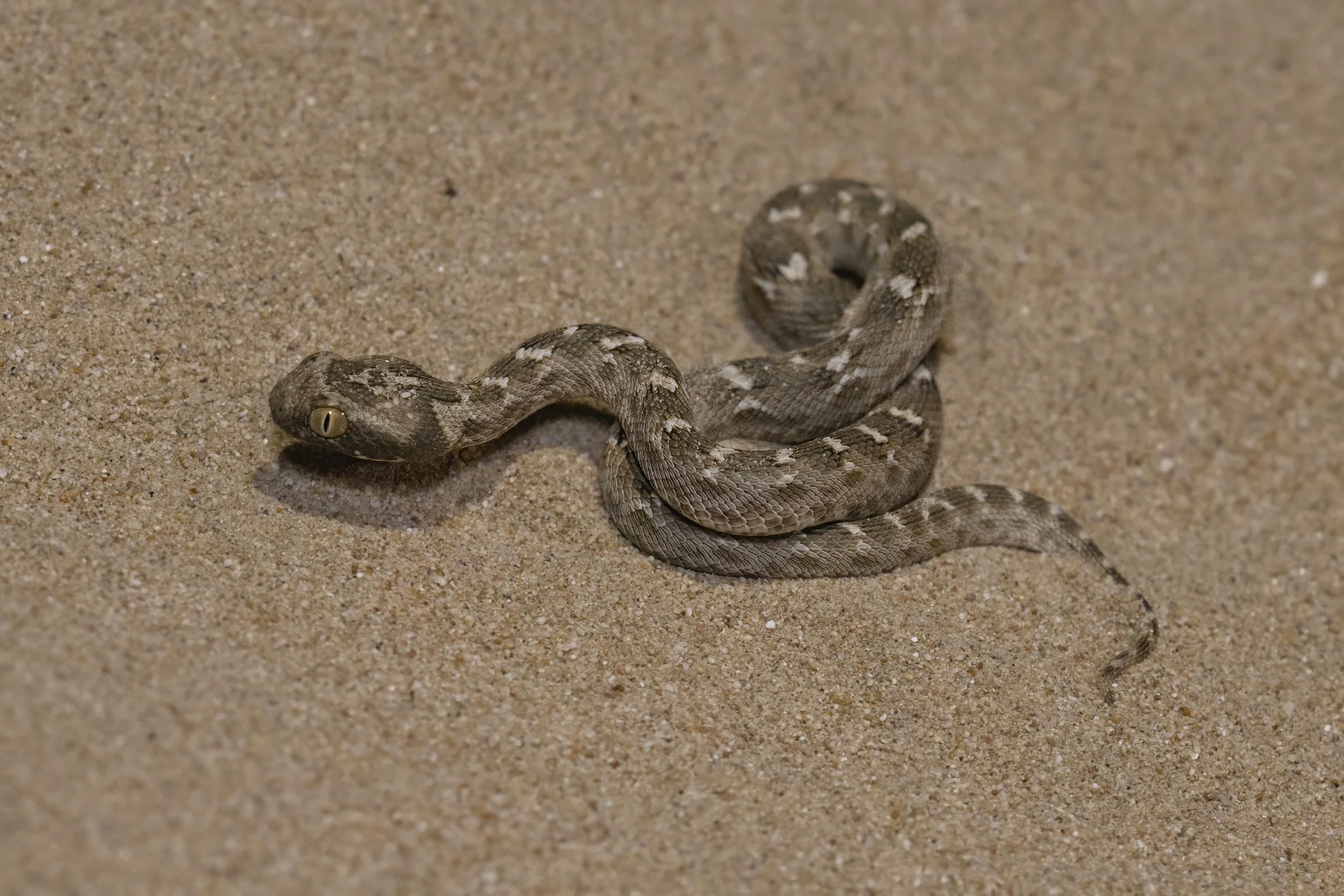
The Sindh Saw-scaled Viper inhabits some of the harshest and driest environments across its range. In the UAE and wider Arabian Peninsula, it favors arid desert plains, rocky outcrops, gravel flats, and sparse scrublands where it blends perfectly with the sandy and stony substrate. This camouflage allows it to remain undetected during the day, usually sheltering under rocks, in burrows, or beneath vegetation to avoid the heat. At night, it becomes more active, moving across open terrain in search of prey. Its presence is often associated with areas that offer both concealment and opportunities for ambush hunting, making it a resilient species well adapted to desert ecosystems.
تعيش أفعى الطفي منشارية الحراشف في بعض أقسى البيئات وأكثرها جفافاً ضمن نطاق انتشارها. في دولة الإمارات العربية المتحدة وشبه الجزيرة العربية عموماً، تفضّل السهول الصحراوية الجافة، والنتوءات الصخرية، والسهول الحصوية، والمناطق قليلة الشجيرات، حيث ينسجم لونها تماماً مع الأرض الرملية والحصوية. ويساعدها هذا التمويه على البقاء غير مرئية خلال النهار، إذ تختبئ عادةً تحت الصخور، أو داخل الجحور، أو بين النباتات لتجنب الحرارة. ومع حلول الليل، تصبح أكثر نشاطاً، وتتحرك عبر الأراضي المفتوحة بحثاً عن الفرائس. وغالباً ما يرتبط وجودها بالمناطق التي توفر لها الغطاء وفرص الصيد بالكمون، مما يجعلها نوعاً شديد القدرة على التكيف مع النظم البيئية الصحراوية
Physical Characteristics
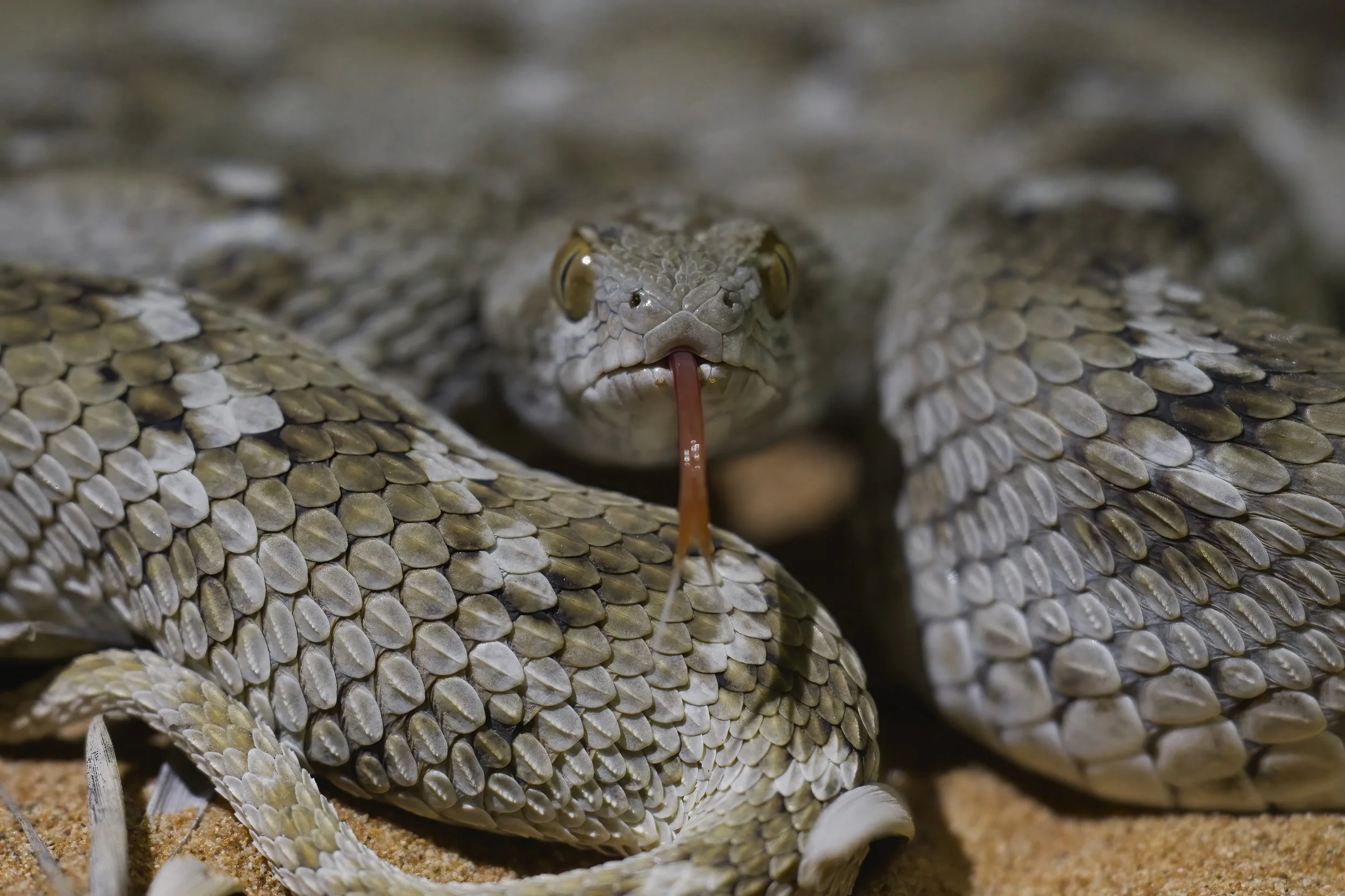
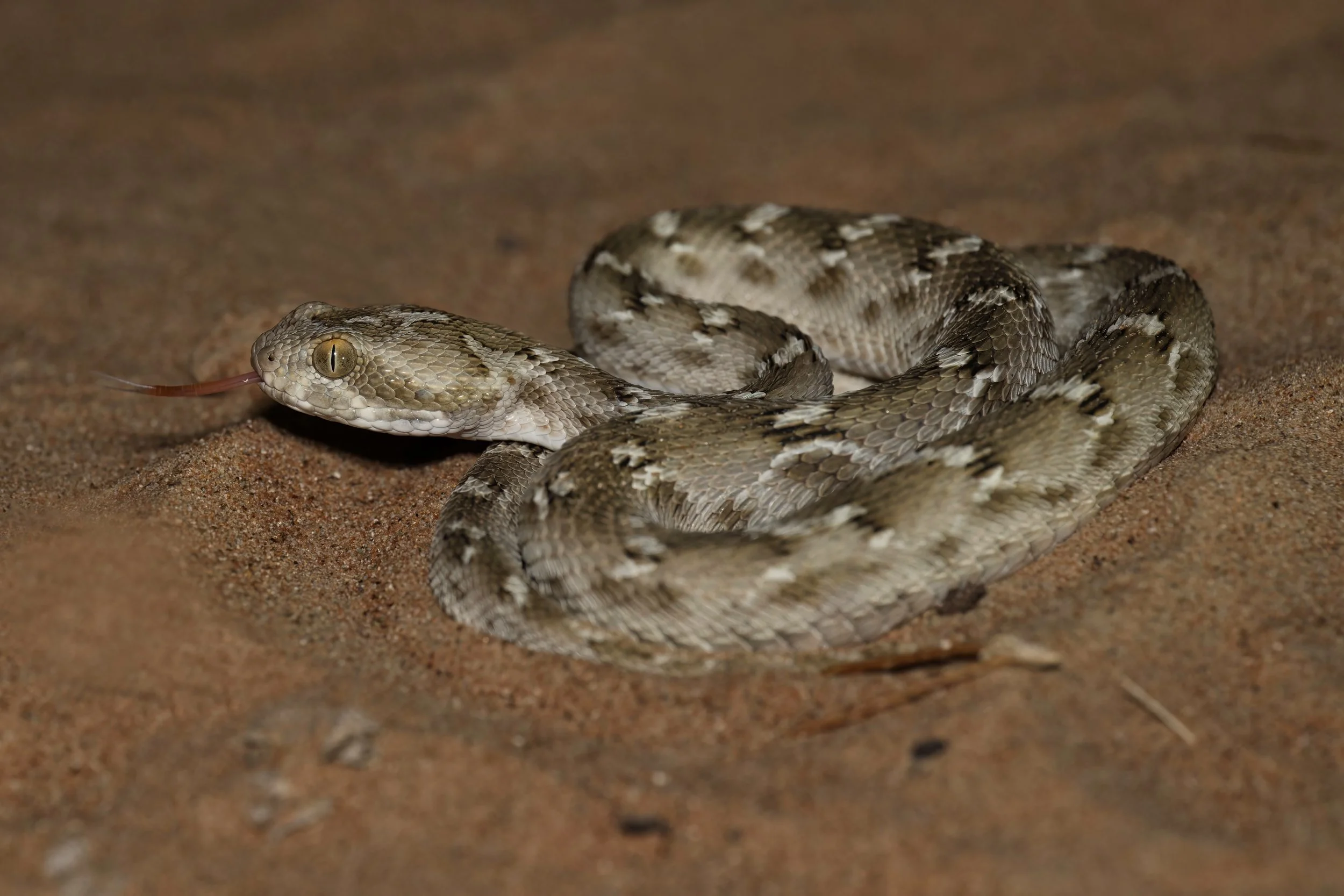
The Saw-scaled Viper is a small to medium-sized venomous snake, typically ranging from 30 to 60 cm in length, though some individuals may grow larger. It has a short, stout body with a wide head that is distinct from the neck. The dorsal coloration usually blends with its desert surroundings, showing shades of sandy brown, gray, or reddish with darker cross-bands or blotches, providing excellent camouflage. One of its most distinctive features is the keeled scales along its sides, which produce a rasping “sawing” sound when rubbed together — a unique defensive warning that gives the species its name. The eyes are relatively large with vertical pupils, well suited for its nocturnal lifestyle.
صغيرة إلى متوسطة الحجم، وهي أفعى سامة يتراوح طولها عادةً بين 30 و60 سم، مع أن بعض الأفراد قد تنمو إلى أحجام أكبر. تمتلك جسماً قصيراً وممتلئاً، ورأساً عريضاً واضح الانفصال عن العنق. غالباً ما ينسجم لونها الظهري مع البيئة الصحراوية المحيطة بها، إذ يظهر بدرجات من البني الرملي أو الرمادي أو المحمر، مع أشرطة عرضية أو بقع داكنة تمنحها تمويهاً ممتازاً. ومن أبرز صفاتها الحراشف الخشنة ذات الحواف البارزة على جانبي الجسم، والتي تُصدر صوتاً خشناً يشبه “النشر” عندما تحتك ببعضها، وهو تحذير دفاعي مميز أعطى هذا النوع اسمه. كما أن عينيها كبيرتان نسبياً وبؤبؤاهما عموديان، ما يناسب نمط حياتها الليلي
Hunting Habits
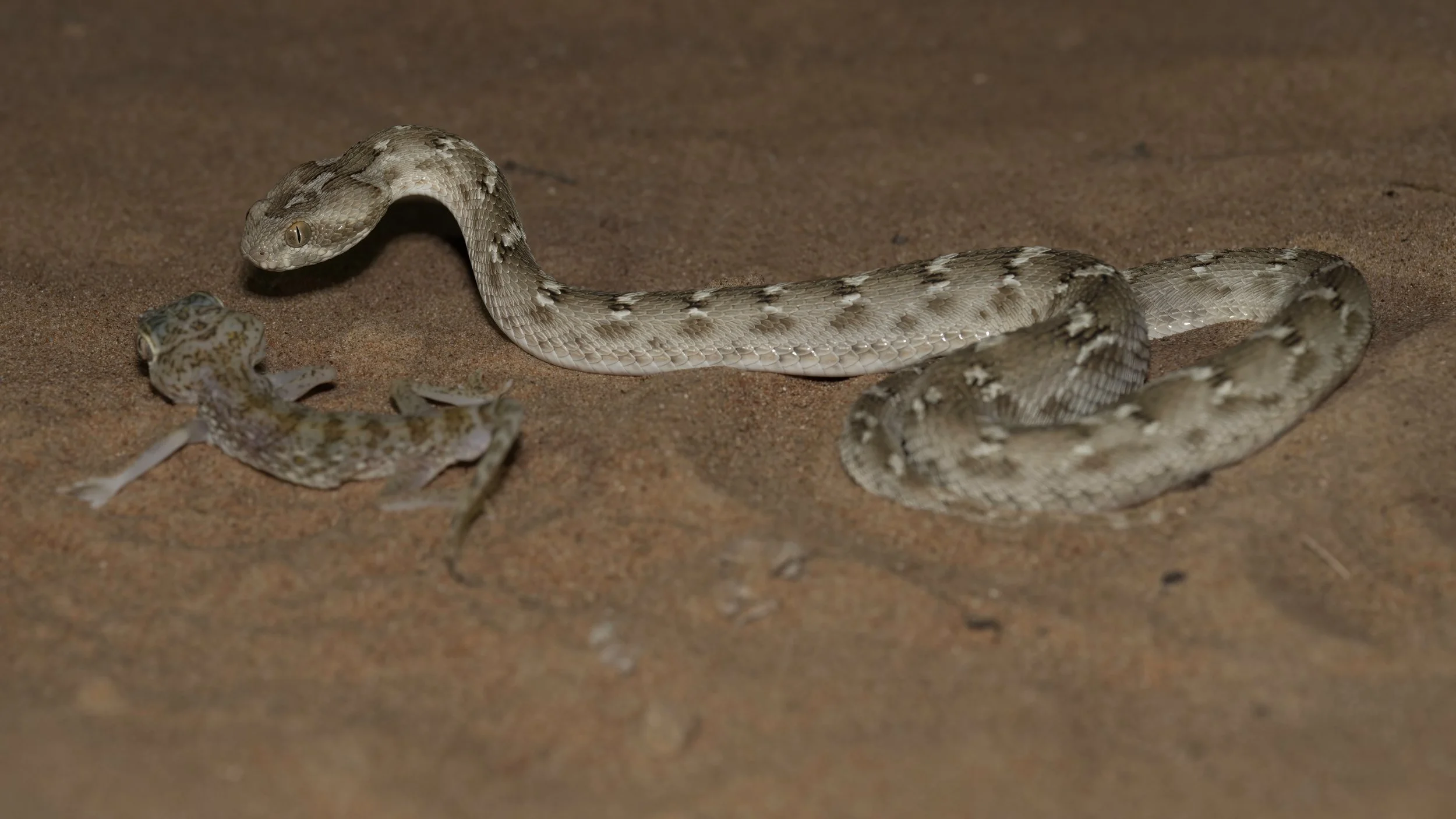
The Sindh Saw-scaled Viper is primarily nocturnal, emerging after sunset to hunt when desert temperatures are cooler. It relies on stealth and ambush tactics, often lying in wait, partially buried in sand or hidden among stones, until unsuspecting prey comes within striking range. Its diet consists mainly of small mammals, lizards, birds, and occasionally amphibians and invertebrates. Using its lightning-fast strike and potent venom, it quickly subdues prey before swallowing it whole. Unlike some snakes that actively pursue food, the Saw-scaled Viper conserves energy by remaining motionless for long periods, blending seamlessly into its environment until the right opportunity arises.
تنشط بشكل رئيسي ليلاً، وتخرج بعد غروب الشمس للصيد عندما تصبح درجات حرارة الصحراء أكثر اعتدالاً. تعتمد في صيدها على التخفي والكمون، وغالباً ما تبقى منتظرة وهي مدفونة جزئياً في الرمل أو مختبئة بين الحجارة، حتى تقترب فريسة غير منتبهة إلى مدى الضربة. يتكوّن غذاؤها أساساً من الثدييات الصغيرة، والسحالي، والطيور، وأحياناً البرمائيات واللافقاريات. وبفضل ضربتها السريعة جداً وسمّها القوي، تتمكن من إخضاع الفريسة بسرعة قبل ابتلاعها كاملة. وعلى عكس بعض الثعابين التي تطارد فرائسها بنشاط، توفّر الأفعى الحفّافة طاقتها بالبقاء ساكنة لفترات طويلة، مندمجة تماماً مع بيئتها حتى تظهر الفرصة المناسبة
Venom Details
The Sindh Saw-scaled Viper is considered one of the most medically significant snakes in its range due to both the potency of its venom and its tendency to live near human settlements. Its venom is a complex mix of hemotoxins, cytotoxins, and procoagulants that can disrupt blood clotting, cause severe internal bleeding, and damage tissue around the bite site. Envenomation can lead to intense pain, swelling, blistering, and in serious cases, systemic effects such as hemorrhage or organ complications if untreated. While fatalities are possible, timely administration of the correct antivenom and supportive medical care greatly reduces the risks. Despite its size, this viper’s venom makes it one of the most dangerous snakes in the desert ecosystems of the Middle East and South Asia.
تنشط بشكل رئيسي ليلاً، وتخرج بعد غروب الشمس للصيد عندما تصبح درجات حرارة الصحراء أكثر اعتدالاً. تعتمد في صيدها على التخفي والكمون، وغالباً ما تبقى منتظرة وهي مدفونة جزئياً في الرمل أو مختبئة بين الحجارة، حتى تقترب فريسة غير منتبهة إلى مدى الضربة. يتكوّن غذاؤها أساساً من الثدييات الصغيرة، والسحالي، والطيور، وأحياناً البرمائيات واللافقاريات. وبفضل ضربتها السريعة جداً وسمّها القوي، تتمكن من إخضاع الفريسة بسرعة قبل ابتلاعها كاملة. وعلى عكس بعض الثعابين التي تطارد فرائسها بنشاط، توفّر أفعى الطفي منشارية الحراشف طاقتها بالبقاء ساكنة لفترات طويلة، مندمجة تماماً مع بيئتها حتى تظهر الفرصة المناسبة