

Habitat
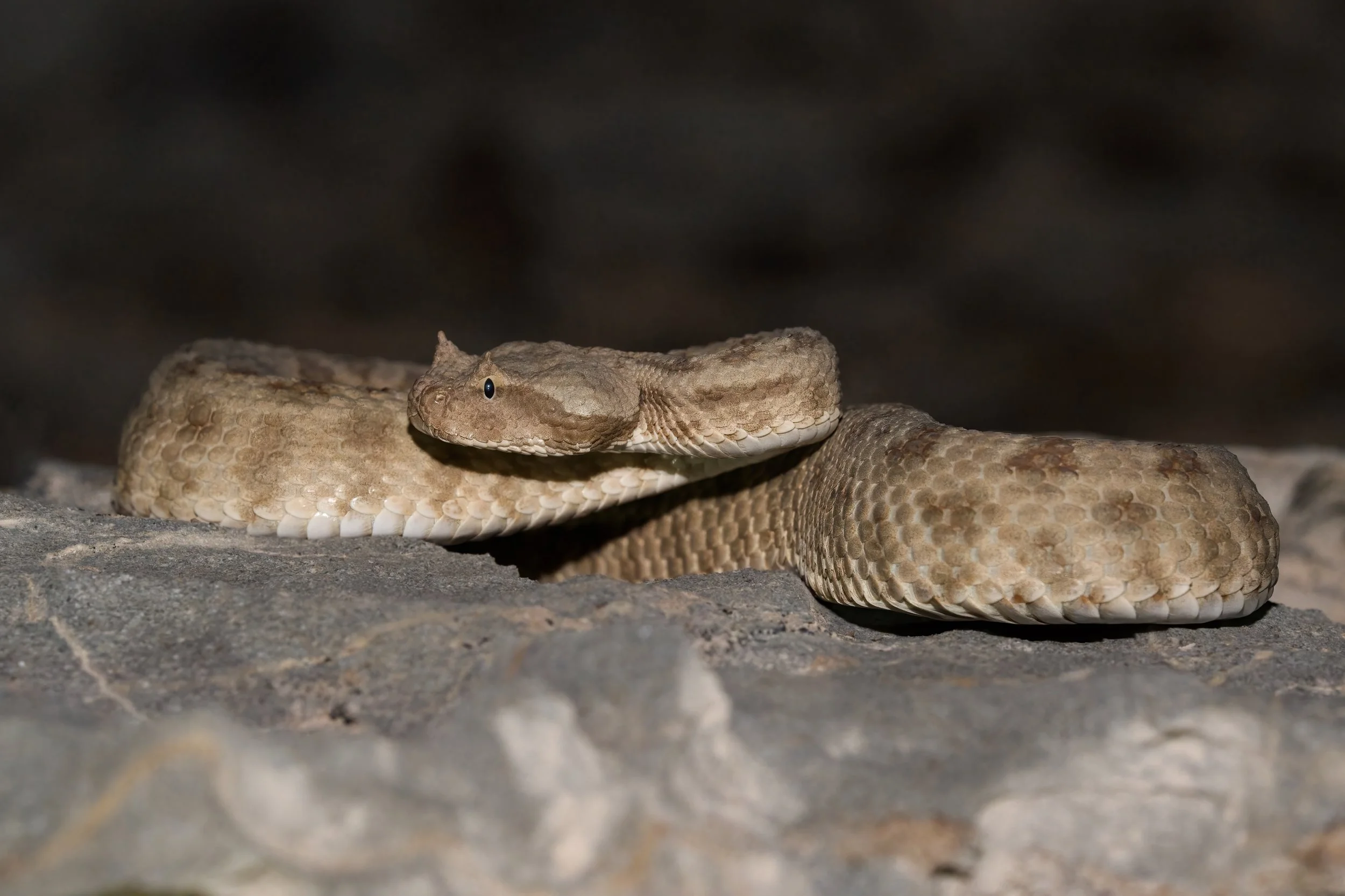
The Persian Horned Viper (Pseudocerastes persicus) inhabits arid, rocky landscapes, including mountain slopes, gravel plains, dry wadis, and rugged valleys with scattered boulders. In the United Arab Emirates, its distribution is largely restricted to the Hajar Mountains, where rocky crevices and broken terrain provide shelter, camouflage, and suitable hunting positions. Although commonly associated with higher elevations, confirmed records from as low as 195 metres demonstrate that altitude alone does not determine its presence. Rock structure, suitable microclimates, and prey availability are more important habitat requirements. Unlike the Arabian Horned Viper, this species is not typically associated with open sand dunes.
تعيش الأفعى القرناء الفارسية في البيئات الجافة والصخرية، بما في ذلك المنحدرات الجبلية والسهول الحصوية والأودية الجافة والتضاريس الوعرة التي تنتشر فيها الصخور الكبيرة. وفي دولة الإمارات العربية المتحدة، يقتصر انتشارها بشكل رئيسي على جبال الحجر، حيث توفر الشقوق الصخرية والتضاريس المتكسرة المأوى والتمويه ومواقع مناسبة للصيد. وعلى الرغم من ارتباطها عادةً بالمرتفعات الجبلية، فقد سُجّلت مشاهدات مؤكدة لها على ارتفاعات تصل إلى 195 متراً فقط فوق مستوى سطح البحر، مما يشير إلى أن الارتفاع ليس العامل الوحيد الذي يحدد وجودها. وتُعد طبيعة الصخور والظروف المناخية المحلية وتوافر الفرائس عوامل أكثر أهمية في اختيار موائلها. وعلى خلاف الأفعى العربية القرناء، لا ترتبط هذه الأفعى عادةً بالكثبان الرملية المفتوحة
Physical Characteristics
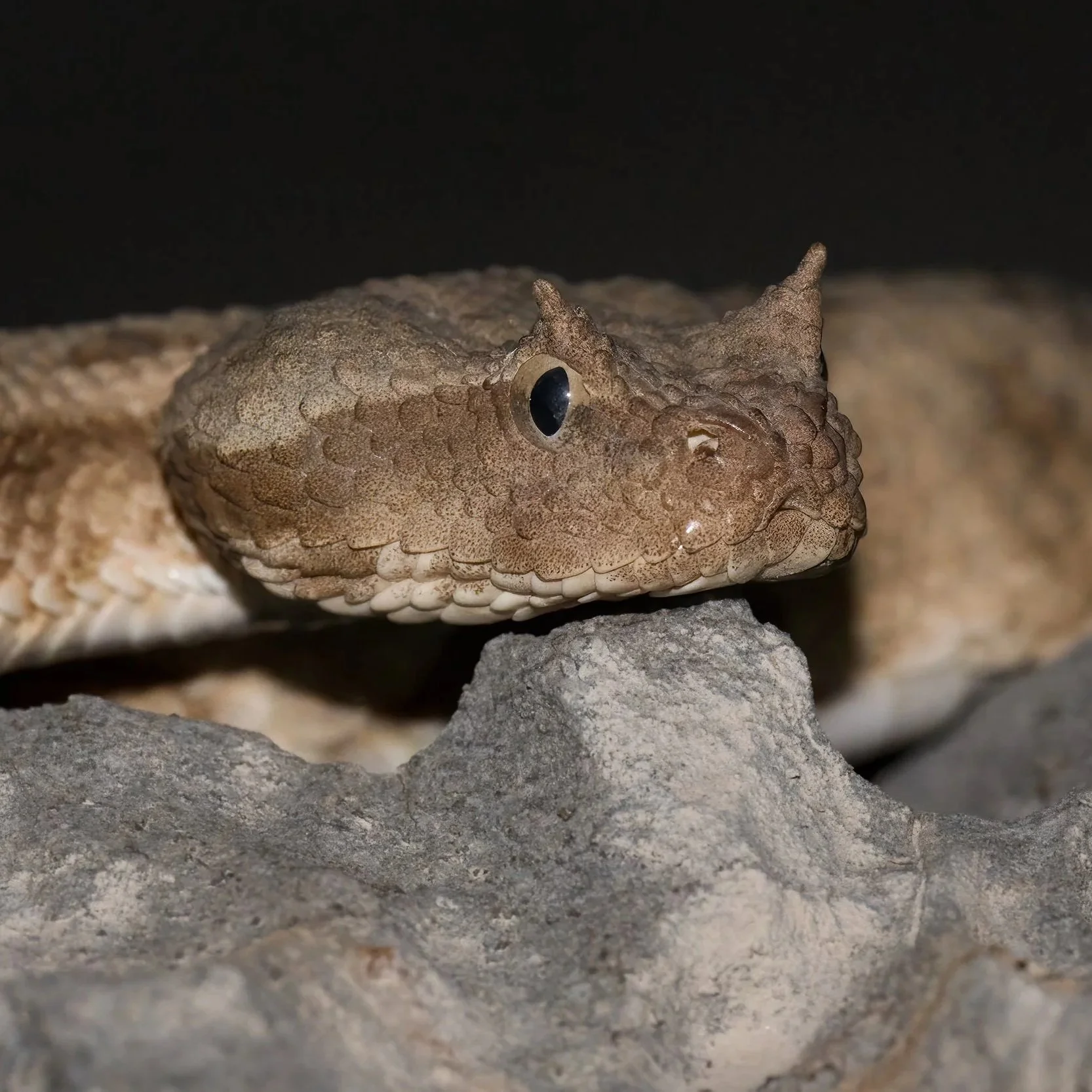
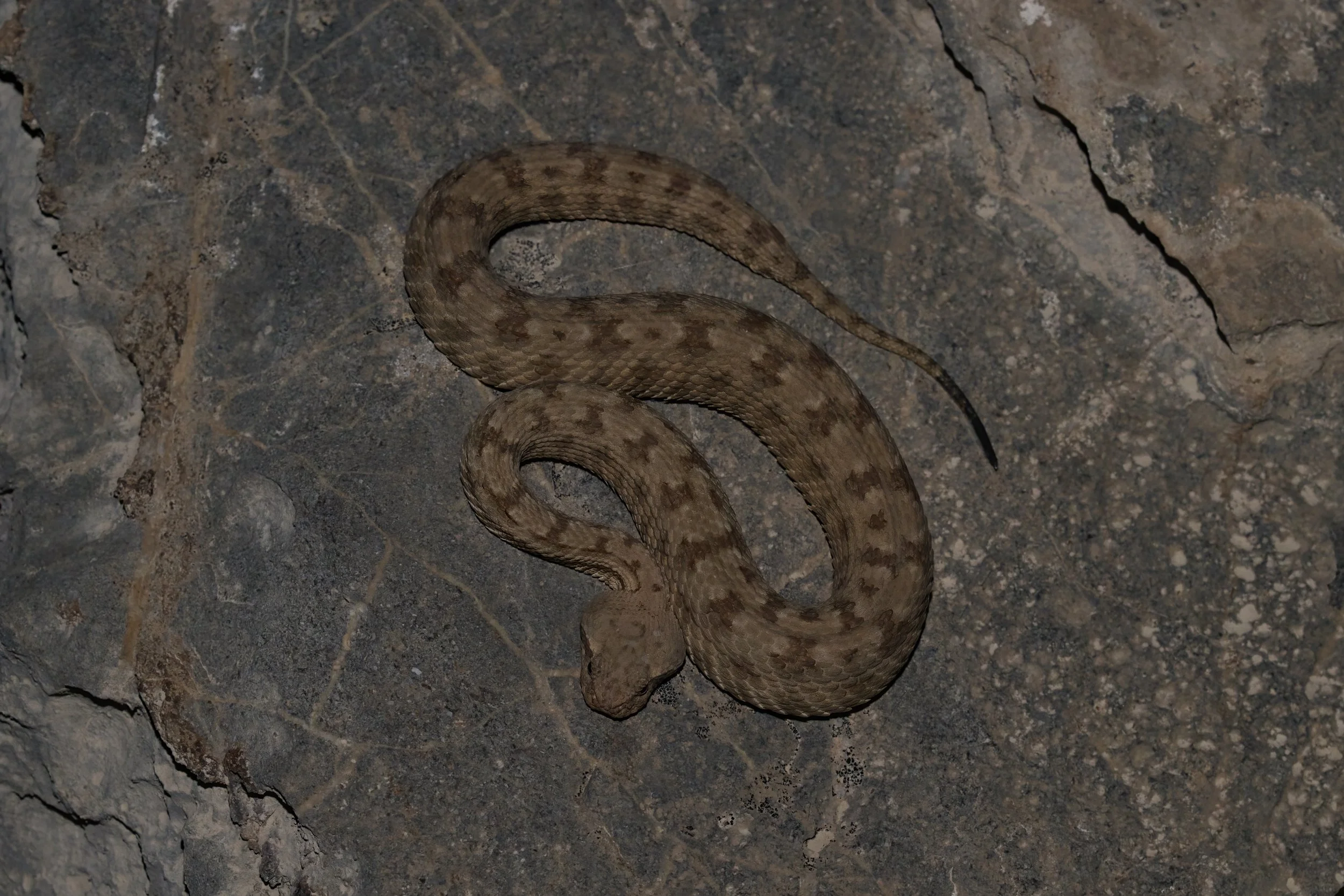
The Persian Horned Viper is a medium-sized, heavy-bodied snake, commonly measuring between 40 and 70 centimetres in length. Its most distinctive features are the horn-like projections above each eye, formed from several elongated scales rather than a single scale. It has a broad, triangular head, a narrow neck, vertically elliptical pupils, and strongly keeled scales that give its body a rough appearance. Coloration varies considerably, ranging from pale sandy-grey to darker brown and grey, with irregular blotches or transverse bands along the back. These variations provide excellent camouflage against the surrounding rocks. Its dark or black tail tip is another identifying feature and has been suggested to play a role in attracting prey, although this behaviour has not been conclusively documented in the species.
الأفعى القرناء الفارسية ثعبان سام متوسط الحجم، يتميز بجسم ممتلئ وقوي، ويتراوح طولها عادةً بين 40 و70 سنتيمتراً. وأكثر ما يميزها البروزان الشبيهان بالقرنين فوق العينين، ويتكون كل منهما من عدة حراشف متطاولة بدلاً من حرشفة واحدة. تمتلك رأساً عريضاً مثلث الشكل، ورقبة ضيقة، وبؤبؤ عين عمودياً، وحراشف ذات حواف بارزة تمنح جسمها ملمساً خشناً. ويتفاوت لونها بشكل ملحوظ بين الرمادي الرملي الفاتح والبني والرمادي الداكن، مع بقع غير منتظمة أو أشرطة عرضية على طول الظهر. ويساعدها هذا التنوع اللوني على الاندماج مع الصخور المحيطة بها. كما تتميز بطرف ذيل داكن أو أسود، يُعتقد أنه قد يساعد في جذب الفرائس، إلا أن هذا السلوك لم يُوثق بشكل قاطع لدى هذا النوع
Hunting Habits
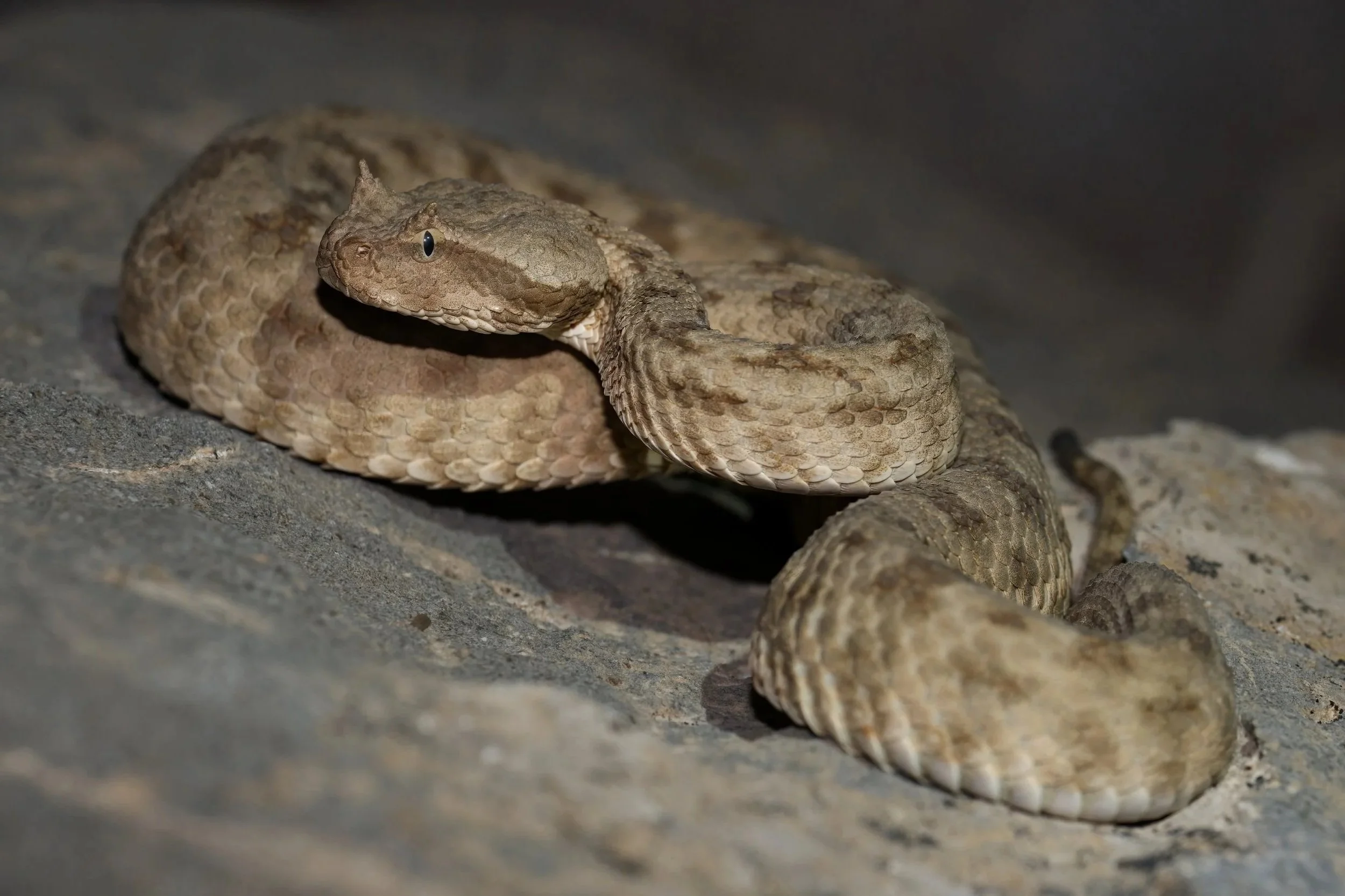
An ambush predator, relying on camouflage, patience, and a rapid strike rather than actively pursuing its prey. It typically selects concealed positions beside rocks, crevices, or natural pathways used by small animals, remaining almost motionless until a suitable target approaches. Its diet includes small mammals, lizards, birds, and occasionally arthropods. Primarily active at night, it may also be observed basking during cooler morning hours. When prey comes within striking distance, the viper delivers a rapid venomous bite, allowing its venom to assist in subduing the animal. This energy-efficient hunting strategy is particularly well suited to the harsh, resource-limited environments of the Hajar Mountains.
تعتمد الأفعى القرناء الفارسية على الصيد بالمباغتة، مستخدمةً التمويه والصبر واللدغة السريعة بدلاً من مطاردة فرائسها بنشاط. وعادةً ما تختار مواقع مخفية بجانب الصخور أو الشقوق أو الممرات الطبيعية التي تستخدمها الحيوانات الصغيرة، وتبقى ساكنة لفترات طويلة حتى تقترب فريسة مناسبة. يشمل غذاؤها الثدييات الصغيرة والسحالي والطيور، وأحياناً بعض المفصليات. وتنشط بشكل رئيسي خلال الليل، لكنها قد تُشاهد أيضاً وهي تتشمس في ساعات الصباح الباردة. وعندما تقترب الفريسة إلى مسافة مناسبة، توجه الأفعى لدغة سريعة تحقن خلالها السم الذي يساعد على إخضاع الفريسة. وتُعد هذه الاستراتيجية وسيلة فعالة لتوفير الطاقة، وتتناسب مع الظروف البيئية القاسية ومحدودية الموارد الغذائية في جبال الحجر
Venom Details
The Persian Horned Viper possesses medically significant venom containing a complex mixture of biologically active toxins, including components capable of affecting blood vessels, blood clotting, and muscle tissue. Its venom is primarily associated with hemotoxic and myotoxic effects, potentially causing severe local pain, swelling, bruising, tissue injury, and systemic complications in serious envenomations. The snake delivers its venom through long, hinged fangs that fold against the roof of the mouth when not in use. Although generally secretive and more inclined to rely on camouflage or retreat when disturbed, it may hiss, coil defensively, and strike when threatened at close range. Any suspected bite must be treated as a medical emergency requiring immediate professional treatment.
تمتلك الأفعى القرناء الفارسية سماً ذا أهمية طبية، يتكون من مزيج معقد من السموم النشطة بيولوجياً، بما في ذلك مركبات قد تؤثر في الأوعية الدموية وتخثر الدم والأنسجة العضلية. ويتميز سمها بتأثيرات دموية وعضلية، وقد تسبب اللدغة ألماً شديداً وتورماً وكدمات وتلفاً في الأنسجة، إضافةً إلى مضاعفات عامة خطيرة في حالات التسمم الشديدة. وتحقن الأفعى سمها بواسطة أنياب طويلة ومتحركة تنطوي باتجاه سقف الفم عندما لا تكون قيد الاستخدام. وعلى الرغم من طبيعتها المتخفية واعتمادها غالباً على التمويه أو الانسحاب عند الإزعاج، فإنها قد تصدر فحيحاً قوياً وتتخذ وضعية دفاعية ملتفة وتوجه لدغة إذا شعرت بالتهديد من مسافة قريبة. ويجب التعامل مع أي لدغة مشتبه بها باعتبارها حالة طبية طارئة تتطلب تدخلاً طبياً فورياً