

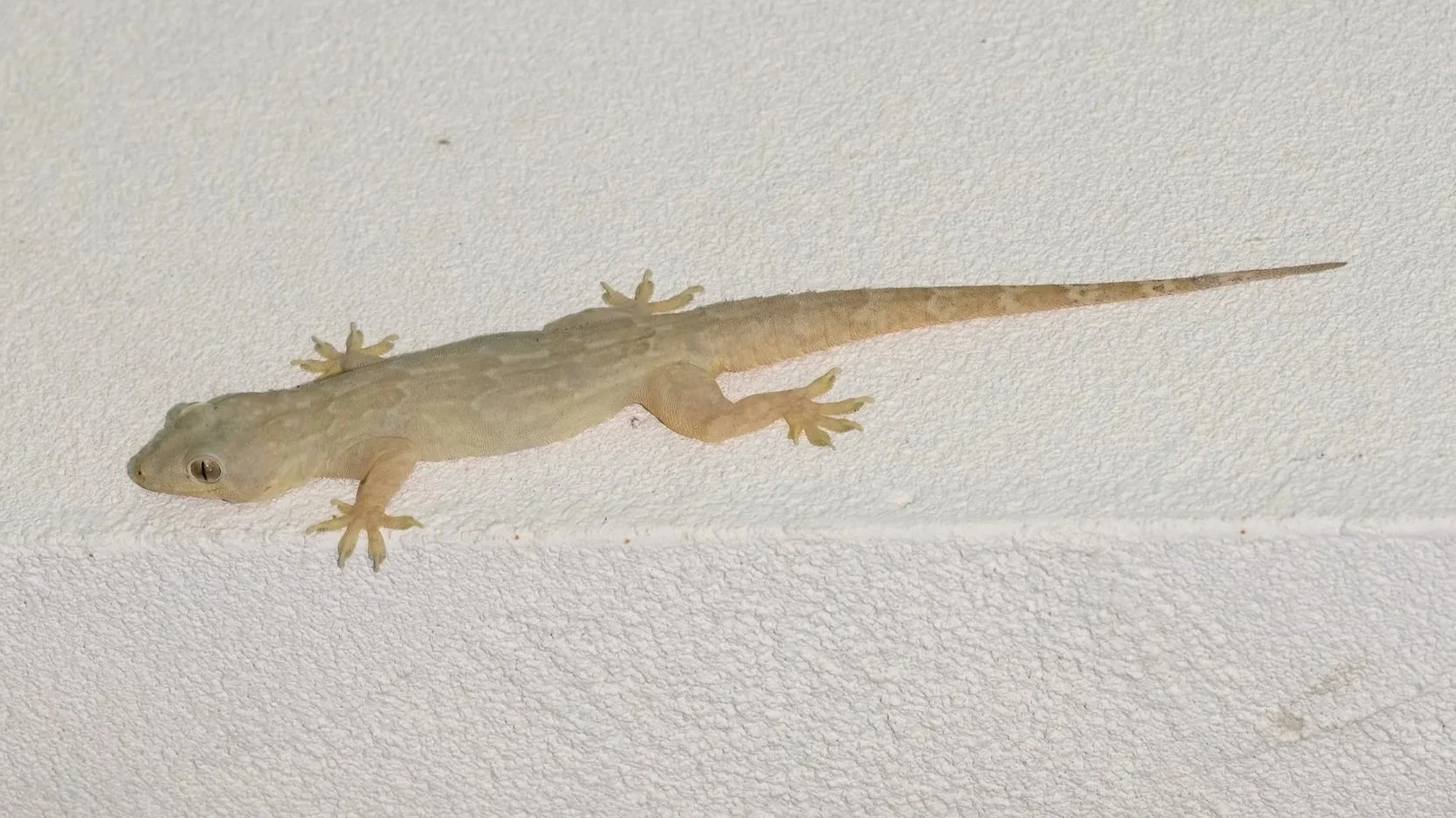
Yellow-bellied House Gecko
The Yellow-bellied House Gecko (Hemidactylus flaviviridis) is a medium-sized gecko belonging to the family Gekkonidae. Recognized by its flattened body, broad head, large eyes with vertical pupils, and distinctive yellowish underside, this species is well adapted to living alongside humans. Its colour varies from pale yellowish-white at night to darker grey or brown during the day, often displaying five wavy crossbands. In the United Arab Emirates, it is classified as an introduced, non-native species.
وزغة المنازل صفراء البطن هي وزغة متوسطة الحجم تنتمي إلى فصيلة الوزغيات. تتميز بجسمها المفلطح ورأسها العريض وعينيها الكبيرتين ذواتي الحدقة العمودية، إضافة إلى بطنها المائل إلى اللون الأصفر. تتغير ألوانها من الأبيض المصفر ليلًا إلى الرمادي أو البني الداكن نهارًا، وغالبًا ما تظهر على ظهرها خمسة أشرطة عرضية متموجة. تُصنّف هذه الوزغة في دولة الإمارات العربية المتحدة ضمن الأنواع الدخيلة غير المحلية
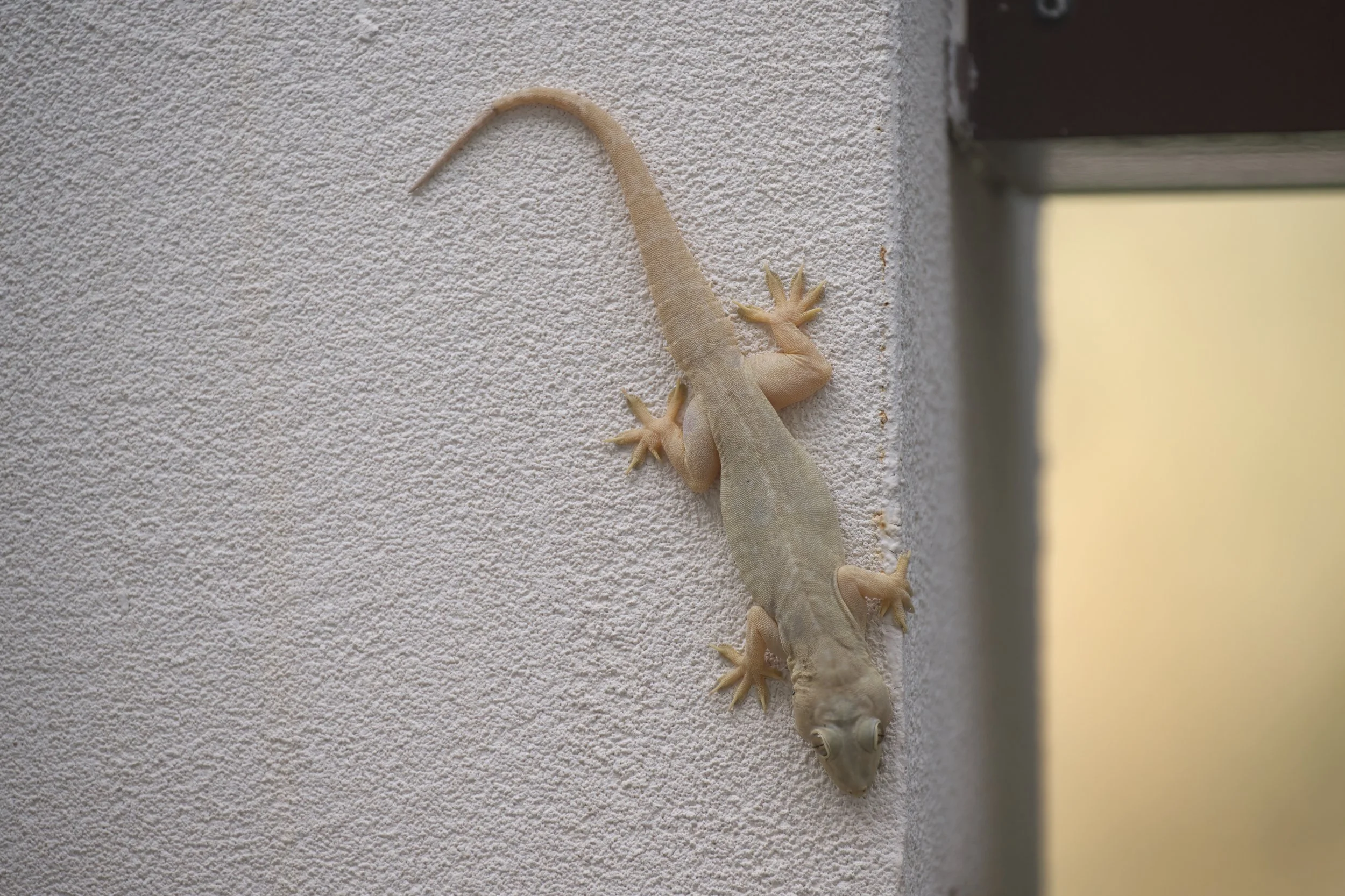
Habitat and behavior
The Yellow-bellied House Gecko primarily inhabits buildings, residential areas, and other human-made structures, where its specialized toe pads allow it to climb smooth walls and ceilings effortlessly. Although predominantly nocturnal, it may occasionally be observed during daylight hours. After sunset, it frequently gathers around outdoor lights to hunt moths, insects, and other small arthropods. When threatened, it quickly retreats into cracks and sheltered spaces. Females typically lay two hard-shelled eggs that hatch after approximately five to seven weeks.
تعيش وزغة المنازل صفراء البطن بشكل رئيسي على المباني وفي المناطق السكنية والمنشآت البشرية، حيث تساعدها وسائد أصابعها المتخصصة على تسلق الجدران الملساء والأسقف بسهولة. تنشط غالبًا خلال الليل، مع إمكانية مشاهدتها أحيانًا نهارًا. بعد غروب الشمس، تتجمع بالقرب من الأضواء الخارجية لاصطياد العث والحشرات وغيرها من مفصليات الأرجل الصغيرة. وعند شعورها بالخطر، تسارع إلى الاختباء داخل الشقوق والأماكن المحمية. تضع الأنثى عادةً بيضتين بقشرة صلبة، وتفقسان بعد نحو خمسة إلى سبعة أسابيع
Why this species matters
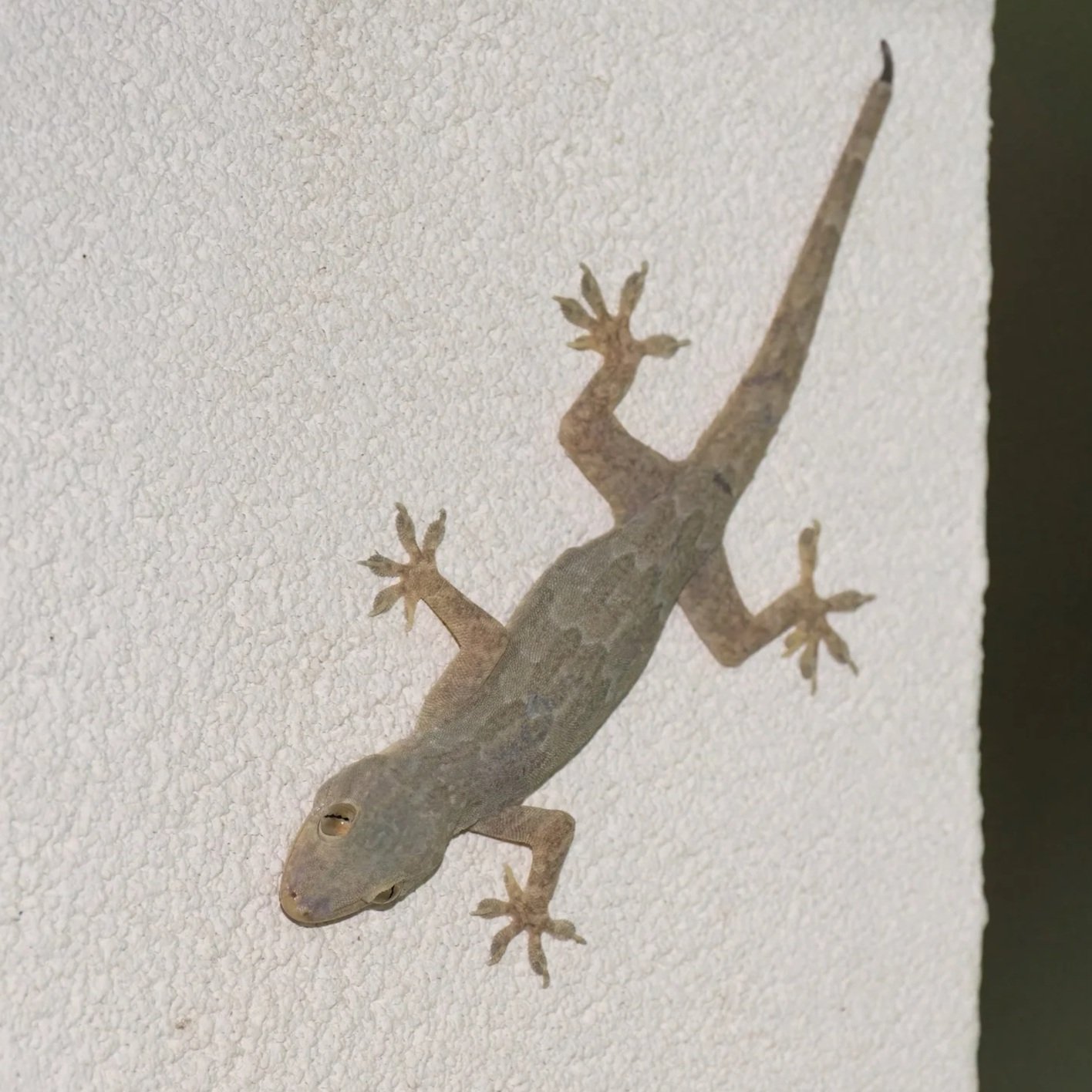
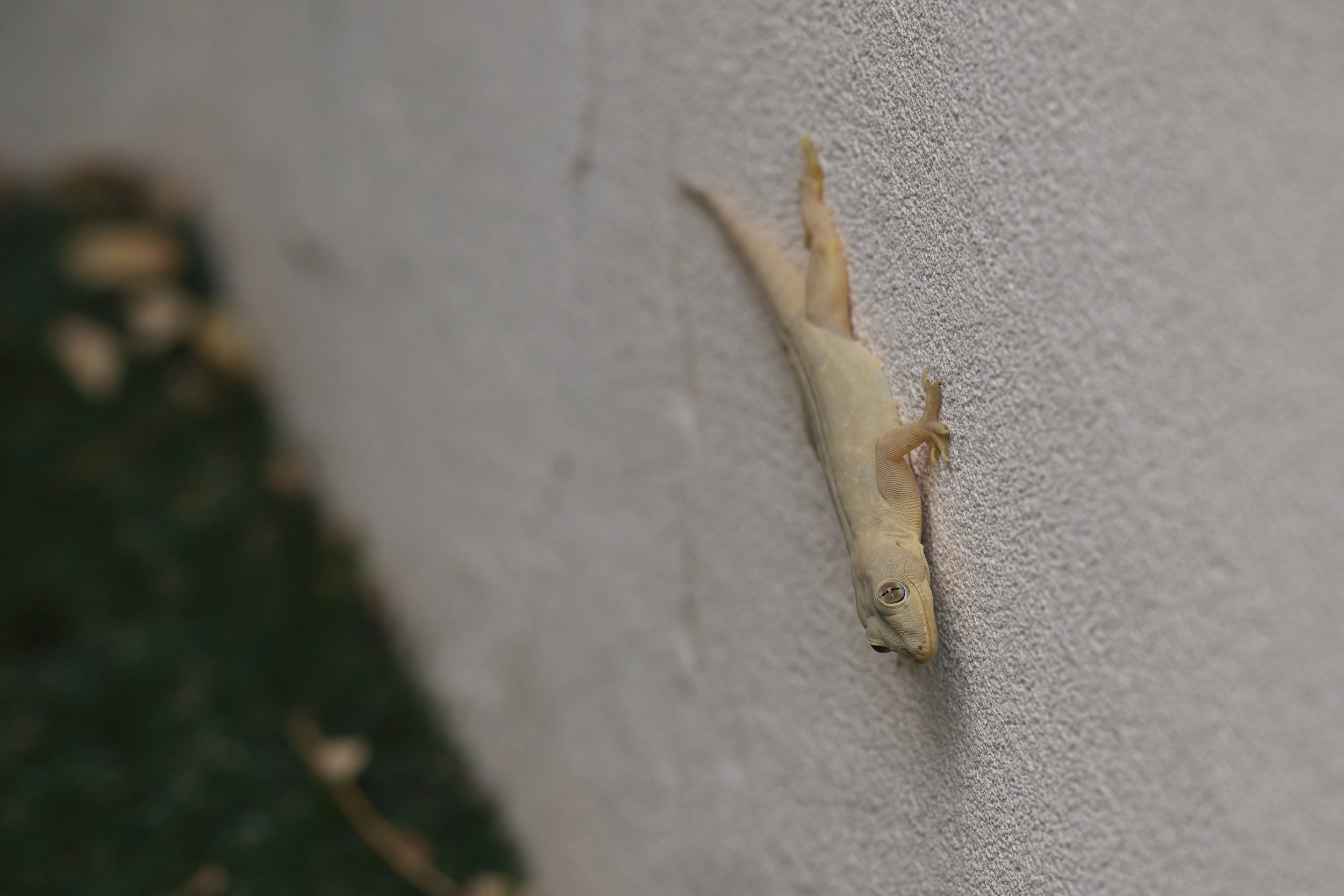
The Yellow-bellied House Gecko provides an interesting example of how reptiles adapt to human-modified environments. By feeding on insects and other small arthropods, it contributes to local food webs and helps reduce insect numbers around buildings. However, its introduced status in the UAE also highlights the importance of documenting non-native species and monitoring their distribution. Observing this gecko offers an accessible opportunity to appreciate urban wildlife and understand how human activity influences species movements and habitats.
تقدم وزغة المنازل صفراء البطن مثالًا مثيرًا للاهتمام على قدرة الزواحف على التكيف مع البيئات التي غيّرها الإنسان. فمن خلال تغذيتها على الحشرات ومفصليات الأرجل الصغيرة، تسهم في الشبكات الغذائية المحلية وتساعد على تقليل أعداد الحشرات حول المباني. ومع ذلك، فإن تصنيفها نوعًا دخيلًا في دولة الإمارات يبرز أهمية توثيق الأنواع غير المحلية ومراقبة انتشارها. كما توفر مراقبة هذه الوزغة فرصة سهلة للتعرف على الحياة البرية في المناطق الحضرية وفهم تأثير الأنشطة البشرية في انتشار الأنواع وموائلها