
Habitat
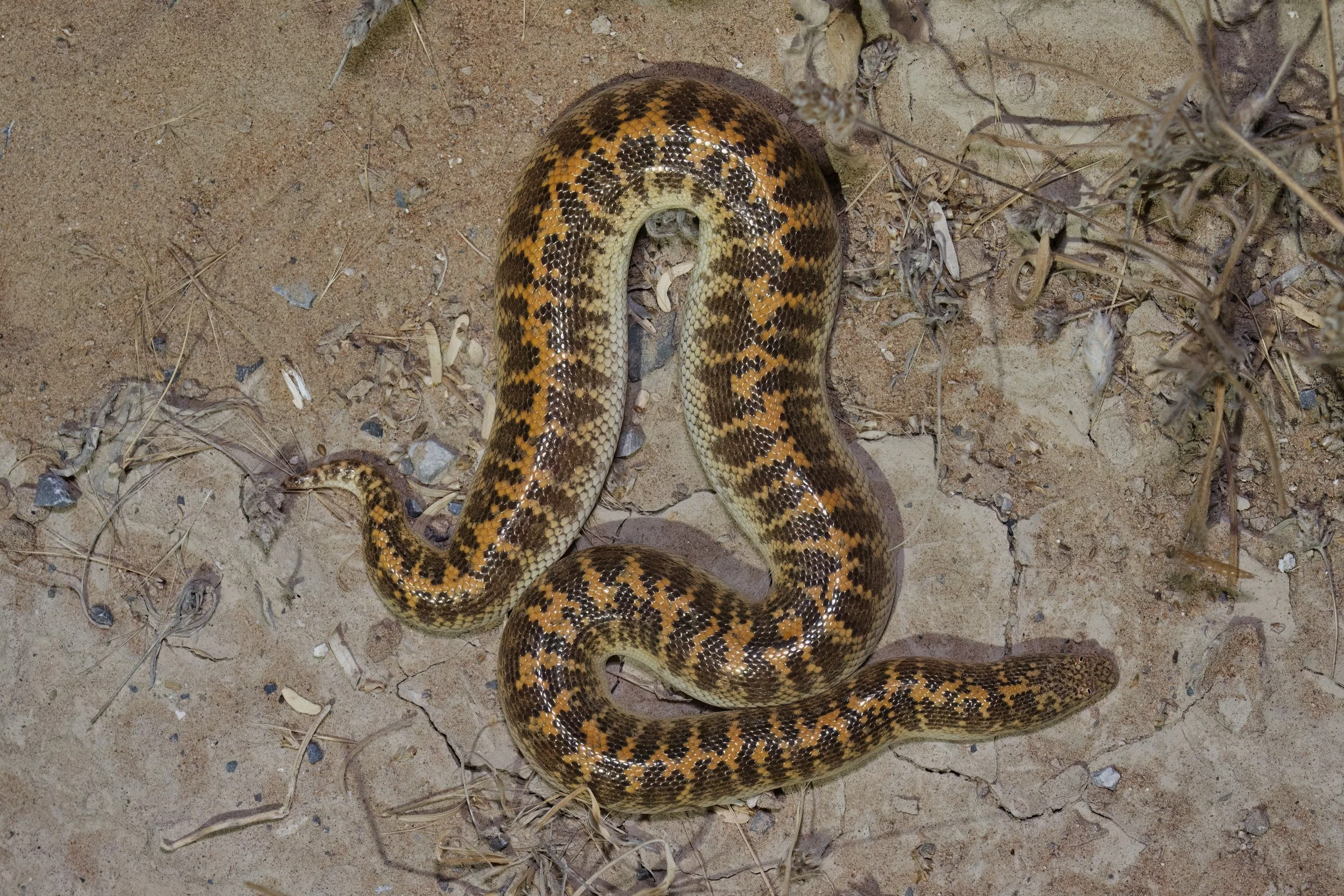
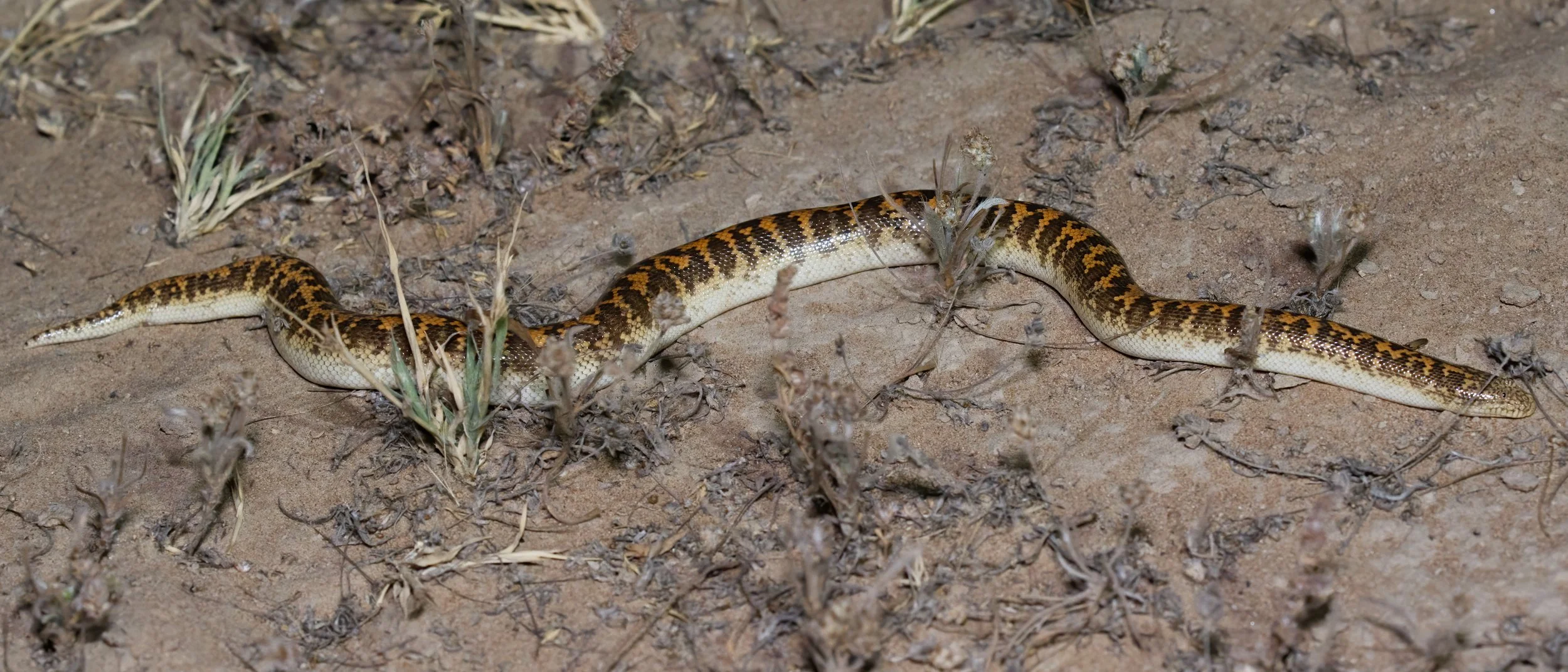
The Arabian Sand Boa (Eryx jayakari) inhabits sandy deserts and dune systems where loose, soft substrates allow for efficient burrowing. It is most commonly found in areas with fine sand, low vegetation cover, and stable dune formations, though it may also occur in sandy plains and transitional desert zones. This species spends much of its life partially or fully buried beneath the surface, using the sand both as concealment and as protection from extreme temperatures. Its habitat preference reflects a high degree of specialization for arid environments, where survival depends on camouflage, thermoregulation, and access to small desert prey species.
تعيش دساس الرمال العربية في الصحارى الرملية وأنظمة الكثبان، حيث تسمح لها التربة الرملية الناعمة والمفككة بالحفر بكفاءة. وتُشاهد غالباً في المناطق ذات الرمال الناعمة، والغطاء النباتي المنخفض، والتكوينات الكثبانية المستقرة، مع أنها قد توجد أيضاً في السهول الرملية والمناطق الصحراوية الانتقالية. يقضي هذا النوع جزءاً كبيراً من حياته مدفوناً جزئياً أو كلياً تحت سطح الرمل، مستخدماً الرمال كوسيلة للتخفي والحماية من درجات الحرارة القاسية. ويعكس تفضيله لهذه الموائل درجة عالية من التخصص في البيئات الجافة، حيث يعتمد البقاء على التمويه، وتنظيم حرارة الجسم، والوصول إلى فرائس الصحراء الصغيرة
Physical Characteristics
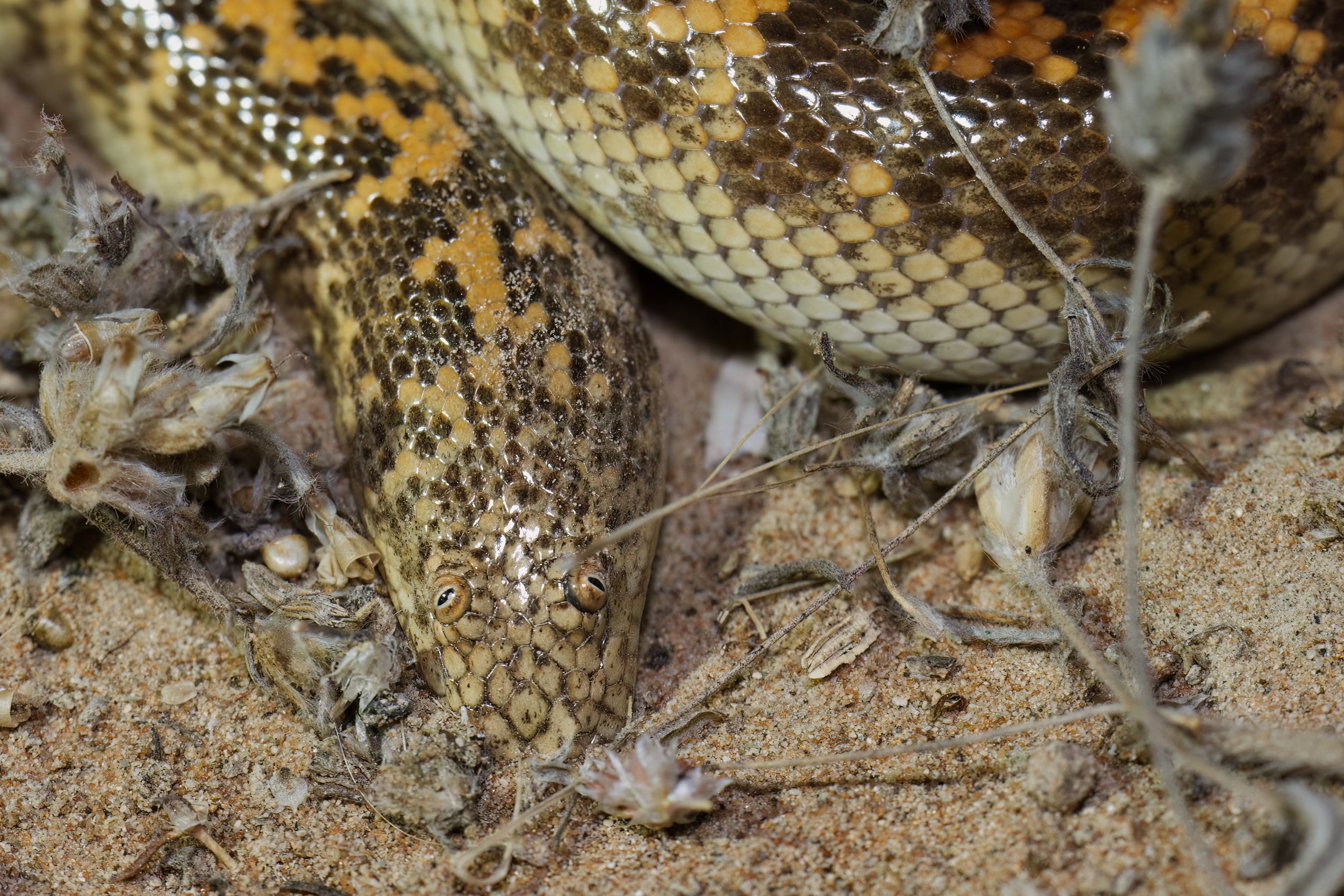
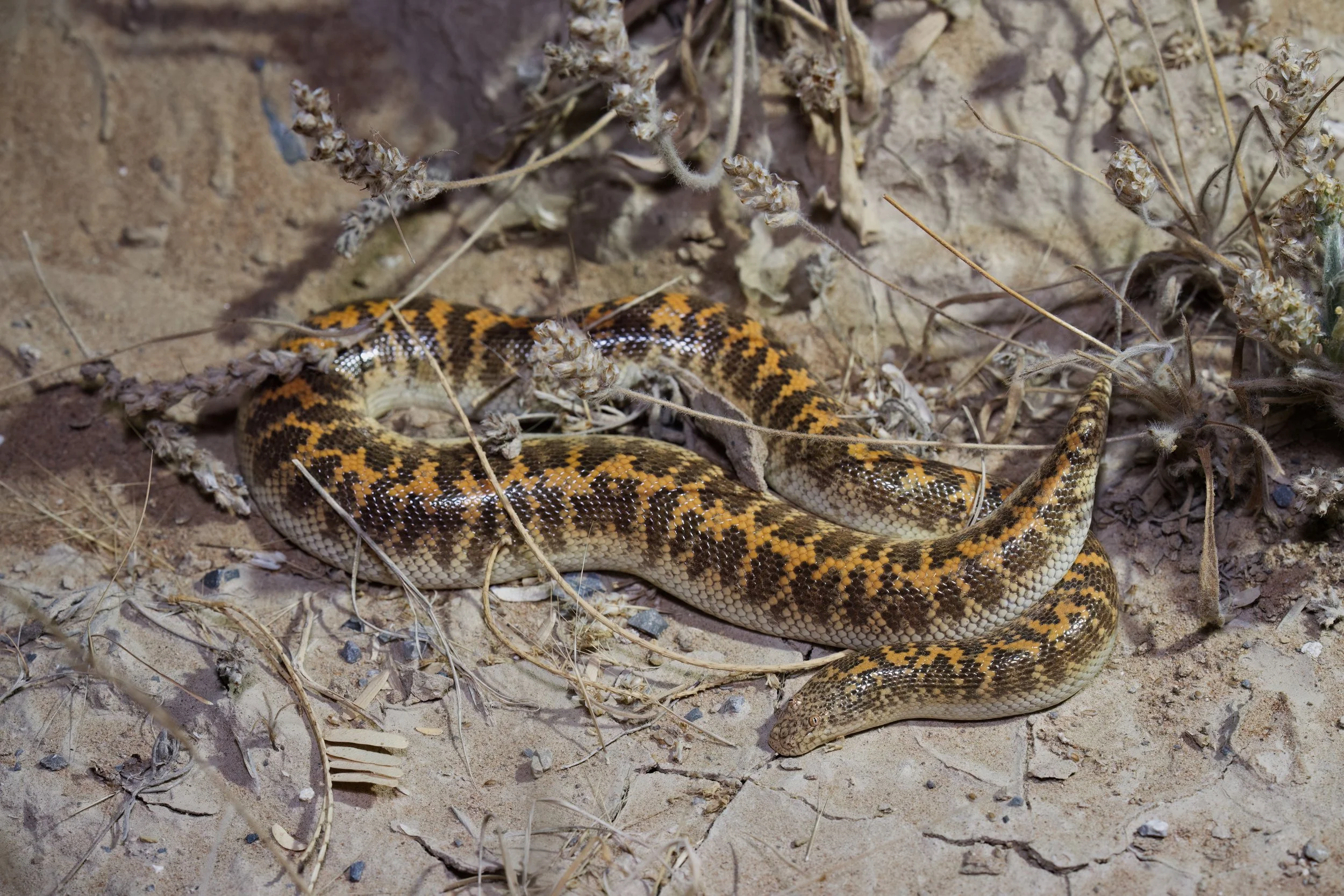
The Arabian Sand Boa (Eryx jayakari) is a small, stout-bodied snake with a cylindrical shape perfectly adapted for life beneath loose sand. Its scales are smooth and glossy, reducing friction while burrowing. The head is small and not clearly distinct from the neck, giving the body a uniform appearance, while the eyes are positioned slightly upward, allowing it to remain mostly buried with only the eyes exposed. Coloration typically ranges from pale sandy beige to light brown, often marked with darker irregular blotches that enhance camouflage against desert substrates. The tail is short and blunt, sometimes resembling the head — a defensive adaptation that can confuse predators.
دساس الرمال العربية هي ثعبان صغير ممتلئ الجسم، ذو شكل أسطواني متكيف تماماً مع الحياة تحت الرمال المفككة. حراشفها ناعمة ولامعة، مما يقلل الاحتكاك أثناء الحفر والتحرك داخل الرمل. يكون الرأس صغيراً وغير واضح الانفصال عن العنق، ما يمنح الجسم مظهراً متجانساً، بينما تتموضع العينان قليلاً نحو الأعلى، مما يسمح لها بالبقاء مدفونة في معظم جسمها مع إبقاء العينين فقط ظاهرتين. يتراوح لونها عادةً بين البيج الرملي الفاتح والبني الفاتح، وغالباً ما تحمل بقعاً داكنة غير منتظمة تعزز قدرتها على التمويه فوق أرضية الصحراء. أما الذيل فهو قصير وغير حاد، وقد يشبه الرأس أحياناً، وهي وسيلة دفاعية قد تربك المفترسات
Hunting Habits
An ambush predator that relies on concealment rather than speed. It typically buries itself beneath loose sand with only its eyes exposed, remaining motionless as it waits for prey to pass within striking distance. Once a small lizard or rodent moves close enough, the boa launches a short, rapid strike and immediately grips the prey. Being a constrictor, it subdues its catch by coiling its body around it before swallowing it whole.
Primarily nocturnal, the species takes advantage of cooler desert temperatures and increased prey activity after sunset. Its hunting strategy reflects the quiet efficiency of desert life — patience, camouflage, and precise timing.
تُعد دساس الرمال العربية مفترساً يعتمد على الكمون والتخفي أكثر من اعتماده على السرعة. وعادةً ما تدفن نفسها تحت الرمل المفكك، مع إبقاء العينين فقط ظاهرتين، وتبقى ساكنة بانتظار مرور الفريسة ضمن مسافة الضربة. وعندما تقترب سحلية صغيرة أو قارض صغير بما يكفي، تنفذ الأفعى ضربة قصيرة وسريعة وتمسك بالفريسة مباشرة. وبما أنها من الثعابين العاصرة، فإنها تسيطر على فريستها بالالتفاف حولها بجسمها قبل أن تبتلعها كاملة.
ينشط هذا النوع بشكل رئيسي ليلاً، مستفيداً من انخفاض درجات حرارة الصحراء وزيادة حركة الفرائس بعد غروب الشمس. وتعكس طريقة صيده الكفاءة الهادئة للحياة الصحراوية: الصبر، والتمويه، والتوقيت الدقيق
Venom Details
Non-venomous. It belongs to the family Boidae, a group of constricting snakes that subdue prey through muscular pressure rather than venom. When hunting, it relies on ambush and quickly grasps small prey such as lizards or rodents, using its body to constrict and immobilize them before swallowing.
Although it may hiss or attempt to escape if disturbed, it poses no venomous threat to humans. Its primary defense mechanisms are camouflage, burrowing, and remaining motionless to avoid detection.
أفعى دساس الرمال العربية غير سامة. وهي تنتمي إلى فصيلة البوائيات، وهي مجموعة من الثعابين العاصرة التي تُخضع فرائسها بالضغط العضلي بدلاً من السم. وعند الصيد، تعتمد على الكمون، ثم تمسك بسرعة بالفرائس الصغيرة مثل السحالي أو القوارض، وتستخدم جسمها للالتفاف حولها وتثبيتها قبل ابتلاعها
وعلى الرغم من أنها قد تُصدر فحيحاً أو تحاول الهروب إذا تعرضت للإزعاج، فإنها لا تشكل أي خطر سام على الإنسان. وتتمثل وسائل دفاعها الأساسية في التمويه، والحفر داخل الرمل، والبقاء ساكنة لتجنب اكتشافها