

Herping in United Arab Emirates
Summer Herping (June–September):
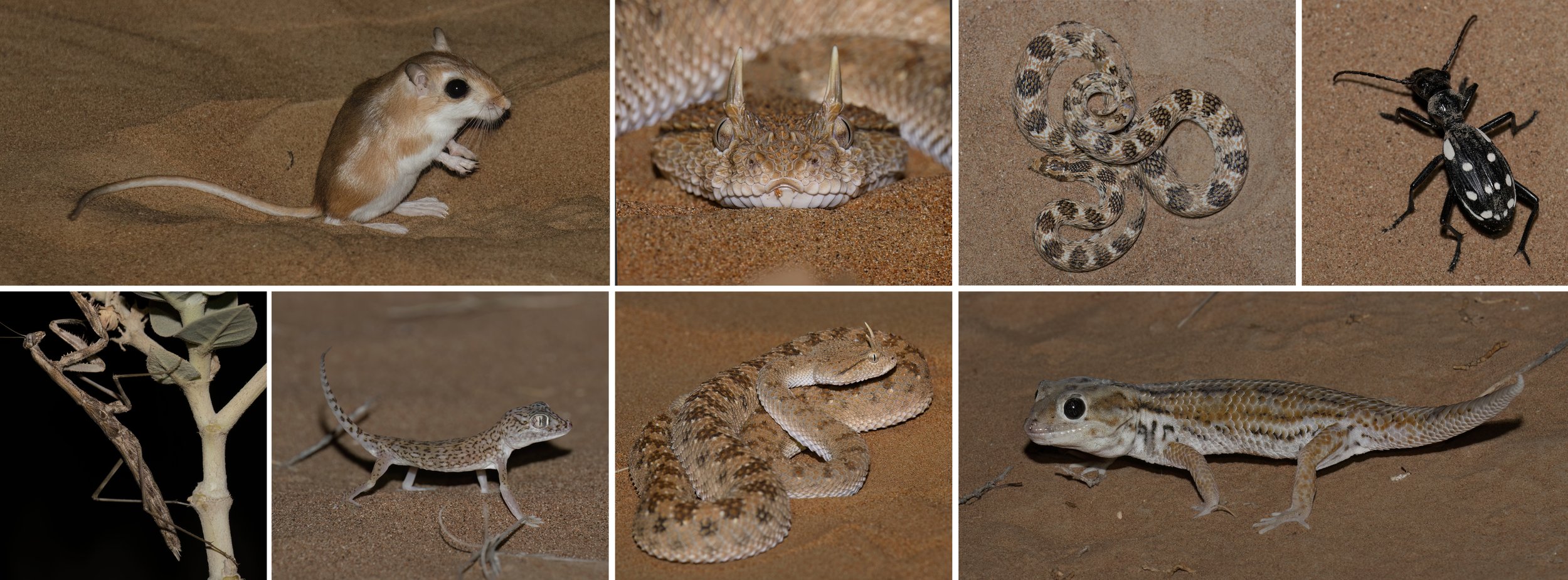
Once the sun sets and the temperature dips, the desert’s nocturnal world awakens. From 9 PM until 1 AM, headlamps guide you to glittering eyeshine as Sandfish Skinks burrow in loose dunes and Keyserling’s Wonder Geckos emerge to hunt. Scorpions—Deathstalkers (Leiurus arabicus), Arabian Fat-tailed (Androctonus crassicauda), Jayakar’s Scorpion (Hottentotta jayakari)—prowl the gravel undergrowth, while ambush predators like the Arabian Horned Viper and Hajar Saw-scaled Viper slither silently beneath rocks. With sturdy boots, plenty of water, and gentle stone-turning, summer nights reveal the UAE’s hidden herpetofauna in its most active—and most thrilling—state.
Winter Herping (November–April):
When the desert cools, the days are perfect for diurnal herping. Between 8 AM and 11 AM (and again 4 PM–6 PM), you’ll find Keyserling’s Wonder Gecko (Teratoscincus keyserlingii) basking on sun-warmed boulders, Sinai Agamas (Trapelus sinaitus) clinging to wind-sculpted rock faces, and Desert Monitors (Varanus griseus) lumbering through gravel plains. After rare winter rains, ephemeral pools spring to life with Arabian Toads (Bufotes viridis), and Sand Skinks (Scincus scincus) slip across damp sand. Keep an eye on loose stones—you might even glimpse a Hajar Saw-scaled Viper (Echis omanensis) or Arabian Horned Viper (Cerastes gasperettii) at dusk—but daylight hours let you admire the full color and behavior of these remarkable reptiles and amphibians.
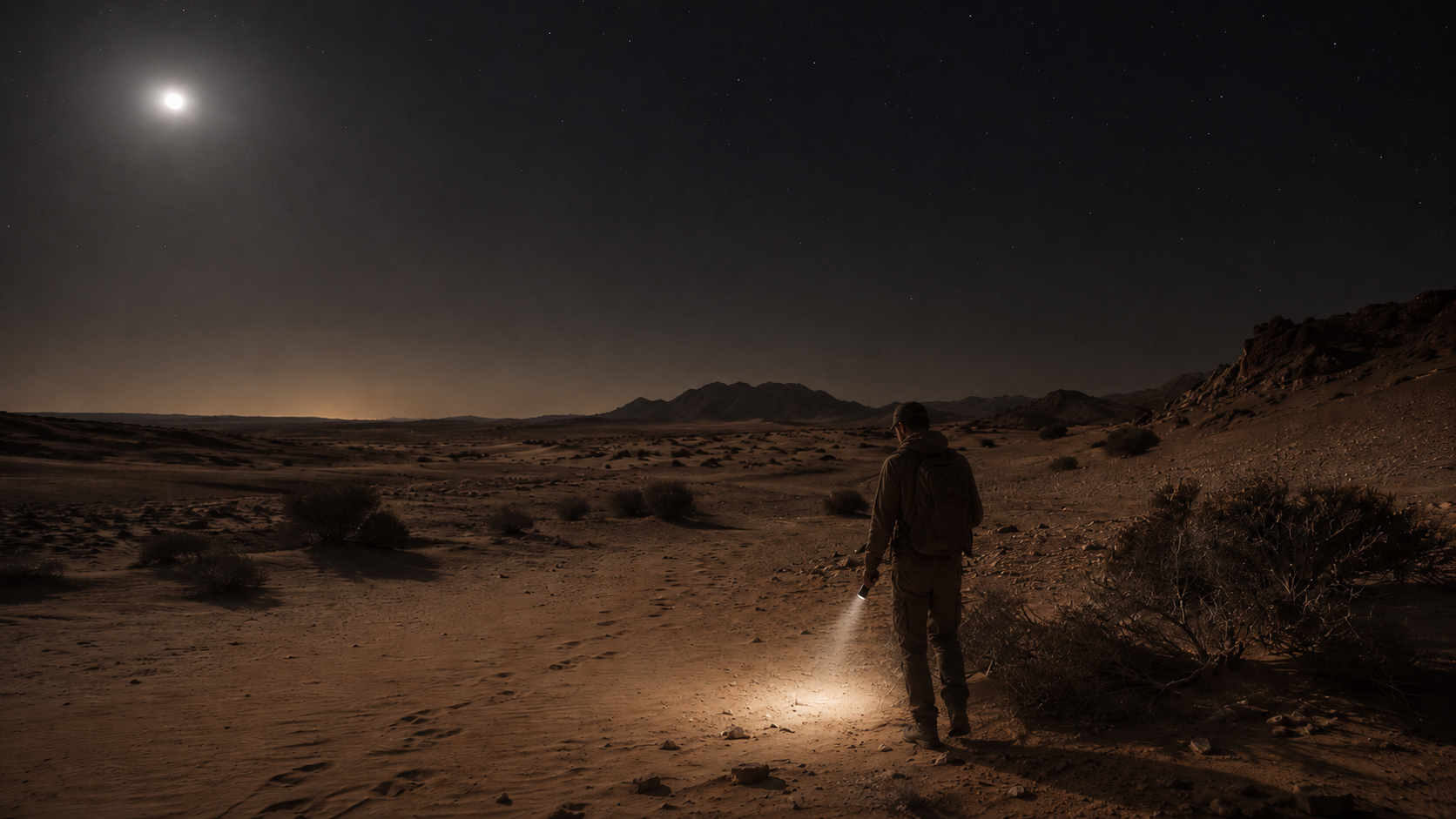
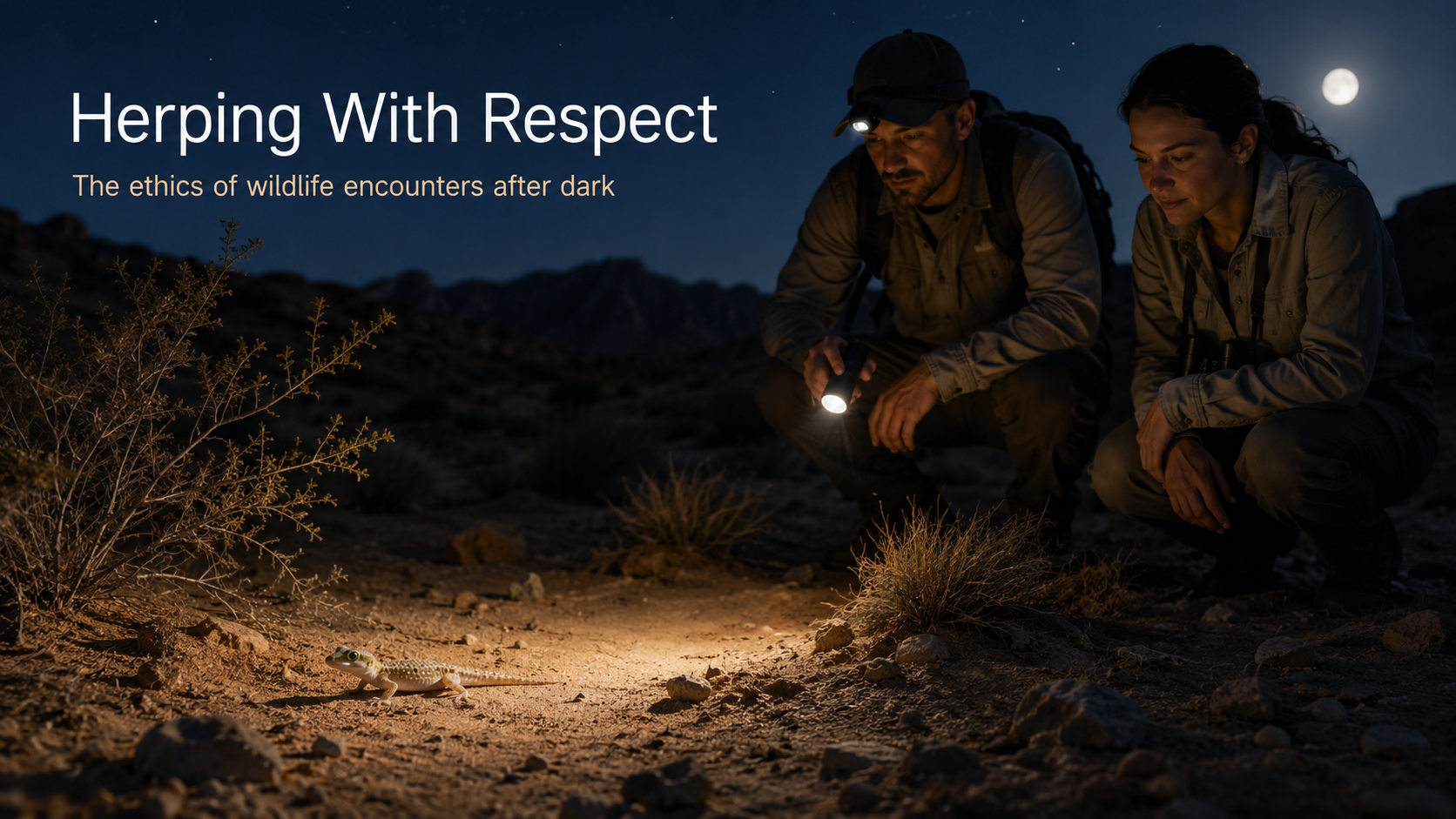
Night mountain herping in the UAE is slower, harder, and more technical than searching the desert. It is about reading rocks, scanning cliffs, watching your footing, and understanding how reptiles use mountain habitats after sunset.